REVIEW · TOKYO
Tokyo: City Tour B
Book on GetYourGuide →Operated by NIPONEANDO · Bookable on GetYourGuide
Tokyo feels big. This tour helps you steer it.
What makes it work is the Spanish guide plus a tight route that strings together Tokyo’s biggest contrasts in one day: tradition at Meiji Shrine, street fashion in Harajuku, tech pop culture in Akihabara, then modern bay views and a grand Shibuya finish. I especially like the close, friendly guiding style and the practical flow on public transport, so you spend less time figuring things out and more time looking around. One thing to consider: the pace is packed, and that can feel like a lot if you want long hangs in each neighborhood.
You’ll meet at the main Torii entrance area at Yoyogi Park, get guided stops with time to wander, and end right where Tokyo puts on its most famous street theater: Shibuya Scramble Crossing and the Hachiko dog statue area. The day is designed for people who like variety and who are comfortable moving from place to place.
In This Review
- Quick hits you’ll actually care about
- Spanish-guided Tokyo in 8 hours: the real value of City Tour B
- Starting at Yoyogi Park: Meiji Shrine first, before the crowds hit you
- Harajuku Takeshita Street: trends on foot, with guided structure
- Akihabara: geek-pop culture with real time to look and recharge
- Ginza and Tokyo Bay / Odaiba: the contrast phase of the day
- Shibuya city finish: Scramble Crossing with the Hachiko moment
- Pacing reality check: who this 8-hour route suits best
- Price and value: is $96 for Tokyo actually fair?
- What “friendly, close guiding” means on the ground
- Ending strong: how to get the most out of Shibuya after the tour
- Should you book Tokyo City Tour B?
- FAQ
- How long is Tokyo City Tour B?
- Is the tour guided in Spanish?
- Where do I meet the tour?
- What’s included in the price?
- Is transportation included?
- Is food included?
- Can I cancel for a full refund?
Quick hits you’ll actually care about
- Spanish-only live guiding so you get context, not just directions
- Yoyogi Park + Meiji Shrine as the calm start before the city noise
- Harajuku Takeshita Street focused time for trends without getting lost
- Akihabara break and lunch window built into the schedule
- Ginza to Tokyo Bay / Odaiba area for the modern-side contrast
- Shibuya finish at Scramble Crossing so you end with a big payoff
Spanish-guided Tokyo in 8 hours: the real value of City Tour B
For $96, you’re buying something you can’t easily replicate alone in the same way: a ready-made route through multiple Tokyo zones, explained in Spanish, with a guide who keeps the group moving while still giving you room to look.
You do have a couple extra costs and rules to plan around. Transportation isn’t included (¥1,160), and food and drink aren’t included, so budget for lunch on your own. Also, luggage or large bags aren’t allowed, which matters if you’re traveling with more than a day bag. The tour uses public transport, so you’ll get more than sightseeing—you’ll also get practice navigating Tokyo’s rhythm with a plan.
If you want an efficient day that still feels personal (not like a cattle-line), this tour is built for that. The feedback specifically highlights a guide who’s friendly and enthusiastic—like Ismael—and that warmth is a real part of why the itinerary lands.
You can also read our reviews of more city tours in Tokyo


Starting at Yoyogi Park: Meiji Shrine first, before the crowds hit you
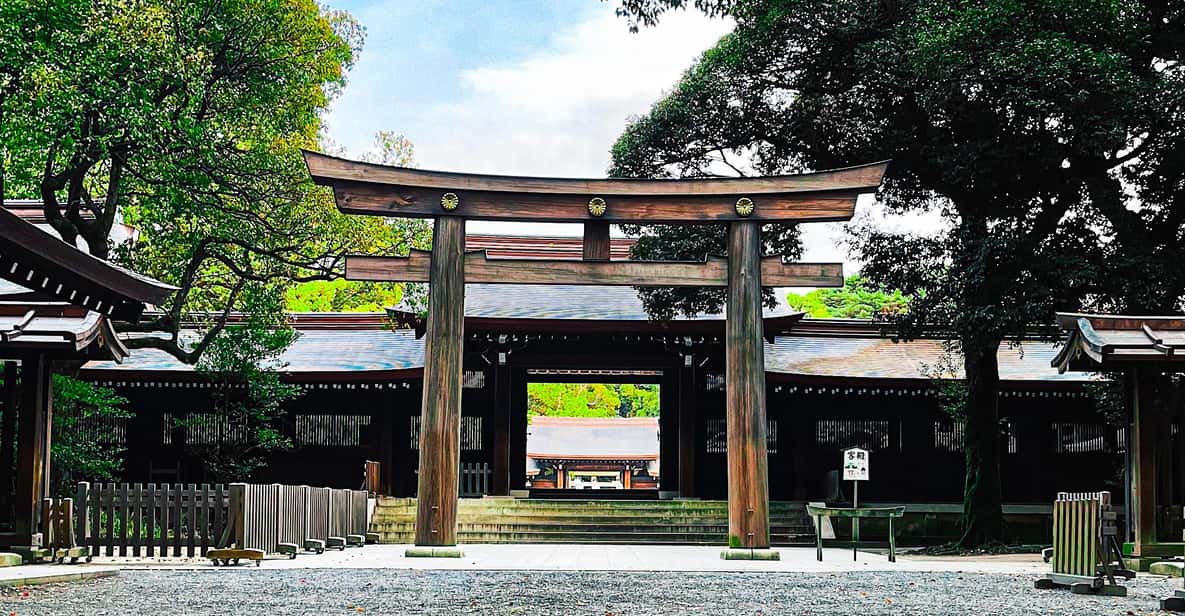
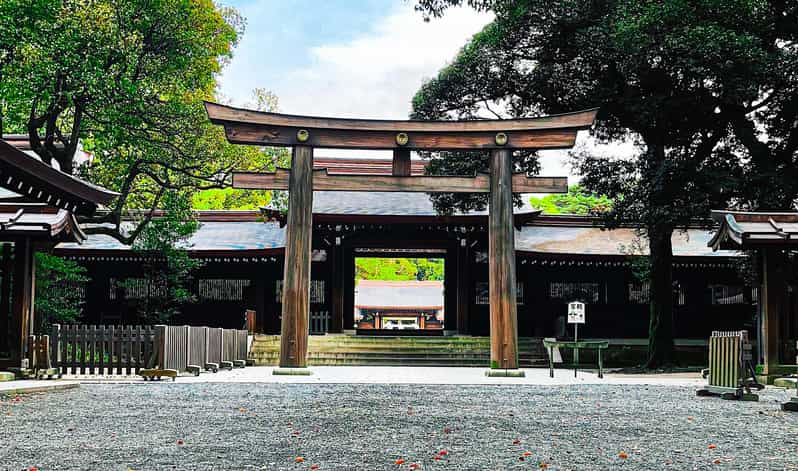
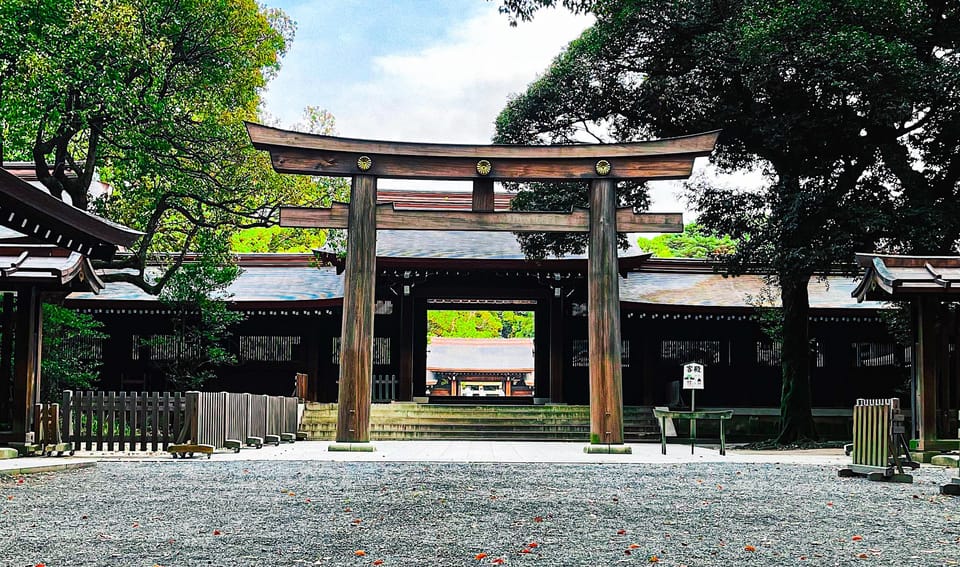
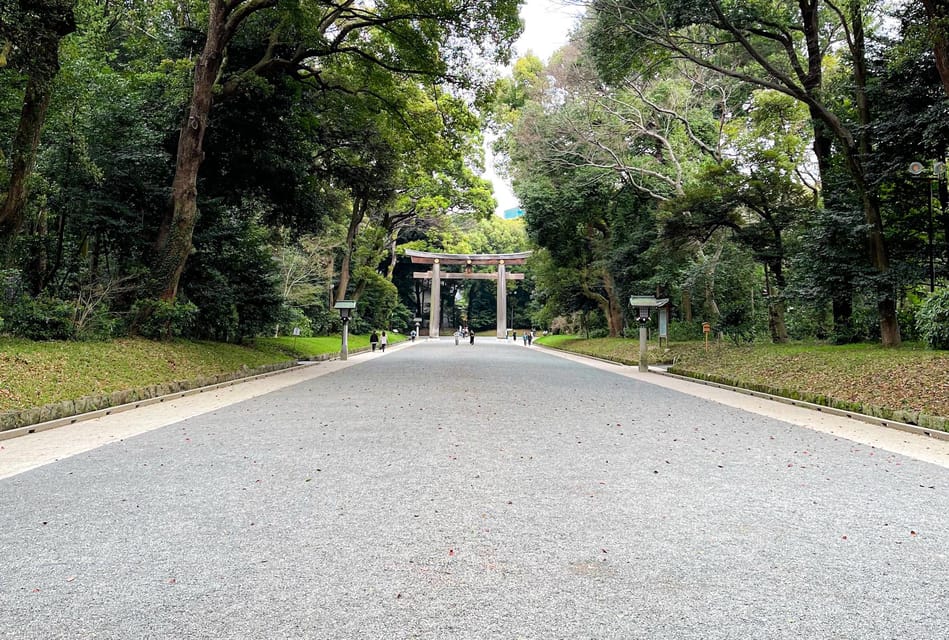
The day kicks off at the large wooden Torii gate/arch at the entrance to Yoyogi Park, right by Harajuku Station (West Exit). Arrive about 5 minutes early, and watch for the guide with a name tag showing NIPONEANDO.
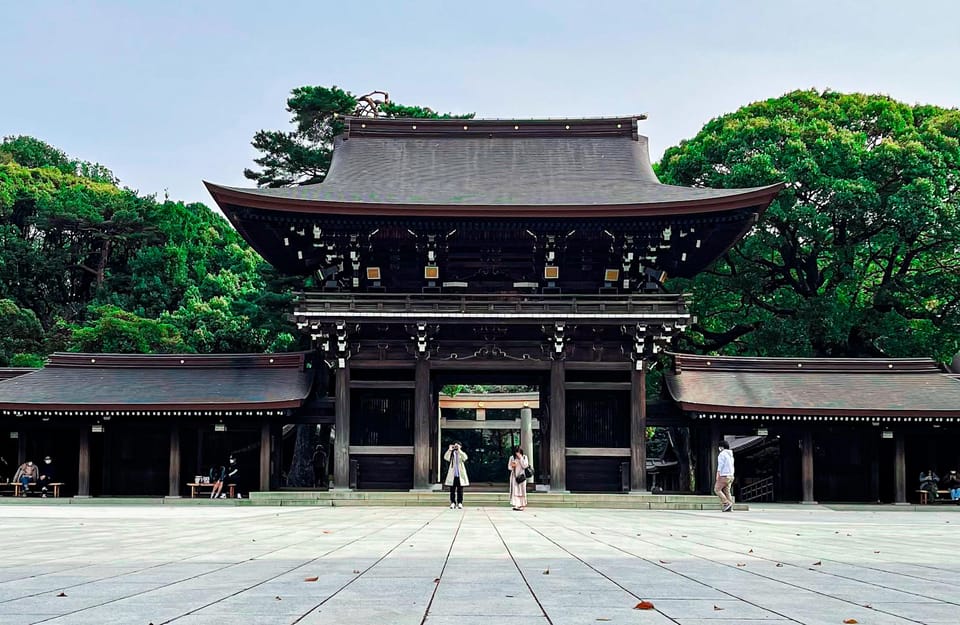
This opening choice is smart. You start with Meiji Shrine, dedicated to the emperor who ended Japan’s feudal era. The shrine visit is guided for about 1.5 hours, which is enough time to understand what you’re seeing without rushing through the experience.
Practical tip: Meiji Shrine is the kind of place where quiet attention pays off. Even if you’re in a group, slow down when you’re inside the shrine grounds and take in how the space changes from street energy into a calmer, more ritual feel. If you tend to skip details at temples, this stop is where the tour’s guidance can change your whole day.
You’ll also benefit from the tour setup that includes a separate entrance to help with queues when lines happen. That can save time later, especially with an itinerary this full.
Harajuku Takeshita Street: trends on foot, with guided structure
Next comes the switch to Harajuku. You’ll head on foot briefly, then get Takeshita Street for about 40 minutes with a guided visit.
Takeshita Street is famous for fashion, snacks, and the kind of fast-moving street energy that can overwhelm you if you arrive with no plan. With a guide and a defined window, you can do two things instead of twenty:
1) get a quick sense of what’s trending and why this area became a trend-launching hub, and
2) pick a few spots to actually enjoy rather than wandering randomly.
This is a good place to do light shopping or a first snack stop. Since food isn’t included, the tour’s structure helps because you know when the walking will slow and when you’ll need to grab something quick.
Possible drawback: 40 minutes on Takeshita sounds short, but it’s enough for a taste. If you want to linger for a longer fashion browse, save a little extra time for later on your own day.
Akihabara: geek-pop culture with real time to look and recharge
Akihabara is your tech and pop culture stop, and it’s given serious attention: about 80 minutes of guided time, plus a separate break and lunch window (70 minutes).
This split matters. Guided time is best when someone explains what you’re looking at—electronics culture, character-driven shops, arcade vibe, and the broader “geek” identity the district has built. Then the break gives you control. You can eat, regroup, and choose what to explore on your own without feeling rushed.
The route between stops also keeps things moving. You’ll take a train to get there (about 25 minutes on the schedule), then another short train hop later. Because it’s on public transport, you’ll likely spend less time waiting around and more time following the guide’s “next stop” logic.
One more practical point: this is a good time to check your phone for the end-of-day meeting points visually, even if you trust the group. You’ll thank yourself later when you’re in Shibuya.
Ginza and Tokyo Bay / Odaiba: the contrast phase of the day
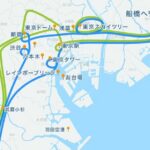
After Akihabara, the tour heads toward Ginza, the luxury district, with guided time of about 40 minutes. Then you’ll continue toward Tokyo Bay and the Odaiba area, with about 1 hour guided there.
Why this section works: it balances the morning’s sensory chaos. Ginza is cleaner, more polished, and it helps you recalibrate. Then Odaiba brings in a different kind of modern: waterfront views, big-city architecture, and that feeling of Tokyo looking forward.
This is also where your day becomes a “movie montage” of the city. You’ve already seen old Japan at Meiji Shrine. You saw street trends at Harajuku. You got the tech-pop identity at Akihabara. Now you shift into modern retail and bay scenery.
What to watch for in Odaiba: if the weather is decent, your best photos usually come from simply walking and watching how the skyline frames the water. Even if you don’t buy anything, this area helps you understand why Tokyo’s modern image isn’t just billboards—it’s space, layout, and scale.


Shibuya city finish: Scramble Crossing with the Hachiko moment
The final neighborhood is Shibuya. The guided visit here is shorter—about 20 minutes—but it ends in a high-impact place: Shibuya Scramble Crossing.
This is where you get the payoff. The Scramble is the busiest crossing in the world, and the tour finishes at the crossing so you can experience it in real time. Right around there, you’ll also see the famous Hachiko dog statue area.
If you’re the type who wants to stand back and watch before stepping into the flow, this is your moment. The group will be there, but you can still take your time to observe how people cross and how the sidewalks feel packed and controlled at once.
Pacing reality check: who this 8-hour route suits best
This is an 8-hour city tour, and it’s built to cover a lot of ground. That’s a plus if you want big coverage and don’t mind moving. It can feel like a lot if you prefer slow travel and long hangs in each place.
It’s ideal for:
- First-timers who want Tokyo highlights without planning every detail
- People who travel with a clear language need (Spanish-only guiding is a big advantage)
- Visitors who like contrast: tradition, fashion, tech, luxury, bay views, and Shibuya energy
It’s not ideal for:
- Anyone who hates tight schedules or needs lots of downtime
- People who rely on accessibility formats beyond what the tour supports (it is wheelchair accessible, but it is not suitable for hearing-impaired people, based on provided info)
Also note: unaccompanied minors aren’t allowed, and luggage or large bags aren’t allowed. So if you’re carrying shopping bags or a bigger suitcase, plan to leave it elsewhere before meeting.
Price and value: is $96 for Tokyo actually fair?
$96 for an 8-hour, Spanish-guided loop across major districts is not bad value—especially when you factor in two things you normally pay for with time and stress:
1) Guided context in Spanish across multiple neighborhoods, and
2) A plan that handles movement across Harajuku, Akihabara, Ginza, Odaiba, and Shibuya using public transport.
But be honest about the add-ons:
- Transportation cost is extra (¥1,160)
- Food and drink are extra, so you’ll want to budget lunch during the built-in Akihabara break
- Optional hotel pickup exists only if you choose the supplement or private option
So the real question is not only whether the price is low. It’s whether you want a guided day that gets you oriented and moving. If you do, the $96 price is a solid deal. If you’d rather wander independently, you might spend less money but you’ll spend more time figuring out the order and meaning of each stop.
One more value point: eco-friendly is listed as a highlight. While there aren’t operational details here, that’s a sign the provider thinks about impact, which often pairs with more thoughtful group logistics.
What “friendly, close guiding” means on the ground
A guiding style isn’t just a personality thing. It affects how much you get from each stop.
When a guide keeps things close and friendly, it usually means:
- you’re more likely to ask questions instead of feeling stuck
- you’ll understand what you’re looking at during faster transitions
- group momentum stays high, which matters on a day with trains and multiple zones
Feedback on the guide’s enthusiasm and facilitation style is a consistent theme. A guide like Ismael being described as enthusiastic and helpful is exactly what makes a fast itinerary feel manageable instead of chaotic.
Ending strong: how to get the most out of Shibuya after the tour
Even though the tour ends at Shibuya Scramble Crossing, it helps to have a tiny plan for what you do next. Since the tour’s last guided window is short, you’ll likely be on your own right after.
I suggest you:
- take a few minutes to watch the crossing flow before jumping into it
- snap your photos and then pick a direction rather than walking in circles
- if you’re hungry, decide whether you want something quick nearby or to move a block or two
Shibuya is one of those places where wandering works, but only after you set your baseline. Watch first. Then explore.
Should you book Tokyo City Tour B?
Book it if you want a Spanish-guided highlights day that covers Tokyo’s big contrasts with a route you can trust. It’s especially worth it for first-time visitors who don’t want to spend hours planning and navigating across multiple neighborhoods. The schedule is full, but the guidance and pacing keep it from feeling like random walking.
Skip it (or consider a different format) if you hate fast itineraries, want lots of free time in each neighborhood, or prefer hearing the city without explanations in a language you don’t need. With Spanish-only guiding and a packed 8-hour flow, this one is best for people who like structure.
FAQ
How long is Tokyo City Tour B?
It lasts 8 hours.
Is the tour guided in Spanish?
Yes. The live tour guide speaks Spanish.
Where do I meet the tour?
Meet in front of the large wooden Torii gate/arch at the entrance to Yoyogi Park, located at the West Exit of Harajuku Station. The guide waits with a name tag showing NIPONEANDO.
What’s included in the price?
Included are the 8-hour Tokyo tour in Spanish, and hotel pickup if you add the supplement or select the Private Tour option.
Is transportation included?
No. Transportation is not included and is listed as ¥1,160. The tour is done on public transport.
Is food included?
No. Food and drink are not included.
Can I cancel for a full refund?
Yes. Free cancellation is available up to 24 hours in advance for a full refund.