REVIEW · TOKYO
Asakusa: 3.5-hour Big-picture History Walk
Book on GetYourGuide →Operated by Arumachi, Inc. · Bookable on GetYourGuide
Asakusa explains Japan faster than you think. This 3.5-hour walk uses iconic sights to build big-picture history—Japan’s isolation and reopening, plus the country’s two faiths living side by side—without getting stuck in museum mode. I especially like the small group pace, with a real guide steering you from landmark to landmark.
My second favorite part is the mix of sacred and street-level. You’ll be in and around Sensō-ji, then cut through the older shopping lanes and pub-style alley energy that sits right next to the holy spaces. And since you get headsets for groups of 3 or more, you can actually hear the story while you’re walking—plus the tour includes freshly made snacks and sweets to keep you moving.
One heads-up: this is moderate walking on older streets, and it’s not suitable for mobility impairments. If you mostly want quiet sightseeing photos with no context, the history-focused approach may feel like a lot.
In This Review
- Key highlights worth marking on your mental map
- Starting at Asakusa Station and lining up your bearings
- Tokyo Cruise Asakusa Pier: the short stop that frames the whole story
- Asakusa Culture Tourist Information Center: modern context near old roots
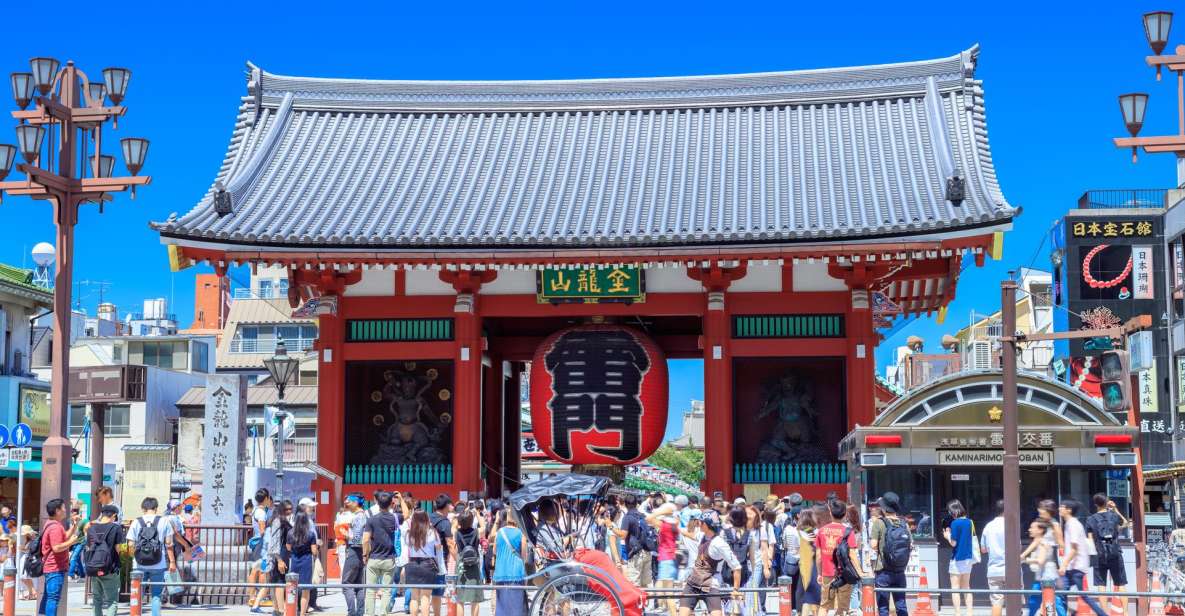
- Kaminarimon Gate: the moment the neighborhood becomes a lesson
- Nakamise Shopping Street and Hōzōmon Gate: Edo flavor with a street-smart guide
- Sensō-ji Temple: how sacred space teaches you Japan’s timeline
- Asakusa Shrine and Yōgō-dō Pavilion: two belief systems sharing the same streets
- Asakusa Nishi-sandō, Mokubakan, and the story of sacred-and-secular
- Hoppy Street: where the tour slows down to let the alley feel land
- Price and value: is $88 worth 210 minutes in Asakusa?
- Weather, pace, and what to wear so the tour stays fun
- Should you book this Asakusa big-picture history walk?
- FAQ
- How long is the Asakusa big-picture history walk?
- Where does the tour meet?
- How large is the group?
- Is the tour in English?
- Are snacks included?
- Does the price include hotel pickup or drop-off?
- Does the tour run in bad weather?
- Is the tour suitable for mobility impairments?
- Is there free cancellation?
Key highlights worth marking on your mental map
- Japan’s isolation to reopening, including why the Netherlands mattered and how trade shifted the world
- Two religions in daily life, explained as a shared neighborhood of worshipers and practices
- Cultural parallels with the West, including a fun look at dragons across cultures
- Crowd-smart touring and practical care, with guides known for watching timing, directions, and even toilet timing
- Old entertainment-area stories, where temple streets connect to postwar work life and early 20th-century performance culture
- Edo-period nostalgia that you can feel, with a calmer shopping-street stop that reads like an old movie set
Starting at Asakusa Station and lining up your bearings
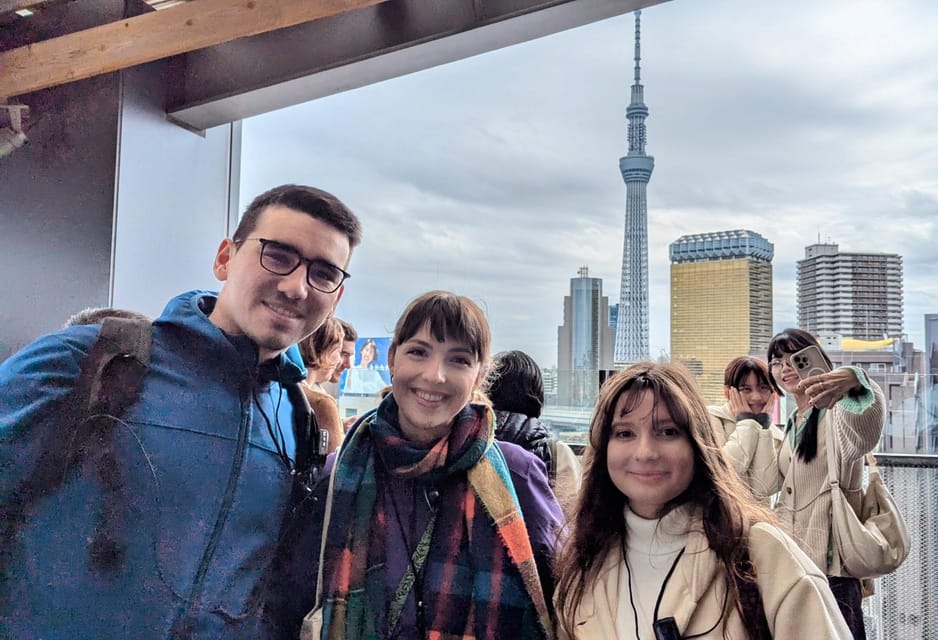
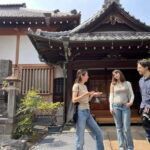
The tour meets by a Burger King right next to Exit 4 of Asakusa subway station (Ginza line, G19). I like this kind of meeting point: it’s easy to find, and you can arrive when you’re ready without complicated taxi math. From there, you’ll move as a group on foot, with your guide setting the tone fast—what you’re seeing, and why it matters.
Because the group is capped at 8 people, the guide can slow down when you need to look closely at details (or when the crowd thickens near the big temples). And since the tour runs in all weather, the practical style matters: wear shoes you don’t mind getting a little dirty, and plan for cool rain just as much as sun.
You can also read our reviews of more walking tours in Tokyo
Tokyo Cruise Asakusa Pier: the short stop that frames the whole story
You kick off with a guided segment at Tokyo Cruise Asakusa Pier. Even if you aren’t getting on a boat, this first stop helps you think like a historian—not just like a tourist. Here’s where the tour’s big-picture promise starts to make sense: Asakusa isn’t treated as a postcard. It’s treated as a hinge point in Tokyo’s long transformation.
This is also where you get the tour’s pattern: every landmark is used as a gateway. For example, the guide explains Japan’s long period of isolation and then the dramatic reopening—so later, when you’re looking at gates, shrines, and streets, the changes don’t feel random. They feel like cause and effect.
Asakusa Culture Tourist Information Center: modern context near old roots
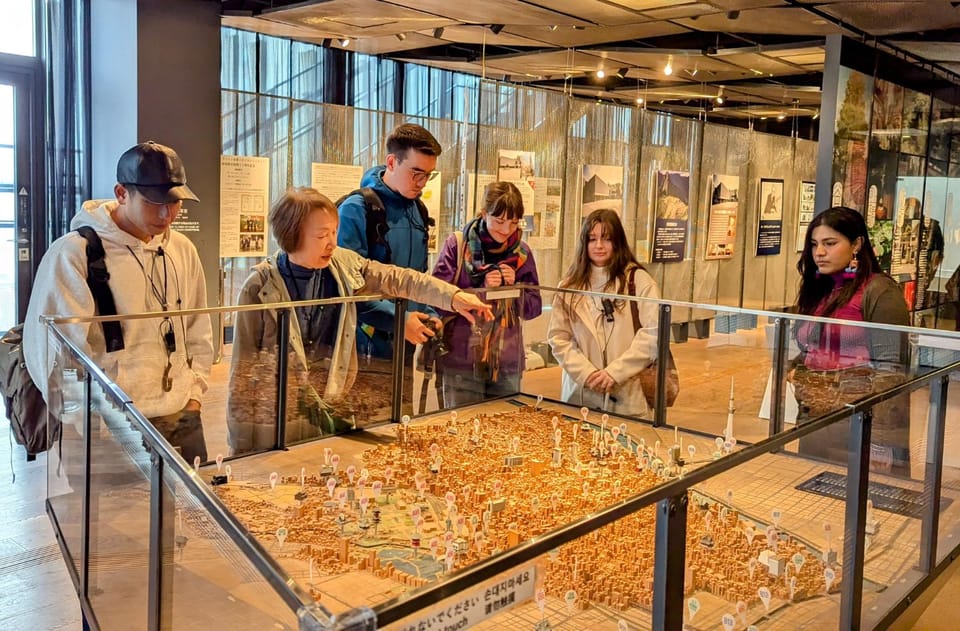
Next comes the Asakusa Culture Tourist Information Center. I like this stop because it gives you orientation without the lecture vibe. You’re surrounded by the machinery of modern Tokyo tourism, but the guide uses that contrast to pull you backward in time.
It’s the right moment to understand what you’ll be doing for the next 3.5 hours: walking through layers. The tour keeps snapping you between eras—feudal Japan, Edo-period city life, and the way global events shaped Japan’s visual culture. If you’re the kind of traveler who gets lost when a tour jumps centuries, this stop helps you stay oriented.
And yes, you’ll also be thinking about global connections. One of the recurring threads is how Japanese art from the 19th century influenced people far beyond Japan—especially French Impressionist painters. The guide connects that kind of cultural export to the story of opening the country, not just to the artwork itself.
Kaminarimon Gate: the moment the neighborhood becomes a lesson
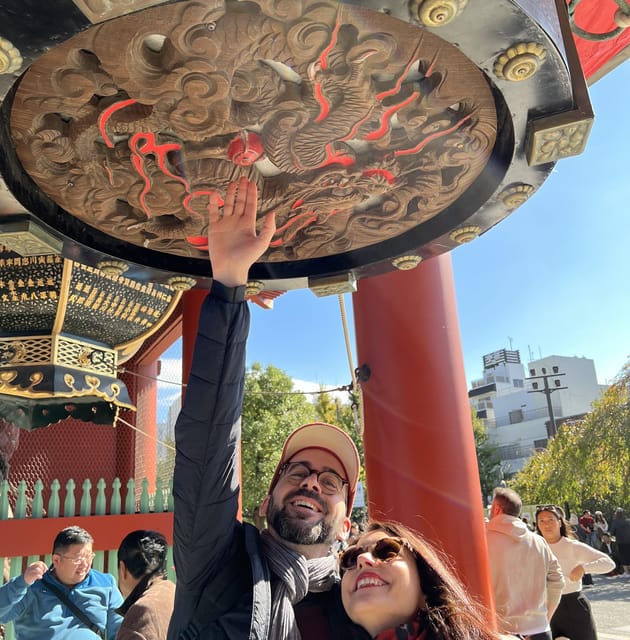
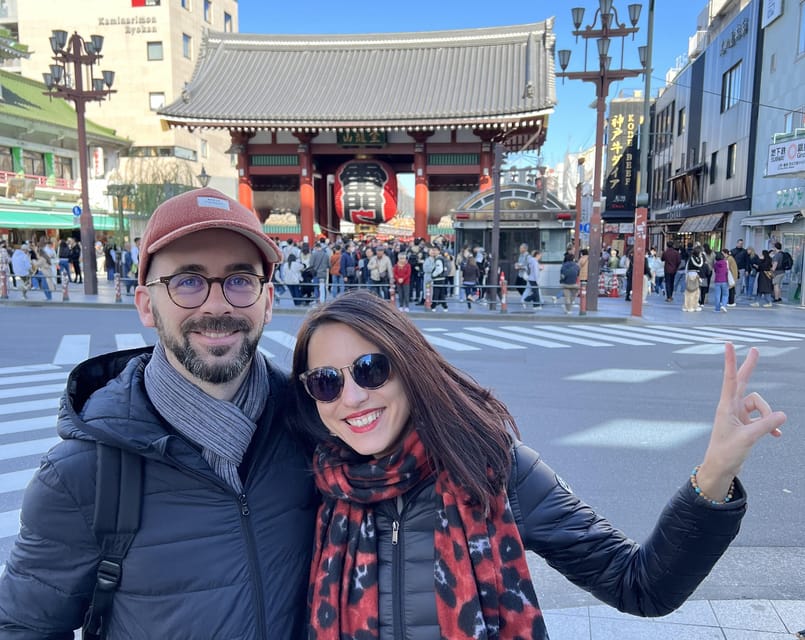
Then you reach Kaminarimon. This gate is dramatic in the way that instantly grabs your attention, but the guide makes it more than a photo stop. You’ll get the kind of explanation that helps you read Japan’s history in ordinary visuals: why symbols matter, how public space shapes belief, and how older Tokyo kept reinventing itself.
Kaminarimon works well as a transition from the pier-and-context start into the dense temple district. Once you’re here, you’re in the thick of what makes Asakusa feel like a living time capsule—yet it’s not stuck in the past. It’s still used, still busy, still layered.
Nakamise Shopping Street and Hōzōmon Gate: Edo flavor with a street-smart guide
Nakamise Shopping Street is next. This is where Asakusa leans into nostalgia. You’ll walk the classic lane of traditional snacks and souvenirs, but the tour doesn’t treat it like background scenery. The guide points out how the street’s rhythm connects to older city life and the way Asakusa developed its identity around visitors—then and now.
You also get a proper checkpoint at Hōzōmon Gate. Gates like this can look purely decorative until someone explains their role in guiding movement and behavior. The guide’s style here is practical: you’ll know where to look and what you’re looking for, instead of just passing through.
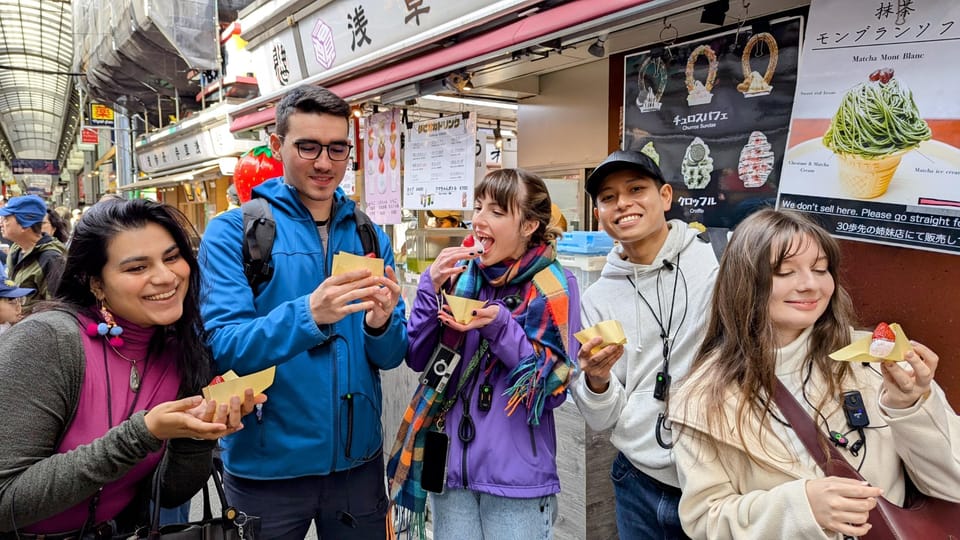
And because snacks are included, this is a good place to slow down just a bit, taste what’s offered, and keep energy up for the temple area that follows.
You can also read our reviews of more historical tours in Tokyo
Sensō-ji Temple: how sacred space teaches you Japan’s timeline
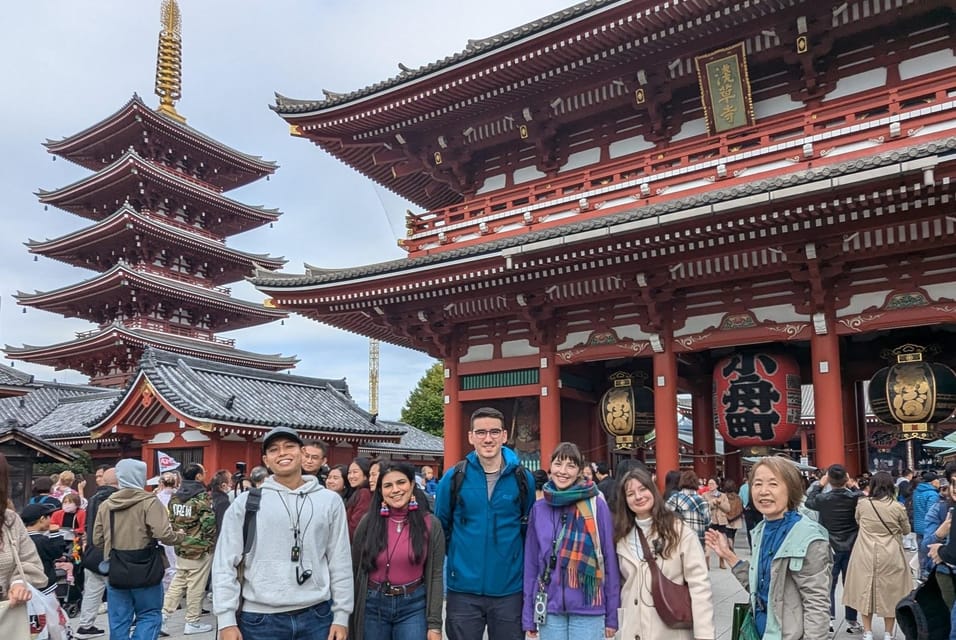
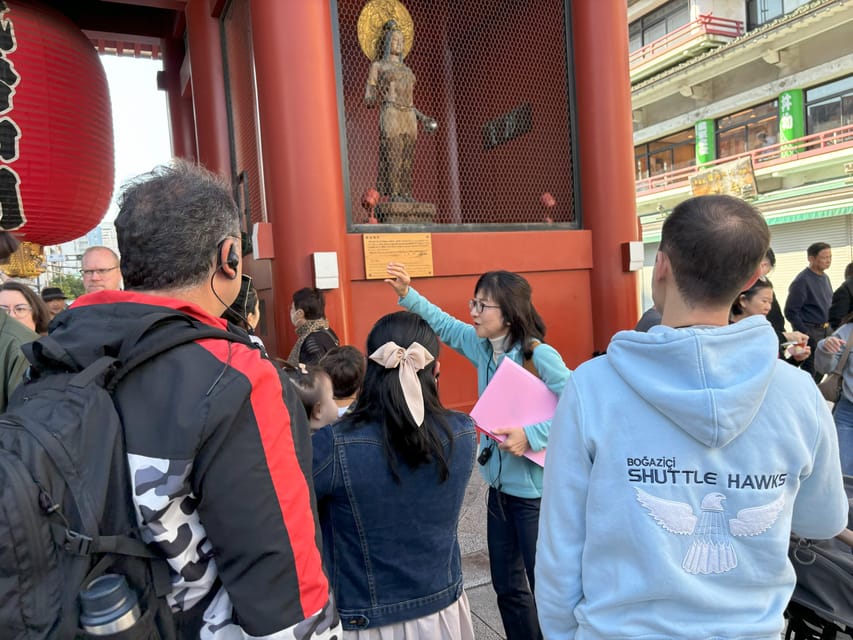
Sensō-ji is the big anchor, with a longer guided stop. I like how the guide uses Sensō-ji as the tour’s main argument: Japan’s sacred sites aren’t isolated from politics, trade, and daily life. They sit at the center of how people understood the world.
You’ll also get the faith-angle of the tour. The idea isn’t that you must memorize religious facts. It’s that you understand how Japan’s two major religions have coexisted for over a millennium, even while sharing many worshipers. In other words, you’ll see religion as lived practice, not just separate institutions.
As you move around, the guide links back to earlier themes you heard near the pier and information center: isolation and reopening, global cultural influence, and how Japan changed while still keeping strong continuity in daily rituals.
Asakusa Shrine and Yōgō-dō Pavilion: two belief systems sharing the same streets
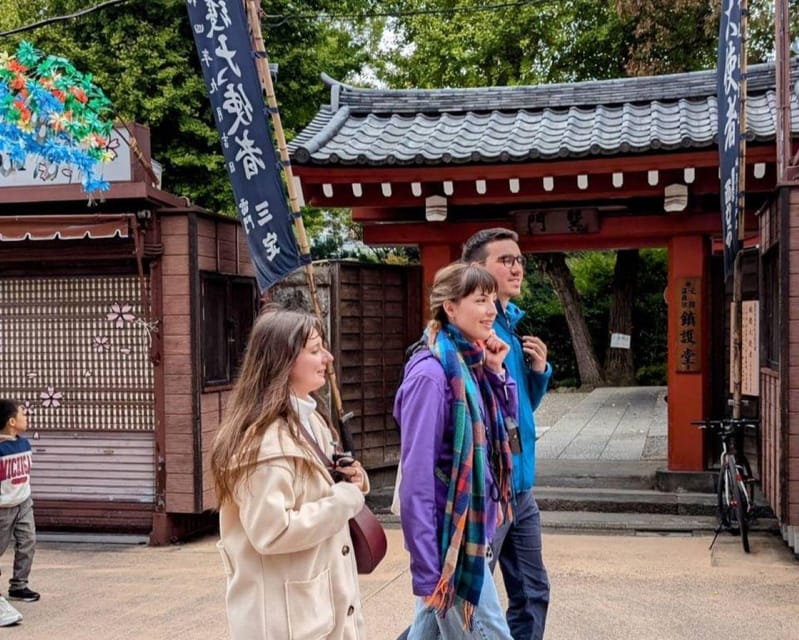
After Sensō-ji, the walk shifts to Asakusa Shrine and then the Yōgō-dō Pavilion. This section is where the tour’s “two religions” promise becomes concrete. The guide explains how the two traditions complement each other and why they can live side by side without constant conflict in everyday routines.
What I appreciate here is the tone. It’s not preachy. It’s explanatory. The guide treats worship and architecture like parts of a single cultural language—one that you can notice once you know what questions to ask. You’ll likely start spotting how people show respect, how spaces are organized, and how offerings or gestures fit into the larger picture of “how things work” in Japan.
Asakusa Nishi-sandō, Mokubakan, and the story of sacred-and-secular
Now the tour gets more interesting—and more human. You head onto Asakusa Nishi-sandō Shopping Street and then the Asakusa Mokubakan stop, before finishing with Hoppy Street. This is the part where Asakusa stops feeling like a checklist of holy sites and starts feeling like a neighborhood.
Here’s a big concept the guide emphasizes: human nature vacillates between sacred and secular. And Asakusa makes that visible. The tour explores the area right next to the temple that used to be a major entertainment zone long before Shinjuku and Shibuya became the big names. You’ll get the feeling of how the same city that worships also performs, drinks, watches shows, and runs on working-class resilience.
The guide also connects this to postwar energy—like those narrow lanes famous for old-style Japanese pubs and the kind of stubborn, everyday optimism that keeps showing up in street culture. You may hear about early 20th-century entertainment too, including cinemas and vaudeville-style performance halls. It’s a reminder that modern Tokyo’s nightlife giants didn’t appear from nowhere; they grew out of places like this.
Hoppy Street: where the tour slows down to let the alley feel land
Hoppy Street is short, but it’s a strong ending note. This is where you see Asakusa’s street identity up close: narrow lanes, old-school pub vibe, and the kind of working-day-to-night energy you can’t really fake from a map.
I like the way the guide treats this as atmosphere with context, not just a place to buy something. In at least one example, guides have been known to pass through shopping spots without pushing purchases, so if you’re focused on architecture or history, you’re not forced into souvenir mode.
Also, if you care about comfort, this is where a good guide becomes a quiet hero. One past guide was praised for pointing out toilets before anyone needed an emergency plan. That’s the kind of detail that matters more than people think.
Price and value: is $88 worth 210 minutes in Asakusa?
For $88 per person, you’re paying for more than a walk. You’re paying for an English-speaking, certified guide, headsets (for groups of 3 or more), and included freshly made traditional snacks and sweets. You’re also buying the small-group limit—8 people—so the guide can actually manage pacing and questions.
Here’s the value logic: if you do Asakusa on your own, you can see the obvious highlights. But without a guide, the big-picture connections—300 years of isolation and reopening, why the Netherlands became an outsized partner, how Japanese art influenced French Impressionists, and how the two religions share worshipers—stay hidden in translation. This tour stitches those pieces together while you’re already standing in the right places.
So I think the price makes sense if you like explanations that connect history to what you can physically point at.
Weather, pace, and what to wear so the tour stays fun
The walk is designed for all weather, so dress like the day you’ll actually have. Comfortable shoes are the headline. The route involves moderate walking, on older streets and uneven areas typical of central Asakusa. If you have mobility limitations, the tour isn’t suitable for that, so you’ll want a different format.
Bring water. Bottled water is recommended, and vending machines are available, so you won’t be stranded—but having water in your day bag saves time and keeps you steady through longer temple sections.
Should you book this Asakusa big-picture history walk?
Book it if you want Asakusa to make sense fast. This is ideal for first-time Tokyo visitors who feel overwhelmed by how much Japan history is layered into everyday life. It’s also great if you enjoy guided storytelling that turns gates, streets, and shrines into cause-and-effect history.
Skip it if you mostly want passive sightseeing. This tour is built around explanations, not quiet wandering. And if mobility is an issue, it won’t work for you.
If you like practical guidance, included snacks, and a guide who can handle crowds while still getting you into lesser-feeling corners, this is a strong choice. It’s the kind of half day that helps you understand Japan beyond the postcard version.
FAQ
How long is the Asakusa big-picture history walk?
It lasts 210 minutes, about 3.5 hours.
Where does the tour meet?
Meet in front of a Burger King restaurant right next to Exit 4 of Asakusa subway station (G19) on the Ginza line.
How large is the group?
The group is limited to 8 participants.
Is the tour in English?
Yes. It includes a live English-speaking certified guide and an English audio guide.
Are snacks included?
Yes. The tour includes a selection of freshly made Japanese traditional snacks and sweets.
Does the price include hotel pickup or drop-off?
No. Hotel pickup and drop-off are not included.
Does the tour run in bad weather?
Yes. It operates in all weather conditions, so wear appropriate clothing.
Is the tour suitable for mobility impairments?
No. It is not suitable for people with mobility impairments.
Is there free cancellation?
Free cancellation is available up to 24 hours in advance for a full refund.