REVIEW · TOKYO
Tokyo: Tsukiji Fish Market Culture Tour with Sashimi Tasting
Book on GetYourGuide →Operated by Japan Wonder Travel · Bookable on GetYourGuide
Your nose will lead to Tsukiji, fast. This tour is interesting because you get English guidance through the maze of the Outer Market and a focused sashimi tasting that goes beyond the idea of a tiny bite. I like that you’re pointed toward the best seasonal shops and offerings without wasting your morning wandering, and I like the way assistants introduce food culture and help you talk shop like a local.
One consideration: food beyond the tasting isn’t included. You’ll get some free samples that vary by day, but you should still plan on eating on your own after, and don’t expect a full meal built into the tour.
In This Review
- Key things that make this Tsukiji tour worth your time
- Tsukiji Outer Market, Explained Like You Actually Need
- Price and what you’re really paying for
- Meeting Points: Start at the temple side or the market side
- The first walk: getting your bearings in a place that doesn’t wait
- Outer Market backstreets: finding the shops you’d miss on your own
- Sashimi tasting: where the tour earns attention
- Learning culture, not just eating: what your guide brings
- The timing reality: 90 minutes guided, longer total window
- After the tour: what to do once the guide steps away
- What to bring so the tour feels easy
- Who this Tsukiji tour suits best
- Should you book this Tsukiji Fish Market Culture Tour?
- FAQ
- How long is the Tsukiji Fish Market culture tour?
- Is sashimi tasting included?
- Is food included in the tour price?
- Where do we meet for the tour?
- Is the tour guide available in English?
- Do I need cash for the tour?
Key things that make this Tsukiji tour worth your time
- Small group (up to 10 people): easier questions, less crowding at tight stalls
- English-speaking assistants: practical shopping and dining recommendations as you go
- Outer Market backstreets: guidance that helps you find the good spots fast
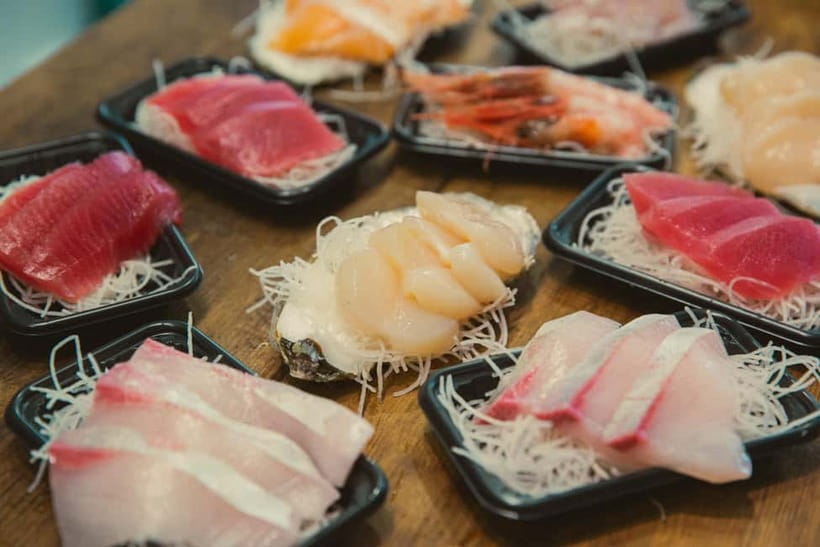
- Sashimi tasting: treated as a highlight, not a token sample
- Seasonal, day-to-day variety: what you try can change depending on offerings that day
- Rain or shine: plan for weather and bring shoes that can handle uneven ground
Tsukiji Outer Market, Explained Like You Actually Need
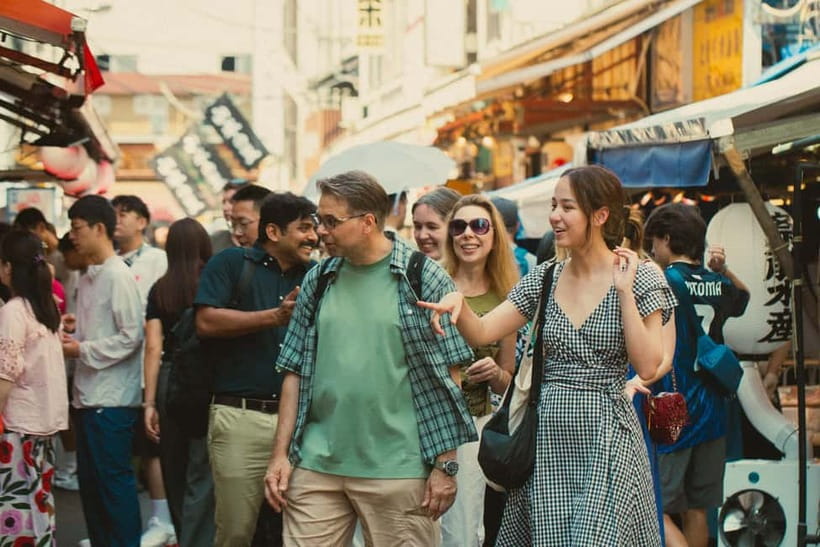
Tsukiji is one of those places where arriving on your own can feel like trying to read a menu in a thunderstorm. Lots of people, lots of smells, lots of counters, and not much time before your brain gets tired. This is where a guide earns their fee fast.
The core idea is simple: you follow your assistant through the Tsukiji Outer Market, hit the right lanes and shop types, and come away with context you can use even after the tour ends. You’re not just collecting photos. You’re learning what to look for when you’re hungry, what to ask for, and how the market culture shapes what you’ll find.
And yes, the sashimi tasting matters. In this kind of market, “tasting” can mean one confusing sliver of fish and a shrug. Here, it’s presented as an actual highlight, with groups praising the selection as something more satisfying than they expected.
You can also read our reviews of more food & drink experiences in Tokyo

Price and what you’re really paying for
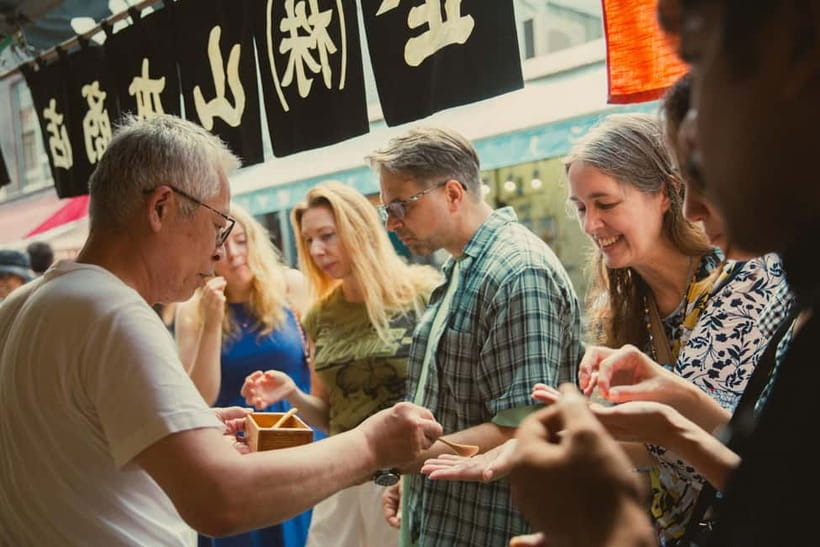
At $38 per person, the question isn’t just whether it’s “cheap” or “expensive.” It’s whether you’re buying something that’s hard to DIY.
You’re paying for:
- an English-speaking assistant (so you can understand what you’re seeing and asking for)
- a guided route through a maze of shops (so you don’t waste prime morning time)
- a sashimi tasting that’s part of the experience flow
- recommendations that help you eat well after the tour
Where the price can feel like a mismatch is if you mostly want a long, free-roam market session with lots of food on autopilot. If that’s your style, you may feel you wanted more time in the market area. One guide-style mismatch also comes up when people expect the tour to be only food stops and very quick sampling. So read your own expectations honestly: this is culture + market sense-making, with food as a centerpiece, not the only goal.
Meeting Points: Start at the temple side or the market side
You’ve got two starting location options, and the one you choose affects your opening minutes.
- Tsukiji Hongwan-ji Temple (築地ボン・マルシェ築地みやげコーナー is the other option, see below)
- 築地ボン・マルシェ築地みやげコーナー (Tsukiji souvenir/market area)
Either way, you’re going to get moving toward the outer market quickly. The benefit of choosing the market-side start is that you waste less time getting into market rhythms. The temple-side start can be a nice way to ease in and get a sense of the area around Tsukiji before you hit the busiest lanes.
The first walk: getting your bearings in a place that doesn’t wait
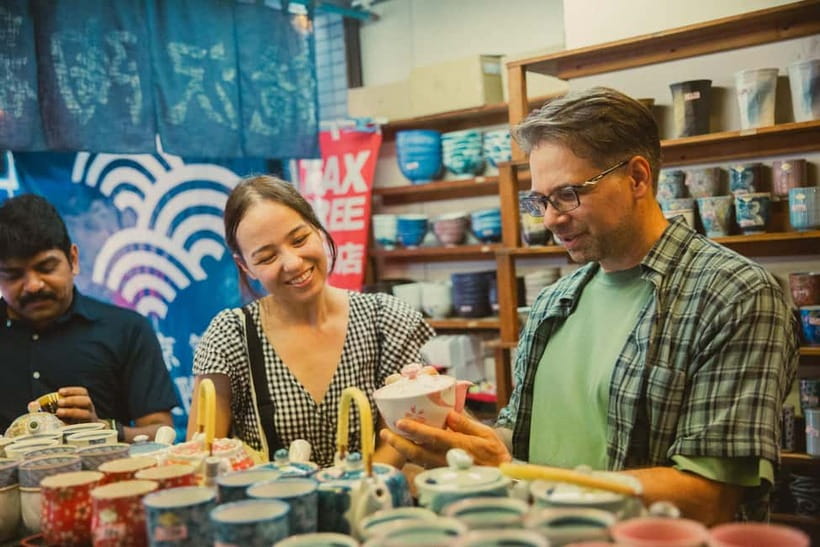
Once you meet your assistant, you start into the market labyrinth. The big value here is how early you’re guided. Tsukiji is famous, but fame doesn’t teach you where to stand, what to look for, or how to avoid the frustrating stalls that won’t help you.
You’ll also learn the basics of what you’re seeing and why. Even if you don’t know any Japanese, the guide’s role becomes more than translation. They help you connect:
- the culture of the market
- how different shops operate
- what kinds of items tend to be seasonal
If you’re visiting for one morning only, this “get oriented first” approach saves you from the usual post-fumble scramble.
Also, plan for walking. This is not wheelchair accessible, and there’s a moderate amount of walking. Wear comfortable shoes. The market floor can be uneven, and you’ll be standing at counters enough that your feet will notice if your shoes don’t.
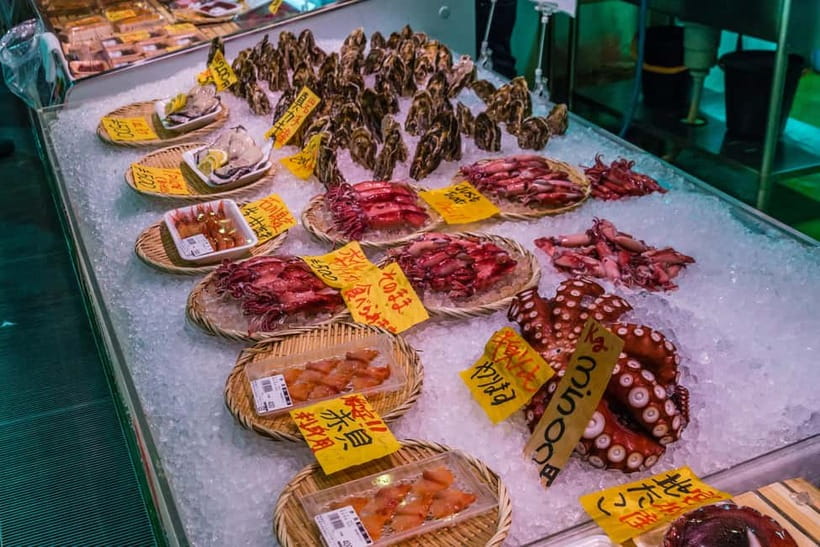
Outer Market backstreets: finding the shops you’d miss on your own
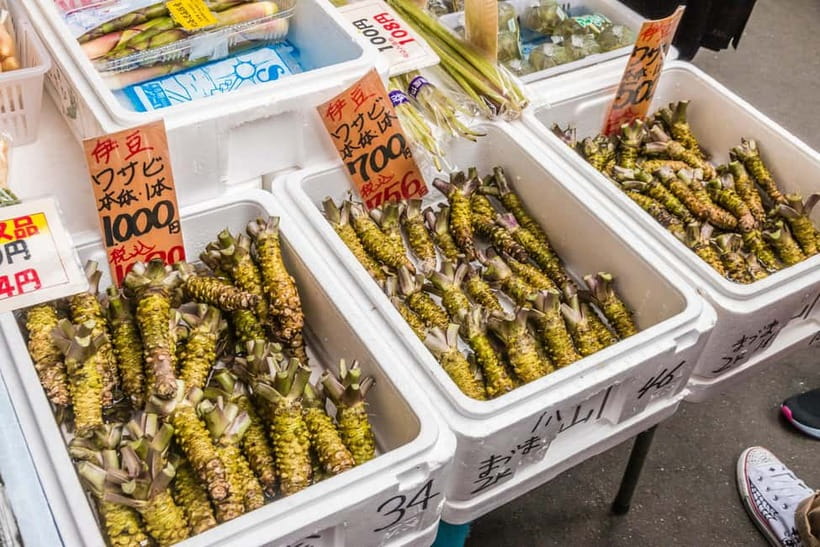
This is the heart of the tour: exploring the backstreets of the Outer Market. Tsukiji has hundreds of shops, so if you go in alone, you end up doing one of two things:
1) aiming for whatever looks popular
2) bouncing around without learning what each section is best for
With the guide, you’re guided toward seasonal offerings and better matches for what you actually want to eat. And because it’s a small group (limited to 10 people), your assistant can adjust as you go. You’re not just following a slow conveyor belt of people.
What I like about this part, as a concept for you, is that it gives you a “map in your head.” After you’ve walked the route with context, you can continue on your own with more confidence instead of feeling like you’re just drifting.
You can also read our reviews of more shopping tours in Tokyo
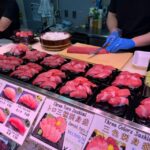

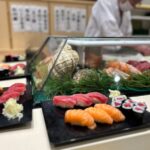


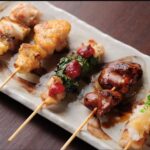
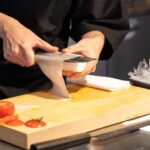
Sashimi tasting: where the tour earns attention
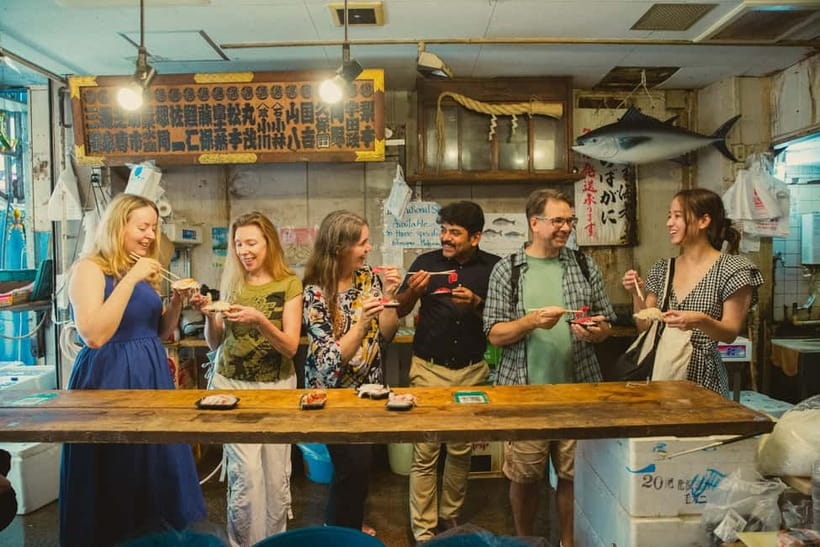
The tour includes a sashimi tasting, and that’s the piece most people care about. What’s refreshing is that the tasting is treated like a real moment, not a quick gimmick.
The tasting also benefits from the market context you’re receiving alongside it. When you understand what you’re tasting and why it’s chosen, the bites land differently. You’re not just eating fish. You’re learning how market culture affects what shows up and how it’s presented.
A few groups have mentioned extra elements like sake as part of the experience on some days, which makes sense given that the tour also includes sampling of local foods. Still, the only solid guarantee is that the sashimi tasting is included. Anything beyond that is day-dependent.
And this matters for your planning: because food is not broadly included, the tasting can’t be your only meal strategy. Treat it as a highlight that sets you up to explore and eat after the guided portion.
Learning culture, not just eating: what your guide brings
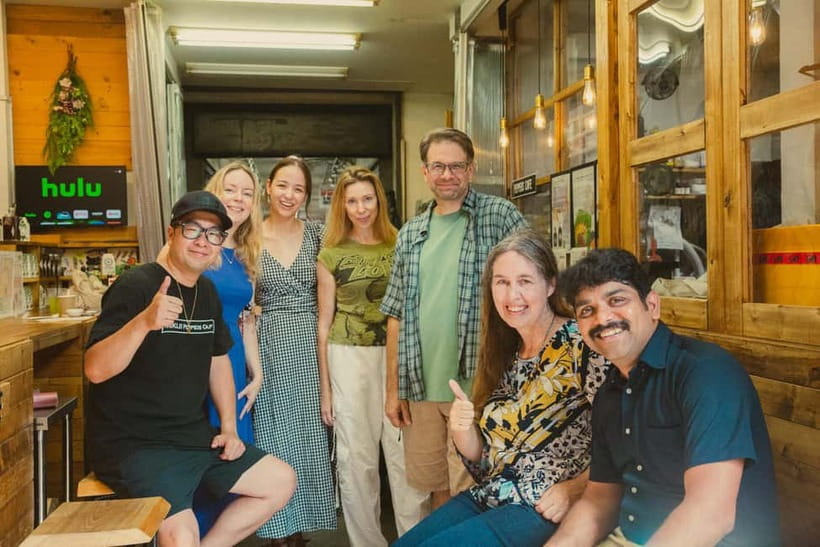
The best guides here don’t only point at stalls. They share market history and culture so you get the “why” behind the “what.”
Names that have come up include Shun, Taka, and Shoko, and the common thread in their praise is clarity and friendliness. A good assistant helps you:
- understand what’s special about Tsukiji’s food world
- recognize how seasonal offerings change
- navigate shop choices without feeling clueless
This is one reason the tour can be worth it even for food lovers. You’re still eating, but you’re also building judgment. That judgment helps later when you’re picking what to order on your own.
The timing reality: 90 minutes guided, longer total window
The guided tour is about 90 minutes. But the overall duration can stretch up to 4 hours, depending on the starting time and how the schedule is set for your slot.
Here’s the practical takeaway for you: don’t assume you’re getting hours of constant guided eating. The tour includes the guided route plus the tasting and sampling, then you continue exploring the Outer Market yourself afterward.
Some people want more time inside the market area, and that can be a disappointment if you pictured a longer guided roam. If you’re the kind of traveler who loves lingering over food decisions, consider using the guided time to learn what you like—then lean on your independent time after.
After the tour: what to do once the guide steps away
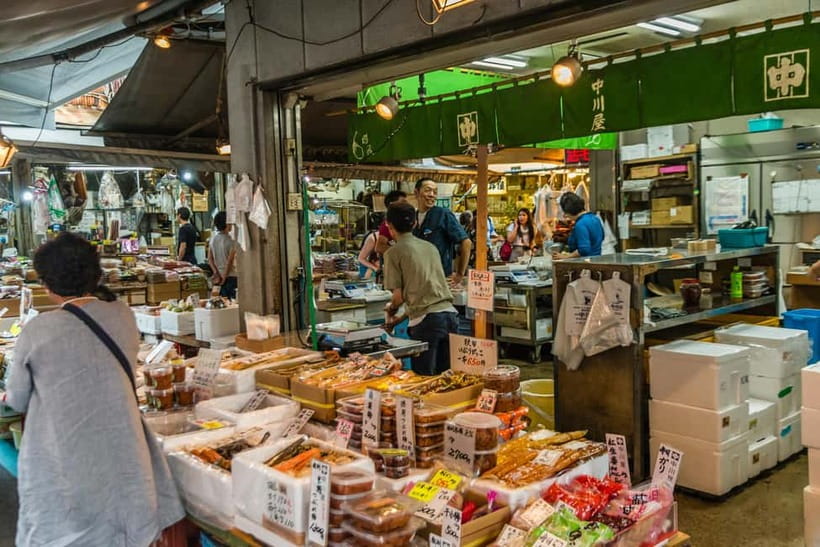
Once the guided portion ends, you’re free to shop, eat, and explore at your own pace in the Tsukiji Outer Market.
This is where the recommendations you get during the tour matter most. Your assistant’s suggestions give you a short list of what to target and what to ignore. You’ll usually have a better sense of:
- which shops match your taste (simple vs. adventurous)
- what to order next
- where to spend time if you only have one or two passes
Also keep in mind a key practical rule: bring cash. The tour notes that many local spots only accept cash. You’ll be happier with a wallet that’s ready instead of scrambling for an ATM mid-snack.
If you want to avoid decision fatigue, think like this:
1) Use the tasting to figure out what you love
2) Then use your remaining time to order that style again somewhere else
3) Add one “curiosity” item so you don’t leave without trying something unexpected
What to bring so the tour feels easy
This isn’t a fancy indoor tour. You’re outside, walking, and stopping often.
Bring:
- Comfortable shoes
- Camera (you’ll want it)
- Comfortable clothes
- Cash
One more tip: dress for rain even if the forecast looks harmless. The tour runs rain or shine, so plan on dealing with weather without turning the experience into a misery march.
Who this Tsukiji tour suits best
This experience fits best if you:
- want help navigating a famous, confusing market
- care about learning market culture, not just photographing it
- want an English-speaking guide to speed up food decisions
- like a small group format (limited to 10 participants)
It may not be ideal if you:
- expect the tour to be a nonstop food crawl with lots of included eating
- want hours of constant guided time inside the market area
- need wheelchair accessibility (it’s not wheelchair accessible)
- are traveling with very young kids (not suitable for children under 3)
A good match is a couple, a small group of friends, or a solo traveler who wants a plan and a tastable payoff, then freedom afterward.
Should you book this Tsukiji Fish Market Culture Tour?
I’d book it if you want Tsukiji to feel organized and worthwhile, not chaotic and random. The combination of English guidance, backstreet routing, and sashimi tasting is a strong value package for a morning (or part of the day) in Tokyo.
But I’d pause if your main goal is a full meal itinerary with lots of included food. The tasting is included, and you may get free samples, but food is not broadly included. If you’re expecting an all-you-eat tour, you’ll likely be disappointed.
If you like learning just enough to eat confidently afterward, this tour is a smart way to get there fast. Then you can spend your independent time eating at your pace, with your shopping list already in hand.
FAQ
How long is the Tsukiji Fish Market culture tour?
The guided portion is about 90 minutes, and the overall duration can be listed as 90 minutes to 4 hours depending on the start time.
Is sashimi tasting included?
Yes. The tour includes a sashimi tasting.
Is food included in the tour price?
Food is not included in the tour. You may receive free samples, and what you get can vary by day.
Where do we meet for the tour?
The meeting point can vary based on the option booked, with options including Tsukiji Hongwan-ji Temple and the 築地ボン・マルシェ築地みやげコーナー area.
Is the tour guide available in English?
Yes. The tour is described as having an English-speaking guide/assistant.
Do I need cash for the tour?
You should plan to bring cash. Many local spots only accept cash.
![Tokyo Shinjuku Food Tour for Family [1 Group Only] - IKEA Shinjuku Meet-Up: How the Night Starts](https://b.tokyosights.com/wp-content/uploads/tokyo-shinjuku-food-tour-for-family-1-group-only-400x300.jpg)