REVIEW · TOKYO
Tokyo: Traditional Geisha Experience Show & Japanese Dinner
Book on GetYourGuide →Operated by Hamakura-style · Bookable on GetYourGuide
Geisha art, up close in Tokyo. This Benitsuya evening pairs a live performance in a traditional zashiki room with a Kyoto-inspired kaiseki dinner in an easy 90-minute format.
I really like how the setting feels small and respectful, so you’re not watching from the back row. And I also like that the food is a multi-course dinner with seasonal details, not a one-size-fits-all meal.
One heads-up: it’s a strict traditional experience—no smoking and flash photography isn’t allowed, and it’s not available for anyone under 20. If you want a loud, casual party vibe, this won’t be your match.
In This Review
- Key things to know before you go
- Benitsuya at Shimbashi: finding the 6F zashiki room
- What the 90 minutes actually feels like (simple flow)
- Kyoto-style kaiseki dinner: seasonal courses, not a generic set menu
- Drinks and dietary notes
- The geisha show: live dance and shamisen in an intimate setting
- Ozashiki games and conversation: what you can ask and how it works
- A practical expectation
- Photos in kimono: making the camera moment count (no flash)
- Price and value: is $141 fair for this Tokyo evening?
- Who should book this geisha dinner experience
- Quick tips to enjoy it without stress
- Should you book this Benitsuya geisha show and kaiseki dinner?
- FAQ
- How long is the Benitsuya Tokyo geisha experience?
- What is included in the price?
- Where do I meet for the tour?
- Is the staff English-speaking?
- Are flash photos allowed?
- Is it available for children or teens?
- Can I bring allergies or special dietary needs?
Key things to know before you go
- Benitsuya on the 6th floor: you’ll check in at Grand Hammer (グランハマー) and head up to 6F for the zashiki room.
- Kyoto-style kaiseki dinner: multiple courses with seasonal Japanese ingredients, with the lineup changing by season.
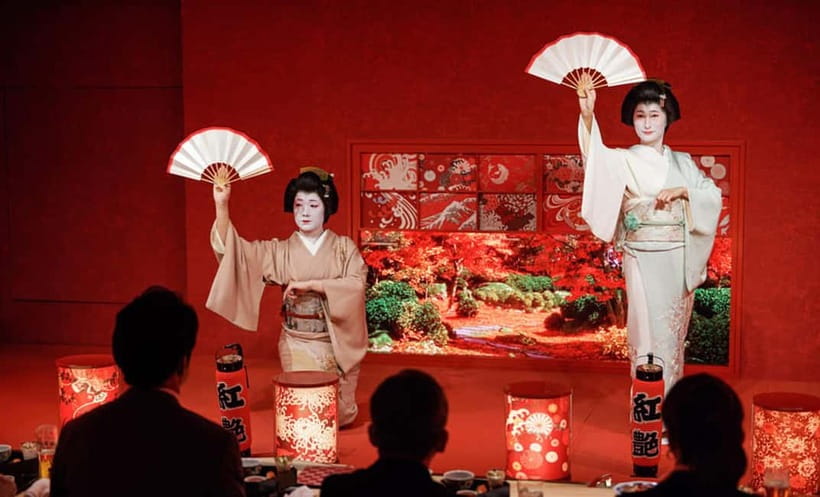
- Live geisha performance with shamisen: you watch up close with music happening in the room.
- Ozashiki games + conversation time: after the show, you can play traditional games and ask questions with English-speaking support.
- Kimono photo time: you get a dedicated chance to take memorable photos with the geisha (no flash).
- Value is built in: food, entrance fee, tip, and drinks are included in the $141 price.
Benitsuya at Shimbashi: finding the 6F zashiki room
This experience is based in central Tokyo, just a short walk from Shimbashi Station. The meeting point is about a minute away—west exit 7, right in front of Shimbashi SL Square. From there, you enter the Grand Hammer building (グランハマー) and go up to 6F Benitsuya(紅艶).
Why this matters: Tokyo can be confusing fast, especially on evenings when you want to just relax. Having a clear meeting point near a major station helps you arrive calm instead of rushing. Also, being on the 6th floor means you’ll likely feel the shift from “street Tokyo” into a quieter, controlled setting once you step inside.
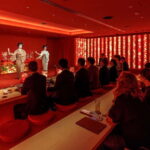
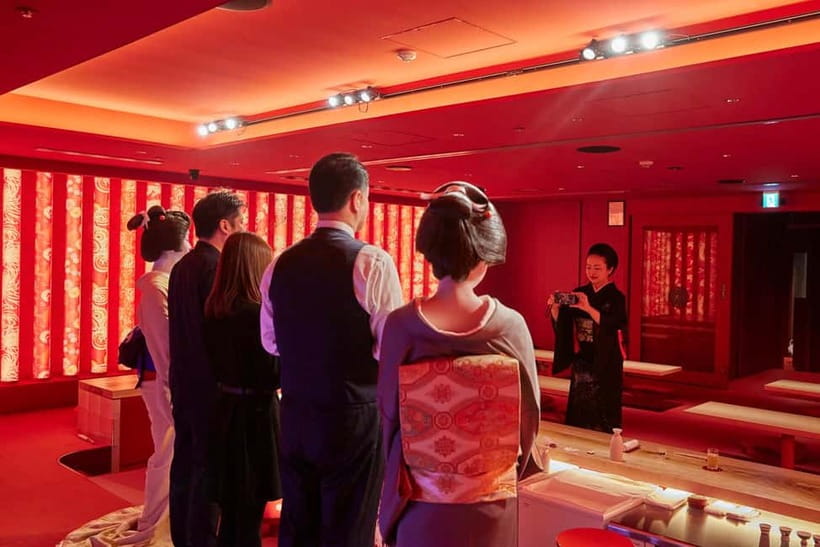
You’ll be welcomed into a beautifully designed zashiki room with tatami flooring and traditional decor. The room setup is part of the experience: you’re meant to sit, watch, and eat in a way that feels close to how Japanese arts are traditionally presented.
You can also read our reviews of more tours and experiences in Tokyo

What the 90 minutes actually feels like (simple flow)
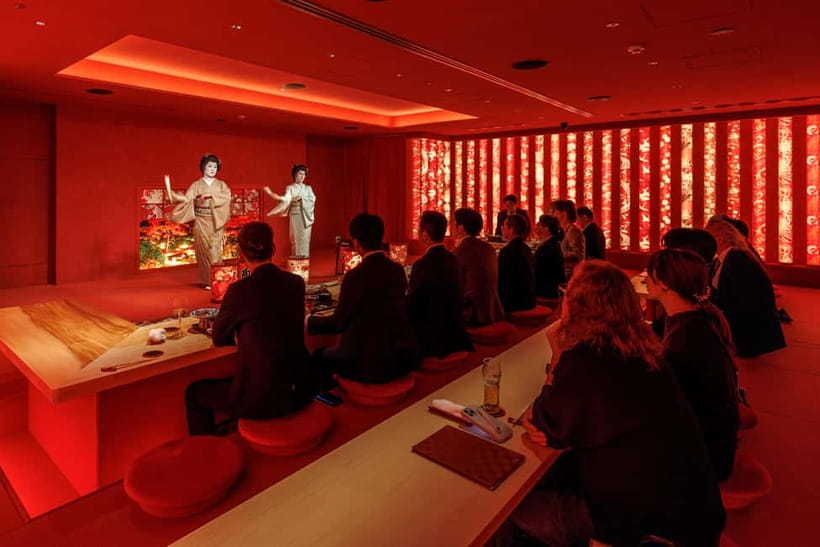
The whole experience runs about 90 minutes, so it’s long enough to feel special but not so long that you start thinking about dinner plans later. A typical flow looks like this: you arrive, get seated in the tatami room, enjoy a multi-course meal, watch the geisha performance with live music, then join ozashiki games and conversation time. The night ends with photo time.
The pacing is one reason this tour works well for first-timers. It gives you the full arc—culture, food, performance, then interaction—without turning it into a half-day event. And the English-speaking staff support you throughout, so you’re not left guessing about what’s happening next.
Kyoto-style kaiseki dinner: seasonal courses, not a generic set menu
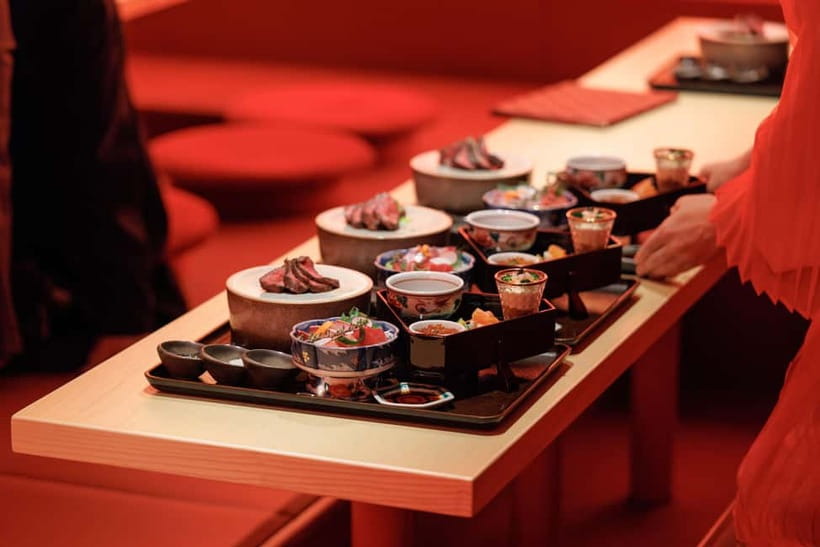
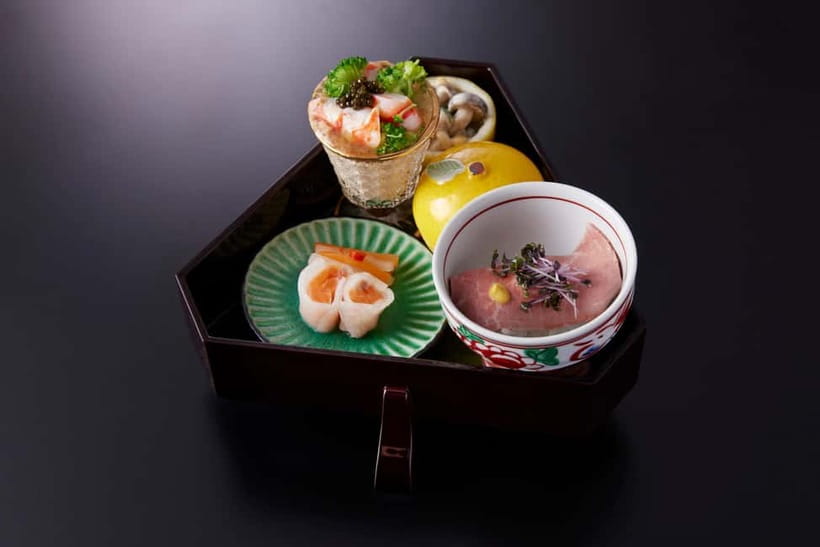
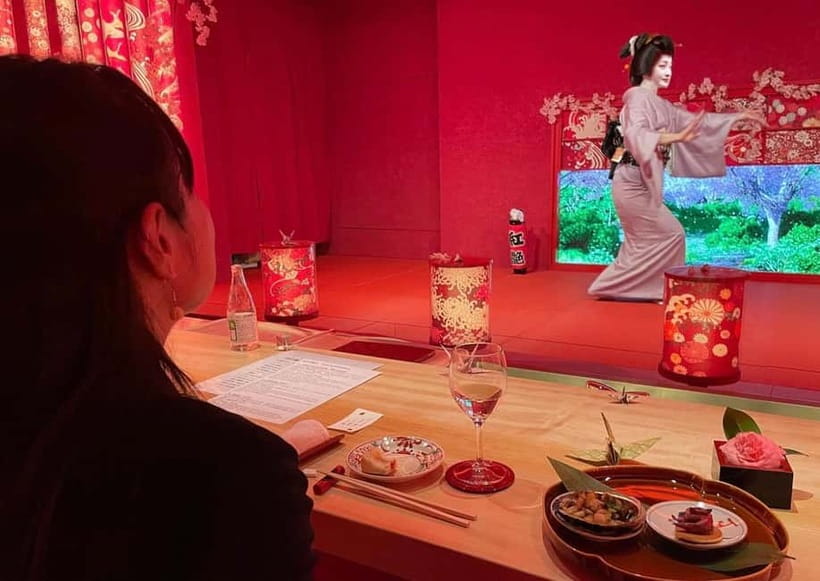
The dinner is a multi-course kaiseki meal inspired by refined Kyoto cuisine. The key detail here is that the food lineup changes depending on the season, which keeps the meal feeling fresh and intentional instead of like a standard script.
Kaiseki meals are built to be paced. Even without knowing every term on the menu, you’ll notice the rhythm: smaller, carefully presented courses that highlight different tastes and textures. That style suits this kind of cultural evening, because it naturally slows you down. You’re not rushing through food while trying to pay attention to the show.
Also, the meal is part of why the night feels “complete.” If you go only for a performance, you often end up with a quick snack before or after. Here, you sit down and eat as the evening unfolds—so you get a full sensory experience, not just a one-act show.
Drinks and dietary notes
The price includes drinks, which helps avoid surprise add-ons once you’re seated. And if you have food allergies, you need to advise during booking, since that’s the only way the team can plan for you properly.
The geisha show: live dance and shamisen in an intimate setting
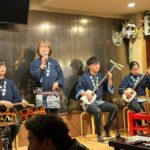
The performance is the heart of the evening. You’ll watch the geisha dance in an intimate zashiki (tatami) room setting, with live traditional music—shamisen—played live during the show.
This is one of those moments where the difference between a big stage and a smaller room becomes obvious. In a smaller space, movement feels closer, and the music doesn’t feel distant. You’re seeing the craft of dance and timing, not just the final picture.
It also helps that the experience is guided with English-speaking staff. You can focus on what’s happening rather than trying to interpret everything from scratch. And because the performance happens in the same environment where you’re eating, it feels like a single evening of culture rather than two separate activities welded together.
You can also read our reviews of more tours and experiences in Tokyo

Ozashiki games and conversation: what you can ask and how it works
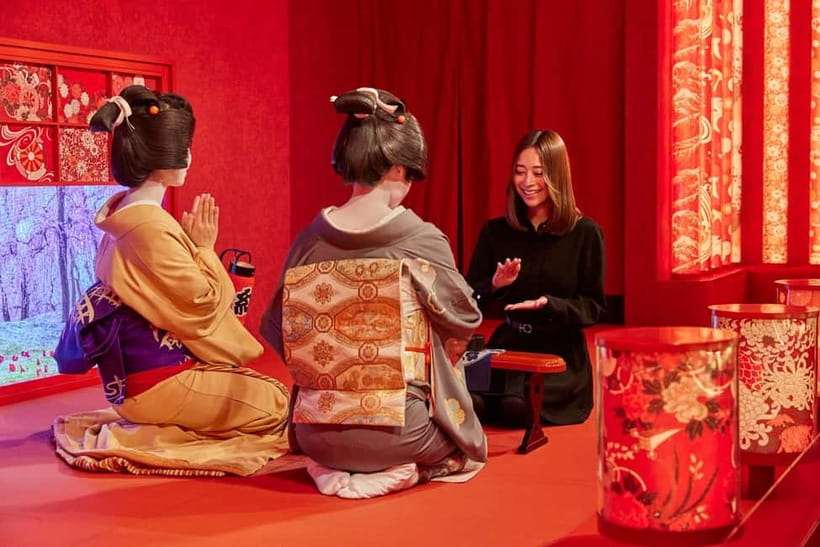
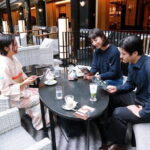
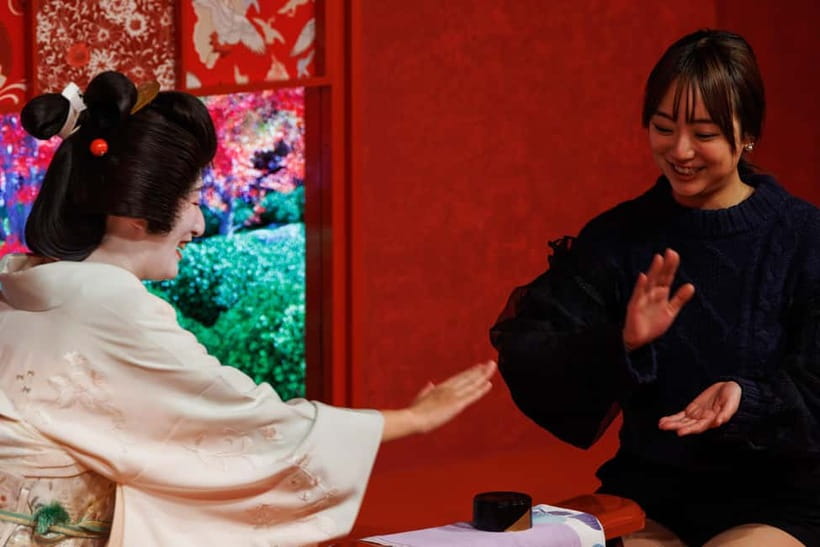
After the performance, you get a rare chance to shift from watching to participating. You’ll play ozashiki games and have time to converse with the geisha.
Here’s why this part can be genuinely meaningful: games give you an easy entry point. Instead of relying only on conversation, you’re doing something shared. That lowers the pressure and makes it easier to connect, even if you’re new to Japanese etiquette.
You’ll also have the support of English-speaking staff, which matters because it removes the guesswork around etiquette and how to ask questions. You can ask about the art, lifestyle, and culture, and you’re not left figuring out what’s appropriate on your own.
A practical expectation
This isn’t a casual hangout where you do whatever you want. Think of it as structured, respectful interaction. You’ll likely feel the formality in the room and the pace of the conversation. That’s normal here—and honestly, it’s part of why the experience is so special.
Photos in kimono: making the camera moment count (no flash)
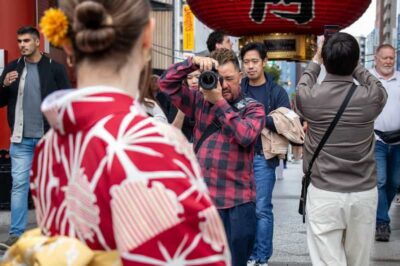
You’ll have time to take photos with the geisha in elegant kimono. This is scheduled at the end, which is helpful: you’re not trying to balance camera work during the dinner or performance.
Two important photo rules you should plan around:
- Flash photography is not allowed.
- You’ll still want to position yourself carefully, because in a smaller tatami room, angles matter.
If you’re bringing a phone, I’d suggest you keep it ready but not frantic—take a few test taps and keep your gestures calm. Flash-free lighting can make photos look softer, so use the room’s light and follow the staff’s cues.
If you want good photos without stress, come with a clear idea of what you want: one close shot, one slightly wider shot that includes more of the kimono, and one photo where the background looks clean and intentional.
Price and value: is $141 fair for this Tokyo evening?
The price is $141 per person for a 90-minute experience. On paper, that’s not cheap. But here’s why it can feel fair: the ticket covers food, the entrance fee, tip, and drinks. That means you’re not piecing together multiple purchases in the same evening.
You’re also paying for something harder to replicate on your own. A geisha performance in an intimate setting, plus an ozashiki games segment and photo time, isn’t the kind of experience most visitors can arrange casually. Add in English-speaking staff support, and you’re buying not just access, but guidance that makes the whole evening smoother.
Another value point: the experience includes a full meal that changes seasonally. If the dinner were basic or always the same, the value story would weaken. Seasonal kaiseki helps keep each visit feel purposeful.
One more thing: the experience is rated 4.2 with 59 bookings overall. Ratings aren’t everything, but they do suggest enough people felt the night lived up to expectations.
Who should book this geisha dinner experience
This is a strong fit if you want:
- A respectful, traditional Tokyo evening that doesn’t require deep cultural prep
- A real dinner plus a live performance, not just a quick show
- A chance to interact through ozashiki games and conversation with English support
- Photos in kimono that are built into the experience, not something you have to chase
It may be less ideal if you hate formality, are sensitive to quiet rules, or expect a loud, party-style atmosphere. Also, it’s not available for anyone under 20, so families with younger teens will need to look elsewhere.
If you’re doing Tokyo for the first time, this is a smart way to focus on Japanese arts without trying to turn the evening into an information scavenger hunt. If you’re more experienced, you’ll probably appreciate the pacing and the intimate room format.
Quick tips to enjoy it without stress
Before you go, take a minute to plan around the room’s rules and pace. These are the practical points that tend to make or break the experience:
- Avoid flash photography; plan for phone brightness without camera flashes.
- Keep it calm during the performance. The setting is designed for quiet attention.
- If you have allergies, mention them when booking so the team can manage the menu.
- Arrive on time for check-in so you don’t feel rushed once you’re seated.
Also, if you’re booking, check the start times available since the experience runs 90 minutes. That helps you line it up with your day schedule around Shimbashi.
Should you book this Benitsuya geisha show and kaiseki dinner?
Yes, if you want a structured, respectful cultural evening that combines food, performance, and interaction in a small setting. The biggest reason I’d recommend it is the mix: live geisha dance with shamisen, a Kyoto-inspired seasonal kaiseki dinner, ozashiki games, and then kimono photo time—all supported by English-speaking staff.
Book it especially if you’re the kind of traveler who enjoys when meals aren’t an afterthought. Here, dinner is part of the show, and the whole night is paced to keep you present.
Pass on it if you’re looking for a casual free-for-all, or if you can’t handle strict rules like no smoking and no flash. And if you’re under 20, you can’t book this one, so choose another cultural evening that fits your age group.
If you line it up with your Tokyo itinerary and come with a calm attitude, this is the kind of experience that sticks in your memory for the right reasons.
FAQ
How long is the Benitsuya Tokyo geisha experience?
The experience runs for 90 minutes.
What is included in the price?
The price includes food, the entrance fee, tip, and drinks.
Where do I meet for the tour?
Meet about 1 minute from Shimbashi station (H04/E21), west exit 7, in front of Shimbashi SL Square. Then enter the GrandHammer(グランハマー) building and go up to 6F Benitsuya(紅艶).
Is the staff English-speaking?
Yes. The experience includes English-speaking staff to guide you through the evening.
Are flash photos allowed?
No. Flash photography is not allowed.
Is it available for children or teens?
No. It is not available for those under 20.
Can I bring allergies or special dietary needs?
You should advise of any food allergies when booking.
If you want, tell me what day of the week you’re in Tokyo and whether you’re staying near Ginza, Shinjuku, or Asakusa—I can suggest a clean schedule around this 90-minute time slot.