REVIEW · TOKYO
Tokyo City Attractive One Day Tour
Book on Viator →Operated by Sato · Bookable on Viator
Tokyo can feel huge at first. This private day tour makes sense of it fast, stitching together old-meets-new landmarks in a single, guided sweep. I like that you get a personal guide plus round-trip hotel transfers to keep the day from turning into a commute marathon. One caution: entry for Skytree and Tokyo Tower costs extra, and those are two of the biggest “line and timing” variables.
You also get comfort and convenience built in. Expect an air-conditioned vehicle, and there’s a Wi-Fi hotspot on board so you can map, translate, and book any add-ons without hunting for signal.
The route is well paced for a first trip, but it still covers a lot. Plan on skipping the idea of a slow meal day—lunch and dinner aren’t included, so you’ll want a simple plan for where to eat between stops.
In This Review
- Key Highlights You’ll Actually Feel During the Day
- A 9-Hour Route That Balances Old Tokyo and Neon Tokyo
- Price and Value: What $500 per Group Really Buys
- Pickup, Hotspot, and Comfort: The Logistics That Save Your Energy
- Stop-by-Stop: What Each Place Gives You (and What to Watch For)
- Asakusa (Sensoji) and Nakamise: The Temple-Plus-Market Start
- Tokyo Skytree: View Tickets, Plus a Whole Mini-World
- Tokyo Tower: Post-War Symbol and a Classic Skyline Icon
- Tsukiji Fish Market (Outer Market): Food Town Energy Without the Fuss
- Shinjuku Gyoen National Garden: A Breather Inside a Busy City
- Meiji Jingu Shrine: Calm, Ceremony, and Meiji-Era Meaning
- Shibuya Scramble Square: The Controlled Chaos Scene
- Hachiko: The Heartbeat of Shibuya
- Harajuku Station and Takeshita Street: Youth Culture in Walkable Form
- Timing Tips That Make a Big Difference
- Who Should Book This Private Tokyo Highlights Tour
- Should You Book This Tour?
- FAQ
- What is the meeting point for this tour?
- Is pickup from your hotel included?
- How long is the tour?
- What’s included in the price?
- Are tickets for Tokyo Skytree and Tokyo Tower included?
- Can I cancel for free?
Key Highlights You’ll Actually Feel During the Day
- Private tour rhythm: one group, one guide, and room to customize the flow as the day evolves
- Hotel transfers included: start and end back at Tokyo Station Hotel, with pickup offered
- A/C transport + hotspot: comfort plus an easier time navigating and planning
- Mix of Tokyo moods: temple calm at Meiji Jingu, then neon energy at Shibuya
- Big photo stops, fast access: Sensoji, Skytree, Tokyo Tower, Tsukiji, and the Shibuya-Harajuku corridor
- Seasonal bonus potential: Shinjuku Gyoen is a top cherry blossom spot when timing lines up
A 9-Hour Route That Balances Old Tokyo and Neon Tokyo
This is the kind of one-day plan that works because it follows a logic: start with iconic historic Tokyo, move into skyline views, then finish in the youth-fashion and entertainment zones. You’re not just “checking boxes.” You’re seeing Tokyo as a set of different worlds—spiritual, culinary, and high-rise—without losing hours to transit.
A private format is key here. With a small group (up to 5), you’re not stuck behind strangers at every photo moment. Your guide can slow down where you care and speed up where you don’t. That matters a lot in Tokyo, where a 15-minute wait can turn into a 45-minute detour if you’re not efficient.
Also, this is built for time limits. The schedule runs about 9 hours, and many of the stops have free admission. That gives you more flexibility to spend money where it counts—like view tickets—rather than paying entry everywhere.
You can also read our reviews of more city tours in Tokyo

Price and Value: What $500 per Group Really Buys
The price is $500 per group (up to 5). That breaks down to:
- If you book with 5 people: about $100 per person
- If you book with 2 people: about $250 per person
Private tours can be expensive in Tokyo, so value depends on how many people are sharing the cost. If your group is two or three, it’s still not “cheap,” but it’s easier to justify because you’re getting hotel transfers, a dedicated guide, and an air-conditioned vehicle for most of the day.
What’s not included is also part of the math. Skytree and Tokyo Tower admission are separate (given as about $12 USD and $7 USD). Lunch and dinner aren’t included either. If those are the only paid add-ons you plan to cover, this tour can still feel like a bargain compared with doing each big attraction by yourself and paying for lots of taxis or train changes.
One more practical point: this tour is often booked about 38 days in advance on average. That’s a signal to lock it in early, especially if you’re visiting during peak seasons.
Pickup, Hotspot, and Comfort: The Logistics That Save Your Energy
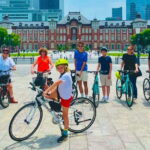
Starting at Tokyo Station Hotel is a smart choice. Tokyo Station is a major hub, so you’re not building the day around an obscure meeting point. The tour also ends back at the same meeting point, which makes the last leg of your day easier—no extra scramble to get home.
You’ll ride in a comfortable air-conditioned vehicle, which is a real quality-of-life upgrade in summer and shoulder seasons. You’re also given a mobile ticket, plus a Wi-Fi hotspot on board. That combination helps a lot when you’re moving across neighborhoods with different transit flows and lots of station exits.
And since this is a private tour, the “when do we leave?” question gets answered by your guide, not by a fixed group schedule. That’s the hidden win in a day that includes both early crowds (Tsukiji area) and entertainment zones that can feel chaotic on weekends.
Stop-by-Stop: What Each Place Gives You (and What to Watch For)
Asakusa (Sensoji) and Nakamise: The Temple-Plus-Market Start
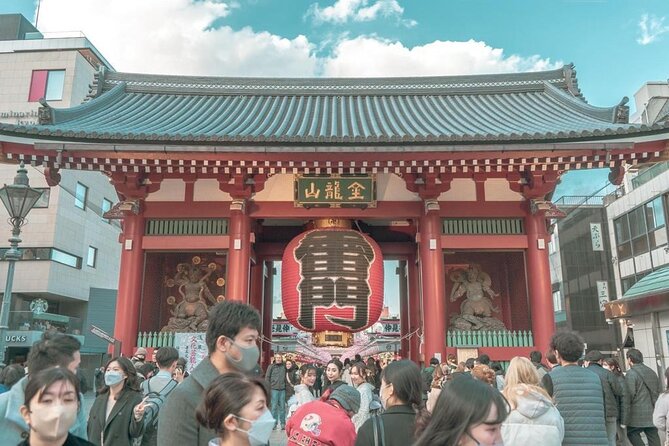
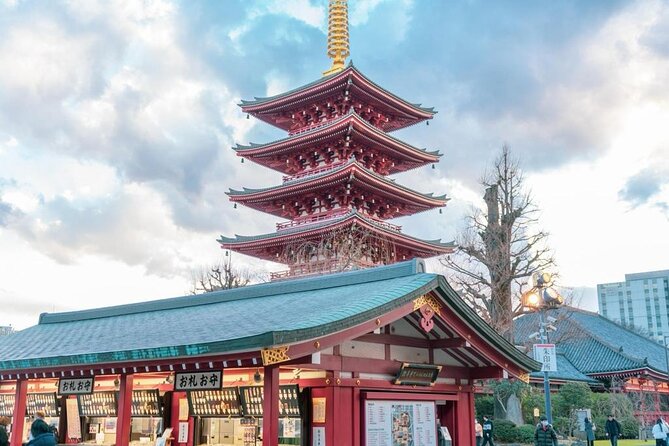
Your day begins in Asakusa, at Sensoji (Asakusa Kannon Temple). This temple is tied to a legend: in 628, two brothers fished a Kannon statue out of the Sumida River. Even after returning it, the statue reportedly came back to them. Sensoji was built nearby as a result, and it’s considered Tokyo’s oldest temple (completed in 645).
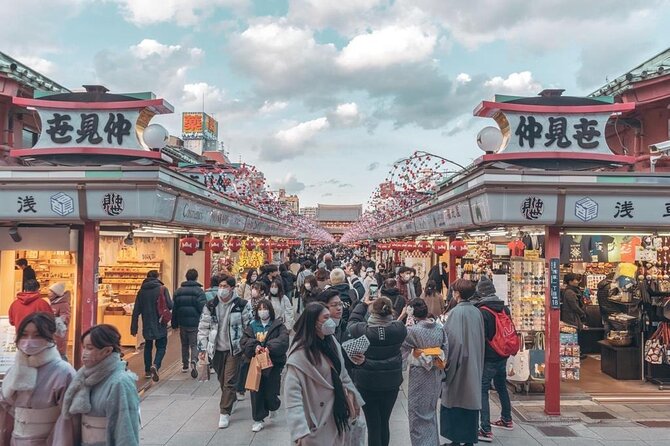
What I like about this start is that it gives you “Tokyo character” right away. The temple itself has the drama of lanterns and incense-style atmosphere, and then you walk into Nakamise, a shopping street over 200 meters long. It’s packed with small souvenirs and snack-type shopping, so it works even if you’re not trying to buy much.
Practical note: admission is free here, so you can focus time on the walk and photos rather than ticket lines.
You can also read our reviews of more tours and experiences in Tokyo

Tokyo Skytree: View Tickets, Plus a Whole Mini-World
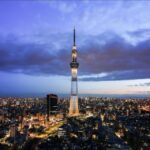
Next is Tokyo Skytree, the world’s tallest free-standing broadcast tower at 634 meters. It has two main observation decks at 350 meters and 450 meters. Admission isn’t included, and the big reality check is that Skytree can mean lines and timing pressure.
A useful tip from real experience: if you’re considering Skytree, you’ll want to plan ahead for when you go up, because it’s one of those places where “waiting” can eat your time fast. The tour gives about an hour at Skytree, so you’ll want to make that hour count.
Beyond the view, Skytree is part of Skytree Town and Solamachi. Solamachi is described as having 312 restaurants and retail shops, plus other attractions like:
- a retail complex featuring local craftsmen
- an exhibition space for robot technology
- an aquarium with penguins
- a Postal Museum
If you’re the type who likes a view and then a short wander, this stop can feel like more than just a single photo point.
Tokyo Tower: Post-War Symbol and a Classic Skyline Icon
After Skytree, you head to Tokyo Tower, at 333 meters. It’s described as the world’s tallest self-supported steel tower and 3 meters taller than its Eiffel Tower model. Tokyo Tower also carries cultural weight: it’s positioned as a symbol of Japan’s post-war rise as a major economic power. It served as Japan’s tallest structure until Skytree surpassed it in 2012, and it still functions as a broadcast antenna.
This stop is also about about an hour, with admission not included. If Skytree is the “new super-tall,” Tokyo Tower is the “classic skyline.” Together, they cover both the modern and the nostalgic view angles.
One thing to consider: since tickets are extra, decide early which tower you care about more. If you’re budget-tight, that can change your priorities without breaking the tour.
Tsukiji Fish Market (Outer Market): Food Town Energy Without the Fuss
Then you move to Tsukiji Outer Market, often treated like Japan’s Food Town. This is where you’ll see a mix of older-school wholesale roots and modern retail-style tasting.
What makes Tsukiji especially fun is the variety. There are traditional foods, street-level snacks, and lots of ready-to-eat options. It’s not described as a place built for small family shopping—items were originally geared toward professionals, so sizes often weren’t “small.” But today, many shops offer retail options that fit visitors better, including smaller ready-to-eat sushi meals and bite-sized snacks like egg rolls.
Your time here is about an hour with free admission. That’s usually enough to:
- walk the lanes
- sample one or two bites
- buy a small edible souvenir for later
If you’re deciding what to eat on the fly, bring cash or a backup payment method. The tour doesn’t include lunch, so you’ll likely turn Tsukiji into either your early snack stop or a bridge to your next meal.
Shinjuku Gyoen National Garden: A Breather Inside a Busy City
After the market energy, you get a reset at Shinjuku Gyoen National Garden, one of Tokyo’s larger parks. This is a walkable space with lawns and meandering paths that help you get away from the intensity of the surrounding city.
The best seasonal note here is spring. Shinjuku Gyoen is highlighted as one of the city’s top cherry blossom spots when timing lines up.
Admission is free, and the schedule allows about an hour. Since this is a calmer stop, it’s also a smart place to step away from shopping and just breathe. If you’re trying to keep your day from feeling like a nonstop sprint, this garden segment is doing real work.
Meiji Jingu Shrine: Calm, Ceremony, and Meiji-Era Meaning
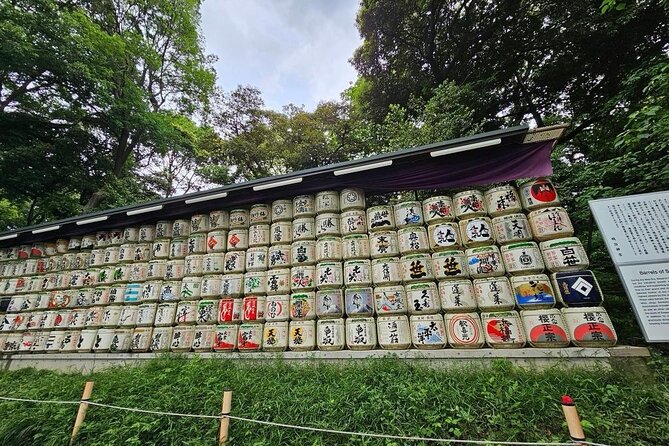
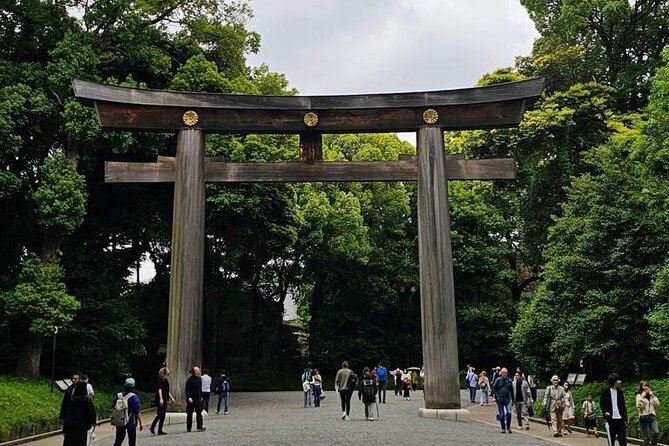
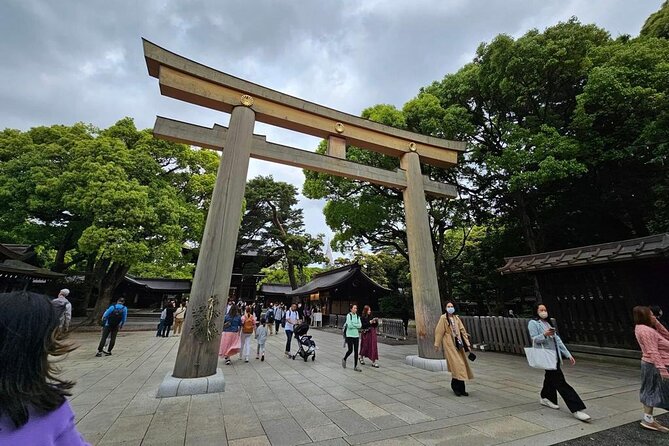
Next comes Meiji Jingu Shrine, dedicated to Emperor Meiji and Empress Shoken. It was completed in 1920, and after wartime destruction, it was rebuilt shortly afterward. The shrine is tied to the modern history of Japan’s transformation, with Emperor Meiji described as the first emperor of modern Japan, born in 1852 and ascending the throne in 1867 during the Meiji Restoration.
I like this stop because it’s not just pretty scenery. It gives context for why Tokyo’s “modern Japan” story has a spiritual and historical spine. The atmosphere tends to slow you down, which is exactly what you need after Skytree and Tsukiji.
Admission is free, and you’ll get about an hour here.
Shibuya Scramble Square: The Controlled Chaos Scene
Now you’re into the part of Tokyo that looks like it’s from a different planet. Shibuya Scramble Square is centered on the famous Shibuya Crossing—described as 10 lanes of traffic and five major crosswalks converging around neon buildings.
It’s a huge stage for events too. The crossing is referenced as a focal point for Times Square-style New Year’s countdown moments and Halloween celebrations.
Your time here is shorter (about 30 minutes), which is perfect. You get the iconic view and the experience of the crowd without wasting half your day on one photo angle.
Hachiko: The Heartbeat of Shibuya
Just a short step away is Hachiko, the statue linked to a dog who became part of national story. Hachiko is believed to have been born in Odate, Akita Prefecture, in November 1923, adopted by university professor Hidesaburo Ueno living in Shibuya, and known for waiting for Ueno at Shibuya Station every day. Ueno died in 1925, yet Hachiko kept showing up until Hachiko died in 1935.
It’s also part of global pop culture through the 2009 film Hachi: A Dog’s Tale, starring Richard Gere.
You’ll have about 30 minutes for this stop. Think of it as a human story moment—good contrast to the high-energy Shibuya crossing scene.
Harajuku Station and Takeshita Street: Youth Culture in Walkable Form
To finish, you head to Harajuku, a must if you’re curious about Japanese youth culture and fashion. The area is strongly associated with weekends and holidays, with crowds of people and school-age groups heading toward Takeshita Street.
Takeshita Street is described as lined with clothing shops, cafes, dessert shops, and unusual memorabilia. Accessory stores are especially common, and the info highlights Paris Kids as an early stop worth noting for fashionable items at reasonable prices.
Expect this to be lively, but your hour here is well placed to do quick browsing, grab a dessert, and pick up small souvenirs without feeling like you need a whole afternoon.
Timing Tips That Make a Big Difference
This day tour packs a lot into one schedule. That’s the point. But a couple of timing realities can make or break your experience:
- Skytree can mean long lines. If you care about views, treat that as a top priority and plan your time accordingly. This is especially true if you’re traveling during peak seasons when demand spikes.
- Seasonal sights can shift the best order. The tour includes Shinjuku Gyoen for spring cherry blossoms. If you’re visiting right when blossoms are peaking, you might get better results by aiming garden time at the moment you want most—rather than assuming every stop hits the exact sweet spot at the same time of day.
- Lunch is on you. Since lunch and dinner aren’t included, have a simple plan: either eat earlier near Tsukiji or use Tsukiji and Harajuku for snack-heavy meals and keep dinner flexible.
The good news: because you’re private, your guide can usually help you adjust the micro-order when conditions change.
Who Should Book This Private Tokyo Highlights Tour
This is a strong fit if you want:
- a first-time Tokyo orientation without spending hours planning your own route
- a mix of history (Sensoji, Meiji Jingu) and big “Tokyo icons” (Skytree, Tokyo Tower, Shibuya)
- comfort and efficiency via hotel pickup, A/C transport, and a dedicated guide
- a small-group day (up to 5) where the guide can shape the pace
It’s also ideal for short on time. The day runs about 9 hours and hits major areas—Asakusa, Skytree/Tower, Tsukiji, Shinjuku Gyoen, Meiji Jingu, Shibuya, and Harajuku—so you don’t have to choose just one Tokyo “side.”
If you hate crowds, don’t want to buy extra tickets, or are strict about skipping iconic places, then this might feel like too many “big-name” moments. But if your goal is to see Tokyo’s main identity pieces quickly, it’s a good match.
Should You Book This Tour?
If your group is 3 to 5 people, I’d lean yes. The price becomes much easier to justify when the tour’s real value—private guiding, hotel transfers, A/C comfort, and Wi-Fi—gets shared.
Book it early (it’s commonly reserved about 38 days in advance), and decide in advance whether you want to spend for Skytree and Tokyo Tower. If view tickets are part of your Tokyo dream list, this tour sets you up nicely: you get both towers, plus the historic and food neighborhoods that make those views feel meaningful.
If you’re the type who likes structure, wants fewer transit headaches, and enjoys Tokyo’s mix of sacred quiet and loud city energy, this one-day private loop is built for you.
FAQ
What is the meeting point for this tour?
The tour starts at Tokyo Station Hotel in Marunouchi, and it ends back at the same meeting point.
Is pickup from your hotel included?
Yes. Pickup is offered, and the tour includes handy round-trip hotel transfers.
How long is the tour?
The duration is about 9 hours.
What’s included in the price?
Included features are an air-conditioned vehicle, private transportation, and a hotspot on board.
Are tickets for Tokyo Skytree and Tokyo Tower included?
No. Skytree and Tokyo Tower entry tickets are not included, with Skytree listed at about $12 USD and Tokyo Tower about $7 USD.
Can I cancel for free?
Yes, free cancellation is available. You can cancel up to 24 hours in advance for a full refund.