REVIEW · TOKYO
Tokyo: Calligraphy Workshop & Original T-Shirt Creation
Book on GetYourGuide →Operated by Local Guide Stars · Bookable on GetYourGuide
A calligraphy class in Tokyo where your name becomes art. You’ll grind ink from an inkstick, learn stroke basics, then write kanji with real guidance in Shinjuku with English support.
Two things I especially like: the hands-on inkmaking, and the focused way you practice kanji so it starts looking like something you’d frame. One possible drawback: if you want the custom shirt, plan for extra cost since the shirt itself isn’t included.
What makes this feel unusually practical is the pace and teaching setup: a professional instructor (often called Sousen-sensei) works with an English host like Mayuko-san, so you’re not stuck guessing what to do. Small groups also mean you get feedback without the class turning into a production line.
Still, kanji is legitimately hard at first, so your first draft may look a bit chaotic. The good news is the experience is designed to keep it calm and fun while you learn.
In This Review
- Key Things You’ll Notice in This Workshop
- Getting Started in Shinjuku Without Overthinking It
- Why Making Ink From an Inkstick Feels Like a Reset
- Brush Basics and Real Stroke Order (Yes, It’s Hard)
- Turning Your Name Into Kanji You Can Explain
- Writing on Paper or an Original T-Shirt
- English Hosting and a Calm Room in a Short 2 Hours
- Price and Value: Why $30 Can Be a Fair Deal
- Who This Workshop Fits Best (And Who Might Skip)
- Practical Tips So Your Piece Looks Better
- FAQ
- Where does the workshop meet in Tokyo?
- Is the workshop language English?
- How long is the workshop?
- How big is the group?
- What’s included in the price?
- Is the original T-shirt included?
- Is there a ticket line to deal with?
- Can I cancel if my plans change?
- Do they offer reserve now and pay later?
- Should You Book This Calligraphy Workshop in Shinjuku?
Key Things You’ll Notice in This Workshop
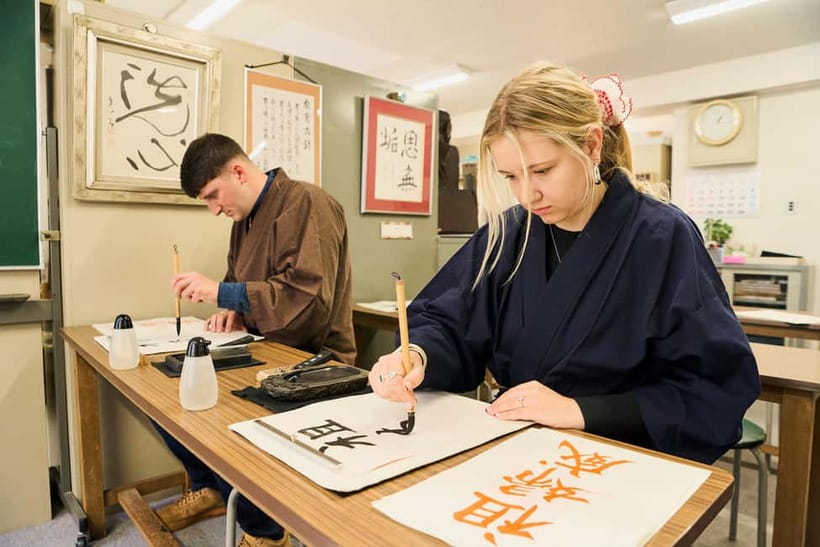
- Inkstick grinding that slows your brain down and builds real ink, not just bottled paint.
- Kanji made from your own name, with help on character choice and placement.
- Professional calligraphy instruction from a trained sensei with hands-on corrections.
- English guidance in the room, often handled by hosts like Hiromi and Mayuko-san.
- Optional original T-shirt creation, with extra planning if you want that version.
- Small group size (up to 10), so you can actually get feedback.
Getting Started in Shinjuku Without Overthinking It
The workshop starts in Shinjuku, meeting at a FamilyMart right by Okubo Station south exit (FamilyMart Okubo Station South Exit Store, 1-23-21 Hyakunincho). There’s a guide holding a sign that says Local Guide Stars, so you’re not wandering around asking strangers what’s going on.
This part matters more than people think. Calligraphy is a slow skill, and you’ll get more out of it if you arrive ready to settle in. Shinjuku can be loud and hectic, so being in the right spot on time helps you get into the right mindset fast.
Once you’re grouped, you’ll switch into traditional Japanese workwear for the class. That isn’t a gimmick. It signals you’re doing something serious and traditional, and it also makes the whole process feel more authentic once you start handling brushes and ink.
You can also read our reviews of more tours and experiences in Tokyo


Why Making Ink From an Inkstick Feels Like a Reset
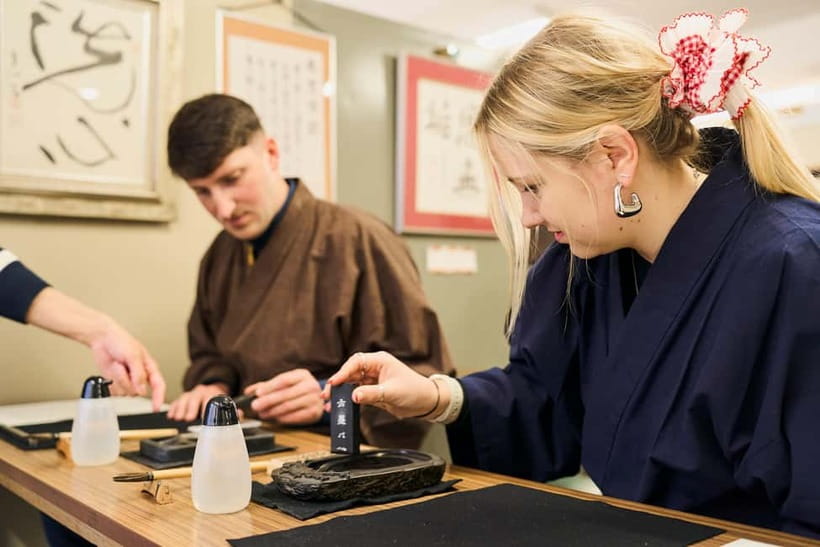
A big centerpiece here is grinding a solid inkstick into ink. It’s traditional, hands-on, and oddly grounding. You’re not just watching someone else do the work. You’ll feel the texture, control the grind, and then turn that into your writing surface’s ink.
That moment often turns into a mini pause in a trip packed with trains, lines, and decision fatigue. Several people highlight how calm the process feels, and it makes sense: inkmaking forces you to slow down. Your hands do the work; your mind follows.
You’ll also get taught basic brush setup and technique before you write your final piece. The point isn’t to make you an expert calligrapher in two hours. It’s to give you a working method you can repeat, so your kanji looks purposeful instead of random.
Brush Basics and Real Stroke Order (Yes, It’s Hard)
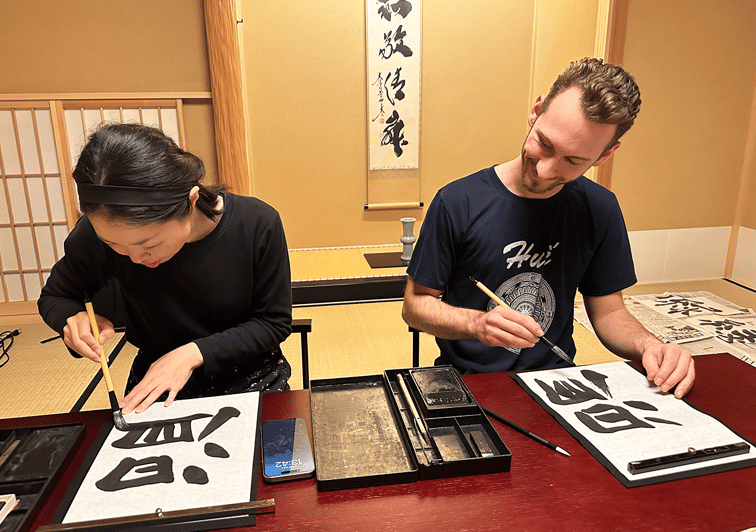
Calligraphy has rules. The class makes sure you understand them in a way that’s doable in a short workshop.
Expect to practice basic brush techniques first—how to hold the brush, how much pressure to use, and how to move smoothly through a stroke. After that, you’ll learn the order of writing and how to position characters so they sit correctly next to each other. That’s one of the practical differences between this kind of workshop and a quick demo: you’re not only drawing symbols, you’re learning structure.
From the feedback, instructors are patient and detailed. Hosts like Hiromi are described as supportive and helpful, and the teacher’s corrections seem to focus on stroke quality—how to shape lines so the end result reads as kanji, not blobs.
Here’s the consideration: if you rush, your strokes will spread or look uneven. If you stay calm and follow the guidance, your work starts improving fast. Think slow and deliberate, not artistic speed.
Turning Your Name Into Kanji You Can Explain
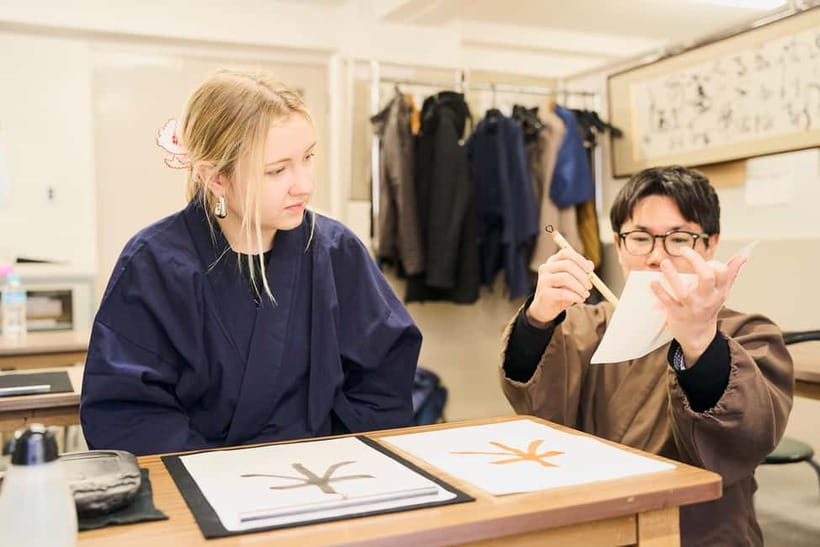
One of the most fun parts is transforming your name into kanji. You’ll choose or work with characters tied to your name, and you’ll practice writing your name using those kanji.
This is where the cultural learning clicks for many people. There’s more here than spelling. People say they learned about how Japanese characters evolved over time and about the meaning behind selecting kanji for a name. Even if you already know basic hiragana/katakana, kanji feels different—more weighted, more rule-based, and more connected to meaning.
You’ll also get guidance so you write the characters with correct form and placement. In calligraphy, spacing and alignment matter. The class gives you the steps to make your characters look like they belong together rather than stacked like separate stickers.
If you’re curious about language, this is a great way to connect what you’ve been reading in Tokyo to something physical you make yourself.
Writing on Paper or an Original T-Shirt
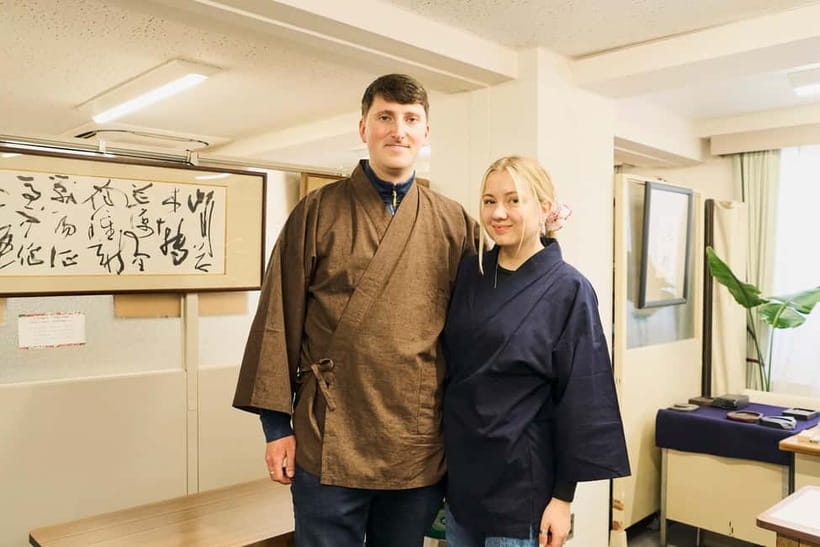
The workshop includes taking home your own artwork. But the optional part is the original T-shirt creation.
Here’s how to think about it:
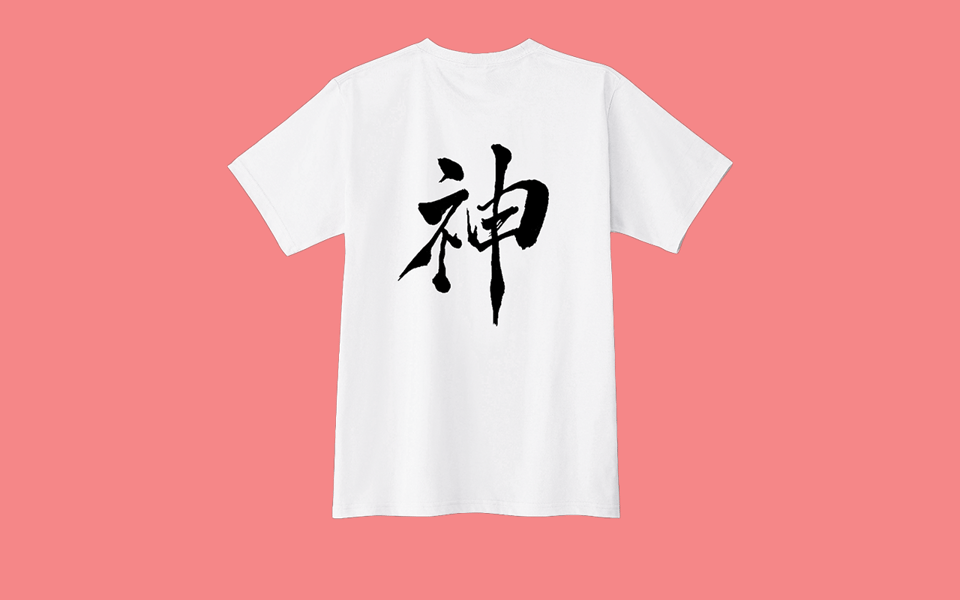
- You can create a piece where your kanji is written directly onto a T-shirt, and you can design your original layout.
- The T-shirt itself isn’t included, so you’ll want to plan for any additional cost if you want that wearable souvenir.
That optional choice is worth considering based on what kind of souvenir you want. A T-shirt is fun and personal, but it’s also more time-sensitive and requires you to adapt your brushwork to fabric. If you’d rather keep things simpler, some participants mention the instructor can provide an alternative on paper when the T-shirt isn’t the goal.
Either way, you’re leaving with something you made with your name in kanji. And that kind of souvenir is always more meaningful than buying a printed postcard with your photos copied onto it.


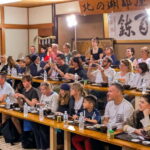


English Hosting and a Calm Room in a Short 2 Hours
The class is guided in English, which is key for calligraphy. You need clear direction to fix small problems with stroke order and brush pressure. The setup includes an expert host who translates the teacher’s instructions and helps keep the room moving at the right speed.
You’ll hear plenty of encouragement and practical feedback. People specifically mention hosts like Mayuko-san and Hiromi as helpful and kind, and the sensei as patient with beginners. Several comments also describe the session as therapeutic—exactly the kind of calm activity that balances Tokyo’s nonstop rhythm.
The small group size (limited to 10 participants) helps a lot. You’re not one of twenty people the teacher glances at. It’s easier for the instructor to notice when someone’s brush angle or stroke timing needs correction.
And because the total duration is about two hours, the workshop is structured enough that you won’t spend the whole time only learning tools. You’ll grind ink, practice, and produce a finished take-home piece.
Price and Value: Why $30 Can Be a Fair Deal
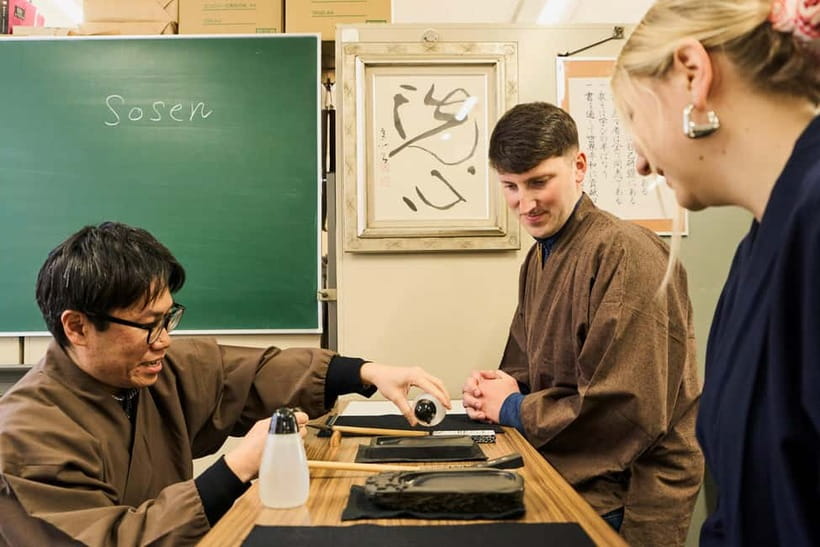
At about $30 per person for a two-hour workshop, this is priced like an experience-focused class rather than a craft you buy supplies for yourself. Here’s what you get for that cost:
- An English guide
- Calligraphy supplies to use during the class
- Your finished artwork to take home
The value is strongest if you care about doing something real with instruction, not just watching. Learning stroke order and how to shape kanji takes time, and beginners usually benefit from direct correction. Also, inkstick grinding and professional tools aren’t the kind of things you can easily recreate on your own after a long day of sightseeing.
The one value wobble to watch is the optional T-shirt. Since the shirt isn’t included, you should treat that as an add-on souvenir choice. If you’re budget-tight, you can still get the core experience—ink, brush practice, and your kanji artwork—without going all-in on a wearable item.
If you’re a first-timer and you want a structured, supportive class with real cultural context, the price feels fair.
Who This Workshop Fits Best (And Who Might Skip)
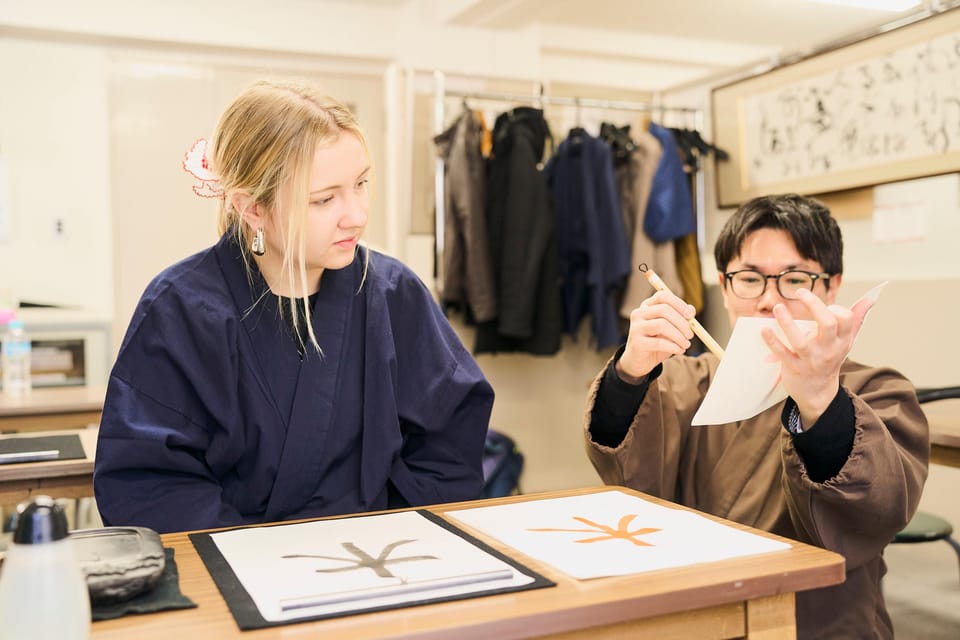
This workshop fits well if you’re:
- Curious about Japanese language and want a hands-on way to connect to kanji meaning and form
- Interested in Japanese culture beyond food and temples
- Traveling with kids, since the class is designed to be enjoyable even for children
- Looking for a calmer activity in Tokyo that doesn’t require major athletic effort
It might be less ideal if you:
- Need guaranteed perfect calligraphy results. You’re learning, so early strokes can be messy even with good instruction.
- Hate slow, careful activities. Calligraphy asks you to take your time.
- Want a very quick souvenir. Two hours is short enough that you’re creating one main piece, not a full multi-page art project.
Practical Tips So Your Piece Looks Better
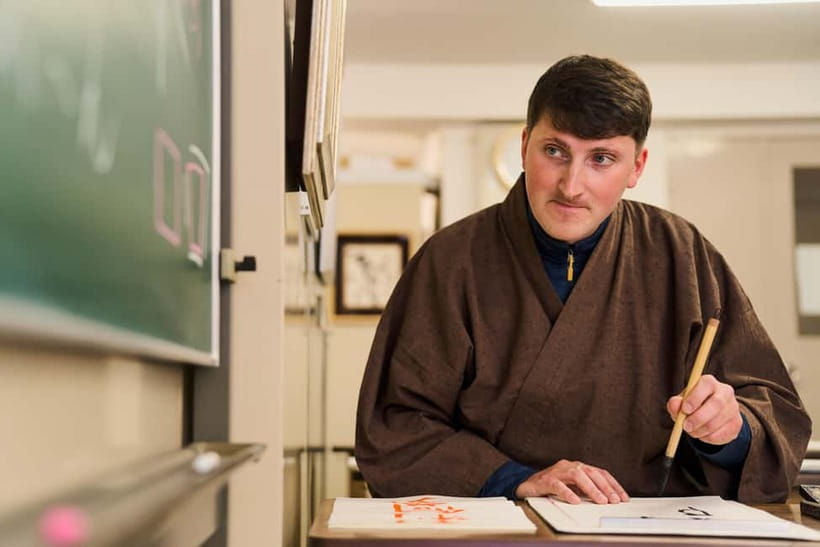
A few small choices can make your experience smoother:
- Bring your full attention for the inkmaking step. The ink quality affects how your strokes lay down.
- Go with a calm pace. Calligraphy rewards steadiness more than speed.
- Be ready to choose kanji thoughtfully. If you’re unsure about character meaning, ask the host for help during the process.
- If you want the T-shirt, think about your expectations. Fabric work can look different than paper, and your final design should match your comfort level.
The biggest tip: treat it like a mindful craft, not a test. You’ll learn more and enjoy it more.
FAQ
Where does the workshop meet in Tokyo?
You’ll meet at FamilyMart Okubo Station South Exit Store, 1-23-21 Hyakunincho, Shinjuku-ku, Tokyo, Japan.
Is the workshop language English?
Yes. The guide and instruction are in English.
How long is the workshop?
The experience lasts about 2 hours.
How big is the group?
It’s a small group limited to up to 10 participants.
What’s included in the price?
The class includes an English guide, calligraphy supplies to use during the workshop, and you take home your own artwork.
Is the original T-shirt included?
No. Original T-shirts are not included, though writing/designing on a T-shirt is part of the optional experience.
Is there a ticket line to deal with?
The activity includes skipping the ticket line.
Can I cancel if my plans change?
Free cancellation is available up to 24 hours in advance for a full refund.
Do they offer reserve now and pay later?
Yes. You can reserve now and pay later.
Should You Book This Calligraphy Workshop in Shinjuku?
If you want a hands-on, calm Tokyo experience tied to language and culture, I’d book it. You get real instruction, inkmaking you can feel in your hands, and a take-home piece with your own kanji. The English hosting makes it beginner-friendly, and the small group setup helps you learn instead of just participate.
If you’re especially interested in a wearable souvenir, budget for the optional T-shirt. If you’re budget-conscious, you can still focus on the core skills: ink, brush techniques, and making kanji artwork you’ll actually remember.
One last thing: go in ready to slow down. This isn’t a quick photo stop. It’s two hours where your name turns into something thoughtful.


![Tokyo Shinjuku Food Tour for Family [1 Group Only] - IKEA Shinjuku Meet-Up: How the Night Starts](https://b.tokyosights.com/wp-content/uploads/tokyo-shinjuku-food-tour-for-family-1-group-only-400x300.jpg)