REVIEW · TOKYO
Tokyo: Shibuya Highlights Walking Tour & Secret View Spot
Book on GetYourGuide →Operated by Local Guide Stars · Bookable on GetYourGuide
Shibuya can feel like sensory overload. This 90-minute walking tour gives it shape fast, from Hachiko to the Scramble Crossing to a Tokyo view that cuts through the chaos. I love the way the guide connects street scenes to Japanese trend culture, and I also love that you get practical photo-and-walk guidance instead of just standing on a corner.
The main consideration is simple: it’s a walking tour, and Shibuya is busy even when the sidewalks feel packed. The tour runs rain or shine, so you’ll want a good umbrella and shoes that handle crowds.
In This Review
- Key moments worth your time
- Finding Your Guide Near JR Shibuya (SHIBU HACHI BOX)
- From Hachiko to the Scramble Crossing: A Masterclass in Tokyo Traffic
- Scramble Square and the Secret-Feeling View Above Shibuya
- Nonbei Yokocho: Local Alley Energy Without the Full Meal Commitment
- Miyashita Park: When Shibuya Turns Into a Breather
- Center-Gai and Mark City: Neon Streets With a Local’s Point of View
- Why 90 Minutes Feels Like the Right Slice of Shibuya
- Price and Value: Is $23 a Good Deal?
- Rain, Timing, and What to Do After the Walk
- Should You Book This Shibuya Walking Tour?
- FAQ
- How long is the Shibuya highlights tour?
- Where do I meet the guide?
- What’s included in the price?
- Is food or transportation included?
- What languages are the guides?
- Does the tour run in the rain?
Key moments worth your time
- Hachiko as your story anchor: you start with context, not just landmarks
- The Scramble Crossing, at real pedestrian pace: you’ll see it without getting stuck in the middle
- A view from above tied to the scramble: a short stop that helps you understand the layout
- Nonbei Yokocho alley culture: small-eats energy in a tight lane
- Miyashita Park as a youth hangout: an actual break from pure retail streets
- Center-Gai and Mark City for neon Tokyo vibes: fashion, signage, and street bustle with direction
Finding Your Guide Near JR Shibuya (SHIBU HACHI BOX)
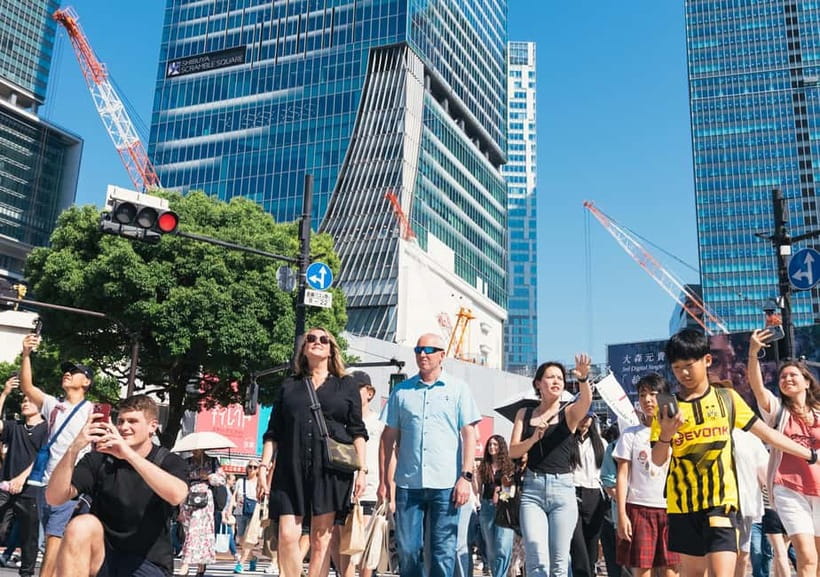
Your tour starts in front of SHIBU HACHI BOX, close to JR Shibuya Station at the Hachiko Gate and Tokyo Metro Exit A8. If you know Shibuya, you’ll recognize the area right away. If you don’t, plan to arrive a few minutes early because this is one of those stations where everyone is rushing in the same direction.
Look for a guide holding a Local Guide Stars sign. That sounds obvious, but in a place this crowded, it’s worth being explicit with yourself: check the sign the moment you spot it, then orient to where you need to be standing. One practical tip from other guests: it can help to take a second photo of your own location with your phone so you don’t have to play guessing games when you’re tired.
Also note the tour is live and in English or Japanese. That matters here, because the value is in the explanations—how places earned their reputation, and what to notice when the lights and ads are doing their best to steal your attention.
You can also read our reviews of more walking tours in Tokyo


From Hachiko to the Scramble Crossing: A Masterclass in Tokyo Traffic
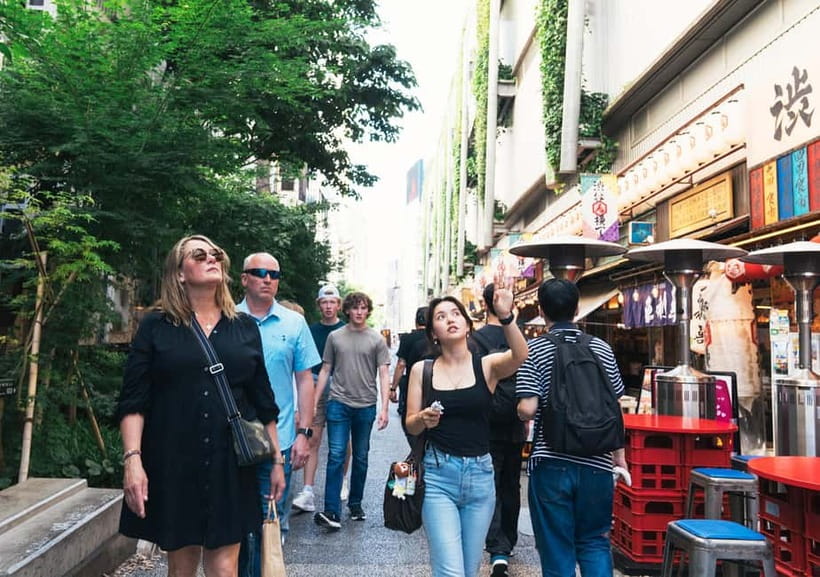
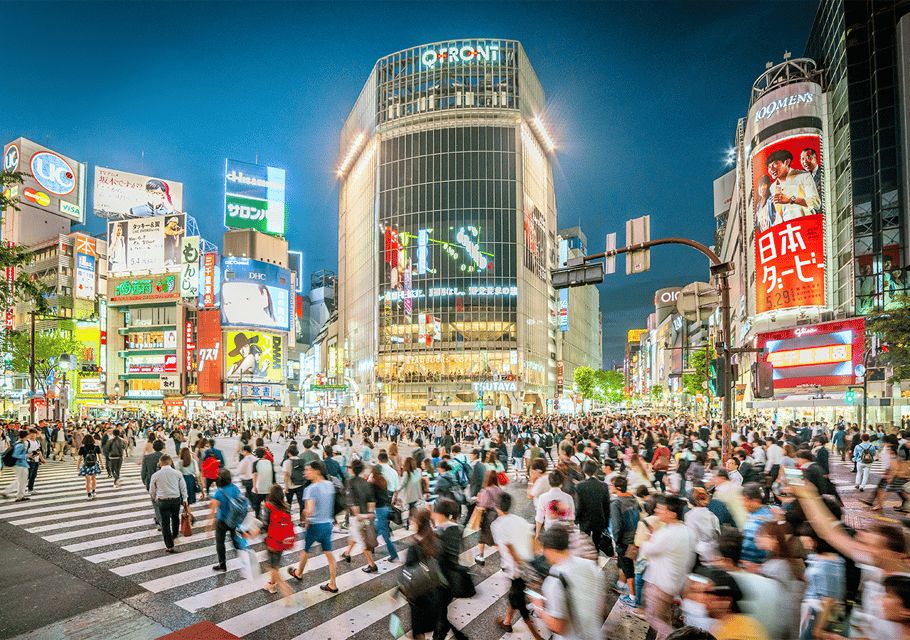
You’ll move from the Hachiko starting point into the heart of Shibuya’s most famous intersection. The Scramble Crossing visit is short, around 10 minutes, but it’s planned so you see how the crossing works and what it feels like from a pedestrian view.
This is the world’s busiest crossing in the most literal sense. It’s not a scenic overlook where you just admire from a distance. It’s an exercise in timing: when the signals change, you watch streams of people flow like they’re following choreography. A good guide helps you understand what you’re looking at so you don’t just think, Wow, that’s loud.
In past groups, guides like Sakura, Hannah, Mao, and Ayaka were highlighted for answering questions on the spot and keeping the pace friendly. You’ll often hear practical etiquette and street-level details along the way—exactly the kind of stuff that makes your first day in Tokyo smoother.
One drawback to expect: the crossing area can be loud and full of moving bodies. If you’re uncomfortable with crowds, the benefit is still there, but it helps to stay aware of where your group is stepping and when the guide signals you to move.
Scramble Square and the Secret-Feeling View Above Shibuya
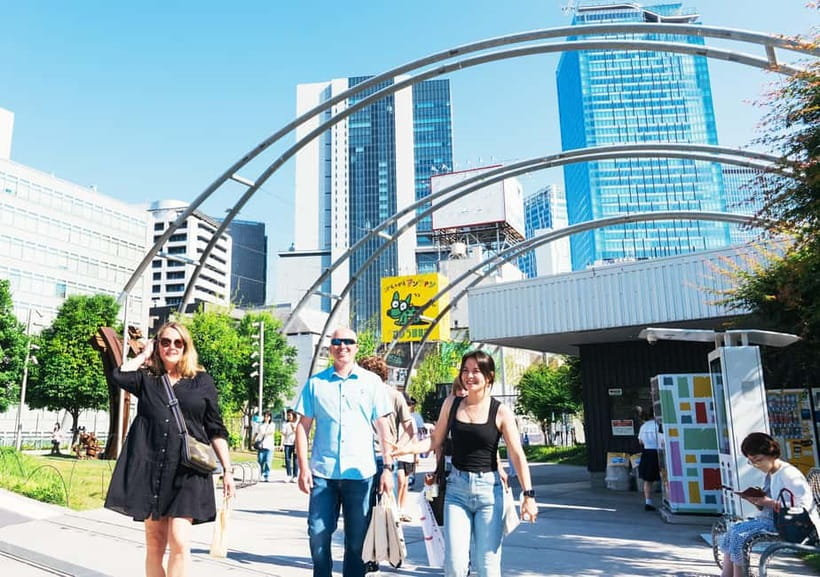
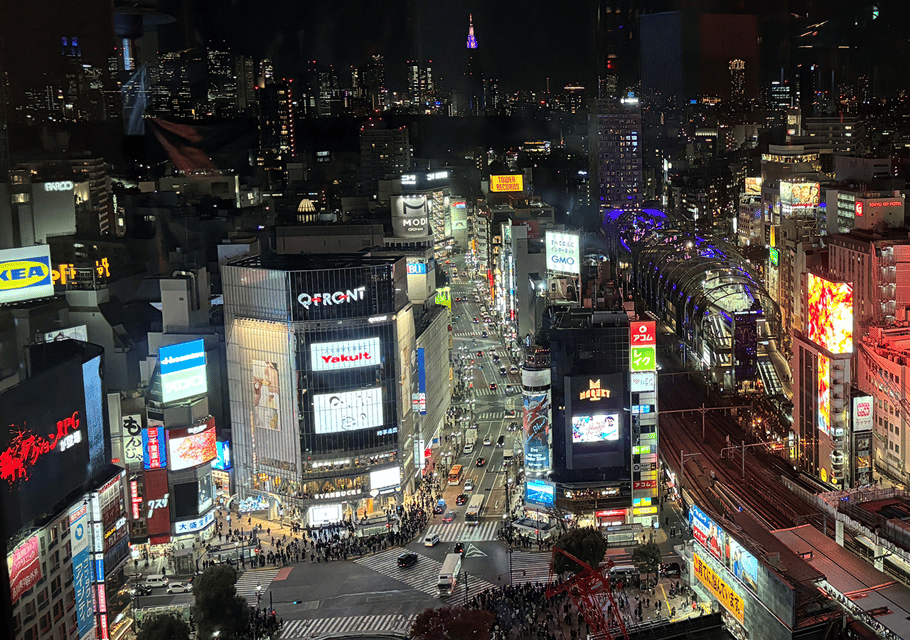
After the main crossing, you’ll head to Shibuya Scramble Square for another 10 minutes. This is where the tour earns its title of a secret view spot. It’s not just a “look at the city” moment; it’s a quick reset that helps you understand Shibuya’s geometry.
From above, the crossing makes more sense. You start seeing which streets feed the intersection, how different districts connect, and why Shibuya feels like a junction for the whole city. It also helps with photos because you’re not only shooting a sea of people—you’re capturing the pattern.
One theme from the experience: the guide will aim you toward a view position instead of leaving you to hunt. A past guest even noted getting a crossing-from-above perspective without waiting in lines, which is a big deal in Tokyo where “waiting” often means “losing the day.”
If you care about photos, this is the moment to be ready. Bring your camera strap or phone fully charged. And if you’re traveling with a group, tell your guide you’d like a couple of shots so they can plan the stop.
Nonbei Yokocho: Local Alley Energy Without the Full Meal Commitment
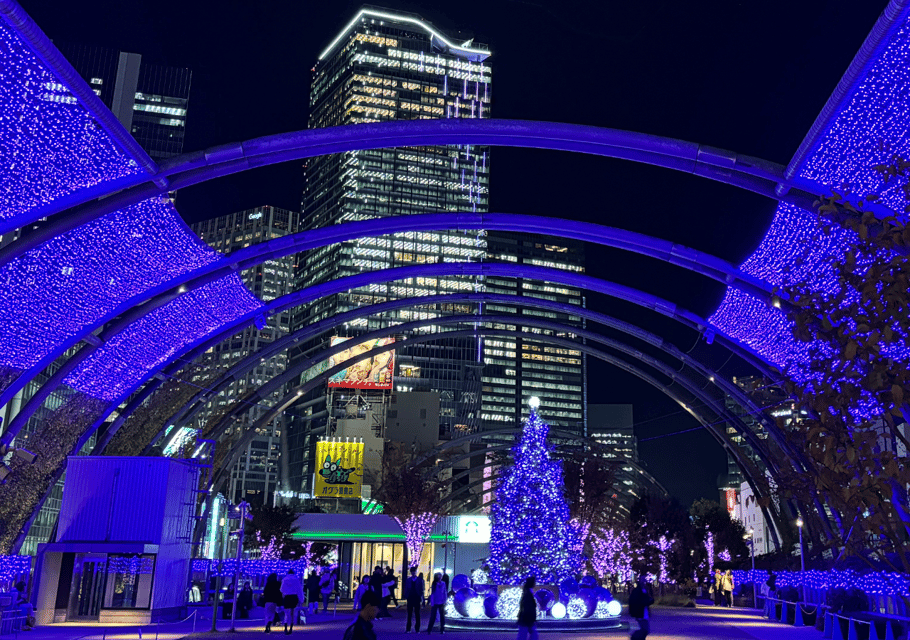
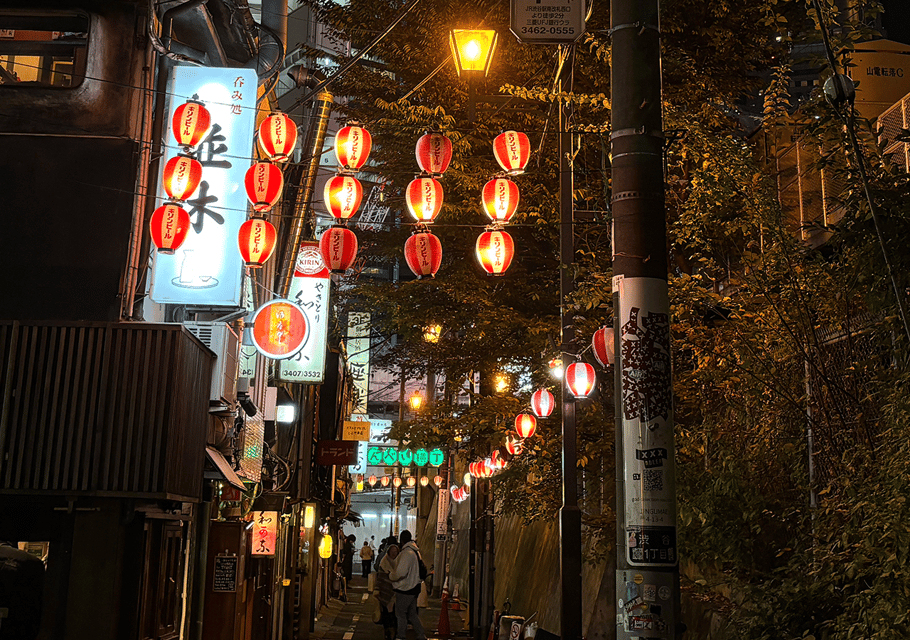
Next up is のんべい横丁 (Nonbei Yokocho), another 10 minutes. This is the kind of alley where Shibuya shows its playful side: compact lanes, small eateries, and that late-night vibe Tokyo is famous for. It’s not a museum stop, and it isn’t meant to be slow.
The value here is cultural. Big-name Shibuya landmarks are easy to find. Nonbei Yokocho is what helps you feel Shibuya like a neighborhood. You’ll see how the area supports small dining spots that keep students, office workers, and young adults cycling through the evening.
Food and drinks are not included, so you won’t get a set meal from the tour. But many guides use stops like this to point you toward what to try after the walk. In other groups, guides such as Mao and Sota were praised for giving restaurant recommendations and even helping with what to order.
Consider this stop a tasting-mentality stop. You’re not committing to a restaurant. You’re learning the texture of Shibuya’s food streets so your night makes sense.
Miyashita Park: When Shibuya Turns Into a Breather
You’ll spend about 20 minutes at Miyashita Park, which is one of Shibuya’s best “stop and reset” zones. The tour frames it as an urban oasis popular with younger people, and that’s exactly how it lands in real life: open space, casual energy, and a place where you can watch how the district breathes.
This matters because the rest of the walk is packed with visual intensity—neon, crowds, signage, and shopping energy. Miyashita Park is the one spot where your brain can go quiet for a moment, even if people are still moving around.
In past outings, guides like Mao and Ayaka were noted for good pacing, which makes a difference here. If you arrive feeling drained, a guided break like this helps you enjoy the rest instead of speeding through it like a checklist.
Rain can change the feel. The tour runs rain or shine, so you might have fewer “linger” moments than in dry weather. In any case, use the park time to look, not just walk—watch the people, read the atmosphere, and let the district slow your pulse down.




Center-Gai and Mark City: Neon Streets With a Local’s Point of View
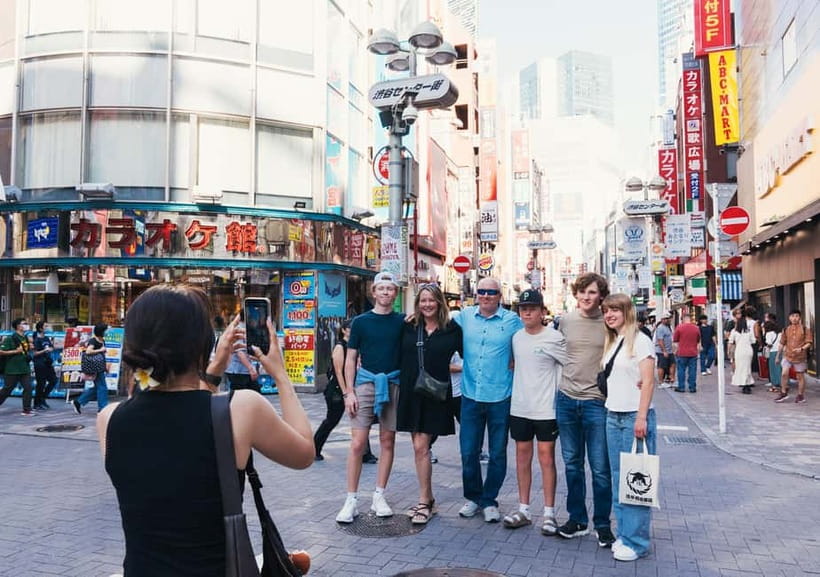
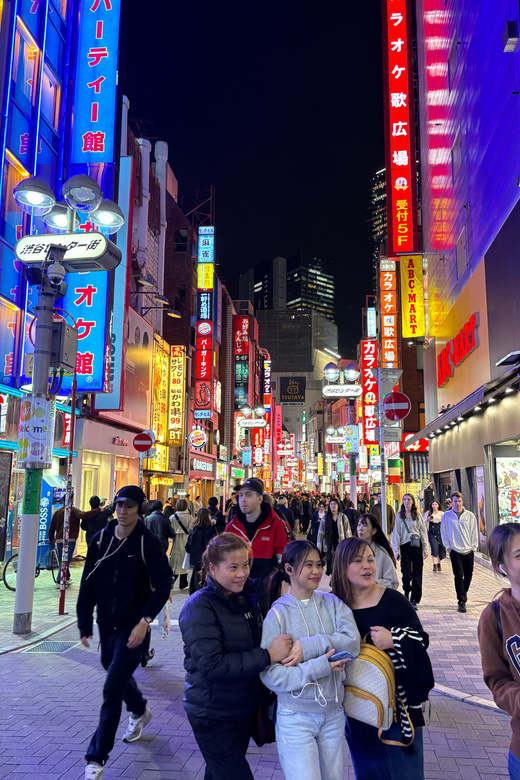
Two final blocks anchor the “cut-through-the-noise” part of the tour: Shibuya Center-Gai (about 20 minutes) and Shibuya Mark City (about 20 minutes). This is where you’ll see the retail and entertainment side of Shibuya that attracts people from all over the world, but in a way that feels organized rather than overwhelming.
Center-Gai is essentially a Shibuya corridor of bright shops, loud signage, and quick fashion trends. You’ll notice that it’s not just big screens. It’s also the rhythms: where people pause, where they flow, and how the street shapes what you look at.
Mark City brings you into more indoor-adjacent vibes. A few past guests mentioned the tour moving between warmer and cooler spots to manage weather, which fits how Shibuya is structured—outdoor streets plus commercial interiors.
If you’re traveling for the first time, this pair of stops is a win. It gives you the “what to look for” basics: how Shibuya’s identity shows up in shopping streets, food ads, and entertainment signage. And if you ask your guide, you’ll often get recommendations that go beyond the obvious.
Guides like Hannah and Tomo were praised for showing lesser-known corners, and Noa was specifically called out for taking people to spots they couldn’t easily find alone. Translation: you won’t just walk the famous routes—you’ll be pointed toward what’s worth noticing while you’re already there.
Why 90 Minutes Feels Like the Right Slice of Shibuya
Ninety minutes is a smart length for Shibuya. It’s long enough to see multiple sides of the district—crossing, view angle, park pause, food alley, and neon streets. It’s short enough that you don’t end up exhausted before you’ve even had dinner.
The pacing is a recurring theme in the way the tour is described by guests. Many noted that stops felt timed well for learning and moving, and a few mentioned the guide making adjustments to preferences. That’s important because Shibuya isn’t one vibe. It’s several moods stacked together.
Also, you’re not paying extra for transport inside the tour. You’re paying for a local guide and the walking route that ties it together. For many visitors, this is the best way to “get your bearings fast.” You’ll leave knowing the major landmarks, but more importantly, you’ll understand how they connect.
One more practical point: you’re on your own for food and drinks. Don’t plan this as a “tour meal” experience. Think of it as a high-value orientation walk that sets you up to choose your next stop with confidence.
Price and Value: Is $23 a Good Deal?
At about $23 per person for a 90-minute guided walk, you’re paying for three things: expert local explanations, a route that avoids aimless wandering, and guided time at Shibuya’s core sites. You’re not paying for attractions that require separate ticketing, and that keeps the cost reasonable compared to doing the same “cover everything” approach with taxis or multiple paid entry stops.
The biggest value is the guide’s storytelling and direction. When guides like Yuki were noted for friendly, entertaining pacing, or Ayaka for photo help and recommendations, that’s the core reason the tour feels worth it. You’re not only seeing Shibuya. You’re learning how to navigate it and what to prioritize next.
If you’re the type who hates group tours that feel rushed, you’ll likely appreciate the guided flow and frequent opportunity to ask questions. If you expect a quiet, minimalist stroll, Shibuya itself won’t match that mood. This is for people who enjoy energy and street life.
Rain, Timing, and What to Do After the Walk
The tour runs rain or shine, so pack for the weather. A light umbrella or raincoat is the obvious move. Less obvious: Shibuya gets slick around busy crossings, and you’ll be walking through crowds, so stable shoes matter more than usual.
When you finish back at SHIBU HACHI BOX, you’ll be in a prime position to continue your day. A good rule: use the tour to decide your next meal and your next photo mission. Several guides are specifically praised for pointing out ramen, snacks, and where to shop in a way that matches your interests.
If you’ve got limited time in Tokyo, do this early in your trip. One guest’s suggestion stuck with me: taking a tour as soon as you arrive helps you make better use of the rest of your days, because Shibuya becomes a place you understand instead of a place you’re just passing through.
And if you want a repeat view of the Scramble Crossing, you’ll know where to go and what angle to look for.
Should You Book This Shibuya Walking Tour?
Book it if you want the fastest route to understanding Shibuya as more than just a postcard. You’ll get major landmarks like the Scramble Crossing and Hachiko context, plus the “different side” parts like Miyashita Park and Nonbei Yokocho.
Pass or consider another option if you need a low-crowd experience. This is Shibuya, so the area will be active. Also, if you’re hoping for a food tour where you eat during the walk, you’ll be disappointed—food and drinks aren’t included.
If you do book, show up on time, bring rain gear, and treat the guide like a local cheat code. Chances are you’ll leave with practical tips, better photo spots, and an easier time finding your way through one of Tokyo’s most intense neighborhoods.
FAQ
How long is the Shibuya highlights tour?
The tour lasts 90 minutes.
Where do I meet the guide?
Meet in front of SHIBU HACHI BOX (シブハチボックス), near JR Shibuya Station Hachiko Gate and Tokyo Metro Exit A8. A guide will be waiting with a Local Guide Stars sign.
What’s included in the price?
The tour includes a walking tour and a local guide.
Is food or transportation included?
No. Food and drinks and transportation are not included, and there’s no hotel pickup or drop-off.
What languages are the guides?
The live guide is available in English and Japanese.
Does the tour run in the rain?
Yes, it runs rain or shine. The experience notes that you should bring an umbrella or raincoat if it rains.