REVIEW · TOKYO
Tokyo Asakusa : Handmade Japanese Paper Workshop
Book on GetYourGuide →Operated by watashino · Bookable on GetYourGuide
Tokyo’s paper workshop is small and surprisingly hands-on. You’ll learn the story of Tosa Washi and then make your own sheet at a relaxed pace, right in Asakusa. The best part is seeing how something that starts as watery pulp turns into real, textured paper you can hold.
I love the mix of history + doing. You get a short video that explains what makes Tosa Washi special, then you immediately work with water, patterns, and dye under a friendly instructor’s guidance. I also like that the process is social in a good way, with laughter in the room instead of stiff museum vibes.
One thing to think about: if you pick the Colored Paper Plan, you’ll be dealing with extra cost for colored Rakusuishi pieces, and that detail isn’t everyone’s favorite surprise.
In This Review
- Key things to know before you go
- Why Asakusa Washi Paper Making Feels Worth Your Time
- Meeting upstairs in Asakusa: how the session actually starts
- The samue moment: why dressing up helps learning
- The short video you watch before making paper
- Creating your washi base: water, patterns, dye, and patience
- Colored Paper Plan and Rakusuishi: where choices affect cost
- Colored Paper Plan: base paper + Rakusuishi layering
- Plain Paper Plan: only the base sheet
- What you take home (and why it makes a great souvenir)
- Instructor support and the small-group advantage
- How to pick the right plan for your trip style
- Practical tips so you don’t fight the materials
- Price and value: $38, and what changes it
- Who this workshop is best for
- Should you book the Asakusa washi workshop?
- FAQ
- How long is the washi paper workshop?
- Where is the workshop located in Asakusa?
- What’s included in the price?
- Is Rakusuishi included?
- What should I wear for the workshop?
- Is there an elevator or restrooms in the shop?
- What languages are available with the instructor?
- Is the workshop suitable for young children or pregnancy?
Key things to know before you go
- Tosa Washi story first: A short video frames what you’re making and why it lasts.
- You wear samue: Traditional work clothes make the whole thing feel authentic.
- Work with water (plan accordingly): Remove watches/accessories and roll up sleeves.
- Small group size: Limited to 8 participants, so you’re not left floundering.
- Colored upgrade is a decision point: Rakusuishi is only included in the Colored Paper Plan, and extra pieces can cost more.
Why Asakusa Washi Paper Making Feels Worth Your Time
Asakusa is famous for temples and street snacks, but this workshop gives you a different kind of Tokyo memory: a crafted object with a story attached. You’re not just watching paper magic happen—you’re making it, and the steps make more sense once you’ve felt the material.
The setting helps, too. The shop is on the second floor at 1-32-11 Asakusa (near Kaminarimon and Sensoji Temple). You’ll climb stairs, you’ll store valuables in the shop’s lockers, and then you’ll jump into the craft. It’s a compact, focused activity that fits cleanly into a day of sightseeing.
At $38 per person for about one hour, the value comes from what’s included: samue (traditional work clothes), an instructor, and the materials. You’re paying for hands-on guidance plus the supplies you’ll use right in front of you.
You can also read our reviews of more tours and experiences in Tokyo

Meeting upstairs in Asakusa: how the session actually starts
Your first job is practical: show up and head upstairs. The shop is on the 2nd floor and there’s no elevator, so wear shoes that can handle stairs without stress. If you’re carrying a day bag, use the lockers—this is especially helpful because you’ll be working around water.
Then it’s the “reset for craft time” moment. You’ll be asked to remove watches and accessories, since you’ll handle water during the process. You’ll also want sleeves that can be easily rolled up, which matters more than people expect. If your clothes don’t cooperate, your day gets messier than the paper.
One timing note: if you arrive more than 10 minutes late, you may not be able to join. This is a short workshop, so you’ll want to build in a little buffer while you’re walking through busy Asakusa streets.
The samue moment: why dressing up helps learning
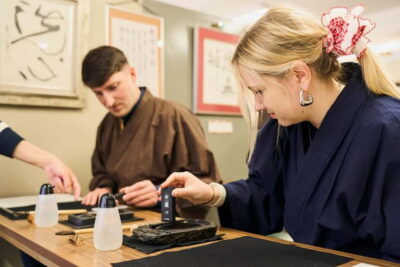
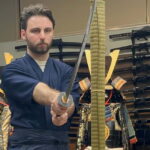
After you check in, you’ll put on samue, traditional Japanese work clothes. It sounds like a simple detail, but it changes the tone of the activity. Suddenly you’re not a tourist holding a phone—you’re a participant, ready to work.
And it makes the craft feel more grounded. Washi paper isn’t made by pressing a button or watching a machine. It’s careful handling: patterns, water, and dye all work because you’re moving and working with your hands. When you’re dressed for it, you feel less self-conscious and more ready to actually try.
The short video you watch before making paper
Before hands-on work begins, you’ll watch a short video about the history of Tosa Washi and how it’s made. The key idea is that Tosa Washi is one of Japan’s three major traditional papers, with roots over 1,000 years old.
That matters because it changes how you see your final sheet. Instead of thinking, I made paper, you start thinking, this is a craft designed for durability and a certain warmth in the material. You’ll still focus on your own piece, but the context helps you appreciate why the steps are the way they are.
Creating your washi base: water, patterns, dye, and patience
Now comes the part you’ll remember: you’ll make your own washi paper with instructor help. The workshop includes a hands-on process where craftsmen pour water onto paper, create patterns, and then dye it.
Don’t expect complicated machinery. This is mostly tactile craft work, and that’s why it can be fun even if your hands aren’t naturally “artsy.” You’re not required to be perfect. The goal is to learn the method and make something that feels distinctly yours.
In practice, you’ll work at a comfortable pace in a small group. Because the class is limited to 8 participants, you’re more likely to get real feedback when something doesn’t look right. That smaller size is one of the reasons the experience tends to feel welcoming.
Also, expect laughter. Multiple people were drawn to the beauty of their finished paper, but the vibe isn’t silent art class. It’s active learning—hands wet, sleeves rolled, and everyone trying their best.
Colored Paper Plan and Rakusuishi: where choices affect cost
This is the big fork in the road: the workshop offers a Colored Paper Plan and a Plain Paper Plan.
Colored Paper Plan: base paper + Rakusuishi layering
With the Colored Paper Plan, you’ll make a postcard-sized sheet and then layer it with Rakusuishi, a colored paper design. The process described is that Rakusuishi pieces are made through water patterning and dyeing, then offered in a range of styles.
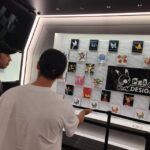
You’ll get to pick your favorite Rakusuishi among dozens of options that have already been prepared. Then you layer your chosen piece on top of the washi you made. That layering step is where your final look starts to feel like a real design object, not just handmade paper.
Plain Paper Plan: only the base sheet
With the Plain Paper Plan, Rakusuishi is not included. In plain terms: you’ll be making white/blank washi paper, and if you want color, you’ll need to add Rakusuishi separately.
One review specifically called out that the colored component wasn’t included and required an extra purchase per colored paper piece. The lesson for you is simple: check exactly what plan you’re booking and what’s included in your price before you get to the fun part of picking colors.
What you take home (and why it makes a great souvenir)
By the end, you take home your own washi paper. For the Colored Paper Plan, you’re making a postcard-sized piece, and the Rakusuishi layering gives it extra visual impact.
This is one of those souvenirs that actually earns a place on your desk or wall. You’re not bringing home a magnet-shaped memory. You’re bringing home something made through steps that require time, water handling, and dye—so it feels earned.
And because it’s paper, it’s easy to pack. You’re not worrying about bulky crafts, and you’re not carrying anything fragile in the same way you would with ceramics (though you still want to treat paper gently). It’s a clean way to bring a piece of Tokyo craftsmanship back with you.
Instructor support and the small-group advantage
One of the most praised parts of the experience is how the instructor guides the process. People highlighted the way their instructor explained steps clearly and stayed patient while they were making their paper.
In one review, the instructor was named Fuji San, and the feedback emphasized step-by-step help. Even without focusing on names, the consistent theme is support: you’re not left guessing how the craft should look.
That small-group setting (max 8) helps a lot here. In larger workshops, you might get a quick glance and then work alone. Here, you’re more likely to get help when you need it—especially when water, patterns, and dye are involved.
How to pick the right plan for your trip style
If you want the simplest, most straightforward souvenir with the least decision-making, the Plain Paper Plan may suit you. You’ll still learn the craft, learn about Tosa Washi, and end up with a handmade sheet.
If you want your final piece to look more finished and visually striking, go for the Colored Paper Plan. The Rakusuishi layering turns the project into a design you chose on purpose, and you’ll be able to pick from dozens of color patterns.
If your budget is tight, consider this carefully: there can be added costs when color components aren’t included. That doesn’t make the workshop bad—it just means you’ll get the best value when you match the plan to your goals.
Practical tips so you don’t fight the materials
A few small things make a big difference:
- Wear clothing with sleeves you can roll up easily.
- Leave jewelry and watches behind (you’ll work with water).
- Arrive on time—this is a short one-hour experience.
- Plan a quick restroom stop before you go. The shop notes there are no restrooms on site, so use a nearby public restroom.
Also remember: it requires stairs to reach the second floor and there’s no elevator. If stairs are an issue for you, this can turn from “easy” into “annoying” quickly.
Finally, you can speak English, Japanese, or Spanish with the instructor. That’s comforting if your Japanese is rusty, and it helps you focus on the craft rather than translation.
Price and value: $38, and what changes it
Let’s talk value without sugarcoating it. The base price is $38 per person for a one-hour session, and it includes samue, a friendly instructor, and materials to create your paper.
The value is strongest when you feel like the inclusions match what you want as a final souvenir. If you choose the plan that gives you the look you’re after (especially if you want colored Rakusuishi), you’ll feel like your money went directly into your finished piece.
If you choose a plan that leaves out the color component you really want, you may face added charges per colored piece. That’s exactly the sort of “why is this extra?” moment you can avoid by confirming what your selected plan includes before you start.
Who this workshop is best for
This works well if you:
- Want a hands-on craft instead of another photo stop
- Like learning a little cultural context while you make something yourself
- Enjoy small-group activities with real instructor help
- Want a memorable, take-home souvenir from Asakusa
It may not be the best match if you’re looking for something fast and passive. This is a working workshop—your sleeves will get wet, and you’ll use water during the process.
Should you book the Asakusa washi workshop?
I’d book it if you want a creative, practical memory from Tokyo’s old-street area. The combination of Tosa Washi history, samue dressing, and true hands-on paper making makes this more than a craft demo.
I’d also book it if small-group attention matters to you. With a cap of 8 participants, it’s easier to ask questions and get help.
The only reason to hesitate is the color decision. If you care about Rakusuishi and color effects, pick the Colored Paper Plan thoughtfully and double-check what’s included so you don’t get surprised by extra costs later.
FAQ
How long is the washi paper workshop?
It lasts 1 hour.
Where is the workshop located in Asakusa?
The shop is at 1-32-11 Asakusa, Taito-ku, Tokyo 111-0032, and it’s on the second floor. It’s close to Kaminarimon and Sensoji Temple.
What’s included in the price?
Included are samue (traditional work clothes), a friendly instructor, and the materials to create your washi paper.
Is Rakusuishi included?
Rakusuishi is included in the Colored Paper Plan. It is not included in the Plain Paper Plan.
What should I wear for the workshop?
Wear clothing with sleeves that can be easily rolled up. You’ll also work with water, so it helps to wear something comfortable for that.
Is there an elevator or restrooms in the shop?
The shop requires stairs to reach the second floor and has no elevator. There are no restrooms, so you’ll need to use a nearby public restroom.
What languages are available with the instructor?
The instructor is available in English, Japanese, and Spanish.
Is the workshop suitable for young children or pregnancy?
It’s not suitable for children under 4, pregnant women, or people with heart problems.
If you want, tell me whether you’re leaning Plain or Colored, and I’ll help you pick the option that fits your souvenir goals and budget.