REVIEW · TOKYO
Tokyo Samurai Experience: Kyudo (Archery) and Swordsmanship
Book on GetYourGuide →Operated by BUB Activity Center · Bookable on GetYourGuide
Hakama armor, minus the battlefield stress. This Tokyo Samurai Experience in Asakusa puts you into a hakama-set and teaches kyudo (Japanese archery) plus katana sword basics in a hands-on, no-experience-needed way.
I especially like the fast, game-style intro that gets you thinking and moving like a warrior before you shoot. The staff are also big on encouragement and clear English (I saw this shine through especially with instructor Joe and Coach Mori), but the one-hour format means you’ll focus on fundamentals, not hours of training.
If you’re picky about details, you’ll still be happy: you get the outfit, the traditional tools, Japanese snacks, and plenty of help with photos, all in a single smooth session. Just plan to arrive ready to walk in comfortable clothes and shoes.
In This Review
- Key Points at a Glance
- Arriving for Your Asakusa Samurai Moment
- Putting On the Hakama-Set (and Getting the Fit Right)
- The Samurai Rank Mini-Game: Fun First, Then Skills
- Kyudo Archery: Why It Feels Different From Western Archery
- Swordsmanship With a Single-Edged Katana
- Photos, Snacks, and the English-Support Advantage
- Price and Value: Is $96 Worth It?
- Timing and Practical Tips for a Smooth Hour
- Who This Samurai Experience Is Best For
- Quick Booking Checklist Before You Go
- Should You Book This Kyudo and Katana Session in Asakusa?
- FAQ
- Where is the meeting point for the Tokyo Samurai Experience?
- How long does the experience last?
- How much does it cost?
- Is prior experience required for kyudo or katana training?
- What language is instruction offered in?
- What’s included in the experience?
- Do I need to bring anything?
- Is the experience family-friendly?
- Is the activity wheelchair accessible?
- Are there any restrictions on what I can bring?
- FAQ
- Is free cancellation available?
- Can I reserve now and pay later?
Key Points at a Glance
- Hakama-set fitting with lots of sizes so more people can actually look right in the outfit
- Kyudo with a traditional bow that feels different from Western target archery
- Katana pose and grip coaching so you leave with a confident, photogenic stance
- A samurai rank mini-game that adds structure and fun before the training starts
- Staff help with pictures and videos so you don’t have to fuss with your phone
- English instruction and bilingual support designed to match your level
Arriving for Your Asakusa Samurai Moment
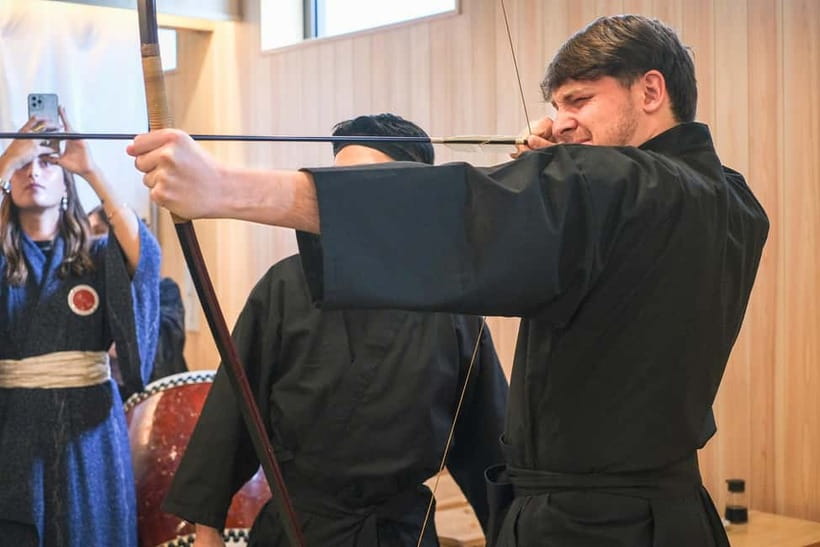
You meet in Tokyo’s Taito-ku, in Asakusa, at the Heiwa Building (2 Chome 6-11). The key detail is that you take the elevator up to the 5th floor—easy once you know, annoying if you don’t.
This is the kind of activity where being punctual matters. Aim to arrive about 10 minutes early so you can settle in, get assigned your hakama-set, and start without that rushed feeling.
Also bring comfortable shoes and clothes. You’ll be moving, posing, and handling training equipment, and the whole point is to enjoy it rather than stiffen up halfway through.
You can also read our reviews of more tours and experiences in Tokyo.



Putting On the Hakama-Set (and Getting the Fit Right)
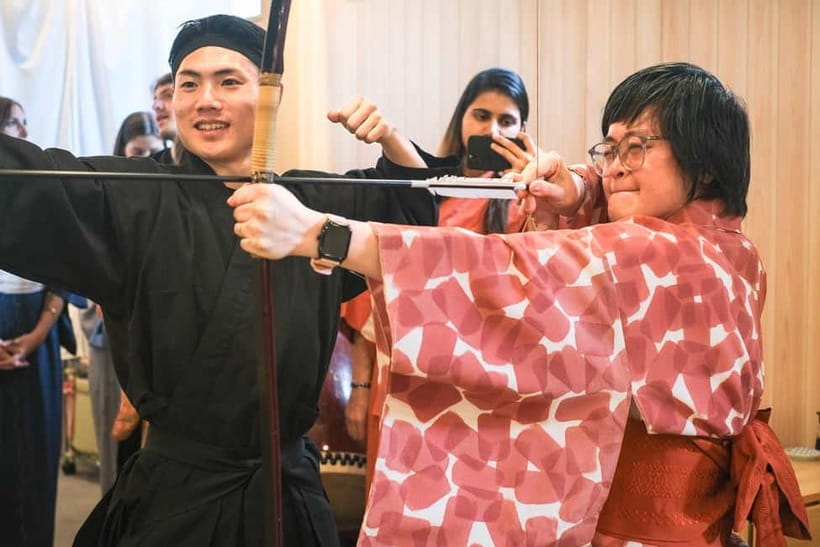
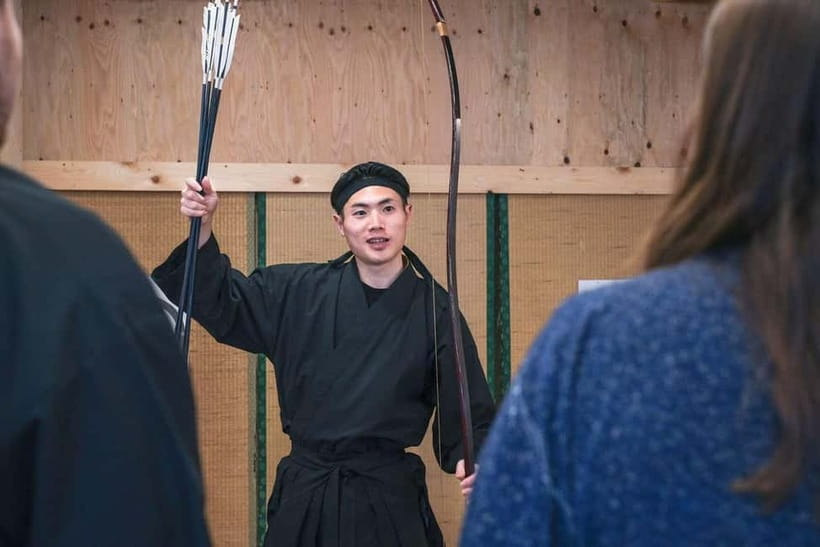
The experience starts with a costume switch: you step into traditional samurai clothing, the hakama-set. A big practical win here is that there are different heights and sizes available, which is not always guaranteed on short, photo-heavy activities.
Why this matters: the outfit isn’t just for show. When your clothing fits, your stance feels natural, and the staff can correct your posture without fighting the wrong size. That makes the archery and sword parts easier to learn fast.
You’ll also get a moment to look the part. The session is designed so you end up photo-ready, not just dressed and waiting for the instructor.
The Samurai Rank Mini-Game: Fun First, Then Skills
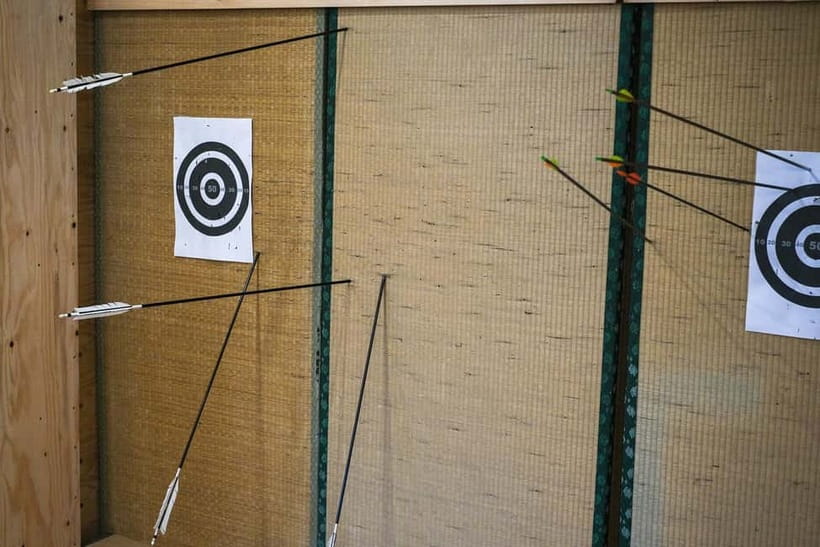
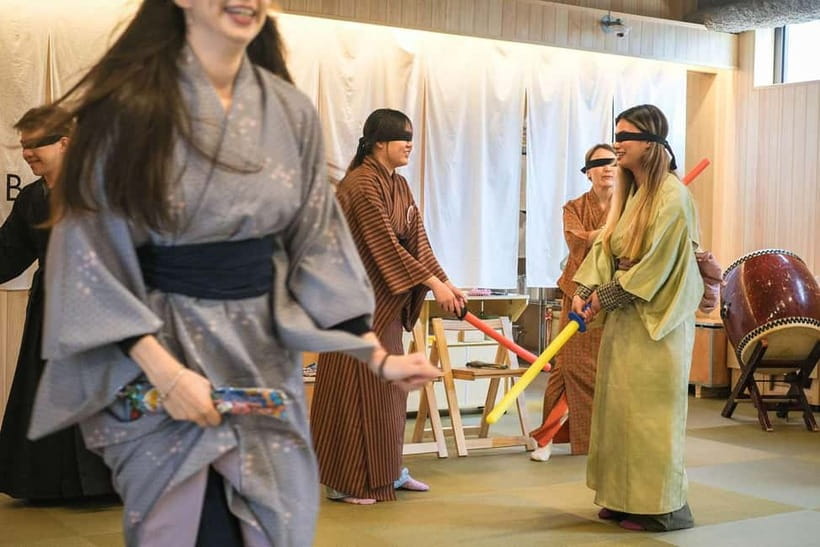
After the outfit, you get a short intro into samurai traditions and philosophy. Then comes a mini-game that determines your samurai rank. The tone is light, competitive, and very beginner-friendly.
Here’s what I like about this approach: it turns a history talk into something you do, not something you listen to. You’re thinking about rank, roles, and discipline while you’re already in character.
And if you lose, that’s not the end of the story. The activity is structured so the real training begins right after, so you’re not punished for being new. It’s more like a warm-up and a mood-setter.
Kyudo Archery: Why It Feels Different From Western Archery
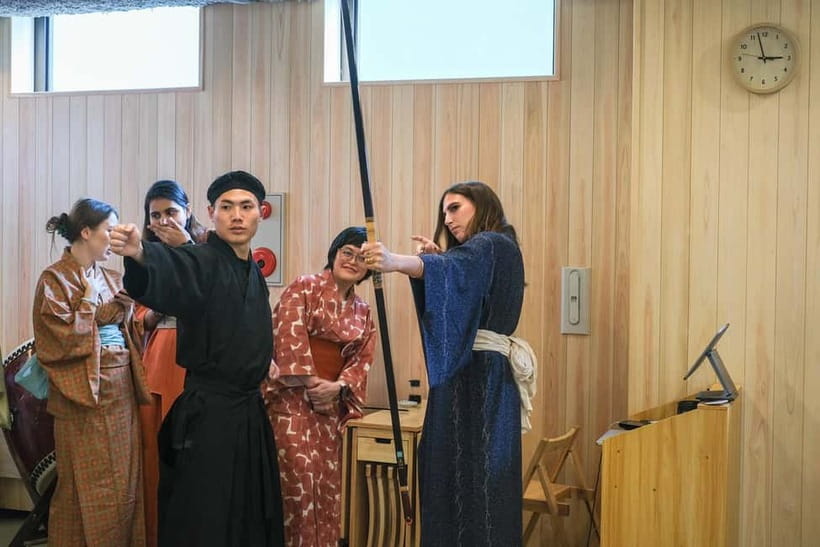
Now for the main event: kyudo. You compete with friends in a friendly format where you aim for the general/shogun position. You’ll use a traditional Japanese bow, not a modern sports setup.
Kyudo is often described as distinct from Western archery, and you’ll likely feel that difference in how the movement and focus work. Even if you don’t know the terminology, you can pick up the idea quickly: posture and controlled execution matter as much as the shot itself.
Practical takeaway for you: don’t treat this like a casual toss. Pay attention to the staff’s cues on stance and the timing of your form. Your first attempts might feel awkward, but that’s normal—watch what they emphasize and copy the rhythm.
And yes, you’ll enjoy the moment where you’re competing. It gives the practice energy, and it makes the learning stick better than a silent drill.
Swordsmanship With a Single-Edged Katana
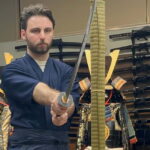
Next up is sword training with a single-edged katana. The focus isn’t on anything dangerous or “movie combat.” Instead, you learn the correct way of holding the sword and key elements of a strong pose.
The staff help you build that posture, and they also coach the presentation side: where your body should face, how your grip should feel, and how to look confident without forcing it. This is exactly the kind of instruction that helps beginners feel capable.
If you want a quick confidence boost, focus on one thing: the pose. Many people get nervous about the mechanics at first, but the activity is set up so you can improve fast through repetition and corrections.
Also, since the staff take lots of pictures and help you set up shots, you can test different angles without losing your place in the training.




Photos, Snacks, and the English-Support Advantage
One of the most underrated parts of this experience is how supported you are. Bilingual staff keep explanations simple in English, adjusting to your level. That matters because archery and sword stance are hard to learn from gestures alone.
You’ll also get Japanese snacks during the session. It’s a small detail, but it keeps the energy up, especially if you’re doing this as part of a day exploring Asakusa.
And then there’s the photo side. The staff assist with pictures and video, so you don’t have to multitask between aiming and playing photographer. If you care about having more than just a blurry souvenir, this is a real plus.
From the vibe shared by the instructors, it also seems like patience is part of the method. Coach Mori and instructor Joe are mentioned as especially friendly and calm, which is exactly what you want when you’re learning something new with your body.
Price and Value: Is $96 Worth It?
At $96 per person for a 1-hour session, you’re paying for more than “a try.” You’re getting:
- Traditional tools: a bow and katana training equipment
- A fitted traditional outfit: the hakama-set
- Japanese snacks included
- Bilingual staff and English instruction
- Photo and video support
So the value isn’t just the activities—it’s the package and the guidance. If you tried to DIY this in Tokyo, you’d spend time figuring out where to go, whether equipment is available, and how you’d learn correct form. Here, someone teaches you and corrects you in real time.
Is it a deal if you want deep technical mastery? Probably not. The session is short on purpose, so you leave with basics and a strong sense of form rather than advanced skill.
But if you want a fun Tokyo cultural experience that feels hands-on, looks great in photos, and works for first-timers, $96 starts to make a lot of sense.
Timing and Practical Tips for a Smooth Hour
You’re working within a 1-hour duration, so efficiency is built in. You’ll move from outfit to intro/history to mini-game to archery to sword pose, then end with photos and a finish that feels complete.
Here’s how to get the most out of that hour:
- Wear comfortable clothes that let you move easily
- Bring comfortable shoes for standing and posing
- Take the staff cues seriously on the first few tries, even if you feel clumsy
Also, don’t plan a big schedule rush right before this. You’ll want a calm start so the instructions land well.
Who This Samurai Experience Is Best For
This activity is family-friendly, and it works well for kids and young adults. It’s also suitable for beginners, since no prior experience is required.
It’s a smart choice if:
- you want an authentic-feeling cultural activity in Asakusa
- you like action and learning by doing
- you care about good photos and friendly guidance
- you’re traveling with companions and want a shared moment to compete and laugh
It might be less ideal if:
- you’re looking for long, serious training or advanced technique
- you need plenty of time to practice beyond fundamentals
- you dislike posing for photos (even with staff help, it’s part of the deal)
Quick Booking Checklist Before You Go
This is straightforward, but a few rules keep things smooth:
- No alcohol and no drugs
- Comfortable shoes and clothes are recommended
- Arrive about 10 minutes early
- Elevator to the 5th floor at the Heiwa Building
If you have questions about getting there, you’ll want to contact the provider in advance. That single “elevator to the 5th floor” detail can save you stress.
Should You Book This Kyudo and Katana Session in Asakusa?
Book it if you want a fun Tokyo “samurai day” moment that teaches real basics—kyudo archery and katana pose—within a short, structured session. You’ll likely appreciate the fitted hakama-set, the friendly English support, the mini-game energy, and the staff help for photos.
Skip it only if you’re chasing advanced mastery or you hate short experiences where you learn fundamentals quickly and move on. Otherwise, this is one of those activities that feels like a story you can actually tell later, not just a stop on a list.
FAQ
Where is the meeting point for the Tokyo Samurai Experience?
You’ll meet at Tokyo, Taito-ku, Asakusa, 2 Chome 6-11 Heiwa Building. Take the elevator to the 5th floor.
How long does the experience last?
The duration is 1 hour.
How much does it cost?
The price is $96 per person.
Is prior experience required for kyudo or katana training?
No prior experience is necessary.
What language is instruction offered in?
Instruction is in English, with bilingual staff support.
What’s included in the experience?
Included items are use of a traditional Japanese bow and katana, traditional clothes (hakama-set), Japanese snacks, and bilingual staff.
Do I need to bring anything?
Bring comfortable shoes and comfortable clothes.
Is the experience family-friendly?
Yes, it’s family-friendly.
Is the activity wheelchair accessible?
Yes, it is wheelchair accessible.
Are there any restrictions on what I can bring?
Alcohol and drugs are not allowed.
FAQ
Is free cancellation available?
Yes, you can cancel up to 24 hours in advance for a full refund.
Can I reserve now and pay later?
Yes, you can reserve your spot and pay later.