REVIEW · TOKYO
Historic Kanda Sake Tasting at Tokyo’s Oldest Shop (1596)
Book on GetYourGuide →Operated by JLB TOURS · Bookable on GetYourGuide
Sake, but make it historical. This 2-hour Kanda tour takes you into one of Tokyo’s oldest sake stops, founded in 1596, and pairs that old-world atmosphere with a practical tasting you can actually use. I like the small-group feel (up to 10 people) and the way the guide connects what you taste to what’s going on around you in Kanda.
Two things stand out: you get a proper introduction to sake before you pour, and you get to taste multiple styles from the shop with small 10–20 ml pours. The possible drawback is simple: there’s no food provided, and food isn’t allowed during the experience, so going hungry will make it less enjoyable.
In This Review
- Key things I think you’ll care about
- First stop in Kanda: the NewDays meet-up and quick timing
- The 1596 shop visit: why Tokyo’s oldest sake place changes how you taste
- A guided walk through Kanda Nishiguchi: learning the neighborhood’s drinking rhythm
- Your tasting session: seven pours, small cups, and what to compare
- Kanda recommendations after the cups: where to go for real sake and izakaya food
- Price and value: why $38 can make sense here
- Who should book (and who should skip)
- Should you book? My practical take
- FAQ
- What’s the duration of the sake tasting tour?
- How much does the tour cost?
- Where do I meet the guide?
- Is the tour in English?
- How many sake tastings are included?
- Is there food included or allowed during the tour?
- What’s the minimum age to participate?
- Do I need to bring ID?
- What happens if I’m late to the meeting point?
- Is cancellation possible if plans change?
Key things I think you’ll care about
- Founded in 1596: you’re tasting with a long track record behind the counter
- Seven tastings included: multiple styles, not just one safe flight
- Small 10–20 ml pours: enough to compare, not so much you rush
- Kanda context: you learn why this area is tied to salarymen nights out
- English live guide: clear explanations and room for questions
- End with shopping options: buy what you actually liked
First stop in Kanda: the NewDays meet-up and quick timing
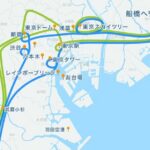
Your tour starts at NewDays Kanda South Entrance at Kanda Station. It’s easy to spot: the guide holds a sign that says Sake Tasting Tour, and you’ll meet right there before walking to the nearby area.
One thing to respect: you can only wait 5 minutes if you’re late, and you can’t join partway through. So I’d treat this like a train connection. Get there a few minutes early, then relax once you’ve found your guide.
This timing matters because the tour is built as a smooth flow. You move from area atmosphere, to shop history, to tasting, and then back out with suggestions for where to go next. If you miss the start, you’ll end up awkwardly trying to catch up in the wrong place.
Also, you’ll be walking a bit inside the Kanda neighborhood. Bring comfortable shoes and clothes you can move in without thinking about it. This is not a sit-only experience.
You can also read our reviews of more food & drink experiences in Tokyo

The 1596 shop visit: why Tokyo’s oldest sake place changes how you taste
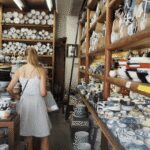
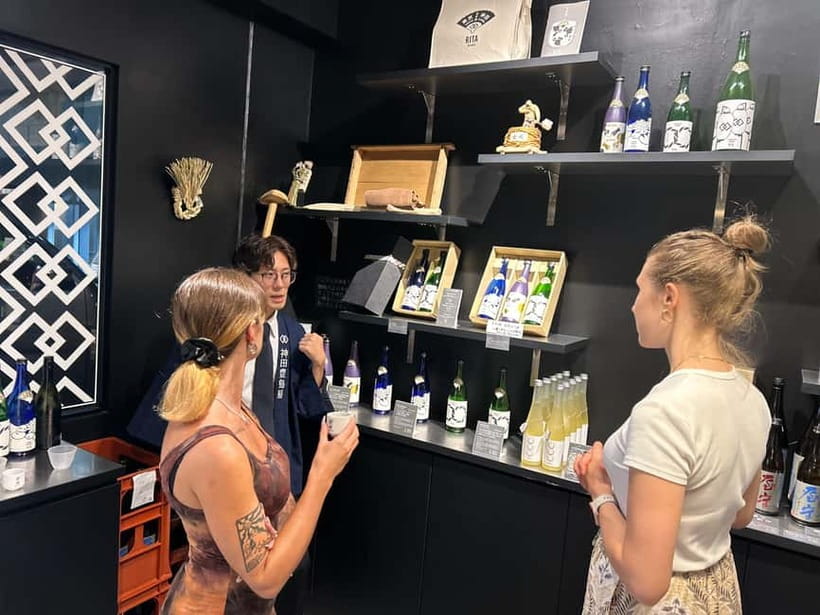
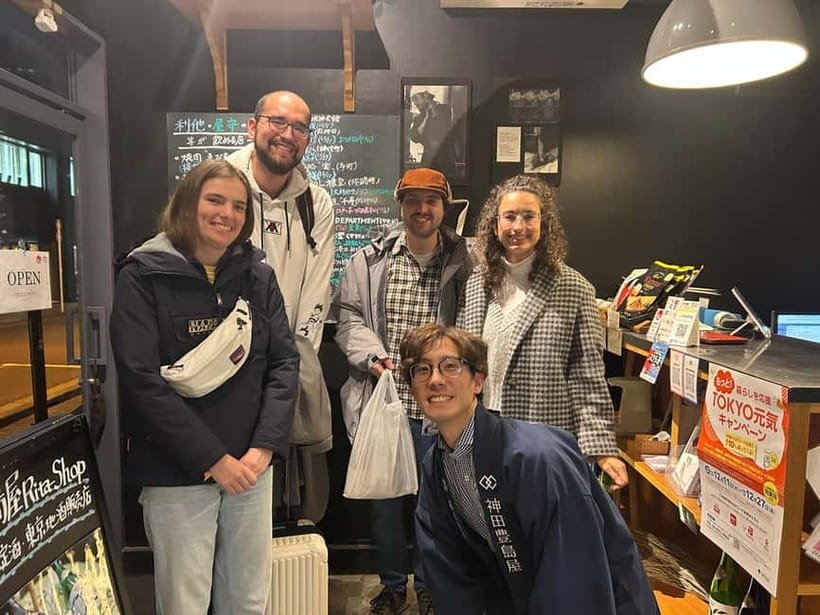
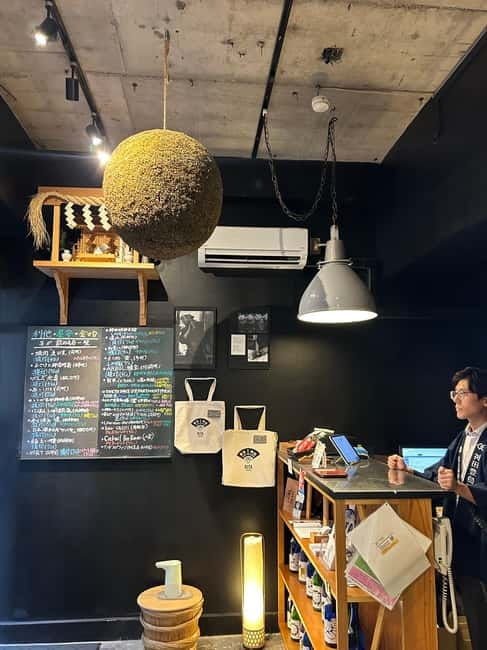
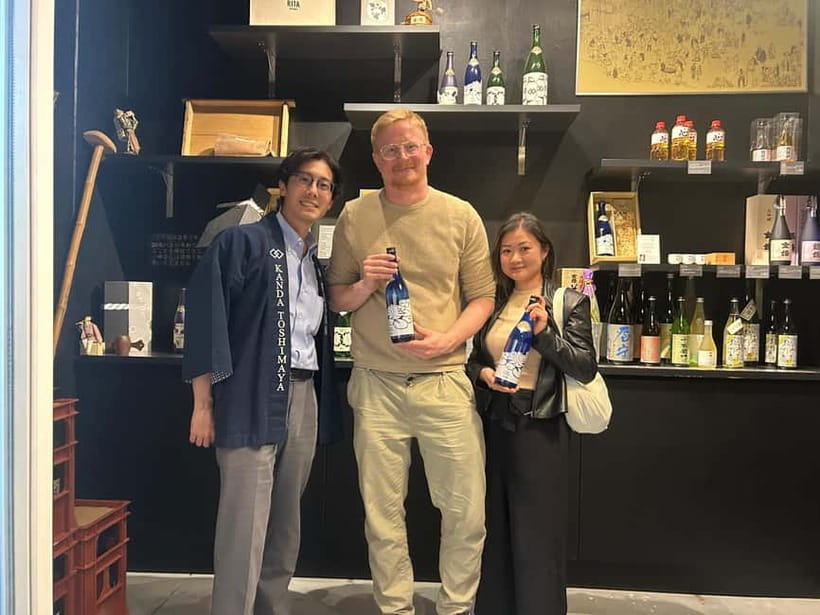
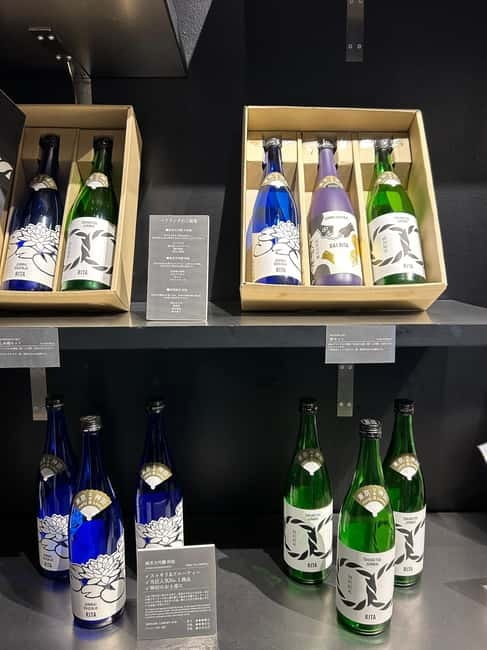
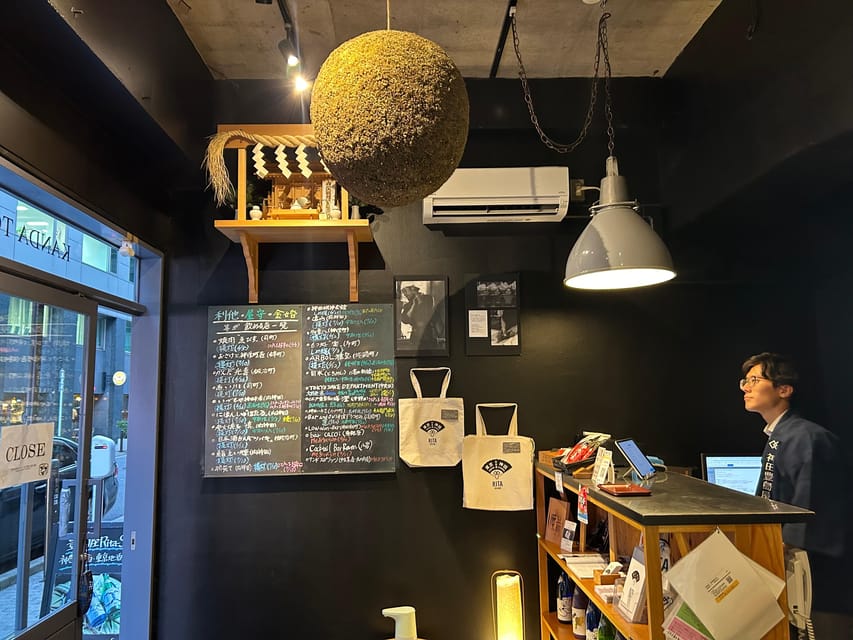
The core of the experience is the shop itself, Toshimaya Rita-Shop. You start there with time to take in the atmosphere and learn about the store’s long connection to sake in Tokyo. A business founded in 1596 isn’t just a novelty. It shapes how the tasting is framed: you’re not just sampling flavors, you’re learning how sake fits into everyday culture over centuries.
In practical terms, this shop-first approach helps you taste with context. Before you start comparing, you’re guided through what you’re likely to notice in different types—how they’re made and how they can taste different. That means your questions make more sense, and you’re less likely to get stuck in the mode of I like it or I don’t.
If you’re a beginner, this is a relief. You’ll get a guided starting point instead of guessing. If you already know sake, the format still works because you’re tasting multiple varieties from the shop and talking through differences as you go.
And yes, you’ll have the option to buy something at the end if a sake clicks for you. That’s a real value move, because taste memories are fragile. If you find a style you’d drink again, you can bring it home while the flavors are still fresh in your head.
A guided walk through Kanda Nishiguchi: learning the neighborhood’s drinking rhythm
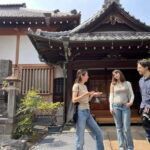
Before the longest shop time, you’ll do a short guided walk around the Kanda area, including 神田駅西口商店街 (Kanda Station West Exit shopping street). This isn’t a long sightseeing detour. It’s more like a warm-up that helps you understand why Kanda is known as a drinking district, especially for Japanese salarymen after work.
Even in a couple dozen minutes, the guide’s framing can change how you notice the neighborhood. You start to see how the area supports evenings out: bars, food stops, and the kind of places where people go specifically for conversation and drinks, not just for photos.
This is the kind of setup I like before a tasting, because it puts sake into the same social context where it’s actually consumed. You’re tasting like a participant, not like a tourist who will wander off and forget everything ten minutes later.
One practical note: this portion is time-boxed, so don’t plan to wander off for extra photos. Follow the group, stay close, and you’ll get the benefit without losing the flow.
Your tasting session: seven pours, small cups, and what to compare
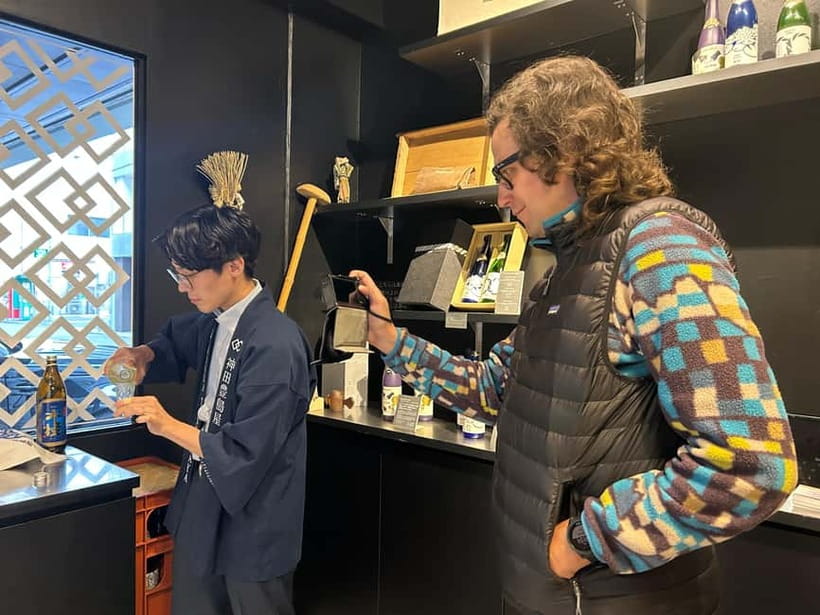
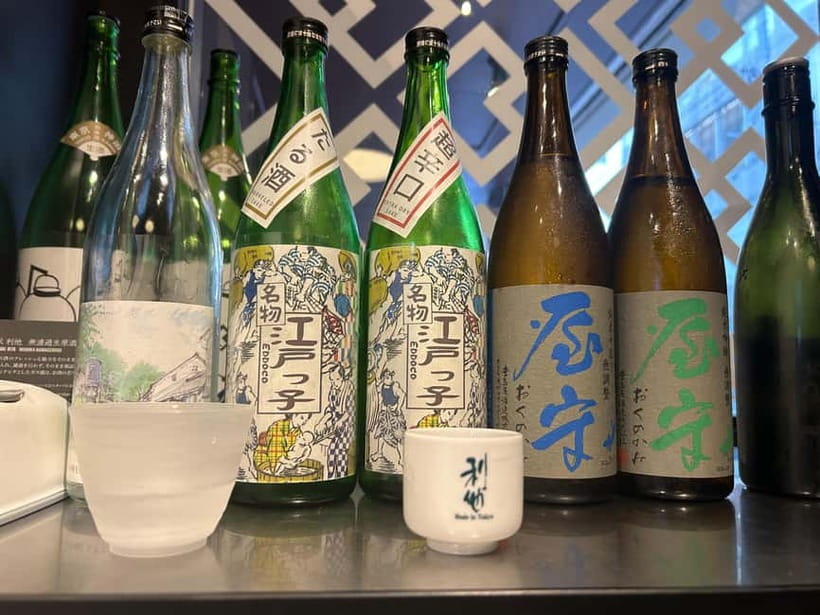
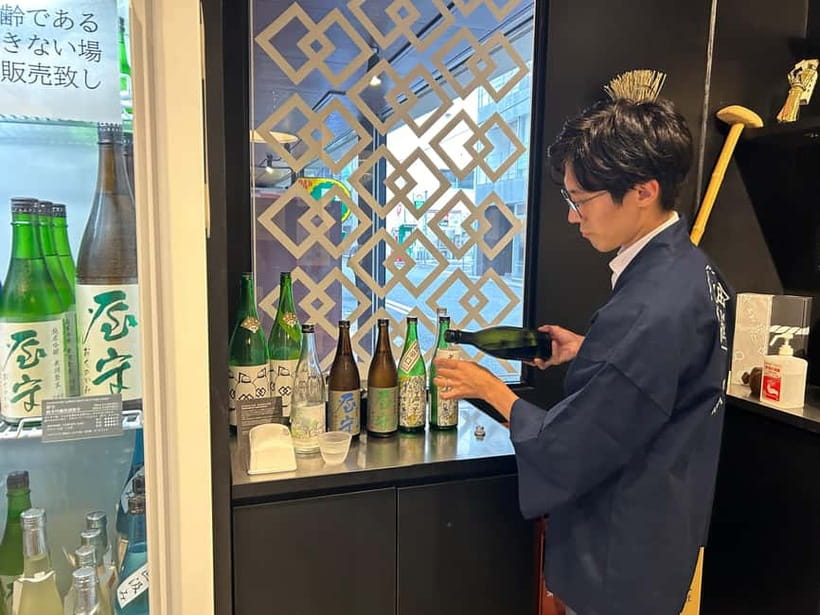
The tasting is the centerpiece and it runs for about 1.5 hours at the shop. You’ll head into a separate room for the pours. The tasting cups are the small style used for saké tasting (the experience provides the cups shown in the tour materials).
You’ll get roughly seven sake tastings, with each pour about 10–20 ml. That small amount is exactly what you want. It lets you compare clearly without turning the experience into a race to the finish. You’ll be able to notice how aroma, sweetness, and finish can shift from one style to another.
The tour also sets you up with the right questions. The guide explains sake and its differences as you taste, so you’re not stuck with mystery cups. If you’re the type who asks why one tastes drier or why another feels lighter, this is set up for that.
Here’s how I’d “use” the tasting so it sticks:
- Try to identify one style that feels clean and crisp, and one that feels richer or rounder.
- Pay attention to what happens at the end of each sip (the finish).
- If something surprises you, that’s a clue for a style you might want to buy later.
At the end, if you find a sake you like, you can purchase it right there. That turns your tasting into a souvenir that you’ll actually drink. A bottle is more memorable than another tote bag, and it’s directly connected to the flavor decisions you made during the tour.
One more helpful detail: the exact sake offered can change depending on season and timing. That’s not a flaw. It’s part of how sake works, and it’s one reason to treat the tour as a live experience rather than a scripted checklist.
Kanda recommendations after the cups: where to go for real sake and izakaya food
After the tasting, your guide introduces nearby places where you can enjoy delicious sake and izakayas. This is where the tour becomes useful even after you leave. Instead of guessing which street is best, you get a local path forward.
I like this part because you’re already “primed.” You know what you tasted, and you know the kind of place that matches that mood: casual drinking spots, places where sake is treated like normal life, and likely options to continue exploring without wasting time.
One practical reminder: food isn’t included, and food isn’t allowed during the tour itself. So if you want a proper meal after, plan on that. Think of the tasting as the appetizer to your evening, not the full dinner.
This is also why I suggest eating something before you go. If your stomach is empty, every sip can feel more intense (and not in a fun way). A light meal beforehand keeps you comfortable enough to pay attention to the flavors.
Finally, since Kanda is known for salarymen nightlife, you’ll usually find plenty of options nearby once you step back into the neighborhood. The guide helps you choose faster so you can get to drinking and conversation faster.
You can also read our reviews of more historical tours in Tokyo
Price and value: why $38 can make sense here
At $38 per person for about 2 hours, the value comes from what’s included, not just the location. You’re paying for:
- a live English-speaking guide
- guided explanation of sake
- about seven tastings with small pours
- the chance to buy what you liked from the shop
If you tried to DIY this, you’d still need to figure out tasting order, what to ask, and how to interpret differences. Even if you find tastings on your own, the “why” part might be missing. Here, the guided structure does the heavy lifting.
The small group cap (limited to 10) also matters. More people can mean you get rushed questions and less attention. With fewer spots, you’re more likely to get answers that actually match what you care about—newbie curiosity or more specific comparisons.
That sales moment at the end can feel like part of the package, and for this type of tour it generally makes sense. You’re tasting what the shop sells, and if you like something, you’re not stuck hoping a bottle matches your memory later.
Who should book (and who should skip)
This tour is designed for adults. You must be at least 20 years old, and you’ll need to show ID or your passport because age is verified. That’s not a “maybe” detail. It’s a hard requirement tied to legal drinking age in Japan.
It’s also not suitable for:
- pregnant women
- people with a cold
- people under 20
If you’re healthy and of age, this is a great fit if you want an easy entry into sake culture without feeling overwhelmed. Beginners get clear structure. People with more interest get guided comparisons across styles and the chance to ask more specific questions.
You’ll especially enjoy it if you’re the kind of traveler who likes practical local experiences—things you can carry into your next night out. If you’re only after a quick photo stop, the format may feel a bit too focused.
Should you book? My practical take
Book it if you want a guided, adult-only tasting that combines Tokyo’s oldest sake-shop atmosphere with real explanation, then gives you a plan for where to go afterward in Kanda. The $38 price works best when you’ll actually pay attention to what you taste and you’re open to buying one bottle you love.
Skip it if you expect food to be part of the deal or if you’re sensitive to alcohol even in small tastings. Also skip if you don’t want to deal with strict timing—5-minute wait rules are real, and you can’t hop in mid-tour.
FAQ
What’s the duration of the sake tasting tour?
The tour lasts 2 hours.
How much does the tour cost?
It costs $38 per person.
Where do I meet the guide?
You meet at NewDays Kanda South Entrance at Kanda Station. The guide will be holding a sign that says Sake Tasting Tour.
Is the tour in English?
Yes. The live tour guide speaks English.
How many sake tastings are included?
The tour includes 7 sake tastings.
Is there food included or allowed during the tour?
Food is not included, and food is not allowed during the experience. It’s recommended to eat something before you join.
What’s the minimum age to participate?
Participants must be at least 20 years old, since this is the legal drinking age in Japan.
Do I need to bring ID?
Yes. Age is verified, so bring a valid ID or your passport.
What happens if I’m late to the meeting point?
You can only wait 5 minutes, and you can’t join from the middle of the tour.
Is cancellation possible if plans change?
You can cancel up to 24 hours in advance for a full refund.