REVIEW · TOKYO
Asakusa: Beginner-Friendly Japanese Dance Workshop
Book on GetYourGuide →Operated by YUKI YOSHIDA · Bookable on GetYourGuide
Fan dance in Asakusa, in 45 minutes. This is a short, friendly way to see Nihon Buyo up close, right by Kaminarimon, and then try a few graceful moves yourself. I really like the mix of a real kimono performance (including the classic white stage makeup) plus a hands-on fan workshop that does not feel intimidating.
The second thing I like: you finish with a photo session with the professional dancer and a chance to chat. One consideration: the complimentary matcha has a hard cutoff, served until 5 minutes before the performance starts, so you’ll want to arrive early.
In This Review
- Key things to know before you go
- Asakusa by Kaminarimon Gate: a smart place for a short cultural stop
- Nihon Buyo basics: why slow movements land so powerfully
- Matcha welcome drink timing: don’t cut it close
- What you’ll watch: the pro dancer’s kimono performance and story moments
- A small reality check
- The beginner-friendly fan dance workshop: learn by copying, not performing
- Who teaches?
- Photo time with the dancer: your souvenir is part of the performance
- Price and value: why $25 can make sense here
- Who should book this Nihon Buyo fan workshop
- Should you book this Asakusa Nihon Buyo workshop?
- FAQ
- How long is the Japanese dance workshop in Asakusa?
- What is included in the $25 per person price?
- Do I need to wear a kimono to join?
- When should I arrive for the matcha welcome drink?
- Where is the meeting point?
- What booking options and policies are offered?
Key things to know before you go
- 45 minutes total means it’s perfect for a quick cultural stop without swallowing your whole afternoon.
- Nihon Buyo shironuri makeup is part of the show’s climax, so you’ll see the traditional look used in Japanese theater.
- Fan dance for beginners: you do not need prior dance or costume experience.
- English and Japanese support from the instructor helps you follow along without guessing.
- Photo time with the dancer turns this from a “watch only” activity into a keepsake moment.
- Matcha is time-sensitive and stops 5 minutes before the performance begins.
Asakusa by Kaminarimon Gate: a smart place for a short cultural stop
Asakusa is the kind of Tokyo neighborhood where you can feel the old-town pace without it turning into a history lecture. This workshop is located near Kaminarimon Gate, so it fits naturally with an Asakusa walk—temple streets, old shops, and that classic sense that you’re in the heart of Tokyo’s past.
The practical upside is timing. With a 45-minute experience, you’re not committing to a half-day activity just to get a taste of something traditional. And because it’s beginner-friendly, you can go even if your day already includes a lot of walking and you’re not trying to add another strenuous “class.”
You can also read our reviews of more tours and experiences in Tokyo



Nihon Buyo basics: why slow movements land so powerfully
Nihon Buyo is a refined Japanese classical dance style that dates back to the Edo period. The big idea is simple: you tell a story and show emotion through controlled motion—slow, steady gestures that read like a narrative told by the body.
What’s fun (and useful) for a first-timer is how readable it can be once you focus on the fundamentals the workshop emphasizes. Instead of asking you to memorize complicated choreography, you’ll learn basic fan movements and how to shape your arms and posture.
One show detail you’ll likely notice fast: the dancer uses shironuri, the white stage makeup tradition. That look—paired with the kimono—helps the performance feel like classic theater rather than casual stage dancing. It’s also a visual cue that you’re watching a piece of a long-standing performance tradition.
Matcha welcome drink timing: don’t cut it close
You’ll be served a complimentary cup of matcha before the performance starts. It’s meant to slow you down a notch—tea in hand, watching the atmosphere settle before the dancer appears.
Here’s the key logistics detail that can make or break your experience: matcha is served until 5 minutes before the performance begins. Due to preparation timing, drinks are not available for people arriving after that point. So if you’re building your day around this, I’d treat it like a timed entry show, not an open hangout.
If you’re the type who likes to arrive early for everything (you know who you are), this is your moment to shine. Show up on the early side, grab the matcha, and let the experience start without the stress.
What you’ll watch: the pro dancer’s kimono performance and story moments
The heart of the experience is a live performance by a professional Nihon Buyo dancer in a kimono. You’re not just passively watching either—you’re watching with an instructor close by later, which makes the first part feel like a guide for what you’ll try yourself.
The performance includes the classic visual traditions of Nihon Buyo, including the white stage makeup (shironuri) at the climax. That moment matters because it signals the peak of the dance, and it’s typically when the gestures and pacing feel most theatrical.
From the way this is described and how it’s been experienced by people in the past, you can expect the dance to communicate through elegant, controlled movements—often including themes like Japan’s seasons. The tone is formal and graceful, but you’re not expected to understand a whole script. You can just watch the body language do its thing.
A small reality check
This is a short program, so the performance and workshop are intentionally focused. If you’re hoping for a long multi-lesson immersion into Nihon Buyo technique, this isn’t that. Think of it as an efficient cultural sampler: you’ll get the essentials without the time drain.





The beginner-friendly fan dance workshop: learn by copying, not performing
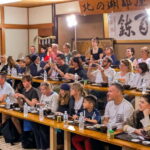
After the performance, you’ll shift from audience mode to participation mode. The workshop part is designed to be gentle and welcoming, focused on basic fan dance movements with guidance from an instructor.
The best part for beginners is that you do not need dance experience or a costume. You bring curiosity, and the instructor provides the structure—what to do with your arms, how to coordinate the fan, and how to keep your movements graceful rather than stiff.
If you’ve ever felt awkward learning something “artsy,” this style is actually kind to first-timers because the motions are clear and intentional. You’re not being graded on athleticism. You’re learning timing, posture, and how to make the fan gesture look like part of a story.
Who teaches?
The instructor supports the experience in English and Japanese, which makes a big difference if you’re not fluent. You’ll be able to follow along without relying entirely on body language.
Photo time with the dancer: your souvenir is part of the performance
The experience ends with a commemorative photo session with the professional dancer. This isn’t just a quick posed snapshot. You’ll have the chance to be photographed with the dancer in full kimono and makeup, which is exactly the kind of visual memory that’s hard to recreate on your own.
You’ll also have a chance to chat, which helps it feel more human than a factory-style tour stop. In past experiences, people have even mentioned small thoughtful touches like a fan-related gift alongside the matcha—so keep an eye out if something like that is offered during your session.
Bring your phone with enough battery. Also, if you’re traveling with friends or family, it’s worth coordinating who holds the camera before you start lining up.
Price and value: why $25 can make sense here
At $25 per person for 45 minutes, the value comes from what’s included—not from time alone. You’re paying for:
- a live performance by a professional dancer
- a hands-on workshop (beginner-level)
- photo time with the dancer
- a welcome drink (matcha)
In Tokyo, paying for a traditional performance can get expensive fast. Here, you’re not only watching—you’re also participating and leaving with a tangible keepsake photo. That combination is what makes the price feel fair rather than just “cheap.”
Another quiet value point: it’s designed for first-timers. You don’t need to know anything in advance, and that reduces the friction cost of traveling. You can spend your mental energy enjoying the moment instead of decoding cultural rules.
Who should book this Nihon Buyo fan workshop
This is ideal if you:
- want a beginner-friendly way into Japanese classical dance
- like hands-on cultural experiences, even if you’re not a “class person”
- are visiting Asakusa and want something different from temples and shopping
- want a short activity that still feels special
It also works well for families, since the workshop format is meant to be approachable and not overly technical. People often like the parent-child dynamic here because the style is elegant and the instructor guidance keeps things smooth.
You might skip it if you’re looking for a long-form training program, or if you only want something very casual and informal. This is a structured cultural program with a real performance component.
Should you book this Asakusa Nihon Buyo workshop?
Yes, if your goal is a focused, traditional experience that’s easy to join and satisfying to remember. I think this works especially well when you want something authentic without needing advance knowledge, and when you value a guided “try it yourself” moment.
Book it if you can also respect the timing detail about matcha. Show up early, enjoy the tea, watch the shironuri climax, then learn a few fan moves and finish with the photo. That’s the whole payoff in one compact block.
If you want more time than that, or if you’re tired of structured activities, then look for a longer class or a different kind of performance. But for many first-timers, this strikes the right balance.
FAQ
How long is the Japanese dance workshop in Asakusa?
The experience lasts 45 minutes total.
What is included in the $25 per person price?
You get a live performance by a professional Nihon Buyo dancer, a basic fan dance workshop, a photo session with the dancer, and a welcome drink.
Do I need to wear a kimono to join?
No. You do not need any prior dance or costume experience, and you do not need to wear a kimono for the workshop.
When should I arrive for the matcha welcome drink?
The matcha is served until 5 minutes before the performance starts. You’ll want to arrive early because drinks are not provided after that cutoff.
Where is the meeting point?
Go directly to the 6th floor (6階へ).
What booking options and policies are offered?
You can cancel for a full refund up to 24 hours in advance, and you can reserve now and pay later.