REVIEW · NARITA
Tokyo Layover Tour with Licensed Guide:Narita Airport Dep
Book on Viator →Operated by Japan Guide Agency · Bookable on Viator
A layover, turned into real Tokyo time. This Tokyo Layover Tour from Narita (NRT) is built for people with limited hours, using trains plus a government-licensed English guide to whisk you into the city and then route you back.
I like the way it’s customizable: you pick 3 to 4 sights from a clear menu, so you can chase history, temples, shopping, or views without cramming your whole day. The best part for me is the promise of a guided plan that keeps Tokyo’s size from swallowing your schedule.
I also like the efficient rail guidance—including being taken to the nearest station for the Narita Express or other train options. And the guide help can be high-stress saver, like the kind of support where Masa is described as meeting travelers at a busy airport with a Welcome sign and getting everyone on trains smoothly.
One possible drawback: it’s a walking tour, and one review noted feeling like the pace became a forced march when the guide didn’t slow down or focus on fewer stops. If you want a calmer day, say so early.
In This Review
- Key Points That Matter for Your Layover Day
- First, The Big Idea: A Tokyo Day Built Around Your Hours
- Picking Your 3–4 Stops: The Menu Approach That Actually Fits a Layover
- Narita Meet-Up and the Start-to-Finish Flow Through Trains
- Imperial Palace: Free Grounds, No Inside Access
- Shibuya Crossing and Tsukiji: Icon Views vs. Tokyo’s Food Pulse
- Meiji Jingu and Asakusa: Two Ways to Feel Japan’s Spiritual Side
- Gardens and Museums: When You Need a Pause (and Which Ones Cost Extra)
- Harajuku, Akihabara, and Takeshita Street: Pick Shopping Energy, Not Shopping Chaos
- Shinjuku Gyoen, Golden Gai, and Roppongi Hills: Mix Costs and Atmosphere
- Yoyogi Park, Shinjuku Gyoen Alternatives, and Odaiba: Open-Air Options With Different Vibes
- The Walking-Tour Reality: How to Avoid the Forced March Problem
- Price and Value: What $435.74 Buys You on a Short Tokyo Day
- Who This Tokyo Layover Tour From Narita Fits Best
- Should You Book This Tokyo Layover Tour From Narita?
- FAQ
- Where does the tour start?
- How long is the Tokyo layover tour?
- How many stops can I choose?
- Is admission to the Imperial Palace included?
- Are entrance fees included for all stops?
- Is the Narita Express round trip ticket included?
- Is lunch included?
- Is this tour mainly walking?
- Is this tour suitable if I have trouble with walking or public transportation?
Key Points That Matter for Your Layover Day
- Licensed English guide from Narita: you meet at NRT and start moving right away
- Choose 3–4 sights: a focused day is the goal because Tokyo is huge
- Mostly admission-free stops: many options list admission as free, with a few notable exceptions
- Guide helps you get back: you’re taken to the nearest station for your ride home to Narita
- Walking pace is real: comfortable shoes and a clear pacing request can make or break the day
First, The Big Idea: A Tokyo Day Built Around Your Hours
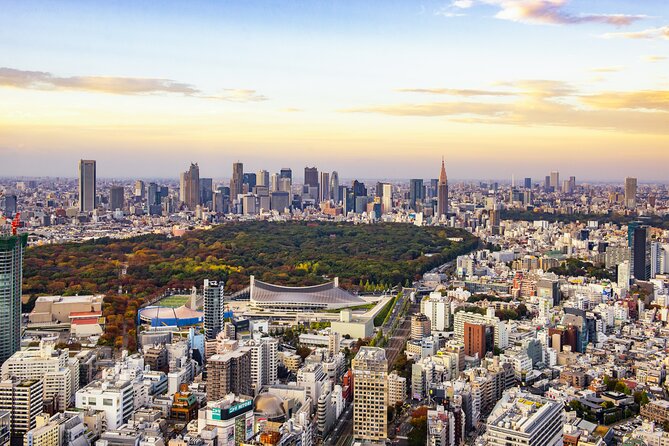
Tokyo is so large that even experienced travelers can lose time just figuring out transit and “where to go next.” This tour is designed to solve that problem with structure: you get picked up at Narita and taken into Tokyo with a guide, then you leave with the guide routing you back to the airport.
You’re not trying to do everything. You’re choosing an action plan for a layover—usually around 8 hours total—and then letting the guide handle the flow between stops. That matters because layover days get squeezed fast. One hour too long in the wrong place, and suddenly you’re sprinting between neighborhoods.
Also, the tour is described as private, meaning it’s just your group. That can be a big quality upgrade for a short visit, because your guide isn’t trying to herd mixed preferences with different walking comfort levels.
You can also read our reviews of more guided tours in Narita


Picking Your 3–4 Stops: The Menu Approach That Actually Fits a Layover
Here’s how the tour stays practical: it’s not “one fixed itinerary.” It’s a set of approved sights, and you select 3 to 4 from the list and plan the order with your guide.
That flexibility is the core value. In the feedback, Yoshi is described as keeping the day aligned with requests while also adding some smart extras based on location. Shuji is also described as tailoring the plan after meeting travelers and guiding them through the bullet train and subway system efficiently.
So how should you choose your stops? I’d use a simple layover rule: group your picks by mood and by geography.
For example:
- If you want “old Tokyo,” combine Asakusa (Senso-ji) with one nearby cultural or park option.
- If you want “modern Tokyo,” pair Shibuya Crossing with something like Harajuku (Takeshita Street) or Roppongi Hills.
- If you want “shopping + energy,” go with Akihabara plus a second neighborhood stop.
This approach prevents the classic mistake—picking four attractions that look good on a list, but end up spreading your day across too many directions.
Narita Meet-Up and the Start-to-Finish Flow Through Trains
The tour starts at Narita International Airport (NRT). Your guide meets you there, and the tour is focused on getting you into the city and back efficiently. The meeting point is listed as 1-1 Furugome, Narita, Chiba 282-0004, Japan, and multiple guides in the feedback are noted for making it easy to find them in a crowded airport setting (again, Masa is mentioned carrying a Welcome sign).
That “arrive and locate the guide” part sounds minor until you’re juggling luggage, jet lag, and airport signage. For layovers, it’s the difference between starting relaxed or starting stressed.
At the end of your day, the guide takes you to the nearest station so you can ride the Narita Express or otherwise back to the airport. This is not just a nice gesture; it’s the kind of problem-solving that keeps the last hour from turning chaotic.
One thing to know: transportation fees are not included. The Narita Express round trip ticket is specifically noted as not included (listed as ¥6,140 for adults and ¥3,060 for children, with variation by destination). So you’ll want to decide how you want to handle the ride back—using the Narita Express or another train option—based on your ticketing and timing.
Imperial Palace: Free Grounds, No Inside Access

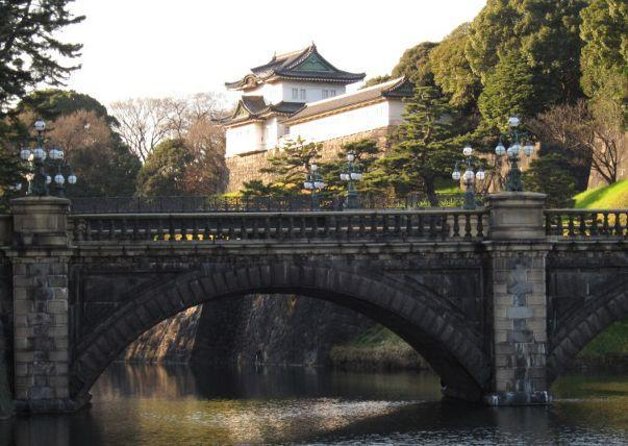
Imperial Palace is one of those “Tokyo basics” stops that helps you understand what the city replaced and what it preserved. The tour option is outside-only: the Imperial Palace visit is described as not including access to the inside.
The value here is the setting. You’re looking at the area tied to the former site of Edo Castle, surrounded by moats and massive stone walls, plus large park space. Even without going inside, it gives you a visual anchor for Japanese history right in the center of Tokyo.
Time-wise, the stop is listed at about 30 minutes, which is generally enough for a quick orientation walk and photos without eating your entire layover.
If your priority is “actually enter and see,” this isn’t the choice. But if your priority is “see the place where old Tokyo logic meets modern Tokyo logistics,” it can work well.
Shibuya Crossing and Tsukiji: Icon Views vs. Tokyo’s Food Pulse
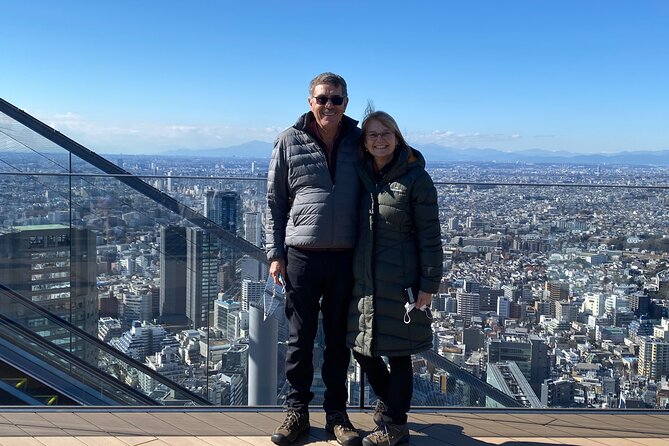
If you choose Shibuya Crossing, you’re picking the kind of landmark that feels like a movie scene—but in real life, it’s also a lesson in how Tokyo handles crowds and flow. It’s short and direct, and the tour lists it as one of the core iconic options. This is also the kind of stop that’s easy to enjoy even if your energy is slightly low. Stand, look around, and let the city do its thing.
Then consider Tsukiji Fish Market. This option is about stepping into a more specific Tokyo culture: an old fish market atmosphere. The stop is listed at about 30 minutes and admission is free.
The practical angle: Tsukiji can be a sensory hit—busy, food-focused, and visually active. If you’re the type who likes to understand how places earn their reputation, this is a strong pick. If you’re sensitive to crowd density, you might want to pair it with a quieter second stop so your day doesn’t feel like a nonstop sprint.




Meiji Jingu and Asakusa: Two Ways to Feel Japan’s Spiritual Side
For a calmer, more reflective contrast to Shibuya, the tour includes Meiji Jingu Shrine. It’s listed beside the Harajuku Station area, which is useful for planning. The stop is around 20 minutes and admission is free.
Meiji Jingu is a good “reset” between shopping neighborhoods and city streets. Even a short stop can feel like it breaks the rhythm of walking in dense districts.
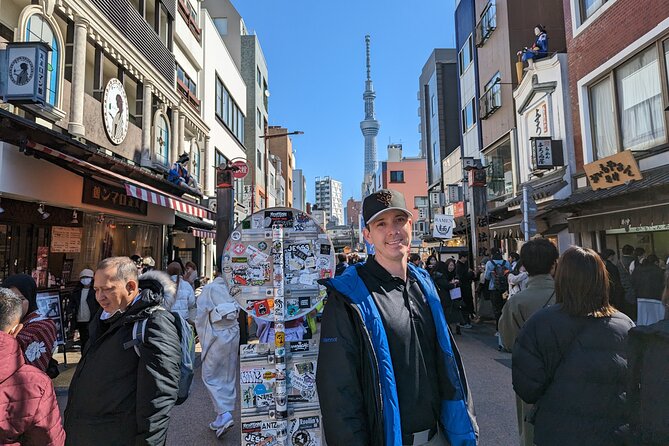
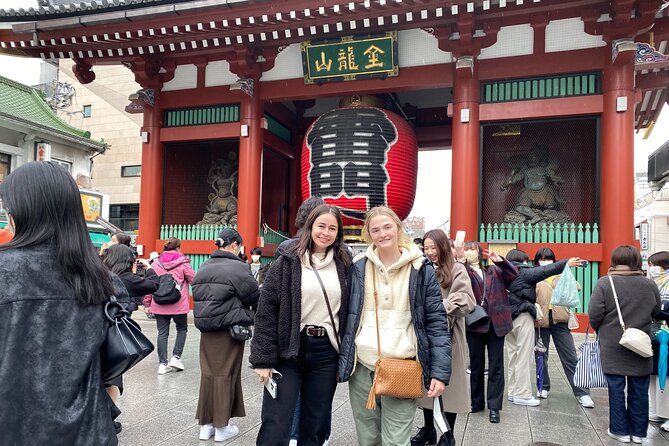
Then there’s Asakusa and Senso-ji Temple, one of Tokyo’s best-known temple areas. This option is 15 minutes and admission is free. It’s often chosen because it’s colorful, popular, and easy to find your footing. If your layover is short and you want a temple stop that won’t derail timing, this one is made for that.
I also like that Asakusa sits in a world where you can see old-style Tokyo energy. If you choose Asakusa, you’re likely to remember how the atmosphere changes even within a single day.
Gardens and Museums: When You Need a Pause (and Which Ones Cost Extra)
Tokyo can feel like a full-speed video. These garden and museum options give you moments to slow down and still “do Tokyo.”
Here are the included options and how they’re handled:
- Koishikawa Korakuen Garden: admission not included, stop listed around 10 minutes
- Hama Rikyu Gardens: admission not included, stop listed around 5 minutes
- Tokyo National Museum: admission not included, stop listed around 5 minutes
- Rikugien Garden: admission not included, stop listed around 30 minutes
This is important: the tour may cover the guided part, but you’ll need to budget for entrances when a stop is marked not included. Shinjuku Gyoen is a clear example of this in the pricing notes: adult admission is listed as ¥500, with a group discounted price of ¥400, plus ¥250 for seniors and students with valid ID, purchased at a staffed counter.
So when you’re deciding, think like this:
- If you want a quick scenic break, a short garden stop can work even if you don’t buy tickets for the biggest areas.
- If “museum time” is your main goal, pick it and accept that it may eat more of your day than the short stop times suggest.
Harajuku, Akihabara, and Takeshita Street: Pick Shopping Energy, Not Shopping Chaos
The tour includes shopping and youth-culture areas, which is a great match for layovers if you manage expectations on time.
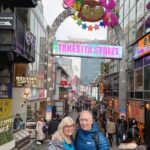
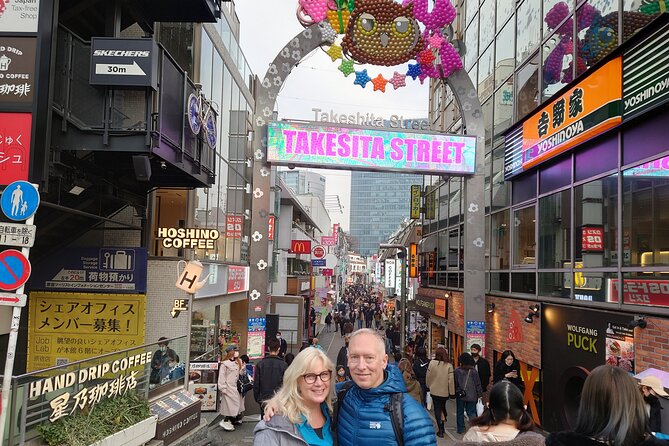
Takeshita Street (Harajuku) is listed for about 30 minutes and admission is free. This is your “teen fashion and fast trend” stop. If that’s your thing, it’s fun and easy to wander. If not, you’ll likely spend most of that time just moving through crowds.
Akihabara is listed as about a free admission stop and is known for electronics shops. It’s a strong choice if you like tech stores, character culture, or browsing rather than shopping with a fixed plan.
One practical tip I’d follow: choose only one “shopping-heavy” neighborhood if you’re also doing a temple or a market. That keeps your day from turning into queueing and walking with no payoff.
Shinjuku Gyoen, Golden Gai, and Roppongi Hills: Mix Costs and Atmosphere
The tour list gives you options that feel very different from each other, which is good—because Tokyo days get boring when every stop is the same kind of busy.
Shinjuku Gyoen National Garden: admission is not included, and the tour lists ticket pricing details (with group discount and ID requirements). It’s typically a more relaxed choice than shopping streets. If you want greenery and a breather, this is the one where budgeting for admission is worth considering.
Shinjuku Golden Gai: listed for 15 minutes and admission is free. It’s described as a small area known for many drinking and eating spots and a history tied to postwar black market movement. This is a good “atmosphere stop” where you can wander streets without needing long ticket lines.
Roppongi Hills Shops & Restaurants: listed around 15 minutes and admission is free. It’s described as a city-like complex in the Roppongi district, which makes it easy to visit even if your day is packed.
If your goal is photo moments plus a quick cultural contrast, this cluster can work well. If you want quiet time, you’ll probably want to spend more of your 3–4 stops in the shrine/temple/garden directions.
Yoyogi Park, Shinjuku Gyoen Alternatives, and Odaiba: Open-Air Options With Different Vibes
For an outdoors break, the tour includes Yoyogi Park (about 30 minutes, free admission listed). It’s described as having lawns, ponds, and forested areas, plus it’s good for jogging or picnicking. Even if you’re not jogging, it’s a good pause between crowded shopping and busy intersections.
Then there’s Odaiba, on a man-made island in Tokyo Bay. It’s listed about 15 minutes and admission is free. Odaiba is a fun “Tokyo as a planned modern space” add-on, especially if you want a change of scenery near the water.
These two options aren’t quiet in the sense of “no crowds,” but they can provide a different sensory experience than temples and markets.
The Walking-Tour Reality: How to Avoid the Forced March Problem
This tour is a walking tour, and the tour description also notes that pickup is on foot. That’s where pacing becomes everything.
One review highlighted a mismatch where the day felt like a forced march because the guide didn’t slow down or focus on fewer sites as requested. I’d treat that as a clear message: your layover tour needs your pace to be explicit.
If you have limited time in your itinerary, tell your guide which of these you want most:
- one “iconic Tokyo” stop (Shibuya Crossing)
- one “traditional Tokyo” stop (Meiji Jingu or Asakusa)
- one “food or market” stop (Tsukiji)
- one “breather” stop (a park or garden)
Then add a simple line about how long you want per stop. When the plan is tight and the group is moving together, a guide can keep it enjoyable. When the plan spreads too wide, the day gets tiring fast.
Also, the tour notes that if you have difficulty walking or taking public transportation, this isn’t suggested. Even if you’re fine physically, if you’re arriving with fatigue from international travel, shoes and a realistic expectation matter.
Price and Value: What $435.74 Buys You on a Short Tokyo Day
At $435.74 per person for an approximately 8-hour private tour, this is not a bargain DIY price. It’s priced for time-saving and for having a licensed English guide handle the moving pieces.
Here’s what you’re paying for, in practical terms:
- Licensed local English guide starting at the airport
- Custom plan of 3–4 sites rather than a rigid factory itinerary
- Time management inside Tokyo where “random walking” can waste your best hours
- End-of-day station help so you don’t scramble alone back to Narita
Many costs are not included, like transportation fees, lunch, and entrance fees for stops marked as not included. The Narita Express ticket is also not included. So value depends on how you choose your stops.
If you pick mostly admission-free attractions and you’re using the guide to avoid wasted transit time, the price can feel fair. If you add several paid entrances and you’re already comfortable navigating Tokyo transit, you may feel the cost more.
Still, for a layover, reliability often beats savings. A guided day can turn a stressful schedule into something you can actually enjoy.
Who This Tokyo Layover Tour From Narita Fits Best
This tour is a strong fit if:
- you want an organized Tokyo day with 3–4 targeted stops
- you prefer not to figure out train routes and station transfers alone
- you want an English guide from Narita (NRT) and help getting back
- you enjoy iconic sights plus at least one traditional or cultural moment
It may be less ideal if:
- you hate walking and you’re trying to do a “max stops” plan
- you want the inside experience of the Imperial Palace (this tour option does not include it)
- you’re hoping entrances are fully covered for gardens and museums (some are explicitly not included)
Should You Book This Tokyo Layover Tour From Narita?
I’d book this tour if you want a guided Tokyo day that respects your limited time—and you’re choosing stops thoughtfully. The best reasons to say yes are the licensed guide meet-up at NRT, the custom selection of 3–4 sights, and the help returning to the right station for your ride back.
I’d hesitate if your number one priority is a very slow day with lots of downtime, because it’s still a walking format and one feedback item flagged pacing issues when guests wanted fewer stops and more breathing room. If you book, solve that risk by communicating your pace and by narrowing your choices to your top priorities.
If you want Tokyo variety—modern icons, a shrine or temple, plus one market or park—this tour is built to make that possible in a layover-sized window.
FAQ
Where does the tour start?
You meet your licensed guide at Narita International Airport (NRT), with the listed start address at 1-1 Furugome, Narita, Chiba 282-0004, Japan.
How long is the Tokyo layover tour?
The duration is listed as about 8 hours.
How many stops can I choose?
You customize a walking tour by choosing 3 to 4 sites from the provided options, and then plan the order with your guide.
Is admission to the Imperial Palace included?
No. The tour notes that it does not include access to the inside of the Imperial Palace.
Are entrance fees included for all stops?
No. Several options are marked admission ticket not included, such as Koishikawa Korakuen Garden, Hama Rikyu Gardens, Tokyo National Museum, Rikugien Garden, and Shinjuku Gyoen. Others are marked free.
Is the Narita Express round trip ticket included?
No. The tour states that the Narita Express round trip ticket is not included (with listed adult and child prices).
Is lunch included?
No. Lunch is not included in the package.
Is this tour mainly walking?
Yes. It’s described as a walking tour, with pickup on foot.
Is this tour suitable if I have trouble with walking or public transportation?
The tour notes that for those who have difficulty walking or taking public transportation, it is not suggested.