REVIEW · NARITA
Narita Layover tour with National Licensed guide
Book on Viator →Operated by MY Travel Consulting · Bookable on Viator
One good layover plan beats two bad hours in the airport. This Narita experience turns a short stop into a real taste of Japan, anchored by Shinsho-ji Temple and the classic Edo-style lanes of Omote Sando. I also love how the tour mixes temple culture with practical time-saving, so you can still shop, snack, and even consider sake tasting without feeling like you’re sprinting. The main thing to consider is that it’s only 4 to 6 hours, so you’ll want to prioritize what matters most if you’re tight on time or have jet lag.
The tour runs with a nationally licensed guide who meets you at the Narita arrival gate, then uses public transportation (with pickup) to keep logistics simple. You’re also not on the hook for temple admission fees, since the stops are listed as free, which makes the whole plan feel focused instead of pay-to-play.
The one potential drawback: the schedule can shift with weather or other factors, and you’ll be doing walking between nearby highlights. It’s a good fit for moderate mobility, but this is not a sit-and-watch kind of outing.
In This Review
- Key things to know before you go
- Using a Narita layover to see Japan (fast, not frantic)
- Meeting your guide at Narita Airport: less guessing, more time
- Stop 1: Shinsho-ji Temple and the goma prayer you’ll actually remember
- Stop 2: Naritasan Omote Sando for Edo-era lanes and snack breaks
- Stop 3: Naritasan Park for a calm reset after temple streets
- How transport and timing work on a 4 to 6 hour schedule
- Price and value: is $247.50 worth it for a Narita layover?
- Who should book this Narita layover tour
- Should you book? My honest call for Narita layovers
- FAQ
- How long is the Narita layover tour?
- What is included in the price of $247.50 per person?
- Are entrance fees included for the temple and park stops?
- Is this tour private or shared with other groups?
- Where is the meeting point?
- Can the tour accommodate dietary restrictions?
Key things to know before you go
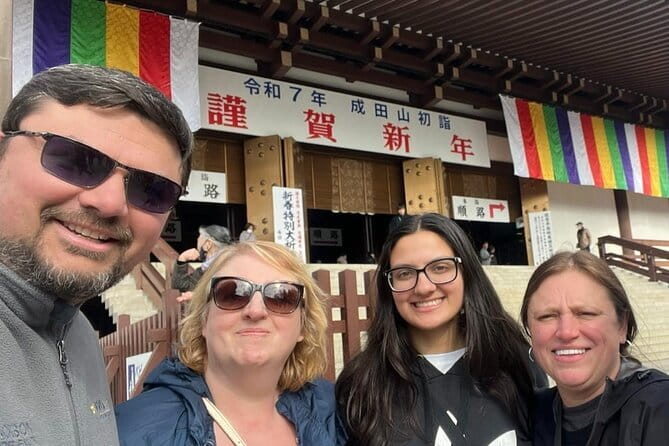
- Nationally licensed guide waiting at the arrival gate so you don’t lose time figuring out transportation right after landing
- Free admission at the main stops, which keeps your costs predictable on a layover
- Shinsho-ji Temple highlights including the goma prayer and carved inner sanctuary
- Omote Sando temple-town streets with Edo atmosphere plus chances to snack and try sake tasting
- Naritasan Park nearby for a calm break in a landscaped Japanese garden
Using a Narita layover to see Japan (fast, not frantic)

Narita layovers can be rough. You land tired, your flight might land off-schedule, and the airport starts to feel like the only option. This tour is built for that reality. You’re not trying to conquer Tokyo. You’re taking a short, guided loop around Narita’s most meaningful visitor sights and returning to airport mode after.
What I like is that the experience has a clear rhythm: temple first, then the old-town shopping streets, then a peaceful garden reset. That sequencing matters because you get culture when your brain is still fresh enough to enjoy it, and you get quiet when you want a breather from the terminal buzz.
Also, Narita is often treated like a gateway. This flips the script. Instead of treating Narita as a holding pen, you treat it like a small destination with its own identity.
You can also read our reviews of more guided tours in Narita



Meeting your guide at Narita Airport: less guessing, more time

The tour’s starting point is Narita Airport at 1-1 Furugome, Narita, Chiba 282-0004. The big practical win is that your guide meets you at the arrival gate area. That is huge on a layover, because the hardest part is usually not the sightseeing—it’s the moment after you exit the plane when everything is loud, confusing, and unfamiliar.
You also get airport pickup included. That reduces the odds that you’ll spend 45 minutes negotiating trains, ticket machines, or signage while your group is hungry and your clock is ticking.
Then you’re put on public transportation, not taxis. That’s both more authentic and usually more time-efficient in the long run. And because the tour includes the logistics, you can focus on being present rather than planning around the transit system on the fly.
Finally, you have a mobile ticket for the experience. That helps when you’re moving through airports and train stations quickly. Just make sure you can access it on your phone without digging through your entire photo library.
Stop 1: Shinsho-ji Temple and the goma prayer you’ll actually remember

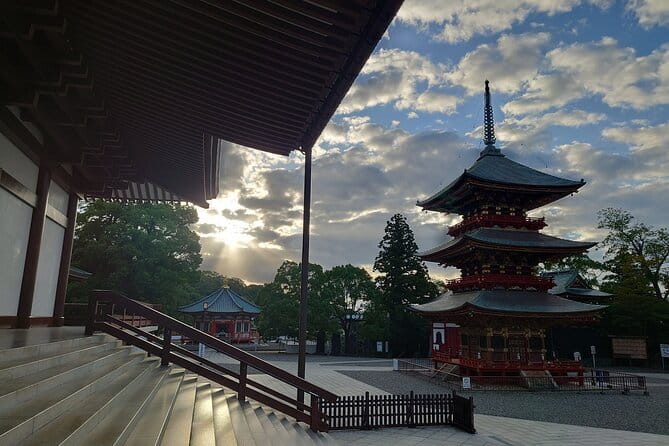
The first visit is Naritasan Shinshoji Temple, one of Narita’s core cultural anchors with a history of over 1,000 years. The tour keeps this stop to about two hours, which is a good pace for a layover. You’re not stuck in line for hours, and you’re not forced to rush through the meaningful parts.
The temple is especially famous for its goma prayer. If you’re not used to Japanese temple rituals, don’t worry. The guide’s job here is to help you understand what you’re seeing so it doesn’t turn into a vague photo-op. I like that the experience is described as a chance to learn basic information about Japan there, not just wander.
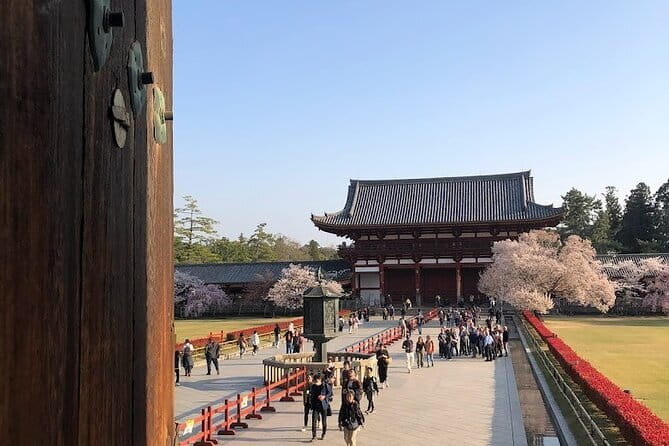
You’ll also get to see the main hall, described as majestic, plus splendid carvings in the inner sanctuary. That combination is what makes this stop click. It’s not only about the atmosphere; it’s about details—architecture, craftsmanship, and how the sacred space is arranged.
Practical tip: Shinsho-ji is the kind of place where you’ll want to slow down for a few minutes even if your flight clock is nagging you. Take a careful walk through the areas the guide highlights. Even if you don’t know all the terminology, you can still appreciate the craftsmanship and the sense of age.
Potential drawback to keep in mind: you’ll want to be ready for walking inside temple grounds. If your layover includes a long delay, you’ll feel that walking more than you expect. Keep your energy for the highlights and save long detours for a future return trip.
Stop 2: Naritasan Omote Sando for Edo-era lanes and snack breaks

After the temple, the tour moves you to Naritasan Omote Sando, described as a temple town that prospered since the Edo period. That matters because you’re not just visiting a building. You’re walking streets that developed around pilgrimage.
You’ll notice remnants of older times in the townscape, and the area is designated as a Japanese Heritage Site. In plain terms: the vibe is meant to feel traditional, and it’s one of the easiest ways to sense Narita’s identity without needing a full-day itinerary.
This is also where the tour gets fun and flexible. Along Omote Sando, you can enjoy shopping and trying traditional Japanese snacks. The overview even mentions sake tasting in the area, which can be a great way to make the experience feel like more than sightseeing—especially if you’re spending your first days in Japan trying small, local things.
How to make this section work for your time: set a mini plan before you wander. For example, decide whether you’re going for one snack you’ve never tried before, or whether you want to sample a few small items. If you add too many stops, the time can evaporate quickly on a layover. Omote Sando is easy to get carried away in, because everything smells good and looks photogenic.
Also, keep an eye on how you’re spending money here. Lunch isn’t included, and personal expenses aren’t included either. So you’ll want some cash or card capacity for snacks and any tasting you choose.
Stop 3: Naritasan Park for a calm reset after temple streets

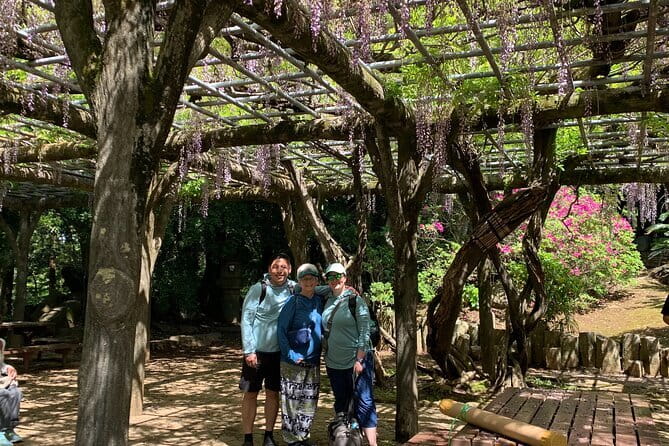
After the lively streets, you get a short walk to Naritasan Park, a beautifully landscaped Japanese garden. This is scheduled for about one hour, and that’s a smart move on a layover tour. It gives you a mental gear change: from temple and shops to quiet paths and a slower pace.
The garden is described as spanning over 165,000 square meters, which tells you this isn’t just a tiny courtyard for a quick photo. It’s a real park, even if your tour time in it is brief.
I like this stop because it balances the itinerary. Temples can be emotionally intense if you’re watching a lot of rituals and taking in history all at once. A garden visit gives your brain somewhere to rest while still feeling like you’re doing something meaningful.
What you should expect: you’ll likely follow a route that makes sense from the tour plan. If you find yourself wandering off on your own, try to return to the path your guide expects so you don’t run late. That sounds obvious, but in parks it’s easy to lose track of time.




How transport and timing work on a 4 to 6 hour schedule
This tour is designed for layovers, so timing is the hidden feature. It runs about 4 to 6 hours, and that window is realistic if you want a temple experience plus a street walk and a garden without turning your day into a full expedition.
The itinerary is also explicitly described as flexible: it might be changed due to weather condition or other reasons. That’s normal for outdoor walking and short airport windows. The key for you is mindset. Expect the plan to focus on the essential highlights even if the exact flow adjusts.
Transport-wise, you’re using public transportation, but you’re not doing it alone. The included pickup and guide help you avoid the most frustrating part: figuring out what to do first once you’re outside the airport.
And since the tour is private (only your group participates), you can usually move at a pace that matches your energy level. That’s a real advantage if someone in your group is slower, tired, or needs a bathroom break without making it stressful for everyone.
Price and value: is $247.50 worth it for a Narita layover?
At $247.50 per person, this isn’t the cheapest way to fill time in Narita. But it can be strong value if you compare what you’re actually buying: a nationally licensed guide, pickup, and public transportation coordination, all wrapped into a short, guided loop.
Here’s how I think about value on tours like this:
- You’re paying for time control. On a layover, shaving even 30 minutes of confusion can make the difference between seeing three highlights and seeing one.
- You avoid admission costs at the main stops. The itinerary lists admission as free for each stop, which helps your budget feel predictable.
- You get an interpretation layer. Temple carvings, ritual details like goma prayer, and Edo-era town context are easier to enjoy when someone translates what you’re seeing into something you can understand.
Lunch is not included. Typical lunch estimates are about $10 to $30 USD per person, and you’ll also have personal expenses for shopping and snacks. In other words, your true out-of-pocket cost depends on how much you eat and shop.
So is it worth it? If you’re the type who wants a structured plan and hates feeling lost, yes. If you’d rather wander freely and don’t need guiding context, you might prefer a DIY half-day. But for first-time Japan visitors using Narita as a springboard, the guide-led approach is where the money tends to pay off.
Who should book this Narita layover tour
This tour fits best if you want a real taste of Japan during a tight window. It’s particularly useful if:
- It’s your first time in Japan and you want a guided introduction rather than guessing your way through temples and old streets.
- You want one coherent loop instead of piecing together transport, tickets, and which sites matter most.
- Your group is okay with a bit of walking and has moderate physical fitness.
It may not be ideal if:
- You want long free time with no structure. This is paced for a layover window.
- You expect to spend hours shopping. Omote Sando is great, but the tour time is limited, so shopping time competes with sightseeing time.
One more practical note: the tour can accommodate dietary restrictions such as vegetarian, vegan, and gluten-free, as long as you indicate your needs during booking.
Should you book? My honest call for Narita layovers
If your layover is long enough to leave the airport and you want a structured, guided visit with cultural context, I think this tour is a smart use of time. You get a classic temple stop with Shinsho-ji, a traditional street experience at Omote Sando, and a calming garden finish at Naritasan Park—all with free admission at the main stops and support that reduces transit stress.
Book it if you like clear priorities and you’d rather spend your energy watching and learning than planning. Skip it if you’re hoping for a slow, unstructured day or if your schedule is so unpredictable that you can’t commit to a set 4 to 6 hour plan.
FAQ
How long is the Narita layover tour?
The tour lasts about 4 to 6 hours.
What is included in the price of $247.50 per person?
It includes a national licensed guide, airport pick up, and public transportation.
Are entrance fees included for the temple and park stops?
Yes. The itinerary notes admission tickets as free for Shinsho-ji Temple, Omote Sando, and Naritasan Park.
Is this tour private or shared with other groups?
It’s private. Only your group participates.
Where is the meeting point?
The meeting point is Narita Airport, 1-1 Furugome, Narita 282-0004 Chiba Prefecture.
Can the tour accommodate dietary restrictions?
Yes. The tour can accommodate dietary restrictions such as vegetarian, vegan, and gluten-free. You need to indicate your dietary needs at booking.