REVIEW · TOKYO
Tokyo: Morning Sightseeing Bus Tour
Book on GetYourGuide →Operated by Japan Panoramic Tours · Bookable on GetYourGuide
Tokyo at 8 a.m. feels doable. This morning bus circuit is a smart way to see Tokyo’s biggest icons in a short window, with an English-speaking guide who keeps each stop clear, plus a hands-on premium Uji matcha break in Asakusa. The main thing to know: this tour finishes in Asakusa/Sensō-ji, and you won’t get hotel drop-off.
You start around Shinjuku (or a Ginza pickup option), ride in a comfy air-conditioned coach with free Wi-Fi, and get live commentary plus multilingual audio headsets. Expect photo stops, some gentle walking in shrine and shopping areas, and a route planned to keep moving even when traffic slows things down.
In This Review
- Top highlights to know before you go
- Getting oriented fast: Shinjuku and a coach route that actually helps
- Meiji Jingu: where the city noise disappears
- Harajuku and Omotesandō pass-by: pop culture and clean design
- Imperial Palace photo stops: what you’ll actually see (and what you won’t)
- Akihabara, Ueno, and Kappabashi: the useful detour beyond the postcard hits
- Asakusa and Sensō-ji: Nakamise street plus an actual matcha break
- Shinto manners and small moments that make the tour feel respectful
- Value check: what $90 buys you (and what it doesn’t)
- Logistics that matter: timing, order changes, and the Asakusa ending
- Who this Tokyo morning bus tour suits best
- Booking verdict: should you do it?
- FAQ
- How long is the Tokyo morning sightseeing bus tour?
- Where does the tour start, and where does it end?
- Is there a live guide, and what language is it?
- What languages are available for the audio guide?
- Is matcha included?
- Is Wi‑Fi provided on the bus?
- Do I need to bring anything?
Top highlights to know before you go
- A 210-minute morning loop through 12 Tokyo must-sees without the planning headache
- Meiji Jingu Shinto Shrine with guidance on how to worship respectfully
- Photo-friendly stops at places like the Imperial Palace Outer Gardens area
- Akihabara, Ueno, and Kappabashi for tech culture, park vibes, and food-replica browsing
- Asakusa time that feels like a proper visit with Nakamise street and Kaminari-mon
- Multilingual audio headsets (plus a live English guide) and Wi‑Fi onboard
Getting oriented fast: Shinjuku and a coach route that actually helps
If you’re short on time, I like this kind of tour because it solves the hardest problem in Tokyo: sorting out distances. Starting in the Shinjuku area means you’re already positioned for a high-efficiency morning drive. If you book the Ginza option, you meet near the Robert Indiana sculpture with the word LOVE, and the pickup keeps things simple if you’re staying around central Tokyo.
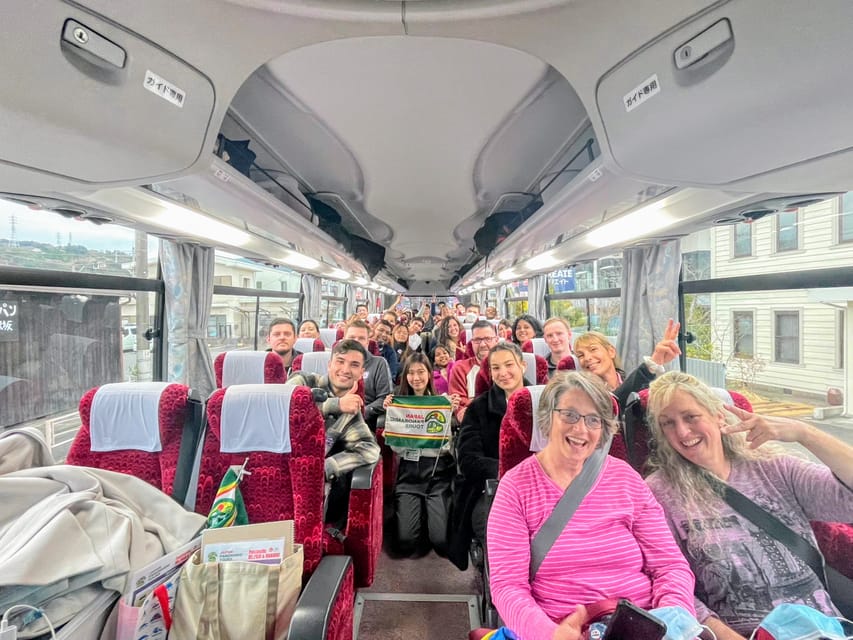
Then comes the reality-check: Tokyo can be slow in the morning, so you’ll feel the benefit of a coach tour. You’re not stuck between stations, and you’re not spending your energy figuring out transfers. The air-conditioned bus plus free Wi-Fi is a practical win, especially before midday when you’ll likely want your phone charged for maps and photos.
The bus also passes major districts like Kabukichō and goes by the Harajuku pop-culture stretch around Takeshita Avenue. Even if you never get out there on your own, the driving route gives you a useful mental map for where everything sits.
You can also read our reviews of more tours and experiences in Tokyo
Meiji Jingu: where the city noise disappears
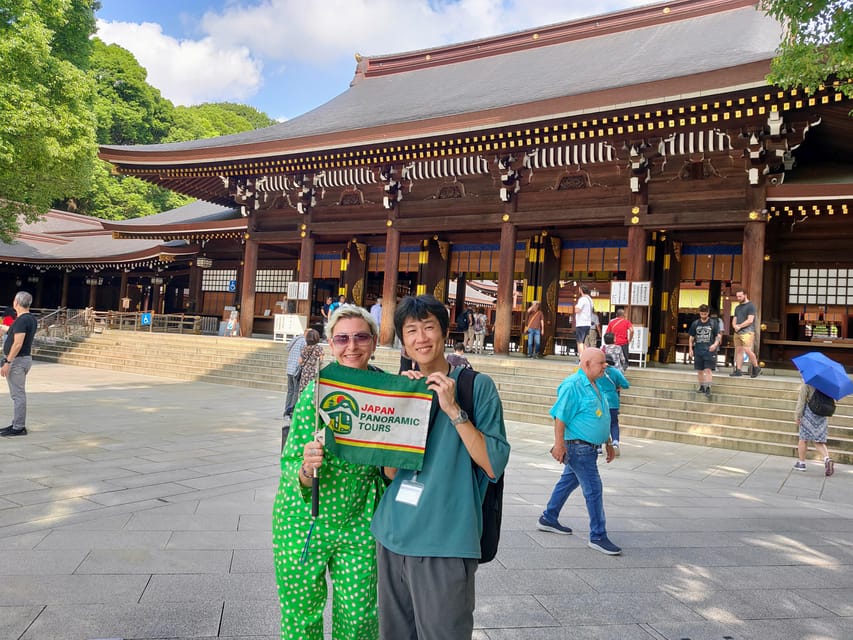
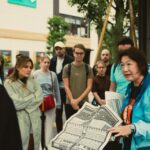
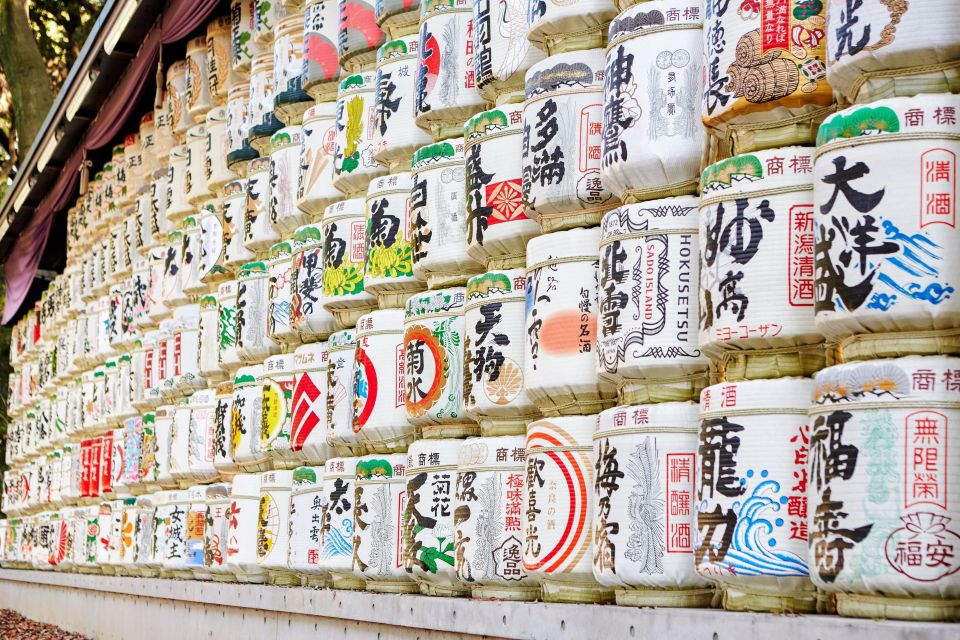
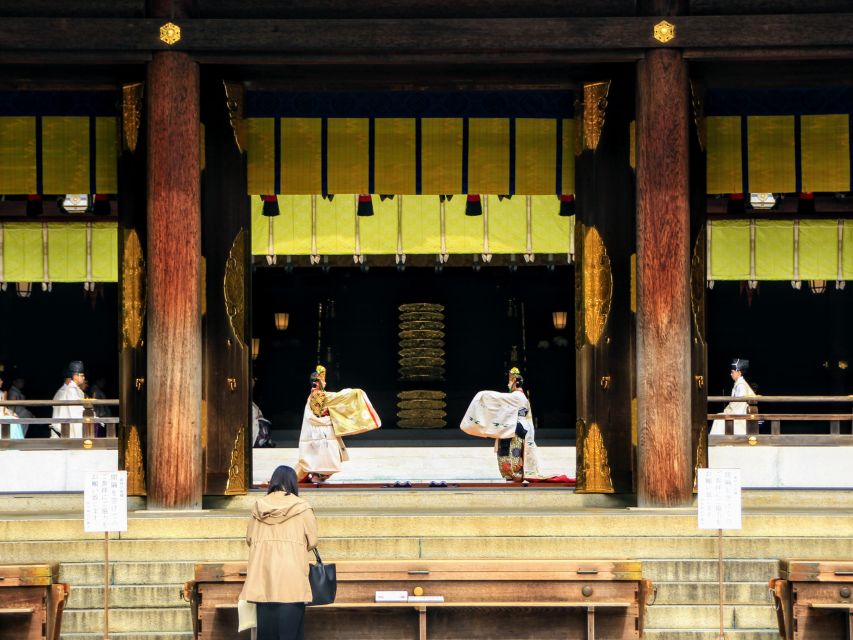
The tour begins with a classic, and I understand why: Meiji Jingu is one of Tokyo’s most memorable shrine experiences. The stop is at Meiji Jingu Shinto Shrine, built in 1921, dedicated to Emperor Meiji, and surrounded by deep forest. That alone makes it worth an early start. Tokyo still feels like Tokyo when you arrive, but once you’re inside the grounds, your brain starts acting like you’re somewhere quieter.
You also learn the traditional way of visiting a Shinto shrine. I’m not talking about a lecture you forget five minutes later. It’s the kind of guidance that helps you behave correctly without slowing everyone down. You’ll feel more confident doing simple things like where to stand, how to follow the flow, and how to participate respectfully instead of treating it like just another photo spot.
One practical tip: wear shoes you can walk in without thinking. The shrine grounds can involve unhurried walking paths, and you’ll want to stay comfortable while you take it all in.
Harajuku and Omotesandō pass-by: pop culture and clean design
After Meiji Jingu, the bus route swings toward Harajuku, passing Takeshita Avenue. This is a good moment in the day for a quick visual hit of Tokyo youth fashion and pop culture energy. You don’t need to chase every storefront; even seeing it from the road helps you place the area.
Then you roll into Omotesandō, known for upscale shopping streets and a more polished, architectural vibe. I like this contrast because it shows Tokyo’s range in one morning: forest shrine calm, then instantly back to fashion and design.
You also drive past the National Diet Building, Japan’s parliament house with a symmetrical design built in 1936. It’s the kind of landmark that’s easy to miss if you’re focused only on the big “tourist” spots. Here, it works as a quick geography lesson: you learn where government sits in relation to the areas you’ll want to explore later.
Imperial Palace photo stops: what you’ll actually see (and what you won’t)
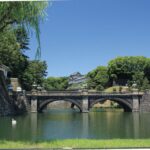
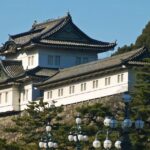
The Imperial Palace area is one of those “everyone knows it exists” places that can be tricky to navigate independently. Here, you get a guided photo stop at the Outer Gardens area. Depending on conditions, you visit either the East Garden (traditional Japanese gardens) or the Niju-bashi Bridge in the Outer Garden.
This matters because the difference between a bridge viewpoint and a garden viewpoint changes the photos and the vibe. A bridge is best for crisp structure and easy angles; a garden stop usually feels more about walking paths and atmosphere. Either way, you’re viewing the current residence of the Imperial family, and the site is also the location of Edo Castle. So you’re connecting modern Tokyo to older layers, even if the time on-site is brief.
Consideration: this is still a coach tour, so you’re not spending hours inside. If you want a deeper, more leisurely Imperial Palace visit, treat this stop as your introduction—something that helps you decide if you want to come back later.
Akihabara, Ueno, and Kappabashi: the useful detour beyond the postcard hits
After the Imperial Palace area, the bus drives through Akihabara, Tokyo’s center for anime and otaku culture. This is a smart inclusion for first-timers because it helps you understand that Tokyo isn’t only shrines and shopping streets. Akihabara brings a different kind of energy, one tied to fandom, tech, and hobby culture.
Then you pass Ueno, described as Japan’s oldest park. Even from a bus window, Ueno is a clue to why people plan longer stays around it. It’s one of those areas where you could easily spend an entire day if you start exploring properly.
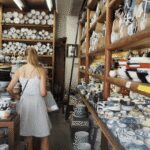
And then comes Kappa-bashi market street, a stop that’s especially practical if you like food and kitchen gear. The area is known for kitchen items—knives, serving tools, and more—and it also features very real-looking food replicas. If you’ve ever wanted to bring home a fun souvenir that’s tied to Japanese food culture, this is the kind of place that makes sense.
One thing to watch: you’re mainly seeing the area as you pass or stop briefly. If you want to shop deeply for specific items, you’ll likely need extra time on a separate trip later. Still, the stop is valuable because it tells you where that world is.
Asakusa and Sensō-ji: Nakamise street plus an actual matcha break
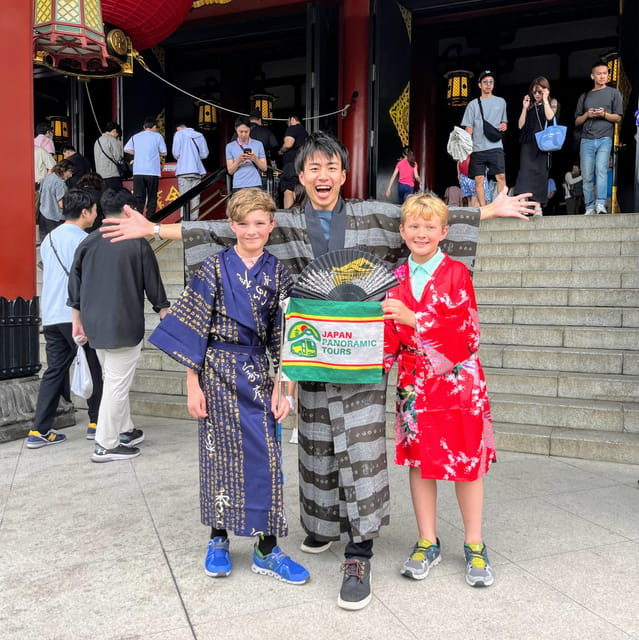
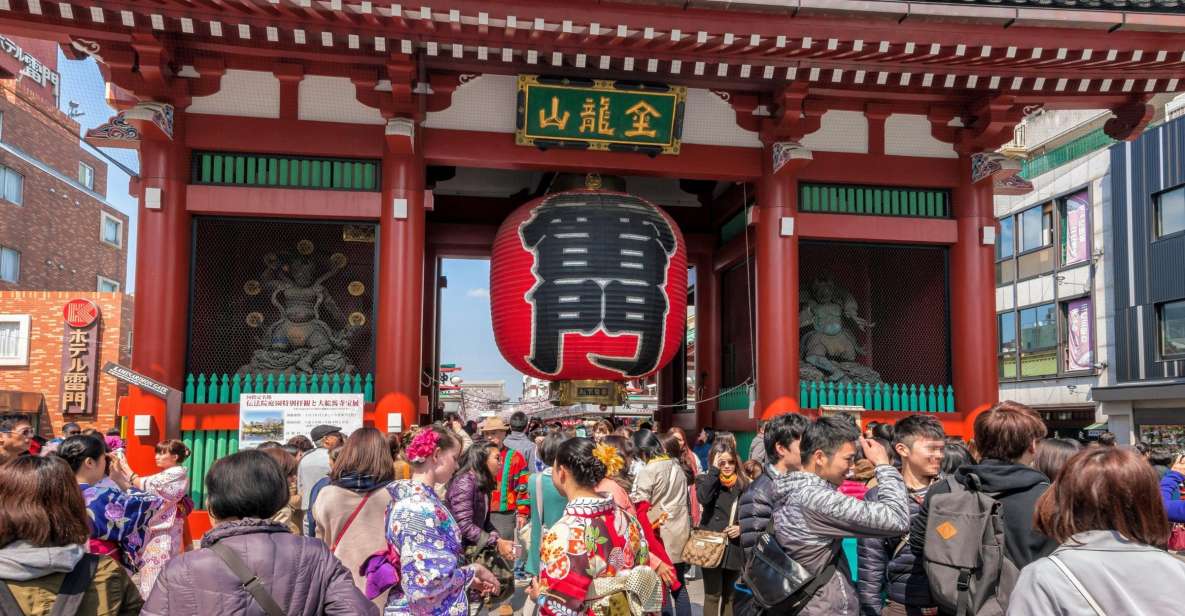
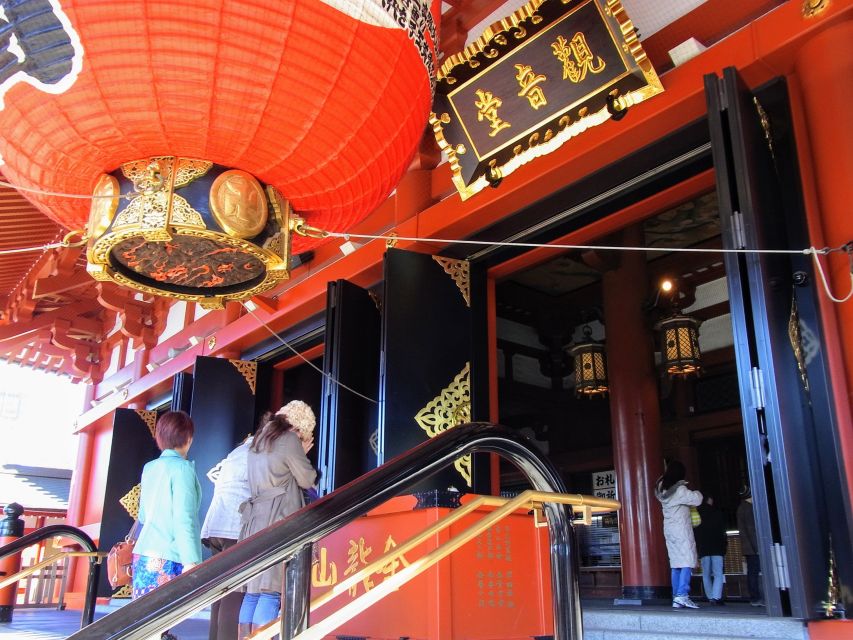
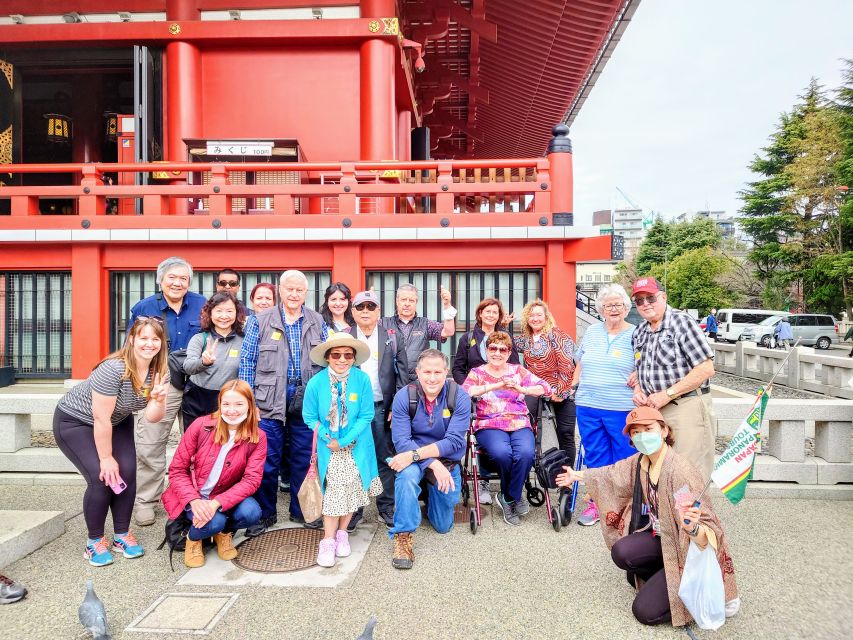
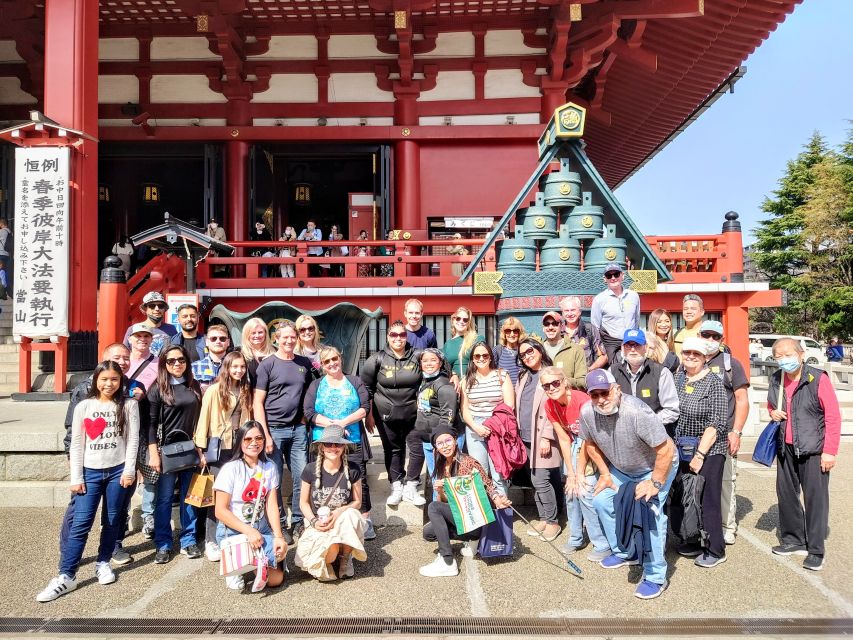
This is the reason many people book the morning tour: Asakusa. The tour finishes here at Sensō-ji, but you don’t arrive with everyone rushing through like a checklist. You get time to explore Nakamise Avenue and take photos at Kaminari-mon Gate, the iconic red lantern entrance. It’s busy in a good way—your photos will look like Tokyo.
Nakamise Avenue is the shopping street that connects the approach toward Sensō-ji. You’ll find the kinds of souvenirs and snacks that make you stop and look. Even if you don’t buy much, walking the street gives you a real sense of the area’s rhythm.
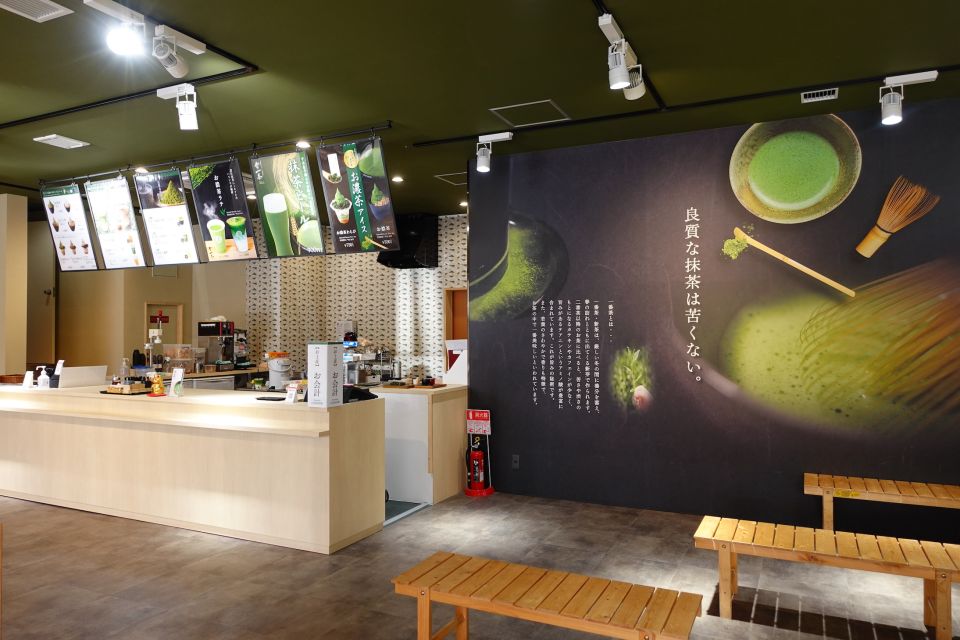
Then the tour includes a matcha experience at a historical place in Asakusa. The matcha is described as not bitter premium matcha using Ichibancha (first flush) from Uji, Kyoto. I like that detail because it explains the goal: a smoother taste profile instead of harsh bitterness. You can also choose sweet matcha gelato, and there’s an option for matcha beer.
Practical note: comfortable shoes matter again here. You’ll likely want to move around Nakamise and the Sensō-ji area at your own pace once you’re done with the tour segment.
Shinto manners and small moments that make the tour feel respectful
I’ve found that the best cultural tours teach you what to do, not just what to see. This one explicitly includes learning the traditional way of visiting a Shinto shrine at Meiji Jingu. That’s the difference between stepping into a sacred space like a tourist and stepping in like a guest.
It also helps that the guide and the audio headset support multiple languages. Even if you’re not using the audio all the time, it’s comforting to know you can switch when something is said too fast or you want a second pass at a detail. If your group includes non-English speakers, it makes the experience smoother since the coach provides audio in several languages: English, French, Italian, Spanish, German, Portuguese, UK English, and Ukrainian.
Value check: what $90 buys you (and what it doesn’t)
At around $90 per person for 210 minutes, this tour can be good value if you like guided structure. You’re paying for:
- a professional English live guide
- the coach ride between major districts
- live commentary plus multilingual audio headsets
- Wi‑Fi on the bus
- an included matcha drink or matcha gelato
- and a practical morning schedule that covers a lot of ground efficiently
What you should expect to pay extra for:
- lunch (not included)
- no hotel pickup and drop-off beyond the Ginza pickup option
I think the smartest way to judge the price is to translate it into your own day plan. If you tried to replicate this route on your own with transit, entrance planning, and timing, you’d spend a chunk of time just figuring out logistics. This tour turns that planning time into sightseeing time, especially if you’re new to Tokyo or you’re traveling with someone who doesn’t want to map every step.
Logistics that matter: timing, order changes, and the Asakusa ending
Tokyo morning schedules can shift. This tour notes that the itinerary order is subject to change depending on traffic, weather, and operational reasons. In practice, that means you should keep your day flexible and not treat the schedule like a rigid train timetable.
Also, this tour ends in Asakusa at Sensō-ji. The tour does not provide extra drop-off service afterward. If your hotel is far from that area, plan your next movement ahead of time. On the plus side, ending in Asakusa is convenient if you actually want to keep exploring—Sensō-ji and Nakamise street are exactly where you’d want to linger.
One more small but important item: you handle loading and unloading luggage from the trunk yourself. If you have a stroller or wheelchair, the guidance is to handle it during loading/unloading, so factor that into how you travel.
Who this Tokyo morning bus tour suits best
This is a strong fit if you:
- want a high-signal introduction to Tokyo’s top neighborhoods and landmarks
- don’t want to figure out transit between distant areas in the morning
- like guided explanations, especially around shrine etiquette
- want an easy cultural plus food stop with matcha in Asakusa
It might be less ideal if you:
- want long, slow time at one place (like a full Imperial Palace experience)
- plan to do heavy shopping in Kappabashi and need extended browsing time
- hate coach time and would rather build your own route entirely on foot and metro
Booking verdict: should you do it?
I’d book this tour if you want a guided, efficient Tokyo morning that blends iconic sites with real culture moments like shrine visits and a proper matcha break. The combination of live English guidance, multilingual audio support, and a matcha stop in Asakusa makes the $90 feel earned, not padded.
If you’re the type who loves lingering for hours in one neighborhood, skip this and build a slower plan. But if your goal is to see Tokyo’s highlights fast, this is a solid, well-structured way to start.
FAQ
How long is the Tokyo morning sightseeing bus tour?
The duration is 210 minutes.
Where does the tour start, and where does it end?
It starts in the Shinjuku area at 8am, or you can choose a Ginza pickup option near the Robert Indiana sculpture with the LOVE design. The tour ends in Asakusa at Sensō-ji, with no extra drop-off service.
Is there a live guide, and what language is it?
Yes. The live tour guide speaks English.
What languages are available for the audio guide?
Multilingual audio headsets are available in English, French, Italian, Spanish, German, Portuguese, UK English, and Ukrainian.
Is matcha included?
Yes. The tour includes a matcha drink or matcha gelato at the historical Asakusa matcha experience.
Is Wi‑Fi provided on the bus?
Yes. Free Wi‑Fi is available on the coach.
Do I need to bring anything?
Comfortable shoes are recommended, since you’ll walk at the shrine and around Asakusa.