REVIEW · TOKYO
Tokyo Sumo Morning Practice: Viewing & Exclusive Interaction
Book on GetYourGuide →Operated by 合同会社 TASUKI · Bookable on GetYourGuide
The best part starts before you even reach the stable. This Tokyo morning experience puts you close to real sumo training in a working environment, not a show built for tourists. You’ll begin at Narihira Park with clear etiquette coaching, then walk to active practice for the sights and sounds you only get this early. The tour is led by English support, and guides like Sarah and Sana (plus others such as Haru, Momo, and Ryoko) are part of what makes the experience feel orderly and welcoming.
What I like most is the exclusive interaction. After practice, you get a direct Q&A and commemorative photo with active wrestlers, with your guide helping translate and steer the conversation. I also love the souvenir value: you receive an official banzuke ranking sheet in a designed folder, then you close with a longer Q&A time so you can ask the questions that actually stick.
One consideration: this is early, and it’s strict about behavior. You’ll need to stay quiet during practice, no flash photography, and you can’t record video or audio (food and alcohol are also off-limits). If you want a casual, freestyle morning with lots of wandering, you may find the rules and early start a little rigid.
In This Review
- Key things to notice before you go
- Narihira Park start: the etiquette moment that makes everything better
- Walking into the stable: close-up training you don’t usually see
- If you visit during the Grand Sumo Tournament
- Seating inside practice: zabuton floor cushions vs. stools
- After practice: Q&A and photos with active wrestlers
- Park closing with the official banzuke ranking sheet
- The final Deep Q&A: your questions get real answers
- Price and value: is $93 worth it?
- Practical rules that affect your comfort (and your photos)
- Who this is best for (and who may not love it)
- Should you book this Tokyo morning sumo practice tour?
- FAQ
- Where do I meet for the tour?
- How long is the tour?
- Can I take photos or record video during the practice?
- Is food allowed during the experience?
- What changes during the Grand Sumo Tournament period?
- Is the tour suitable for young children?
Key things to notice before you go
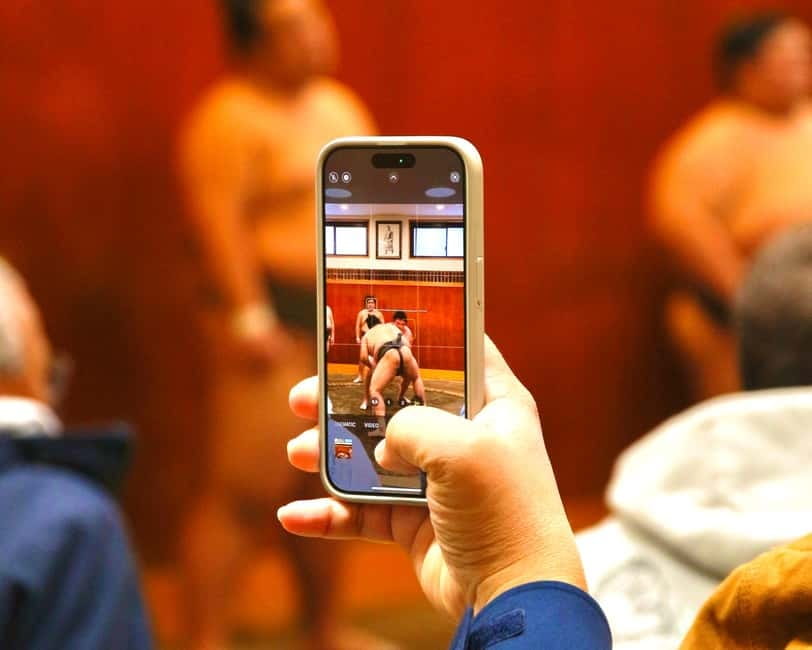
- Working-stable access: You’re watching a real training session that’s usually closed off to the public.
- Two rounds of Q&A: One after practice, plus a later park session for more questions.
- Flexible seating: Front-row zabuton floor cushions for an up-close feel, stools in the back if you prefer not to sit on the floor.
- Official banzuke souvenir: You don’t just get a generic keepsake—you get the real ranking sheet in a folder.
- Close photo opportunity: You’ll take commemorative photos with active wrestlers, coordinated through your guide.
- Tournament timing changes: During the Grand Sumo Tournament, the session starts earlier and the viewing window is about 1 hour.
Narihira Park start: the etiquette moment that makes everything better
Your morning kicks off at Narihira Park, near the multipurpose restroom. This matters more than you’d think. Sumo training has rules, and those rules set the tone for the entire visit. Before you walk to the stable, your guide checks names, hands out materials related to sumo, and explains the manners you’re expected to follow.
This part is useful because it helps you avoid common mistakes. If you know when to sit, when to be quiet, and how photography works inside the stable, you’ll feel less like you’re waiting for instructions and more like you’re part of the group. It also makes the conversation afterward easier, because you’ll already understand the basics of what you’re looking at.
Expect an early-morning vibe—quiet streets, calm energy, and a group that’s ready to behave respectfully. That early calm is part of the magic. Sumo feels more sacred before the crowds arrive.
You can also read our reviews of more tours and experiences in Tokyo
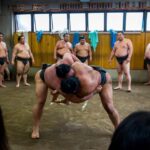
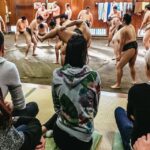

Walking into the stable: close-up training you don’t usually see
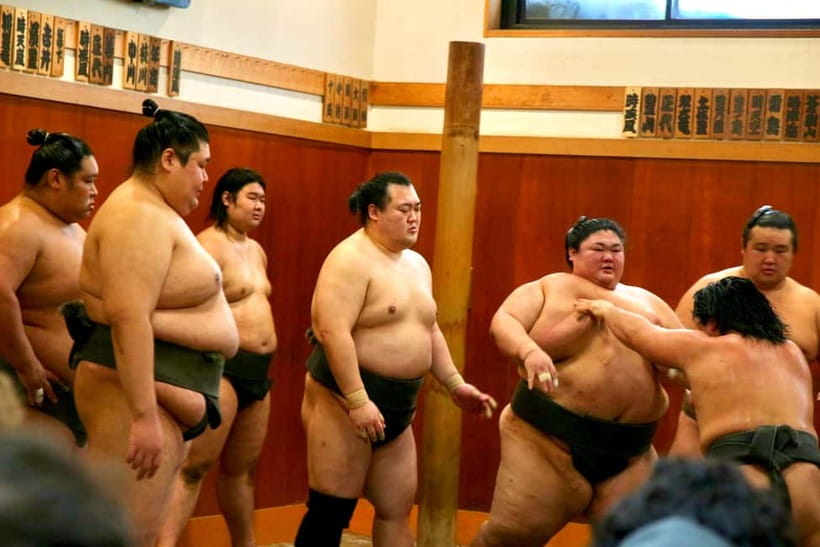
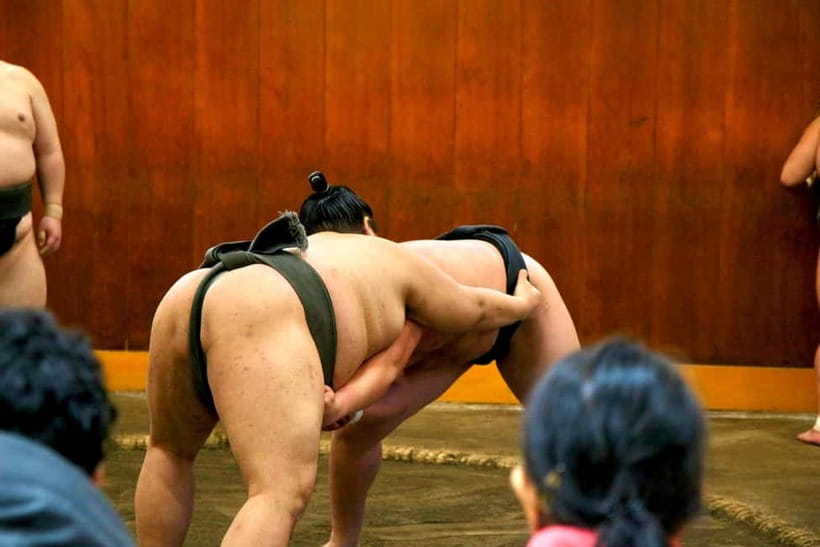
After a short walk, you arrive at an active sumo stable. This is the heart of the experience. You’re not watching scripted theatrics. You’re seeing professional athletes practicing with real intensity, in a real training space.
The tour is designed so you get a front-row view of warmups and training activity. You’ll notice the physical power immediately: the speed of warmup movements, the discipline of repetition, and how training looks more like work than performance. Up close, sumo has a different feel. The sport’s “slow” reputation doesn’t match what you see in the morning—bodies moving fast, focused, and controlled.
A practical note: photography is allowed, but you must stay quiet and follow rules on flash. And while you’ll be encouraged to take photos, the environment still expects restraint. That’s not a buzzkill. It’s part of why the athletes behave differently than they would in a tourist setting.
If you visit during the Grand Sumo Tournament
Timing can shift. During the Grand Sumo Tournament (roughly two weeks in January, May, and September), practice starts about 30 minutes earlier, and the viewing time is about 1 hour. So if your travel plan is tight, build in a little flexibility for those dates.
Seating inside practice: zabuton floor cushions vs. stools
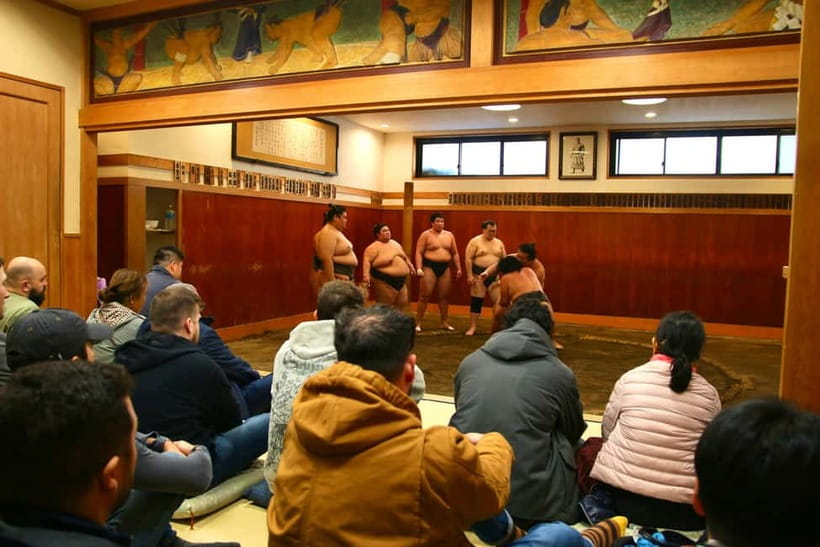
Inside the stable, you get flexible seating. This is a big deal for comfort because sumo practice usually asks you to sit still for periods while people train around you.
You can choose:
- Front-row zabuton cushions for the most immersive angle
- Stools at the back if you don’t want to sit on the floor
Here’s how to choose based on your body, not your pride. If you can comfortably sit cross-legged (or at least comfortably enough for a morning), the front-row zabuton experience can feel more intense in a good way—you’re closer to the action and the atmosphere. If you’re prone to leg numbness or back pain, the stools help you stay relaxed, which means you’ll enjoy the training more and take better photos without rushing to adjust constantly.
Either way, follow your guide’s placement instructions. Seating position can affect sightlines and flow inside the stable.
After practice: Q&A and photos with active wrestlers
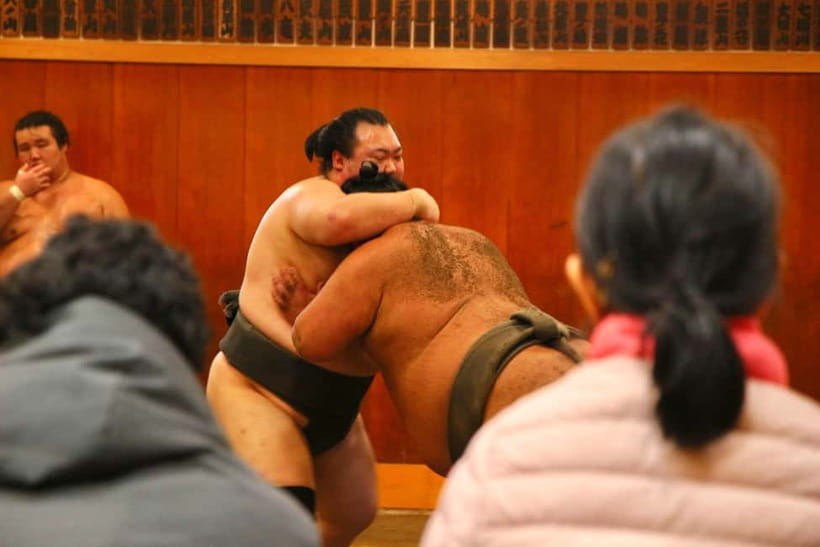
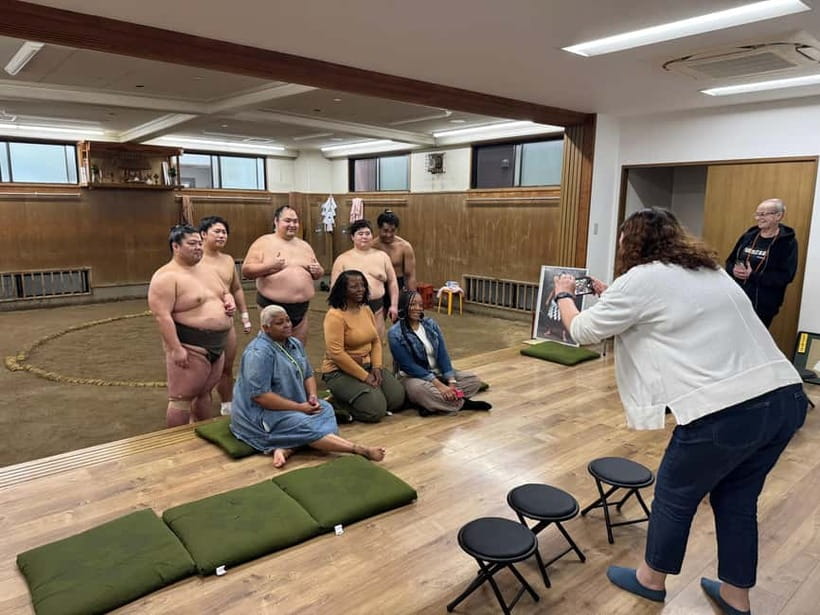
This tour doesn’t stop at viewing. The standout experience is the chance to talk with the wrestlers directly, with your guide helping translate and keep things respectful.
After training, you’ll have an opportunity for:
- a Q&A session where you can ask about daily life, training, and mindset
- a commemorative photo with active wrestlers
This is where the experience turns personal. Watching sumo is one layer. Hearing how they think about training, routine, and discipline is the layer that changes your understanding. The Q&A is also where you’ll pick up the practical meaning behind the rituals you saw earlier—why certain movements happen, how practice fits into life, and what it feels like to stay focused day after day.
One more thing: photos matter here because they’re coordinated, not random. You’re not trying to chase a moment with awkward timing. Your guide manages the timing so it stays orderly and doesn’t distract the wrestlers.
You might also see moments that turn participation into a memory, depending on how the stable runs that day. Some participants report being invited into the ring for short try-outs or sparring-style interactions. That’s not something to count on every time, but it’s the kind of “close encounter” the tour has offered in practice.



Park closing with the official banzuke ranking sheet
Once the stable session ends, you return to Narihira Park for the special closing. This is where you pick up your souvenir: an official banzuke ranking sheet, placed inside a souvenir folder.
This isn’t a generic “Japan souvenir” moment. The banzuke is the real ranking document used in sumo competition, so it gives you something concrete to connect with what you’re seeing in training. It also becomes a conversation starter later when you’re telling friends you saw active wrestlers up close.
The folder makes it easy to carry without damage, and it feels like a meaningful keepsake because it’s tied to the sport itself. When you’re paying for access and attention, it’s nice when the souvenir matches that standard.
The final Deep Q&A: your questions get real answers
Instead of rushing you into a meal stop or a fast exit, the tour builds in additional time at the park for a Deep Q&A with the guide.
This extra time is valuable because you can shift from general curiosity to specific questions. If something about the stable rules, rituals, training methods, or daily routine didn’t fully click earlier, you get another chance to ask. And because your guide is there for you, you can also get practical Tokyo tips—especially useful since the tour ends with you positioned to keep exploring.
The tour wraps up around 11:00 AM, which is perfect timing for connecting to the nearby areas like Tokyo Skytree or Asakusa. Think of it as an “early anchor” for your day: you get the cultural experience first, then you spend the rest of the morning and lunch area doing your own thing.
Price and value: is $93 worth it?
At $93 per person, this tour sits in the “you’re paying for access” category. In Tokyo, you’ll find cheaper cultural activities. But they often don’t give you working-stable proximity or direct interaction with active wrestlers.
Here’s what makes the value feel fair:
- Actual stable access (the kind of setting usually off-limits)
- Guide support that makes the rules, rituals, and Q&A easier to understand
- Two Q&A moments, not just a quick chat at the end
- An official banzuke in a proper folder, not a generic throwaway item
So the question isn’t whether it’s the lowest price. It’s whether you want a sumo experience that feels human and specific. If you care about seeing training in context—and you like asking questions—you’re paying for that intimacy.
If you’re the type who just wants a quick photo and a casual walk-through, you might feel like the structure and rules are more than you need for the money.
Practical rules that affect your comfort (and your photos)
This tour keeps things respectful and controlled. You’ll need to follow the restrictions:
- no flash photography
- no video recording
- no audio recording
- no food during the visit
- no alcohol and drugs
Photography is allowed, but quiet behavior is part of the deal. That means you should plan to take fewer, better photos rather than trying to capture everything.
Also, you should be aware that the stable environment can be tight. Wear practical clothes and consider bringing a calm, “quiet” mindset for the training portion. The payoff is that the experience stays focused on the wrestlers, not on the crowd.
Who this is best for (and who may not love it)
This tour is a strong fit if you:
- want a real training morning rather than a staged performance
- like cultural explanations and etiquette, not just watching from the sidelines
- enjoy Q&A and want to learn how athletes view training and life
- want a meaningful souvenir tied to the sport itself (the banzuke)
It may be less ideal if you:
- don’t handle early mornings well
- need to eat during the activity window
- strongly prefer lots of recording or nonstop roaming
- are traveling with young kids—children under 6 aren’t suitable for this tour
Should you book this Tokyo morning sumo practice tour?
I’d book it if you’re the type who remembers small moments: a wrestler’s answer to a thoughtful question, the feel of an official banzuke ranking sheet in your hands, and the quiet intensity of training you can actually see up close. The price makes more sense when you focus on access plus interaction, not just the viewing.
Skip it (or think hard) if you want a laid-back sightseeing morning where you can talk loudly, record everything, or treat the stable visit like a casual photo stop. The rules are part of what keeps the experience authentic.
If your goal is to understand sumo as a living discipline—not just a spectacle—this is one of the better ways to do it in Tokyo.
FAQ
Where do I meet for the tour?
Meet near the multipurpose restroom at Narihira Park. Your guide will check your name and explain important manners before you head to the stable.
How long is the tour?
The tour duration is 3 hours, and it wraps up around 11:00 AM.
Can I take photos or record video during the practice?
Photography is allowed, but you must follow the rules (including no flash). Video recording and audio recording are not allowed.
Is food allowed during the experience?
No. Food is not allowed during the visit.
What changes during the Grand Sumo Tournament period?
During the Grand Sumo Tournament (about two weeks in January, May, and September), practice starts about 30 minutes earlier and the viewing time is about 1 hour.
Is the tour suitable for young children?
Children under 6 years are not suitable for this tour.