REVIEW · TOKYO
Tokyo: Japanese Calligraphy Lesson with Skilled Instructor
Book on GetYourGuide →Operated by Experience Calligraphy Tokyo · Bookable on GetYourGuide
Tokyo calligraphy can feel fancy and intimidating. This lesson keeps it human: you choose a word, get it explained in clear English, and turn it into a real keepsake in one hour. The small-group setup in Asakusa helps you move at your own pace, not like you’re rushing through an attraction.
What I like most is the focus on meaning before strokes. You’ll see sample works, understand the word or phrase, and then practice the writing the way your instructor guides you. My other favorite part is the hands-on payoff: you produce a souvenir like an uchiwa, shikishi, or kakemono, plus a commemorative photo to take home.
One possible drawback to consider: with only 60 minutes and a small set of materials, you’re not signing up for a long study program. If you want lots of historical theory or very advanced technique drills, this format may feel short.
In This Review
- Key highlights you should know before you book
- A one-hour calligraphy workshop that ends with something you can keep
- Choosing your word or phrase: meaning comes first
- Practice on 20 sheets of hanshi: the real lesson is in repetition
- Turn your writing into a souvenir fan, board, or scroll
- Working with Shusuke: calm coaching and multilingual support
- Price and value: what $45 covers in a real, useful way
- Who should book this calligraphy lesson
- Practical tips to get better results fast
- Should you book this Tokyo calligraphy lesson?
- FAQ
- What is the duration of the calligraphy lesson?
- How much does it cost, and what’s included?
- What can I make during the class?
- Do I need to speak Japanese to join?
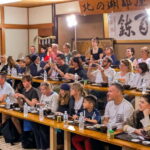
- How big is the group?
- Can I cancel, and is there a pay-later option?
Key highlights you should know before you book
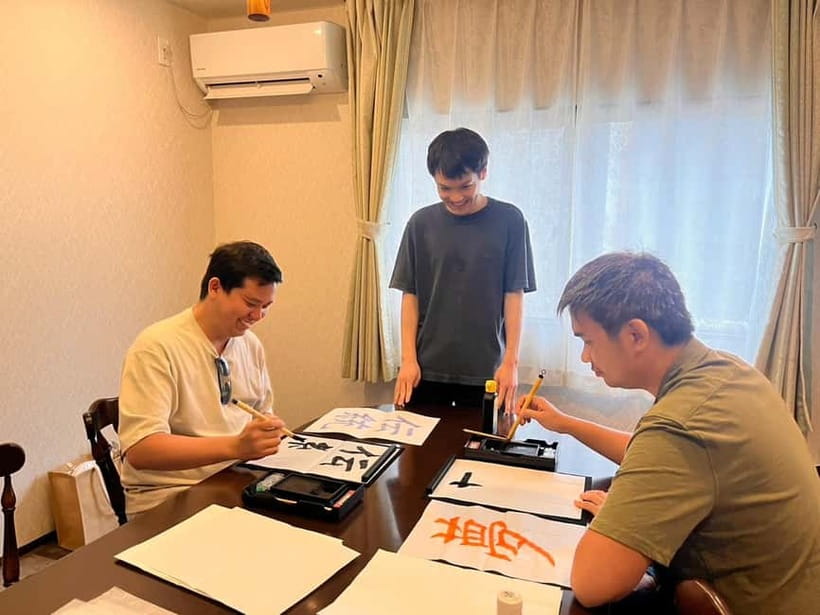
- Choose your own word or phrase after seeing sample calligraphy with meanings explained in English.
- Practice on 20 sheets of hanshi, with enough time (around 30 minutes) to correct your strokes.
- Make a souvenir you can actually use or display: uchiwa fan, shikishi decorative board, or kakemono hanging scroll.
- A fluent, patient instructor helps with technique and meaning, and communicates in English and Japanese.
- Small group of up to 4 means you get more direct attention than in big classes.
- Commemorative photo so you leave with proof of your final piece, not just a new skill.
A one-hour calligraphy workshop that ends with something you can keep
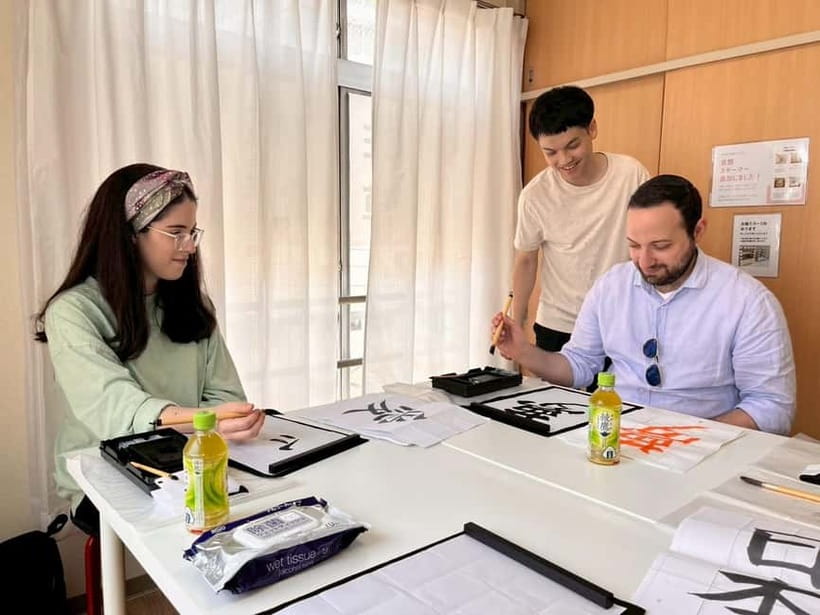
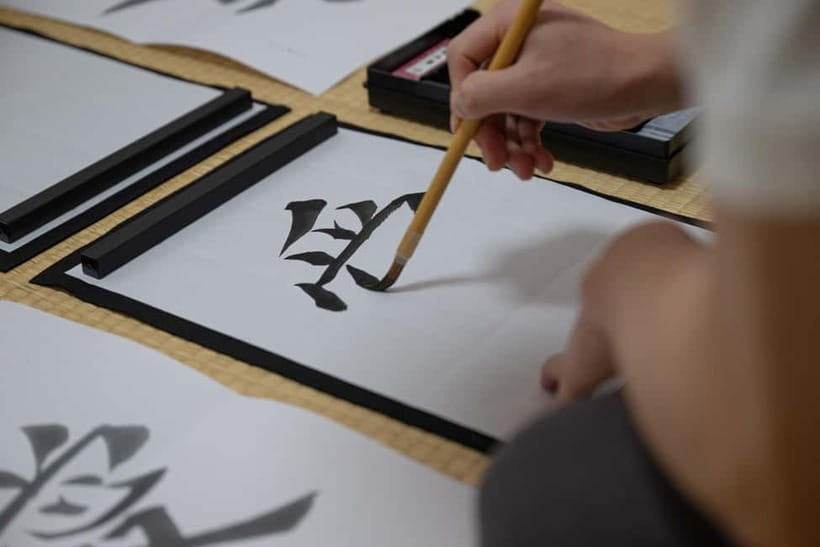
This class happens in Asakusa, in one of the area’s rental rooms. Depending on what’s available, you’ll be in a traditional tatami-style room or a Western-style room with a table and chairs. Either way, the setting matters: it’s quieter than most busy tourist stops, and it’s set up for writing, not sightseeing.
The timing is simple: one hour total. That short window is part of the appeal. You’re not waiting around for a multi-stage production. Instead, you’re guided from first decision (choosing a word) to final output (your souvenir) without getting lost in a long schedule.
You’re also paying for a complete experience, not just watching. Materials are included, and you’re limited to four participants, which helps the instructor notice how your wrist, pressure, and flow are working.
You can also read our reviews of more tours and experiences in Tokyo

Choosing your word or phrase: meaning comes first
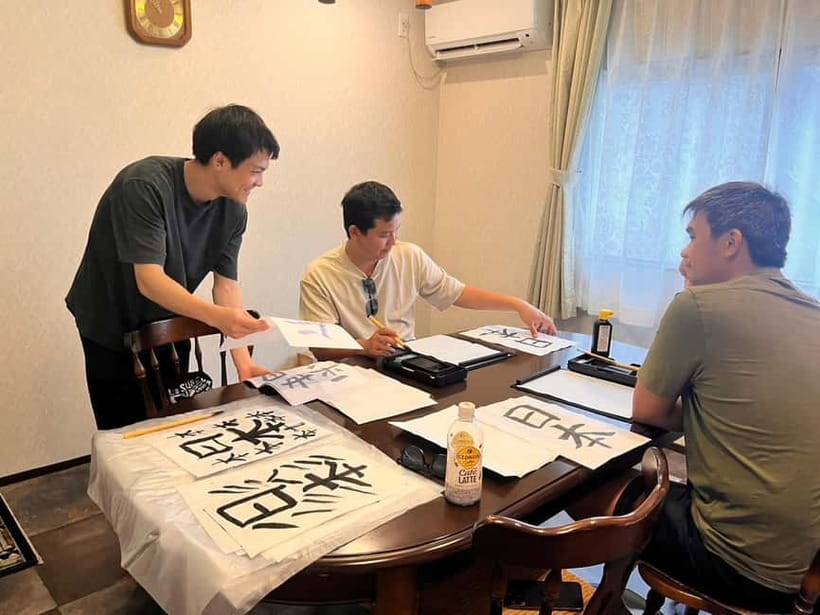
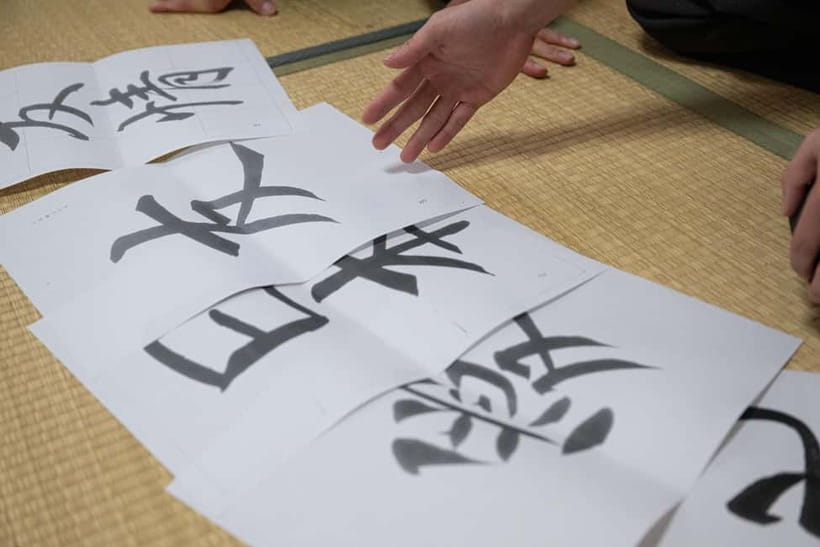
The first stage is all about choice. You’ll look at several sample calligraphy pieces, each tied to a specific meaning and cultural significance. The instructor explains what the word or phrase means in English, so you’re not left guessing.
This is a smart setup for most visitors, because calligraphy isn’t only about making pretty shapes. It’s tied to the idea behind the writing. When you understand what you’re making, the strokes start to feel purposeful instead of random.
The class structure nudges you to pick something that fits you personally. Want something poetic? Choose a phrase with that vibe. Want something more practical? Pick a word that matches your mood for the trip. Even if your Japanese is basic, the English explanations let you make an informed decision.
A quick consideration: if you overthink, you can lose time. Decide early. You can always refine your writing later during the practice portion.
Practice on 20 sheets of hanshi: the real lesson is in repetition
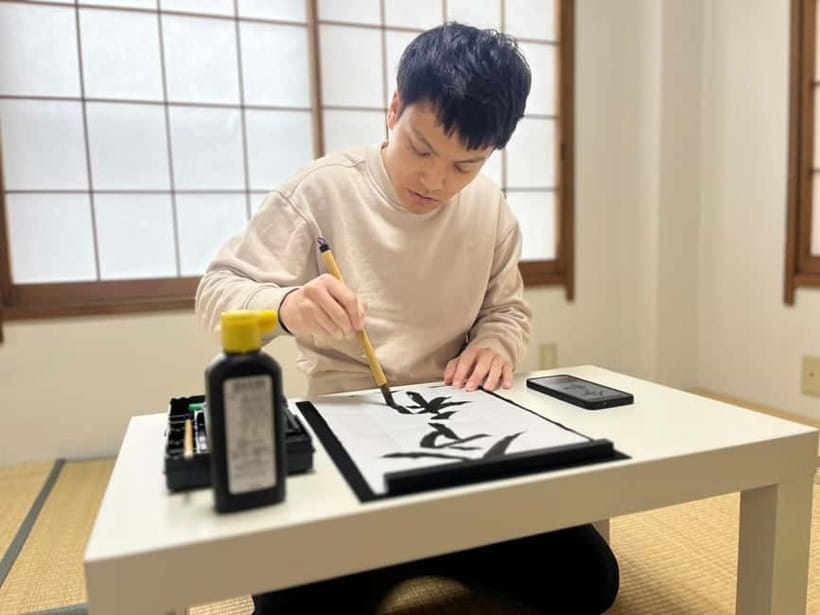
After you choose, you move into writing practice. You’ll use hanshi (calligraphy paper) and focus on your chosen word or phrase. Each participant gets 20 sheets, which is more useful than you might expect.
Here’s why: calligraphy improves through tiny adjustments. Your first attempt often has the right idea but the wrong stroke weight, spacing, or direction. The second attempt gets closer. By the time you reach the middle of your stack, you can feel the rhythm.
The class gives you about 30 minutes of practice time, guided by the instructor. That guidance is the difference between trying to copy and actually learning how to control your strokes. You’ll get tips as you write, not after you’re finished.
One detail that makes a big difference: you’re practicing before you commit the final look to your souvenir item. That saves you from the most common beginner problem, which is rushing straight to the finished piece.
Turn your writing into a souvenir fan, board, or scroll
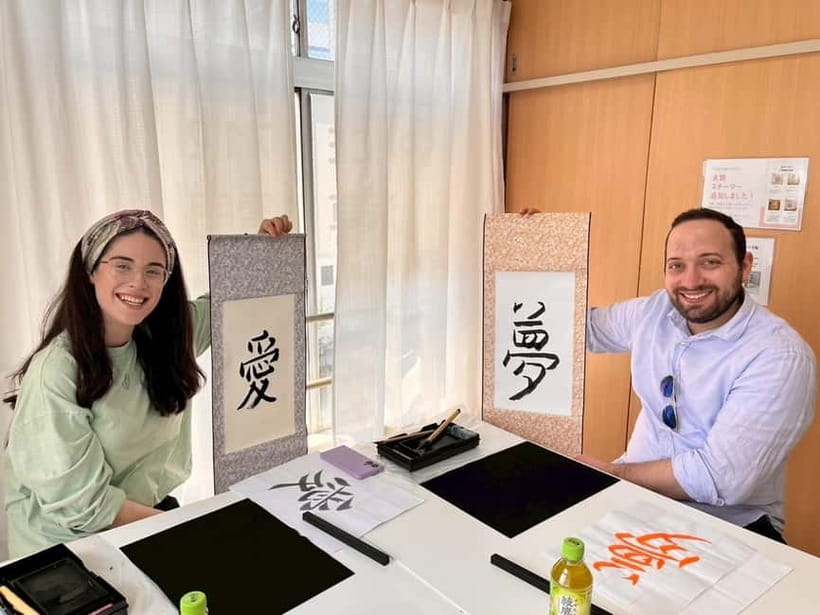
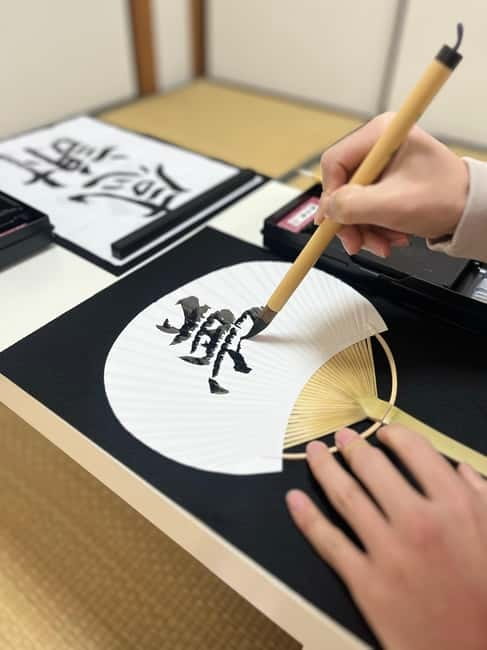
This is the satisfying part. Once your instructor says your version is ready, you transfer your chosen calligraphy onto a souvenir item you select:
- Uchiwa (traditional fan)
- Shikishi (decorative board)
- Kakemono (hanging scroll)
This choice matters because each format changes how you think about layout. A fan is meant to be viewed in hand and from a distance. A hanging scroll invites more attention to vertical flow. A board feels like wall decor—balanced and display-friendly.
If you want the easiest souvenir to take home and live with, you might lean toward the fan or board. If you want something more ceremonial and display-forward, the kakemono is the classic pick. The good news is you’re not stuck with one option. You choose your style during the session.
Before the class ends, you get a commemorative photo with your finished masterpiece. For many people, that’s the memory anchor that makes the souvenir feel like a story, not just a purchase.
Working with Shusuke: calm coaching and multilingual support
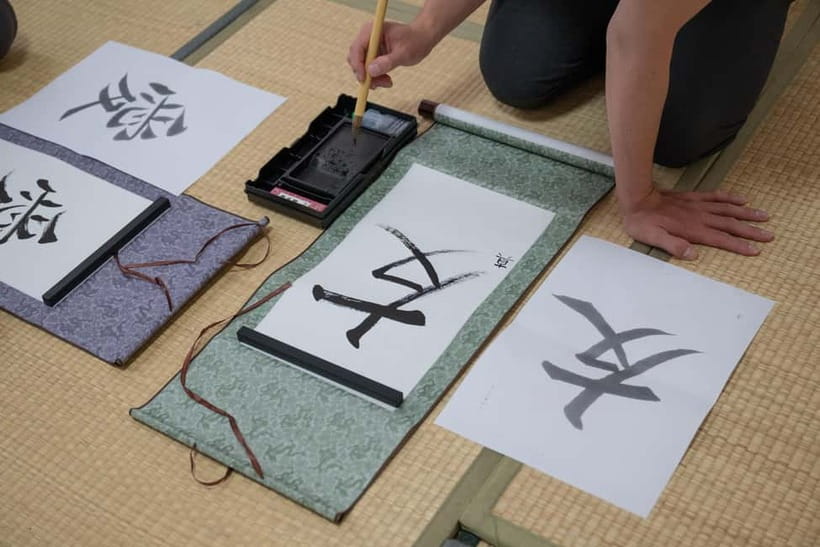
The instructor, Shusuke, brings real teaching experience. He’s certified in Japanese calligraphy with a rank of 3rd Dan through the Japan Educational Calligraphy Federation, and he has over 10 years of calligraphy instruction experience.
The practical value here is simple: he doesn’t just provide materials. He guides your technique. In a one-hour lesson, that matters more than fancy extra talk, because time is limited and your improvement depends on corrections in the moment.
Language support is also a major plus. Shusuke is native in Japanese and has advanced English. He also speaks beginner Korean, which can help in mixed-language groups or for participants who speak Korean at a basic level.
From the way the session is structured, you’re not expected to already know how calligraphy works. Instead, you’re taught how to interpret the strokes and how to adjust while you practice.
Small group size (up to 4 participants) also helps here. You’re more likely to get personal feedback when your strokes need a specific correction.




Price and value: what $45 covers in a real, useful way
At $45 per person for one hour, the question isn’t only affordability. It’s what you’re actually getting.
You’re paying for:
- English explanations of your chosen word or phrase
- Direct, step-by-step instruction
- 20 sheets of hanshi for practice
- A finished souvenir (uchiwa, shikishi, or kakemono)
- A commemorative photo
A basic craft experience where you only copy a finished model can be cheaper. But this class is different because you generate the choice, you practice the writing first, and you finish with a physical keepsake. Materials and the souvenir are built into the cost, so you’re not adding extra spending for paper, ink, or the final item.
Also, the small group size is part of the value. You get more attention per person than you would in a larger workshop, even though the total time stays short.
Who should book this calligraphy lesson
This works best if you want:
- A meaningful souvenir that’s tied to a word or phrase you understand
- A calm, hands-on activity during your Tokyo stay
- An experience that’s not locked to your language skills
- A teacher who can guide technique in a short timeframe
It’s also a good choice for people who feel awkward in structured classes. Calligraphy sounds strict, but the lesson approach is supportive: choose, practice, refine, then finish.
If you’re someone who wants a long multi-session course, heavy art-history theory, or advanced calligraphy drills with lots of repetition beyond the included sheets, you might feel limited by the one-hour format.
Practical tips to get better results fast
You’ll do best if you treat the hour like a sprint with feedback, not a casual doodle session.
- Pick a word or phrase you can commit to quickly. You’ll write it many times on paper, so choose something you genuinely want.
- Pay attention to stroke direction and spacing early. Small fixes early improve your later practice sheets.
- Ask questions while you’re writing, not only at the end. That’s when the instructor can correct what you’re doing in real time.
- Decide your souvenir choice based on how you want to display it. Fan and board are easy to keep; scrolls look more formal.
- Use the commemorative photo moment as your final checkpoint. Your piece is the result of the practice, so make sure you’re happy with how it looks.
One more small thought: calligraphy is as much about control as it is about style. If one character looks off, don’t panic. The next sheet is your chance to correct it.
Should you book this Tokyo calligraphy lesson?
If you want a hands-on Tokyo memory that isn’t just a photo at a landmark, this is a strong booking. The mix of meaningful word selection, guided practice on included paper, and a souvenir output makes the one hour feel complete. The small group and Shusuke’s 3rd Dan instruction background are practical advantages, not marketing fluff.
Book it if you’d enjoy:
- learning the meaning of your chosen Japanese word in English
- making something you can display at home
- getting real feedback on your strokes
Skip it only if you’re craving a longer, deeper calligraphy course or want advanced technical instruction that takes more than one session to build.
FAQ
What is the duration of the calligraphy lesson?
The lesson lasts 1 hour, with availability for different starting times.
How much does it cost, and what’s included?
It costs $45 per person. You’ll get instruction, access to word samples with English meanings, 20 sheets of hanshi, your choice of souvenir (uchiwa, shikishi, or kakemono), and a commemorative photo.
What can I make during the class?
You can create a calligraphy piece on one of these souvenir options: uchiwa (fan), shikishi (decorative board), or kakemono (hanging scroll).
Do I need to speak Japanese to join?
No. The lesson is taught with English support (and Japanese is also used). The instructor explains the meanings in English so you can choose confidently.
How big is the group?
The class is a small group with a maximum of 4 participants.
Can I cancel, and is there a pay-later option?
Yes. There is free cancellation up to 24 hours in advance for a full refund. You can also reserve now & pay later, so you can book without paying immediately.