REVIEW · TOKYO
Tokyo: Mt Fuji 3 Lakes Day Trip | 9-Guest Small Group
Book on GetYourGuide →Operated by Leda Japan · Bookable on GetYourGuide
Fuji day trips are usually crowded. This one takes a smarter route with three-lake calm and a small-group pace.
I like the focus on viewpoints most people miss. You’re not just ticking boxes around Lake Kawaguchi. You get Lake Shoji and Hirano Beach too, where the mountains can feel far more private.
One thing to keep in mind: while entry costs for optional stops aren’t included (like the ropeway, cruise, and museum), plans can also shift a bit depending on what’s running that day. In other words, build in flexibility for how much you can do beyond the core stops—especially if you were hoping for a specific activity.
In This Review
- Key highlights you’ll actually care about
- Leaving Tokyo: pickup timing that really matters
- Lake Shoji: Fuji’s quieter mirror (and why it feels different)
- Oishi Park and the seasonal swap system
- Lake Kawaguchi choices: cruise, ropeway, music museum, and more
- Option 1: Lake Kawaguchi cruise
- Option 2: Mt. Kachikachi Ropeway to Tenjozan Park
- Option 3: Lake Kawaguchi Music Forest Museum
- The Fuji “Lawson framing” moment and Hikawa Clock Shop
- The viral Lawson Store photo
- Hikawa Clock Shop
- Hirano Beach on Lake Yamanaka: the quiet payoff
- Price and value: $20 worth it, or just marketing?
- Who this Mt Fuji 3 lakes day trip suits best
- Tips to make the day smoother (and less tiring)
- Should you book this tour?
- FAQ
- What’s the total duration of the tour?
- Where do pickups happen?
- What language support do you get?
- Are meals included?
- Are entry tickets included for activities like the ropeway or cruise?
- What should I bring, and what’s not allowed?
- Is this tour refundable if I cancel?
Key highlights you’ll actually care about
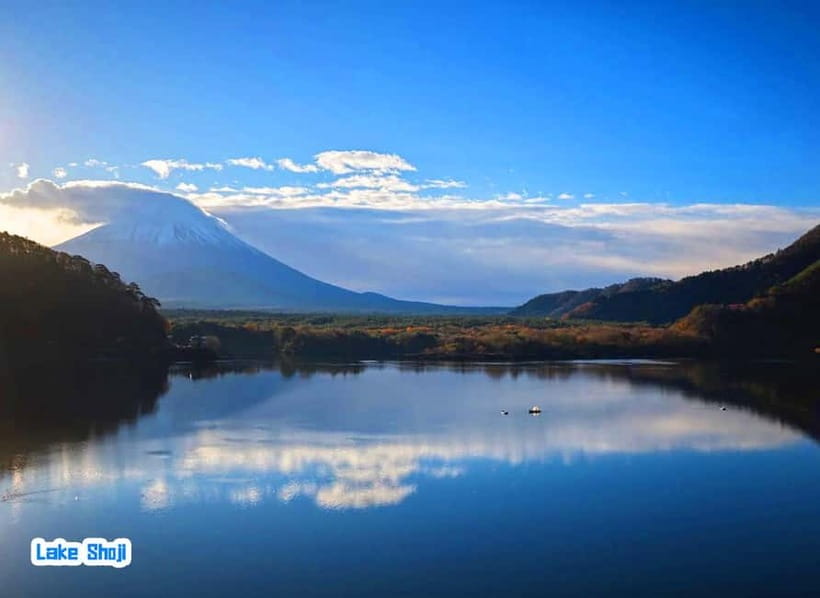
- Three quiet Fuji lakes: Lake Shoji, Lake Yamanaka (Hirano Beach), and the Lake Kawaguchi area
- Seasonal swaps: your main garden stop changes by month, so it’s not the same tour year-round
- Photo-heavy, but not cheesy: Fujiverse views, including the famous convenience-store framing and mirrored reflections
- Timed for daylight: golden-hour style views are built into the schedule for Hirano Beach
- English/Chinese support: (EN/CHI) guidance plus direct driver contact makes it easier to stay with the group
Leaving Tokyo: pickup timing that really matters
This is a true day trip, about 10 hours door-to-departure, with a morning start and a return drop-off back to Tokyo. The schedule runs like this:
- 7:30–8:30 AM: hotel pickup in multiple central wards (including Shinjuku, Chiyoda, Chuo, Shinbashi, Akasaka, Tamachi, Shiodome, Hamamatsuchō, Roppongi, and Taito)
- JR Tokyo Station meetup if you booked the package meet-up (the Marunouchi North Exit)
- Around 10:00 AM: you start Lake Shoji
- By ~4:00 PM: you head back toward Tokyo, usually dropping you around 6:00 PM
Here’s the practical part: pickup order and timing are set by the driver-guide, and late arrivals don’t get accommodated. So if you’re going from a hotel lobby, be ready a bit early and keep your phone handy.
Also, you’ll receive your guide’s direct phone contact the night before (email, including spam folder). On tour day, that phone/WhatsApp link is your safety net if anything gets confusing at the meeting point.
You can also read our reviews of more tours and experiences in Tokyo

Lake Shoji: Fuji’s quieter mirror (and why it feels different)
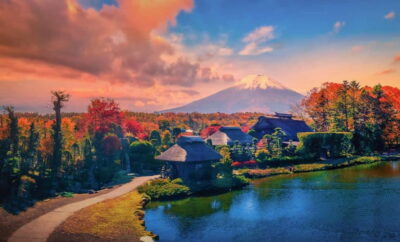
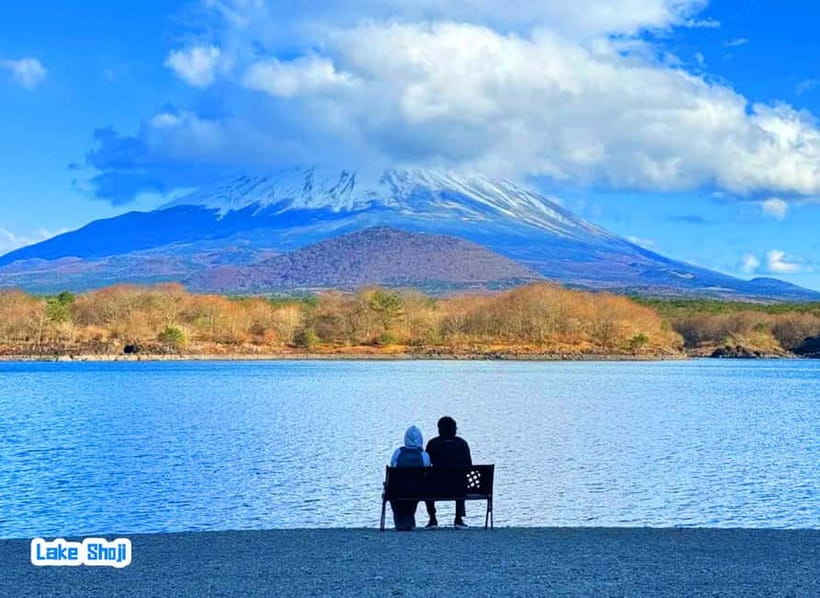
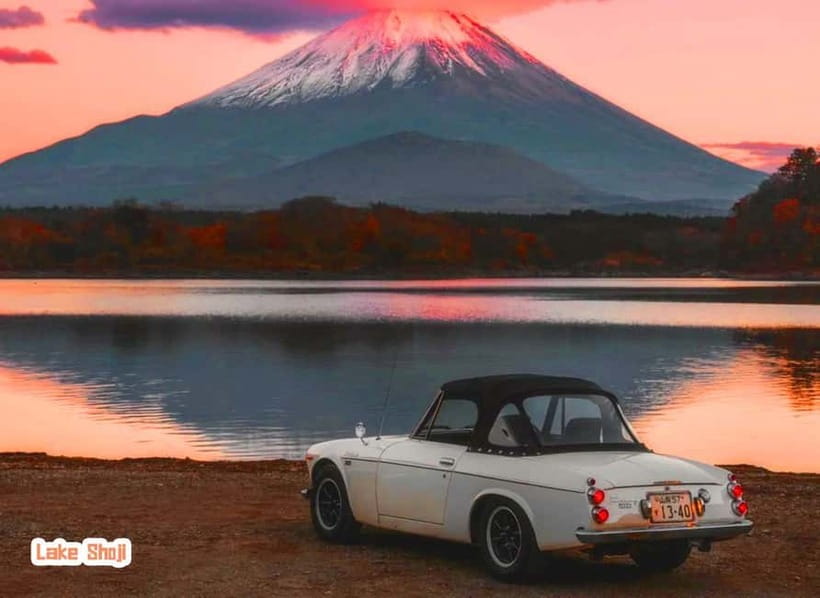
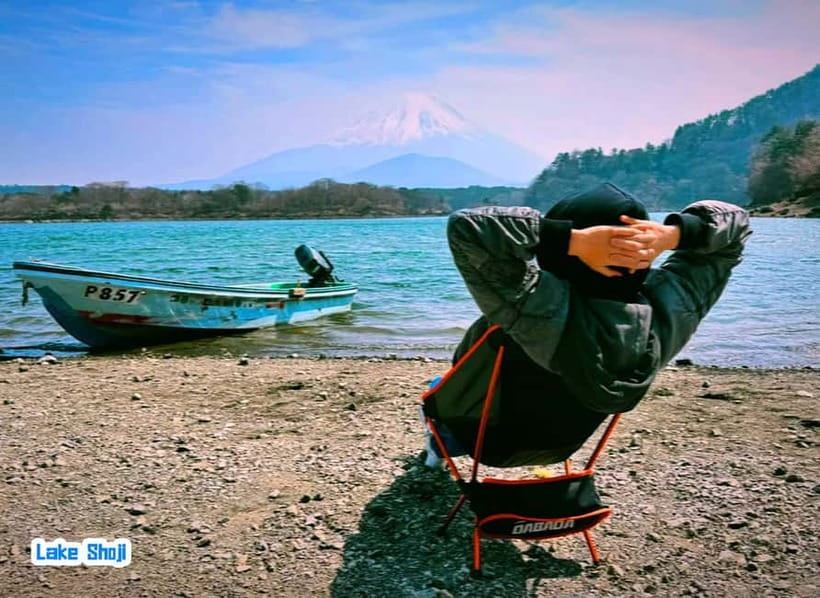
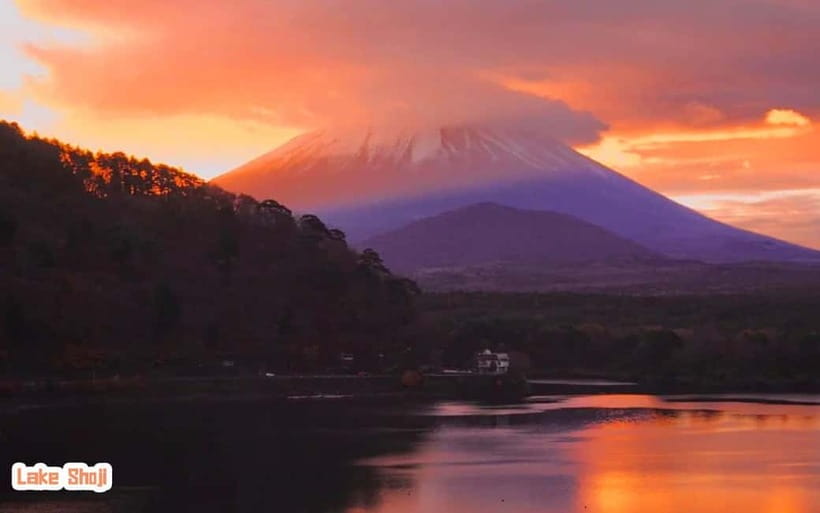
Lake Shoji is the tone-setter. The whole vibe changes there because it’s not the main “Instagram loop.” The payoff is that Fuji can look steadier and calmer—especially when skies cooperate.
The season changes what you’ll see:
- Spring: cherry blossoms
- Summer: emerald forests
- Autumn: fiery fall colors
- Winter: snow-dusted serenity
There’s also a spiritual stop at Sengen Shrine, which helps explain why Fuji isn’t just a view. It’s part of people’s lives and traditions—so when you look at the mountain later, it lands differently.
If you’re the type who gets bored when a tour is all fast stops and no context, Lake Shoji is the spot where the day feels like it has breathing room.
Oishi Park and the seasonal swap system
Next comes the main garden-and-flowers stretch around the Lake Kawaguchi area. This is where this tour tries to avoid the “same-day, same-everything” problem.
Your stop is Oishi Park (or seasonal alternatives) for about 150 minutes plus lunch, and the flower theme depends on the time of year:
- Lavender (Jun–Jul)
- Cosmos (Sep–Oct)
- Snow art (Dec–Feb)
If your dates line up with it, there’s also a special callout: the Lake Kawaguchi Cherry Blossom Festival (Mar 25–Apr 15), with pink canopy walking and festival treats.
Why this matters: timing in Japan is everything. A generic tour often shows up “near Fuji” but still delivers the wrong season. Here, the route adjusts so you’re more likely to see what’s actually photogenic right then.
Lake Kawaguchi choices: cruise, ropeway, music museum, and more
This part is structured as a choose-your-own set of options (you pick one adventure from three), and then the tour continues with a few extra stops.
Option 1: Lake Kawaguchi cruise
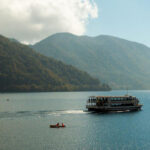
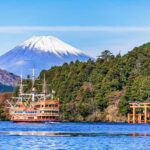
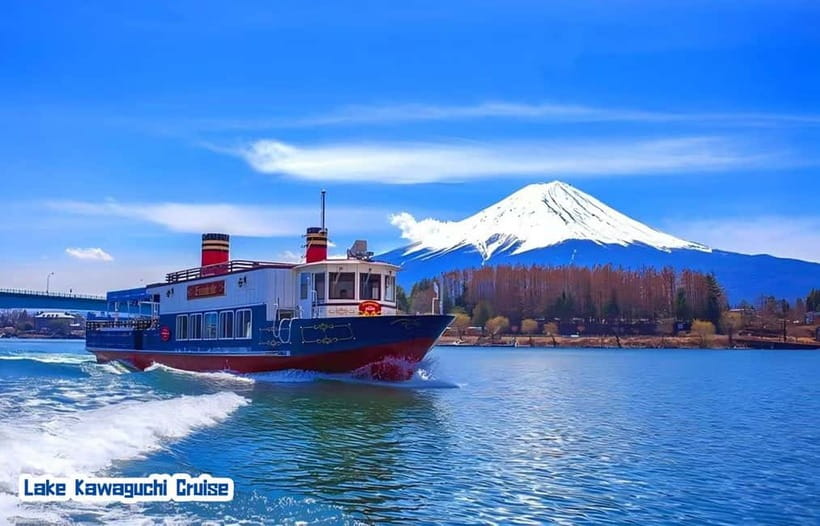
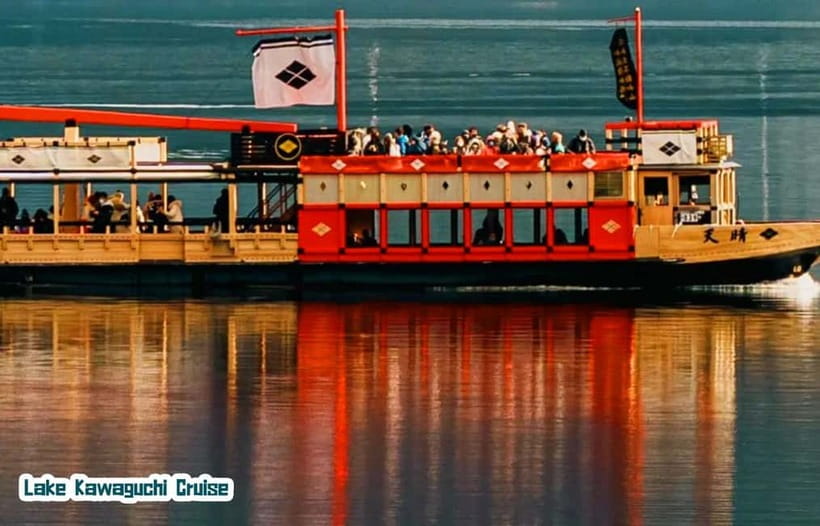
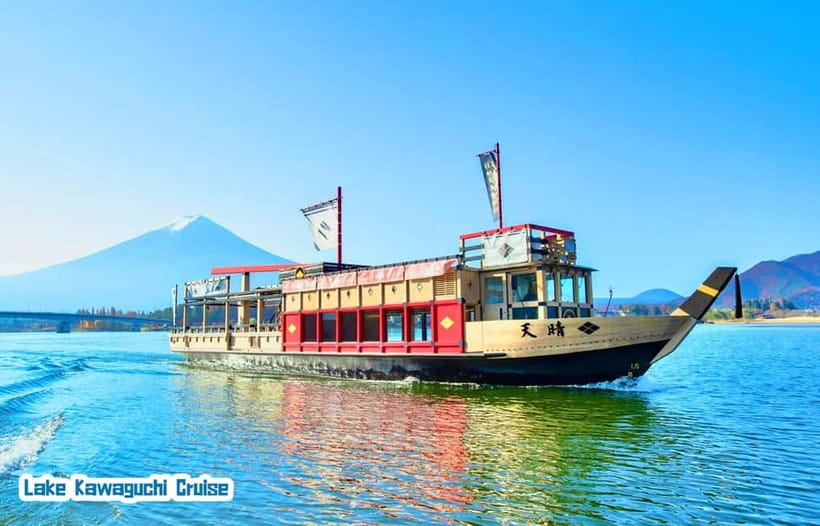
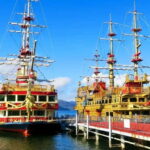
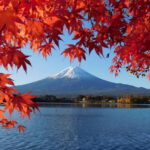
You can take the Tenkyo sightseeing boat, modeled after a 16th-century warship. It’s a short ride (about 20 minutes), but it’s timed so you can watch Fuji from a different angle and catch that famous “upside-down Fuji” reflection effect when conditions are right.
Option 2: Mt. Kachikachi Ropeway to Tenjozan Park
This is a 3-minute ride up to panoramic views. Once you’re there, the folklore-themed experience includes rabbit and raccoon statues and shrines, grilled kachi-kachi dango (sweet rice dumplings), a clay disc throwing for luck, and a couples’ photo moment with the Bell of Heaven.
It’s also noted as wheelchair-accessible, which is useful if mobility is a factor.
Option 3: Lake Kawaguchi Music Forest Museum
If you prefer something less “walk-and-peak,” this is the quieter, quirky option. It’s a European-style garden with antique music boxes and organs, including a Titanic replica, plus weekend concerts (when scheduled). There are also music box-making workshops, lakeside dining, and souvenir shops.
Between these choices, you’re not just seeing Fuji from shore. You’re changing how you relate to the mountain—water level, elevation, or a more themed interior.
One more real-world note: no day like this is totally immune to access changes. If a specific add-on you hoped for isn’t operating, you’ll still have the rest of the day, but your time may shift. So if you’re traveling with tight plans after the tour, don’t schedule anything right away.
The Fuji “Lawson framing” moment and Hikawa Clock Shop
After the lakes, the day pivots into two very Japan-style stops: one instantly recognizable photo moment, then one slow wander.
The viral Lawson Store photo
You’ll stop at a well-known convenience store location where Fuji is framed behind the building. It’s the kind of shot that looks effortless online—but in person, the view depends on weather and the exact angle.
Hikawa Clock Shop
Then you head to Hikawa Clock Shop, in a retro-style alley area. You’re looking at 1,000+ handcrafted clocks, and it’s timed so you can enjoy the streetscape feel even if the weather isn’t perfect.
This stop is more about browsing and atmosphere than “standing at a viewpoint with your neck craned.”
And yes, clocks sound random on paper. In practice, it breaks the day up. It gives your eyes a rest from mountain scenes and makes the trip feel like more than a one-note photo quest.
Hirano Beach on Lake Yamanaka: the quiet payoff
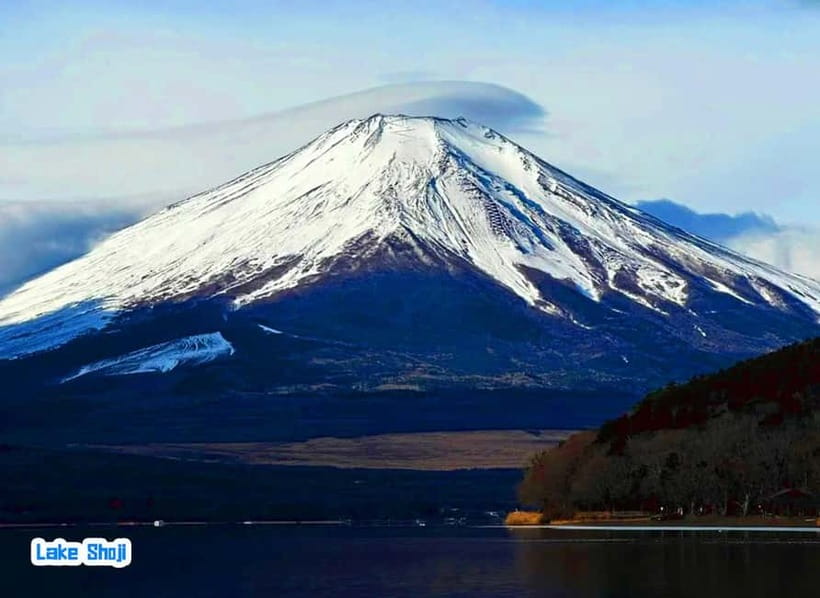
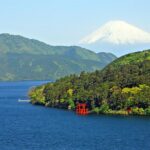
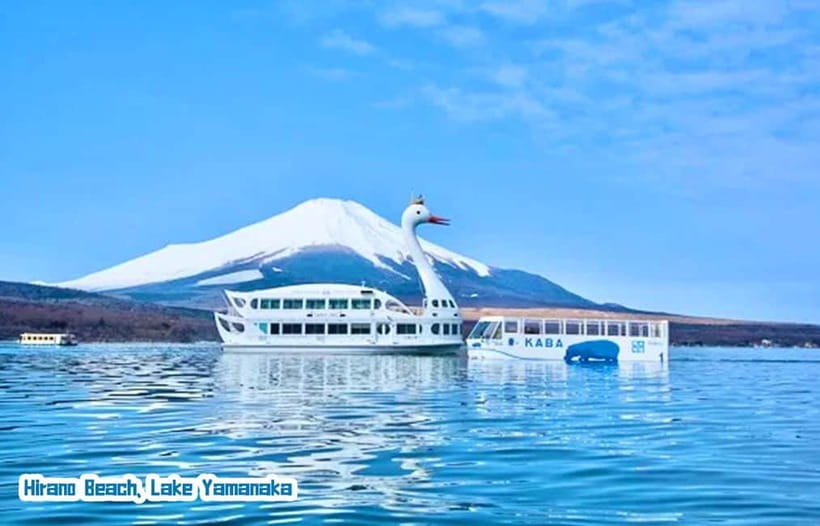
Late afternoon brings you to Hirano Beach on Lake Yamanaka, which is described as Fuji’s highest-altitude lake. This is where the tour aims to cap the day with calm water and wide views.
The big experience here:
- You unwind on quiet shores
- You try for the “floating Fuji” illusion around golden hour
This is the moment you’ll be grateful for if the earlier stops got you a bit out of breath. The day has been active. Here, you can slow down, let your eyes adjust, and take fewer but better photos.
Also, this is the stop where the tour’s promise of “crowd-free viewpoints” tends to feel real, because Lake Yamanaka is less of a mass-tour magnet than the most famous Fuji lakes.
Price and value: $20 worth it, or just marketing?
At about $20 per person, this tour can be excellent value on paper—especially because you’re paying for:
- van transportation
- driver service
- a full ~10-hour outing
- fuel, tolls, and parking
But the value math depends on what you do at each stop, since entry tickets aren’t included for the ropeway, cruise, and museum.
So here’s how I’d think about it:
- If you want at least one paid option (cruise or ropeway or the museum), you’ll still need to budget extra.
- If you’re mostly there for viewpoints, shrine, and walking time, the included plan may feel like plenty.
Either way, the real “value” isn’t only the cost. It’s the route logic: getting Fuji views across three lakes plus multiple photo stops in one day without you having to plan bus transfers or car logistics.
Who this Mt Fuji 3 lakes day trip suits best
This tour fits best if you want:
- a managed day with transport and a set route
- small-group energy (less chaos than big bus tours)
- Fuji photos with variety: reflections, shore scenes, and a late-day calmer finish
- English/Chinese support so you can ask questions without guessing
It may not fit if you:
- need a very slow, minimal-walking pace every hour (the day is structured and you’ll be moving)
- have health constraints, since it’s listed as not suitable for pregnant women, people with heart problems, and people over 70
- don’t like committing to group timing (pickup deadlines are firm)
If you’re traveling solo and don’t want to rent a car, this is one of the more straightforward ways to see more than one Fuji-lake in a single day.
Tips to make the day smoother (and less tiring)
The trip is long enough that small choices matter.
- Wear comfortable shoes. You’ll be walking between viewpoints and through shop/park areas.
- Bring water. You’ll want it, especially during the garden stop and at the shore.
- Plan to eat outside the tour inclusions. Meals aren’t included, so carry snacks if you prefer, but note you can’t eat in the vehicle.
- Use your guide contact early. Message/confirm after you get the email so pickup doesn’t become a guessing game.
- Don’t schedule a late plan after the tour. Even with a return by early evening, you’ll likely be tired from the day’s travel and walking.
Also follow the vehicle rules: no smoking, no alcohol, and no food/drinks inside the van.
Should you book this tour?
I’d book this day trip if you’re going to Japan with one goal: see Mt Fuji from more than one angle without turning the day into transportation homework. The combination of Lake Shoji, the seasonally changing Oishi Park area, and Hirano Beach on Lake Yamanaka gives you more variety than the standard “single-lake, single-viewpoint” approach.
I’d hesitate if:
- you’re banking on a very specific ticketed activity working (ropeway/cruise/museum), or
- you can’t handle schedule shifts or added walking if something can’t run as expected.
If you can be flexible and want a guided, small-group Fuji day with smart stop selection, this is a strong fit.
FAQ
What’s the total duration of the tour?
The tour runs for about 10 hours, starting with morning pickup and returning to Tokyo around early evening (typically by about 6:00 PM).
Where do pickups happen?
Pickup is available in multiple Tokyo wards. If you chose the JR Tokyo Station meet-up option, the meeting point is the Marunouchi North Exit.
What language support do you get?
Guides are provided in English and Chinese (EN/CHI), with additional languages listed as Chinese, English, Japanese, and Traditional Chinese.
Are meals included?
No. Meals are not included, and there’s no food or drinks allowed in the vehicle.
Are entry tickets included for activities like the ropeway or cruise?
No. Entry tickets for optional activities such as the ropeway, cruise, and the museum are not included.
What should I bring, and what’s not allowed?
Bring comfortable shoes and water. Smoking and alcoholic drinks are not allowed in the vehicle, and you can’t have food or drinks in the vehicle.
Is this tour refundable if I cancel?
You can cancel up to 24 hours in advance for a full refund.