REVIEW · TOKYO
Asakusa Calligraphy Workshop Craft Your Own Art in Tokyo
Book on Viator →Operated by Localized Walking & Food Tours · Bookable on Viator
Your name can become calligraphy in Tokyo.
This hands-on Asakusa calligraphy workshop turns a famous Japanese art form into something you can actually do, not just watch. In about 1 to 1.5 hours, you’ll practice the basics of brush writing in a classic, historic neighborhood setting, then walk away with your finished piece.
I especially like two things: the small group size (up to 10) and the chance to learn real technique you can repeat later. You’ll work on brush grip, control, and stroke order, and the class also uses both traditional brushes and a modern fude pen so you get classic elegance plus practical precision.
One thing to consider: bottled water isn’t included, so bring your own if you tend to get thirsty while you’re focused. The session is also time-limited, so don’t expect to become a calligraphy pro in 90 minutes—but you will leave with usable skills and a nice keepsake.
In This Review
- Key moments that make this class worth your time
- Tokyo Tourist Lounge Asakusa: a simple start point
- The lesson flow in about 90 minutes
- Brush control, stroke order, and the grip you actually need
- Traditional brush practice, then a modern fude pen comparison
- Choose characters and make it feel like your art
- Your take-home piece and what makes it a good souvenir
- What I think about the $40 price and the value you get
- Who should book this Asakusa calligraphy workshop
- Practical tips so your session goes smoothly
- Should you book this calligraphy class?
- FAQ
- How long is the Asakusa calligraphy workshop?
- What is the price per person?
- How big is the group?
- What’s included in the price?
- Do I need to bring bottled water?
- Where do I meet for the workshop?
- How does the cancellation work?
Key moments that make this class worth your time
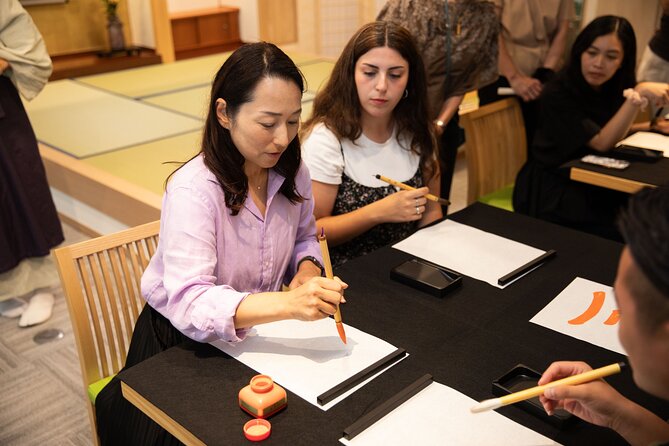
- Small group access (max 10) means you can actually get help when your strokes feel off
- Stroke order and grip practice gives you a foundation you can repeat at home
- Brush + fude pen switch lets you compare traditional control with modern precision
- Pick characters you want to write so the finished art feels personal
- Take-home souvenirs add a little extra joy after the lesson ends
Tokyo Tourist Lounge Asakusa: a simple start point
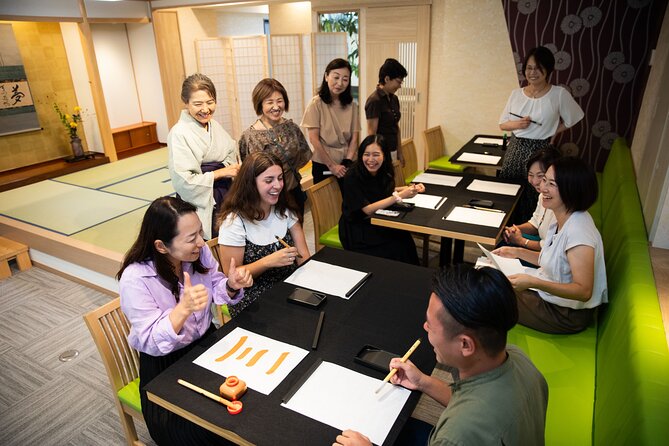
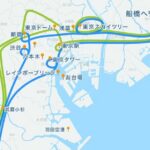
The workshop begins at Tokyo Tourist Lounge Asakusa, on the 5th floor (111-0034, 2-chome-18-15 Kaminarimon, Taito City, Tokyo). Starting from a named spot matters in Tokyo. It’s one less thing to stress about, especially if you’re navigating trains and streets before a class.
You’ll also have access to the Tokyo Tourist Lounge service for free. That’s a small but helpful value-add because it gives you a comfortable buffer before your lesson. If you’re the type who likes to get settled early—set your things down, use the facilities, and calm your brain—that free lounge access is a plus.
This experience is near public transportation. So even if your plans change slightly, you’re not stuck in the middle of nowhere with a long hike to the meeting place.
You can also read our reviews of more tours and experiences in Tokyo

The lesson flow in about 90 minutes
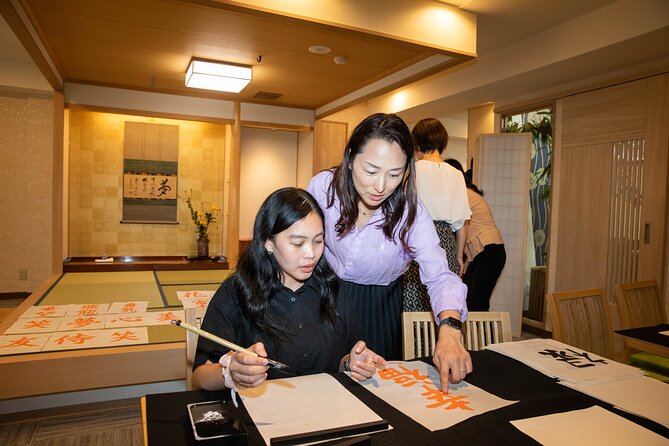
You’re looking at roughly 1 hour 30 minutes, give or take. That timing is ideal for beginners because the class moves in a clear sequence without dragging. You’ll start with fundamentals, then shift to choosing characters and writing them in your own style.
Here’s the practical rhythm you should expect:
- Begin with basic calligraphy technique (brush control, stroke order, and a proper grip)
- Practice with traditional tools first, so you understand how the brush behaves
- Add creative choice by writing characters you select
- Finish by writing with a modern fude pen as well, for cleaner control and detail
At the end, it returns you back to the meeting point. This matters more than people think. When a class ends right where you started, you’re less likely to waste time figuring out your next move right away.
Brush control, stroke order, and the grip you actually need
Calligraphy can look effortless from a distance. Up close, it’s about technique. This workshop focuses on the things that books and videos often skip or explain vaguely.
You’ll learn:
- How to hold the brush so you can control thickness and pressure
- How to control the stroke so lines start clean and finish with intention
- Stroke order, which is one of those rules that changes everything once you understand it
If you’ve ever written Japanese characters by copying printed examples, you know how quickly it gets frustrating. Stroke order affects the flow and the final look. Proper grip and control affect everything from whether your brush line looks steady to whether it gathers into a satisfying shape.
And here’s the value point: you’re not just getting told the rules. You’re practicing them in a guided way, which is what lets the skill stick. Even one short session can make a big difference in how you think about writing.
Traditional brush practice, then a modern fude pen comparison
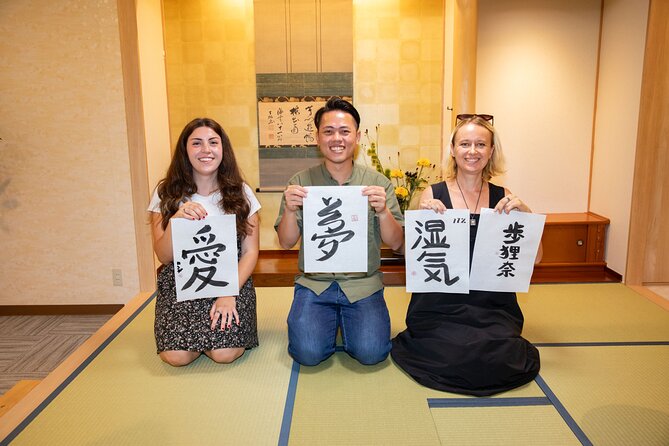
One of the smartest parts of the class is using two tools. Traditional calligraphy tools can teach the soul of the technique. But sometimes beginners want help making the strokes look consistent.
This workshop lets you:
- Practice with traditional brushes
- Then write again using a modern fude pen (a brush pen)
Why this matters for you: a fude pen is often more forgiving on pressure and gives a smoother line for certain strokes. That can help you build confidence while still learning the same underlying calligraphy structure.
If you like the idea of making a keepsake that looks good without needing advanced muscle memory, the fude pen portion is a real win. You get the best of both worlds: classic brush practice plus a tool that helps your final piece look tidy.
Choose characters and make it feel like your art
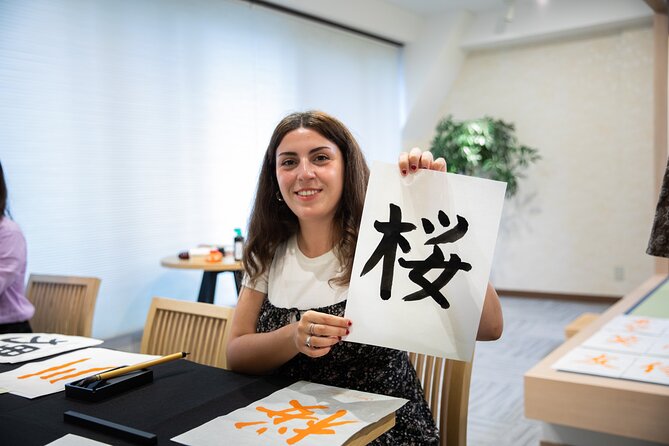
After the fundamentals, you choose characters to write. That’s where the workshop stops feeling like a lesson and starts feeling like a souvenir you’ll actually want to display.
You’ll practice:
- Essential technique first (so your strokes have structure)
- Then creative expression (so your finished work reflects your choice)
This is a beginner-friendly approach. You’re not thrown into writing something with zero guidance. You learn how strokes work, then you immediately apply it to characters you care about.
If you’re visiting Tokyo and you want one activity that feels personal—something you can’t replicate on your phone—this is it. A class like this turns your time into a tangible piece of art, not just photos.



Your take-home piece and what makes it a good souvenir
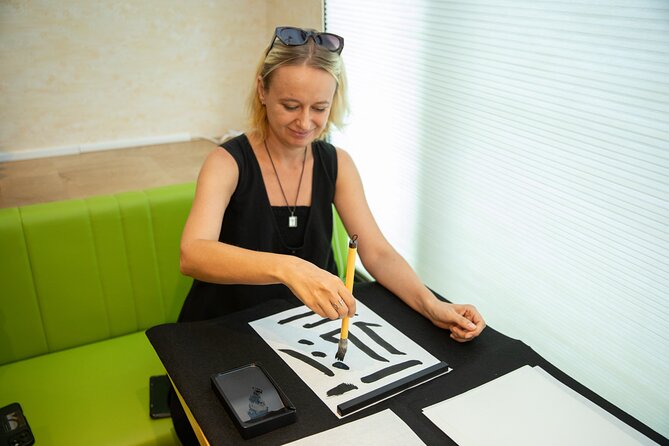
The workshop includes souvenirs, and the main souvenir is your finished calligraphy artwork. In other words, you’re not leaving with an empty “experience” credit. You leave with something you made.
A good calligraphy keepsake does two things:
- It gives you a skill you can reuse later.
- It becomes a memory object you’ll keep, not a thing you toss in a drawer.
Since the class covers brush grip, control, and stroke order, you’re also likely to notice your own improvement next time you write the character(s) you chose. That makes the souvenir more than decoration.
Also, having your work end the same day you learn it is important. Calligraphy looks different depending on pressure and speed. Getting feedback during the session helps you lock in what you’re doing right when it counts.
What I think about the $40 price and the value you get
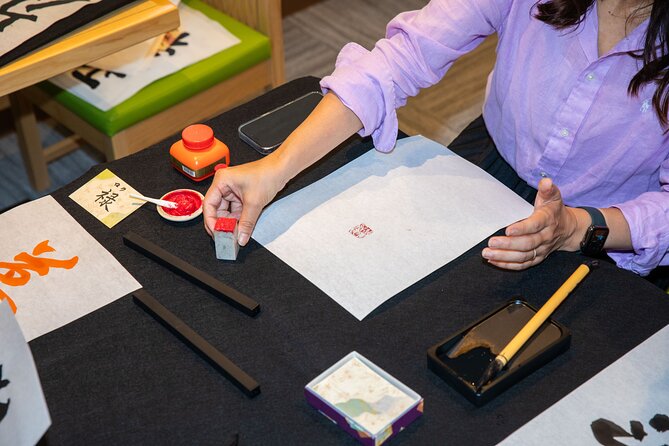
At about $40 per person, this workshop sits in the “doable and worth trying” range for a single paid activity in Tokyo. Here’s why it can be good value:
- You get instruction, not just materials. The class teaches fundamentals you normally can’t pick up from casual online videos.
- You get tools: traditional brushes plus a modern fude pen.
- You get a keepsake you can take home.
- Your group is small (up to 10), which usually means better hands-on support.
- The experience includes an entrance fee and includes souvenirs.
The only small catch is that bottled water isn’t included. That’s easy to solve, but it’s still a real consideration if you start feeling thirsty mid-lesson.
If you’re picking between a quick photo stop and a skill-based activity, calligraphy often wins. It’s one of those cultural activities where the result is personal and the learning is practical.
Who should book this Asakusa calligraphy workshop
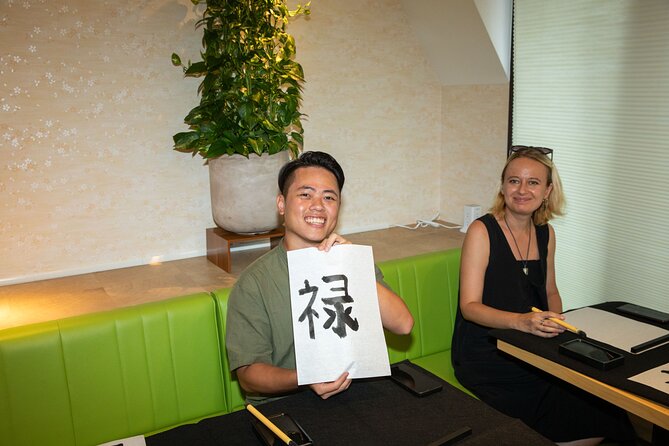
This is a strong fit if you:
- Want a beginner-friendly cultural activity with real instruction
- Like hands-on experiences where you make something tangible
- Prefer small group settings where you can get guidance while practicing
- Want a Tokyo souvenir that isn’t another postcard-sized object
It’s also a good option if you’re visiting Asakusa anyway and want to add meaning to the neighborhood. Asakusa is often where people go for classic Tokyo atmosphere, and a calligraphy workshop adds an artistic layer to the visit.
Most people can participate. If you have any specific concerns (comfort holding a brush, timing, or general physical needs), it’s worth checking with the provider in advance so you can go in confidently.
Practical tips so your session goes smoothly
A few small choices make a difference in a short workshop like this.
- Bring water. Bottled water isn’t included.
- Wear sleeves you’re comfortable with. You’ll be holding a tool and writing for a while.
- Go in with an open mind. Calligraphy has rules like stroke order, and then it has room for your own style.
- Don’t overthink your first strokes. The workshop is designed for practice, so your early lines are part of the learning.
- If you’re late, stay in touch. The workshop experience has an example of the instructor Mei being kind and patient with a delayed participant and adapting the session timing when needed.
Should you book this calligraphy class?
Yes, if you want a short, structured cultural lesson that ends with an actual keepsake. The small group size, the focus on grip and stroke order, and the two-tool approach (traditional brush plus fude pen) make this feel like more than a tourist craft stop.
Book it if you:
- value hands-on instruction,
- want something you can bring home,
- and like the idea of learning a skill with clear steps you can repeat.
Skip it (or consider something else) if you’re hoping to spend hours on advanced calligraphy, or if you strongly prefer activities that don’t involve practicing the same basic strokes multiple times. This class is best for learning fundamentals and producing a finished piece within about 90 minutes.
FAQ
How long is the Asakusa calligraphy workshop?
The workshop lasts about 1 hour 30 minutes (approximately).
What is the price per person?
It costs $40.00 per person.
How big is the group?
The class has a maximum of 10 travelers.
What’s included in the price?
The entrance fee is included, and you also receive souvenirs. You can use the Tokyo Tourist Lounge service for free as part of the included items.
Do I need to bring bottled water?
Bottled water is not included, so you may want to bring your own.
Where do I meet for the workshop?
You start at Tokyo Tourist Lounge Asakusa, 5F, 2丁目-18-15 雷門, 台東区, 東京都 111-0034, Japan.
How does the cancellation work?
Free cancellation is available up to 24 hours in advance for a full refund. If you cancel less than 24 hours before the start time, the amount you paid isn’t refunded.