REVIEW · TOKYO
Traditional Japanese Knife-Making Workshop in Asakusa
Book on GetYourGuide →Operated by Traveling Tokyo · Bookable on GetYourGuide
Knife-making in Tokyo feels calming. In Asakusa, you shape and refine a Japanese-style knife using traditional tools, then take your finished blade home. I love the step-by-step coaching that makes this beginner-friendly, and I also love that you can choose a handle wood and even add engraving. One thing to consider: the time is focused on shaping/refining and sharpening, so if you expect long, full-on blacksmith forging, this may feel shorter than you imagine.
The workshop runs with bilingual support in English and Japanese, and the teaching style matters here. Past participants mentioned instructors such as Dewi and Shin, with extra help when questions pop up. The setting is also clean and pleasant, with that unmistakable smell of freshly cut wood when you walk in.
You’ll spend the 90 minutes working carefully at your own pace, with chances to ask questions and take photos. If you go in with the right mindset, you’ll leave with something more meaningful than a postcard: a tool you helped make.
In This Review
- Key Points You’ll Care About Before You Go
- Asakusa’s 10th-Floor Workshop: Find It and Get Oriented
- What You’ll Actually Make: The Knife You Take Home
- Tool Intro to Blade Refining: How the 90 Minutes Usually Feels
- Handle Choice, Optional Engraving, and the “Finish Line” Moment
- Instructors and Group Vibe: Dewi, Shin, and the Human Side
- Price and Value of a $96, 90-Minute Craft Session
- Who This Asakusa Knife Workshop Fits Best
- Should You Book This Asakusa Knife-Making Workshop?
- FAQ
- How long is the Traditional Japanese Knife-Making Workshop in Asakusa?
- Where does the workshop meet in Asakusa?
- Is prior experience needed to make a knife?
- What languages are the instructors and staff?
- What will I take home at the end?
- Is the workshop wheelchair accessible?
- How does cancellation and reserve-and-pay-later work?
Key Points You’ll Care About Before You Go
- Beginner-friendly knife shaping and refinement with clear guidance
- You keep what you make: knife blade and handle
- Handle wood choice, plus optional engraving for a more personal souvenir
- English/Japanese bilingual staff and supportive teaching
- A clean, beautiful workshop space with a strong wood-scent welcome
- Tokyo Skytree visible from the building for an added Tokyo moment
Asakusa’s 10th-Floor Workshop: Find It and Get Oriented
This workshop is on the 10th floor of the building, so I’d plan to give yourself a little extra time to get up there without rushing. Asakusa can be busy at street level, but once you’re inside, the vibe turns calm and focused.
The room itself is described as very clean and beautiful. One detail I really like from people’s impressions: as soon as you enter, you catch that smell of freshly cut wood. It’s a small thing, but it sets the tone. This isn’t a loud “activity.” It’s hands-on craft time.
You’ll be working in a workshop environment designed for instruction, with the staff guiding you safely through each stage. Even if you’re new to this kind of work, the setup is meant to keep you moving forward rather than getting stuck.
You can also read our reviews of more tours and experiences in Tokyo


What You’ll Actually Make: The Knife You Take Home
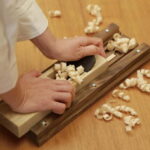
The big promise here is simple: you leave with a handmade knife you created during the session. The included materials are the knife blade and handle, plus use of the tools and workshop space.
A very practical detail: you can choose your handle from a variety of wood options. That matters because a handle is what you’ll actually feel every time you use the knife. It also means your souvenir isn’t just a generic take-home item. You’ll have something that looks and feels like your choice.
Engraving is also mentioned as an option. If you want a personal touch, this is the kind of add-on that turns a workshop purchase into something you’ll remember every time you see it.
One more note for expectations: while you are doing real shaping and refinement, the session is still a single 90-minute experience. That means the workflow is guided and time-managed, not a full multi-day artisan apprenticeship.
Tool Intro to Blade Refining: How the 90 Minutes Usually Feels
The session starts with an introduction to the tools and materials used in traditional knife-making. This matters more than it sounds. If you understand what each tool is for, the later steps make sense, and you waste less time guessing.
Then you move into shaping and refining the blade under careful instruction. This is where the craft shows up: Japanese knife-making is all about precision and patience. You’ll be learning how to handle the process slowly enough to get good results, without overthinking every tiny movement.
You work at your own pace, and the staff provides step-by-step guidance to keep you from feeling overwhelmed. If you’ve never sharpened a blade before, be ready for a mild reality check: it’s not as easy as it looks. People specifically noted that sharpening takes real technique, and the workshop helps you learn the basics rather than just sending you through motions.
You should also plan for this to be a hands-on session where questions are welcome. The environment is described as supportive, with opportunities to ask questions and take photos while you’re working.
A good practical takeaway: by the end, you’ll understand what proper sharpening and refinement really require. Even if the knife you take home isn’t your daily kitchen workhorse (some people prefer to frame or keep it as a crafted item), you’ll have the skill knowledge in your head.
Handle Choice, Optional Engraving, and the “Finish Line” Moment
Near the end, you shift focus from the blade to the handle. Past participants highlighted that there’s a selection of wood handles to choose from. That’s a nice way to make the workshop feel like yours.
Some people also mentioned that engraving is available, letting you personalize the finished knife. If you’re the type who likes souvenirs that look intentional rather than random, engraving is a smart add-on.
Now, here’s the consideration to keep in mind: one booking mentioned that the session felt like a lot of sharpening, followed by handle attachment before leaving. That doesn’t mean the process is low quality; it likely reflects the reality of a 90-minute format. But it does mean your time may be more concentrated on blade work than on a long, multi-stage finishing ritual.
If you arrive expecting a dramatic “from start to finish forging story,” you may feel the timeline is compressed. If you arrive expecting guided craft work and a take-home knife, you’ll probably feel satisfied with what you get.
Instructors and Group Vibe: Dewi, Shin, and the Human Side
The staff is a core reason this workshop earns strong scores. People repeatedly describe the team as very friendly, fun, and interested in helping you do the steps correctly.
Names came up in participant accounts: Dewi and Shin were both mentioned as instructors, with Dewi especially credited for extra help during the session. That kind of support is what makes a beginner experience actually work. Without that, you’d spend most of your time guessing.
There’s also a second human factor: how the workshop feels while you’re learning something delicate. Some bookings praised the calm atmosphere and clear guidance. One critical note mentioned a rude comment from another worker during instruction, which is obviously not ideal.
So here’s the balanced version. The standard experience seems warm and patient, but group situations can be unpredictable. If you’re sensitive to tone, it may help to remember you’re there for craft training. Focus on the instructor’s step-by-step guidance and keep asking clarifying questions as needed.





Price and Value of a $96, 90-Minute Craft Session
At $96 per person for 90 minutes, the best way to judge value is to look at what’s included, not just time. You’re paying for:
- use of the workshop and tools
- the knife blade and handle materials
- bilingual instruction in English and Japanese
That combination matters. A workshop that includes materials and gives you a take-home object is different from a basic demonstration. You’re not only watching; you’re making.
I also think the value comes from the skill transfer. This isn’t only about producing a souvenir. You learn how sharpening works and how precision feels when you’re doing it yourself. People specifically noted that they realized sharpening takes more technique than they thought at first, and that the staff taught them carefully.
One caution on value: if you’re expecting a longer, more expansive knife-making process (think many stages of grinding, forging, and extended finishing), the 90 minutes may feel tight. In that case, the price could feel steeper relative to your expectations.
But if your goal is a meaningful, hands-on craft experience with a take-home knife, the math works better. You’re paying for instruction plus the materials that become your final product.
Who This Asakusa Knife Workshop Fits Best
This workshop suits a few clear types of travelers.
First, it’s great for beginners. The experience is designed with no prior experience needed, and the teaching is step-by-step. If you’ve never done anything like sharpening or precision shaping, you’ll likely find it approachable.
Second, it’s ideal if you want a Tokyo activity that’s actually hands-on and culturally specific. This is not generic crafting. Japanese knife-making has a real reputation for precision, and you’ll feel that as you work.
Third, it’s a strong pick for people who love making souvenirs that have a practical purpose. The fact that you take home the knife you created makes it more satisfying than typical keepsakes.
Lastly, it’s wheelchair accessible. If mobility access matters for you, this is a real advantage worth noting upfront.
If you dislike precision tasks or you want a purely sightseeing experience, this might not be the best fit. It’s work. Good work, but work.
Should You Book This Asakusa Knife-Making Workshop?
Book it if you want a hands-on craft that ends with something you can hold, use, and remember. The big win is the combination of guided instruction, a take-home knife, and the chance to personalize the handle with wood choice and optional engraving.
Skip it or adjust expectations if you’re chasing a long forging narrative or a multi-day deep process. This is a focused 90-minute workshop, heavy on blade shaping/refining and sharpening, with the finish wrapping up before you leave.
If you’re flexible, go in with beginner curiosity, and plan to learn slowly and carefully, you’ll likely come out feeling you gained real technique, not just a quick activity.
FAQ
How long is the Traditional Japanese Knife-Making Workshop in Asakusa?
The workshop lasts 90 minutes.
Where does the workshop meet in Asakusa?
You’ll meet at the workshop held on the 10th floor of the building.
Is prior experience needed to make a knife?
No prior experience is needed. The workshop is designed to be accessible for beginners.
What languages are the instructors and staff?
The workshop offers English and Japanese support.
What will I take home at the end?
You’ll leave with a handmade knife you created, including the knife blade and handle.
Is the workshop wheelchair accessible?
Yes, the activity is wheelchair accessible.
How does cancellation and reserve-and-pay-later work?
You can cancel up to 24 hours in advance for a full refund, and you can reserve now and pay later.