REVIEW · TOKYO
Tokyo: Calligraphy Workshop Craft Your Own Art in Asakusa
Book on GetYourGuide →Operated by Localized Walking & Food Tours · Bookable on GetYourGuide
Tokyo has a way of keeping you busy. This calligraphy class gives you a slower pace in Asakusa. I love the mix of practical technique and real cultural context, especially with Mei’s clear guidance on stroke order and brush control. I also like that you end up with a take-home piece, using both traditional brushes and a modern fude pen for added precision. One thing to consider: you’ll need to plan your own way to the meeting point, since transportation isn’t included.
If you want a hands-on activity that doesn’t feel like a rushed tourist stop, this workshop fits. It’s designed for beginners, and the small group size keeps things calm and personal. Still, since it’s only 90 minutes, you should go in ready to learn the basics fast and enjoy the practice, not hunt for perfect calligraphy.
In This Review
- Key Reasons This Workshop Works in Tokyo
- Asakusa Is the Right Place for Shodo
- Finding the Studio: Tokyo Tourist Lounge Asakusa (5th Floor)
- What Actually Happens in the 90 Minutes
- Learning Stroke Order and Brush Control the No-Stress Way
- Traditional Brush vs. Fude Pen: Why Both Tools Matter
- Choosing Your Characters and Producing a Take-Home Piece
- The Cultural Context: More Than Just Pretty Writing
- Price and Value: Why $38 Is Fair for What You Get
- Who Should Book This Workshop (And Who Might Think Twice)
- Quick Tips So You Get the Most From Your Class
- Should You Book This Calligraphy Workshop?
- FAQ
- Is the workshop suitable for beginners?
- How long is the calligraphy workshop?
- Is the instructor able to teach in English?
- What materials are included during the workshop?
- What do I take home at the end?
- Is transportation to and from the workshop included?
- Where is the meeting point?
- Is the workshop wheelchair accessible?
Key Reasons This Workshop Works in Tokyo
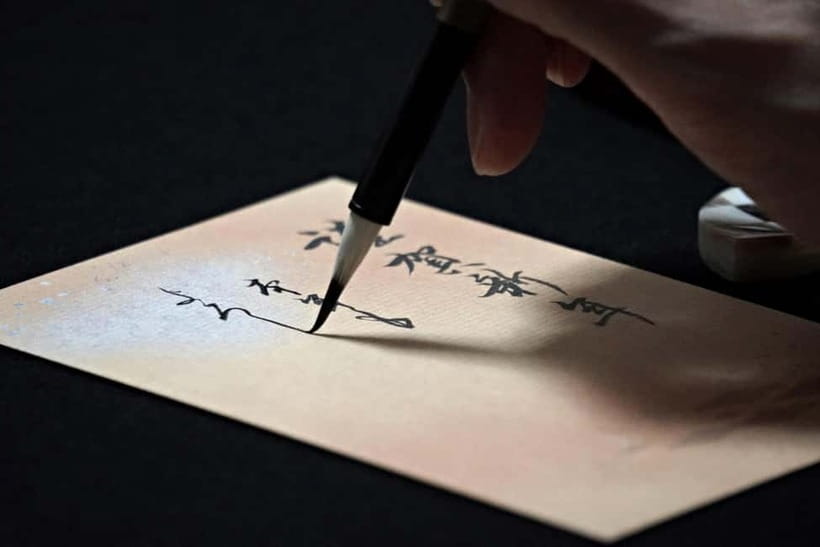
- Mei’s teaching style is patient and structured, with lots of practice before your final piece
- You learn stroke order and brush control in a way that actually translates to what you write
- The class uses both traditional brushes and a modern fude pen for accuracy
- You choose your characters and leave with a finished artwork you can display at home
- It’s a small group (up to 10), so questions don’t get lost in the shuffle
- The tone is peaceful and focused, which feels like a reset during busy days
Asakusa Is the Right Place for Shodo
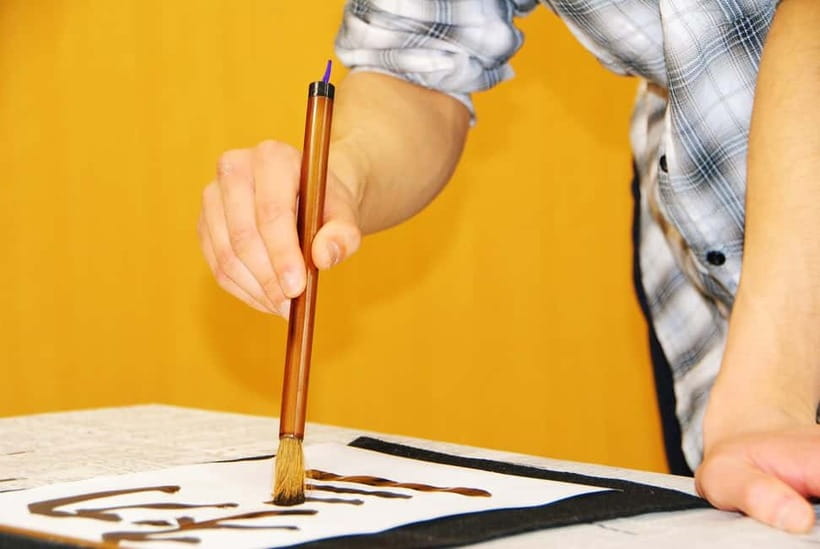
Asakusa is one of those Tokyo neighborhoods where history isn’t frozen behind glass. You get that old-meets-new feeling just walking around, and a calligraphy workshop lands naturally here. The workshop itself is set up for beginners, so you’re not forced to already know how Japanese writing works.
What I like most about choosing Asakusa is the match between place and activity. Calligraphy, or shodo, isn’t just about drawing lines. It’s about rhythm, intention, and control—and Asakusa helps you slow down enough to notice those details.
You can also read our reviews of more tours and experiences in Tokyo


Finding the Studio: Tokyo Tourist Lounge Asakusa (5th Floor)
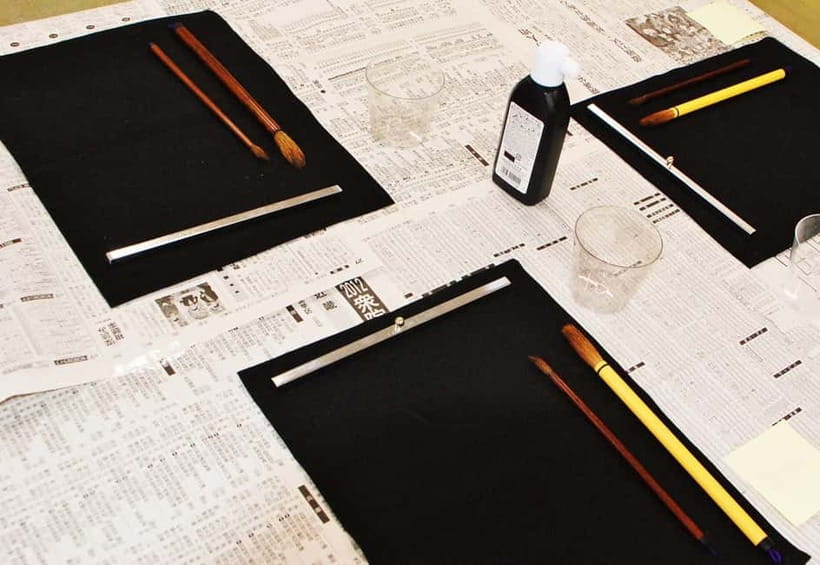
You’ll meet at Tokyo Tourist Lounge Asakusa, on the 5th floor. That detail matters because in Tokyo, easy-to-miss floor numbers can turn a short errand into a detour.
Also plan for the simplest part: getting there on your own. The workshop includes the class and materials, but transportation to and from the workshop is not included, so give yourself a little buffer if you’re coming from farther parts of the city.
Once you’re inside, the setup is straightforward. The space is described as lovely, and the studio is easy to find, which helps a lot when you’re trying to arrive calm and ready to practice.
What Actually Happens in the 90 Minutes
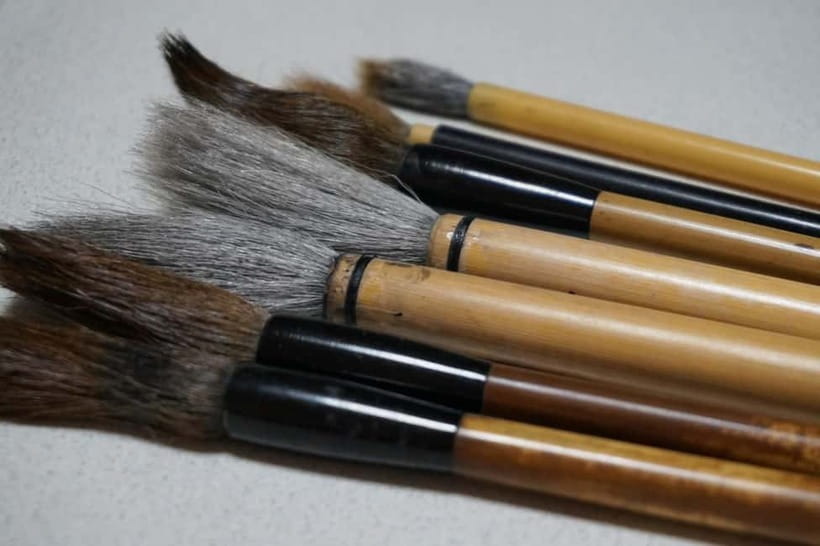
Think of this workshop as a focused mini-class, not a performance. You’ll spend your time learning how the brush behaves, how strokes are sequenced, and how to finish a piece you can take home.
Here’s how the session typically flows:
1) Warm-up practice
You start with brush control and basic technique. Expect repeated emphasis on stroke order, and time spent getting comfortable with how much pressure matters.
2) Guided technique building
Mei shows you the proper way to form strokes and corrects what needs fixing. You’re not just copying blindly—you’re learning what to watch for so you can improve on the next try.
3) Creative writing with a character choice
Then you shift into your own writing. This is where both tools come in: traditional brushes and a modern fude pen that helps with precision.
4) Final artwork and wrap-up
You finish with a take-home piece. Depending on what you’re making, you might end up with options like a scroll, a fan, or a hard-backed square type of format.
Because the class runs about 90 minutes, the pacing is tight in a good way. You’ll practice enough to feel progress, then you’ll produce something real instead of leaving with only worksheets.
Learning Stroke Order and Brush Control the No-Stress Way
Japanese calligraphy looks simple from a distance. Up close, it’s all about control: the angle of the brush, the pressure you apply, and how you move through each stroke.
This workshop trains those exact skills. You work on brush control and stroke order early, so when you write your own characters later, the movements make sense instead of feeling random.
And the teaching method matters. Mei’s guidance is described as patient and very encouraging, including time to perfect strokes with plenty of practice. If you’re worried you’ll be slow, you can relax: the pacing is built around getting you to a point where your final piece looks like something you’re proud to hang.
Traditional Brush vs. Fude Pen: Why Both Tools Matter
This is one of the cleverest parts of the class. You’re not forced into one approach the whole time. You get to use both traditional brushes and a modern fude pen.
The traditional brush teaches the heart of shodo: fluid motion and pressure changes that create variation. The fude pen, on the other hand, gives you a more precise feel, especially helpful if your hand is still learning. Using both means you can focus on learning the forms without getting frustrated by the tool.
In practical terms, that blend also helps you finish with something cleaner. You’re still learning calligraphy, but you’re not being graded on whether you mastered a centuries-old instrument in one afternoon.



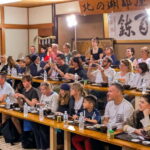


Choosing Your Characters and Producing a Take-Home Piece
The fun part isn’t watching someone else write. It’s writing your own characters and leaving with the results.
You’ll be able to write characters of your choice, and you’ll use the technique you practiced earlier. Mei also uses helpful templates, which makes a big difference for beginners. Templates reduce guesswork and help you focus on stroke quality rather than shape confusion.
Your finished artwork may come as a scroll, a fan, or a hard-backed square style piece. That variety is great because it gives you options for what you want to display at home. If you want something that feels like a traditional keepsake, a scroll makes sense. If you want something easy to frame or store, a hard-backed format is practical.
The Cultural Context: More Than Just Pretty Writing
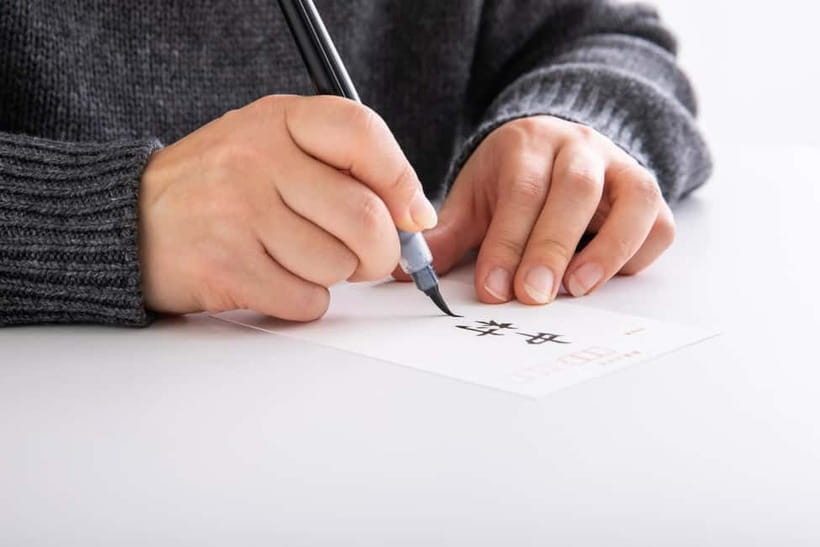
Calligraphy in Japan has a history tied to culture, discipline, and communication. In this workshop, you don’t just learn motions. You learn what the strokes mean in a broader sense—plus why people treat calligraphy like a mindful practice.
Mei includes background on the history and culture of Japanese calligraphy, with explanations delivered in English. The effect is that your final piece doesn’t feel like random scribbles. It feels intentional, like you participated in a real tradition.
There’s also a noticeable calm in how the class is taught. It’s described as peaceful, even meditative in tone. In the middle of Tokyo’s constant motion, that kind of focus feels like a real break.
Price and Value: Why $38 Is Fair for What You Get
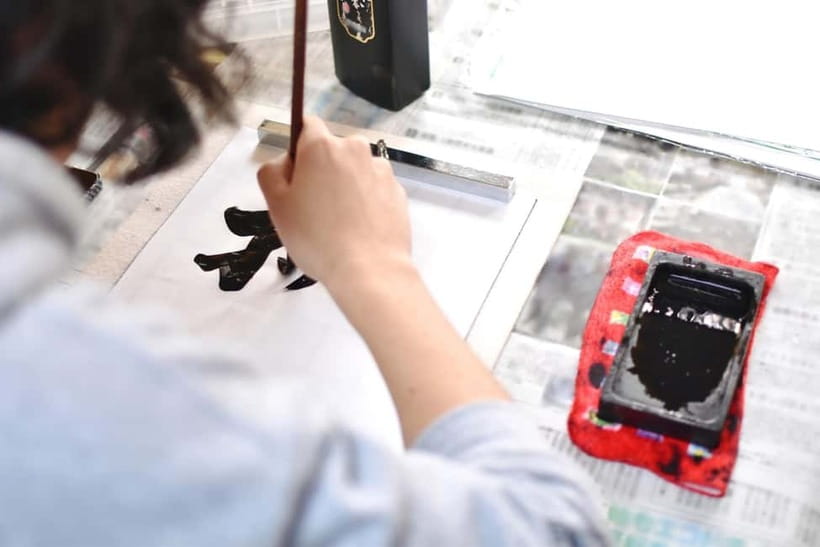
At $38 per person for about 90 minutes, you’re paying for instruction, tools, and a take-home artwork. That’s not just a souvenir fee.
Here’s what makes the value feel strong:
- You’re in a small group (limited to 10), which usually means more attention and clearer corrections
- You get both traditional brushes and a fude pen during the class
- The instructor is English-speaking, and the teaching style is built for beginners
- You leave with a finished piece, not just practice sheets
Compared to lots of city activities that give you a photo and a short story, this one gives you a physical memory you can display. And because you learn something you can reuse—like stroke order basics—you get more than a one-time novelty.
Who Should Book This Workshop (And Who Might Think Twice)
This workshop is best for you if you want a hands-on cultural activity that’s beginner-friendly and structured. It’s also a great choice if you like slow, focused experiences in between louder Tokyo days.
You’ll probably enjoy it most if you:
- are a first-time visitor who wants a genuinely cultural thing to do
- want a calm break from crowds
- like crafts where your final product is actually yours
- don’t mind learning basics quickly, then applying them immediately
One reason to think twice is timing and energy. If you’re the kind of traveler who wants a full-day project or deep technical instruction, a 90-minute session might feel short. But if your goal is to learn the fundamentals and walk away with something beautiful, it’s a strong fit.
Quick Tips So You Get the Most From Your Class
You don’t need prior experience. But you’ll have a better time if you treat it like practice, not performance.
- Arrive with a relaxed mindset and expect to repeat strokes
- If you have a character idea you want to write, think about it ahead of time
- Plan to bring comfortable layers. Brush writing sits you in one place for a while
- Wear shoes you can slip in and out of easily if the studio setup requires it (this might vary, so just be ready)
And for the biggest payoff: follow Mei’s corrections. Small changes in pressure and movement make a noticeable difference fast.
Should You Book This Calligraphy Workshop?
If you want a meaningful Tokyo moment that doesn’t eat your whole day, I think you should book it. The combination of patient instruction, stroke-by-stroke practice, and a take-home artwork makes the experience feel complete. Add in English guidance and a small group size, and it’s one of those activities that works even when you’re not an art person.
My call: book this if you want to leave with your own finished piece and a skill you can talk about. Skip it only if you’re looking for something more advanced or you hate sitting still long enough to learn.
FAQ
Is the workshop suitable for beginners?
Yes. It’s designed for beginners, and no prior experience is required.
How long is the calligraphy workshop?
The duration is about 90 minutes (listed as 1 to 1.5 hours).
Is the instructor able to teach in English?
Yes. The instructor language is English.
What materials are included during the workshop?
You’ll use traditional brushes and a modern fude pen, and you’ll make a personal calligraphy artwork to take home.
What do I take home at the end?
You leave with your own calligraphy artwork as a personal souvenir.
Is transportation to and from the workshop included?
No. Transportation is not included.
Where is the meeting point?
You meet at Tokyo Tourist Lounge Asakusa, located on the 5th floor of the building.
Is the workshop wheelchair accessible?
Yes. The activity is listed as wheelchair accessible.