REVIEW · TOKYO
Japanese Traditional Sweets making and Tea Ceremony
Book on GetYourGuide →Operated by 日本文化体験 庵an東京 AN TOKYO · Bookable on GetYourGuide
Making wagashi feels like edible art. In this 95-minute experience you’ll shape nerikiri sweets from colored bean paste and enjoy Uji matcha alongside what you made. What I like most is the hands-on focus (you actually craft the sweets), and the quality angle: the bean paste comes from Kyoto’s long-established shops and the matcha is single-origin special matcha. The main drawback to consider is that it’s mainly a Japanese-language class, so if your group is full or audio/translation isn’t perfect, you may miss parts of the explanation.
You’ll move through a clear rhythm: start with sweets, then a short break, then tea with a matcha grinding demonstration and a tea-ceremony experience. You’ll end with eating time plus picture time. If you want a gentle, cultural activity with real technique, this works. If you’re hunting for a quick photo op, the value is really in the making and the tea steps.
In This Review
- Key highlights you should notice before you go
- A 95-minute wagashi-and-tea class in Honshu
- Nerikiri wagashi: coloring bean paste and shaping seasonal art
- The Kyoto ingredient angle: why bean paste quality matters
- Taking a break, then shifting to tea with Uji matcha
- The matcha and sweets pairing: what to look for while you eat
- Price and value: is $18 worth it?
- Language reality: Japanese-led with translation support
- Where the class happens and how to plan your timing
- Who this experience fits best
- Should you book Japanese traditional sweets making and tea ceremony?
- FAQ
- How long is the Japanese Traditional Sweets making and Tea Ceremony experience?
- Where is the meeting point?
- How much does it cost?
- What will I make during the class?
- What matcha is used?
- Is the tea ceremony included?
- Is anything extra available to purchase?
- Is English provided?
- What languages does the instructor use?
- Are children allowed?
- Is there a cancellation policy?
Key highlights you should notice before you go
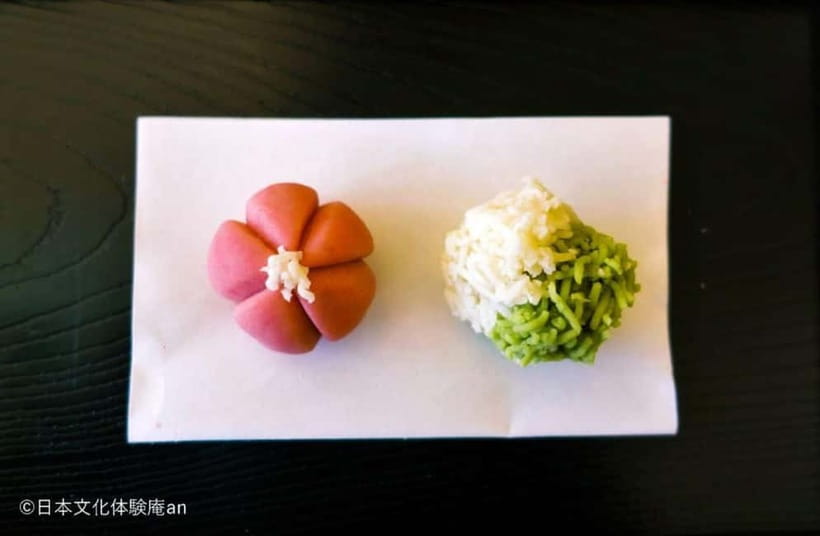
- Kyoto bean paste you can taste: You use white/red bean paste produced by Kyoto’s long-established shops.
- Two seasonal sweets: You make 2 Japanese sweets that match the season, not just one sample.
- Nerikiri is the star: You start by coloring the bean paste, then shape it into a seasonal look.
- Uji matcha focus: The class centers on Uji matcha, including a matcha grinding demonstration.
- Skill-building, not just watching: You craft and then enjoy what you made with your own matcha.
- Instruction that can work even with limited English: One review called out instructor Marie for being a great presenter, and another noted that even with English difficulty, people still understood through demonstrations.
A 95-minute wagashi-and-tea class in Honshu
This experience is built for people who like learning by doing. In 95 minutes, you’re not just tasting Japanese traditional sweets; you’re making nerikiri sweets and then pairing them with matcha as part of a tea-ceremony experience.
The pacing is practical. You start with the sweets portion, then you get a break. After that, you shift your attention to tea: there’s an explanation, a matcha grinding demonstration, and then the tea-ceremony part. You finish with time to eat and drink what you prepared.
For me, the best part is that it connects the two worlds. Nerikiri isn’t treated as a random craft. The class specifically aims to show how the sweets and matcha fit together, including how the quality bean paste balances the taste of matcha. That pairing mindset is what makes it feel more like cultural technique than a souvenir activity.
You can also read our reviews of more tours and experiences in Tokyo
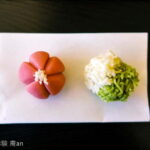
Nerikiri wagashi: coloring bean paste and shaping seasonal art
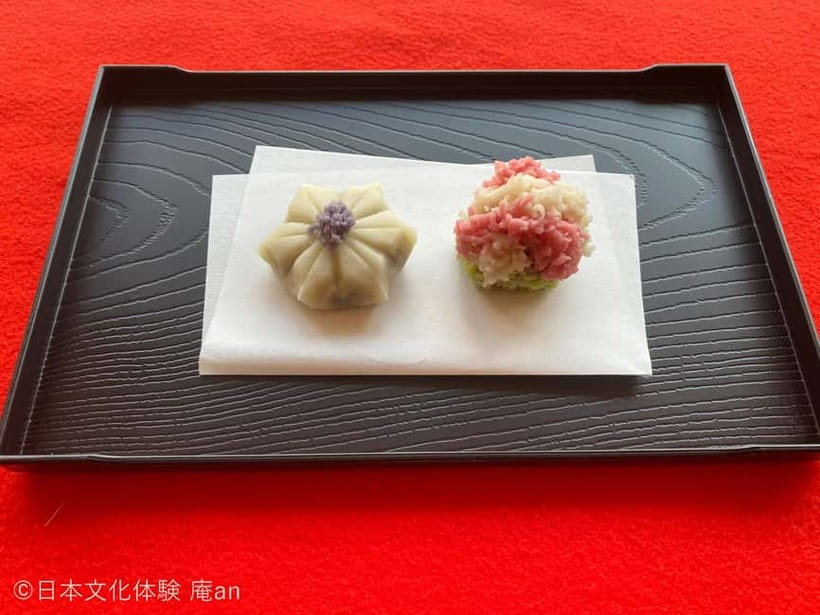
The sweets segment begins with an overview of Japanese traditional sweets, then you jump into the craft: nerikiri making.
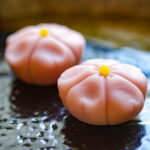
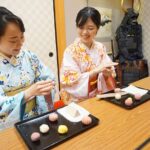
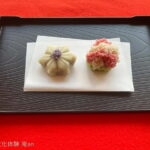
Nerikiri is described here as a high-grade Japanese sweet. The key idea is that it uses colored white bean paste and is shaped into seasonal flowers or fruits. In this class, you start at the beginning: coloring the white bean paste first. That’s a smart teaching approach because it explains the look before you worry about the final shape.
Then you get into forming the sweets. You’ll make two sweets in total, and the class includes flower-shaped nerikiri making. You’ll also make what’s listed as Kinton Nerikiri. If that sounds like a lot of names, don’t stress. The real takeaway is that you’re not following a vague template. You’re practicing the technique behind the seasonal look.
A few practical notes for your mindset:
- Expect the “artist” part, but guided. The class frames coloring and crafting as a chance to express creativity, so you’re not only copying. Still, you’re being taught the process, not left alone with bean paste.
- Your sweets are built around real ingredients. The description emphasizes that you use white/red bean paste produced by Kyoto’s long-established shops. That matters because it helps your finished sweets taste like the traditional thing, not just like a craft project.
- You’ll have a pairing plan later. The class specifically calls out that the sweetness from higher quality bean paste balances the taste of the matcha. That means you should pay attention to how your sweets taste, because the class is trying to connect flavors.
The Kyoto ingredient angle: why bean paste quality matters
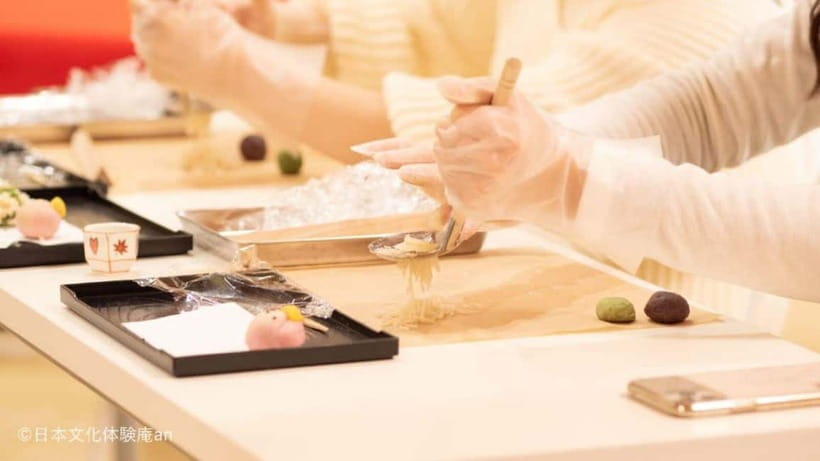
This experience leans hard on ingredient credibility. The white/red bean paste is produced by Kyoto’s long-established shops. And you’re not just eating it—you’re working with it.
Why you should care: bean paste sweetness and texture are the foundation of most wagashi flavors. If the paste is good, the final sweet doesn’t taste flat. It also pairs better with matcha, which can be intense on its own.
The class description even points to the goal: the high-quality bean paste sweetness should balance the taste of matcha. In other words, the sweets aren’t meant to be overpowering. They’re meant to harmonize.
So when you’re deciding if this class is for you, think about your matcha style. If you like matcha that’s clean and not masked, wagashi made with quality bean paste is one of the easiest ways to appreciate that. And because you made the sweets yourself, the tasting part doesn’t feel like you’re eating someone else’s recipe.
Taking a break, then shifting to tea with Uji matcha
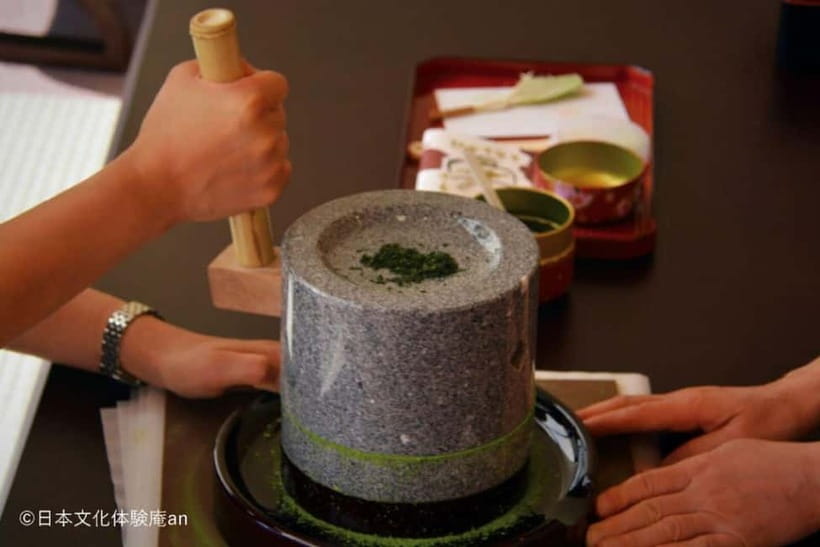
After the nerikiri portion, you get a break. Then the tea segment begins with an explanation of tea, followed by matcha grinding demonstration.
The mention of grinding is important. Even if you’re familiar with matcha at cafes, watching the preparation process connects the powder you see with the ceremony you practice afterward. It also gives you a better sense of why matcha tastes the way it does when it’s freshly prepared.
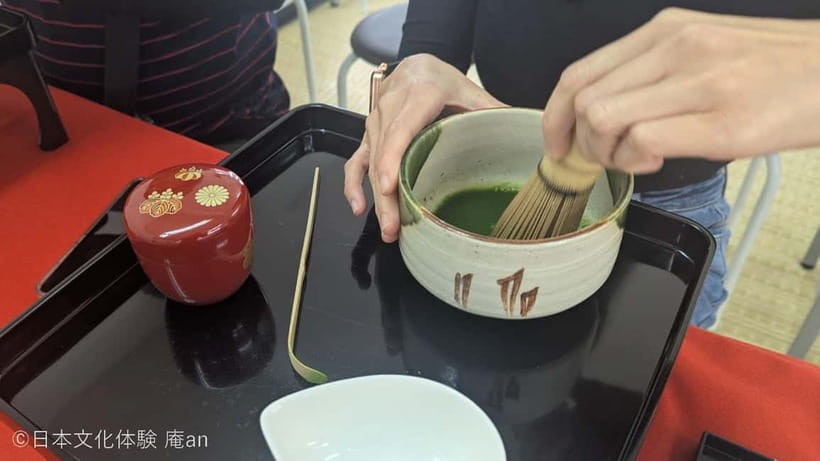
From there, you participate in a tea-ceremony experience. This is not described as a lecture-only moment. The flow is: explanation, grinding demonstration, then the ceremony itself.
One detail I’d treat as a positive signal: the class includes picture time after the ceremony and before the end. That means the experience recognizes the moment as something you’ll want to remember, not just something you rush through.
And when you finally eat, you’re not stuck with generic snacks. You’ll enjoy the two sweets you prepared along with your own matcha tea. That pairing is the heart of the value.
The matcha and sweets pairing: what to look for while you eat
This is where you should slow down for 60 seconds. The class sets you up for a specific flavor relationship: higher quality bean paste sweetness balancing matcha taste.
Here’s what you can actually watch for while you’re eating:
- How sweet the nerikiri tastes right after the matcha aroma hits. The goal is balance, not cloying sugar.
- How the matcha changes as you take bites of the sweet. If it feels rounder, that’s the bean paste doing its job.
- How the sweetness and the texture feel together. Nerikiri has a shaped, refined presentation, so the tasting experience is part visual, part flavor.
You’re doing more than “having dessert.” You’re learning why wagashi and tea are traditionally paired. And since you made the sweets yourself, you’ll likely be more attentive than you would be at a tasting counter.




Price and value: is $18 worth it?
For $18 per person, this is one of those activities that’s hard to compare. You’re getting:
- Hands-on making of 2 nerikiri sweets
- Tea explanation
- Matcha grinding demonstration
- Tea-ceremony experience
- Time to eat and drink your sweets with matcha
- A focus on specific materials: Kyoto bean paste and single-origin special matcha
Also, the price isn’t pretending there are no extras. Take-out boxes cost 100 JPY if you want to package sweets. A certificate costs 300 JPY, and if you want a nominative certificate, you need to provide your names in advance (otherwise they leave a blank space).
Here’s how I’d judge the value in plain terms: if you want technique and not just tasting, you’re paying for the process. If you love matcha and you like craft activities, this price can feel like a bargain compared to buying wagashi and a matcha session separately.
If you’re the type who just wants a drink and a snack, you might be better off grabbing wagashi at a shop. But if you want to leave with a real skill and a better sense of how tea and wagashi work together, $18 is reasonable for what you actually do.
Language reality: Japanese-led with translation support
The class language is Japanese. English translation is provided as much as possible.
That’s good news, but it also explains why some people might feel the course is fast or audio-dependent. One review mentioned instructor Marie being a great presenter. Another noted that the instructor had difficulty with English, but that the demonstrations made it understandable.
My practical advice: don’t rely on verbal explanation alone. Watch the instructor’s hands and the process steps. If you’re someone who learns best by following visuals, you’ll be fine.
Also, if you need extra English support, the info says you can contact the organizer to add it. So if language is a deal-breaker, handle it before you arrive.
Where the class happens and how to plan your timing
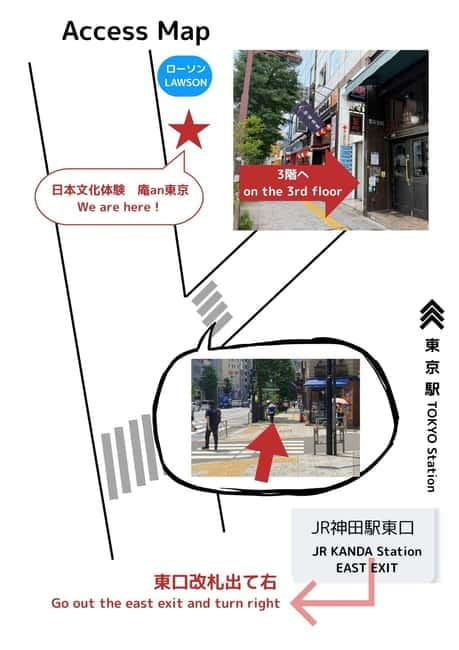
The meeting point is AN TOKYO Japanese Culture Experience (coordinates: 35.6916541, 139.7715022).
Operation hours are 10:00 to 17:00. If you reserve after 17:00, it gets processed the next day. And they note they can’t hold the event for delays. That’s common for small classes, but it still matters: plan to arrive a bit early, not right on the dot.
One more “don’t get surprised” detail: those who do not participate in the experience won’t be allowed to enter. So if you’re meeting friends nearby, make sure everyone is joining the class.
Who this experience fits best
This class is a great match if you:
- Want a hands-on introduction to Japanese wagashi, specifically nerikiri
- Like matcha and want to understand it through a pairing with sweets
- Prefer small skill-building activities over long museum-style explanations
- Enjoy structured cultural rituals, not just food tasting
It’s also friendly for families in one specific way: children who sit on their parents’ laps are free of charge (under 2 years old only).
Where you might hesitate:
- If you’re sensitive to group dynamics or noise, keep in mind there’s at least one report of a class being too crowded to hear the instructor well.
- If you want a super quiet, personal tutorial, this is a scheduled shared experience. Your best bet is picking a time when you expect fewer people, if your booking options allow it.
Should you book Japanese traditional sweets making and tea ceremony?
Book it if you want to do two things at once: learn the technique behind seasonal nerikiri and practice the tea experience with Uji matcha. The quality ingredient angle (Kyoto bean paste and special single-origin matcha) is the kind of detail that turns a typical “try sweets” activity into something more memorable.
Skip or reconsider if your goal is only a quick bite and a photo. The real payoff is the making and the pairing, not the final product alone. And if language support needs to be perfect for you, know that it’s Japanese-led with translation support as much as possible.
If you do decide to go, go with the right expectations: you’re here to follow steps, shape seasonal sweets, and taste how the sweetness balances matcha. Do that, and it’s one of those practical cultural stops that leaves you with both flavor and know-how.
FAQ
How long is the Japanese Traditional Sweets making and Tea Ceremony experience?
The duration is 95 minutes.
Where is the meeting point?
The meeting point is AN TOKYO Japanese Culture Experience, at coordinates 35.6916541, 139.7715022.
How much does it cost?
It costs $18 per person.
What will I make during the class?
You will make two Japanese traditional sweets based on the season, including nerikiri.
What matcha is used?
The experience uses single-origin special Matcha, and the tea ceremony part uses Uji matcha.
Is the tea ceremony included?
Yes. It includes explanations of tea, a matcha grinding demonstration, and a tea-ceremony experience.
Is anything extra available to purchase?
Yes. A sweets take-out box costs 100 JPY, and an experience completion certificate costs 300 JPY.
Is English provided?
English translation is provided as much as possible. If you want to add English translation, you should contact the organizer.
What languages does the instructor use?
The instructor speaks Japanese.
Are children allowed?
Children who sit on their parents’ laps are free of charge if they are under 2 years old.
Is there a cancellation policy?
The experience offers free cancellation up to 24 hours in advance for a full refund. (If you cancel later, cancellation fees may apply per the provided policy.)