REVIEW · TOKYO
From Tokyo: Mt. Fuji And Hakone Private Sightseeing Day Trip
Book on GetYourGuide →Operated by Travizta Tours · Bookable on GetYourGuide
Mt. Fuji in one tight, private day.
This 10-hour Mt. Fuji and Hakone outing is built for convenience, with door-to-door pickup across Tokyo’s 23 wards and a driver who keeps the day moving around traffic and weather. I like how the route mixes classic photo stops with actual places you can walk—so you get views, then a moment to breathe.
I love the chance to see Fuji from multiple angles, including the Arakurayama Sengen Park viewpoint and the Fuji 5th Station (with time set aside for photos and shopping). I also like the calmer, more local feel of Oshino Hakkai and the lake-area parks, where the scenery changes slowly and you’re not rushed through everything.
One consideration: this is a private schedule with paid extras on top (ropeway, cruise, and some admissions). If the weather turns rainy or foggy, you’ll still see the sites, but Fuji views may be hit-or-miss, so I’d go in with flexible expectations.
In This Review
- Quick takeaways
- Private pickup, private pacing: how this day really starts
- Two ways to build your Mt. Fuji and Hakone day
- Itinerary A: Fuji-first with Fuji Five Lakes highlights
- Itinerary B: Hakone scenery, ropeway views, and art
- Arakurayama Sengen Park and the Chureito-style viewpoint
- Mt. Fuji 5th Station: the altitude moment (and the practical time limit)
- Lake Kawaguchiko time: ropeway views plus a slower rhythm
- Oishi Park: flowers, lake views, and an easy place to pause
- Oshino Hakkai and the pond village feel
- Saiko Iyashi-no-Sato Nenba: a short step into traditional countryside
- Hakone Ropeway, Lake Ashi cruise, and the Open Air Museum payoff
- Hakone Ropeway: an easy win for views
- Lake Ashi sightseeing cruise: do it when you can see clearly
- Hakone Open Air Museum: art with room to breathe
- Price and logistics: is $419 per group actually good value?
- Who should book this private Fuji and Hakone day
- Should you book? My practical take
- FAQ
- What time is pickup, and can it be late?
- Where can you be picked up and dropped off in Tokyo?
- Is lunch included in the price?
- Are the ropeway and cruise tickets included?
- How long is the tour?
- How much are the entrance and admission fees for key stops?
- Is the tour wheelchair accessible?
Quick takeaways
- Private pickup and drop-off from major Tokyo neighborhoods, so you skip long commutes and get extra time outside
- Two route choices: Fuji Five Lakes (Itinerary A) or Hakone hot-spring scenery and art (Itinerary B)
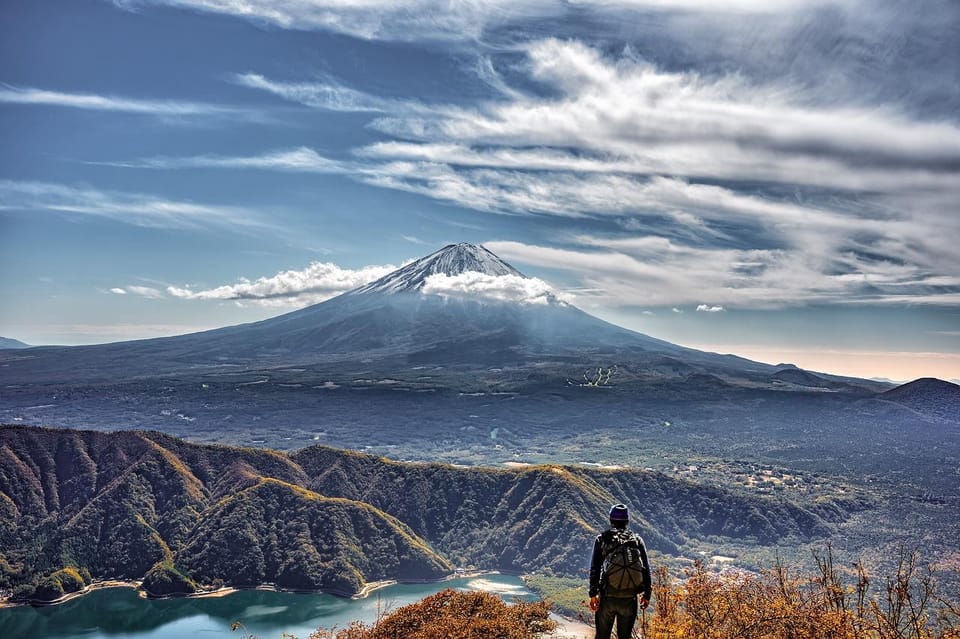
- Arakurayama Sengen Park + Fuji 5th Station for the most iconic mountain moments in one day
- Lake Kawaguchiko stops (including Oishi Park) that feel more relaxed than the main Tokyo crowd
- Oshino Hakkai for traditional thatched-roof ponds fed by spring water
- Guides like Amir, Ishii, or Zubi are repeatedly praised for smooth pacing and adapting when plans shift
Private pickup, private pacing: how this day really starts
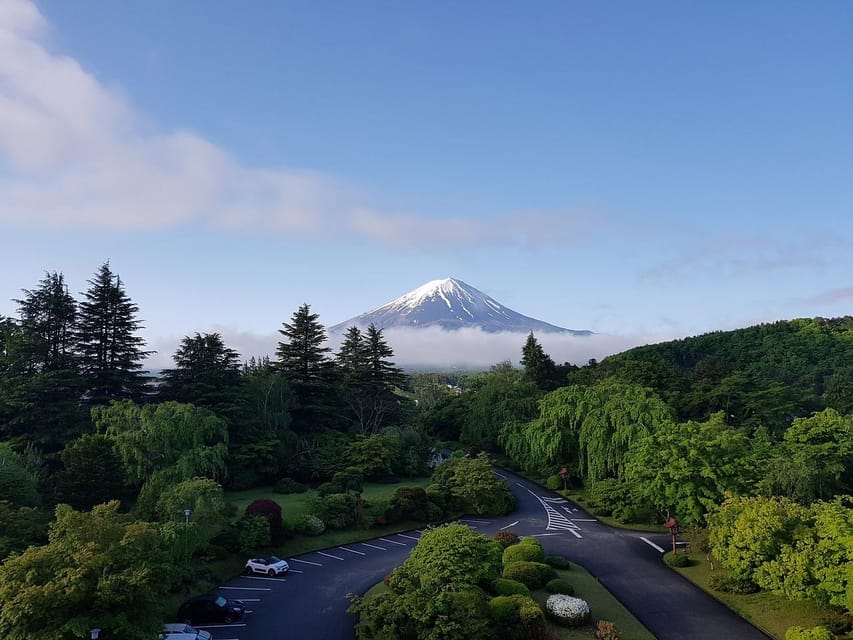
The big value here is that you start at home base. You can choose from pickup areas in Shinjuku, Shibuya, Minato, Shinagawa, Setagaya, and the same list covers drop-off. The pickup time is 8:30 AM, and because Tokyo traffic happens, the operator notes you can be up to 30 minutes late on arrival.
In practice, that means you’re not spending your morning on transit transfers or waiting for shuttles. You’re already seated, the car is air-conditioned, and you’re heading west toward Fuji. If you’re traveling with family, older parents, or anyone who hates tight group logistics, this is the kind of comfort that makes the day feel calmer from minute one.
The vehicle itself is described as modern and clean, and the driver speaks English and Japanese. One small but important detail from past experiences: you may meet guides such as Amir, Ishii, or Zubi, and the recurring theme is that they aim to keep things organized even when the weather or timing gets awkward.
You can also read our reviews of more private tours in Tokyo
Two ways to build your Mt. Fuji and Hakone day
This is not just one fixed route. You choose between two itinerary styles, both centered on famous viewpoints but with different priorities:
Itinerary A: Fuji-first with Fuji Five Lakes highlights
If you want the most direct Fuji checklist—views, shrines, lakes, and traditional ponds—this is the route. Expect stops around:
- Arakurayama Sengen Park (famous viewpoint area)
- Kitaguchi Hongu Fuji Sengen Shrine
- Mt. Fuji 5th Station
- Lake Kawaguchiko with scenic time plus a ropeway option
- Oishi Park
- Oshino Hakkai
- A short countryside break at Saiko Iyashi-no-Sato Nenba (short, photo-friendly time)
This route works best if you want the mountain to be the star of the day, even if it means a busier sequence of stops.
Itinerary B: Hakone scenery, ropeway views, and art
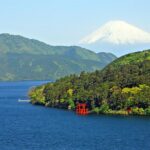
If you prefer hot-spring-region vibes, Lake Ashi, and an art setting with views, Itinerary B is the better fit. You’ll still see Fuji-area sights, then move into Hakone with:
- Arakurayama Sengen Park
- Oishi Park
- Hakone Ropeway
- Hakone Sightseeing Cruise on Lake Ashi
- Hakone Open Air Museum
This route is ideal if you’re already planning to spend a couple of nights in Hakone later, or if you want the variety: mountain views plus a more “Hakone” feel in the same day.
Arakurayama Sengen Park and the Chureito-style viewpoint
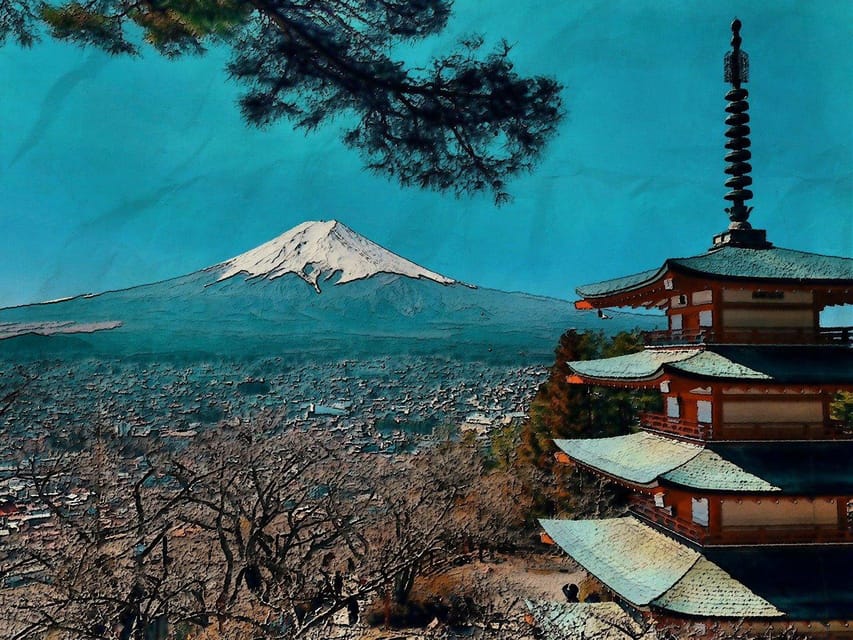
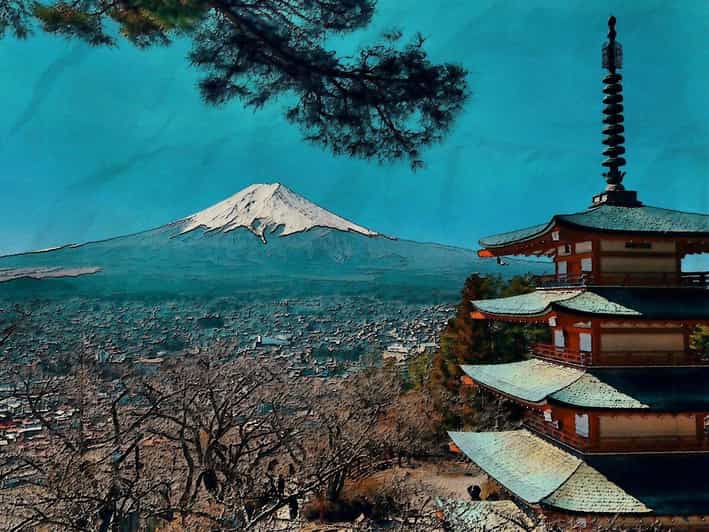
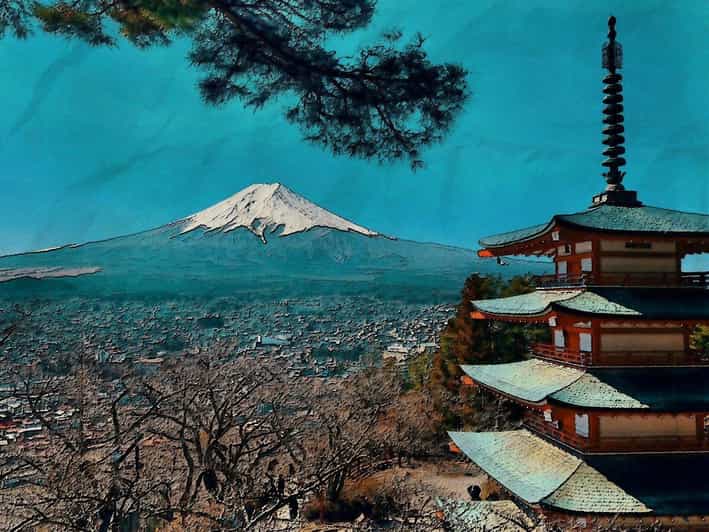
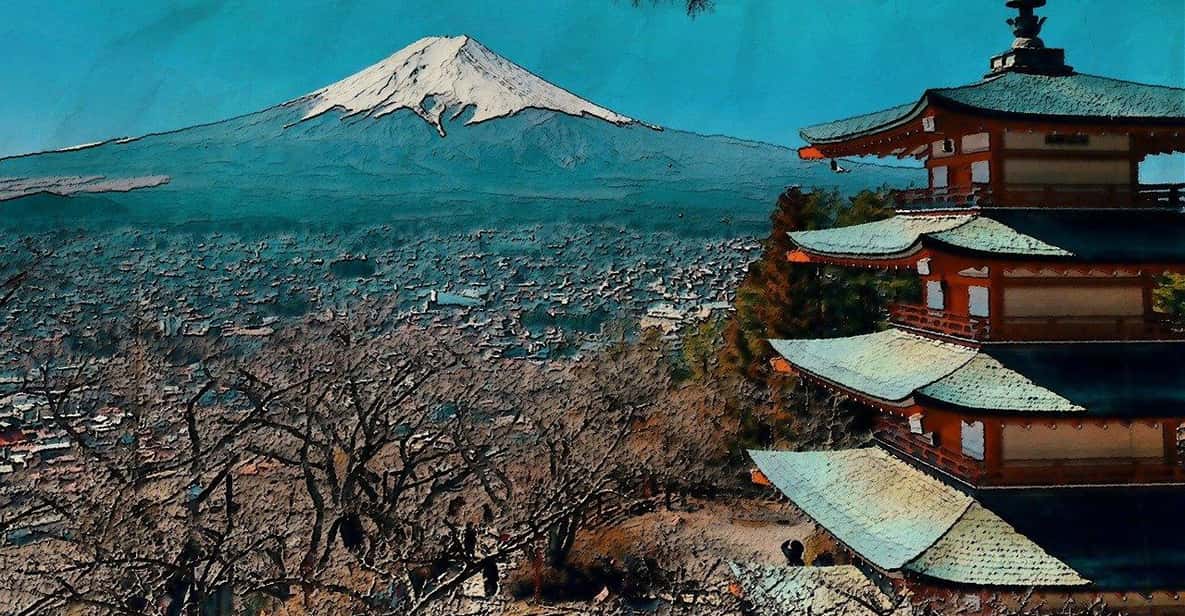
Whether you choose Itinerary A or B, Arakurayama Sengen Park shows up as a must-do. This is where you get that classic postcard view area—high enough for a broad perspective, and structured enough that it’s easy to find photo angles without sprinting.
You’ll spend about 30 minutes here (timing varies by day), and the park stop works for two traveler types:
- People who want photos fast and clean: you can get the main view and still have time for a short walk.
- People who like light pacing: you can linger if the weather clears and you’re comfortable with some waiting.
Because the operator includes scenic driving and photo stops on the way to other points, this park stop helps you “set the day’s mood” early—then the rest of the itinerary pays off even more.
You can also read our reviews of more tours and experiences in Tokyo


Mt. Fuji 5th Station: the altitude moment (and the practical time limit)
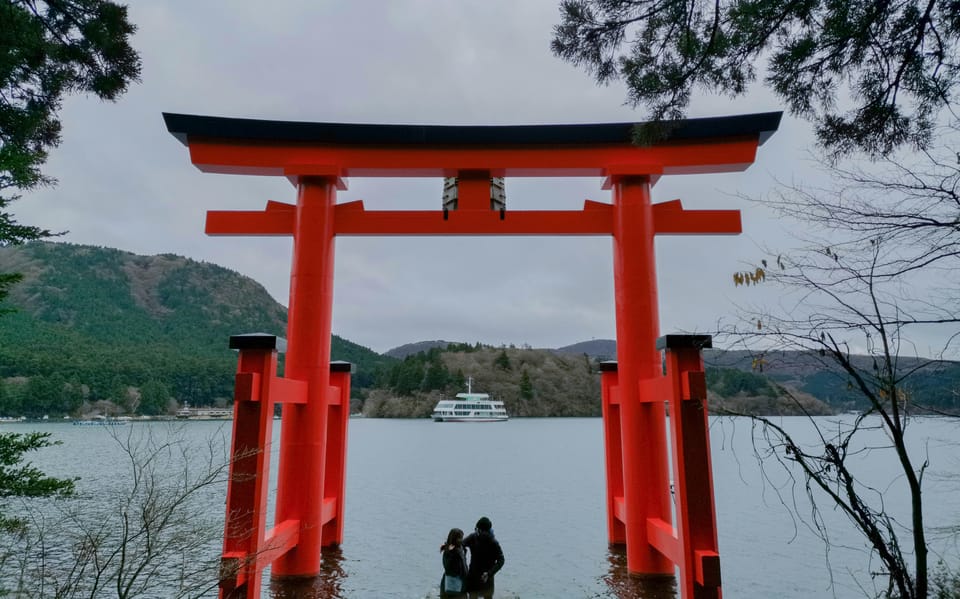
The highlight for many people is Mt. Fuji 5th Station, and the tour schedules it for about 1 hour with time for photos and free roaming. This is where the trip shifts from lakes and towns into true mountain territory.
A key practical point: there’s a Mt. Fuji entrance fee listed as 2100 yen per group (not per person). I like that this fee is per group because it keeps the add-on more predictable if you’re traveling as a small party.
You’ll get guided context and viewpoints along the way, plus time to explore. If you’re hoping for the best chance at visibility, treat this as a priority stop. Fuji views can change fast, so having a dedicated hour at the 5th Station is a smart use of time.
Lake Kawaguchiko time: ropeway views plus a slower rhythm
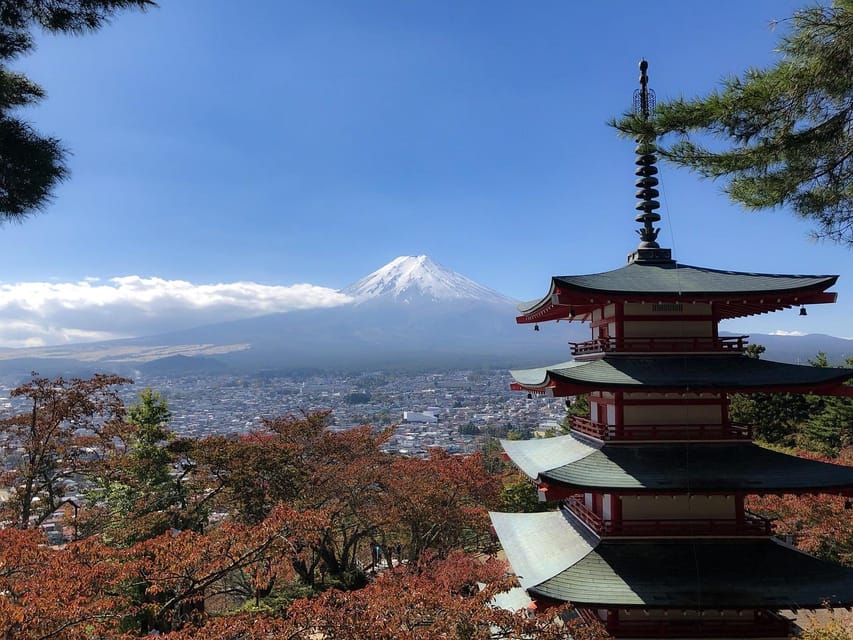
Once you’re down the mountain approach, the day becomes more scenic and relaxed. Lake Kawaguchiko is the center of this stretch, with roughly 1.5 hours allocated plus guided and free time.
You’ll have options around the lakeside, including a long-tail boat ride listed in the schedule. There’s also a Lake Kawaguchiko Mount Fuji panoramic ropeway add-on. The ropeway is described as ascending 400 meters from the eastern shore toward an observation deck near Mt. Tenjo, which is the kind of vertical perspective that makes the lake look dramatically different from ground level.
Important cost note: ropeway and cruise tickets are not included, and the tour lists 500 yen per person for the ropeway/cruise category. Also, if you’re someone who hates surprises, you should be ready for tickets and admissions at several stops—this itinerary is packed, so the non-included line items matter.
Oishi Park: flowers, lake views, and an easy place to pause
After Kawaguchiko, there’s Oishi Park with about 1 hour including a photo stop, guided time, and free time. This stop is especially good if you want something that feels more “walkable” and less like a checkpoint. It’s also a nice buffer: if your Fuji visibility is less than ideal earlier, Oishi Park gives you another chance to catch clear skies reflecting on the water.
Oshino Hakkai and the pond village feel
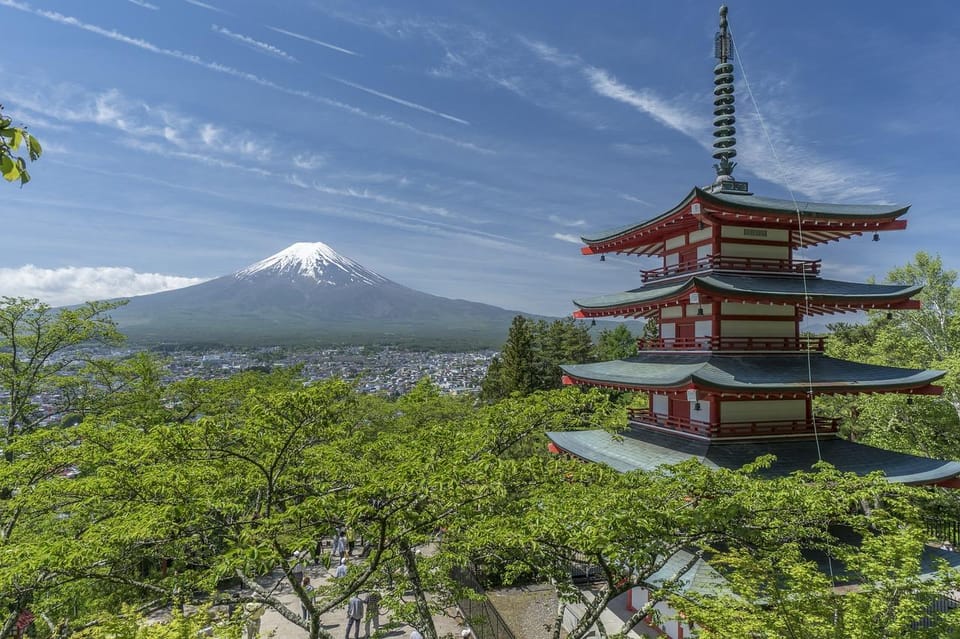
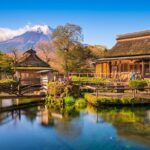
If I were picking the “most calm and memorable” stop of the Fuji side, it would be Oshino Hakkai. The schedule gives you about 30 minutes here: enough time to see the main ponds and appreciate the thatched-roof atmosphere without feeling trapped.
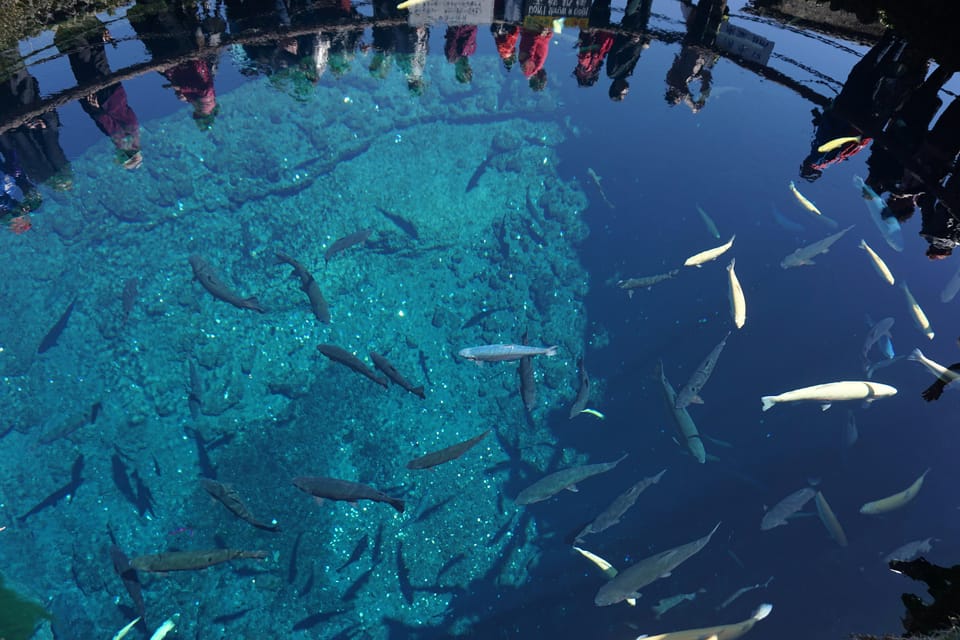
This is a spring-fed area, famous for crystal-clear water ponds tied to Mount Fuji’s melting snow. Even if you’ve seen photos before, it’s one of those places where your brain catches up with your camera: the water looks different in real life, and the buildings feel human-scale instead of theme-park perfect.
There’s no ticket mentioned for Oshino Hakkai in the list you provided, so the cost planning mainly comes from the ropeway/cruise and the Mt. Fuji and village admissions.
Saiko Iyashi-no-Sato Nenba: a short step into traditional countryside
The itinerary includes a short break and photo stop at Saiko Iyashi-no-Sato Nenba (listed as about 30 minutes, with a self-guided feel). Admissions are listed as 500 yen per person.
Even though the time is brief, this stop is useful because it adds texture. After viewpoints and lakes, you get a quieter, village-style atmosphere where you can look at old-style thatched-roof buildings and slow down for a moment.
If you’re the kind of traveler who enjoys “one small cultural stop” rather than another viewpoint, this is a good match.
Hakone Ropeway, Lake Ashi cruise, and the Open Air Museum payoff
If you choose Itinerary B, the day shifts to Hakone’s signature rhythm: aerial views, then water views, then an art walk in nature.
Hakone Ropeway: an easy win for views
The schedule includes the Hakone Ropeway, a cable car ride built for big views. This is similar in spirit to the Kawaguchiko ropeway, but the payoff is the Hakone geography—valleys dropping away, and a different angle on the water. Again, ropeway tickets are not included, and the tour list points to 500 yen per person for this category.
Lake Ashi sightseeing cruise: do it when you can see clearly
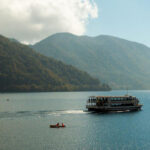
Next is the Lake Ashi sightseeing cruise. The tour doesn’t list cruise duration in the details, but it does give you a clear purpose: relax while you glide across the water with mountain and Hakone scenery around you.
If the weather is poor, this can still be enjoyable, but if you’re aiming for postcard views, treat the timing here as a “make the most of it” moment.
Hakone Open Air Museum: art with room to breathe
The final stop for Itinerary B is Hakone Open Air Museum, with end-of-day time for visiting. This is a nice change from purely scenic stops. You’re not just standing in a crowd with a phone—you’re walking through art in an outdoor setting, and that makes the last hours feel less like you’re checking boxes.
Price and logistics: is $419 per group actually good value?
At $419 per group (up to 5 people) for a 10-hour private day, the value depends on how you divide the cost.
If it’s just two of you, it may feel like a splurge compared with group bus tours. But you’re getting:
- Private, air-conditioned transportation
- Tokyo pickup and drop-off within the 23 wards
- Highway tolls and parking
- Driver support in English and Japanese
Add-ons you should plan for:
- Ropeway/cruise tickets: 500 yen per person
- Mt. Fuji entrance fee: 2100 yen per group
- Saiko Iyashi-no-Sato Nenba: 500 yen per person
- A listed Subaro line ticket (2100 yen per person)
Because some costs are per person and some are per group, your total can swing. Still, I like this pricing model for families or small groups: even with admissions, you often end up paying about the same as a mid-tier private taxi-and-transfers day, while covering far more stops.
Also, because it’s private, you can set your priorities. Want more time at a viewpoint and less time in shopping areas? You’ll usually have the freedom to manage the pacing better than fixed group tours.
Who should book this private Fuji and Hakone day
This is a strong fit if you:
- Want a Mt. Fuji + Hakone day without transferring trains and buses
- Are traveling with kids, multi-generational family, or anyone who needs a comfortable schedule
- Care about seeing the classic Fuji viewpoints (Arakurayama Sengen Park and the 5th Station) and also want a traditional stop like Oshino Hakkai
- Prefer that your day be shaped around what you want to see, not what the crowd does
It may be less ideal if you hate planning around multiple paid extras. Also, if you’re chasing only Fuji visibility at all costs, understand that weather can affect what you see, and the day may become more about the experience than the perfect photo.
Should you book? My practical take
I’d book this if you want convenience plus iconic stops and you’re splitting the cost with up to 5 people. The private pickup/drop-off alone saves energy, and the route selection (Fuji-first or Hakone-first) lets you match your mood.
If you’re on the fence, do this quick checklist:
- Confirm which itinerary matches your trip style: Fuji Five Lakes or Hakone ropeway/cruise/art.
- Budget for ropeway/cruise and the listed admissions so you’re not surprised later.
- Keep a little flexibility for weather—guides have been praised for making the best of rainy days, and that’s a big deal when visibility changes.
If that sounds like your kind of day, this is one of the more practical ways to pack Mt. Fuji and Hakone into a single outing without turning your trip into a transportation project.
FAQ
What time is pickup, and can it be late?
Pickup is scheduled for 8:30 AM. The operator notes that due to traffic, the pickup may be up to 30 minutes late.
Where can you be picked up and dropped off in Tokyo?
Pickup and drop-off are offered at several Tokyo locations in the 23 wards, including Shinjuku, Shibuya, Minato, Shinagawa, and Setagaya.
Is lunch included in the price?
No, lunch is not included.
Are the ropeway and cruise tickets included?
No. Tickets for the ropeway and cruise are not included, and the listed cost is 500 yen per person.
How long is the tour?
The tour duration is 10 hours.
How much are the entrance and admission fees for key stops?
The list shows these add-ons: Mt. Fuji entrance fee is 2100 yen per group, Saiko Iyashi-no-Sato Nenba is 500 yen per person, and Subaro line is 2100 yen per person.
Is the tour wheelchair accessible?
Yes, the tour is listed as wheelchair accessible.