REVIEW · TOKYO
Tokyo : Authentic Samurai Experience in a Private Space.
Book on GetYourGuide →Operated by rojicoya · Bookable on GetYourGuide
Samurai practice in your own little world.
What I like most is how hands-on it feels from minute one, and how the whole session stays personal in a small group of up to 3. You’ll start with dressing for the part, then learn sword basics and etiquette before getting to spar with a real samurai in an old private house setting. One heads-up: this is active training, so it’s not for everyone, especially if you have mobility limits or are pregnant.
Two names stick in my mind from the experience vibe: the instructor (a Japanese teacher who speaks English too) and Yukari, who helps with dressing and also handles photos and tea service. After the training, you slow down with Japanese tea and a chance to talk, plus you get those very typical Japan-style photos inside the house. If you’re sensitive about the sword itself, you should speak up right away about the blade edge—safety rules are taken seriously, but your comfort matters.
In This Review
- Key Highlights You’ll Actually Feel
- Entering the Samurai World in a Small Private Space
- The House Setting: Why the Old Private Home Matters
- Kimono First: Dressing the Part Without Making It Strange
- Learning Samurai Etiquette and Sword Handling from Zero
- Real Sword Practice: The Part You’ll Remember
- The Big Moment: Fighting Against a Real Samurai
- Japanese Tea and Conversation: The Calm Ending
- Typical Japan Photos in an Old House
- Price and Value: Is $322 Worth It?
- Who This Samurai Experience Fits Best
- Who Should Skip It (Important)
- Quick Practical Tips So You Get the Best Session
- Should You Book This Samurai Training?
- FAQ
- Where is the meeting point?
- How long is the experience?
- Is it a small group?
- What languages are used by the instructor?
- Do I get to wear a kimono and handle a sword?
- Is the sparring done with a real samurai and sword?
- Is it refundable if my plans change?
Key Highlights You’ll Actually Feel
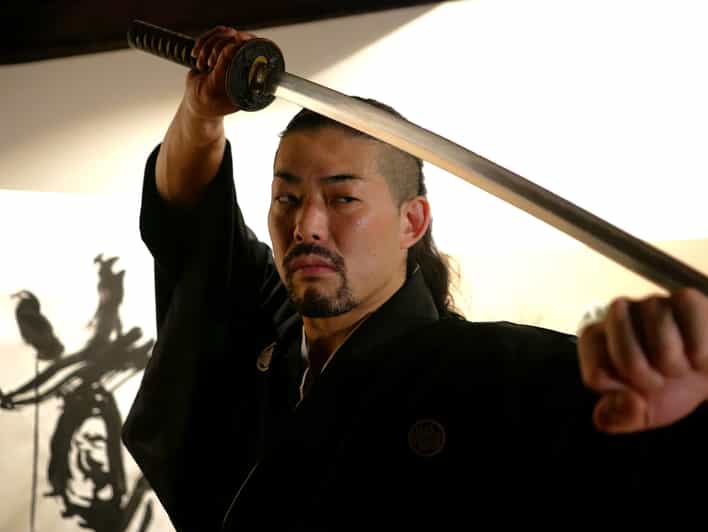
- Small-group attention (max 3 people) so you get correction, not just a demo
- Kimono dressing + a sword moment that makes you feel like you stepped into the role
- Real sword training with etiquette and basic handling for beginners
- A match against a real samurai with safety in mind throughout
- Japanese tea break plus time to chat and take photos in an old private house
Entering the Samurai World in a Small Private Space
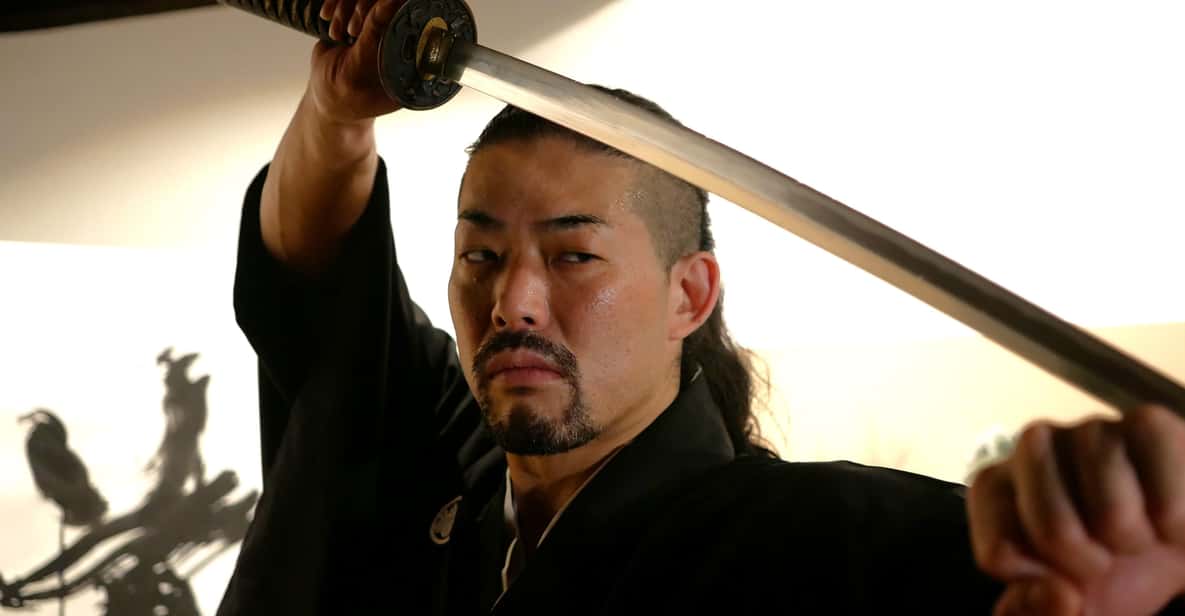
This isn’t a big stage show. It’s a private-feeling training session in a traditional old private house, which changes the whole mood. You don’t wander through exhibits. You suit up, listen, practice, and then go.
The format is simple: you learn from scratch, you handle a real sword under guidance, and you finish with tea and a breather. At 90 minutes, it’s long enough to build confidence but short enough that you don’t feel like your day is swallowed.
A small group matters here. With only up to 3 participants, the instructor can watch your stance, your grip, and your timing. That kind of coaching is hard to get in crowded group experiences.
You can also read our reviews of more private tours in Tokyo



The House Setting: Why the Old Private Home Matters
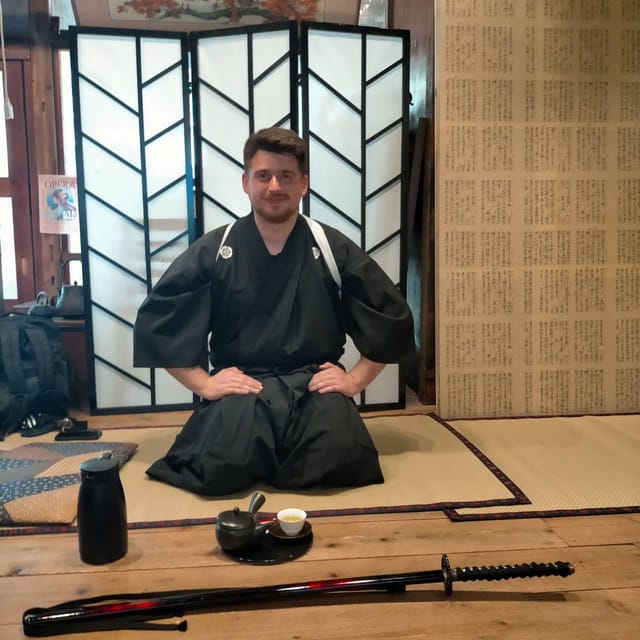
The venue is part of the experience on purpose. An old Japanese house brings in that quiet, wood-and-tatami feel that makes the training sit inside real daily life, not a theme park set.
Expect a room setup that supports instruction and practice, plus photo opportunities that look very “Japan” because the setting is genuinely Japanese. The experience includes learning inside this old house, so you’ll feel the difference between standing in a modern studio and being taught in a traditional space.
If you love authenticity, this is where it shows. You get the photo moment, but you also get the practical benefit of calmer surroundings for learning sword etiquette and movements.
Kimono First: Dressing the Part Without Making It Strange
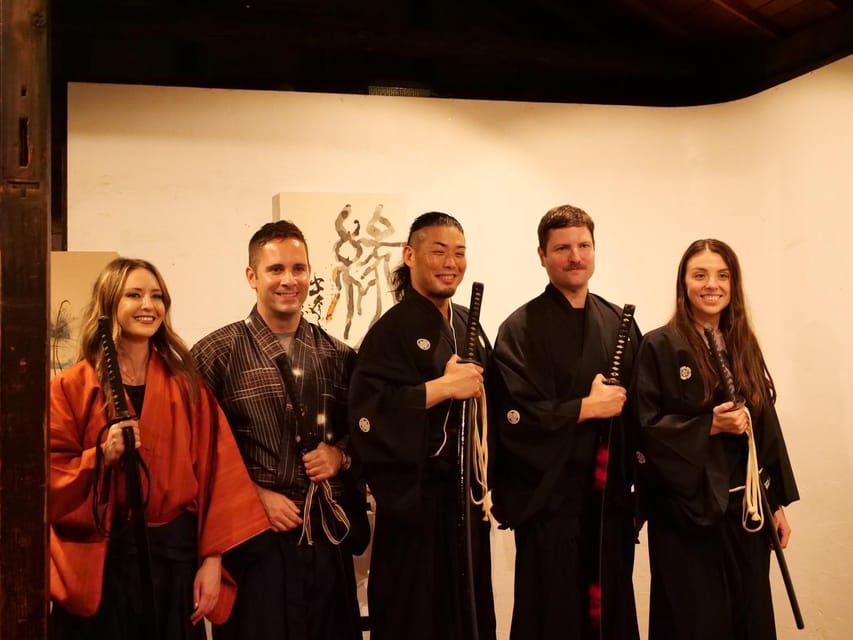
The experience starts with kimono dressing. This matters more than it sounds. When your clothing fits correctly, you naturally move differently, and that helps you understand posture and etiquette while you’re still fresh.
Yukari is there to help with dressing, and that support is part of why the vibe feels easy. You’re not left figuring out ties and sleeves on your own.
After you’re dressed, you don’t just stand around. You move into the samurai experience, including moments where you can wave a sword. It’s a fun transition that sets the tone: this is going to be active, not passive.
Learning Samurai Etiquette and Sword Handling from Zero
Once you’re in costume, the professional instructor teaches you how to handle the sword and the basics of Bushido etiquette. The key detail is that you start from scratch. You don’t need a sword background to keep up.
The instruction covers how to hold and swing the sword safely and correctly, plus how to act with the right respect and awareness. In other words, you’re not only learning motion—you’re learning how to behave like you belong in that role.
I also like that the instructor speaks Japanese and English, so communication stays clear even if your Japanese is limited. One practical tip: listen closely during the first practice. The early corrections tend to matter most for what comes later.
Real Sword Practice: The Part You’ll Remember
This experience includes a real sword. That changes everything compared with plastic props. You’ll feel the weight, the balance, and the need for control right away.
The training includes practicing sword motions and stances, and you also get a taste of cutting practice in a tatami context. (You’ll handle real targets safely under instruction rather than free-swinging wildly.)
If you’re into technique, you’ll likely appreciate how the session isn’t just one long sequence. You get instruction, practice, and adjustments so your movement looks more controlled by the end.
One smart move: if you’re curious about how the sword is built, ask the instructor. There’s a suggestion that they’re willing to show sword construction if you request it, which can be a fascinating add-on for anyone interested in how these blades are put together.





The Big Moment: Fighting Against a Real Samurai
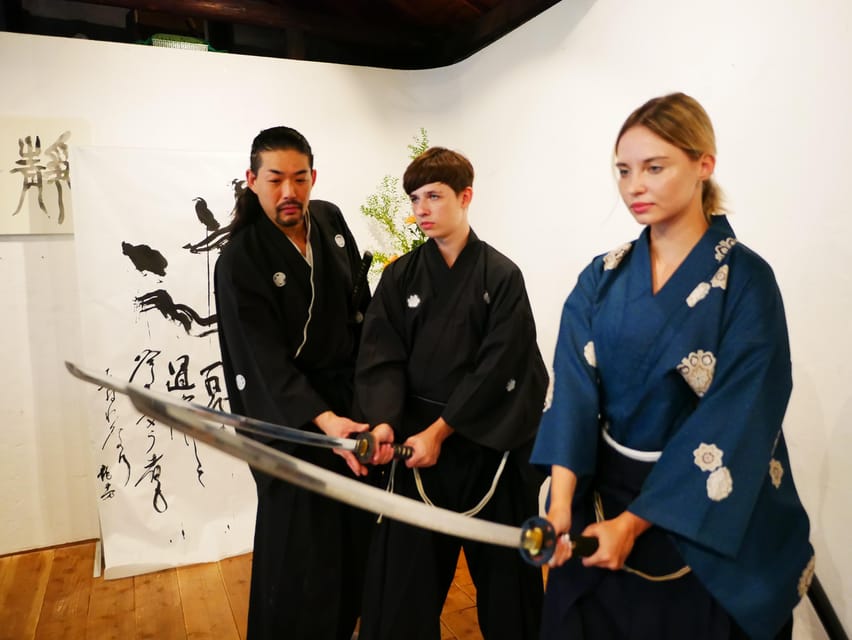
This is the headline: you fight against a real samurai with a sword. It’s the part that turns training into a story you’ll tell.
Safety is explicitly part of the process. They also note that no one will point the blade at you. And if you don’t like the edge of the blade, you should tell them first—your comfort and safety priorities come first.
What to expect in practice is controlled sparring based on instruction and timing, not a chaotic brawl. The whole point is to help you experience the feeling of a samurai engagement while staying within safety limits set by the professionals.
If you’re nervous, that’s normal. The instructor’s job is to guide you so you can participate without panic. Focus on posture, controlled movement, and listening for cues. That’s how you get the best version of this moment.
Japanese Tea and Conversation: The Calm Ending
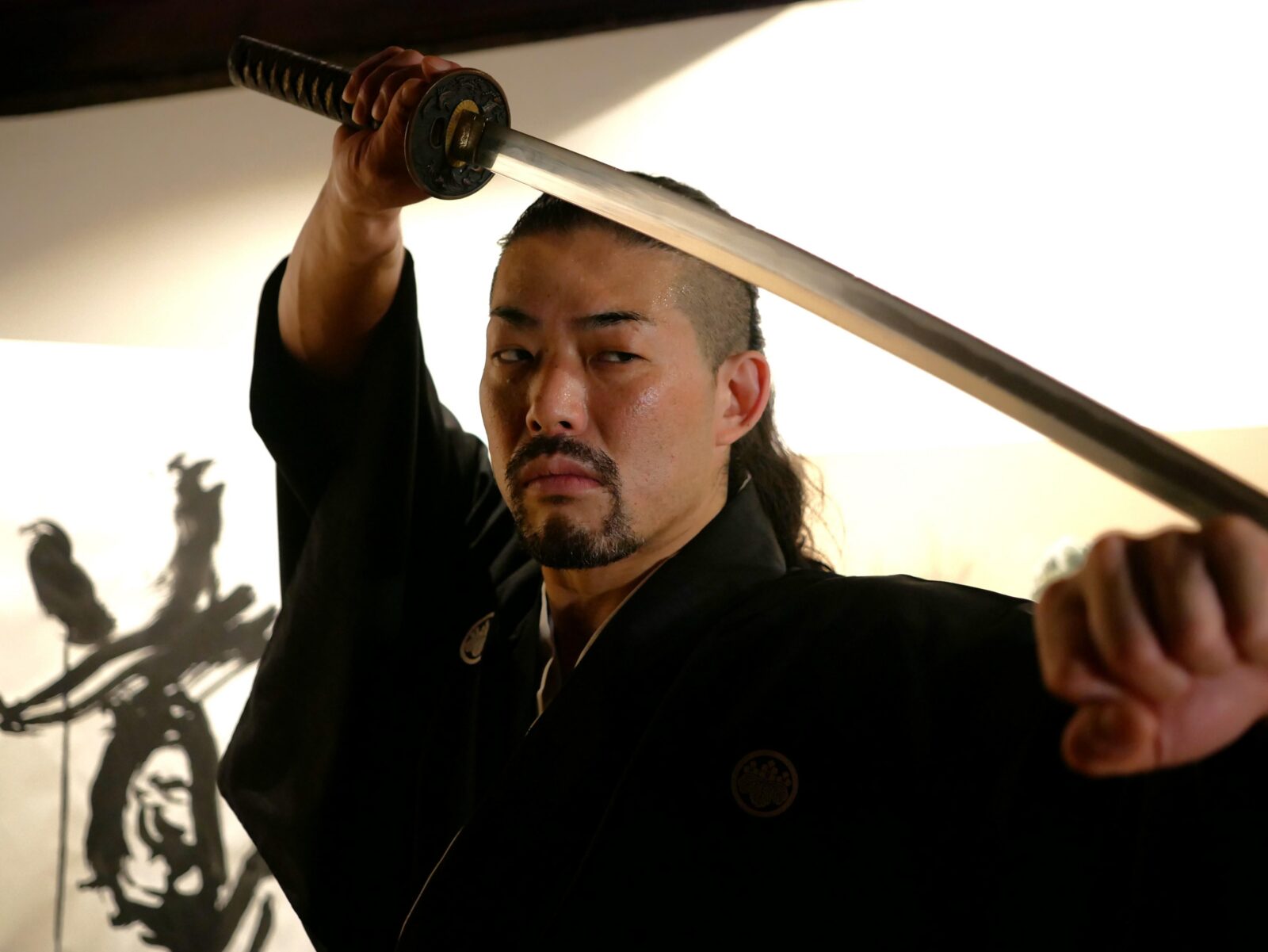
After the training, you slow down with Japanese tea. This isn’t just a free drink at the end. Tea gives your body a break and gives your brain time to catch up with what you just did.
You’ll get served tea after the experience, with a chance to talk and ask questions. This is also when photo time tends to happen, since Yukari helps with taking pictures.
I find tea breaks do two useful things on experiences like this: they turn adrenaline into something you can remember, and they give you a moment to connect the etiquette and philosophy you were taught with what it felt like in your hands.
Typical Japan Photos in an Old House
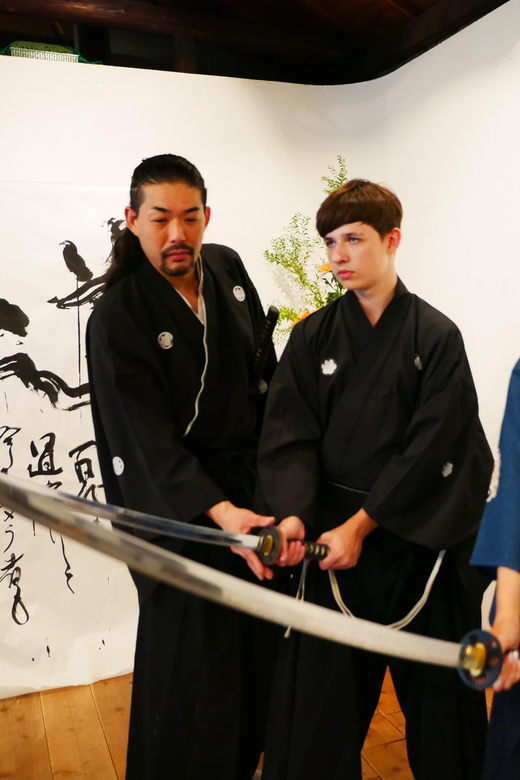
You’ll also get that “you’re in Japan” photo look—inside the traditional home. It’s included as part of the experience environment, not something you have to chase separately.
Because you’ve already dressed in kimono and practiced sword etiquette, your photos won’t look like generic souvenir shots. They’ll look like a real moment in a real setting.
If you care about photos, be ready to move calmly. The kimono look is beautiful, but it can be less forgiving for quick poses—so slow down, breathe, and let Yukari guide the timing.
Price and Value: Is $322 Worth It?
At $322 per person for 90 minutes, this sits in the premium category. The question isn’t just whether it’s “expensive.” It’s what you’re getting.
You’re paying for:
- Small-group training (up to 3)
- Kimono dressing support
- A real sword experience with instruction
- A sparring segment with a real samurai
- Japanese tea afterward
- Learning in an old private house
In plain terms, you’re buying access and time with skilled professionals, plus a rare, hands-on activity you can’t replicate on your own. If you want the full role-play story—costume, instruction, practice, and a real match—this price can make sense.
If you mainly want sightseeing or a quick photo, you might feel it’s more training than you expected. This is for people who actually want to learn and do.
Who This Samurai Experience Fits Best
This experience works best for adults and for anyone who’s comfortable with active instruction.
You’ll likely love it if:
- You want to learn samurai basics from scratch
- You enjoy hands-on activities, not just watching
- You want a traditional setting in an old Japanese house
- You want the full arc: kimono → etiquette → sword handling → sparring → tea
It’s also described as enjoyable for both men and women, which matters because some “character experiences” are really marketed one way. Here, participation is designed to be shared.
Who Should Skip It (Important)
Some things are clearly not a fit.
It’s not suitable for:
- Pregnant women
- People with mobility impairments
- Children under 10 years
Also, no scooters are allowed. That’s worth remembering if you’re planning to bring any mobility device that isn’t explicitly supported.
This is active sword training. Even with safety rules, you should expect physical movements, stance work, and getting into positions that match traditional training.
If you’re unsure, compare your comfort level with movement-heavy activities first, not with museum-style tours.
Quick Practical Tips So You Get the Best Session
A few things I’d do before you go in:
- Arrive with the mindset that you’re learning. The first minutes set the tone.
- If you have any concern about the blade edge, say so at the start. They ask you to tell them if needed.
- If you’re curious about the sword itself, ask the instructor about construction. One person found that extra detail worth requesting.
- Don’t rush the tea and photos at the end. The slower pace is part of why this experience lands well.
Should You Book This Samurai Training?
Book it if you want a real, hands-on samurai experience with small-group coaching, a kimono component, and a sparring moment with a real samurai. It’s a great choice when you want something memorable that goes beyond photos.
Skip it if you’re mainly looking for a cultural walk-through with minimal physical activity, or if you fall into the listed non-suitable categories. This one rewards participation.
If you’re on the fence, think about what you want to remember from Tokyo: a quick selfie, or learning sword etiquette and getting trained for a controlled fight in an old Japanese house.
FAQ
Where is the meeting point?
The meeting point has a signboard near it. Follow the arrow and enter through the entrance.
How long is the experience?
It lasts 90 minutes.
Is it a small group?
Yes. It’s limited to a small group of up to 3 participants.
What languages are used by the instructor?
The instructor speaks Japanese and English.
Do I get to wear a kimono and handle a sword?
Yes. You’ll do a kimono dressing experience, learn sword etiquette and handling, and you’ll also get real sword time (including a moment to wave a sword).
Is the sparring done with a real samurai and sword?
Yes. You fight against a real samurai with a sword, and safety is taken into consideration.
Is it refundable if my plans change?
There is free cancellation up to 24 hours in advance for a full refund.