REVIEW · TOKYO
1 Day Private Charter Tokyo Tour (Green Number Plates)
Book on Viator →Operated by Live Nippon · Bookable on Viator
A one-day Tokyo loop, minus the chaos. This private charter uses an air-conditioned vehicle and an English-speaking guide to help you see major sights in one smooth day. You get the classic mix: old temples, royal grounds, and the pop-culture punch of Harajuku and Shibuya.
What I really like is the flexibility built into the setup. If you want more time for a shrine, a street, or a photo stop, you’re not stuck waiting on anyone else’s train schedule. Another big plus: the best guides named here (from Petteri to Zia to Ahmed) are consistently praised for clear English and smart day-of adjustments, including when it rains.
One consideration: this is a fast-hit itinerary. You’ll spend plenty of time at stops, but you’re also expected to explore on your own inside many areas, following meeting points and instructions from your driver-guide.
In This Review
- Key highlights worth planning for
- Why a private car matters for a first-time Tokyo day
- Price and value: when $400 for up to 5 makes sense
- The flow of your day: pickup, your guide, and how you’ll actually tour
- Stop-by-stop: Senso-ji and Asakusa’s old-town rhythm
- Nakamise shopping street: the 15-minute flavor test
- Tokyo Skytree: big views, extra tickets
- Imperial Palace area: a quick look, not a long walk
- Meiji Jingu Shrine: history you can feel in your breathing
- Takeshita Street and Harajuku style chaos (the fun kind)
- Shibuya Crossing and Hachiko: Tokyo in movie-mode
- Shinjuku Gyoen National Garden: your cherry blossom payoff
- Pacing and weather: how to get a great day even when it rains
- Who this charter suits best
- Should you book this Tokyo Green-Plate charter?
- FAQ
- How long is the private Tokyo charter?
- How many people can fit in the group?
- Is pickup from your hotel included?
- Are entrance tickets included for all stops?
- Will there be an English-speaking guide?
- Is this tour private or shared?
- What happens if the weather is poor?
Key highlights worth planning for
- Private car to cut down the Tokyo train stress and crowd squeeze
- English-speaking guidance that turns famous places into understandable stories
- A classics-to-city-energy route: Asakusa → Meiji Jingu → Harajuku/Shibuya → Shinjuku
- Rain-ready mindset, with guides suggesting alternate choices when walking gets miserable
- Stop times that balance photos and wandering, so you’re not just “passing through”
- Good value for small groups, because the price is per group up to 5
Why a private car matters for a first-time Tokyo day
Tokyo is amazing, and Tokyo is also… a lot. Lines, crowds, and transfer hopping can eat your limited sightseeing time. This charter keeps you moving in comfort, using an air-conditioned vehicle for the big jumps between neighborhoods.
The payoff is simple: you can focus on the sights instead of plotting routes. Even if you’re a confident traveler, you’ll enjoy not having to translate station names while steering around rush-hour surges. That comfort matters most in summer heat, winter chill, and rainy shoulder seasons.
You can also read our reviews of more private tours in Tokyo
Price and value: when $400 for up to 5 makes sense
The price is $400 per group (up to 5 people) for about 8 hours. That’s not “cheap” on a single-person basis, but it often becomes a practical choice once you split it among family or friends.
Here’s the value logic I like: you’re paying for (1) private transport, (2) guide time, and (3) a route that hits major landmarks without you building the plan yourself. If you can get even a couple people to join, the per-person cost drops fast. If you’re traveling with kids, older relatives, or anyone who hates switching lines, the private format can feel like paying to remove friction.
Also, some big-ticket sights on your route (like Tokyo Skytree) are not included in the entry fee, so think of this as a “guided transport and itinerary package.” You bring the mindset of paying entrance costs where needed, and you won’t be surprised.
The flow of your day: pickup, your guide, and how you’ll actually tour
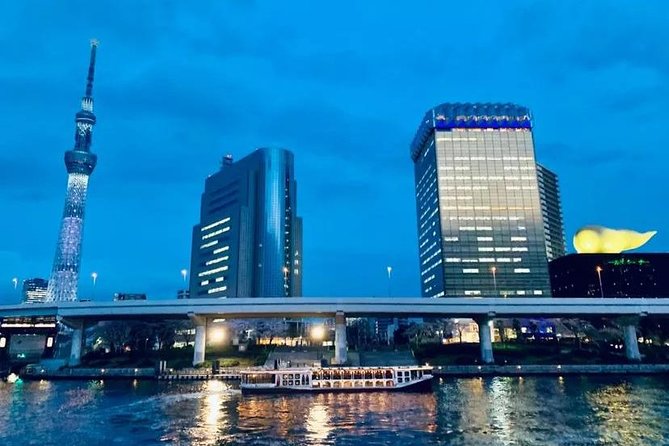
A key feature is pickup is offered, which helps you start the day without a scramble. You’ll also have a mobile ticket, which usually keeps check-in simple.
Your guide role is practical, not academic. The experience is described as learning Japan’s history and culture with an English-speaking guide, and the feedback strongly emphasizes clear guidance and smart adjustments. Names that come up often include Petteri, Zia, Ahmed (spelled both Ahmed and Ahamed in the feedback), Shoaib, Zohaib, and Mukarram.
One thing to understand before you book: at least in some cases, the driver-guide may not accompany you inside every attraction. Instead, they’ll give instructions before entry and help you with timing and meeting points. That can still work well, especially if you like exploring at your own pace once you’re at the location.
Stop-by-stop: Senso-ji and Asakusa’s old-town rhythm
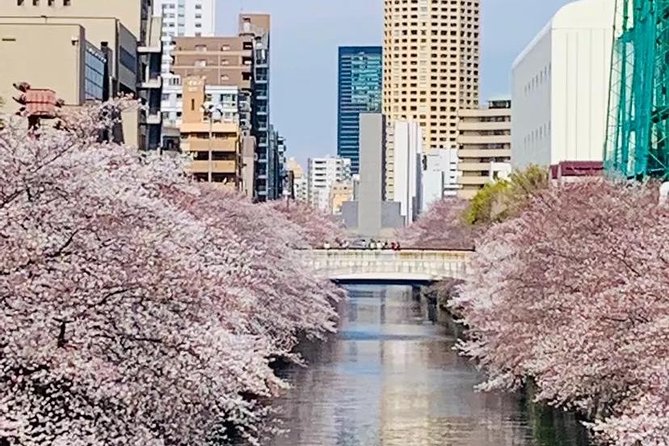
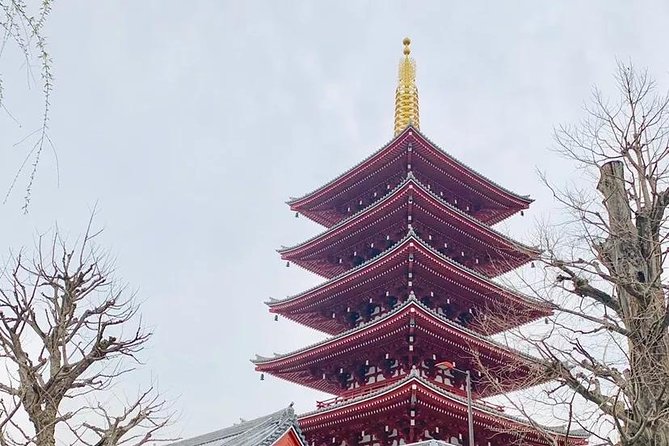
Your day starts with Senso-ji Temple in Asakusa, Tokyo’s oldest temple and one of its most important. You’ll get about 1 hour, and admission is free for this stop.
This is the “arrive and feel Tokyo” moment. Senso-ji has that recognizable temple atmosphere where the area around the grounds feels alive even when the rest of the city is moving fast. It’s the kind of place where a guide helps because you’re not just looking at buildings—you’re learning why certain details matter and what traditions to notice.
One small tip: because Senso-ji is a top magnet for crowds, go in with the idea that you’ll take your photos, soak in the atmosphere, and then move on. Trying to do everything at once can leave you feeling rushed.
Nakamise shopping street: the 15-minute flavor test
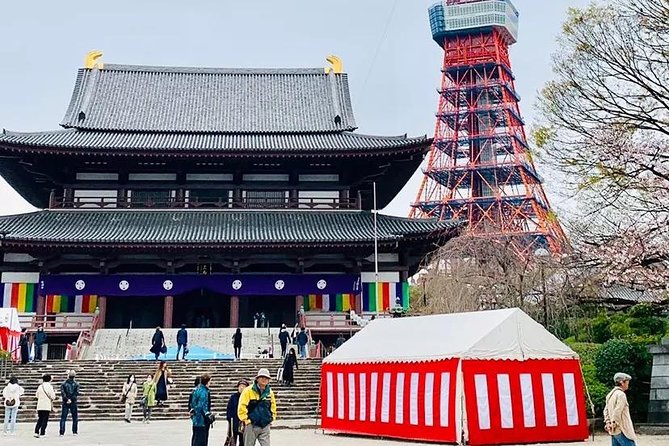
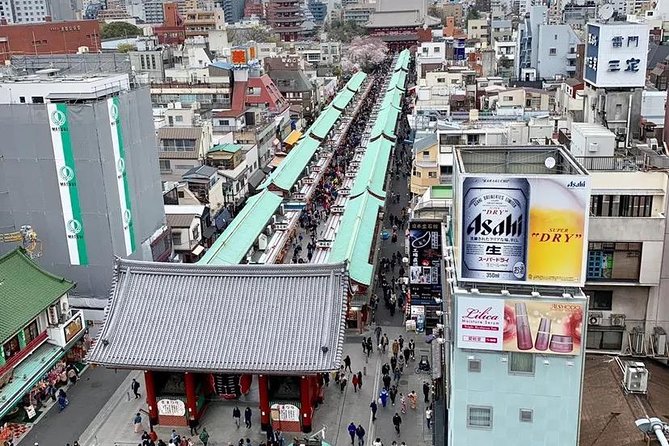
Right after Senso-ji, you’ll have about 15 minutes on Nakamise Shopping Street, near Kaminarimon. The tour marks this as free to access.
This is where you get the quick-hit version of “traditional Tokyo shopping.” Expect snack-style stalls, souvenirs, and the usual pre- and post-temple stroll energy. Fifteen minutes sounds short, but it’s honestly a good length for two reasons: you can try a couple things without turning your visit into a shopping marathon, and you still keep momentum for the rest of the loop.
If you’re the type who wants to browse for 45 minutes, you can ask your guide to adjust time if the day is running ahead.
You can also read our reviews of more tours and experiences in Tokyo

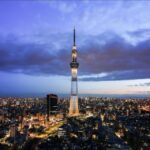
Tokyo Skytree: big views, extra tickets
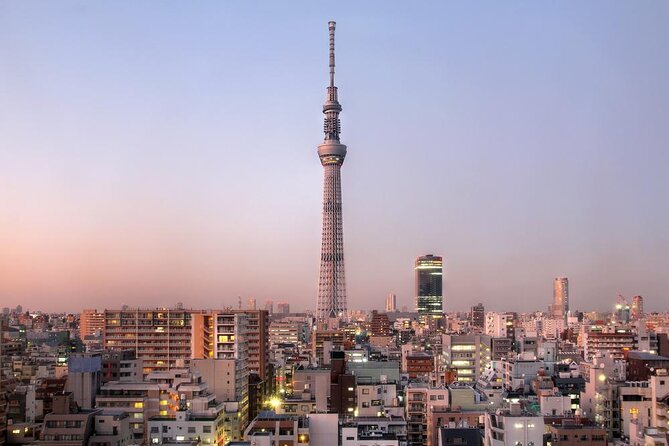
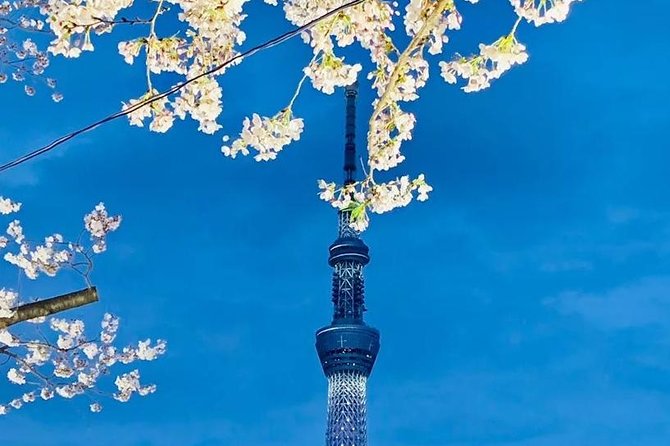
Next up is Tokyo Skytree, with about 1 hour on-site. Here, admission is not included, so budget for entry fees if you want to go up.
Skytree is the “see Tokyo from above” moment. Even if you’re not a rooftop person, the height gives you a sense of the city’s scale that’s hard to get from street-level. It also makes your photos look more dramatic because you can capture layers of neighborhoods rather than just one block.
One practical caution: if you’re navigating on foot afterward, plan for the fact that the Skytree complex area can feel confusing once you’re leaving. I’d recommend agreeing on clear meeting points with your guide before you split up, and keeping your timing tight.
Imperial Palace area: a quick look, not a long walk
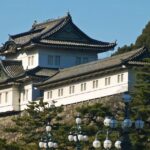
Then you’ll reach the Imperial Palace area, with about 10 minutes and free admission. The tour description suggests a small walk outside the palace rather than a deep interior visit.
Think of this stop as a palate cleanser: you get royal-city context without turning your whole day into a long historical museum session. Ten minutes won’t satisfy someone who wants every detail, but it works for first-timers who want the basics and the location.
If you care a lot about this part of Tokyo, ask your guide if there’s time to circle the area more slowly. In a private format, a small tweak can matter.
Meiji Jingu Shrine: history you can feel in your breathing

After the palace area, you head to Meiji Jingu Shrine, which is about 30 minutes and listed as free. The shrine is dedicated to the deified spirits of Emperor Meiji and Empress Shōken.
Meiji Jingu is where Tokyo’s speed drops. The shrine grounds feel designed for walking slowly and noticing the atmosphere: trees, pathways, and a quieter mood than you’ll get in shopping districts.
This stop also benefits from a good guide. You’re not just taking photos; you’re learning what the shrine represents and what to look for so your visit feels meaningful rather than scenic. If you go during rain, the cypress-and-forest smell experience is the kind of detail you’ll remember, and guides often have good suggestions for how to handle weather without losing the moment.
Takeshita Street and Harajuku style chaos (the fun kind)
Next is Takeshita Street in Harajuku, with about 30 minutes and free access. This is the pedestrian shopping strip lined with fashion boutiques, cafes, and food spots.
This is the pop-culture contrast to the shrines and temples. Takeshita Street is also a place where you can stand back, watch the fashion and energy, and still enjoy it even if you don’t plan to buy anything.
A good move here: treat it as a “walk-and-snack” stop rather than a shopping mission. If it’s crowded, don’t fight it. You’re here to experience the street, grab a few photos, and keep the day balanced.
Shibuya Crossing and Hachiko: Tokyo in movie-mode
You’ll hit Shibuya Crossing next for about 15 minutes. It’s free and often the scene people recognize immediately. If you’re into pop culture, it’s the type of location that makes Tokyo feel instantly cinematic.
Then comes Hachiko, with about 30 minutes and free access. Hachiko is Tokyo’s famous Akita dog who waited for his master at Shibuya Station, even after his master died. This stop gives you a heartwarming break from the high-speed crossing energy.
I like that the tour pairs these two because they cover two sides of Tokyo’s identity: the modern media-ready intersection and the emotional, human story behind a statue. A guide can also help with what to notice around Shibuya so you’re not just collecting landmarks.
Shinjuku Gyoen National Garden: your cherry blossom payoff
The final major stop is Shinjuku Gyoen National Garden, with about 1 hour. The garden is not included for admission fees, but the tour specifically calls out it as one of the best spots to see cherry blossoms during the season.
This is a smart end-of-day option because gardens are where you decompress. You’ll get a calmer setting after Temple → Streets → Crossing energy. Even outside cherry blossom season, the garden format gives you a break from walking in heavy crowds.
Because admission isn’t included, treat it as the one “extra paid entry” stop you’ll likely plan for. Also, if the weather turns messy, guides often adjust: you might spend less time where it’s miserable to walk, or swap your emphasis to photo-friendly areas.
Pacing and weather: how to get a great day even when it rains
Your itinerary includes a range of outdoor and indoor-friendly moments. The experience is described as requiring good weather, and the provided feedback shows guides who handle rain with practical thinking.
Here’s what you should plan for:
- Bring layers and something for rain. Guides have umbrellas or ideas ready, and they’ll use them to keep you seeing Tokyo.
- Don’t overpack your day with “must-do inside every building.” If conditions are bad, the value is in flexibility, not perfection.
- If you care about Skytree or Shinjuku Gyoen, confirm with your guide how they want to manage timing based on rain intensity.
The best guides named in the feedback (including Zia and Mukarram) show up repeatedly for adaptability, including making suggestions and adjusting when gardens or long walks become unpleasant.
Who this charter suits best
This tour is ideal if:
- You’re visiting Tokyo for the first time and want a broad overview in one day
- You dislike crowded trains and want private transport around town
- You’re traveling as a small group of up to 5 (family, friends, or mixed ages)
- You want an English-speaking guide to explain what you’re seeing, not just point at it
It may be less ideal if:
- You want a deeply slow, museum-style itinerary where the guide walks with you inside every room
- You hate paying separate entrance fees for Skytree and Shinjuku Gyoen
Should you book this Tokyo Green-Plate charter?
I’d book it if you want an efficient, first-timer day that avoids Tokyo’s toughest friction points: transfers, crowds, and route confusion. The private car plus an English-speaking guide is the core value, and the stop lineup is a strong “greatest hits with context” approach.
If your dates are tight and you can’t risk losing sightseeing time, the flexibility shown in the feedback is a big plus. Just go in with the right mindset: treat this as a guided day of highlights, not a slow guided museum tour where everything is included and every entrance fee is covered.
When you’re ready, send your guide your priorities early in the day. Then let them handle the pacing. You’ll get the benefit of a plan built for real time constraints, without having to think like a logistics engineer.
FAQ
How long is the private Tokyo charter?
The tour lasts about 8 hours.
How many people can fit in the group?
It’s priced per group and designed for up to 5 people.
Is pickup from your hotel included?
Pickup is offered, and the experience description says you’ll start from a convenient location.
Are entrance tickets included for all stops?
The experience states entry to any place is not included. Some stops are listed as free, while places like Tokyo Skytree and Shinjuku Gyoen National Garden are marked as not included.
Will there be an English-speaking guide?
Yes. The tour includes an English-speaking guide to explain Japan’s history and culture during the day.
Is this tour private or shared?
It’s private, meaning only your group participates.
What happens if the weather is poor?
The experience requires good weather. If it’s canceled due to poor weather, you’ll be offered a different date or a full refund.