REVIEW · TOKYO
Tokyo: Skytree and Tokyo Tower Helicopter Tour
Book on GetYourGuide →Operated by Space Aviation株式会社 · Bookable on GetYourGuide
Two towers, one flight, jaw-dropping views. This private helicopter experience is built around getting an unusually close look at Tokyo Skytree and then flying along the lit Tokyo Bay coastline. It’s also one of those Tokyo plans that can work as a serious wow-factor moment, including proposals.
I especially like the focus on two iconic structures in a single hour, instead of doing them one-by-one from the ground. And the team runs it in a way that feels organized and friendly, with staff available in English and Japanese. The main drawback to plan for is that the heliport in Chiba can be a little hard to find, so you’ll want extra time and good navigation.
If you’re the type of person who likes photos, skyline views, and doing a big highlight in one shot, this tour makes a lot of sense. Just be ready for the practical details: you’ll need exact passenger info (names, ages, weights) and you should arrive early.
In This Review
- Key highlights before you book
- Chiba Wangan Heliport: the small detail that matters most
- Pre-flight rules: passenger info, lap children, and photo requests
- The flight block: 30 minutes aloft with a full, timed experience
- Tokyo Bay coastline at night: why this route feels different
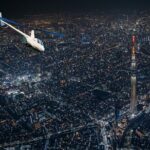
- Seeing Skytree from right beside it
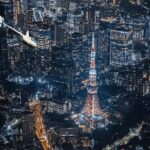
- Tokyo Tower joins the same story
- Private group comfort and timing for big moments
- Price and value: what you’re paying for, and when it makes sense
- Weather, equipment, and how to handle the risk
- Who should book this Tokyo Sky-High W Tower ride
- Should you book this helicopter tour?
- FAQ
- How long is the helicopter tour?
- Where does the tour depart from?
- What passenger info do I need to provide?
- Is it a private experience?
- What are the child and lap-passenger rules?
- Can staff help with photos during the flight?
Key highlights before you book
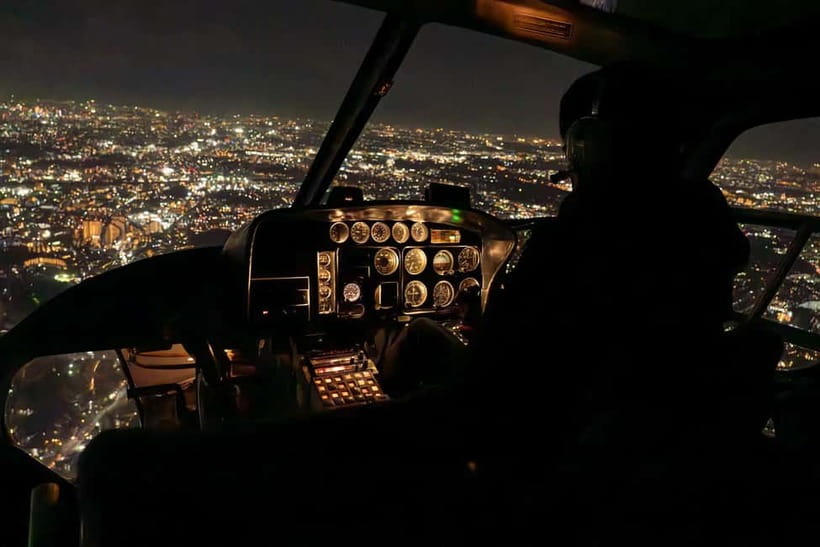
- Skytree near-field views from the air, designed to feel close and special
- Tokyo Bay night lighting along the coastline, ideal for big skyline photos
- W Tower course that pairs Skytree plus Tokyo Tower in one ride
- Private group setup, with English/Japanese guidance
- Proposal-friendly planning (and staff can help with a photo request)
- Chiba Wangan Heliport departure, so give yourself time to get there
Chiba Wangan Heliport: the small detail that matters most
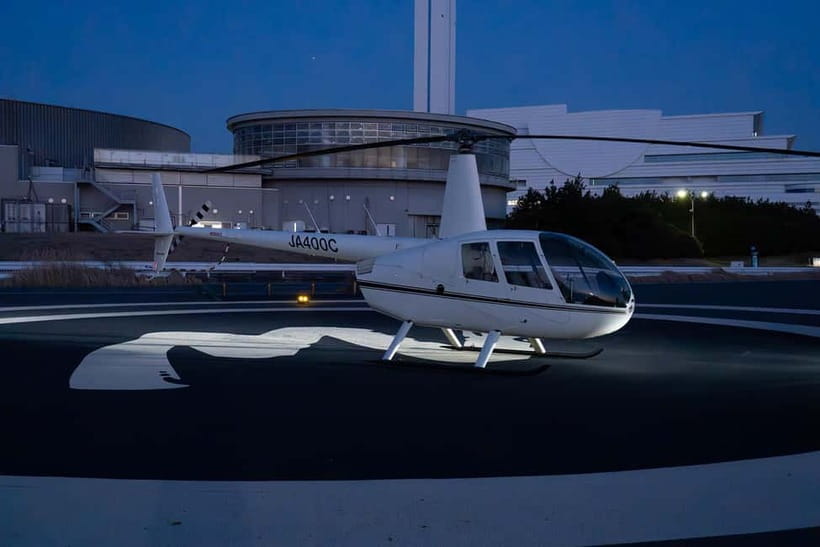
Your tour starts at the Chiba Wangan Heliport, located in Chiba (address details are provided for the site, including reference points like Aqualink Chiba and the east side of Inage Seaside Park). This is not a spot you stumble upon casually while wandering Tokyo, so treat it like an appointment.
I’d plan your route so you can arrive at least 30 minutes early, even if traffic and trains cooperate. One reason is simple: you’ll use that time for the pre-boarding process and to handle any last-minute questions calmly.
Also, save yourself stress by using navigation right away and double-checking the heliport entrance area. Several people have flagged that it can be tricky to locate, so the best move is to arrive earlier than you think you need.
You can also read our reviews of more tours and experiences in Tokyo
Pre-flight rules: passenger info, lap children, and photo requests
Before you go up, you’ll get a briefing on pre-boarding precautions and fill out a list with passenger details. This is where you’ll want to be exact: you need to provide names, ages, and weights for all passengers. Insufficient info can lead to denied boarding, so don’t guess or round.
If you’re traveling with kids, the rules are specific. In principle, children under 2 years old (under 3 years old) may ride on an adult’s lap and are not charged, but you still have to enter the child’s age and weight. Lap passengers are limited to one, seating must be in the back seat, and children alone are not allowed—an adult must accompany them.
One more practical upside: if you want a photo, you can ask the local staff. That small detail matters because it increases the odds you’ll actually get a clean shot at the moment the towers come into view.
The flight block: 30 minutes aloft with a full, timed experience
The tour is listed as 1 hour total. Your flight time is given as 30 minutes, and the itinerary also references a helicopter flight segment of about 40 minutes, so think of it as time from getting set up to landing again, not just the minutes when you’re over the water.
You’re up in the air just long enough to feel the wow, without losing half a day to transit and logistics. This is a big deal in Tokyo, where you can rack up time quickly between neighborhoods.
If you can choose timing, consider going later in the day if it lines up with your schedule. People who did it in the afternoon described it as a standout, and it makes sense: you get the skyline transition into night mood.
Tokyo Bay coastline at night: why this route feels different
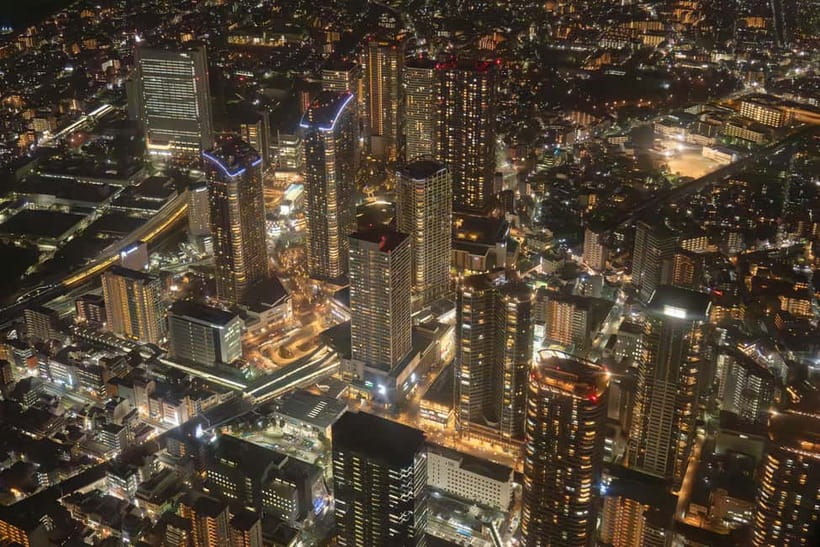
One of the most appealing parts is that you can fly along the illuminated Tokyo Bay coastline. From the air, it’s not just buildings and roads—it’s the way the waterfront lights stretch in long lines. That’s the kind of view that looks dramatic in person and also translates well to photos.
This is also where the helicopter format shines. You’re not waiting in a viewing queue or craning around other people. You’re getting a moving aerial perspective, so the city looks layered instead of flat.
If weather is clear enough on the day, this is the section that tends to feel most cinematic. And if visibility isn’t perfect, you’ll still generally get the main aerial look at the towers, but the coastline effect can be muted—so keep expectations flexible.
Seeing Skytree from right beside it
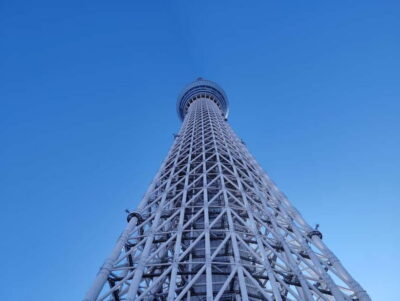
The core attraction here is getting a close look at Tokyo Skytree. The experience is designed specifically so you can appreciate how enormous the structure is from an angle you just can’t replicate from street level.
I like that this tour doesn’t treat Skytree as a checkbox. It’s positioned as a key moment: you’re literally airborne and close to the tower while it’s a recognizable part of the skyline. That’s how you end up with photos that feel like a real viewpoint, not just another tower shot.
There’s also a psychological benefit to doing this from above: your sense of scale kicks in fast. When you see how the surrounding area fits around a tower that big, the whole Tokyo skyline makes more sense.




Tokyo Tower joins the same story
In addition to Skytree, the course includes a visit to Tokyo Tower, so the ride becomes a true two-icon comparison. From the air, Tokyo Tower’s look shifts with angles and distance, and you can appreciate how different it feels from above versus on the ground.
I like the logic of pairing them. Doing only one tower can leave you with a single snapshot. Doing both in one flight gives you a mini skyline study: one famous for its height and modern presence, the other for its classic silhouette.
Also, by handling both in the same hour, you avoid turning this into a logistics project. You’re not bouncing between viewpoints all day; you’re booking one timed, private experience and letting the views do the work.
Private group comfort and timing for big moments
This is a private group experience, and that changes the vibe. You’re not dealing with a mixed crowd or feeling rushed by other people’s schedules. The tour is hosted with English and Japanese support, which helps if you want clear instructions during boarding and if you have questions.
It’s also marketed as a great option for a marriage proposal. That’s not just marketing fluff—helicopter rides naturally feel like a planned “moment,” and the route’s focus on major landmarks gives you something photogenic and meaningful to point at.
If you’re planning to propose, do one simple thing: tell the staff during your photo request process. Since photo support is available, you’re more likely to get help timing it right rather than trying to coordinate everything on the fly.
Price and value: what you’re paying for, and when it makes sense
The pricing shows a starting rate of ¥110,000 and up, and you may also see examples around $948 per group up to 2 depending on passenger count. That’s not a small amount, so the real question is value: what are you buying with helicopter time?
You’re paying for three things:
- Time efficiency: two major towers in one hour, without transit to multiple viewpoints.
- A viewpoint you can’t DIY: the aerial angles on Skytree and Tokyo Tower are the whole point.
- Private control: the experience is set up for a small group rather than a public viewing scene.
If the quote you get fits a pair, the math is usually easier to swallow because you’re splitting the group cost. If you’re solo, it can feel pricier, but the trade-off is you get the full experience for one schedule and one viewpoint style.
My practical advice: book this only if skyline views from above are your priority. If your dream day is museums, food, and walking neighborhoods, this may feel like too much money for too little time aloft.
Weather, equipment, and how to handle the risk
The activity can be canceled in case of inclement weather or equipment failure. That’s worth taking seriously with any helicopter plan, even if the schedule looks smooth in advance.
Because of that, I recommend building flexibility into your Tokyo days. If this tour is on a tight itinerary with no backup, you might want to shift it to a day where you can recover if it doesn’t run.
When it works, it’s a rare Tokyo experience. When it doesn’t, you at least haven’t sacrificed an irreplaceable, one-time reservation elsewhere.
Who should book this Tokyo Sky-High W Tower ride
This tour is a strong match if:
- You want two iconic landmarks handled in one timed experience
- You care about skyline photos from a truly different angle
- You’re traveling as a couple or small group and like a private setup
- You’re planning something special, like a proposal, and want the moment to feel built-in
It may be less of a fit if:
- You dislike strict scheduling and early arrival requirements
- You’re not comfortable providing exact passenger info (names, ages, weights)
- You’re trying to do every major sightseeing stop without spending on premium experiences
Also, if you’re sensitive to location logistics, take the heliport finding issue seriously. Give yourself buffer time, because being late can create problems you don’t want.
Should you book this helicopter tour?
I think you should book it if you want a Tokyo highlight that feels different from the ground. The combination of Skytree close-up plus Tokyo Tower in the same flight, with Tokyo Bay lights along the route, is exactly the kind of concentrated itinerary helicopter rides do well.
Skip it if you’re hoping for a casual, low-effort activity. This is an appointment-based experience with specific rules, and the Chiba heliport needs a little extra planning to find easily. If you’re willing to do that homework, the payoff is a skyline view that’s hard to recreate any other way.
FAQ
How long is the helicopter tour?
The total experience is listed as 1 hour. The time in the air is listed as 30 minutes, with a helicopter flight block referenced as about 40 minutes.
Where does the tour depart from?
The tour departs from Chiba Wangan Heliport. The details provided include 237 Shinko, Mihama-ku, Chiba-shi, Chiba, with the site described as facing Aqualink Chiba and on the east side of Inage Seaside Park.
What passenger info do I need to provide?
You must provide the names, ages, and weights of all passengers. If the information is insufficient, boarding may be denied.
Is it a private experience?
Yes. It’s described as a private group experience, with host or greeter support in English and Japanese.
What are the child and lap-passenger rules?
Children under 2 years old (under 3 years old) may board on an adult’s lap in principle and are not charged, but you must enter the child’s age and weight. Lap passengers are limited to one and must be in the back seat only. Children alone are not allowed; an adult must accompany them.
Can staff help with photos during the flight?
Yes. If you want a photo taken, you can ask the local staff.