Shibuya can feel like sensory overload. This tour turns that chaos into a clear story of modern Tokyo and old side streets. You start near Shibuya’s biggest junction, then move through alley history, pop-art reflection, and youth-focused hangouts that all sit within walking distance.
What I like most is how it balances big landmarks with small streets that you’d miss on your own. Two stops in particular stand out: Nonbei Yokocho’s narrow local-life vibe and the walk ending at the Hachikō Memorial Statue, which lands your day right where Shibuya’s loyalty legend lives.
One thing to plan for: the meeting point is tucked inside Mark City (3rd floor), and it can be tricky if it’s your first day in Tokyo. Also, it’s a fast 2-hour loop—great for orientation, not ideal if you want to linger for hours.
In This Review
- Key highlights worth your time
- Starting at SABON Shibuya Mark City: fast orientation first
- Nonbei Yokocho in 10 minutes: the alley mood you can’t fake
- Myth of Tomorrow: Taro Okamoto’s mural and the story behind the message
- Shibuya Crossing: the world’s scramble, plus how to get your photo
- Miyashita Park: a multi-level breather from the street level crush
- Center Gai and the youth street scene: where Shibuya’s mood shifts
- Maruyamacho: historical lanes with modern nightlife energy
- Finishing at Hachikō: the loyalty statue that anchors your Shibuya day
- Guides are the real engine: why the experience feels smooth
- Price and value: $22 for a focused Shibuya hit
- Who this tour suits best (and who should skip it)
- Should you book this Shibuya Crossing and Hidden Streets walking tour?
- FAQ
- FAQ
- How long is the Shibuya Crossing & Hidden Streets walking tour?
- What does the tour cost?
- Where do I meet the guide?
- Where does the tour end?
- Is the tour offered in English?
- What are the main stops during the walk?
- Is there a local guide fee included?
- Do I need to be on time for the meeting point?
- Can I cancel for a full refund?
- Can I reserve now and pay later?
Key highlights worth your time
- Myth of Tomorrow by Taro Okamoto: a quick, thought-provoking photo stop with a message of hope tied to nuclear impacts
- Shibuya Crossing with photo support: you’ll get help getting your shot right at the world-famous scramble
- Nonbei Yokocho (Drunkard’s Alley): short walk, big atmosphere, local history feel in a tiny space
- Miyashita Park: a multi-level urban break from the street noise
- Center Gai + Maruyama-cho: a shift from shopping energy to late-night streets in a small area
- Hachikō Memorial Statue finish: a clean endpoint that makes it easy to keep exploring after the tour
Starting at SABON Shibuya Mark City: fast orientation first
The tour begins at SABON Shibuya Mark City, inside the building on the 3rd floor. If you’ve never been to Shibuya, this is the kind of detail that matters more than people think: Mark City is a maze of entrances and storefronts, and you don’t want to lose time hunting before you even start.
So here’s the practical approach: arrive early, check the exact floor, and keep an eye out for the guide holding a sign. The tour is only 2 hours, so late arrivals really do throw off the rhythm.
This opening moment is also helpful because the guide sets the tone for how to read Shibuya. Instead of treating the area like one giant crowd, you learn to see it as layers: old Tokyo lanes, modern retail streets, and public spaces designed for people to hang out in.
You can also read our reviews of more walking tours in Tokyo

Nonbei Yokocho in 10 minutes: the alley mood you can’t fake
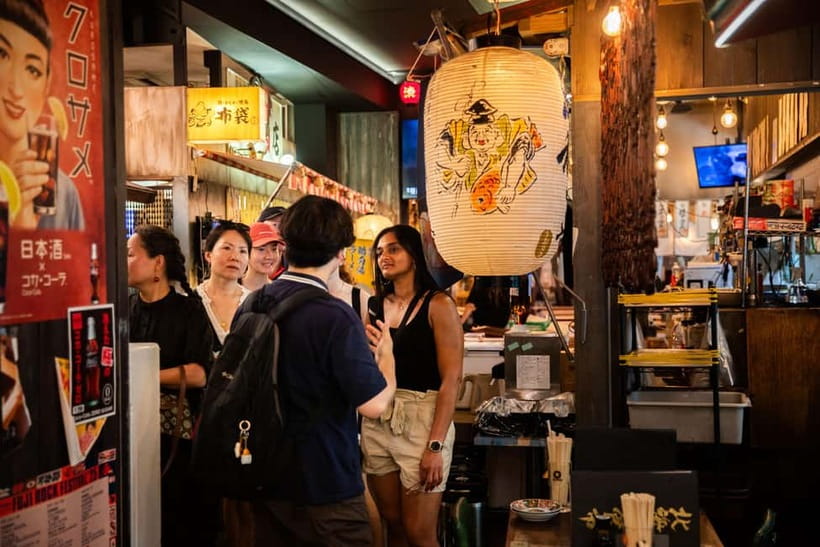
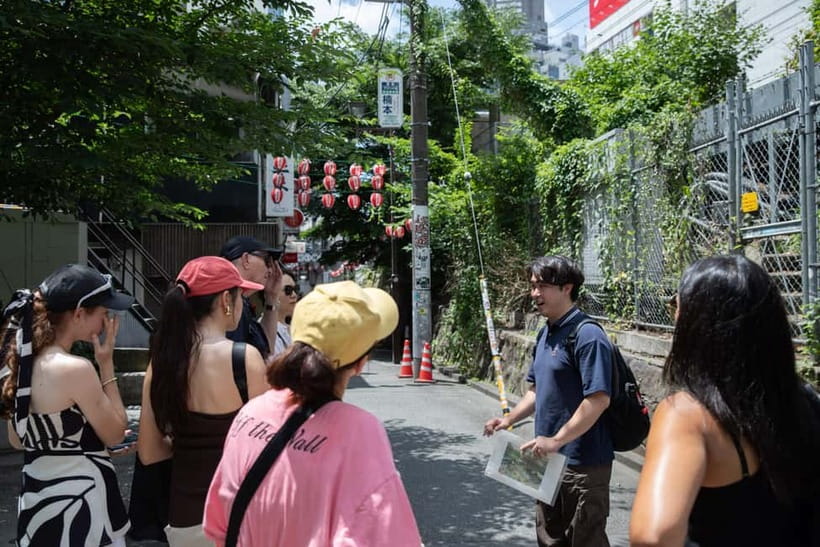
Next you head to Shibuya Nonbei Yokocho (Drunkard’s Alley) for about 10 minutes. This is one of those places that feels like it belongs in a different decade, even though you’re still in central Shibuya.
What makes it work on a walking tour is the contrast. After the big-street intensity of Shibuya, Nonbei Yokocho lets you slow your eyes down. The narrow lane, the local-life feel, and the sense of history give you a different lens for understanding why Shibuya became what it is.
A good guide matters here because the lane is small, and without context it can feel like just another backstreet. With interpretation, you start noticing patterns: how people use the space, how the lane supports little businesses, and how the area’s identity survives beside modern development.
Myth of Tomorrow: Taro Okamoto’s mural and the story behind the message
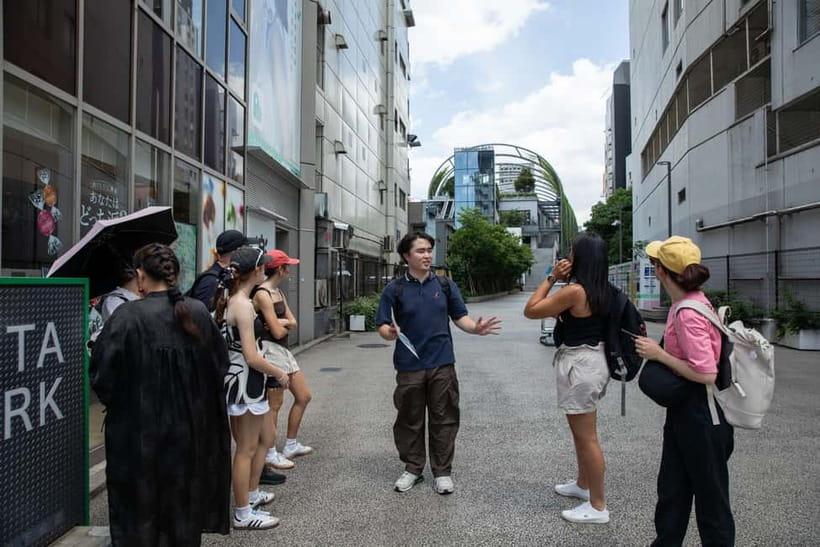
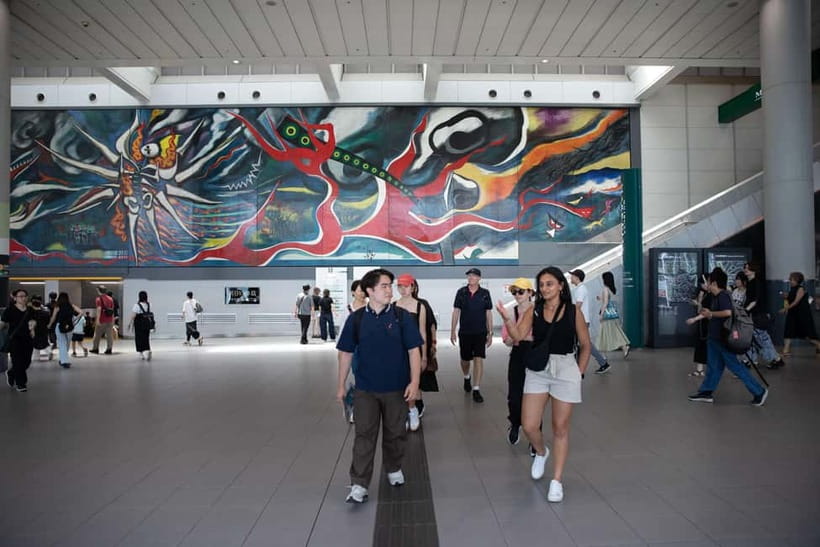
One of the most memorable stops is Myth of Tomorrow, a photo stop and guided segment of about 10 minutes. The mural is by Taro Okamoto, and the theme connects to nuclear impacts while still pointing toward hope.
This matters because Shibuya isn’t only about fashion and crowds. In Tokyo, public art often acts like a civic conversation. Seeing this work in Shibuya makes the district feel bigger than pop culture. It adds weight to your day without turning the tour into a museum lecture.
Practical tip: use this moment as a mental pause. After walking, this is the first place where you can look up, take a proper photo, and reset your brain before you hit the busiest corner in town again.
Shibuya Crossing: the world’s scramble, plus how to get your photo
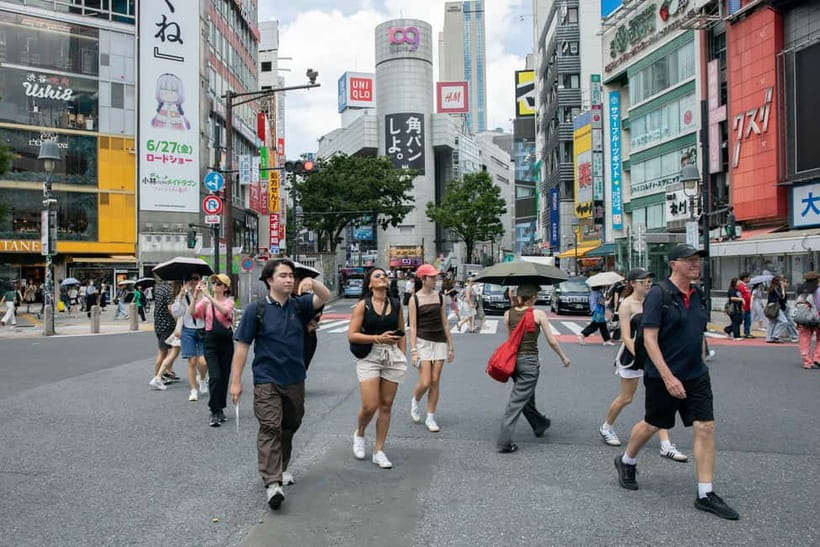
Then you’re back in the center of it all—Shibuya Crossing for another roughly 10 minutes. This is your signature stop: the crossing that’s been filmed a thousand times, and still looks unreal the first time you see it in person.
The value of a guided stop here isn’t just standing near the lines. Guides can help you time your photos and choose a spot where you’re not blocking others or trying to guess where you should stand. Solo travelers in particular seem to appreciate this kind of help; getting a clean shot at the crossing is easier when someone points you to a good angle.
One more thing: Shibuya Crossing can be loud and a bit intimidating if you’re not used to crowd flow. With the guide’s timing, it feels less like chaos and more like choreography.
Miyashita Park: a multi-level breather from the street level crush
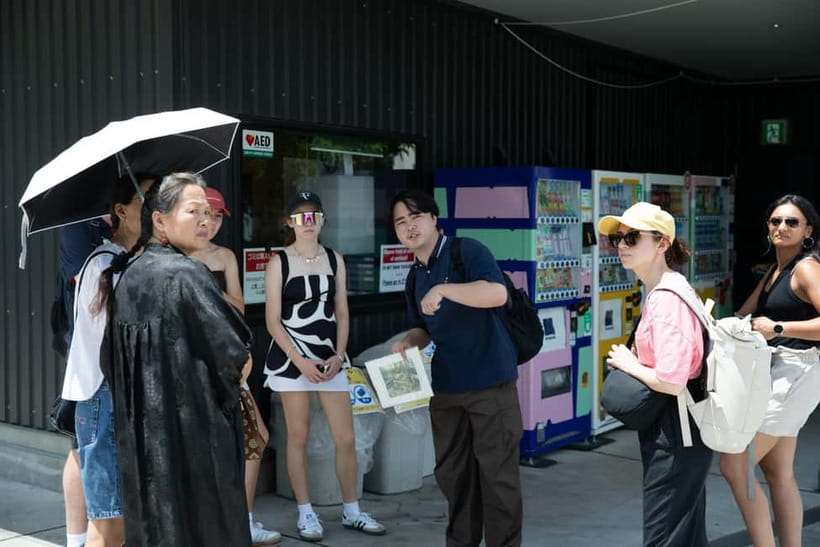
After the crossing intensity, the tour shifts to Miyashita Park for about 20 minutes. The big difference here is scale and breathing room. You’re still in the city, but the park structure gives you levels, sightlines, and a place to sit without feeling like you’re “escaping” Tokyo.
This stop is valuable because it balances the day. You’ve been moving through lanes and iconic intersections. Now you get a calmer moment to watch how Shibuya people use public space—where they meet, how they pass through, and how the district makes room for downtime.
If you’re the type who gets overwhelmed by nonstop walking, this is a smart place to regroup. It breaks the schedule at the exact moment when you usually start wishing you had a chair and five minutes of quiet.


Center Gai and the youth street scene: where Shibuya’s mood shifts
Next comes Center Gai for about 10 minutes. This is where you feel the district’s commercial and youth energy more directly, with lots of people moving between shops, signs, and hangout areas.
I like Center Gai on a guided walk because it’s easy to treat as just a shopping strip. With context from the guide, it becomes a social map. You start to understand what parts of Shibuya are designed for meeting, browsing, and moving in packs.
One practical consideration: Center Gai is crowded. If you don’t enjoy tight foot traffic, keep your pace steady and listen closely for where the guide wants you to stand during key moments.
Maruyamacho: historical lanes with modern nightlife energy
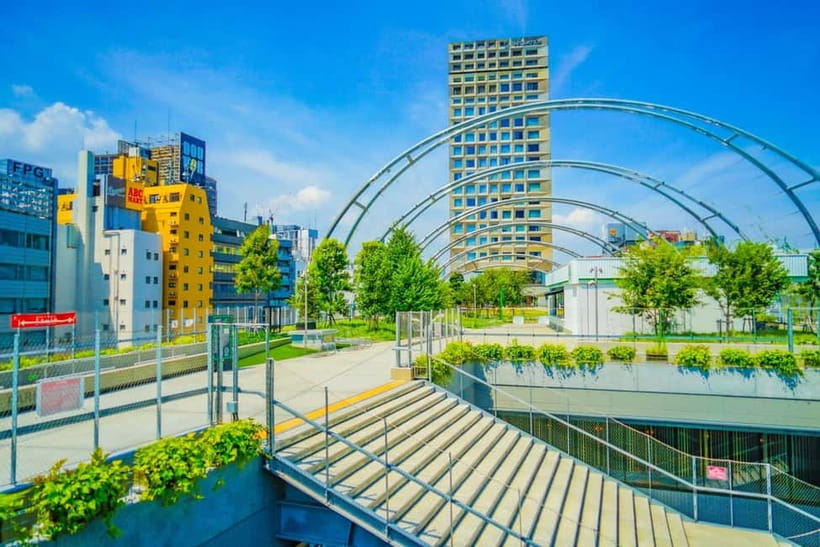
After Center Gai, you walk into Maruyamacho for around 10 minutes. This area is described as historical streets that are now a hub for modern nightlife.
The best way to understand Maruyamacho is to think of it as a neighborhood layer rather than a single “spot.” It’s not a one-picture landmark; it’s a vibe shift. You’re moving from shopping-focused movement into streets where people tend to slow down, eat, and meet.
This is also a good moment to pay attention to what the guide recommends next. The guides often share practical tips about where to go for food and shopping after the walk, and Maruyamacho is exactly the kind of place where those recommendations can save you time.
Finishing at Hachikō: the loyalty statue that anchors your Shibuya day
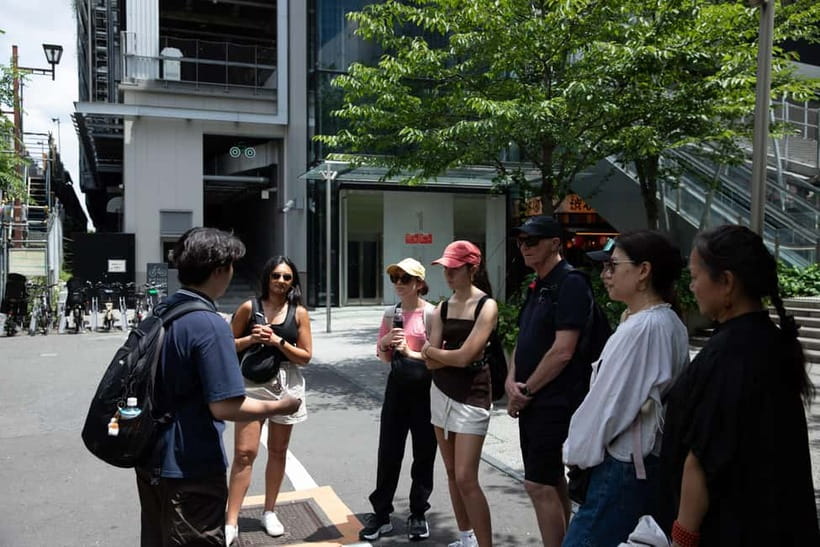
The tour ends at the Hachikō Memorial Statue. Finishing here is practical and symbolic. It’s a clear endpoint, easy to find again, and it helps you connect Shibuya Crossing to something more human than traffic and signage.
Also, Hachikō is one of those Tokyo stories you hear about before you ever arrive. Ending your walk there feels like closure, especially if your day started with a piece of public art about hope and survival. Shibuya’s big modern identity meets a local legend of loyalty right at your feet.
After the tour, you’ll be in the heart of Shibuya with a workable mental map. That makes it easier to branch out for dinner, drinks, or a last wander without feeling like you’re guessing every turn.
Guides are the real engine: why the experience feels smooth
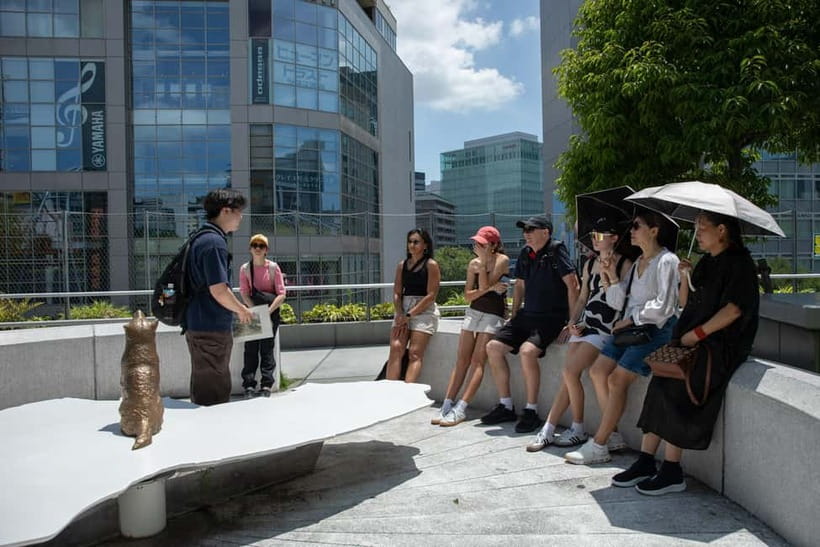
A walking tour can look identical on paper, but the guide makes the difference in how it feels. This one earns high praise for guides who explain what you’re seeing and why it matters, with room for questions.
Names that pop up again and again in strong feedback include Loc, Kumi, Rio, Grey, Zach, Daichi, and Ryo. Common threads: factual context at each stop, good communication in English, and a friendly attitude. People also appreciate that guides can adapt to the pace of the group—one booking even notes the guide stayed flexible when schedules shifted, including when the tour had just one participant.
There’s also a very practical benefit: photo help. Multiple comments mention the guide taking great photos at the crossing and accommodating photo requests. If you care about getting usable pictures in a crowd, that alone can make the tour worth it.
Price and value: $22 for a focused Shibuya hit
At $22 per person for 2 hours, the pricing is competitive for a guided walk in central Tokyo. You’re paying for two things: local expertise and someone to lead you through the district efficiently.
This tour is built for the “I have limited time but want the real Shibuya” traveler. You get a condensed route that mixes:
- a major landmark (Shibuya Crossing),
- a famous art stop (Myth of Tomorrow),
- an older lane neighborhood feel (Nonbei Yokocho),
- and two areas that show how people hang out and shop (Miyashita Park, Center Gai, plus Maruyamacho).
What you don’t get (based on what’s listed) is a food tour meal plan or long sit-down breaks. Instead, you get guidance and recommendations you can use immediately after. If you want a light day that builds your bearings fast, the cost-to-time ratio makes sense.
Who this tour suits best (and who should skip it)
This is a good match if you:
- are visiting Shibuya for the first time and want a structured walk,
- like contrast (modern landmarks plus old Tokyo lanes),
- want photo-friendly stops without spending hours planning where to stand,
- enjoy learning the cultural meaning behind what you see, not just checking boxes.
It may not be the best fit if you:
- need lots of quiet time or slow pacing (this is a short loop with quick stops),
- get stressed by crowds and foot traffic (Shibuya is busy, especially near the crossing and Center Gai),
- are expecting a food tasting tour with included meals (the tour’s focus is walking and interpretation).
Should you book this Shibuya Crossing and Hidden Streets walking tour?
I’d book it if your Tokyo plan includes Shibuya and you want to understand it quickly. The combination of Shibuya Crossing + Nonbei Yokocho + the Myth of Tomorrow mural + Miyashita Park + the Hachikō finish is a solid way to leave Shibuya with both pictures and context.
The strongest reason to choose it: the guides. Feedback emphasizes clear explanations, helpful answers, good English, and flexibility. If you’re traveling solo, you’ll likely appreciate the extra attention to photos and comfort.
My one caution is logistics: arrive on time and find the 3rd floor inside Mark City before your start. If you do that, this tour becomes a smart first move—like setting your compass in one of Tokyo’s most chaotic corners.
FAQ
FAQ
How long is the Shibuya Crossing & Hidden Streets walking tour?
The tour lasts 2 hours.
What does the tour cost?
It costs $22 per person.
Where do I meet the guide?
Meet at SABON Shibuya Mark City, inside the building on the 3rd floor. The guide will be holding a sign.
Where does the tour end?
The tour finishes at the Hachikō Memorial Statue.
Is the tour offered in English?
Yes, the tour is led by a live English-speaking guide.
What are the main stops during the walk?
You’ll visit Nonbei Yokocho, Myth of Tomorrow, Shibuya Crossing, Miyashita Park, Center Gai, Maruyamacho, and finish at Hachikō.
Is there a local guide fee included?
Yes. The local guide fee is included.
Do I need to be on time for the meeting point?
Yes. You should not be late because the meeting point is inside Mark City on the 3rd floor.
Can I cancel for a full refund?
You can cancel up to 24 hours in advance for a full refund.
Can I reserve now and pay later?
Yes. You can reserve now & pay later to keep your plans flexible.