REVIEW · TOKYO
Tokyo: Edo Castle Ruins & Imperial Palace East Garden Tour
Book on GetYourGuide →Operated by DeepExperience, Inc. · Bookable on GetYourGuide
Tokyo’s walls still hold secrets.
This Edo Castle ruins and Imperial Palace East Gardens tour is a tight, well-paced history lesson in the heart of Tokyo, with guided stops that connect shoguns, emperors, and the castle systems that once controlled this space. I especially like how the tour brings meaning to small details like the Wadakura Fountain memorial and the defensive logic behind the gate ruins. One thing to keep in mind: you cannot enter the inner palace grounds or the palace buildings, so this is gardens-and-ruins history, not an inside-palace visit.
The small-group feel helps, too. I love the way English guides like Mari-san and Isao (as seen in guest feedback) handle questions patiently and keep the story moving without turning the walk into a lecture. The likely drawback for some people is the walking time is packed into a 2-hour route, so you’ll want sturdy shoes and realistic expectations if you’re traveling with kids or dealing with mobility limits.
In This Review
- Key Points You Should Know Before You Go
- Why This Edo Castle and Imperial Palace East Gardens Tour Works in 2 Hours
- Meeting at Wadakura: Start Point, Sign, and Timing Reality
- Wadakura Fountain and Moat: A Wedding Memorial Inside a Power Story
- Otemon Gate and the Gate-Ruin Systems: Where Defense Becomes Clear
- Edo Castle Ruins and Honmaru: The Keep, the Models, and the Big Picture
- 都道府県の木 and 諏訪の茶屋: Small Stops, Tokyo-Specific Atmosphere
- Imperial Palace East Gardens: Calm Walk, Clear Limits
- Ninomaru Garden and Koi Pond: The Moment You’ll Actually Relax
- Price, Pace, and Value for Money
- Who Should Book This Tour (and Who Might Prefer DIY)
- Should You Book This Tour for Edo Castle Ruins and Imperial East Gardens?
- FAQ
- How long is the tour?
- Where do I meet the guide?
- Is the tour in English?
- What parts of the Imperial Palace can I see?
- What’s included in the price?
- Are food and drinks included?
- What should I bring, and what isn’t allowed?
- What’s the cancellation policy?
Key Points You Should Know Before You Go
- Wadakura Fountain is treated like a story, not a photo stop, with its royal-wedding context explained.
- Otemon Gate and the nearby gate-ruin areas are where you start seeing how castle defense worked.
- Guardhouse history includes Doshin Bansho and Hyakunin Bansho themes as part of the security system picture.
- Tenshu-dai panoramic views help you understand why this location mattered.
- Ninomaru Garden is the calm payoff, with a koi pond you can actually enjoy instead of just rushing past.
- Imperial Palace access is limited to the East Gardens; the palace buildings themselves are not open to the public.
Why This Edo Castle and Imperial Palace East Gardens Tour Works in 2 Hours
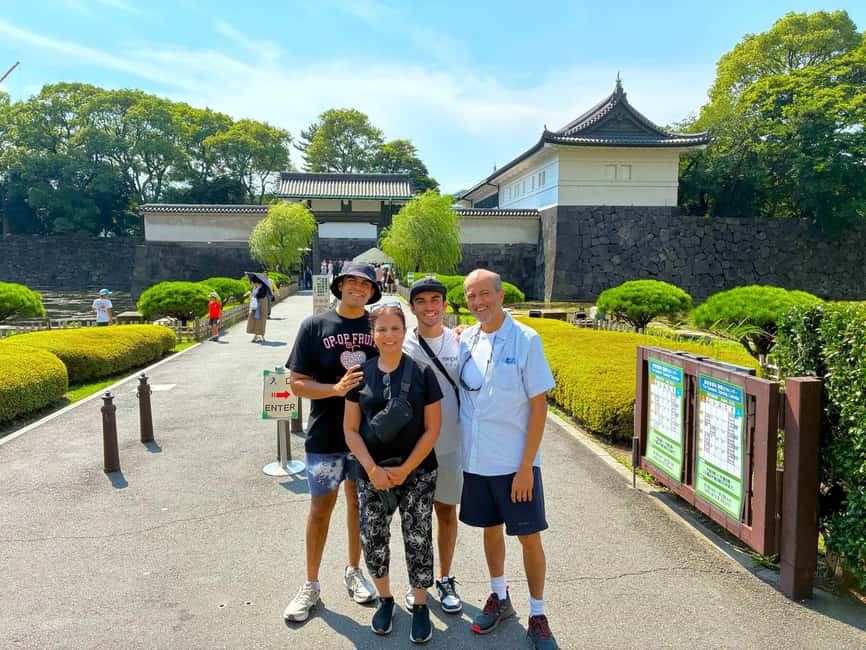
Tokyo can make you feel like you need a full day for big sights. This tour is the opposite. It’s built for people who want the big landmarks, clear context, and a satisfying route without turning your itinerary into a treadmill.
You’re covering two eras of power in one walk: the world of the shoguns and the world of the Imperial Palace that followed. The key is that you don’t just stand in front of things. You walk past remnants and garden spaces while your guide explains what they were for—defense systems, administrative function, and court symbolism. That changes how you look at the grounds.
I also like the way it balances structure and reset time. You get stops that are short but meaningful—like gates, guardhouse areas, and castle-ruin zones—followed by quieter space in the Ninomaru Garden. That matters because if your only plan is to wander on your own, Tokyo’s scale can make you skip over the details that actually teach you something.
One practical advantage: the tour includes admission to Edo Castle and the Imperial Palace East Gardens as part of the price, which turns your money into guided access rather than a pile of separate tickets. At $37 per person for a 2-hour English tour, it’s a strong deal if you’d otherwise pay entry fees and still want interpretation.
You can also read our reviews of more tours and experiences in Tokyo.



Meeting at Wadakura: Start Point, Sign, and Timing Reality
Your meetup is outside the Wadakura Free Rest Area, specifically in front of the entrance, where the guide waits holding a yellow sign. That’s helpful because Tokyo station signage can be perfect and still confusing when you’re juggling train transfers.
Plan to arrive a few minutes early. The first parts of the walk are quick, and the whole rhythm depends on keeping the group moving. You’ll also want to be ready for the early history storytelling, since the first stop centers on the Wadakura Fountain National Park area.
Bring the basics: comfortable shoes, water, and a camera. Flash photography is not allowed, and the tour also prohibits smoking. If you’re thinking about taking lots of pictures, save your flash for later at other spots—inside this tour area, you’ll rely on normal lighting and steady hands.
Also note the physical reality: this isn’t described as wheelchair-friendly, and it’s not suitable for children under 6 or for guests with mobility impairments. The tour is built around walking between nearby historic points and garden sections. If you’re someone who needs frequent breaks, you’ll likely prefer a slower independent plan—or choose a different style of tour with more downtime.
Wadakura Fountain and Moat: A Wedding Memorial Inside a Power Story
The tour starts by focusing your attention on the Wadakura Fountain, connected to a royal wedding commemoration. This is one of those Tokyo details that can look decorative if you don’t know what it represents. With a guide, it becomes a reminder that even in a place tied to military power, court culture and political symbolism mattered.
Right after that, you’ll move toward the Wadakura Moat. Even if you’re not a military-history person, moats teach you how the location functioned. The idea isn’t just water as a barrier. It’s the system—how space controlled movement, slowed attacks, and made it harder for outsiders to reach the heart of authority.
What I like here is the pacing: you learn something, then you immediately see an adjacent feature that supports the explanation. That’s the difference between reading a sign and understanding a landscape.
A small practical tip: this early stretch sets the tone. If you want the most from the tour, listen closely at the fountain and moat. Later stops are visually dramatic, but the guide’s early framing helps you connect the stones, gates, and gardens into one story about how power was organized.
Otemon Gate and the Gate-Ruin Systems: Where Defense Becomes Clear
One of the most memorable sections is the gate zone around the Ote-Mon Gate and the Ote-San’no Gate Ruins. Gates sound straightforward until you see them in context. Here, they’re explained as parts of a security framework—entry control, controlled visibility, and controlled movement.
The Otemon area is where you start seeing how the castle was designed to manage people. You’re not just looking at leftover architecture; you’re learning how the structure would have shaped what happened when someone approached. That’s the kind of historical thinking that sticks.
You’ll also hear about the guardhouse themes, including Doshin Bansho and Hyakunin Bansho. Even without standing at a single giant monument, these references help you imagine the human layer—guards, roles, and the daily mechanics of security.
The tour’s short stop lengths can be a drawback if you expect long, slow discussions at every location. But in this area, the trade-off works. You’re getting the essentials fast, then moving on before your attention fades.
If you’re the type who likes to ask follow-up questions, this is a good time. Guides who have the kind of energy shown in feedback—like Mari-san and Isao—tend to handle questions smoothly. You’ll benefit most if you ask things like how gates worked in practice or why certain areas were emphasized.
Edo Castle Ruins and Honmaru: The Keep, the Models, and the Big Picture
After the gate area, the tour shifts deeper into Edo Castle Ruins and the Honmaru region (the main hall site). This is where the tour stops trying to be just scenic and starts being analytical.
One standout feature is the Edo Castle keep restoration model. Models are sometimes a cop-out, but in this kind of setting, they can be the difference between confusion and understanding. You’re looking at ruins, and ruins are always missing the parts your brain wants to see. A reconstruction model helps you build the missing shape so the rest of the remnants make sense.
You’ll also see the Tenshu-dai, which is designed for views. This is another smart move in the itinerary. From a viewpoint, you understand why certain buildings were placed where they were. It’s one thing to hear that this was the power center. It’s another thing to see the surrounding area layout from the castle perspective.
This section is a great match if you like connecting dots. If you prefer a purely visual experience, you’ll still appreciate the views and the ruins. But if you want context—how the castle kept control over movement and territory—this is where the guided format earns its keep.
Also, be ready for the fact that reconstruction models and preserved ruins won’t look like full operating buildings. That’s normal. Your goal here isn’t to find a functioning keep; it’s to understand how the system worked and why it was built that way.



都道府県の木 and 諏訪の茶屋: Small Stops, Tokyo-Specific Atmosphere
Between the major history points and the garden sections, you’ll pass features listed as 都道府県の木 and 諏訪の茶屋. These aren’t the headline monuments, but they do give the tour a Tokyo feel—this is not a dead museum set. It’s a living public space that mixes remembrance, interpretation, and everyday visitor life.
I like these kinds of stops because they prevent the tour from becoming only about the past. You get a sense of how the area functions now, after the centuries-long transformations. The tour focuses on explanation, but it also acknowledges you’re walking through a real, current park environment.
If you’re the kind of traveler who likes to read little details, have your camera ready for these spots. The rules are clear—no flash—so you’ll rely on ambient light. Early in the day, the East Gardens can photograph nicely because the lighting tends to be forgiving.
Imperial Palace East Gardens: Calm Walk, Clear Limits
The East Gardens are the payoff for many people because they’re peaceful, and they’re a change of pace after the harder-edge castle ruins. Your tour includes Imperial Palace East Gardens, with time allocated to the garden areas and the guided story around them.
A key limit is important: you cannot enter the inner grounds of the Imperial Palace, and palace buildings are not open to the public. The experience you’re buying is the East Garden and the historical connection to the former castle space, not an inside access tour of the palace complex.
This limitation can feel disappointing if your dream is to see palace halls up close. But if your goal is to understand the relationship between the palace grounds and the old Edo Castle layout, the garden focus actually makes sense. Gardens are where you can slow down and let the story settle.
Ninomaru Garden and Koi Pond: The Moment You’ll Actually Relax
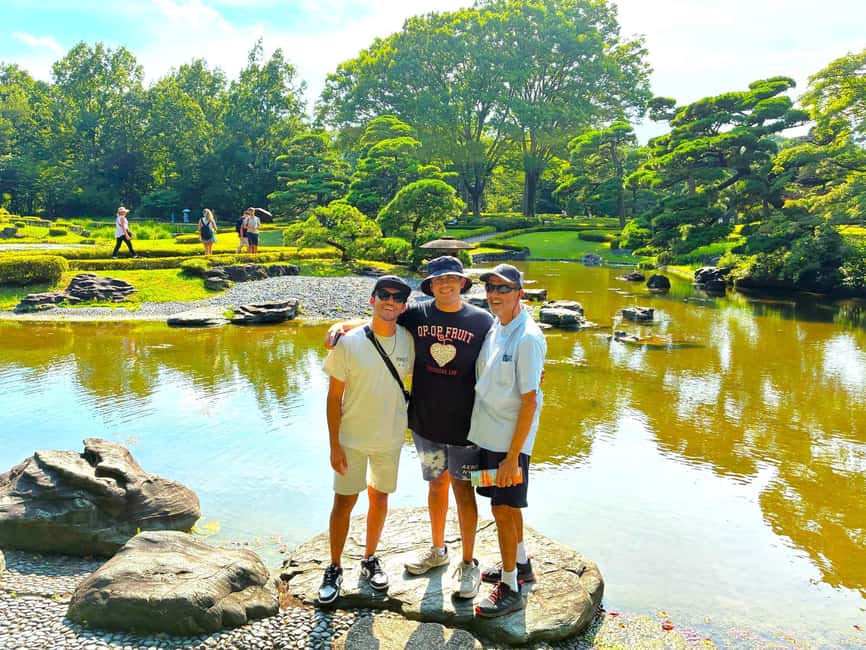
You end with Ninomaru Garden, including time to enjoy the koi fish in the pond. This is exactly the right ending. Castle defense stories can be heavy. Then you get something visual, soothing, and easy to appreciate without needing deep context.
I like that the tour gives you time here—15 minutes at Ninomaru Garden—because koi viewing works best when you’re not rushing. Even if you think you’re a museum person, this pause turns the experience into a balanced memory. You don’t just learn. You reset your brain.
Photography is allowed with normal light. Since flash photography isn’t allowed, focus on composition and natural light. Try to take a moment before you shoot, just to watch how people naturally gather near the pond. It helps you understand how the space is meant to feel.
If you’re traveling with friends and you want at least one part everyone will enjoy, this garden segment is the safest bet.
Price, Pace, and Value for Money
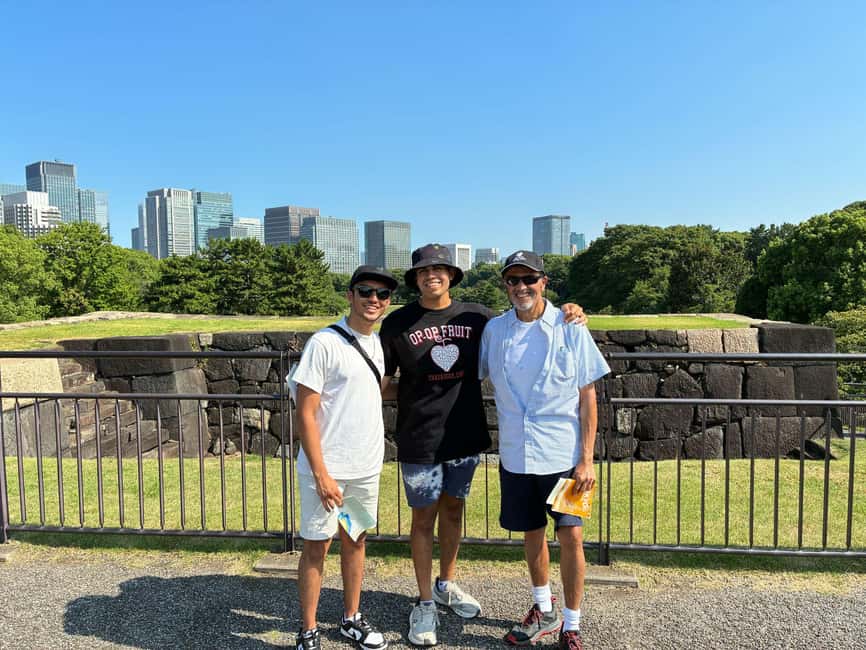
At $37 per person for about 2 hours, you’re paying for three things you’d otherwise have to assemble yourself: guided interpretation, entrance to the sites covered, and a commemorative photo opportunity. Food and drinks aren’t included, so plan to eat separately before or after.
In Tokyo, a guided tour that bundles admission isn’t always cheap, so I view this as fair value—especially if you want English guidance and you don’t want to spend extra time figuring out what each gate ruin or garden feature is telling you.
The pace is compact. You’ll move through many stops with short guided segments. That’s great if you’re time-limited. It can be less ideal if you love to linger or if you get tired easily. You’ll want to go in knowing it’s an efficient route, not a slow stroll.
One more value note: small groups or private options are available. That can matter a lot when you want answers rather than just listening. If you’re traveling with questions about how the shoguns and emperors shaped these spaces, a smaller group typically helps.
Who Should Book This Tour (and Who Might Prefer DIY)
This tour is a strong fit if you:
- Want an English guided explanation of Edo Castle remnants and the Imperial East Gardens
- Like turning ruins into understanding through context and viewpoints
- Appreciate a structured 2-hour plan that doesn’t eat your whole day
- Prefer a garden ending with koi fish after the history-heavy gates and ruins
You might want a different approach if you:
- Really need access to palace buildings or the inner palace grounds (this tour does not include them)
- Have mobility limitations or require wheelchair access (the tour isn’t suitable based on the provided info)
- Are traveling with kids under 6
- Want a longer, slower experience with extended time at fewer stops
If you’re a super independent traveler, you could probably piece together the sights on your own. But the value here is interpretation: how the route connects shoguns, emperors, gate defense logic, and what the reconstruction model helps you visualize.
Should You Book This Tour for Edo Castle Ruins and Imperial East Gardens?
If you want a focused introduction to Tokyo’s power history without hunting for clues, I’d book it. The price makes sense for a guided bundle that includes admission, and the itinerary hits the most meaningful points: Wadakura Fountain, castle gate ruins, Honmaru and the reconstruction model, and then a calm close at Ninomaru Garden with koi.
If you’re chasing inside-the-palace access, save your money and look for a different type of experience. But if you’re happy with gardens plus historical ruins—and you like learning why each place looks the way it does—this is exactly the kind of Tokyo tour that gives you more understanding per hour.
FAQ
How long is the tour?
The tour lasts 2 hours.
Where do I meet the guide?
Meet outside the Wadakura Free Rest Area (in front of the entrance). The guide will be holding a yellow sign.
Is the tour in English?
Yes, the live tour guide is English.
What parts of the Imperial Palace can I see?
The tour includes the Imperial Palace East Gardens, but you cannot enter the inner grounds or the palace buildings because they are not open to the public.
What’s included in the price?
Included are a live tour guide, admission to Edo Castle and the Imperial Palace (East Gardens), and a commemorative photo opportunity.
Are food and drinks included?
No, food and drinks are not included.
What should I bring, and what isn’t allowed?
Bring comfortable shoes, a camera, and water. Smoking is not allowed, and flash photography is not allowed.
What’s the cancellation policy?
You can cancel up to 24 hours in advance for a full refund.