REVIEW · TOKYO
Mount Fuji, Hakone & Lakekawaguchiko Private Group Tour by Car.
Book on Viator →Operated by Explora Japan · Bookable on Viator
Mount Fuji without the train chaos. This private group car tour turns a long day into a smooth circuit of Fuji viewpoints, lakes, and classic stops around Kawaguchiko.
What I like most is how the hotel pickup keeps the morning sane, and how the pace feels truly private. The guide-and-driver setup means you’re not stuck waiting for other groups, and you can get help with photos and timing. One thing to keep in mind: views depend heavily on weather, and the 5th Station fee and lunch are extra.
In This Review
- Key points before you go
- Private car pickup and a realistic 8-to-9-hour plan
- Subaru Line 5th Station and Oishi Park: your first Fuji hit
- Kitaguchi Hongu Fuji Sengen Jinja and the Chureito Pagoda stair climb
- Oshino Hakkai and Lake Yamanaka: old village scenes and swan time
- Lake Kawaguchiko with boat options and the Owakudani add-on
- Price, inclusions, and what costs you should expect
- Who this tour fits best (and who should skip it)
- Should you book this private Mount Fuji group tour?
- FAQ
- FAQ
- What stops are included in this Mount Fuji, Hakone & Lake Kawaguchiko private car tour?
- Is hotel pickup and drop-off included?
- What is included in the tour price?
- What costs are not included?
- Are any attractions ticket-free?
- Will the schedule always include Owakudani Valley?
- What happens if the weather is poor or if I cancel?
Key points before you go

- Private car, small group feel: Up to 6 per booking, with a vehicle that can fit more people if your group is larger.
- Guides help you beat crowds: With good-weather days, timing matters, and your guide can steer your stops accordingly.
- Lots of “Fuji framing” stops: 5th Station views, Oishi Park flower scenes, and Chureito Pagoda all target different angles.
- A real legwork moment: Chureito involves stairs, and in some seasons the plan can shift if the mountain access is closed.
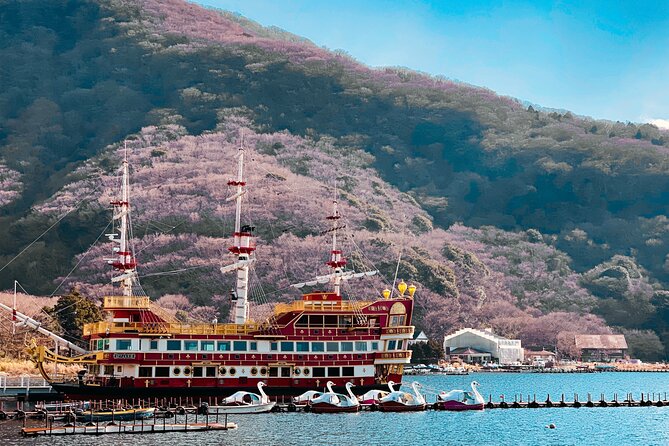
- Lakes add variety beyond photos: Kawaguchiko boat time and Lake Yamanaka swans/fish breaks keep the day from feeling like a checklist.
- Weather can change everything: Cloud cover can blunt the view, but the tour can still pivot to other nearby sights.
Private car pickup and a realistic 8-to-9-hour plan
This is the kind of day trip that’s built for people who don’t want to play transportation roulette. You get round-trip transfers from your Tokyo accommodation, so you start with less stress and you end with less scrambling. The total time on the ground is about 8 to 9 hours (most of the rest is travel time), which is long enough to see multiple iconic spots without feeling totally rushed every 10 minutes.
One practical detail I’d take seriously: there’s a note to tell the operator your luggage quantity. That’s not just bureaucracy. These vans can be comfortable, but luggage space can get tight once you add bags, shopping, and the usual Japanese day-trip extras. If you travel with larger suitcases, mention it early so you’re not negotiating with the trunk later.
The tour also uses a mobile ticket, which is handy when you’re hopping in and out of cars and don’t want paper clutter. And since it’s private, it’s only your group riding together, not a shuffle of strangers at each stop.
The best “value fit” here is friends or a family group that wants to control the day a bit. Prices are quoted per group (up to 6), so the cost per person can drop nicely if you fill the seats. If you’re traveling solo, you might find this less economical than a bus group—unless you really want the door-to-door convenience.
You can also read our reviews of more private tours in Tokyo
Subaru Line 5th Station and Oishi Park: your first Fuji hit
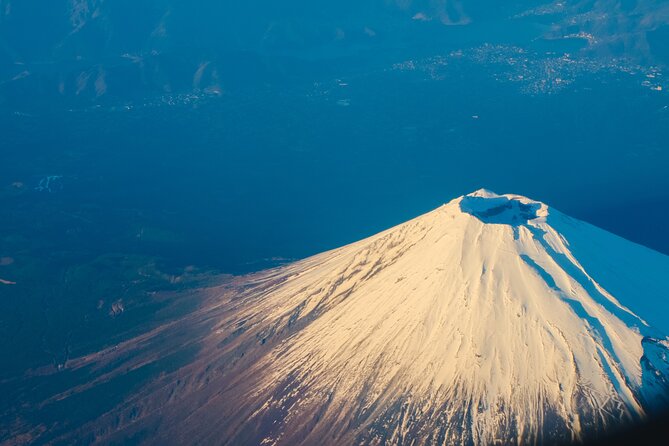
You start with the Mount Fuji Subaru Line 5th Station, a viewpoint around 7,500 feet up. This is the closest you’ll get to seeing the mountain’s upper shape from a road-accessible area, and it’s often the most satisfying stop when the sky cooperates. The catch is simple: you’ll feel the altitude and the weather can change fast up there, so bring a layer even if Tokyo feels mild.
Important cost note: the 5th Station fee is not included (listed as 2,100 yen). You can plan for that upfront so it doesn’t pop up as a surprise mid-day. Also, in winter months the plan can change. One traveler described 5th Station closure due to snow in January, which makes sense in a place where access can get shut when conditions turn.
Next comes Oishi Park, a classic Kawaguchiko-side viewpoint known for colorful flowers and lake-and-Fuji framing. This is one of those stops where even if you’re not a “photo person,” you’ll still feel the scene. It’s also a relief after the altitude stop because Oishi Park is more about strolling and taking in the lake view rather than standing at a single windy lookout.
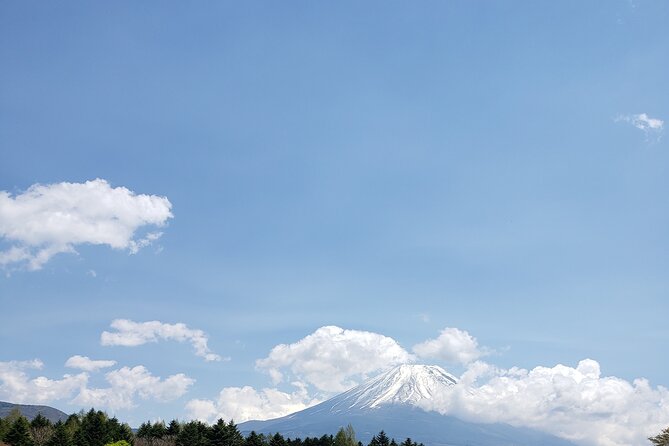
In practice, this sequence works because it gives you multiple chances to catch Fuji. You’re not banking everything on one viewpoint. If the mountain is clear early, great. If it’s hazy, Oishi Park can still deliver a great composition with the lake.
Kitaguchi Hongu Fuji Sengen Jinja and the Chureito Pagoda stair climb
From views to meaning, you’ll visit Kitaguchi Hongu Fuji Sengen Jinja. It’s said to have begun around 100 CE, tied to Yamato Takeru and routes connected to the area that’s now Yamanashi. Even if you don’t get deep into the myths, the shrine adds a human scale to the day. Fuji isn’t just a photo subject here—it’s part of lived tradition, and shrines like this help you feel that.
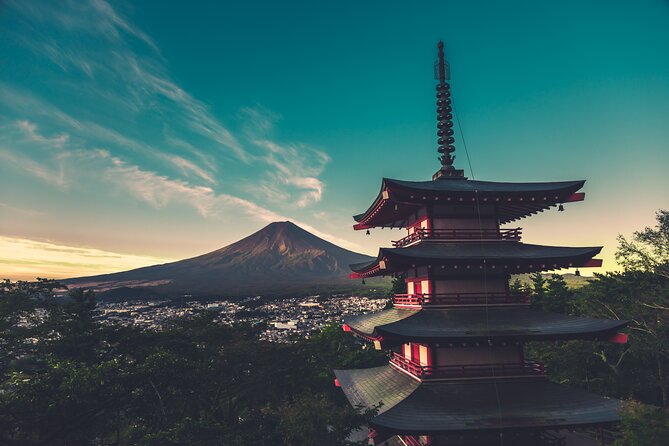
Then comes a stop that mixes culture with effort: Chureito Pagoda. The big headline is the stairs—about 400 steps up. That climb isn’t impossible, but it is a real workout, especially if you’re out of practice with stairs or you’re traveling with kids who want to move more slowly. The reward is the view from the pagoda area, which is why this stop stays on so many Fuji-focused itineraries.
A useful way to think about Chureito: it’s not just about the pagoda itself. It’s about the combination—pagoda lines, the surrounding view, and Fuji if it’s visible. On a clear day, it’s a wow stop. On a gray day, you still get a beautiful temple setting, but you may miss that signature Fuji-in-frame moment.
Also, plan your energy. After Chureito, you’ll want to keep moving at a comfortable pace. If you’re the group’s planner, set expectations: some people will love the climb, and others will prefer shorter breaks.
Oshino Hakkai and Lake Yamanaka: old village scenes and swan time
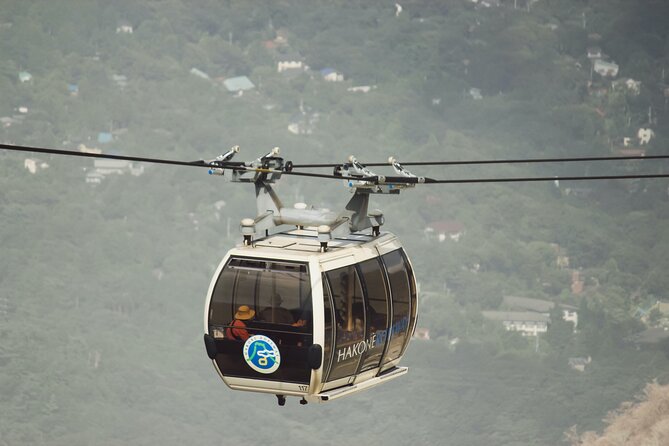
Then you shift to a different flavor: Oshino Hakkai. This area is known for preserved structures from older times and is sometimes described as a type of old village setting. It’s also associated with the idea of a Ninja village and old village vibes—whether you call it that or not, the place has a “step back in time” feel that pairs well with a day otherwise dominated by big views.
The tone here is less climb, more wandering. You’ll have around 50 minutes, which is enough to stroll, take photos, and pick up a snack if the timing works out (though lunch is not included in the tour price).
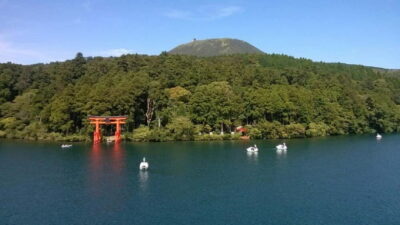
Next up is Lake Yamanaka, where you get a quicker, calmer scene with views of Mount Fuji (when visibility allows) and the chance to feed swans and fish. That’s the kind of moment that breaks the pattern. After shrine, pagoda, and old-village wandering, this gives you something lighter and more playful—especially for families.
One small reality check: because the tour is weather-dependent, the “Fuji in full view” moment at Yamanaka might be clear or might be obscured. Either way, the lake atmosphere still helps you feel like you’ve left Tokyo behind for a reason.
Lake Kawaguchiko with boat options and the Owakudani add-on
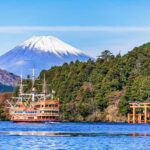
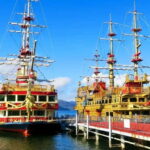
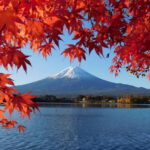
Now we get to the biggest Fuji-lake area on the day: Lake Kawaguchiko. You’ll have about an hour here, which is a good chunk of time for something more than just looking from the shore. The day includes time where you can consider a cruise or a personal boat experience (any boat costs are not included). If the weather is even decent, being out on the water can be one of the best ways to change the angle on Fuji and the shoreline.
This is also where lunch often becomes a key decision. Lunch is not included, and your guide may steer you toward a solid place to eat that fits the timing. In the experience accounts, people praised guides for bringing them to good food and keeping the day flowing without forcing them to rush.
If you’ve heard of Owakudani Valley, this is where it might appear. It’s included only if time permits. I like that flexibility because Owakudani can be fantastic for atmosphere, but it can also eat time fast with travel and queues. If you want that stop, you’ll want your guide to make the call based on road conditions and what Fuji visibility looks like that day.
A travel tip for the lake portion: boats and viewpoints tend to get popular when the sky clears. Your best move is to stay flexible and trust the guide’s timing. Several guides in this program have been praised for steering pickup and stop order to reduce crowd pain.
Price, inclusions, and what costs you should expect

Let’s talk value honestly. The price is $414.59 per group (up to 6 people), booked on average about 38 days in advance, and the tour duration is roughly 8 to 9 hours. If you get a full group, that can work out to a reasonable per-person day-trip cost for door-to-door private transport. If you have fewer people, it’s still a convenience purchase: you’re paying for a driver, a plan, and flexibility that bus tours can’t match.
What’s included:
- Round-trip pickup/transfers from your Tokyo accommodation
- Water bottle
- Mobile ticket
- A private group setting (only your group participates)
What’s not included (and you should budget for):
- Lunch
- The 2,100 yen fee at the Mount Fuji Subaru Line 5th Station
- Any optional costs such as boat/cruise activity
Also, check your expectations around “tour guide.” Most accounts highlight guides who helped with photos, pacing, and history context, and some were named—Ali and Mani come up a lot, along with Sikandar M., Shoaib, Abdullah, Murad, and Zohan. That suggests the experience often leans toward guided sightseeing rather than just driving.
Still, not every day is perfect. One unhappy note mentioned a car odor issue, and another pointed out that the itinerary wasn’t followed as expected. That’s why I recommend two simple steps: confirm the pickup details clearly before the day, and if you have strong must-dos, communicate them early so the plan reflects your priorities.
Weather is the other wildcard. The tour requires good weather, and if conditions prevent it, you’ll be offered a different date or a full refund. Even on days that run, cloud cover can reduce how much you see of Fuji’s peak. The good news: the itinerary still has multiple attractive stops that work even when Fuji is partly hidden.
Who this tour fits best (and who should skip it)
This is a strong fit if you fall into one of these groups:
- You’re traveling with family and want less hassle than trains, especially with kids under 7 (you just need to inform the operator in advance).
- You want a private pace and the ability to adjust when visibility changes.
- You care about getting to multiple classic Fuji spots in one day without negotiating public transit transfers.
It may be less ideal if:
- You want a very structured, script-like tour with fixed timings and zero flexibility.
- You’re highly sensitive to vehicles (one note mentioned a cigarette smoke smell issue).
- You’re arriving with very large luggage and didn’t disclose it. That luggage note matters.
If your main goal is Mount Fuji photos and you only have one day, pick the day with the best forecast you can. Then be psychologically ready for a “Fuji partially hidden” day. Private guiding helps because you can shift emphasis to what’s visible, and that kind of practical pivot showed up repeatedly in accounts—guides suggested alternate spots when Fuji wasn’t cooperating.
Should you book this private Mount Fuji group tour?
If you want the easiest way to do a Fuji-and-lakes day from Tokyo, I’d say yes—especially for small groups who value door-to-door pickup and a flexible plan. The route covers the major emotional beats: a high viewpoint first, flower-and-lake framing, shrine and pagoda culture, then old-village textures and lakeside downtime.
My final decision checklist for you:
- Can you handle a weather-dependent day trip? (Good weather makes Fuji sing. Cloudy days still have beauty, just different.)
- Are you okay paying a couple extras on-site (5th Station fee, lunch, and optional boats)?
- Do you want private transport enough to justify the group price?
If your answers are yes, this is the kind of day that feels worth it. You get variety without the stress tax of trains, and you’re not stuck watching the clock while you figure out where to stand for the best view.
FAQ
FAQ
What stops are included in this Mount Fuji, Hakone & Lake Kawaguchiko private car tour?
You’ll visit Mount Fuji Subaru Line 5th Station, Oishi Park, Kitaguchi Hongu Fuji Sengen Jinja Shrine, Chureito Pagoda, Oshino Hakkai, Lake Kawaguchiko, and Lake Yamanaka. Owakudani Valley is included if time permits.
Is hotel pickup and drop-off included?
Yes. Round-trip transfers from your Tokyo accommodation are included.
What is included in the tour price?
The tour includes a water bottle, round-trip transfers, and you receive a mobile ticket. It is a private experience limited to your group.
What costs are not included?
Lunch is not included, and the Mount Fuji 5th station fee of 2,100 yen is not included. Admission tickets for other stops are listed as free.
Are any attractions ticket-free?
Yes. Oishi Park, Kitaguchi Hongu Fuji Sengen Jinja Shrine, Chureito Pagoda, Oshino Hakkai, Lake Yamanaka are listed as free admissions. The 5th Station fee is not free, and Lake Kawaguchiko boat/cruise options are not included.
Will the schedule always include Owakudani Valley?
No. Owakudani Valley is visited only if time permits.
What happens if the weather is poor or if I cancel?
This experience requires good weather. If it’s canceled due to poor weather, you’ll be offered a different date or a full refund. You can cancel up to 24 hours in advance for a full refund.