REVIEW · TOKYO
Iconic Tokyo Uptown Landmarks Go Kart Tour (120 Minutes)
Book on GetYourGuide →Operated by Kartzilla Discovery Japan (Kartzilla Go Kart, Tokyo) · Bookable on GetYourGuide
Tokyo from the seat of a go-kart. I love the street-legal, comfort-focused Kartzilla karts and the live two-way radio guide that keeps the story going while also keeping traffic stress low. You’ll sweep past major landmarks like Tokyo Skytree, Tokyo Station, the Imperial Palace area, Ginza, and Kabukiza. One thing to plan around: you need a valid driving license and you’ll check in early for the mandatory safety briefing.
I also like that this is built for real beginners. The pace stays relaxed (no racing), the group is kept small (up to 10), and you have options to capture the ride, including an on-board Insta360 setup. You should just know the Insta360 requires a micro SD card, so budget a little time or money if you don’t already have one.
For the price, $116 for 2 hours can feel like a splurge until you break down what’s included: the kart rental, fuel, a local guide, accident insurance, drinks, and even an anime costume rental. If you’re going at night, you may catch extra neon glow (and yes, rain can happen), but either way you’ll be outside, at street level, moving through neighborhoods most tours skip.
In This Review
- Key highlights worth knowing
- From Yotsugi Station to Kartzilla: your Tokyo starting line
- Two-way radio storytelling: the safety layer you actually want
- Skytree and Ryogoku Kokugikan: Tokyo’s big symbols up close
- Tokyo Station and the Imperial Palace area: central Tokyo without the museum lines
- Tokyo Tower, Ginza, and Kabukiza: icons plus everyday city rhythm
- The Kartzilla karts: comfort, control, and confidence
- Capturing your ride with Insta360 and free photos
- Rain, neon, and what to expect on the road
- Price and value: what $116 buys you (and why it can make sense)
- Who this tour is best for (and who should skip it)
- Should you book this Kartzilla Uptown Route?
- FAQ
- Do I need a driver’s license to join the go-kart tour?
- What time should I arrive before the tour starts?
- Is the go-kart street-legal and will I get safety instructions during the ride?
- Is an Insta360 camera included, and do I need extra equipment?
- What landmarks are included on the Uptown Route?
- What should I do if it rains?
Key highlights worth knowing
- Two-way radio guidance so you get landmark storytelling and real-time safety cues together
- Comfort-built karts with suspension, hydraulic brakes, and reinforced frames for big and tall riders
- Icon route with Tokyo icons from Skytree to Kabukiza, plus central districts like Ginza
- Optional Insta360 recording from the driver’s seat (micro SD required)
- Small group size (10 max) keeps the experience feeling personal and controlled
- Snacks for the drive mood: water, tea, and coffee included, plus practical end-of-ride cleanup items
From Yotsugi Station to Kartzilla: your Tokyo starting line
Most go-kart tours start in a hidden back lot and hope you’ll find it. This one is easier: Kartzilla’s facility is an 8–10 minute walk from Yotsugi Station and the building has clear signage. If you’re navigating with Google Maps, you’ll likely be fine, but do yourself a favor and arrive with buffer time.
The ride up to the starting point can take you through quieter suburbs before you hit the big-city sights. That’s not a downside so much as a warm-up. You’ll get used to turning and braking while the city’s less chaotic side settles your nerves.
You can also read our reviews of more tours and experiences in Tokyo.

Two-way radio storytelling: the safety layer you actually want
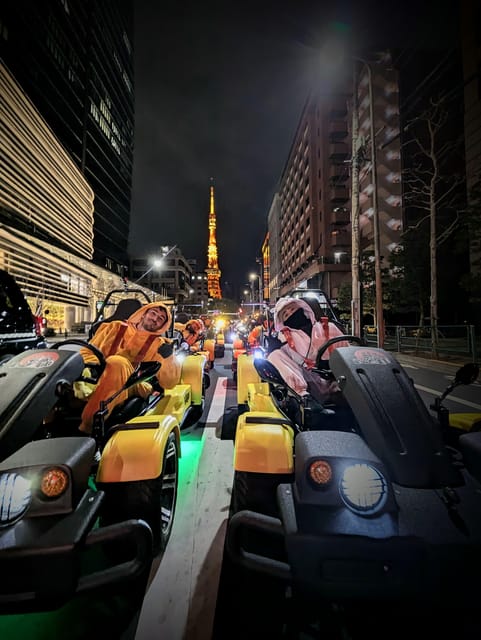
Here’s what I like about this tour format: the guide doesn’t just lead from the front and wave. You’ll be on a two-way radio system, so you hear instructions and safety guidance in real time while the guide tells stories about what you’re passing.
That matters because you’re in a vehicle in real traffic-like conditions, even if the tour route is controlled and paced. With radio cues, you’re not guessing what’s next, and you’re less likely to get separated or surprised at intersections.
You’ll also get a live English, German, or Spanish guide depending on your group. In recent tours, guides have included people like Travis (who gave first-timer Tokyo tips) and Sata (who made directions feel simple and clear). You can count on that same style: short, practical guidance plus cultural context tied to the landmarks.
Skytree and Ryogoku Kokugikan: Tokyo’s big symbols up close
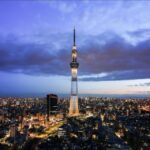
Your tour kicks off at Kartzilla, then rolls toward Tokyo’s skyline icon: Tokyo Skytree. Seeing it from street level changes the scale. From a camera selfie height, Skytree looks impressive. From the driver’s seat, it feels like you’re participating in the city that built it.
After that, you’ll head for Ryogoku Kokugikan, the famous sumo arena area. The guide’s storytelling turns it from a name on a map into a place with meaning. If you know sumo already, you’ll appreciate the context. If you don’t, you’ll still leave with a clearer sense of why Ryogoku matters in Tokyo life.
A practical note: this whole thing runs at a street-friendly pace. That’s good news if you’re a first-time driver. You’re there to see Tokyo and enjoy the ride, not to treat it like a racing league.
Tokyo Station and the Imperial Palace area: central Tokyo without the museum lines
Next comes Tokyo Station, which is one of those buildings you recognize instantly even if you’ve never walked inside. Driving past it gives you a transit-bus view of the city’s heartbeat. It’s a stop that works for almost every traveler because it’s a visual anchor.
Then you’ll pass by the Imperial Palace surroundings. You’re not doing a timed ticket tour here, so you won’t get the “one room per hour” pressure. Instead, it’s a moving look at how Tokyo balances monumental institutions with everyday streets.
The big value of these central stops is how quickly you get orientation. One kart tour won’t replace weeks of sightseeing, but it does give you a street-level map in your head. After this, you’ll have an easier time choosing where to go next.
Tokyo Tower, Ginza, and Kabukiza: icons plus everyday city rhythm
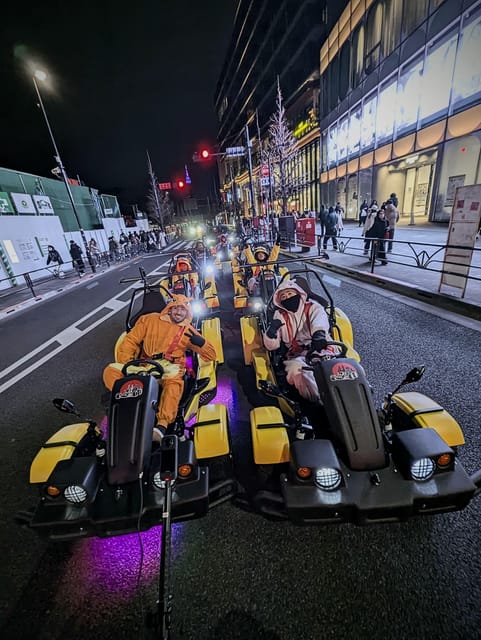
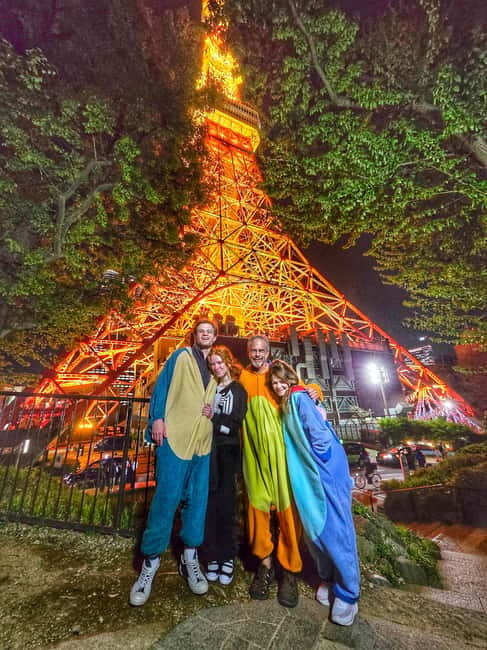
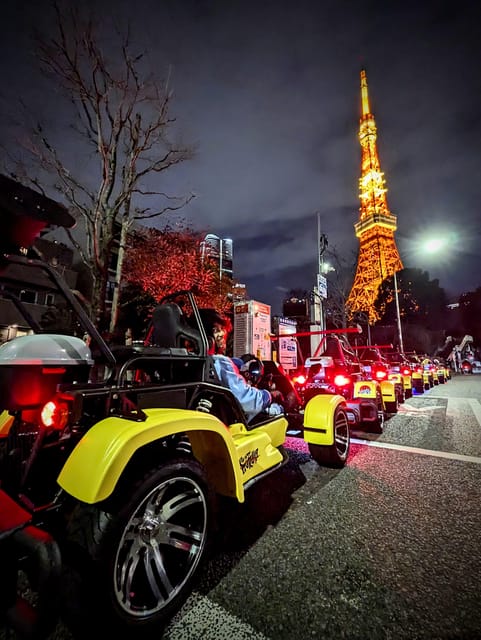
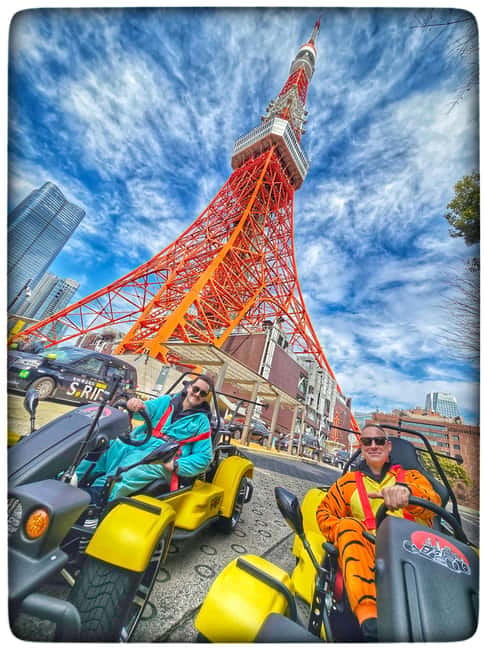
From there, the route keeps hitting recognizables. Tokyo Tower is next, and it’s one of those sights that looks good from every angle, especially when the light shifts.
Then comes Ginza, Tokyo’s famous shopping and business district. You’ll pass through a mix of wide streets and side streets that feel more “real Tokyo” than staged attractions. If you’re going at night, this part is extra fun because you’re moving past illuminated storefronts and signage rather than just photographing them from a curb.
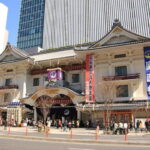
Finally, you’ll reach Kabukiza Theatre. Even if you’re not a hardcore kabuki fan, this stop lands because the area is built around performance culture. It’s a contrast point: you’ve just been through modern commercial Tokyo, and now you’re near a major traditional stage landmark.
As a bonus, you’ll get the stop-and-go rhythm of city driving without dealing with parking, crowding, or long walking detours.
The Kartzilla karts: comfort, control, and confidence
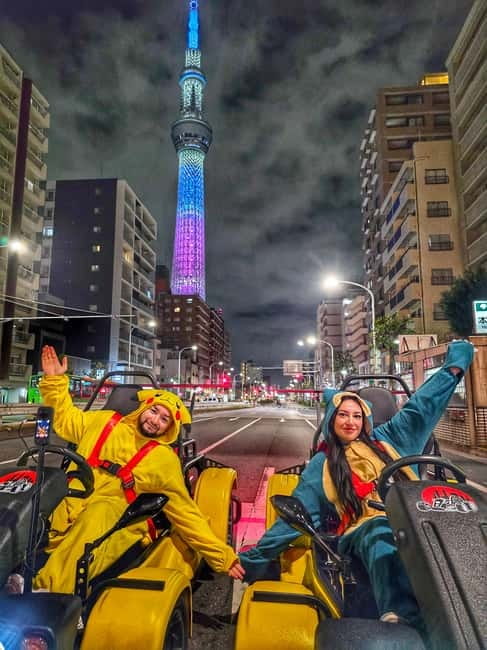
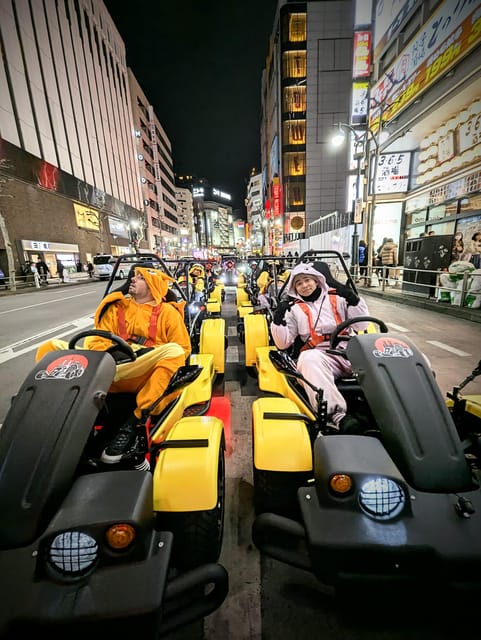
This is a go-kart tour, but Kartzilla is clearly aiming at adults who want to feel steady and comfortable, not squished and jittery. The karts are purpose-built for city driving.
Key comfort points you’ll feel quickly:
- Advanced suspension for a smoother ride over uneven pavement
- Hydraulic brakes for predictable stopping
- Reinforced frames that comfortably accommodate big and tall riders
- Stable handling that helps first-time drivers feel in control
If you’ve ever tried a standard recreational kart and felt like you were wrestling it, this should read as the opposite. You’ll likely spend less energy fighting the vehicle and more time enjoying the views and the guide’s stories.
And you’re not racing. The tour is structured for learning, exploring, and having fun at a beginner-friendly pace.
Capturing your ride with Insta360 and free photos
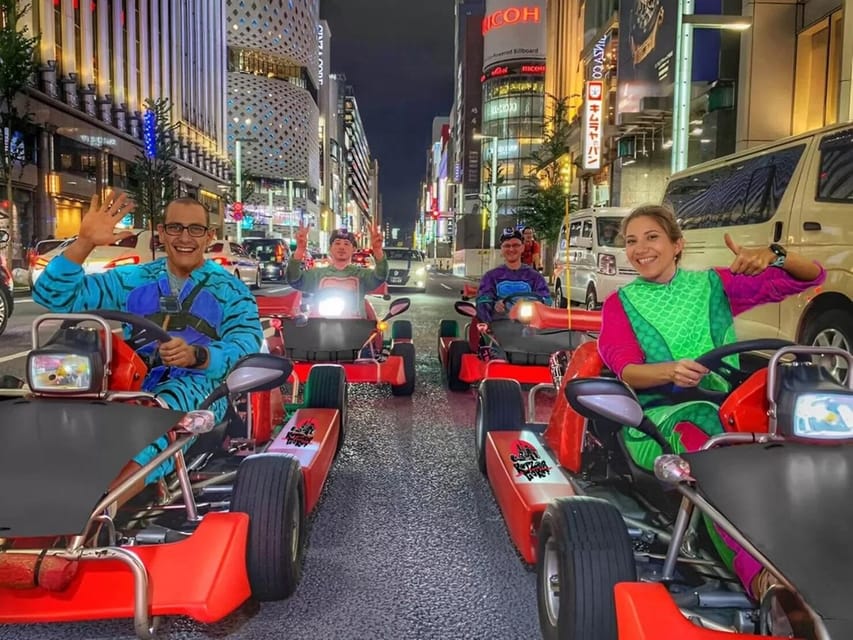
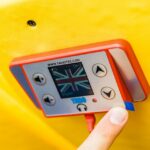
If you want proof you did this (and not just “I think I did this”), you can use an on-board Insta360 option to record from the driver’s seat. It’s a hands-free way to grab landmark moments and street scenes without constantly pulling out your phone.
One thing to plan: you’ll need a micro SD card for the camera. It’s available for purchase on-site, so you don’t have to bring your own, but don’t arrive assuming everything is fully set up.
In addition to the Insta360 option, you’ll get free photos of your experience. That’s useful because go-kart photos are often the difference between remembering the fun and forgetting the details.
If you get sweaty, don’t worry. After the session, practical items like hair dryers and towels have come in handy for riders on past departures.
Rain, neon, and what to expect on the road
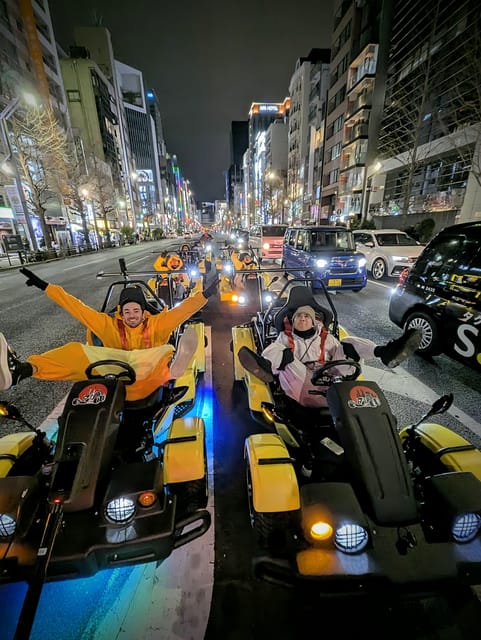
Tokyo weather doesn’t care about your itinerary. One guide-led nighttime departure saw rain for about half the tour, and riders were able to use rain jackets provided for that situation.
My advice: if your timing gives you nighttime, go. The neon glow around Ginza and central streets can make this feel more cinematic than daytime. But even without night lighting, the route is designed to deliver iconic landmarks plus lived-in neighborhoods.
Price and value: what $116 buys you (and why it can make sense)
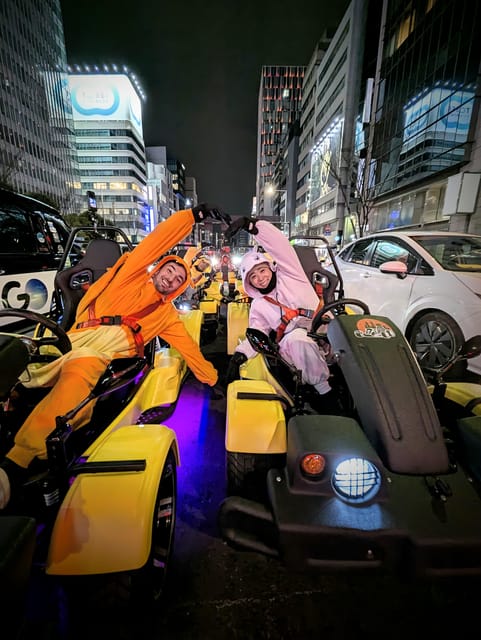
At $116 per person for 2 hours, you’re paying for more than a kart. You’re getting:
- a street-legal go-kart rental plus fuel
- a professional local guide
- accident insurance
- drinks (water, tea, coffee)
- an anime costume rental
- an optional Insta360 experience (with micro SD required)
For some people, that price feels high until they realize the total “deal package” is built in. Many half-day activities in Tokyo charge you for the guide and the vehicle separately, then add extras later. Here, the basics are rolled into the ticket.
If you’re traveling with a group, the value also depends on how many of you will actually drive. This tour isn’t for everyone in your party (see license requirements below), so count who can legally take the wheel before you compare to other experiences.
Also, you may find this is a strong first-stop activity. One guide (Travis) was known for sharing tips that helped riders plan the rest of their Japan trip. Even if you’re not using that exact advice, you’ll still come away with a better sense of where key areas are located.
Who this tour is best for (and who should skip it)
This experience fits you best if:
- you want a street-level Tokyo perspective without waiting on crowded attractions
- you enjoy guided storytelling more than pure sightseeing photos
- you’re comfortable driving and you have the proper documents
- you like practical fun with a controlled pace
It may not be the right choice if:
- you don’t have a valid driving license
- you’re bringing people under 18 (drivers must be 18+)
- you’re counting on a low-visibility or low-effort sightseeing day
The tour is also not for very young drivers and it has restrictions like no intoxication or alcohol/drugs.
On the upside, it’s built for different body types thanks to the reinforced frames. If you’ve struggled to fit in “standard” rides, this is worth your attention.
Should you book this Kartzilla Uptown Route?
Yes, I’d book it if you want a single, high-energy way to experience central Tokyo that doesn’t require ticket lines, subway transfers, or careful parking plans. The combination of iconic landmarks, a live radio guide, and comfort-focused karts makes it feel like you’re doing something active while still getting cultural context.
I’d think twice if you’re missing a qualifying driver’s license, or if your schedule won’t give you time for a 40-minute early arrival for check-in and the safety briefing. If you can handle the documentation and timing, this is one of those rare activities that’s fun first and memorable second, with a route that actually covers major Tokyo names.
FAQ
Do I need a driver’s license to join the go-kart tour?
Yes. A valid driving license is required. For non-residents, an International Driving Permit under the 1949 Geneva Convention is accepted, and some specific national licenses require an official Japanese translation issued by JAF. Digital licenses, photos, or expired licenses are not accepted, and you won’t be able to participate without a valid accepted document.
What time should I arrive before the tour starts?
Plan to arrive at least 40 minutes before your scheduled start time for check-in and the mandatory safety briefing.
Is the go-kart street-legal and will I get safety instructions during the ride?
The karts are street-legal and you’ll receive a road-safety briefing plus simple driving instructions before you start. During the tour, your guide provides real-time safety guidance via two-way radio.
Is an Insta360 camera included, and do I need extra equipment?
An on-board Insta360 camera use is included, but you’ll need a micro SD card. It’s available for purchase on-site if you don’t bring one.
What landmarks are included on the Uptown Route?
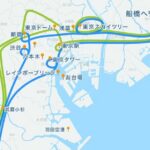
The route includes Tokyo Skytree, Ryogoku Kokugikan (Ryogoku Sumo Stadium), Tokyo Station, the Imperial Palace surroundings, Tokyo Tower, Ginza, and Kabukiza Theatre.
What should I do if it rains?
Rain can happen. Rain jackets have been provided for riders in rainy conditions, so you can keep going without the tour stopping for weather alone.