REVIEW · TOKYO
Unique Afternoon Live Sumo training tour in Tokyo
Book on Viator →Operated by NexSpark Co., Ltd. · Bookable on Viator
Sumo training is real, up close, and loud. You’ll step into Nakamura-beya to watch sumo keiko—the intense practice that feels nothing like a staged performance. I love that it’s not a theme-park look at sport; it’s the same discipline the wrestlers use to prepare for competition.
Two other things I really like: you get a photo souvenir with the wrestlers, and you’re set up with free Wi-Fi and phone charging while you wait. One thing to consider is that the first stretch can feel slow if you expect nonstop action, since warm-ups often take the opening 20–30 minutes before the practice turns intense.
In This Review
- Key Things You’ll Notice From the Start
- Nakamura-beya Keiko in Tokyo: What You’re Actually Seeing
- From Warm-Up to Action: How the 90 Minutes Usually Plays Out
- Keiko Explanations That Make Watching Easier (Not Confusing)
- Seats, Comfort, and Realistic Expectations in a Stable Setting
- Your Extra Value: Photo With the Wrestlers and On-the-Go Convenience
- How to Plan Your Arrival Around Ryogoku and No Pick-Up
- Who This Sumo Keiko Tour Fits Best
- Should You Book? The Decision Guide
- FAQ
- How long is the sumo training tour?
- Where is the meeting point?
- What’s included in the price?
- Is pick-up and drop-off provided?
- What language options are available?
- Is it always in the afternoon?
Key Things You’ll Notice From the Start
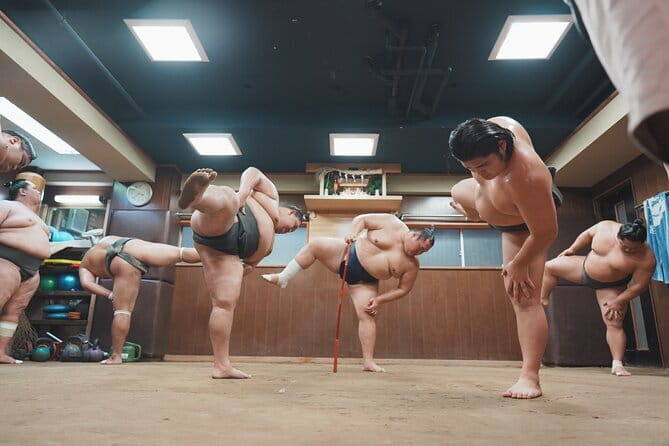
- Nakamura-beya Sumo Stable is the main event, and the training is close enough to feel the impact of stomps and clashes
- Small-group size (max 10) keeps the experience calm and easy to follow
- Multi-language support includes an audio guide in multiple options plus help from the guide
- Keiko explanation is built in, so you’re not just watching movement with zero context
- Practical extras like free Wi-Fi, charging points, and a takeaway pamphlet make it smoother than most small tours
Nakamura-beya Keiko in Tokyo: What You’re Actually Seeing
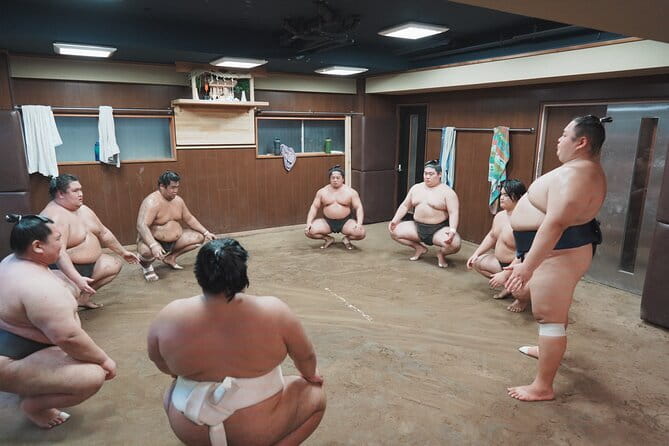
This is a Tokyo experience built around one thing: real sumo keiko at a working stable. Keiko isn’t showmanship. It’s focused training—repetition, balance, grip, timing, and that steady rhythm wrestlers use to sharpen their bodies and minds.
At Nakamura-beya, you’ll get an up-close view of practice routines while the athletes prepare for full power moments. You’ll see those signature stomps and sudden clashes happen right in front of you, not from a distant crowd angle. If you’ve only seen sumo through TV highlights, this is the chance to understand what the sport feels like when it’s still in training mode.
The stable setting also changes the tone. Tokyo can feel busy and fast, but here you’re watching a controlled world with its own rules and tempo. Even if you don’t speak Japanese, the training itself is easy to respect—because the focus is obvious.
You can also read our reviews of more tours and experiences in Tokyo.



From Warm-Up to Action: How the 90 Minutes Usually Plays Out
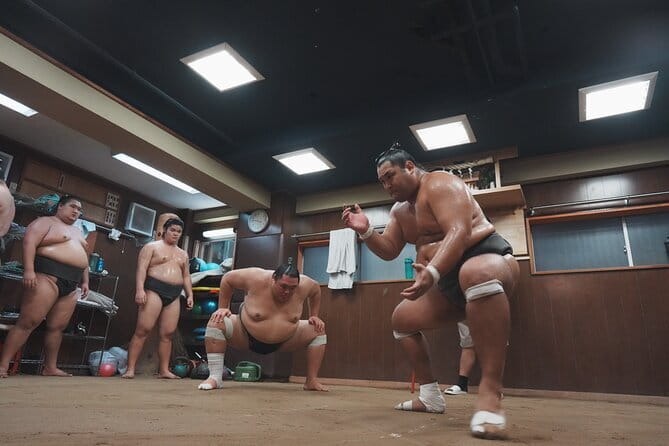
The training runs about 1 hour 30 minutes, and the pace can surprise you. The first 20–30 minutes are often warm-up-focused: lots of movement prep, getting bodies ready, and settling into routine. If you only want dramatic throws, that opening phase may feel uneventful.
Then the session shifts into higher-intensity work—when you’ll notice wrestling that feels sharper and more exciting. The difference is part of the point of keiko: athletes don’t jump straight into peak effort. They build up, then go hard.
For planning your mindset, treat the start like a warm cup of tea before the main meal. Watch for details in the wrestlers’ movement—how they set their stance, how they manage space, and how quickly everything changes once practice turns serious. If you’re traveling with kids or teenagers, it can be a great “stick with it” moment, since the real action tends to land after the initial warm-up stretch.
Keiko Explanations That Make Watching Easier (Not Confusing)
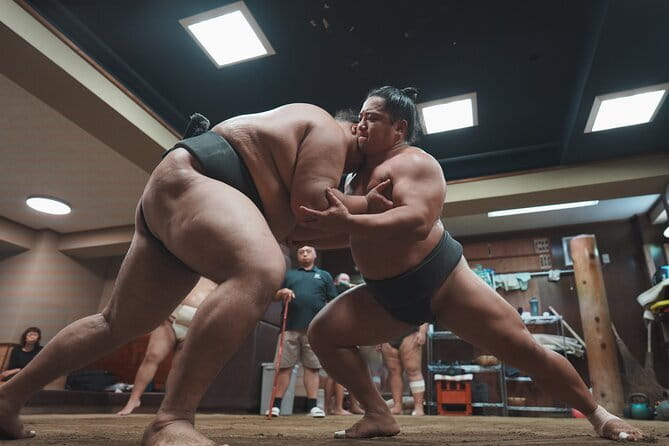
Language barriers are the main worry for most people signing up for a sports-stable visit. This tour handles it with audio support in 10 languages and additional guide help through spoken English, Japanese, and Korean.
What matters most is that the explanations aren’t random facts. You get a sumo keiko explanation pamphlet, and the guide helps clarify what you’re seeing as the practice unfolds. That context turns the experience from just watching bodies collide into understanding why the training looks the way it does.
Here’s the practical win: you’ll be able to follow the flow—what’s warming up, what’s practice drilling, and when the session ramps up. Even if your Japanese is limited, you won’t feel lost. The goal is not to make you an expert in 90 minutes. It’s to help you appreciate the discipline you’re watching.
Seats, Comfort, and Realistic Expectations in a Stable Setting

You’ll be seated for the training, and the arrangement is simple. There are chair-type seats for about 8 to 10 people, while the rest sit on the floor.
So you’ll want to plan for comfort. If you know you have trouble with floor seating for an hour, consider arriving ready with layers and being mindful about posture. Even if you’re fine normally, the stable setting can be more rigid than a typical venue chair.
Also, this experience is generally scheduled in the afternoon, but sometimes it can happen in the morning—so double-check the exact time before you go. That one detail matters because Tokyo plans fill up fast, and a morning shift changes everything.
Your Extra Value: Photo With the Wrestlers and On-the-Go Convenience

This tour isn’t only about watching. It also gives you a tangible souvenir: a photo with the sumo wrestlers. That’s a big value add because it’s part of the experience itself, not something you need to hunt down later.
On top of that, you get practical comfort items that make the wait and travel easier: free Wi-Fi and charging service. In Tokyo, where you’re constantly using your phone for transit and translation, being able to top up your battery helps a lot. It’s one of those small details that makes the experience feel smoother than many “just show up and watch” options.
The bottom line: you’re paying for (1) access to the training setting, (2) guided context, and (3) a real keepsake. At $137.71 per person, that price starts to make sense if you value authenticity and want something beyond another landmark photo.




How to Plan Your Arrival Around Ryogoku and No Pick-Up

The meeting point is Nakamura-beya Sumo Stable, 1-chōme-18-7 Ryōgoku, Sumida City, Tokyo 130-0026. The tour ends back at the meeting point, so you’ll plan your next stop from there.
There’s no pick-up or drop-off. That means you should plan your route using public transportation (the meeting spot is described as near public transportation). Ryogoku is a sensible area for sumo-focused activities, and this tour keeps you anchored right in that world instead of shuttling you around the city.
Bring a few essentials like you would for any active viewing experience: comfortable shoes, water if you tend to get thirsty, and a phone charged enough for maps and translation. If you like photos, keep your camera ready—but remember you’re there to watch the athletes train first.
Who This Sumo Keiko Tour Fits Best
This tour is a great match if you want something different from the usual Tokyo sightseeing loop. If you like sports, martial arts, or simply want to understand Japanese culture through daily practice, you’ll probably feel it right away.
I also think it suits both first-time visitors and repeat Tokyo travelers. First-timers get a “wow, this is real” moment with a culture tied to place and tradition. Repeat visitors get a break from shopping streets and big-ticket attractions.
Family-wise, it works well when expectations are set: the warm-up is gradual, then it turns intense. That patience pays off, and it’s the kind of activity that can hold attention for kids and teens once the wrestling starts.
If you strongly prefer nonstop action from minute one, this may test your attention for the first stretch. But if you can appreciate training as a process, you’ll likely find it rewarding.
Should You Book? The Decision Guide
Book it if you want authentic sumo training rather than a performance. The small group (max 10) and the fact that you get explanations mean you’re not just taking in noise—you’re getting a guided understanding of keiko.
Skip it if you can’t handle floor seating and you’re not sure about comfort, or if the idea of a warm-up phase sounds like a deal-breaker. Also factor in the time of day, since it can be afternoon or sometimes morning.
If you’re weighing price, think value over cost: you’re getting admission access, a guided explanation, multi-language support, a photo with the wrestlers, and phone-friendly extras like Wi-Fi and charging. For many people, that mix is exactly what makes the experience feel “worth it,” not just interesting.
FAQ
How long is the sumo training tour?
The tour lasts about 1 hour 30 minutes.
Where is the meeting point?
You meet at Nakamura-beya Sumo Stable, 1-chōme-18-7 Ryōgoku, Sumida City, Tokyo 130-0026, Japan, and the tour ends back at the same location.
What’s included in the price?
It includes an audio guide (10 languages), a photo with the sumo wrestlers, a sumo keiko explanation pamphlet, the guide’s spoken English/Japanese/Korean, and free Wi-Fi plus phone charging service.
Is pick-up and drop-off provided?
No, pick-up and drop-off are not included.
What language options are available?
The experience offers language support, with an audio guide available in 10 languages and a guide who can speak English, Japanese, and Korean.
Is it always in the afternoon?
It’s usually in the afternoon, but it can sometimes be scheduled for the morning, so you should check the time for your specific booking.