REVIEW · TOKYO
Tokyo: Private Tsukiji Street Food & Sake with Local Guide
Book on GetYourGuide →Operated by Alva Japan Tours🇯🇵 · Bookable on GetYourGuide
Tokyo’s food stops come with a guide’s brain. This Tsukiji street-food and sake walk is interesting because you get the “why” behind what you’re eating, from the market’s history to how sake is served like a lesson, not a party. I especially loved the charcoal-grilled wagyu skewers and the fluffy tamagoyaki, plus the sommelier-led sake tasting finished with baby scallops. The only downside to factor in: the tour includes a set amount of food (1 wagyu skewer and 1 tamagoyaki), so you may still want to budget extra cash if you want more snacks or souvenirs.
You’ll start at Tsukiji Hongwanji Temple, then head into the Outer Market with a bilingual EN/JP guide to help you navigate crowds and order confidently. Expect about 2 hours of walking, so comfortable shoes are a must, and you’ll need ID for the sake tasting (Japan’s legal drinking age is 20).
In This Review
- Key things to know before you go
- Tsukiji, but with context that actually helps
- Meeting at Tsukiji Hongwanji Temple: easy to find, faster to start
- Tsukiji Hongwanji Temple: a short stop with a story behind it
- Outer Market with a guide: how you avoid the real hassle
- Charcoal wagyu skewers and tamagoyaki: the included “must eat”
- Tea, beans, and dashi: an Edo-style tasting that changes your palate
- The sake tasting: sommelier-led, ID-checked, and paired with scallops
- Price and value: where the $99 actually goes
- Who this tour fits best
- Should you book Tsukiji Street Food and Sake with a Local Guide?
- FAQ
- Where is the meeting point?
- How long is the tour?
- What’s included in the food and drinks?
- Do I need ID for the sake tasting?
- What languages are used during the tour?
- What should I bring for extra spending?
- Is free cancellation available?
Key things to know before you go
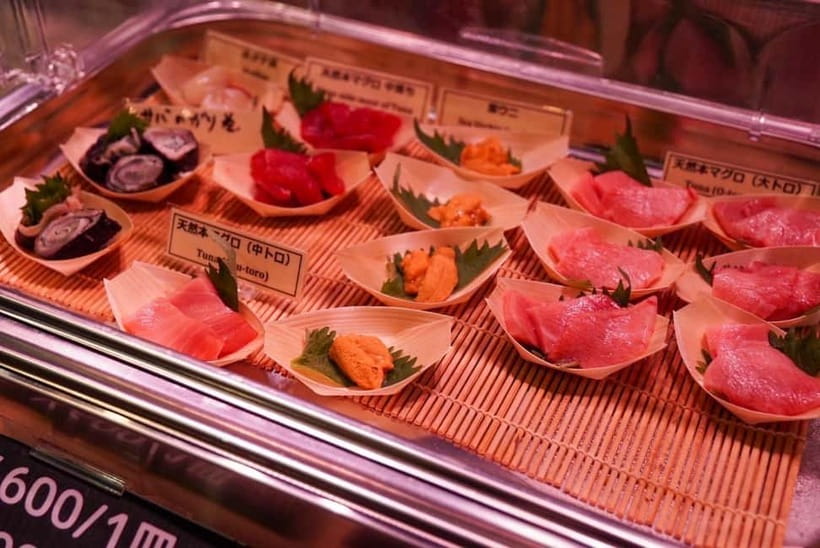
- Charcoal-grilled wagyu skewers + tamagoyaki are included, not just “look but don’t eat” shopping time
- A guided sake flight includes 3 types plus 1 special, paired with baby scallops
- Edo-style tasting: chilled teas and samples like black beans, peanuts, and dashi broth
- Market history in plain language, including Tsukiji’s story and the move to Toyosu
- Small-group feel with bilingual help, including support for eating restrictions
Tsukiji, but with context that actually helps
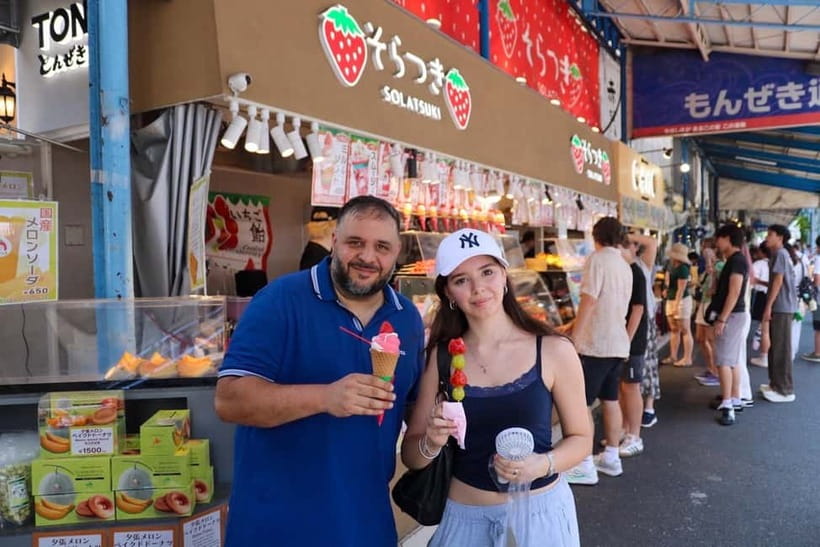
Tsukiji can look like one huge food market on a map, but it’s really a place with layers. This tour teaches you what to look for and why, so you’re not just wandering and guessing your way through stalls.
A big value here is that the guide doesn’t treat the food as random bites. They connect tastes to tradition: what Edo-style cuisine is doing with dashi, why certain flavors get served chilled, and how sake fits the meal. If you’ve ever felt overwhelmed by Japanese menus (and that stiff moment when you’re not sure what’s safe or included), you’ll appreciate having someone manage the order and the pacing.
You can also read our reviews of more food & drink experiences in Tokyo
Meeting at Tsukiji Hongwanji Temple: easy to find, faster to start
Your meeting point is the main gate of Tsukiji Hongwanji Temple. Look for someone holding up a smartphone displaying AlvaJapan. That matters because Tsukiji can confuse your sense of direction fast, especially when you’re walking in a crowd.
Time-wise, you’re not doing a long commute or a complicated schedule. The tour is set for about 2 hours, and it’s built around short stops plus a guided market walk. Translation: you should be able to keep the rest of your day flexible.
What you should bring is simple:
- Comfortable shoes for walking
- Your ID, since sake is included
- Cash for any extra snacks or shopping beyond what’s covered
- If you have allergies or restrictions, tell the guide early so they can tailor what you eat during the included portions
Tsukiji Hongwanji Temple: a short stop with a story behind it
The first activity is a guided visit to Tsukiji Hongwanji Temple, starting from 浄土真宗本願寺派築地本願寺. You get a photo stop plus guided sightseeing time (about 20 minutes).
This isn’t a long temple tour. It’s a quick setup that helps you understand the area as more than a food zone. The temple’s history includes reconstruction after a massive fire during the Meiji era, and you’ll hear about the dramatic nature of that rebuilding. You also get a sense of how this spiritual site differs from the more familiar wooden temple look people expect from Kyoto.
My advice: treat this stop as your mental reset. After you leave the temple grounds, the market feels louder, denser, and more “in motion.” The temple time helps you transition without feeling rushed.
Outer Market with a guide: how you avoid the real hassle
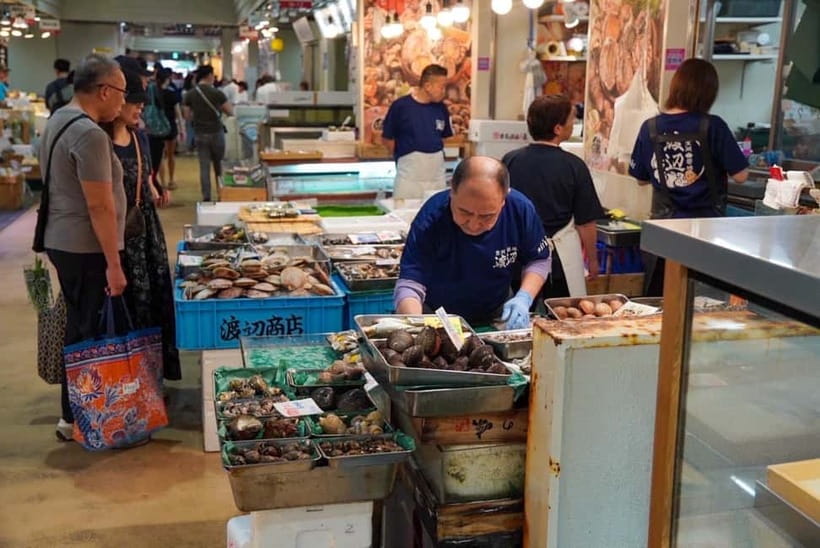
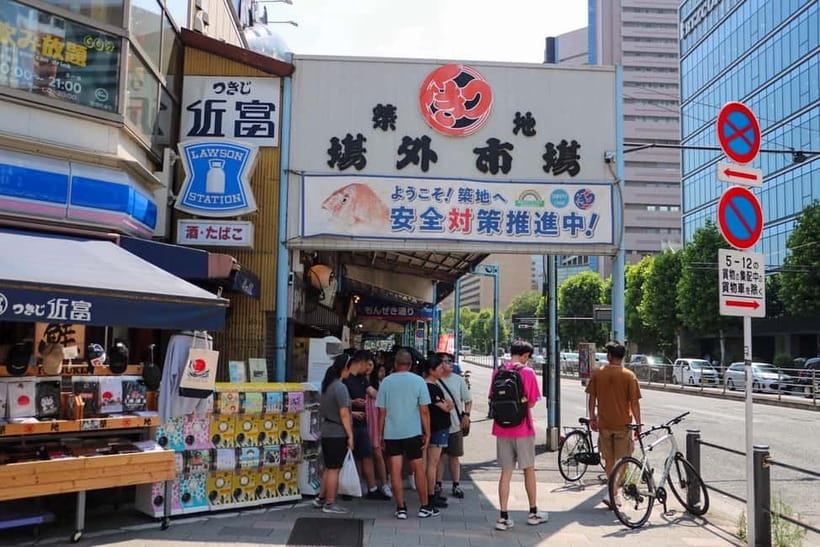
The main food portion happens in Tsukiji Outer Market, with about 100 minutes of guided time that includes photo stops, sightseeing, and where shopping fits in (purchases are up to you).
Here’s what the guide does that’s genuinely useful:
- Navigates crowd flow so you’re not stuck behind bottlenecks
- Bridges the language gap when ordering
- Helps you get good value quickly, without burning time comparing dozens of stalls
This is also where you learn the market’s story, including how Tsukiji’s role changed with the move to Toyosu. That history isn’t just trivia. It gives you a better sense of why certain food habits and shop styles survive even as the “center” shifts.
One practical thing to remember: the market is full of stalls, and your eyes will want to run ahead of your plan. The guide keeps the group focused on the included foods and the tastings, so you don’t accidentally lose the pacing needed for the sake later.
Charcoal wagyu skewers and tamagoyaki: the included “must eat”
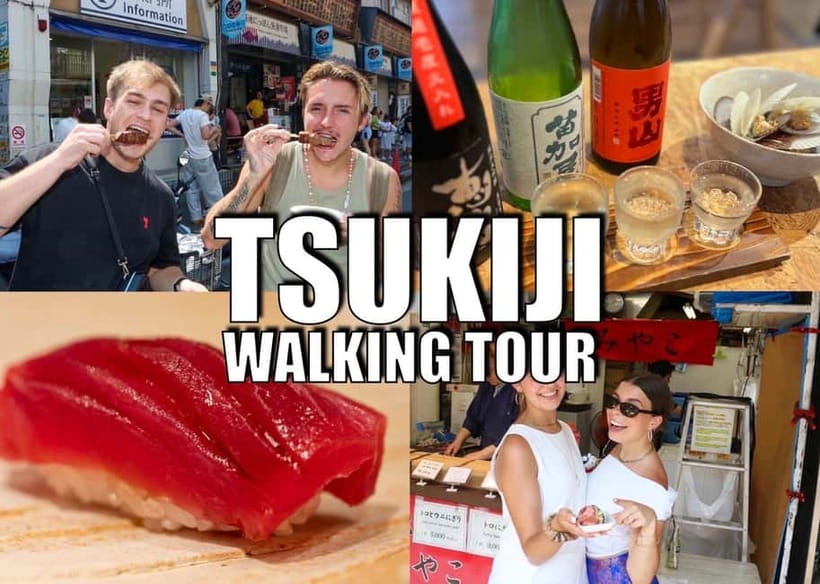
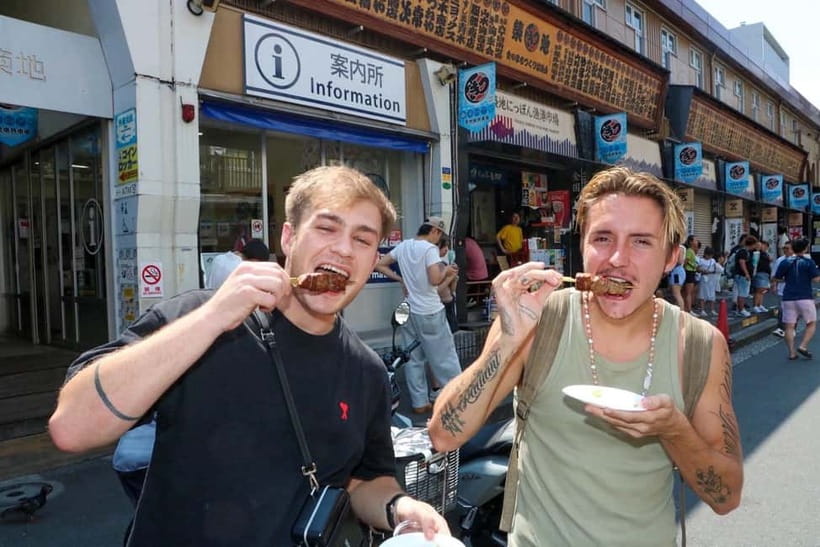
At the heart of the market portion, you’ll be served your included food: 1 wagyu beef skewer plus 1 tamagoyaki portion.
Why this combo works so well:
- The wagyu skewer is charcoal-grilled, so you get smoky aroma and that satisfying, slightly crisp outside.
- Tamagoyaki is different energy: warm, soft, and egg-forward, often flavored with dashi so it feels savory rather than sweet-only.
If you’re the type who worries about ordering the “wrong thing,” this is a relief. You don’t need to decode menus. You get the two classics first, and they act like your anchor flavors for everything else you sample later.
A small practical note that matters: the tour includes these specific items, so if you want more food beyond the included portions, that extra spend is on you. I recommend taking a moment to check what’s already included before ordering additional snacks at the stalls.
You can also read our reviews of more tours and experiences in Tokyo
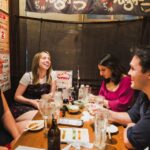

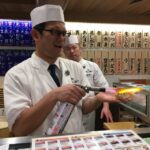
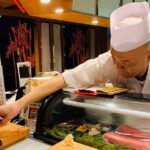
Tea, beans, and dashi: an Edo-style tasting that changes your palate
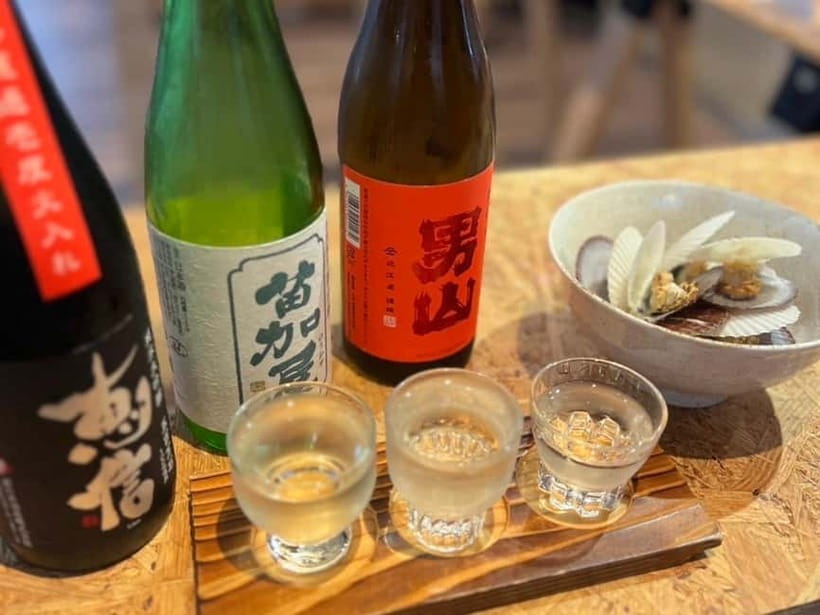
After the market chaos, you get a calmer stop at a traditional specialty place that’s served customers for over 100 years. This segment is about 20 minutes and is designed to reset your taste buds.
You’ll sample:
- Chilled Japanese teas
- Black beans and peanuts
- Dashi broth, a key foundation of Edo-style flavor
This is one of those parts of the day that seems small on paper, but it’s smart. Dashi is subtle, so having it in a controlled tasting moment helps you notice what it’s doing. And the chilled teas give you contrast after warm grilled bites.
If you like learning as you eat, this is a great moment. It turns your palate into an instrument. Instead of just tasting, you start noticing how savory, nutty, and broth-based flavors behave together.
The sake tasting: sommelier-led, ID-checked, and paired with scallops
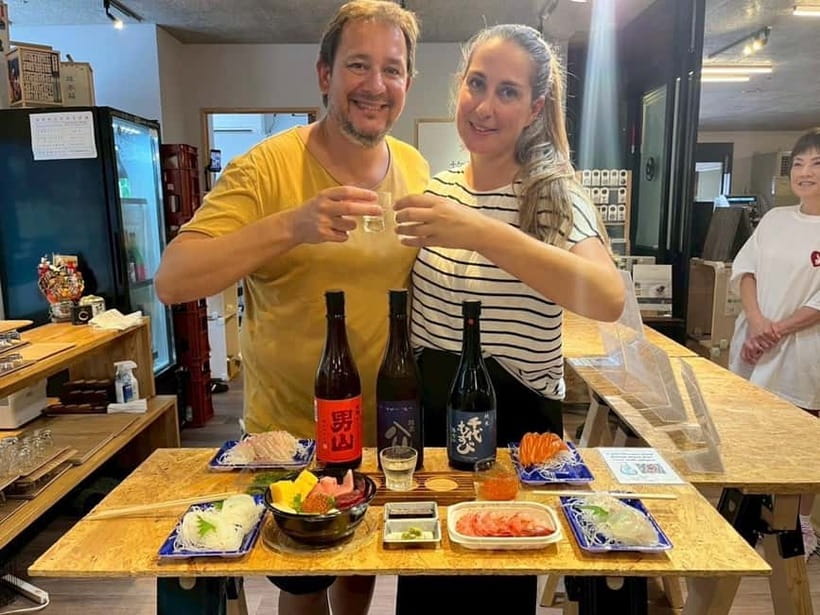
The tour ends with a sommelier-led sake journey lasting about 40 minutes.
What you get is a guided flight of:
- 3 types of sake
- 1 special selection
- Paired with sake-steamed baby scallops
The biggest advantage of doing it this way is structure. You taste multiple styles in sequence, and the guide helps you connect taste differences to what you’re experiencing. Sake is easy to overthink alone in a shop, especially when you’re new to terms like dryness, aroma, or serving style. Here, it becomes a simple tasting lesson.
Also, the pairing matters. Baby scallops add sweetness and a gentle ocean note that doesn’t fight the sake. It makes the tasting feel like an organized meal, not a random lineup of drinks.
Important prep:
- Bring ID. The tasting requires it.
- Japan’s legal drinking age is 20, so plan accordingly if you’re traveling with a younger group member.
Price and value: where the $99 actually goes
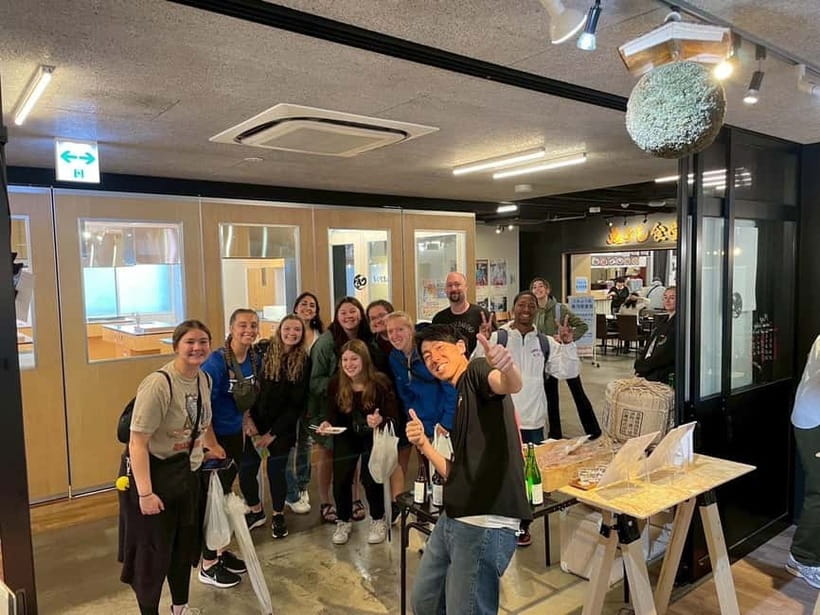
At $99 per person for about 2 hours, this tour isn’t trying to be the cheapest food crawl in Tokyo. It’s priced like a guided experience where the main items are covered.
Here’s what’s included in the price:
- Bilingual guide (EN/JP)
- Tsukiji Hongwanji Temple visit
- Tsukiji Outer Market guided walk
- 1 wagyu skewer and 1 tamagoyaki
- Tea tasting plus samples of black beans, peanuts, and dashi broth
- Full sake tasting flight: 3 types + 1 special, with baby scallops
So the value math is mostly about “you don’t pay for the big-ticket tastings separately.” If you tried to recreate this yourself, you’d spend time figuring out what to order, where to go, and how to handle sake tasting without getting lost in the options.
The main “consideration” is the included food quantity. You’re tasting, not eating an endless buffet. If you’re a heavy eater who wants lots of extra bites, you’ll likely add more snacks at the market—and that’s not part of the base price.
Who this tour fits best
This experience is a strong match if you want:
- A guided food plan so you don’t waste time making decisions
- A real introduction to Japanese flavors through tastings, not just street snacks
- A comfortable mix of history, food, and sake
It also tends to work well for people with food concerns. The guide will ask about eating restrictions and adjust what you choose within the included experience, which makes the day feel less stressful.
If you’re the kind of traveler who likes to roam independently and build your own stall-to-stall route, you might feel constrained by the fixed included portions and tasting sequence. But if you prefer clarity and good pacing, this tour gives it to you.
Should you book Tsukiji Street Food and Sake with a Local Guide?
I’d book it if your goal is quality + guidance in a short window. The sweet spot is the combo of charcoal-grilled wagyu, fluffy tamagoyaki, the calm reset of chilled tea and dashi, and a structured sake flight paired with scallops. You get the market’s story too, which makes the whole neighborhood feel more meaningful.
Skip it (or at least expect to add your own extras) if you want a long, free-form food binge. The included food is specific, and the tour time is tight by design.
If you do book, go in prepared to ask a simple question early: what’s included versus what’s optional. That one habit keeps the day fun and avoids the annoying moment of second-guessing later in the market.
FAQ
Where is the meeting point?
Meet at the main gate of Tsukiji Hongwanji Temple. Look for the guide holding a smartphone displaying AlvaJapan.
How long is the tour?
It lasts about 2 hours.
What’s included in the food and drinks?
You get 1 wagyu beef skewer and 1 tamagoyaki portion, tea tasting, samples of black beans, peanuts, and dashi broth, plus a sake tasting flight of 3 types plus 1 special with baby scallops.
Do I need ID for the sake tasting?
Yes. ID is required for sake tasting, and Japan’s legal drinking age is 20.
What languages are used during the tour?
The tour is conducted in English, and it’s also bilingual EN/JP.
What should I bring for extra spending?
Cash is recommended for any additional snacks or purchases you choose in the market, since extras beyond what’s listed are not included.
Is free cancellation available?
Yes. You can cancel up to 24 hours in advance for a full refund.