REVIEW · TOKYO
Tokyo Asakusa : Samurai School, Become a Samurai Warrior
Book on GetYourGuide →Operated by Smile Vista Co.,Ltd. · Bookable on GetYourGuide
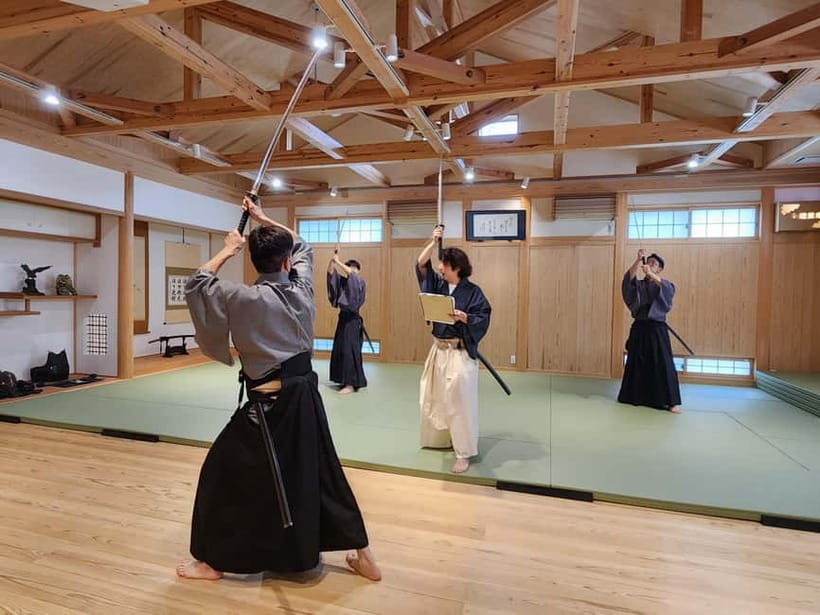
A samurai lesson in Asakusa feels like acting with steel. You’ll learn respectful bowing, basic stances, and stylized sword moves while wearing a traditional costume and getting real camera-time near Tokyo Skytree. I especially loved the hands-on sword choreography and the way the samurai costume photo session makes the whole thing feel like a genuine Tokyo moment. One thing to consider: you’re moving and practicing with training swords, so it’s not a great match if you have a back problem or are pregnant.
This is built for a small group of up to 6, with an English-speaking interpreter, so you won’t get lost in translation or the pacing. The class runs 90 minutes and stays focused on what you can actually do: bow, draw, strike, pose, and take home a certificate.
In This Review
- Key points before you go
- Turning Asakusa Into a Samurai Set
- Meeting the Master and Getting Into Costume
- Bow, Draw, Strike: The Basics That Make Swordplay Look Real
- Your Camera Moment: Photos, Video, and the Choreography Scene
- The Completion Certificate and What You Actually Walk Away With
- Price, Value, and Who This Fits Best
- Tips to Enjoy It Without Feeling Rushed
- Should You Book Samurai School in Asakusa?
- FAQ
- How long is the Samurai lesson in Asakusa?
- What does it cost?
- Where do I meet the group?
- Is there an interpreter and what languages are offered?
- What should I bring?
- Is the activity wheelchair accessible?
- Is food allowed during the activity?
Key points before you go
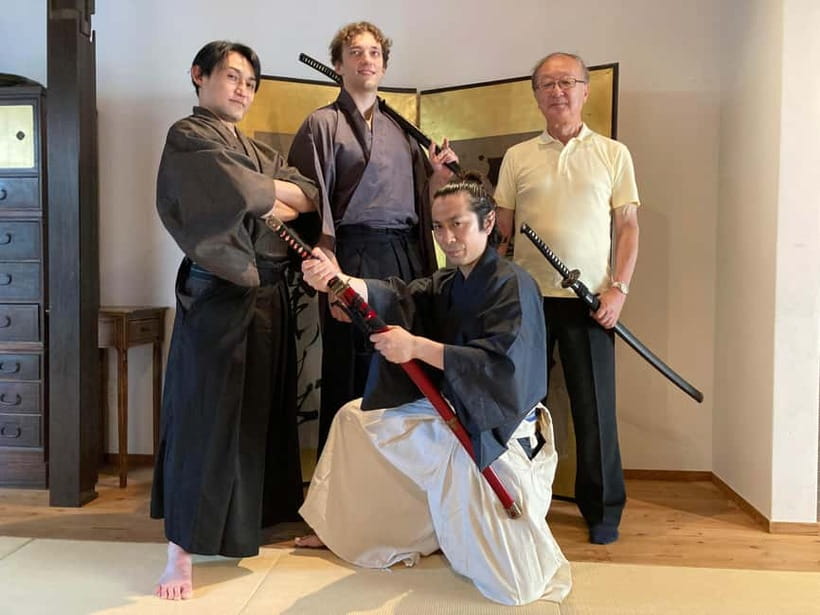
- Costume-first experience: You dress up right after arrival, so you start feeling like a samurai from minute one.
- Respect lessons, not just moves: You practice bowing to show respect with the sword, not only flashy attacks.
- Clear, performance-friendly coaching: The class includes acting and camera work, so your photos and video look intentional.
- Optional choreographed duel: If you want more action, there’s a safe, controlled choreography battle setup.
- Photo and video included: You get a dedicated photo shoot and materials to remember it by.
- Near Tokyo Skytree, easy to reach: It’s by Shimo Station, with a short walk and a simple meeting point.
Turning Asakusa Into a Samurai Set
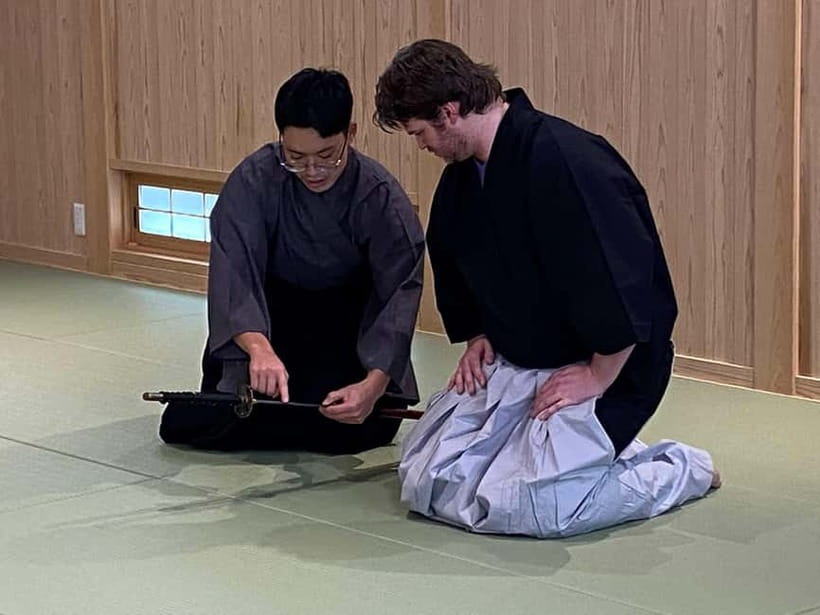
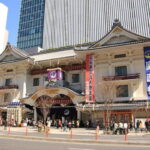
Asakusa is famous for temples and old-street Tokyo, so swapping that scenery for a working dojo experience feels like a movie scene. This class takes you to a dojo area close to Tokyo Skytree, and the timing is tight enough that you get a full story arc in just 90 minutes.
The format is also practical: small group size (up to 6) means you can actually ask questions and get corrections. With an interpreter on hand, you’re not stuck guessing what to do with your hands, your footing, or your timing. Reviews also point to strong communication, even when logistics shift, which matters because the dojo sometimes uses a different location temporarily.
You can also read our reviews of more tours and experiences in Tokyo.



Meeting the Master and Getting Into Costume
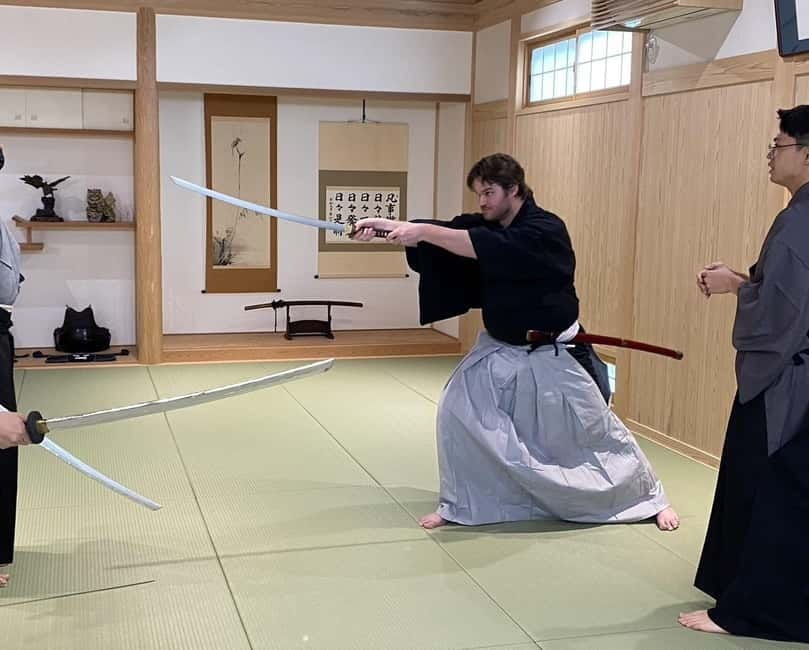
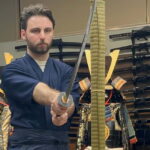
Your first job is simple: show up, meet the instructor/interpreter, and get dressed. You’ll put on samurai attire on arrival, and from that moment the class switches from observer mode to participant mode. You also get the training gear you need, including practice swords, so you’re not scrambling for anything.
A quick note on readiness: bring a towel and water, plus a T-shirt. You’ll be moving, so comfort matters. Food is not allowed during the activity, and you’ll want to plan a meal before or after.
One more logistics detail you should know: the Asakusa dojo can be unavailable due to maintenance, and sessions may be held at a different dojo temporarily. That happened during at least one recent experience, and the communication was reported as strong. Still, it’s smart to double-check your exact meeting location information before you head out.
Bow, Draw, Strike: The Basics That Make Swordplay Look Real
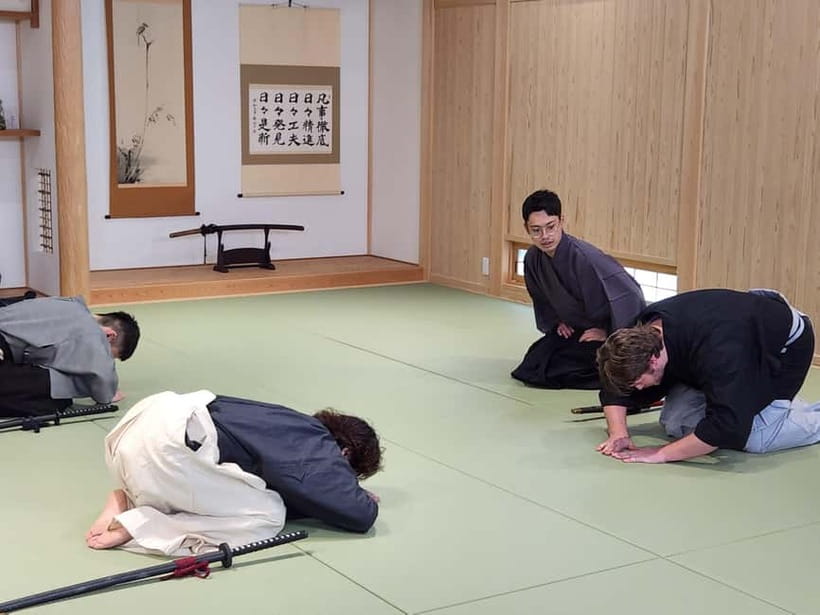
This class is built around fundamentals that make swordplay look correct, even if you’ve never held a practice blade before. You start with the “respect” part: bowing. Not a casual nod. You learn how to show respect to your opponent with the sword, and you practice the movement until it feels natural.
Then you move into the physical building blocks:
- fundamental stances
- strikes
- movement timing and control
- how to draw and strike using stylized samurai swordplay
The instructor described here has long professional experience in samurai action, and the coaching style reflects that. Expect a mix of explanation and guided correction, with a focus on clean form over speed. The optional choreographed duel later depends on you being comfortable with these basics first.
Safety is also part of the design. You’re working in a controlled, lesson-like setup with training swords. It’s not a chaotic fight; it’s structured skill-building that still feels dramatic when you’re in costume.
Your Camera Moment: Photos, Video, and the Choreography Scene
A lot of “do a thing in costume” activities stop at a photo. This one leans harder into the performance side. You’ll get both photos and video-style capture, plus a dedicated photo session where you can pose in your samurai outfit.
The class also includes camera-friendly direction—reviews mention acting and camera work as a standout. That matters because sword lessons can become stiff if you’re just trying to copy movements. Here, the focus is on presenting the moment: posture, angles, and timing so what you record looks like you belong in the scene.
You can also capture your own samurai video or photo with the master. That’s a big difference from classes where you only watch the instructor and then get a single group shot. Here, you have a chance to be the main character.
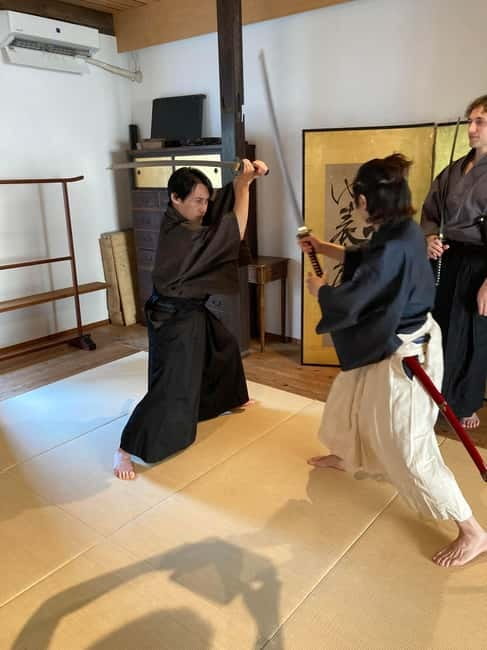
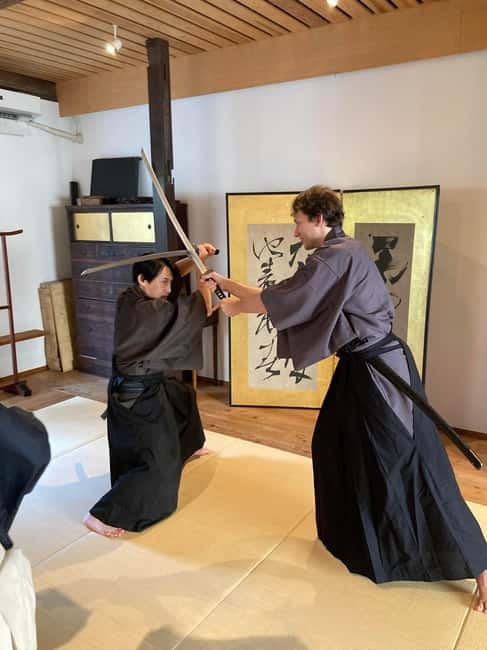
If you choose the optional part, there’s a choreographed sword fight. Think controlled movement with dramatic intent, not real sparring. It’s a fun add-on if you want that last step from practice to performance.
The Completion Certificate and What You Actually Walk Away With
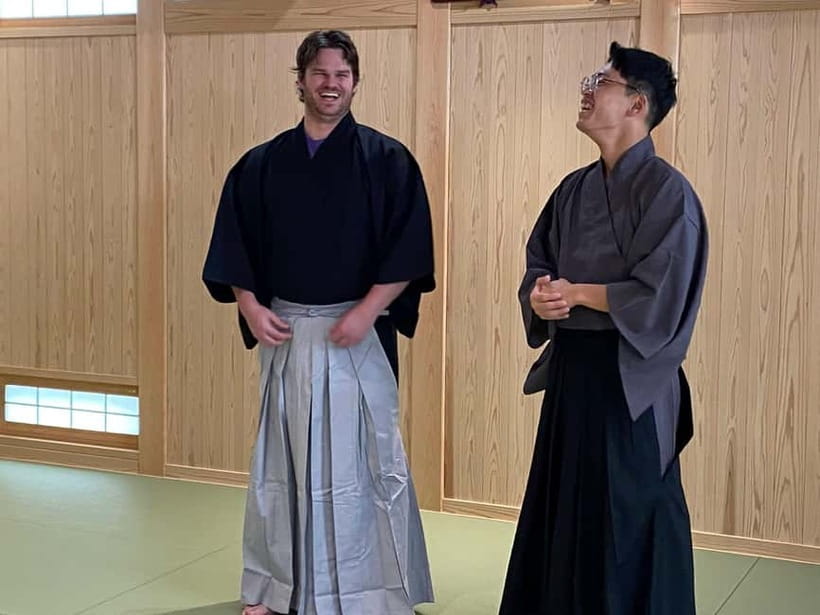
This activity ends with a sense of completion that’s rare in short classes. You’ll receive a completion certificate, and you’ll leave with a clear story to tell: you learned how to bow properly, how to draw and strike with stylized form, and how to present it on camera in costume.
One review also mentioned learning about the art called Tate and different actions with the sword. While you’ll mainly focus on the practical moves, it’s helpful when a class gives a named framework for what you’re doing. It turns random steps into something that feels connected, which makes your photos and video look more confident too.
Most importantly, the certificate isn’t just paper. It’s proof you did it, and it helps families and first-timers feel proud of the experience. A parent booking for a 10-year-old specifically liked the certificate and the structured choreography moment, not just the costume.

Price, Value, and Who This Fits Best
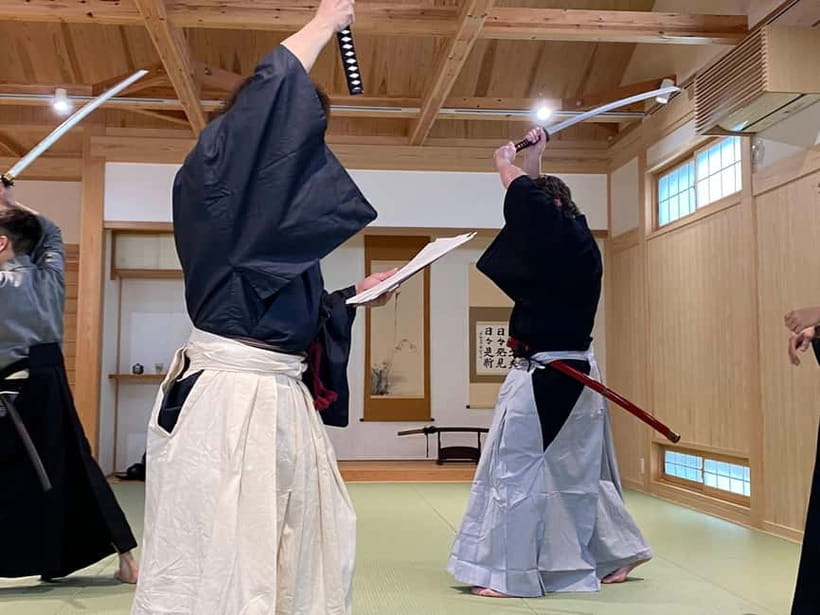
At $90 per person for 90 minutes, this isn’t a budget activity. But it does include a lot that can otherwise cost extra in Tokyo: costumes, interpreter support, practice swords, and a photo shoot. You’re also getting a completion certificate and camera-time direction, which is a big chunk of the value.
Here’s how I’d think about it for your own decision:
- If you want a quick hands-on activity with strong visual results, this is a good value.
- If you’re only looking for a “history lecture,” you’ll probably want something else. This class is more movement and performance than museum time.
- If you want a unique Tokyo souvenir that isn’t just a postcard, costume + photos + certificate is hard to beat.
This experience can suit families, including kids around primary-school age, as long as they can follow instructions and handle the physical part. One booked experience involved a 10-year-old who loved picking the outfit and recording the choreographed scene.
There are also clear limits. It’s not suitable for pregnant women or people with back problems. If you’re unsure whether your body can handle stances and sword movement, it’s worth checking first rather than assuming you can “power through.”
Tips to Enjoy It Without Feeling Rushed
You’ll enjoy this most if you treat it like a performance class, not just a workout. A few practical tips help.
First, plan your timing. The nearest station is Shimo Station on the Namboku Line, about a 6-minute walk from Exit 2. Meet in front of the dojo. If you’re using maps, give yourself extra time for orientation. One recent experience mentioned getting routed to the wrong side of the street, but it was resolved quickly by asking for help.
Second, wear something you can move in. You’re bringing a T-shirt and you’ll be given costume elements, but your base clothing still matters for comfort and posture.
Third, bring a small towel and keep water handy. You’ll sweat a bit during practice and photos, especially if you’re warming up for the optional choreography.
Finally, go in with a playful mindset. Reviews highlight how people didn’t notice the time passing, largely because the class shifts energy from dressing up to learning to recording.
Should You Book Samurai School in Asakusa?
Book it if you want a short Tokyo activity that gives you something tangible: costume photos, practice swords, respectful sword basics, and a certificate—all in a small group with interpretation support. It’s especially worth it for first-timers and for people who like acting, posing, or recording themselves.
Skip it if you need a mostly seated experience, or if you have constraints like back problems or pregnancy. Also skip if you’re hoping for a deep history seminar. This is a do-and-try class that focuses on movement and presentation.
If you’re staying in the Asakusa–Skytree area, this is one of those experiences that feels like Tokyo’s best trick: turning a normal neighborhood day into something cinematic.
FAQ
How long is the Samurai lesson in Asakusa?
The experience lasts 90 minutes.
What does it cost?
The price is $90 per person.
Where do I meet the group?
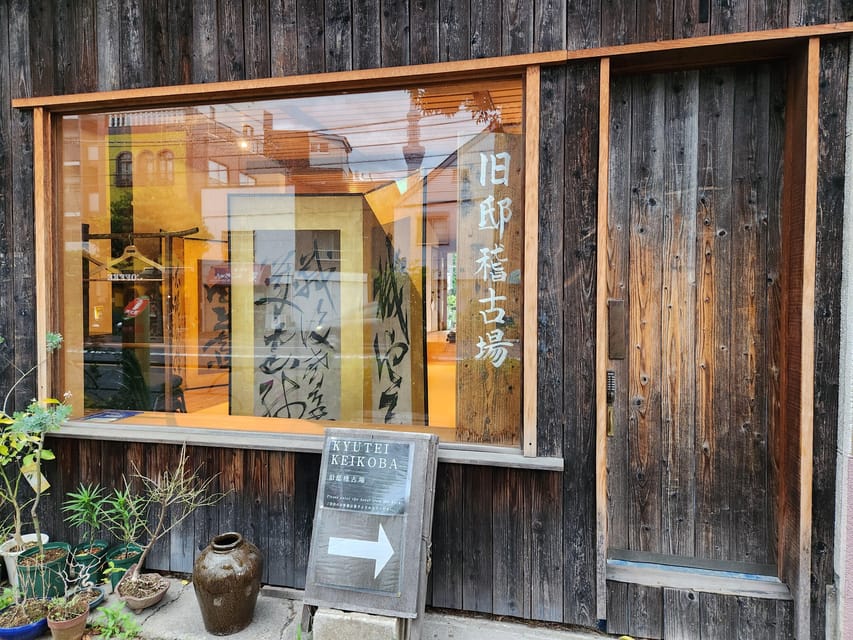
Meet at 4-6-2 Shimo, Kita City, Tokyo 115-0042, Japan (颯志館 / Soushi-Kan). The nearest station is Shimo Station on the Namboku Line, about a 6-minute walk from Exit 2.
Is there an interpreter and what languages are offered?
Yes. There is a friendly English-speaking interpreter, and the instructor is listed as English and Japanese.
What should I bring?
Bring a towel, water, and a T-shirt.
Is the activity wheelchair accessible?
Yes, it is listed as wheelchair accessible.
Is food allowed during the activity?
No, smoking and food are listed as not allowed.