REVIEW · TOKYO
Daikoku JDM car meet experience in a GTR-R35
Book on GetYourGuide →Operated by Rocket Crew · Bookable on GetYourGuide
Tokyo at night sounds different.
The big reason is the GTR-R35 ride, plus a guided stop at Daikoku Car Meet, Japan’s most famous tuning hangout. I especially like the no-stress logistics (you’re taken to the spots) and the chance to see everything from modified JDM builds to serious exotics in one place. One thing to consider: the experience isn’t for everyone, with strict fit limits (around 180 cm / 100 kg) and no wheelchair access.
If you like cars, this tour basically hands you the parts that are hard to figure out on your own: where to stand, what you’re looking at, and how to act around the crowd. It runs as a small group (max 6), with a live guide speaking English (and French), and it’s built around a tight but not rushed evening (210 minutes total).
In This Review
- Key points to know before you go
- Why Daikoku PA feels like Tokyo’s car scene in one hour
- The GTR-R35 ride: sound, speed, and comfort rules that matter
- Meeting at Arrow Parking Udagawachō: how to start smoothly
- Autobacs Shinonome (30 minutes): your quick JDM shopping stop
- Daikoku Car Meet guided hour: what you’ll actually do there
- How the evening stays hassle-free without feeling scripted
- Value check: is $225 worth it for this kind of Tokyo night?
- Who this tour is best for (and who should skip)
- My verdict: should you book the Daikoku GTR-R35 night?
- FAQ
- How long is the experience?
- How much does it cost?
- What happens during the stop at Autobacs Shinonome?
- How long do you spend at Daikoku Car Meet?
- What language is the live guide?
- What do I need to bring?
- Is food included?
- FAQ
- Where is the meeting point?
- Is it okay if I’m tall or heavy?
- Can I cancel and get a refund?
Key points to know before you go
- GTR-R35 thrill + city driving: you get the sound and speed moments without having to plan anything
- Daikoku PA guided hour: you’ll know what you’re seeing and how to photograph without getting in the way
- Autobacs Shinonome stop (30 minutes): quick browsing time at a top automotive store
- Small group feel (up to 6): more talking, less waiting, easier to move as a group
- Strict comfort limits: guides may refuse if you’re too tall or heavy, and wheelchair access isn’t available
Why Daikoku PA feels like Tokyo’s car scene in one hour
Daikoku Parking Area (Daikoku PA) is famous for a reason. This is where car culture shows up in full volume: loud exhausts, turbine-like turbo sounds, and owners who care about the details. It’s also one of those places where you’ll see the whole spectrum of Japanese tuning culture, not just one style.
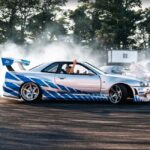
You can expect to spot heavily modified drift-style builds and classic JDM icons side by side. Think Nissan Skyline GT-Rs and Toyota Supras, plus rotary-powered Mazdas and custom Hondas. Even if you only know a few models, the variety makes the scene addictive—every row can feel like a new “what is that?” moment.
And Daikoku isn’t only JDM. You’ll likely see European supercars too. That mix matters because it keeps the experience from turning into a single-fandom echo chamber. If you’re there to photograph, it’s also a gift: the lights and bodywork reflections make cars look unreal in photos.
One practical note: parking-area meets run on respect. You’ll enjoy it more if you keep your voice down, move deliberately, and treat the crowd like it’s a live set—not a theme park.
You can also read our reviews of more tours and experiences in Tokyo.
The GTR-R35 ride: sound, speed, and comfort rules that matter
The center of the evening is the ride in a Nissan GT-R R35. Based on what’s been experienced on past rides, the big “wow” is the combination of power and sound—deep acceleration, crisp turbo noises, and that full-on sports-car presence. People also talk about tunnel driving and the feeling that the whole city becomes part of the performance.
This isn’t a long “sit back and chill” cruise either. It’s more like a planned night drive that sets up the meet atmosphere. If you’re sensitive to motion or you get queasy in moving vehicles, pay attention: the tour is marked as not suitable for people with motion sickness.
Comfort is another reason to read the rules carefully. The tour isn’t recommended if you’re over 100 kg or 180 cm, since you may not fit with other passengers and the guide may not allow you to join. If you’re close to either limit, I’d treat that as a hard stop, not a maybe—these are shared-vehicle constraints.
Also, it’s not a wheelchair-friendly setup and it’s not aimed at people with heart problems or claustrophobia. If any of those apply, I’d choose a different style of car experience.
Meeting at Arrow Parking Udagawachō: how to start smoothly
You meet at Arrow Parking Udagawachō, and the instruction is simple: take the elevator to the 8th floor. That detail matters because in Japan, being a few minutes late can send the group ahead without you.
The best move is to arrive early enough to handle any last-minute sorting—finding the building, getting your bearings, and being ready to go when the guide calls names. Bring your passport as required.
This tour also has clear “vehicle behavior” rules:
- No smoking in the vehicle
- No food or drinks in the vehicle
- No alcohol and no drugs
- Keep luggage minimal: no large bags or oversize luggage
Translation: pack like you’re going to a photo shoot, not a weekend trip. If you show up with lots of gear, you’ll spend energy worrying instead of enjoying the night.
Autobacs Shinonome (30 minutes): your quick JDM shopping stop
After you get going, the route includes Autobacs Shinonome for a self-guided 30-minute stop. Autobacs is one of Japan’s best-known automotive retail brands, so even if you’re not buying anything, the store visit helps you “get” the tuning mindset.
What I like about this stop is the timing. Thirty minutes isn’t enough to shop like a dedicated bargain hunter, which means you don’t get trapped in slow browsing. Instead, you get a fast look at what’s popular: accessories, tuning-related items, and the kind of gear that shows up on cars you’ll see later at Daikoku.
Because it’s self-guided, you can move at your pace. If you want to focus on products that connect to car builds, this is the spot. If you just want to grab a quick snack, remember that food isn’t part of the tour package and you can’t eat inside the vehicle.
Daikoku Car Meet guided hour: what you’ll actually do there
Daikoku PA is the main event, and the schedule gives you a guided tour for about 1 hour. That hour is long enough to walk, take photos, and talk with people when it makes sense—but short enough that you’re not stuck for half the night standing still.
A good guide matters here. Japan’s car meet culture has its own rules, and having a guide who can explain the “why” behind what you’re seeing helps you avoid awkward moments. You’ll get context on the tuning scene and the types of builds you’re looking at, which makes the cars feel less like random art projects and more like stories with owners behind them.
Here’s what you should look for during that hour:
- JDM classics and rare models close up (GT-Rs, Supras, rotary Mazdas, custom Hondas)
- Aggressive body kits and unique liveries that signal a build’s purpose
- European supercars parked among the Japanese cars, if they’re in rotation that night
- Photography angles where the lighting and reflections help your photos look sharp
Also, take your time with photos, but do it with respect. In a busy parking area, your best photos usually come from stepping slightly aside, letting people pass, then shooting when traffic in your shot pauses.
Based on past groups, the energy is part of the attraction: engines roar, turbo sounds cut through the air, and the overall vibe can feel like a movie scene in real life. Just remember: it’s real people and real cars, so keep it friendly and calm.
How the evening stays hassle-free without feeling scripted
One of the biggest value points is that the tour handles the hard part: getting you from place to place. Daikoku PA isn’t easy to reach by public transport, so if you’ve ever tried to stitch together trains, taxis, and walking at night, you already know why this matters.
You’re on a fixed itinerary, and you’re taken straight to the right spots. At the same time, the experience description also notes that routes can adapt to the best car meets and events. I read that as “you’re not trapped in a rigid-by-the-clock plan,” while still following the planned stops.
This balance is why the tour feels fun instead of frantic. You spend less time figuring out directions and more time looking at cars and talking to the guide.
The ride itself also helps. A small group means you’re not crammed in with strangers, and the guide can keep the flow going: when to prepare for the next stop, where to focus, and how to use your time.
Value check: is $225 worth it for this kind of Tokyo night?
At $225 per person for 210 minutes, this is not a cheap “just do the photo stop” add-on. So here’s the honest way to judge the value.
You’re paying for four things:
- The GTR-R35 experience, which is the main thrill component
- Transportation along the planned route (and this is a big deal for Daikoku)
- A live guide who explains Japan’s tuning culture and what you’re seeing at the meet
- Time-efficient stops: Autobacs Shinonome (30 minutes) plus Daikoku PA (guided 1 hour)
If you tried to build this yourself, you’d likely spend time planning transport and second-guessing where to stand at Daikoku. You’d also lose the cultural context that makes the meet feel more meaningful than just a cool car lineup.
That said, this tour is best value if you know you want a car-focused evening. If you’re only mildly interested, the strict rules (fit limits, no big bags, no wheelchairs, and car-based motion) could make it feel like paying premium price for something you didn’t fully want.
Who this tour is best for (and who should skip)
This experience is ideal if you:
- Love JDM cars and want the Daikoku scene without hassle
- Want a guided night where you get context, not just photos
- Prefer a small group (max 6) over bigger bus tours
- Are comfortable in a moving vehicle and don’t get motion sick
It’s not a fit if you:
- Need wheelchair access (wheelchair users aren’t suitable)
- Have heart problems or claustrophobia
- Get motion sickness
- Are bringing lots of luggage or oversize bags
- Are under 18 (minors must be accompanied by a responsible adult)
And there’s that crucial fit check: don’t book if you’re over 100 kg or 180 cm. The guide may refuse you if you won’t fit safely with others.
If you’re close to those limits, it’s worth considering a private option instead. The experience notes that private tour access is needed if you exceed height/seat-fit expectations.
My verdict: should you book the Daikoku GTR-R35 night?
If you’re serious about Tokyo car culture, I think it’s an easy yes. The big win is the combo: GTR-R35 driving energy plus a guided Daikoku hour where you understand what you’re seeing. It’s also one of the rare ways to experience Daikoku without turning your night into a transport puzzle.
I’d only skip it if you’re sensitive to motion, have comfort concerns, or fall outside the fit limits. If you’re within the guidelines and you love cars, this is one of those nights that turns into a “remember this forever” kind of story.
FAQ
How long is the experience?
The total duration is 210 minutes.
How much does it cost?
It costs $225 per person.
What happens during the stop at Autobacs Shinonome?
You get a self-guided visit for 30 minutes at Autobacs Shinonome.
How long do you spend at Daikoku Car Meet?
You have a guided tour of Daikoku Parking Area for about 1 hour.
What language is the live guide?
The live guide is available in English and French.
What do I need to bring?
You need to bring your passport.
Is food included?
No. Food and drinks are not included, and food is not allowed in the vehicle.
FAQ
Where is the meeting point?
You meet at Arrow Parking Udagawachō, and you should take the elevator to the 8th floor.
Is it okay if I’m tall or heavy?
The experience is not recommended if you are over 180 cm or over 100 kg, because you might not fit and may be refused by the guide. The info notes you may need a private tour if you exceed these expectations.
Can I cancel and get a refund?
Yes. Free cancellation is available up to 24 hours in advance for a full refund.