REVIEW · TOKYO
Tokyo Sumo Experience: Chanko & Mochi with a Former Pro
Book on GetYourGuide →Operated by Japanticket Inc. · Bookable on GetYourGuide
Sumo is loud, up close, and surprisingly fun. This hands-on Ryogoku experience puts you right by the dohyo while former pros guide you through wrestler culture, chanko nabe, and playful practice.
I especially like the way the meal is treated like part of the sport, not an afterthought. Chanko nabe is cooked for real appetite, and you also get hands-on sumo instead of only watching.
One thing to consider: seating is assigned, so you can’t pick where you sit, and standard seats aren’t ideal for holding a child on your lap.
In This Review
- Key highlights to look for
- Ryogoku Makes This More Than a Show
- Your 2-Hour Flow: Chanko, Mochi, and Ring Practice
- Chanko Nabe: The Wrestler Meal That Explains the Sport
- Mochi Pounding: Tradition You Can Actually Feel
- Trying Sumo on the Dohyo (Without Needing to Be a Wrestler)
- Former Pros Teach It Like a Craft, Not a Lecture
- Price and Value: Is $103 Worth It?
- Practical Tips: Seats, Food Rules, and What to Bring
- Seating details you should know
- Food preferences and restrictions
- Mobility note
- Who Should Book This Sumo Experience?
- Should You Book It?
- FAQ
- How long is the Tokyo Sumo Experience
- Where do I meet for the tour
- Is the experience available in English
- What meal is included
- Do I get to make mochi or only watch
- Can I try sumo wrestling myself
- Can vegetarian, vegan, or gluten-free meals be provided
- Is a halal meal available
- Can I choose specific seats
- Is the experience wheelchair accessible
Key highlights to look for
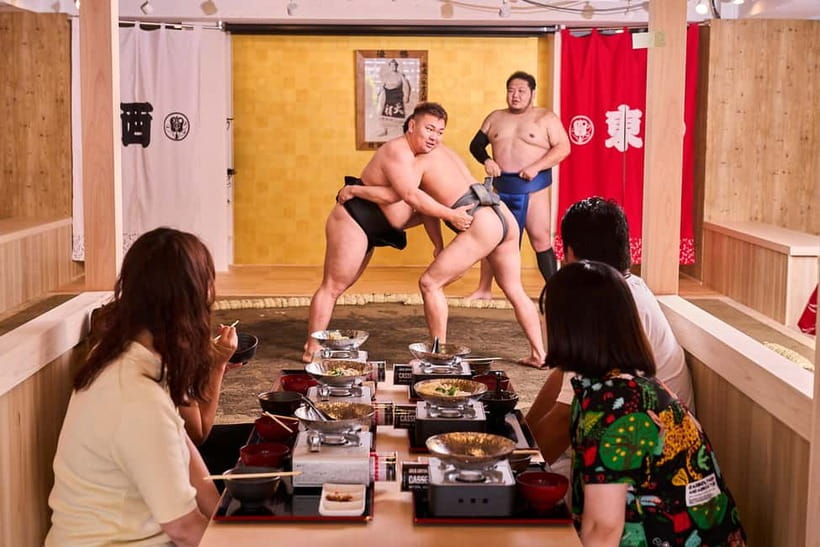
- Ryogoku, the sumo hub: You’re in the city’s most sumo-focused neighborhood, with quick access from Ryogoku Station.
- Chanko nabe with wrestler supervision: The hot pot flavor is overseen by sumo wrestlers from an actual stable.
- Ring time on the dohyo: You don’t just observe. You’ll try sumo techniques and wrestling yourself.
- Mochi pounding + mochi making: You’ll pound mochi with the wrestlers, then make and eat sweet mochi as dessert.
- Plenty of participation: This is designed as an entertaining show for adults and kids, with lots of audience involvement.
Ryogoku Makes This More Than a Show
If you’re going to do sumo in Tokyo, Ryogoku is the place. It’s where the sport has deep roots and where the vibe makes sense even before you sit down. You’ll meet near Ryogoku Station and find the venue by its big sumo-wrestler signage and flags, which is a nice change from tours that feel hidden and hard to spot.
I like that the area around Ryogoku isn’t isolated. After your 2-hour session, you can link it with other classic Tokyo stops. It’s a straightforward base for sightseeing like Asakusa, Akihabara, and Nihonbashi, and it’s also within reach of Tokyo Skytree. In other words, you’re not committing to a dead-end evening.
You can also read our reviews of more tours and experiences in Tokyo.



Your 2-Hour Flow: Chanko, Mochi, and Ring Practice
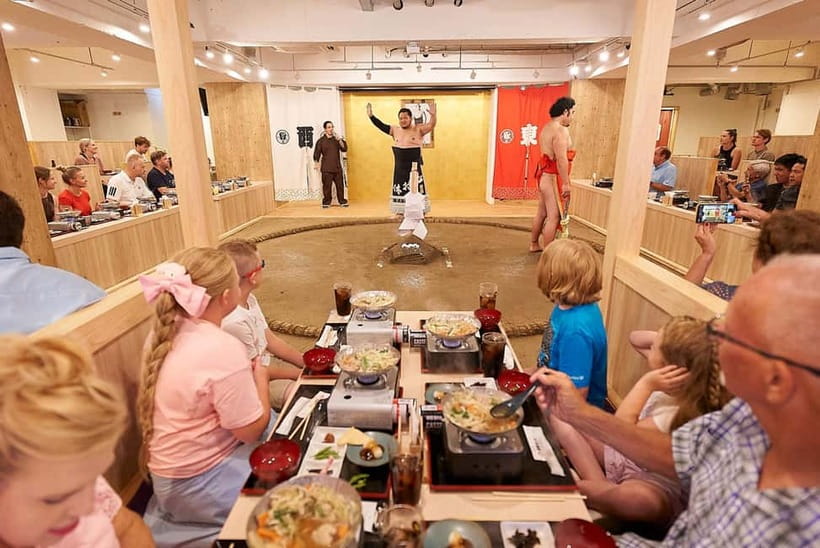
This experience runs about 2 hours, and the pacing matters because you’re doing several different activities, not just eating then watching. Here’s the typical rhythm you should expect:
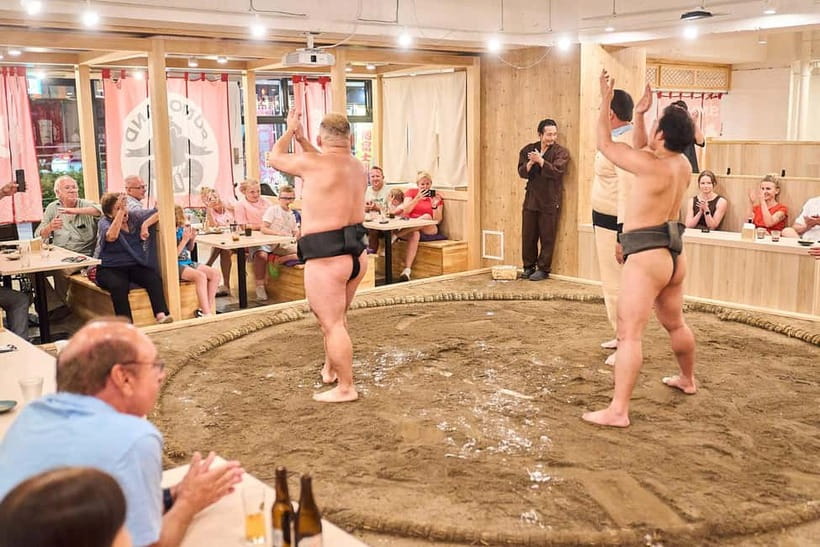
First, you’ll settle into assigned seating around the dohyo (the sumo ring). Once everyone’s in, the show ramps up fast. You’ll watch close-up demonstrations while you enjoy your meal.
Then comes the food-and-culture block: chanko nabe. It’s served hot pot style, and it’s not treated like a side dish. It’s part of how sumo wrestlers fuel training and body weight goals, so eating it while watching makes the whole experience click.
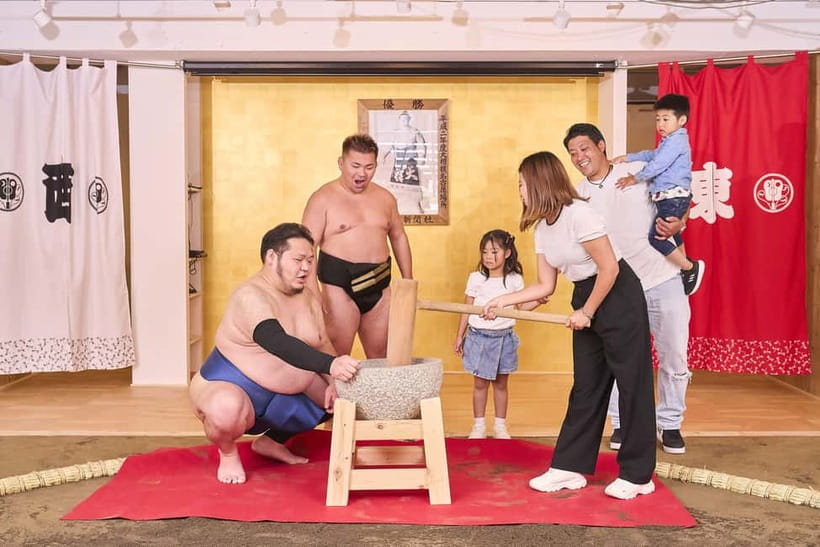
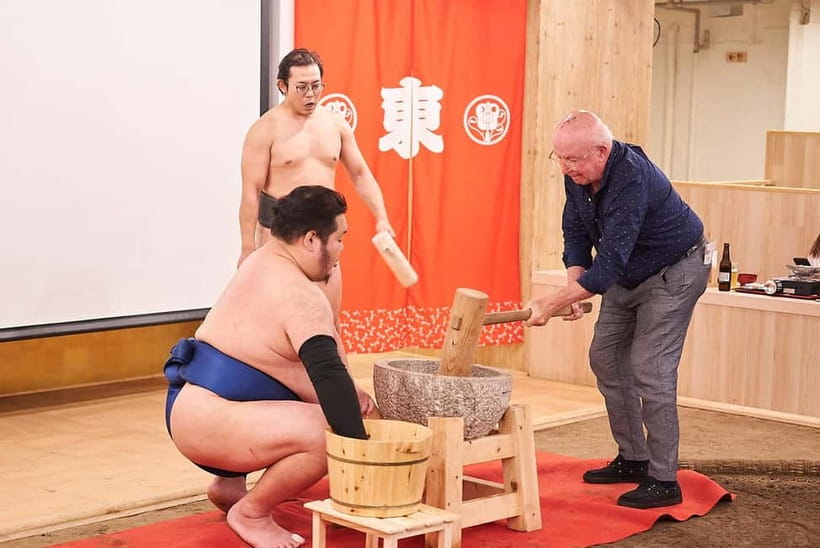
Next, the mochi moment. You’ll see mochi pounding explained and demonstrated in a traditional way, and you’ll get to join in by pounding mochi with the wrestlers. You’ll also make sweet mochi and eat it as dessert.
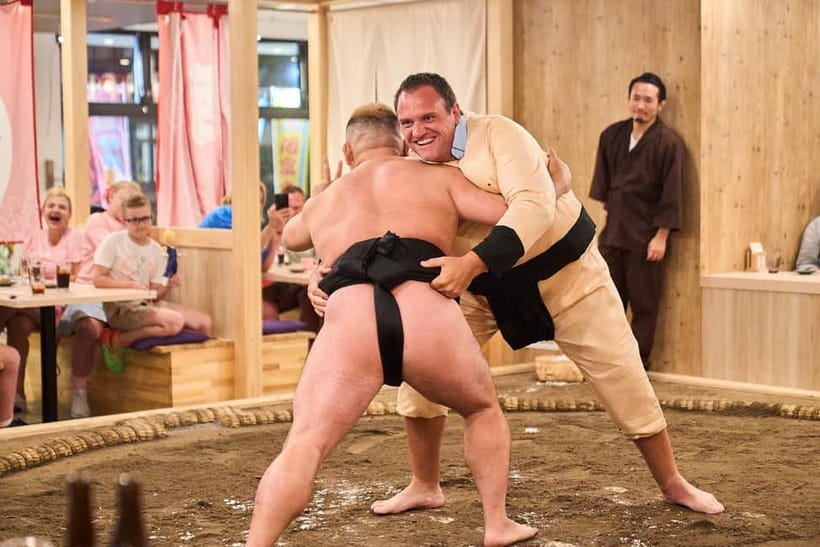
Finally, you get the thing most people came for: you’ll try sumo wrestling and techniques directly with wrestlers on the dohyo. This part is interactive and meant to be fun, including for children.
Chanko Nabe: The Wrestler Meal That Explains the Sport
Chanko nabe is the big meal here, and it’s one reason this tour feels more authentic than a quick performance. This isn’t just a generic “Japanese meal.” The flavor is supervised by sumo wrestlers from an actual stable, which means you’re eating something closer to what’s meant to support training life.
The hot pot format also helps. It’s comforting and filling, and it works well in short sessions because it keeps everyone fed while the show continues. In the experience, people consistently point out that the food is both delicious and satisfying, and that it can feel unexpectedly good for something included in the price.
Practical tip: bring a camera, but also bring some room in your appetite. Chanko nabe is filling enough that it can be a real meal, not a snack.
Mochi Pounding: Tradition You Can Actually Feel
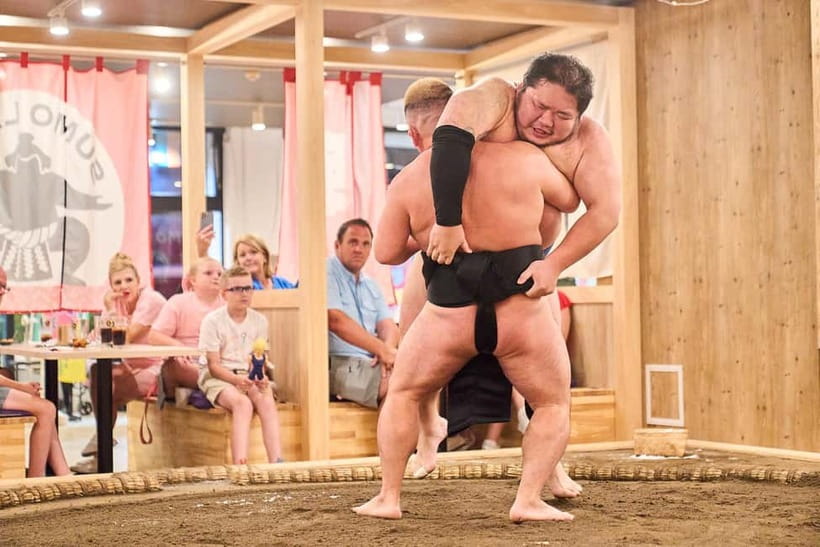
Mochi pounding sounds simple until you’re doing it with trained wrestlers standing right there. In this experience, you’ll watch a mochi pounding demonstration and learn about the traditional process, then you’ll pound mochi yourself as part of the activity.
This is one of the parts that’s easiest to remember because it’s physical and visual at the same time. You get the story—how mochi is made through pounding—and then you get the hands-on part, which makes it stick.
After the pounding, you’ll make sweet mochi and enjoy it for dessert. That last step is important. You’re not just watching tradition, you’re tasting the result, while the session is still fresh in your head.
Trying Sumo on the Dohyo (Without Needing to Be a Wrestler)
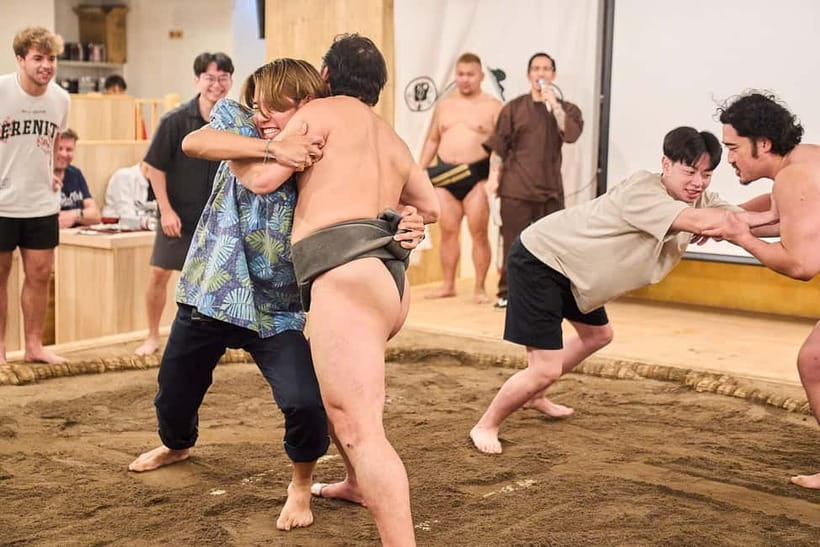
The coolest element is the ring access. You’ll sit close to the action and watch powerful wrestlers up front, then you’ll practice yourself on the dohyo.
This is not the serious, early-morning training version of sumo. The whole point is entertainment plus learning—so you’ll get technique guidance and a chance to try basic wrestling moves in a safe, controlled way.
What I like about the way it’s set up is that it gives you two perspectives at once:
- you see how a match looks up close, with wrestlers right in front of you
- you experience what it feels like to engage with their strength and balance
Many people highlight the interaction as the difference-maker. You’re encouraged to participate, and the energy from the wrestlers and the MC keeps it light. So yes, it’s cultural, but it’s also genuinely a good time—especially if you’re traveling with kids or teens.



Former Pros Teach It Like a Craft, Not a Lecture
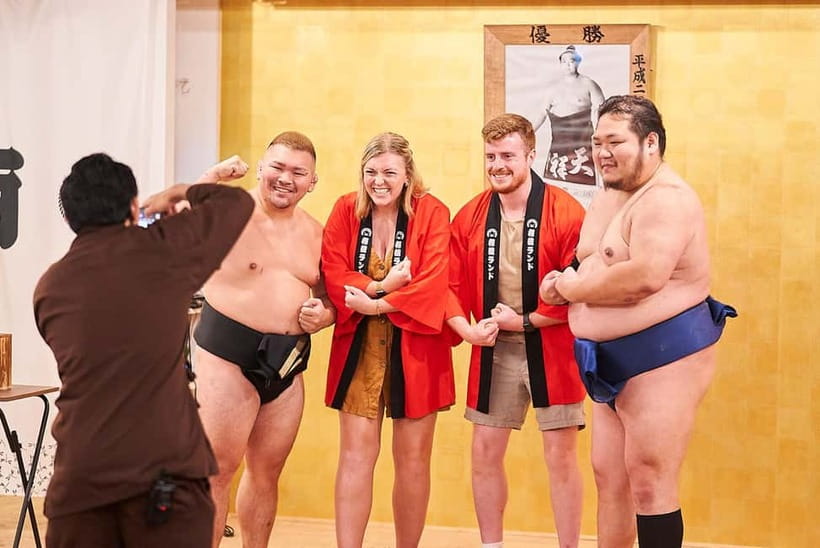
A big part of the value here is that the instruction isn’t delivered like a museum talk. Former pros and sumo wrestlers supervise the meal and run the ring and mochi activities, so the lesson comes through actions: how to move, how to grip, how to respond, and how the food fits the lifestyle.
Even when you’re just watching, you’ll often catch little nuggets that make sumo feel less mysterious. You’re learning the sport as something people live, not just something that happens on TV.
Also, the experience is set up for both adults and children. That matters because sumo can feel intimidating at a distance. Here, it’s packaged with participation so you don’t feel like an outsider.
Price and Value: Is $103 Worth It?
At $103 per person for about 2 hours, this is not the cheapest Tokyo activity. But it’s also not only a show. You’re paying for a bundled experience that includes:
- chanko nabe meal
- mochi pounding and mochi making
- sumo wrestling and technique practice with wrestlers
- close-up ringside seating
When a tour includes a meal and multiple hands-on segments run by actual sumo wrestlers, the value becomes more obvious. You’re not buying one “moment.” You’re buying a sequence of them—food, dessert, practice, and performance, all in one session.
If you’re comparing alternatives in Tokyo, this type of experience often costs similarly or more once you add up tickets, food, and separate activities. Here, the meal and participation are part of the same event.
Practical Tips: Seats, Food Rules, and What to Bring
This is where a little prep saves stress.
Bring: a camera and comfortable clothes.
Rules: smoking is not allowed.
Seating details you should know
Seats are assigned by the venue. You can’t request or choose specific seats. That can affect your view, especially if you’re sensitive to sightlines.
There’s also an important note for families: in standard seats, it can be dangerous to hold a child on your lap. If you’re booking for a standard-seat setup, reserve for the exact number of people. Box seats are safer for this situation: box seats allow seating up to six people and may make it possible to hold a child on your lap.
Food preferences and restrictions
- Vegetarian and vegan meals can be provided if you notify at least two days before.
- Gluten-free can also be provided with at least two days notice.
- Halal meals cannot be provided, but you’re allowed to bring your own food.
Mobility note
Wheelchair users: the experience is not suitable.
If you fit those categories, plan carefully. For everyone else, the bigger “practical” challenge is simply arriving on time so you don’t miss the start while everyone gets seated.
Who Should Book This Sumo Experience?
I think this is a strong match if you want sumo in a format that’s easy to enjoy on day one of Tokyo.
Best fit:
- First-time sumo fans who want more than watching clips
- Families with kids or teens, since participation is built in
- People who like food experiences that connect to culture and daily life
- Travelers who want short, high-energy activities without complicated planning
Less ideal if:
- You’re expecting strict, formal morning training style sumo. This is designed as an entertaining experience.
- You’re traveling with mobility needs, since it’s not wheelchair accessible.
- You need guaranteed seating locations. Assigned seating is part of the deal.
Should You Book It?
Yes, if you want an experience that mixes sumo up close with real food and hands-on activities in a clean, timed 2-hour package. The chanko nabe and mochi moments add texture beyond the ring, and the interaction is the point, not a bonus.
If your top goal is only watching elite professional bouts, this might not satisfy that alone. But if your goal is to understand sumo culture through participation—while eating, making dessert, and trying moves on the dohyo—this is one of the most straightforward ways to do it.
FAQ
How long is the Tokyo Sumo Experience
It lasts about 2 hours.
Where do I meet for the tour
The store is on the first floor near Ryogoku Station. Look for a large sumo wrestler sign and flags.
Is the experience available in English
Yes. Instruction is provided in English and Japanese.
What meal is included
You’ll have chanko nabe, a hot pot dish.
Do I get to make mochi or only watch
You’ll pound mochi with the wrestlers, and you’ll also make sweet mochi to enjoy for dessert.
Can I try sumo wrestling myself
Yes. You’ll get the chance to try sumo techniques and wrestling on the dohyo with the wrestlers.
Can vegetarian, vegan, or gluten-free meals be provided
Vegetarian and vegan meals and gluten-free meals can be provided if you notify the provider at least two days before your reservation.
Is a halal meal available
Halal meals cannot be provided, but you’re allowed to bring your own food.
Can I choose specific seats
No. Seat locations are assigned by the venue and you can’t request specific seats.
Is the experience wheelchair accessible
No. It is not suitable for wheelchair users.