REVIEW · TOKYO
Tokyo: Robot Piloting Attraction Ticket
Book on GetYourGuide →Operated by MOVeLOT.,inc · Bookable on GetYourGuide
Piloting a mech in Tokyo feels unreal. At MOVeLOT’s Robot Base Lab, you step into a sci-fi rescue story and then pilot a real robot prototype that fires blasters.
What I love most is how rare the experience feels, because this is one of the only places in Japan where you can actually take the controls. I also liked the way the hosts—Tomo (and Atsu) included—talk through the tech clearly, so it doesn’t feel like a black box.
One thing to keep in mind: the robot is still early-stage, so you currently control only the arms while the legs are removed, and your hands-on robot time is about 10 minutes per person.
In This Review
- Key things that make this robot-base ticket worth your time
- First Contact: what’s the “Robot Base” story and what you actually do
- The MOVeLOT setup in Ryogoku: easy to find, small space to manage
- Safety briefing and photo stop: it’s short, but don’t treat it like a formality
- VR shooting games: the warm-up that makes you ready for real controls
- Programming the launch: where the experience turns from game to tinkering
- Robot pilot experience with ASTRO: the main event, and its limits
- Hosts and instruction: why people keep recommending this
- Price and value: $32 for 50 minutes—what makes it feel fair
- Who should book this (and who might skip it)
- Practical tips so you get the most out of your slot
- Should you book this Tokyo robot piloting ticket?
- FAQ
- How long is the experience?
- Where do I check in?
- What activities are included?
- What languages are used by the instructor?
- What can I control on the robot?
- Is the experience good for kids?
- Are there height or weight limits?
- Do I need special insurance?
Key things that make this robot-base ticket worth your time
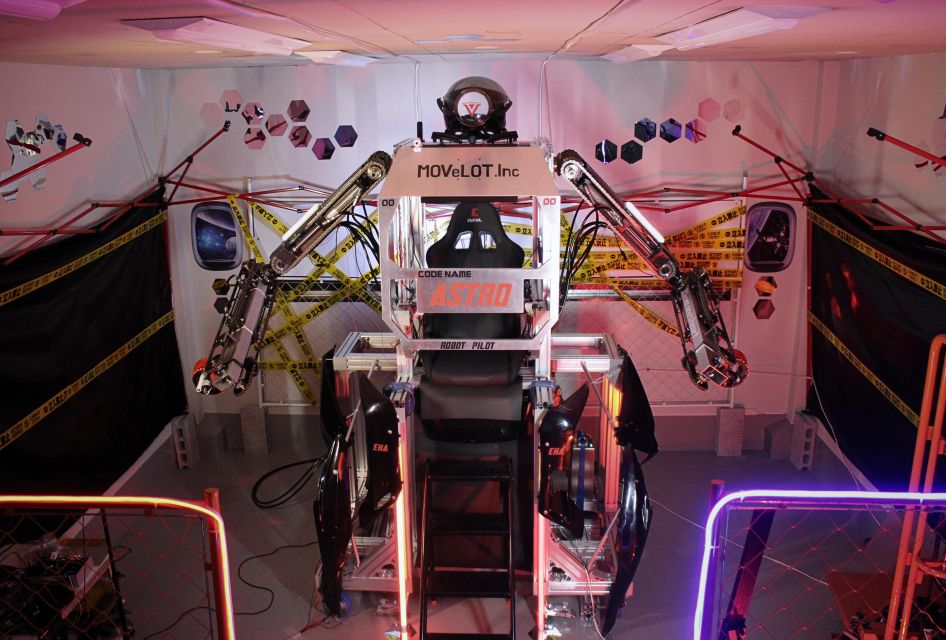
- Human-piloted robot experience you control yourself, not just watch
- Prototype ASTRO action is limited to arm movement and blaster shooting right now
- VR shooting games that match the action theme (FPS-style)
- Programming practice where you set up controls like a mini build/code session
- Small group of up to 4 so you get real guidance while you’re learning
First Contact: what’s the “Robot Base” story and what you actually do
This is not a museum stop. You come for a 50-minute session built around a sci-fi plot: a base on another planet gets attacked, and you’re recruited to protect it like you belong in an anime episode. The story gets used as a structure for the activities, so you’re not just wearing a headset and pressing buttons. You’re moving through a mission.
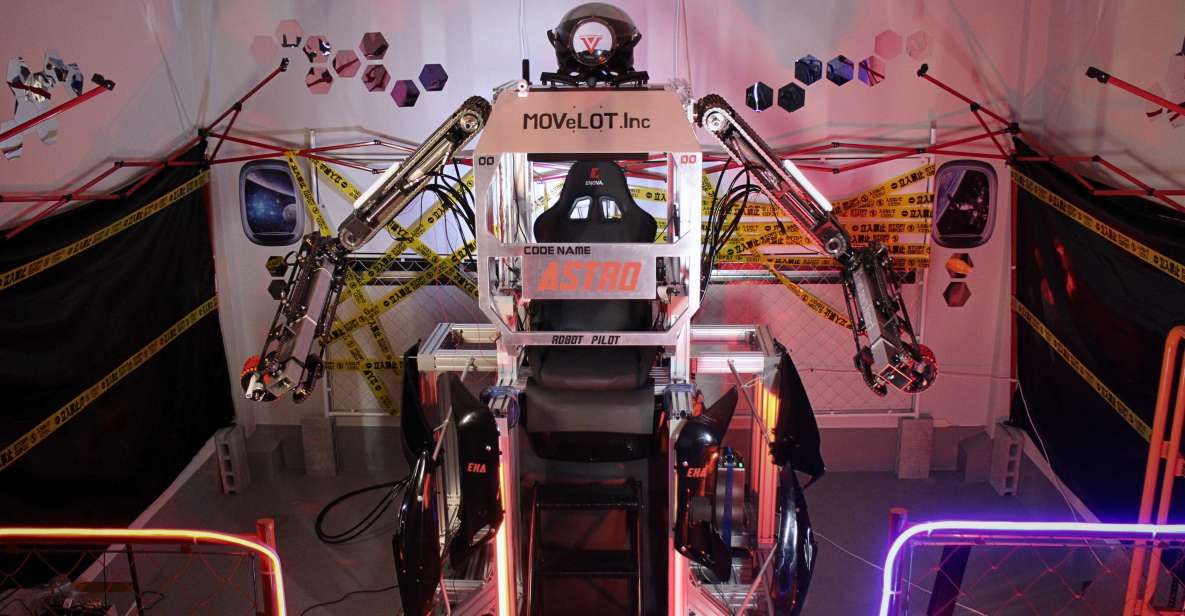
The day’s flow usually starts with a brief orientation and safety talk from the staff at MOVeLOT. Then you’re guided into the hangar-world scenario, where you prepare for the attack and climb into the robot prototype (ASTRO). After that, the real payoff kicks in: VR shooting games and the robot pilot portion where you control what you can—arms and blasters—while staff stand close to keep you on the safe path.
If you’re a Gundam/robot/VR fan, I think you’ll get the most fun here, because the whole session is built to scratch the same itch: hands-on mecha energy, with tech explanations attached.
You can also read our reviews of more tours and experiences in Tokyo


The MOVeLOT setup in Ryogoku: easy to find, small space to manage
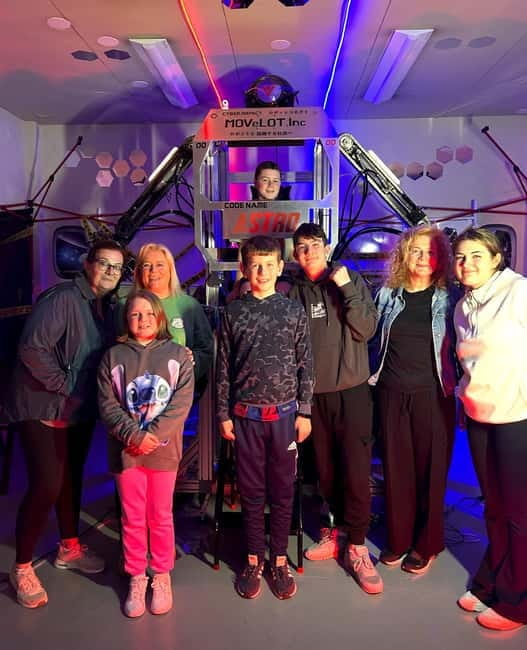
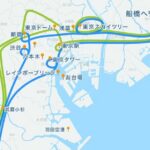
The meeting point is at Robot Base / MOVeLOT (MOVeLOT株式会社). Plan to arrive a bit early because there’s basically no time cushion. The venue is a short walk from Toei Ryogoku Station (Oedo Line), Exit A3 (about 7 minutes) and also reachable from JR Ryogoku Station (about 13 minutes).
Here’s a practical detail that matters: the room where you operate the robot is described as a bit tight, and you’ll be moving in a controlled area. That means you’ll want comfortable shoes and a calm pace—don’t try to “muscle through” the choreography. The staff will guide you, and following their directions is part of making the experience smooth.
Also bring something simple like a drink. Water helps, because you might go from briefing to VR to robot control without much downtime.
Safety briefing and photo stop: it’s short, but don’t treat it like a formality
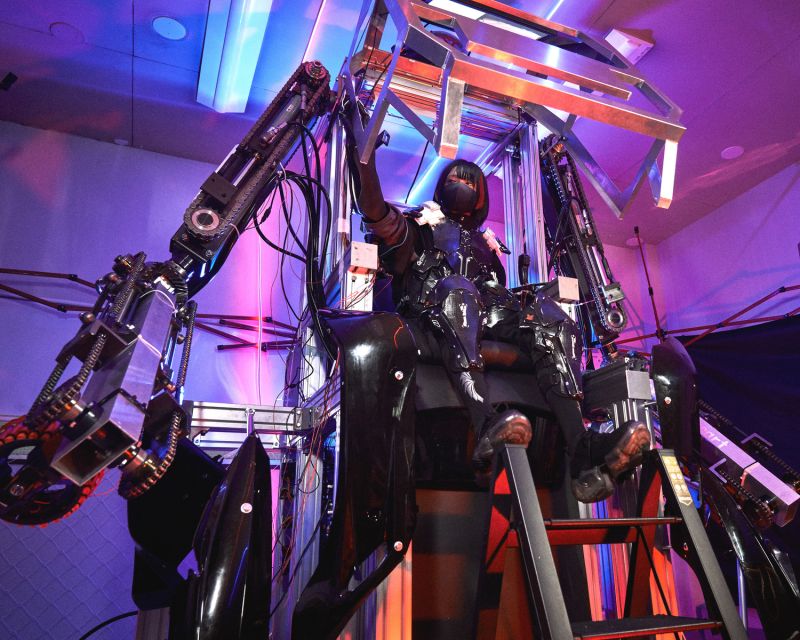
Your session begins with staff-led instruction and a safety briefing, plus a photo stop early on. That matters more than it sounds. The robot you pilot is a prototype, and the controls you get are intentionally limited. You’ll be told what you can and can’t do, and how the robot reacts when you move.
Because the robot is still in development, it’s not a “full mech simulator.” You’ll focus on the actions the prototype supports. That makes the briefing genuinely useful—if you tune in, you’ll waste less time figuring out your range of motion during the actual robot portion.
And if you’re thinking about photos: the staff environment feels like a staged mission. You may get opportunities for cosplay-style space soldier looks and photos in costume, depending on what the group session is set up to include.
VR shooting games: the warm-up that makes you ready for real controls
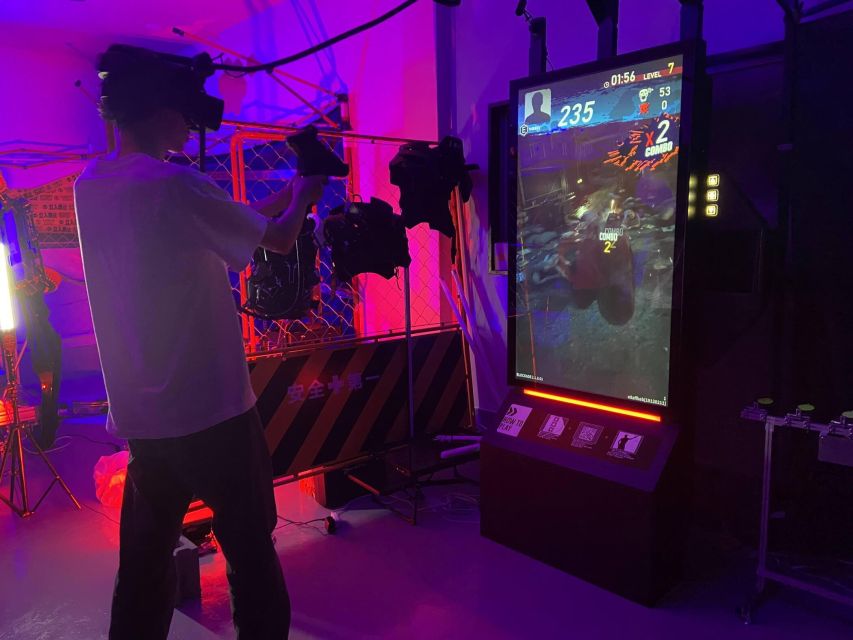
Before you get hands-on with the robot, you go through VR shooting games. Expect action. This is FPS-style target practice in VR, and it’s a nice bridge between “story mode” and “mechanical control mode.”
What I like about this part is the skill transfer. VR teaches you the basic rhythm: aiming, reacting quickly, and working inside a system with rules. Then when you jump from VR into robot piloting, your brain already understands the idea of commands and feedback.
Also, don’t overthink the tech. A lot of people come in with casual VR experience, and the staff guide you. In one case, a kid who already played VR at home adapted quickly—so you don’t need to be a VR veteran to enjoy it.
Programming the launch: where the experience turns from game to tinkering
One of the more satisfying parts is the chance to program the launch of the robot. In plain terms: you don’t just press “start.” You set up control logic that lets you perform your role in the mission.
The programming portion is also described as a Lego-Technik style mini robot build for some sessions—where you assemble and then put the program together on a laptop. If that sounds geeky, that’s the point. This isn’t just about shooting. It gives you a taste of how control systems are built and tested.
Why this matters for value: when you pay for a short experience, you want at least one part that makes you feel smarter at the end. The programming gives that. You leave knowing there’s engineering behind the action, not just spectacle.



Robot pilot experience with ASTRO: the main event, and its limits
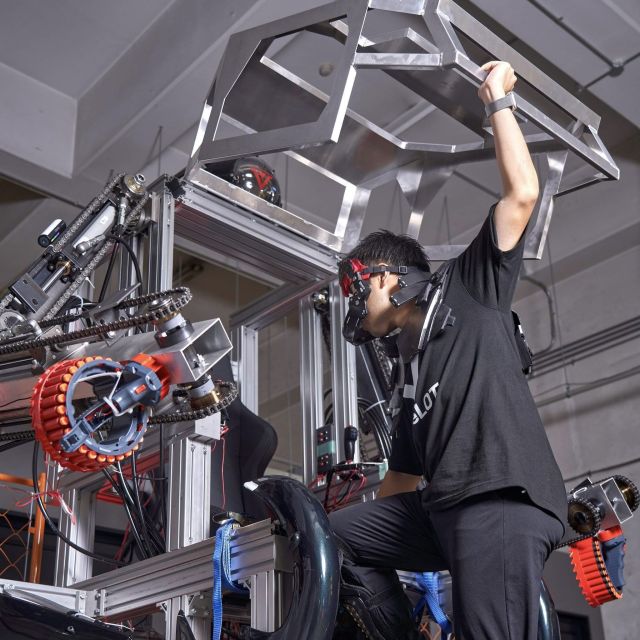
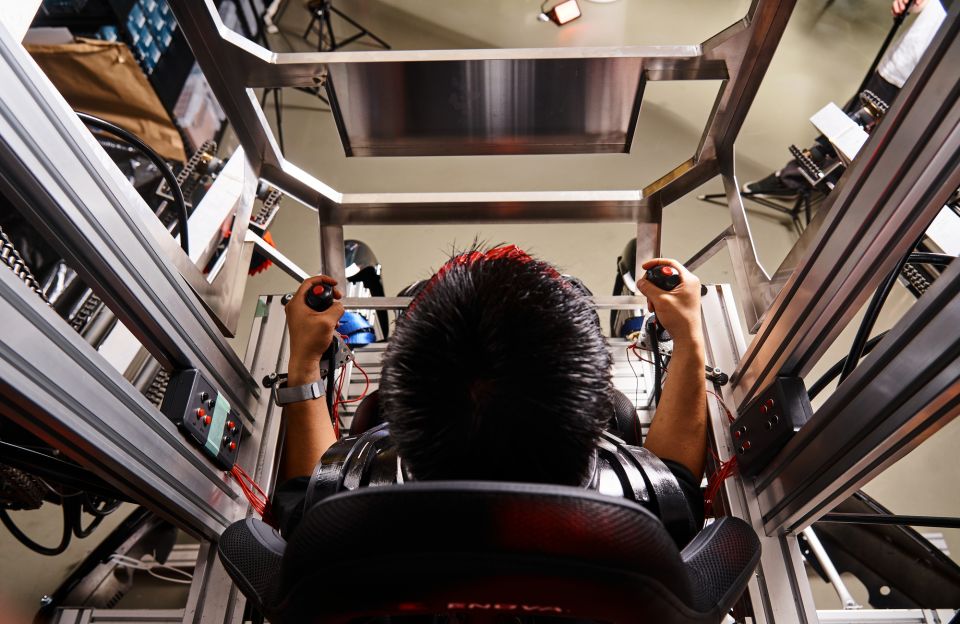
Now the big moment: you pilot the robot. The session uses a “climb in and protect the base” setup, and you’re instructed to eliminate unidentified life forms around the hangar—then you engage the enemy threat in the story context.
Here’s what’s important and what you should expect to control:
- The robot is a prototype
- You can move the arms
- You can shoot the blasters at this stage
- The legs are removed to fit into the lab
That limitation is not a dealbreaker. It actually helps set expectations so you don’t feel like the experience is unfinished in a disappointing way. You still get the wow-factor of controlling a real, human-sized machine—not just a joystick view.
Time also matters. The piloting portion is about 10 minutes per person, and it can get shorter if the group is near the top end of the small-group limit. If you’re in a group larger than 3, you might feel that time squeeze. So if you’re aiming for maximum robot-time, keep your group lean and arrive on time.
One more practical thing: your movement is part of the control loop. There’s a small operating space, and staff will keep you aligned. So think: slow, accurate, follow instructions.
Hosts and instruction: why people keep recommending this
The best part of this experience is the human factor. People repeatedly mention that the hosts are warm, energetic, and really helpful. Tomo gets singled out for being welcoming and enthusiastic. Others talk about guides like Atsu being informative and supportive.
You can feel the staff’s purpose here. This isn’t “entertainment first.” It’s education-with-action. Staff explain what you’re doing and why the prototype behaves the way it does. They also share inspiration and stories about robot development—so you’re not just playing. You’re getting a glimpse of how developers think and what they dream about building next.
That’s one reason the reviews lean so positive. When the staff are great, even a limited prototype feels like a win, because you’re learning while you play.
Price and value: $32 for 50 minutes—what makes it feel fair
At about $32 per person for a ~50-minute ticket, you might compare this to a theme-park ride. Don’t. This is closer to paying for access to a real R&D environment plus VR entertainment plus guided robot control.
The value comes from three things:
1) Rare access: this is billed as the only facility in Japan where you can pilot a robot prototype yourself.
2) Multiple formats: VR shooting + programming + real robot control within one session.
3) Human coaching: staff instruction turns what could be a short gimmick into a skill-building moment.
Is it expensive in absolute terms? It’s not cheap. But for Tokyo, where novelty can cost plenty, I think it’s a fair price if you’re specifically interested in robotics, VR, or mecha-style fandom.
If you want a full-day deep immersion, this isn’t that. But if you want a concentrated hit of real tech and real motion, it fits the bill.
Who should book this (and who might skip it)
This is a strong match if you:
- Love robot anime, mecha, and VR
- Want hands-on tech time rather than sightseeing
- Like structured, guided activities with clear safety direction
- Enjoy learning how systems work, even if you’re not a hardcore engineer
It’s probably not a fit if you:
- Need a full-motion, fully articulated mech simulation (the current prototype limits arm movement)
- Are looking for a slow-paced “hang out” experience (there’s an expectation you keep moving and be on schedule)
There are clear restrictions too. The ticket isn’t suitable for children under 11, people under 110 cm, pregnant women, people with mobility impairments, or people over 100 kg (220 lbs). If you fall into any of those groups, you should skip this one.
Practical tips so you get the most out of your slot
These little choices can make the difference between a fun session and a rushed one:
- Arrive on time. If you’re late, the time slot can’t be extended.
- Wear comfortable shoes. You’ll stand and move in a controlled space, and you’ll be inside the lab environment.
- Bring a passport or ID card. You’ll need it for check-in.
- Bring a drink. Keep your energy up across VR and the robot portion.
- Assume the robot pilot time is fixed. It’s about 10 minutes per person, and it may shorten further when the group is full.
One more item for planning: the safety setup notes that visitors must have overseas insurance in case of injury. Make sure your policy covers you before you go. That’s not the place to hope.
Should you book this Tokyo robot piloting ticket?
I’d book it if you want something genuinely different from standard Tokyo sightseeing—a hands-on tech moment with real robot control and VR action wrapped in a fun story. The big reason is simple: you pilot a real human-piloted robot prototype, and staff like Tomo and Atsu make the whole session feel welcoming and understandable.
Skip it if you’re expecting a full-scale, unrestricted mech simulator or if your schedule can’t handle the on-time requirement. Also, if you’re looking for a long event, remember the total time is about 50 minutes, with robot control around 10 minutes per person.
If robotics is even a little bit your thing, this is one of those tickets that feels worth the cost because it’s rare access—straight into the future.
FAQ
How long is the experience?
The ticket duration is about 50 minutes. The robot piloting experience itself lasts about 10 minutes per person.
Where do I check in?
Check in with staff at MOVeLOT. Inc. It’s about a 7-minute walk from Toei Ryogoku Station (Oedo Line) Exit A3, and about a 13-minute walk from JR Ryogoku Station.
What activities are included?
Your ticket includes VR shooting games, programming the launch of the robot, and the robot pilot experience.
What languages are used by the instructor?
The instructor supports English and Japanese.
What can I control on the robot?
Right now, the robot is a prototype and you can only move the arms and shoot the blasters. The legs of the robot have been removed to fit into the lab.
Is the experience good for kids?
It’s not suitable for children under 11.
Are there height or weight limits?
Yes. It’s not suitable for people under 110 cm. It’s also not suitable for people over 100 kg (220 lbs).
Do I need special insurance?
Because safety measures are taken, visitors must have overseas insurance in case of injury.