REVIEW · TOKYO
Tokyo: Real Ramen & Dumpling Cooking with Master Chef
Book on GetYourGuide →Operated by LLC en · Bookable on GetYourGuide
Ramen gets real when you cook it yourself. This Tokyo class is all hands-on, led by English-speaking chef Yoshi and his assistant Amo, with a background that goes beyond one local shop. I love how practical the steps feel, from semi-soft eggs to the ramen topping build, and I also love the way the instruction stays friendly and patient even when you’re doing it for the first time. One thing to consider: if you want the vegetarian ramen, you must tell them in advance, because they can’t promise same-day changes.
The setting and pace are designed for a small group (they mention up to four), so you’re not lost in a crowd. You meet at Ekoda(Egota) Station in Nerima, and pickup is included with a 15-minute wait at the out-of-ticket gate. The schedule runs for 2 hours, so plan to arrive early and keep things moving if you want the full experience.
Finally, this is good value if you want more than a meal: you get what you made (ramen plus 5 gyoza), and you also get the recipes sent afterward. Expect lots of questions and some ramen talk, including insider stories and amusing anecdotes from the wider ramen world.
In This Review
- Key Highlights That Make This Worth Your Time
- Why This Tokyo Ramen Class Feels Different From a Usual Meal
- The 2-Hour Plan: What You Actually Do, Step by Step
- Semi-Soft Nitamago Eggs
- Prep Ramen Toppings Like a Builder
- Make the Gyoza Filling and Fold Them Right
- Chashu: Flavoring and Cooking the Pork
- Soup and Noodles: The Moment the Bowl Comes Alive
- Assemble the Final Ramen Bowl
- Who Leads This Class and Why Their English Matters
- What You Eat: Included Portions and Menu Details
- Vegetarian Ramen Option: The One Rule You Must Follow
- Getting There: Ekoda Station Pickup and Train Tip
- Small Group Size: Why Up to Four People Changes the Experience
- Value: Is $99 per Person Worth It?
- What Makes This a Great Family Activity in Tokyo
- The Finishing Touches: Recipes, Merchandise, and Repeatability
- Should You Book This Tokyo Ramen & Gyoza Cooking Class?
- FAQ
- What dishes are included in the class?
- How long is the cooking experience in Tokyo?
- Is the instruction offered in English?
- Is vegetarian ramen available?
- Where do we meet for the class?
- How early should I arrive?
- Which train should I take to reach Ekoda(Egota) Station?
- Do I get recipes after the class?
- Can I cancel or pay later?
Key Highlights That Make This Worth Your Time
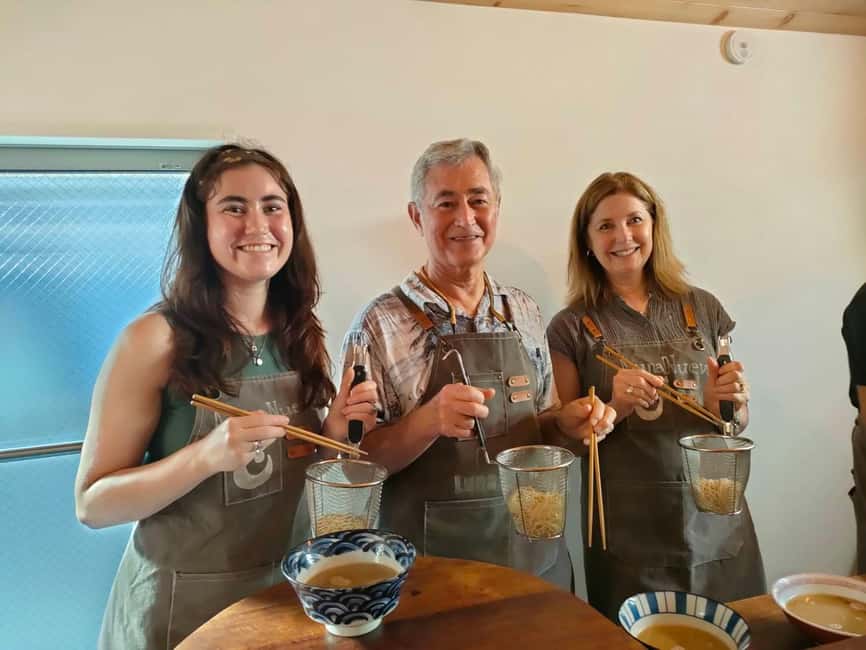
- Pro-level ramen workflow, from nitamago and chashu flavoring to topping assembly
- Gyoza practice with proper folding, then cooking them to finish the plate
- English instruction by Yoshi and Amo, plus restaurant experience abroad
- Small group size possibility (up to four), which helps you keep up
- Vegetarian ramen available with advance notice, not on the fly
- Recipe sharing after the class, so you can repeat it back home
Why This Tokyo Ramen Class Feels Different From a Usual Meal
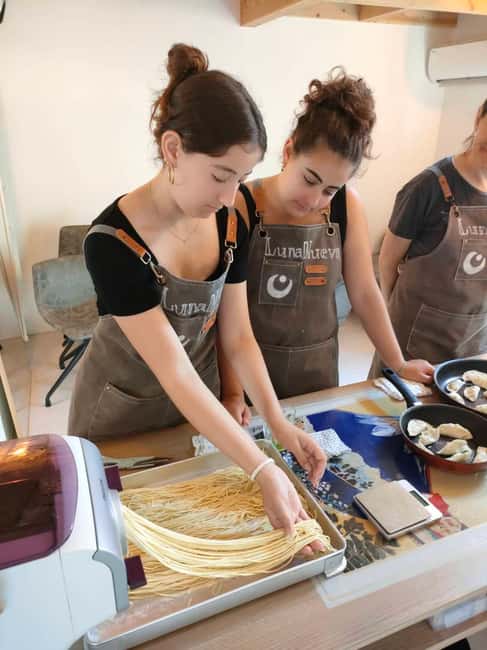
Tokyo has plenty of ramen, but this experience gives you something rare: the process behind it. Instead of just watching or tasting, you’ll build ramen step by step—eggs, toppings, gyoza, then soup and noodles—so you understand why the bowl tastes the way it does.
I like that the class treats ramen as a chain of small skills. You start with semi-soft boiled eggs (nobody nails these on their first try without guidance), then move through topping prep and gyoza folding. By the time you assemble the final bowl, you’ve done enough work that eating it feels like proof, not just a reward.
The other big difference is the teaching style. The instructor team (Yoshi and Amo) are used to explaining in English, and that matters because ramen has a lot of tiny terms and techniques. If you’ve ever felt intimidated by cooking classes, this one aims to keep you comfortable while still pushing you to do real steps.
You can also read our reviews of more tours and experiences in Tokyo.



The 2-Hour Plan: What You Actually Do, Step by Step
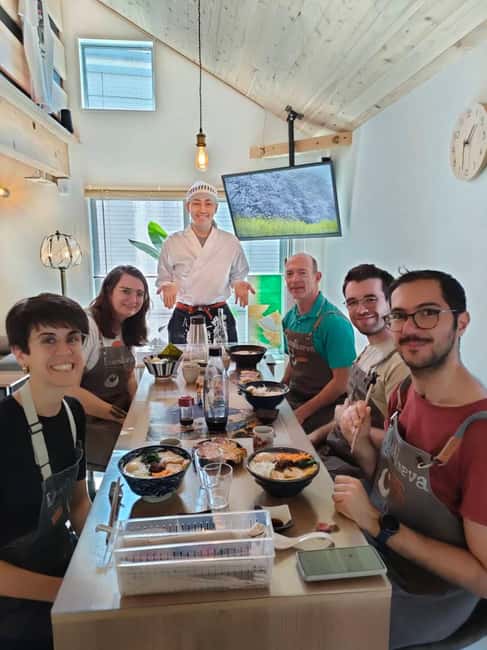
This is a tight 2-hour session, so the order matters. You’ll start with a few foundation tasks, then build toward the ramen bowl, finishing with assembly so everything lands while it’s at its best.
Semi-Soft Nitamago Eggs
First up is crafting semi-soft boiled eggs, which become nitamago—seasoned running yolk eggs. Eggs like this aren’t about fancy tools; they’re about timing and consistency, and that’s why having an experienced teacher helps.
You’ll also learn how seasoning fits into the flavor plan. The egg isn’t an afterthought. It’s one more “layer” that works with the soup instead of sitting on top of it.
Prep Ramen Toppings Like a Builder
Once the eggs are handled, you shift into ramen topping prep. The included ingredients point you toward the classic structure: seaweed, sliced spring onion, and wood ear fungus. You’ll also work on the overall topping mix so the bowl has texture, aroma, and bite.
What I like here is the logic. Ramen toppings aren’t random add-ons. They’re there to balance richness (soup and pork) with freshness (greens) and chew (fungus and seaweed).
Make the Gyoza Filling and Fold Them Right
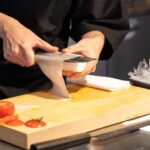
Then comes gyoza. You’ll prep the ingredients, slice and combine what you need, and move on to folding. The folding part is where many first-timers get frustrated—too thick here, too open there—but this is exactly the skill you can practice safely in a class.
After folding, you’ll cook the gyoza. The goal is a crisp finish with the right level of doneness. The class includes sizzling up the gyoza to perfection, so you’ll see how heat and timing change the result.





Chashu: Flavoring and Cooking the Pork
Next you’ll deal with chashu—slow cooked chicken in this class’s menu. You’ll infuse it with its delightful flavors and then handle it as it finishes cooking.
This part matters even if you’re not a meat person, because chashu teaches you what “braised flavor” feels like. You learn the difference between plain cooked meat and meat built for ramen: tender, savory, and able to stand up in a hot bowl.
Soup and Noodles: The Moment the Bowl Comes Alive
After toppings and proteins, you’ll craft the soup. Then it’s noodle time: boiling the noodles and learning the oh-so-cool noodle draining technique.
That draining technique is more than a trick. It helps control texture and temperature, which affects how noodles sit in the bowl. If you’ve ever eaten ramen where the noodles feel weirdly thick or uneven, this is the kind of step you’ll appreciate once you’ve seen it done properly.
Assemble the Final Ramen Bowl
Finally, you artfully assemble toppings onto the ramen. This is where everything you practiced turns into the finished bowl you came for.
If you’re cooking with a family member, this is also the most satisfying moment. You get to see everyone’s work—eggs, toppings, gyoza—come together in one place.
Who Leads This Class and Why Their English Matters
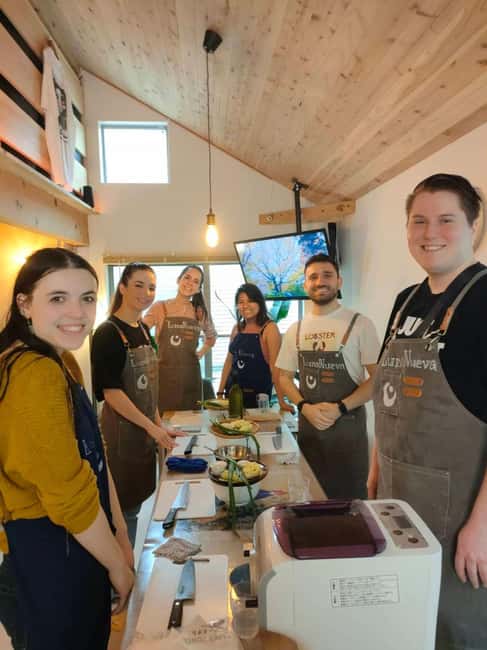
You’re learning from Yoshi and Amo, who bring a professional background and a teaching mindset. The chef is described as a pro ramen chef who has run his own restaurant in Sydney, Australia, and has trained in renowned ramen spaces. That’s a big deal for English speakers in Japan, because cooking vocabulary doesn’t always translate cleanly without a teacher who’s used to explaining it.
I especially value instructors who can answer questions patiently. Ramen has many “small” variables—timing, texture, how toppings distribute. When someone like Amo and Yoshi can explain those in plain English, you’re more likely to remember what matters and skip what doesn’t.
What You Eat: Included Portions and Menu Details
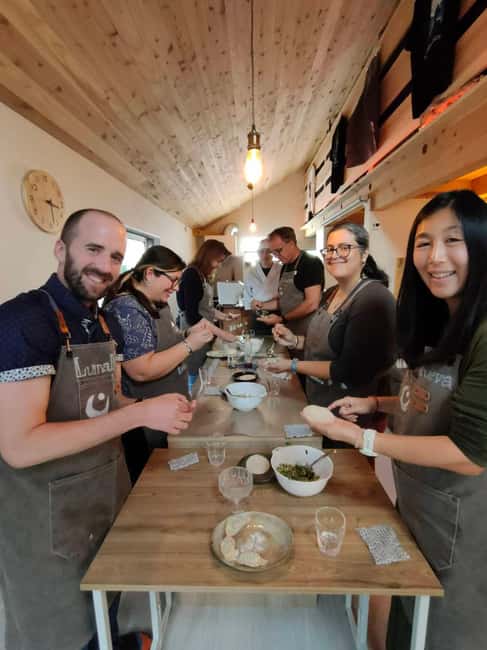
You get ramen and gyoza, plus the components that make the bowl feel complete.
Included items are:
- Ramen and GYOZA (5 pcs)
- Ramen topping
- Nitamago (seasoned running york egg)
- Chashu (slow cooked chicken)
- Seaweed
- Sliced spring onion
- Wood ear fungus
This is not a “tiny tasting class.” You’re meant to leave full with food you made. In fact, the portions can feel generous if you’re hungry after shopping and walking around Tokyo all day.
Vegetarian Ramen Option: The One Rule You Must Follow
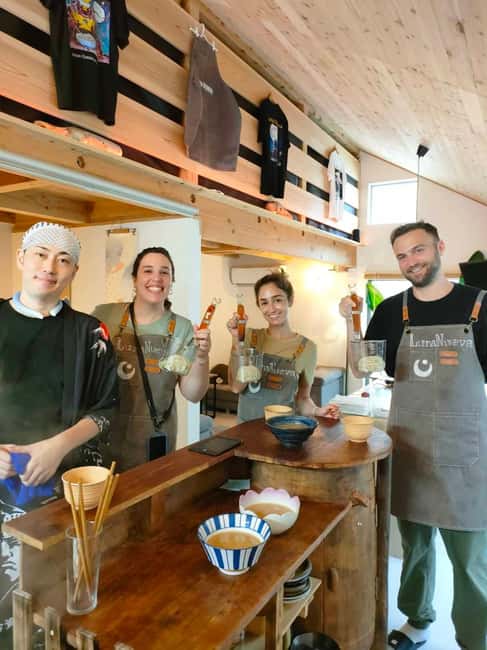
Vegetarian ramen is available, but there’s a catch: you must inform them in advance. They say they won’t be able to accommodate vegetarian requests on the same day without prior notice.
So here’s my practical advice. If you’re vegetarian (or cooking for someone who is), book with the option clearly stated as soon as you can. If you’re unsure, message before the class date and confirm what’s included and how they’ll handle it. You want peace of mind before you arrive, not during.
Getting There: Ekoda Station Pickup and Train Tip
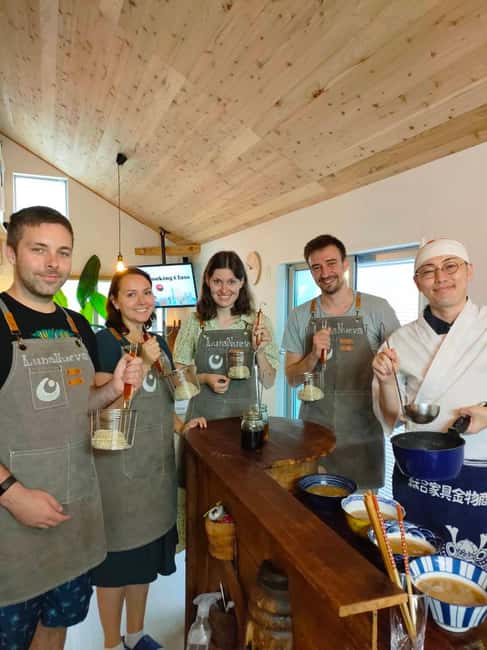
This class starts in Nerima City, with the meeting point at Ekoda(Egota) Station, 1 Chome-78 Asahigaoka, Nerima City, Tokyo 176-0005, Japan.
Two logistics points matter:
- Arrive at the meeting point at least 15 minutes early.
- Pickup is included. They’ll wait for you 15 minutes before the class at the out of ticket gate in Ekoda(Egota) station.
Transit tip: use the Seibu Ikebukuro Line, and avoid riding the Rapid train. The Rapid may not stop at Ekoda(Egota), while the local train does.
If you have WiFi only, it helps to add their WhatsApp contact so you can call when needed. They provide the phone number +81 80 7262 1175, just in case.
Also remember: late arrival might reduce class time. In a hands-on cooking class, time equals food quality and skill practice—so be early.
Small Group Size: Why Up to Four People Changes the Experience
They note there may be a small group of up to four participants. That can make a big difference, especially for folding gyoza and handling noodles. When there’s more space and attention, you’re more likely to get immediate corrections and less likely to feel behind.
For families, this size is also easier to manage. Kids and adults can ask questions, and the instructor can guide you without rushing you out the door.
Value: Is $99 per Person Worth It?
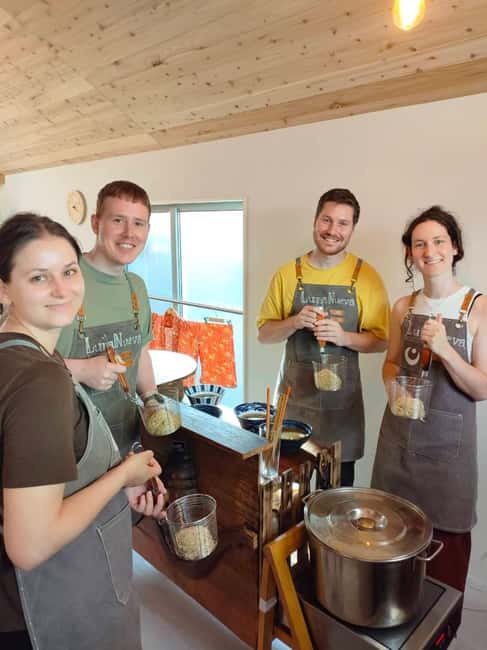
At $99 per person for a 2-hour class, you’re paying for several things at once:
- a pro ramen chef’s instruction
- hands-on cooking (not just watching)
- ramen plus gyoza with multiple included components
- recipes sent after the lesson
- English support, which is a real advantage in Japan
The value improves if you actually want to cook after Tokyo. If you’ll use the recipe email to recreate the bowl at home, the class becomes a skill purchase, not a one-night meal. If you’re only looking for ramen to eat and you’re not interested in cooking techniques, then you might decide it’s extra spend.
But if you like food, hands-on learning, and bringing something home besides photos, the price can feel fair.
What Makes This a Great Family Activity in Tokyo
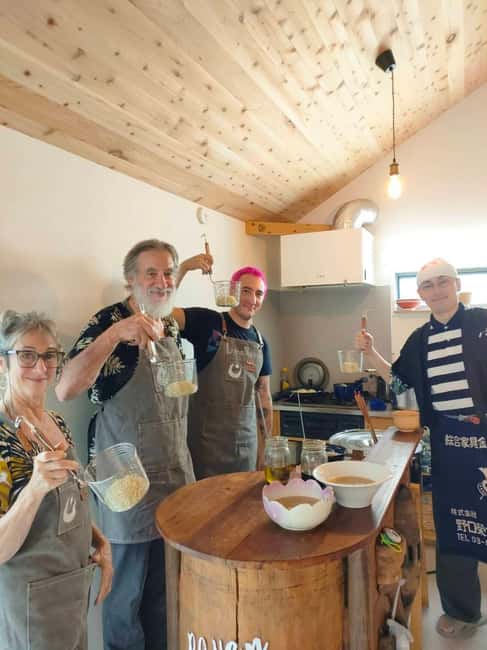
Ramen and gyoza are naturally family-friendly foods—crowd-pleasers with clear steps. This class also includes structured tasks you can share: one person handles topping prep, another does gyoza folding, and everyone gets involved in assembly at the end.
It also helps that Yoshi and Amo are described as friendly and patient, answering questions and giving clear instructions. That’s often the difference between a cooking class that feels stressful and one that feels like a fun, memorable family project.
If you want to turn your trip into more than restaurant hopping, this is a solid option.
The Finishing Touches: Recipes, Merchandise, and Repeatability
After the course, they send all recipes (the menu and the full instructions). That’s huge for repeat cooking. You’re not stuck remembering steps vaguely; you can go back to the actual list and timing you learned.
There’s also mention of complimentary merchandise and cool apparel like t-shirts, and even the option to buy a custom apron. If you’re the type who enjoys cooking as a hobby, those small extras make it feel like you’re joining a real ramen tradition, not just paying for an activity.
Should You Book This Tokyo Ramen & Gyoza Cooking Class?
Book it if you want real skills, not just a meal. You’ll learn how ramen comes together—eggs, chashu, gyoza, soup, noodles, and the assembly—guided by English-speaking instructors with restaurant experience abroad.
Skip it (or think twice) if you need vegetarian options without advance planning. The vegetarian ramen option requires prior notice, and same-day requests may not be accommodated. Also consider skipping if you’re short on time; the class is paced to stay on schedule, and being late can reduce the experience.
If you match the basics—hungry, curious, and willing to cook—you’ll likely leave with a new go-to ramen technique and a bowl that tastes like your own work.
FAQ
What dishes are included in the class?
You’ll make ramen and gyoza, and you also prepare components like nitamago (seasoned running yolk egg), chashu, toppings, seaweed, spring onion, and wood ear fungus. The class includes 5 pieces of gyoza plus ramen and toppings.
How long is the cooking experience in Tokyo?
The class duration is 2 hours.
Is the instruction offered in English?
Yes. The instructor provides instruction in English.
Is vegetarian ramen available?
Vegetarian ramen is available, but you must inform them in advance. They say they cannot accommodate vegetarian requests on the same day without prior notice.
Where do we meet for the class?
The meeting point is Ekoda(Egota) Station, 1 Chome-78 Asahigaoka, Nerima City, Tokyo 176-0005, Japan.
How early should I arrive?
Please arrive at least 15 minutes before the class starts so you can get settled. Pickup is included, and they will wait for you for 15 minutes at the out-of-ticket gate in Ekoda(Egota) station.
Which train should I take to reach Ekoda(Egota) Station?
Use the Seibu Ikebukuro Line, not JR. The local train stops at Ekoda(Egota) Station, while the Rapid train is not recommended.
Do I get recipes after the class?
Yes. They send all recipes after the lesson, including the menu.
Can I cancel or pay later?
You can cancel up to 24 hours in advance for a full refund. You can also reserve now and pay later, so you don’t pay immediately when booking.