REVIEW · TOKYO
Tokyo: Maxell Aqua Park Shinagawa Direct Entry Ticket
Book on GetYourGuide →Operated by LINKTIVITY Inc. · Bookable on GetYourGuide
Tokyo’s aquarium time is easy here. With direct entry near Shinagawa Station, Maxell Aqua Park Shinagawa turns a simple ticket into a low-stress, see-everything visit to a very urban aquarium.
What I like most is the chance to spot two headline stars you won’t find anywhere else in this region: the Alfredi manta ray and the dolphin performance. The indoor setup also means you can plan around weather instead of surrendering your day to it.
One thing to consider: this ticket covers aquarium entry and the included dolphin show, but other attractions aren’t included, so check what you want to do before you go in.
In This Review
- Key highlights at Maxell Aqua Park Shinagawa
- Maxell Aqua Park Shinagawa: close, indoor, and built for a fast plan
- Direct entry works like a shortcut to the fun
- The “only in eastern Japan” manta ray: why it’s a real draw
- The dwarf sawfish: a world-rare animal worth your time
- How the aquarium uses digital seasons to keep things from feeling repetitive
- Dolphin performance: included show that works for families
- Your one-day game plan: how to avoid the “too much, too fast” problem
- What the creature count actually means for your visit
- Price and value: what you’re really paying for at $18
- Practical rules that affect your photos and experience
- Where it is: meeting point and getting there fast
- Who this ticket suits best
- Should you book Maxell Aqua Park Shinagawa direct entry?
- FAQ
- What does the Maxell Aqua Park Shinagawa direct entry ticket include?
- Do I need to wait in line at the counter?
- How long is the ticket valid?
- Is the aquarium indoors?
- Can young children enter for free?
- What time is last admission?
- Is the dolphin performance included in my ticket?
- Are there any restrictions on photos or smoking?
- Where is the meeting point?
Key highlights at Maxell Aqua Park Shinagawa
- Skip-the-counter direct entry so you don’t waste time waiting for ticket pickup
- Urban, fully indoor aquarium—a smart plan in hot rain or cold weather
- Only Alfredi manta ray displayed in eastern Japan
- Only dwarf sawfish on public display in the world
- Digital art tied to Japan’s four seasons, with performances that can change with the calendar
- Dolphin performance included, plus you can expect animals to be active when you arrive
Maxell Aqua Park Shinagawa: close, indoor, and built for a fast plan
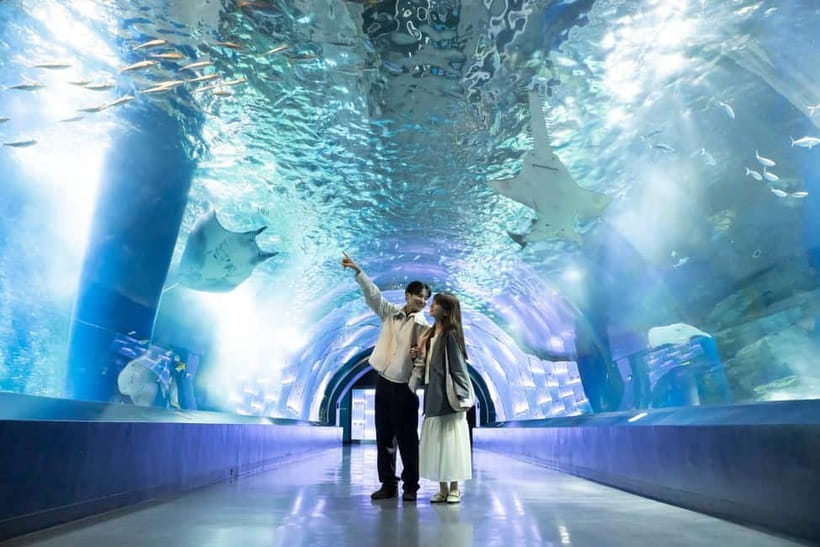
Maxell Aqua Park Shinagawa is in Minato City, inside the Shinagawa Prince Hotel area at 4 Chome−10−30, Takanawa, right near Shinagawa Station—about a 2-minute walk. That proximity matters more than you’d think. Tokyo is great, but travel friction adds up. Here, you can get from the subway to the aquarium without the usual time spiral of lining up, walking, and recalculating.
The aquarium is fully indoors. That’s huge for this type of outing. When rain rolls in (or winter gets crisp), you still have something fun to do that doesn’t depend on open-air comfort. It also keeps things simple: you’re dressed for the weather outside, then you’re inside where conditions are steady.
This is also an aquarium designed around performance and visual storytelling. Instead of treating the exhibits like a passive hallway of tanks, the place leans into showtime. Expect dynamic presentation and seasonal theming through digital art tied to Japan’s four seasons. The goal is clear: you’re not just looking at fish—you’re experiencing an entertainment-style aquarium.
You can also read our reviews of more tours and experiences in Tokyo



Direct entry works like a shortcut to the fun
Your ticket is set up for direct access to the aquarium, skipping the counter line. In practice, that means you spend less time standing around and more time actually watching animals and catching shows on schedule. If you’ve ever missed a performance because you got stuck in a ticket line, you know why this is valuable.
This ticket is valid for 1 day, and opening hours vary by season, so you’ll want to confirm the day’s schedule on the official site. Last admission is 1 hour before closing, which matters if you’re planning dinner afterward or trying to fit this between other Tokyo stops.
One more practical detail: children under 4 can enter for free. If you’re traveling with a young family, that can make the total cost feel much less painful while still giving you a one-stop outing adults and kids both enjoy.
The “only in eastern Japan” manta ray: why it’s a real draw
The aquarium’s big-ticket animal for many people is the Alfredi manta ray. You’re not just seeing a manta ray—you’re seeing the only Alfredi manta ray exhibited in eastern Japan. That’s a clear reason to prioritize this aquarium over any generic aquarium day.
Why does that matter? Because it changes the vibe from ordinary sightseeing to something more like a mission. If you’re the type who enjoys checking off rare species, this is where you get that satisfaction. And manta rays tend to be compelling even for people who don’t normally care about fish. Their size, movement, and calm presence make them easy to watch for longer than you expect.
I like how the rare-species angle pairs well with the aquarium’s entertainment style. You’re watching something uncommon in a setting built to keep your attention. Even if you’re walking faster than you planned, the manta ray is a strong anchor that helps you pace the day.
The dwarf sawfish: a world-rare animal worth your time
The other headline is the dwarf sawfish—described as the only dwarf sawfish on public display in the world. That is an attention-grabber in the best way, because it’s not a vague “look for cool creatures” situation.
Sawfish are not exactly common in public aquariums, and the dwarf sawfish is especially unique. If you care about wildlife in the real-world sense—species that are hard to see elsewhere—this is the kind of exhibit that can justify building your schedule around a single location.
Timing can matter a little with animals like this. You can’t control when a particular animal will swim past the viewing window, but if you’re there at a reasonable point in the day, you give yourself the best chance of seeing activity. In the same spirit, the better your plan to avoid rushing, the more likely you are to catch that “oh wow” moment when the animal finally shows itself clearly.
How the aquarium uses digital seasons to keep things from feeling repetitive
Maxell Aqua Park Shinagawa is designed around the idea of Tokyo-style cutting-edge entertainment with performances and digital art that reflects Japan’s four seasons. The practical result is that your visit is meant to feel like it has a theme, not just a room-by-room tour.
You’ll see ever-changing exhibits and seasonal performances. Translation: if you’re the kind of person who visits twice (or you’re staying nearby and want to return), it won’t feel like you already saw everything the moment you walked out the door. Even for a single visit, the seasonal concept helps the aquarium feel more like a living show than a static museum.
This is also why the indoor location matters. When the mood and lighting and digital displays follow the seasons, the setting becomes part of the experience. A cool winter day can pair nicely with winter-themed digital visuals, and a warmer day can feel lighter because the aquarium presentation leans into the same seasonal rhythm.



Dolphin performance: included show that works for families
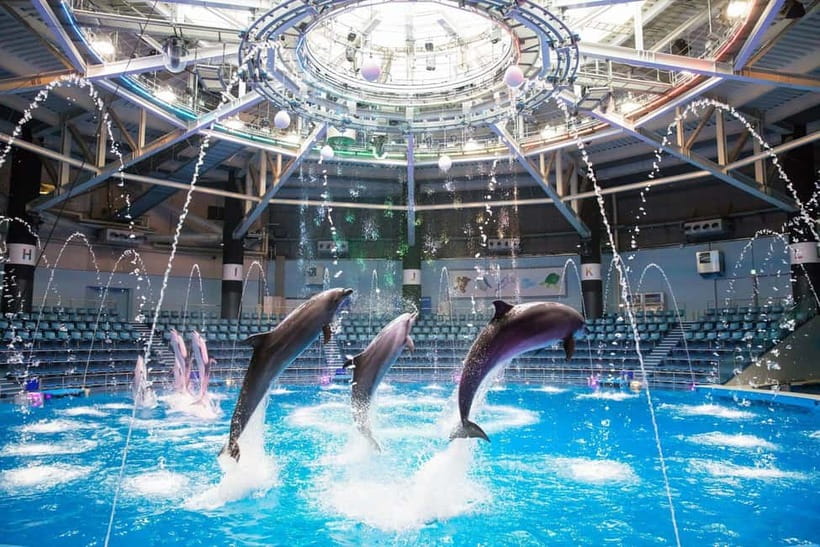
Your ticket includes a dolphin performance. That’s a big value point because dolphin shows are the type of attraction families often want, and the show adds a schedule-based moment to your visit. It turns your aquarium day into something with a built-in highlight.
What to expect is straightforward: arrive when you want to see the performance, then plan the rest of your route around it. The dolphin show being included also helps you avoid the common Tokyo scenario where you pay for entry and then discover the best part is sold separately.
From the way people talk about the experience, the dolphin activity during the show tends to land well with kids. If you’re bringing younger travelers, that’s a strong reason to choose this ticket over an aquarium that’s mostly self-paced without performance anchors.
One note: this ticket includes admission and the dolphin performance, but it does not include the attractions. So if you’re hoping for additional add-on activities beyond the aquarium and the included show, you’ll need to plan for extra purchases on-site or adjust expectations before you arrive.
Your one-day game plan: how to avoid the “too much, too fast” problem
You’ve got a 1-day experience window, and because you’re using direct entry, you can start sooner rather than losing time. Still, the aquarium is large enough that rushing is the enemy of a good day. The sweet spot is to give yourself a loose route: headline exhibits first, then performances, then the rest.
Here’s a practical flow that usually works with this kind of place:
1) Start with the rare-species exhibits like the Alfredi manta ray and dwarf sawfish. They’re the reason people make this trip, so don’t “save them for later” unless you’re sure you’ll revisit those areas.
2) Check show timing so you’re not sprinting when the performance starts. Since the dolphin show is included, you can treat it as one fixed block of your day.
3) Fill the in-between time with the general aquarium viewing and any seasonal digital art sections you pass. The four-seasons concept means you’ll keep seeing new presentation elements rather than repeating identical tank viewing.
Also remember: last admission is 1 hour before closing. If you’re the type who likes to linger, build in extra time earlier rather than counting on your pace near closing.
What the creature count actually means for your visit
The aquarium is home to about 20,000 creatures across 350 species. On paper, that’s a lot. In a real visit, it means you’ll see plenty of variety even if you don’t study every tank. You’re unlikely to feel like you’ve “seen it all” in the first hour.
It also helps explain why the experience is described as different every time you visit. Seasonal performances and changing digital art can shift your sense of what you saw and how you experienced it. For a one-time visit, you should still find enough variety to keep interest up.
The trick is deciding what matters most to you. If you’re chasing the rare animals, prioritize those. If you’re with kids, keep the show and interactive style near the top of your plan. If you’re mostly there for calm aquarium wandering, slow your pace and use the performances as time markers.
Price and value: what you’re really paying for at $18

At about $18 per person, this ticket feels most valuable when you treat it like a bundled deal. You get admission plus the dolphin performance, and you also get the big time-saver of direct entry that bypasses the counter line.
Value doesn’t just mean low cost. In a city like Tokyo, the value of time is real. Cutting down on waiting makes the day feel easier, and it helps you protect the moments you came for. If your schedule is tight and you’re fitting the aquarium between other plans, direct entry can be the difference between a smooth visit and a rushed one.
For families, the inclusion of the dolphin show plus the under-4 free entry rule can make the price feel more reasonable. And if you care about seeing rare species—especially the Alfredi manta ray and the dwarf sawfish—this is the kind of day trip where the price buys access to animals you can’t casually find elsewhere.
The main value risk: if you’re expecting more than aquarium + dolphin performance, you’ll want to verify what additional attractions cost or whether they’re separate. Since attractions aren’t available with this ticket, it’s easy to over-plan in your head if you don’t read what’s included.
Practical rules that affect your photos and experience
A few on-site rules can shape how you enjoy the exhibits:
- No smoking
- No flash photography
If you’re photographing, plan to use your phone camera without flash. Indoors, flash-free photos can still work, but you might need to brace yourself for lower light. The good news is that these kinds of rules are common in aquarium settings; they help protect both visitors and animals.
Where it is: meeting point and getting there fast
You’ll want to head to Maxell Aqua Park Shinagawa, located at Shinagawa Prince Hotel, 4 Chome−10−30, Takanawa, Minato City, Tokyo 108-8611. It’s about a 2-minute walk from Shinagawa Station, so you can typically plan this as a quick add-on to a broader Tokyo day.
If you’re using transit, aim to arrive with buffer time so you can get settled before you start moving toward the rarer exhibits and the dolphin show.
Who this ticket suits best
This ticket is a strong fit if:
- You want an easy, time-saving aquarium visit with direct entry
- You’re traveling with kids and want a dolphin performance without extra planning
- You care about seeing rare species like the Alfredi manta ray and dwarf sawfish
- You want an indoor activity that works in any weather
It’s less ideal if you’re mainly chasing add-on attractions beyond the aquarium and the included show, since other attractions aren’t part of this ticket.
Should you book Maxell Aqua Park Shinagawa direct entry?
Book it if you want a straightforward, near-Station aquarium day that includes a show and focuses on species you can’t easily see elsewhere. The direct-entry setup saves time, and the rare animals are the kind of reason that makes the trip feel purposeful instead of random.
I’d only hesitate if you’re the type who expects every attraction to be included in the price. Since not all attractions are covered with this ticket, check what you’re hoping to do beyond admission and the dolphin performance. If your plan matches what’s included, this is a solid value way to spend 1 day in Tokyo.
FAQ
What does the Maxell Aqua Park Shinagawa direct entry ticket include?
It includes admission to the aquarium and the dolphin performance.
Do I need to wait in line at the counter?
No. This ticket allows direct entry and skips the ticket line at the counter.
How long is the ticket valid?
It’s valid for 1 day. You’ll want to check available starting times.
Is the aquarium indoors?
Yes, it’s fully indoors, making it a good option in any weather.
Can young children enter for free?
Yes. Children under 4 years old can enter for free.
What time is last admission?
Last admission is 1 hour before closing.
Is the dolphin performance included in my ticket?
Yes, the dolphin performance is included.
Are there any restrictions on photos or smoking?
Smoking is not allowed, and flash photography is not allowed.
Where is the meeting point?
Maxell Aqua Park Shinagawa is at Shinagawa Prince Hotel, 4 Chome−10−30, Takanawa, Minato City, Tokyo 108-8611, about a 2-minute walk from Shinagawa Station.