REVIEW · TOKYO
Osaka: Kyoto By The Sea with Amanohashidate & Ine no Funaya
Book on GetYourGuide →Operated by JTOURSTORY · Bookable on GetYourGuide
A Japan coast day can feel like a cheat code, and this one mixes big scenery with easy walking. I love Amanohashidate, the sandbar people describe as a Bridge to Heaven, and I love the quiet twist of Ine no Funaya with its boat houses sitting on the water. The only real catch: optional add-ons like the chairlift/monorail and the Ine boat can add up fast, so plan your budget before you arrive.
You get a live English and Korean speaking guide, and the vibe is relaxed rather than rushed. In past groups, guides like Yuri and Jun also made sure the time felt smooth, even when they doubled as driver for smaller groups, and they’ve helped with photo moments and souvenir prints. If you want a totally hands-off day with zero extra decisions, you may find yourself choosing between activities on the spot—especially at Amanohashidate View Land.
In This Review
- Key highlights worth getting excited about
- Getting to the coast: morning start and the first break
- Amanohashidate: Japan’s Bridge to Heaven sandbar and why it’s so special
- Amanohashidate View Land: chairlift, monorail, and the sky bicycle option
- Chionji Temple: the giant fan-shaped fortune and calm breaks
- Kaisen Bridge: a rotating bridge made for boats
- Amanohashidate Beach: sea air, walking time, and the pine-lined path
- Ine no Funaya: the floating fishing village of funaya boat houses
- The optional boat ride: seeing the funaya up close
- Lunch and timing: how to eat without losing momentum
- Price and value: what you get for about $55 per person
- Guide and photo moments: the small touches that make the day feel easy
- Who this tour fits best (and who should consider another option)
- Tips to make the most of every stop
- Should you book this Osaka to Kyoto by the Sea day trip?
- FAQ
- What time and where do I meet for the tour?
- What’s included in the price?
- Are meals included?
- What optional activities cost extra?
- How flexible is the itinerary if weather or traffic changes?
- Is this tour stroller-friendly or wheelchair-accessible?
- Can I cancel and get a full refund?
Key highlights worth getting excited about
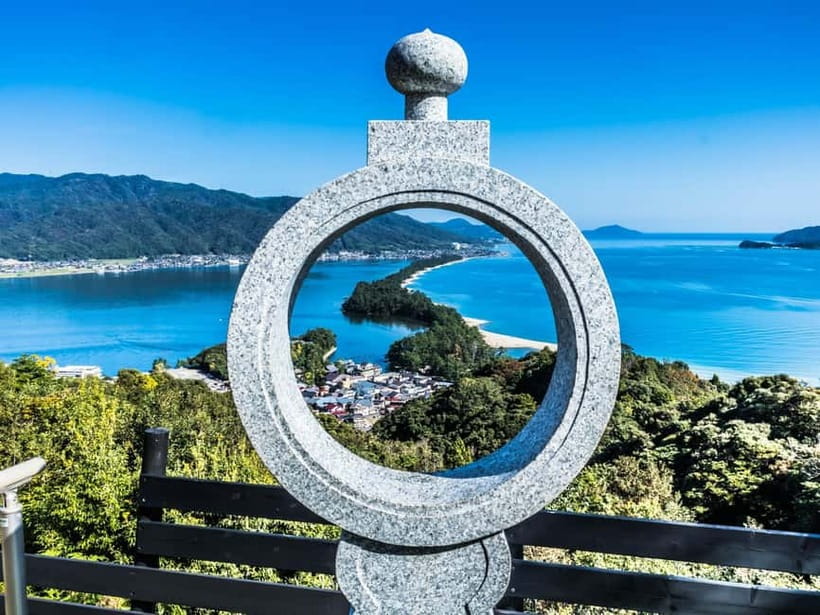
- Amanohashidate photo stop: The “Bridge to Heaven” sandbar lined with 5,000+ pines
- Chionji Temple fortune slips: A fan-shaped paper fortune linked to prayers for wisdom and success
- A seaside break by the beach: Pine-lined walking paths and time to breathe in the sea air
- Kaisen Bridge: A rotating bridge that gives boats a pass
- Ine no Funaya floating funaya: Over 200 traditional boat houses built right on the water
- Optional sightseeing boat: A bay cruise where you get a closer look at the floating houses, plus possible bird-feeding moments on some rides
Getting to the coast: morning start and the first break
The day begins with a simple meeting setup. Be in front of Tsurutontan Soemoncho by 7:50 AM, and the tour leaves at 8:00 AM. From there, you’ll ride by bus toward Kyoto by the sea, and you’ll get a planned stop at a service area.
One mid-journey pause is at Kyotamba-Ajimunosato PA. You’ll have break time, with a chance for street food and free time (about 20 minutes on this schedule). This matters because it keeps the coastal sightseeing from feeling like one long sprint. It also gives you a low-pressure moment to grab water and snacks before you start walking.
The outing is designed to feel like a coastal escape rather than a checklist. You’ll spend most of your energy outdoors—sandbar views, temple steps, a seaside stroll, and the floating village.
You can also read our reviews of more tours and experiences in Tokyo.
Amanohashidate: Japan’s Bridge to Heaven sandbar and why it’s so special
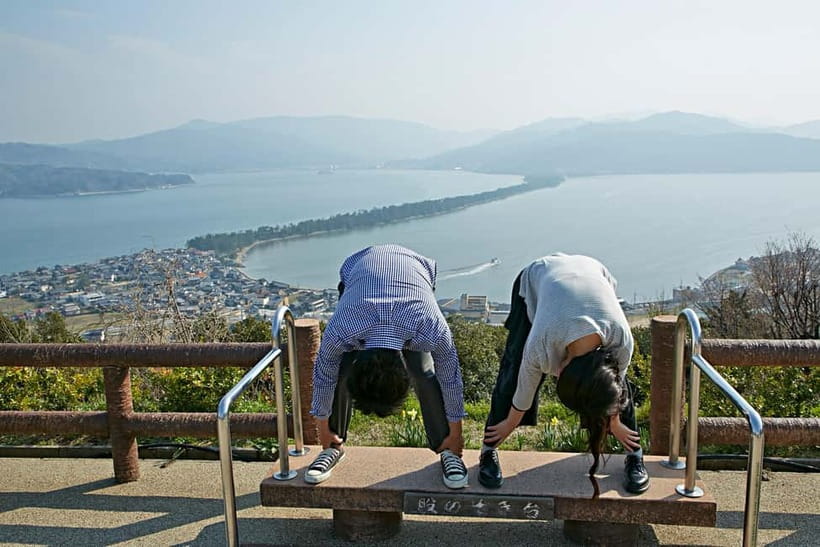
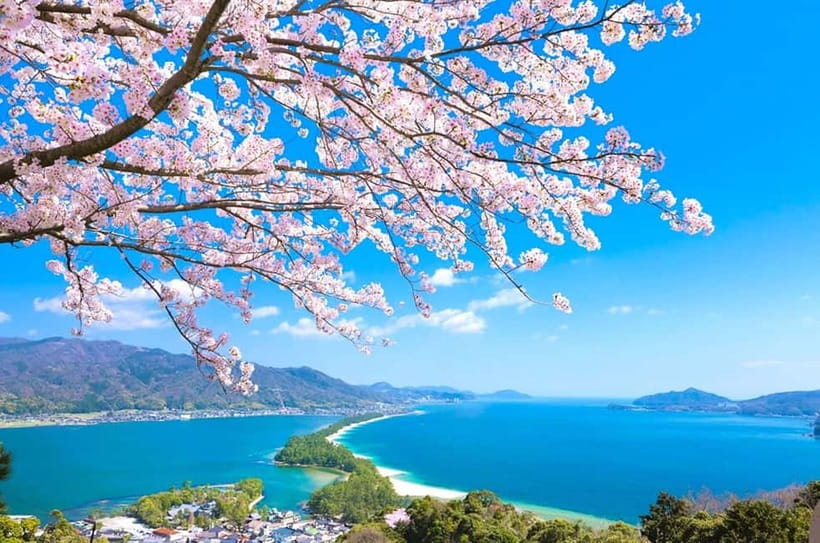
Amanohashidate is the star, and for good reason. This sandbar stretches across Miyazu Bay, and it’s lined with 5,000+ pine trees. From a certain angle, the shape looks like it connects heaven and earth—especially when you view it upside down on clear days.
Your visit includes a dedicated chunk of time to see it properly. You’ll have a photo stop, time to visit, and free time to explore at your own pace. That open time is key. Amanohashidate is one of those places where you want a few different angles, not just one quick look.
Here’s a practical tip: if you’re serious about photos, give yourself time to reposition. The sandbar is wide, and the pine line changes character depending on where you stand. If the light is flat, try shifting to a vantage point that gives you a stronger line toward the water.
Also, don’t feel locked into only the main sandbar. The surrounding viewpoints and the beach area nearby are part of the experience. The tour intentionally balances a major sight with quieter stretches so your day feels varied.
Amanohashidate View Land: chairlift, monorail, and the sky bicycle option
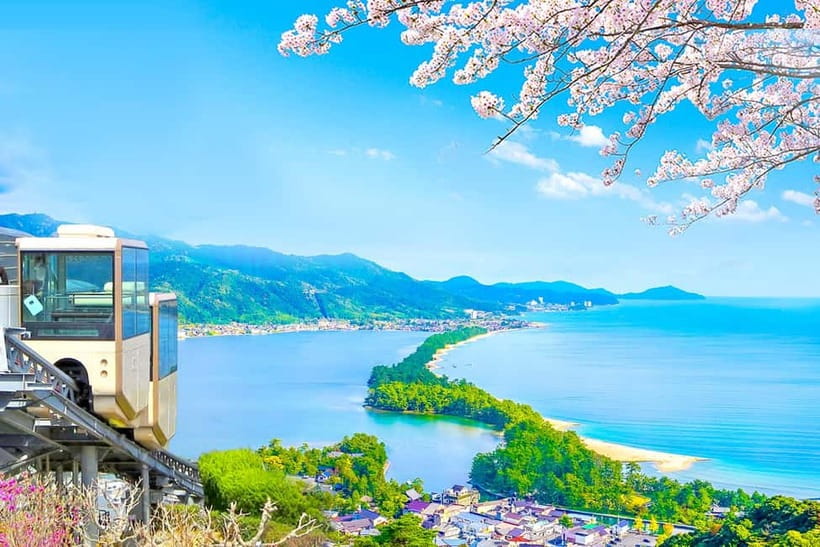
After the first big Amanohashidate look, you’ll head to Amanohashidate View Land for more elevated scenery. This stop is built around viewpoints—so the payoff is dramatic without requiring complicated logistics.
There’s optional access via chairlift or monorail for 850 yen (paid on your own). From there, you can reach a hilltop park for panoramic views. The highlight here is the sky bicycle, where you pedal along a raised track with wide-open views.
Should you do the sky bicycle? If you like movement and you want the view to come with momentum, it’s a fun choice. If you prefer to keep things gentle, you can still enjoy the viewpoint areas without taking the extra activity. Either way, this stop is a chance to see the sandbar in relation to the bay, not just as a single postcard line.
Chionji Temple: the giant fan-shaped fortune and calm breaks
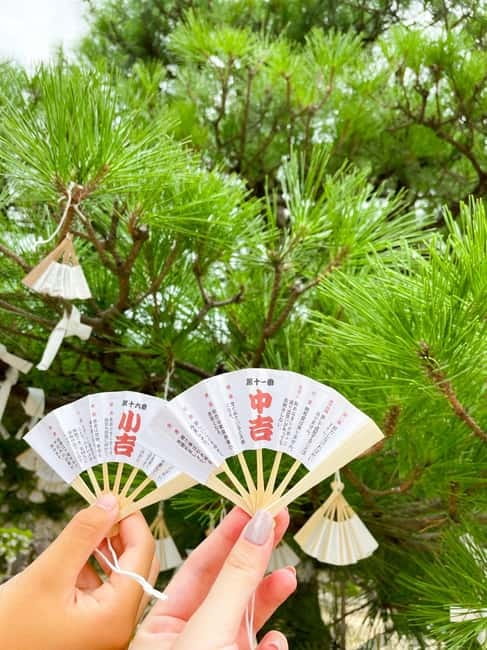
Next comes Chionji Temple, a quieter counterpoint to the seaside spectacle. The temple is known for giant folding fan-shaped fortune slips. People come to pray for wisdom and success, and the fan theme is memorable enough that you’ll likely want time to look closely at what’s offered.
This part of the day is also where the pacing feels especially good. You’ll have a photo stop, then time to visit and enjoy free time. Since Amanohashidate can be visually intense, temple time gives your eyes and feet a breather. It also gives you something more cultural than scenery—something you can actually participate in by choosing a fortune slip.
If you like souvenirs that aren’t just magnets, this is the kind of keepsake you’ll remember later. A fortune slip is personal by nature, so it feels more meaningful than a typical shop item.
Kaisen Bridge: a rotating bridge made for boats
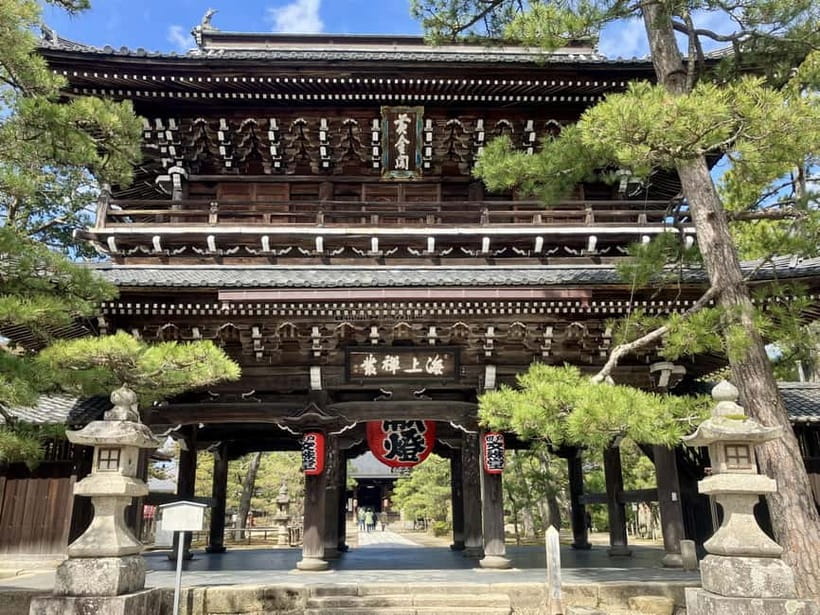
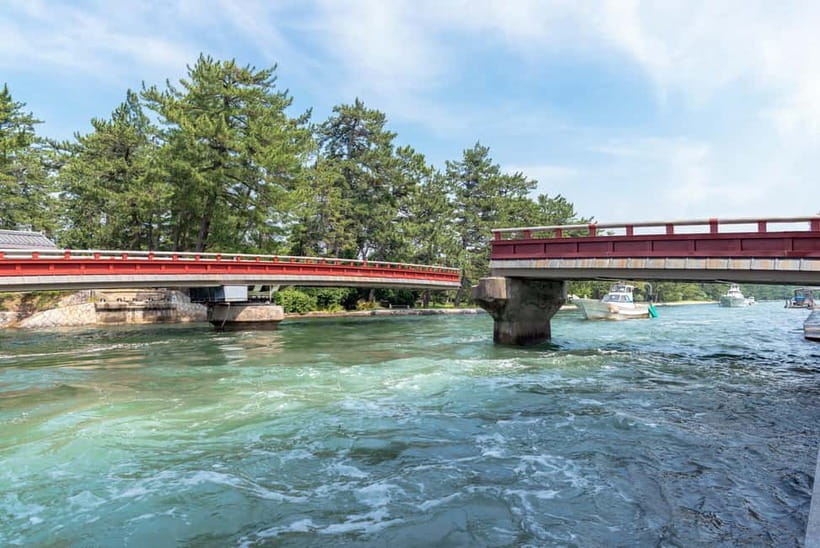
Between temple and beach time, you’ll hit Kaisen Bridge. It’s a special kind of bridge: it can rotate to allow boats to pass. For visitors, that’s more than a neat engineering detail. It adds a sense of being in a working coastal area, where sea traffic still matters.
You’ll stop for photos and have time for sightseeing here. Don’t rush this moment. If you’re lucky and timing works out, you might catch the bridge’s movement, or at least watch the flow of bay life around it. Even without a dramatic rotation, it’s a good visual change-up from the pines and sandbar.
Amanohashidate Beach: sea air, walking time, and the pine-lined path
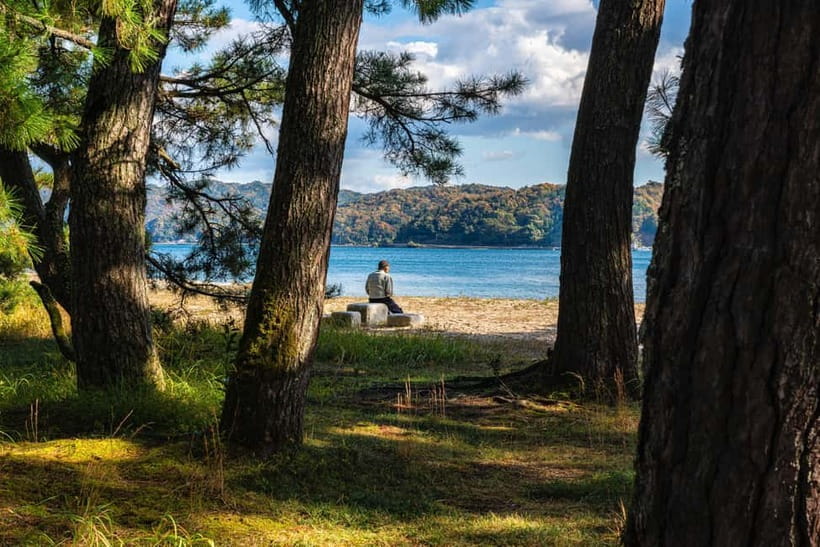
Once you’re done with the bridge, you’ll reach Amanohashidate Beach. You’ll get a scheduled break with photo opportunities, plus free time. This is the laid-back section of the tour: sea breeze, slower walking, and time to reset.
There’s also the chance to rent a bicycle for an easy ride along a pine-lined path (the tour mentions bike rental options during beach time). One review experience I liked in particular was how bicycle time felt like real fun rather than just getting from point A to point B. If the weather is pleasant, this is one of the best chances to slow down and enjoy the coastal rhythm.
Practical note: bring a little hydration and plan for shade. Pine areas help, but beach time also means sun exposure. If you’re sensitive to heat, choose your walking windows wisely.
Ine no Funaya: the floating fishing village of funaya boat houses
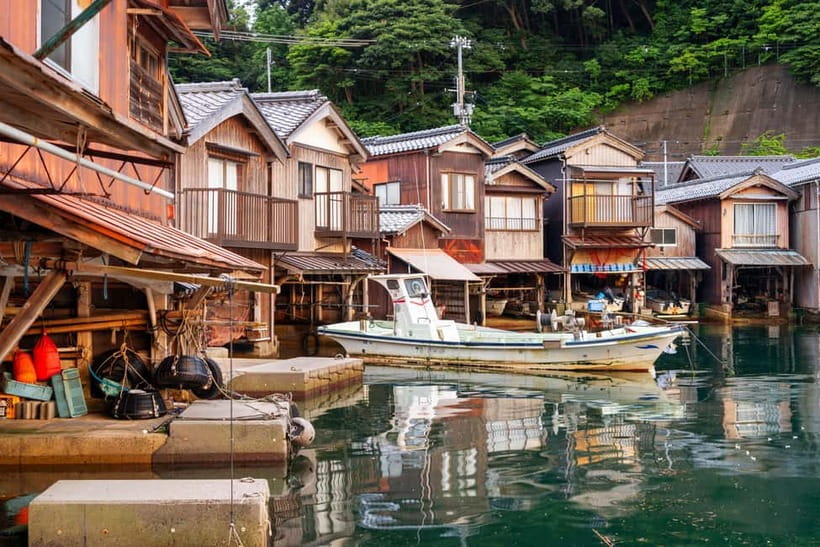
Then the tour flips from “famous view” to “you’re really somewhere specific.” Ine no Funaya is a seaside village known for its over 200 traditional boat houses, called funaya, built right on the water.
The visual is the point. The structures often have boat garages on the ground floor and living spaces above. That creates a layered look—timber forms, water reflections, and a whole townscape that feels like it’s hovering over the bay.
You’ll arrive at Road Station Funaya no Sato Ine for a photo stop, then visit with free time (about 70 minutes). This timing matters because you need time to wander at ground level and also catch views from different angles.
The optional boat ride: seeing the funaya up close
If you want the closest look, there’s an optional sightseeing boat ride for 1,000 yen. This cruise is meant to bring the funaya into clearer view and show you their reflections on the water.
Some departures include extra memorable moments during the boat portion—like bird-feeding moments reported by recent groups. Even if that doesn’t happen every day, you can still expect a more immersive perspective than standing on shore.
Lunch and timing: how to eat without losing momentum
Lunch isn’t included, but you’ll have time for it at your own expense during the Amanohashidate portion. That’s practical. It means you can choose what fits your appetite and budget rather than being forced into one set meal.
Because you’ll have other activities after lunch, I suggest eating something you can finish without turning your legs into bricks. Think simple and filling: a bowl meal, a quick set, or local snacks from nearby spots. Bring cash if you can, since smaller eateries may not always be set up for every payment type.
Also, use lunch time to recharge your phone camera batteries and check the weather. Coastal views change fast, and you’ll want your gear ready for Amanohashidate View Land and the water scenes later.
Price and value: what you get for about $55 per person
At $55 per person for the experience, the value is mostly about two things: transportation and a live English and Korean speaking guide. You’re getting guided movement between multiple scenic sites across the coast, which would be more work to arrange on your own.
The tour also does something that tends to make group days feel worth it: it includes meaningful free time inside the big stops. You’re not just shuffled past points. You also get a calmer, less stressful pace than you would trying to hop between them using trains and buses with limited transfer windows.
What can affect value is the add-on cost. The optional chairlift/monorail is 850 yen, and the Ine boat is 1,000 yen. Those are clearly labeled as extras. If you plan to do both, budget accordingly so the final total feels comfortable.
My rule of thumb: if you’re willing to add one paid activity, do the sky bicycle or the Ine boat ride. Doing both can be great, but pick based on what you’re most excited about: high-elevation views or close-up water perspectives.
Guide and photo moments: the small touches that make the day feel easy
A strong guide can make a long day feel light. In recent experiences, guides including Yuri, Jun, and Jo have handled the day with a friendly, professional tone, plus practical help like picture-taking.
One nice bonus reported by groups: guides have provided printed souvenirs—like a printed photo or Polaroids for everyone. That’s not required, but it’s the kind of extra touch that makes the memories feel more tangible.
Another benefit people have noticed: smoother movement at sights, with less time stuck in lines at entry points. That matters in real life. You come for the coast, not for waiting.
If you care about photos, don’t be shy about asking your guide to help capture shots. The guides on this route seem comfortable doing it, and it can help you get better compositions than self-timing.
Who this tour fits best (and who should consider another option)
This tour is a strong fit if you want:
- Coastal sightseeing outside Osaka/Kyoto city
- A route built around big icons (Amanohashidate) plus a working seaside village (Ine no Funaya)
- A day with a relaxed pace and time to wander
- English or Korean support from a live guide
It may be less ideal if you:
- Want zero optional decisions, since there are paid activities available
- Need wheelchair access, since the experience isn’t wheelchair-accessible (you’d want another option if that’s important for your group)
- Prefer fully independent travel, since the schedule is set around bus travel and guided stops
Tips to make the most of every stop
A few small moves can upgrade your day fast:
- Start with a light plan: decide early if you’ll do chairlift/monorail and the Ine boat, so you don’t spend time hesitating later.
- Wear shoes you can walk in. You’ll be outdoors across sandbar areas, temple grounds, and village paths.
- Bring sun protection. Beach time plus elevated views means sun exposure can add up quickly.
- If you’re into photos, aim to capture the sandbar from multiple angles and then switch gears at the floating houses for reflections.
- If you’re traveling as a family, the tour is stroller-friendly—just inform the operator if you’ll bring a stroller.
Should you book this Osaka to Kyoto by the Sea day trip?
I’d book it if your idea of a great day is big scenery plus one more unusual destination that feels different from the usual city sights. Amanohashidate gives you the headline view. Ine no Funaya gives you the contrast: floating homes, reflections, and a seaside village atmosphere that feels quietly specific.
If you like optional add-ons and you’re okay paying extra for the best perspectives, this tour is a good value. The base price covers the hard part—getting you there with a guide and keeping the day flowing—while you choose how much you want to spend on the elevated ride and the boat cruise.
If you want a stress-free coastal break from crowds, this one does the job. Just go in with your budget for the optional rides, and you’ll have a smooth, photo-heavy day along Kyoto’s sea.
FAQ
What time and where do I meet for the tour?
Please be in front of Tsurutontan Soemoncho before 07:50AM. The tour staff will meet you there, and the departure is at 8:00 AM.
What’s included in the price?
The tour includes transportation and an English & Korean speaking guide.
Are meals included?
No. Meals are not included, and you’ll have time for lunch at your own expense.
What optional activities cost extra?
Optional extras include Amanohashidate chairlift or monorail for 850 Yen, and an Ine no Funaya sightseeing boat ride for 1,000 Yen.
How flexible is the itinerary if weather or traffic changes?
The guide may adjust the itinerary based on real-time traffic and weather conditions, and the schedule can change to comply with Japanese legal driving time limits.
Is this tour stroller-friendly or wheelchair-accessible?
It is stroller-friendly. However, it is not wheelchair-accessible.
Can I cancel and get a full refund?
Yes. You can cancel up to 24 hours in advance for a full refund.