REVIEW · TOKYO
Martial Arts: Samurai Experience (Iaido)
Book on GetYourGuide →Operated by SMEKK Inc. · Bookable on GetYourGuide
Katana class feels like history with motion. This 1-day Iaido session is built around learning the first step of Japanese sword technique, then watching a master use a shinken (real sword). I like that the day is structured from fundamentals to doing it yourself, not just standing around.
One more thing I really appreciate: the instruction and overall tone are described as professional, and the Q&A time seems genuinely useful. A possible drawback to plan for is that food and drinks aren’t included, so you’ll want to handle that around the class time.
In This Review
- Key points before you take up Iaido
- Iaido in the Kanto region: what you’re signing up for
- Getting to the dojo: the 3rd-floor start and outfit change
- Practice fundamentals first: learning the basic movements
- From instruction to action: learning katana usage
- The master’s performance with shinken: why this moment hits
- Q&A time: turning technique into samurai context
- Price and value: is $161 reasonable for this day?
- What to bring (and what to avoid overthinking)
- Language support: English and Japanese instruction
- Who should book (and who should skip)
- Practical logistics for your day in Japan
- Should you book Samurai Experience (Iaido)?
- FAQ
- FAQ
- Where does the Iaido class start?
- How long is the Samurai Experience (Iaido)?
- What languages are spoken during the experience?
- What’s included in the price?
- Is food or drinks included?
- Do you get a photo during the experience?
- Is there a real sword demonstration?
- What should I wear or bring?
- Is this experience suitable for young children?
- Is it wheelchair accessible?
Key points before you take up Iaido
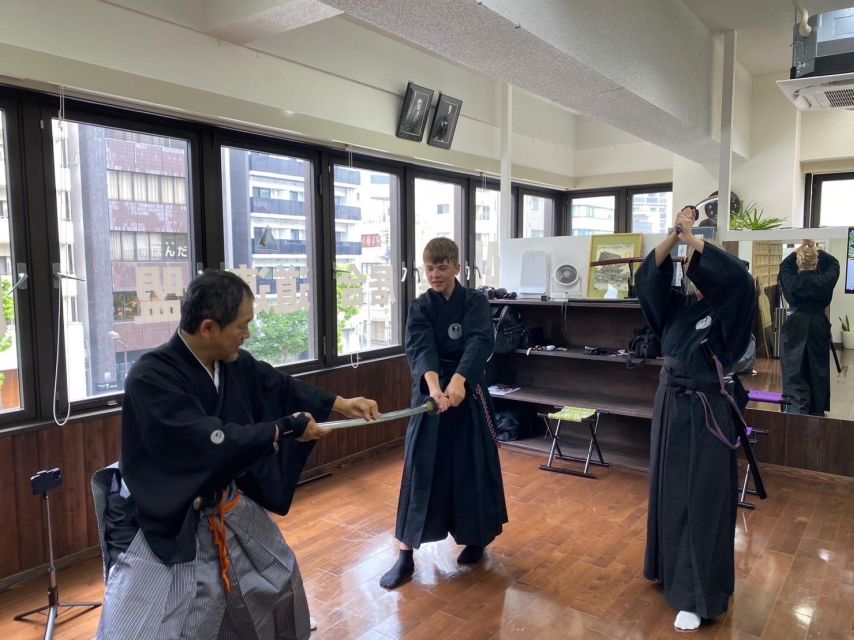
- You start with outfit change + basic kata movements so you’re not lost from minute one.
- You handle a katana yourself, not only watch a demonstration.
- A shinken performance with the master is a highlight of the day.
- You get commemorative photos with the master after the training.
- The instructors speak English and Japanese, which matters for first-timers.
- The session ends back at the same meeting point, making the day easier to organize.
Iaido in the Kanto region: what you’re signing up for
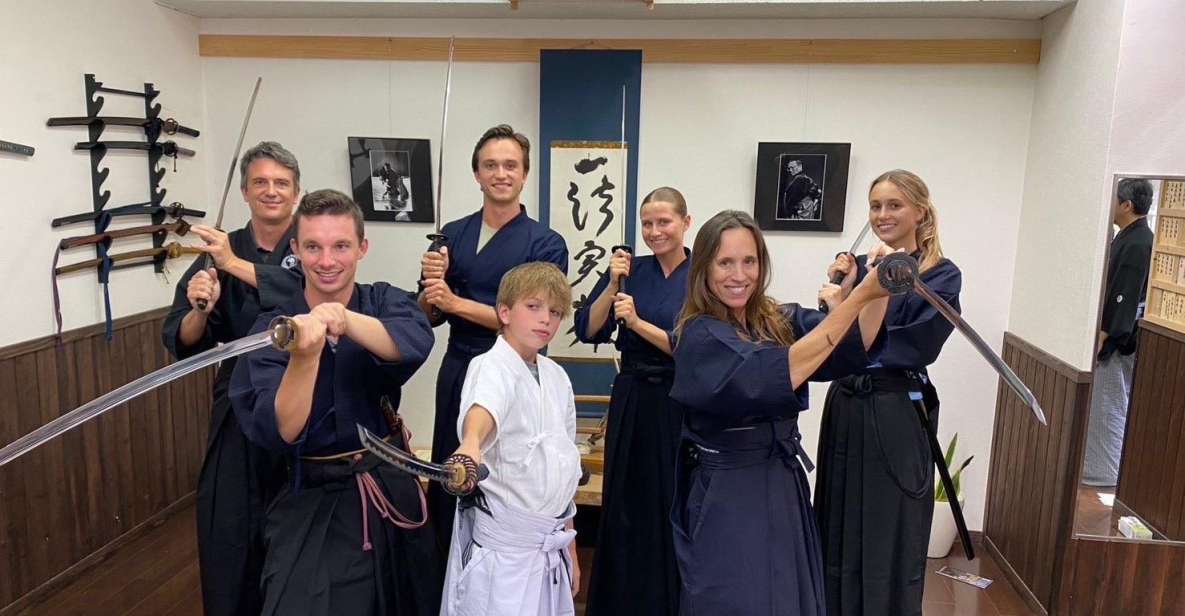
Iaido is Japanese sword technique practiced through controlled movements and set forms. In this Samurai Experience (Iaido), the focus is on learning that system—starting with basics and building toward how a katana is used in practice.
This is a great choice if you like Japanese history but also want a hands-on activity. You’re not just hearing stories about samurai; you’re practicing the physical language of the art.
It’s also a smart pick for first-timers. The day is paced: outfit change, fundamental movements, katana usage, a master’s performance, photos, and a final Q&A.
You can also read our reviews of more tours and experiences in Tokyo.



Getting to the dojo: the 3rd-floor start and outfit change
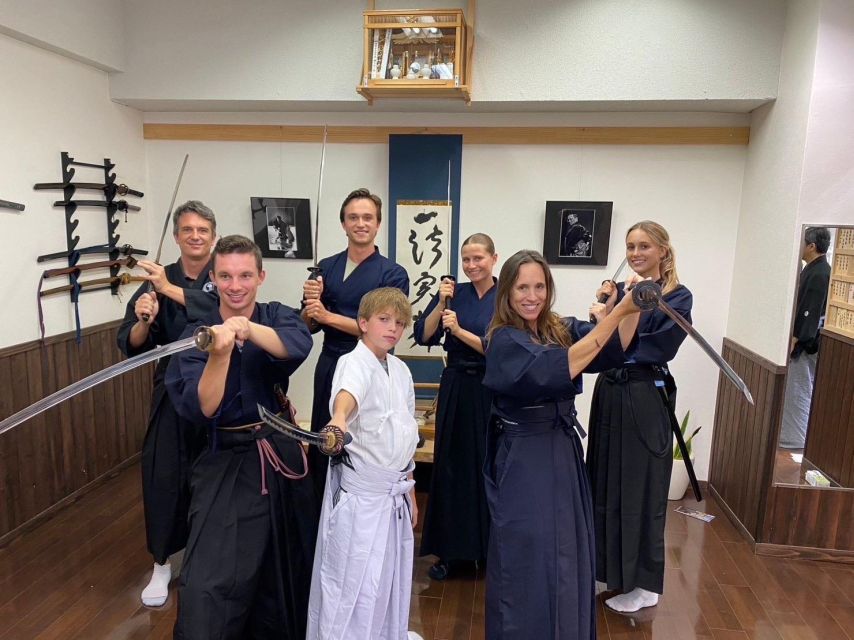
Your experience begins at the meeting point building, and the Iaido training is held on the 3rd floor. You’ll start, change into your rental outfit, and get ready for practice there—then the activity finishes back at the same meeting point.
That outfit change is more than a costume moment. It signals that the class is focused on tradition and formal movement, which helps you take the technique seriously right from the start. Comfortable clothes matter here because you’ll be moving, switching positions, and following instructions.
If you’re the type who likes clear beginnings, this structure is reassuring: you know where to go, what floor to find, and where you’ll return afterward.
Practice fundamentals first: learning the basic movements
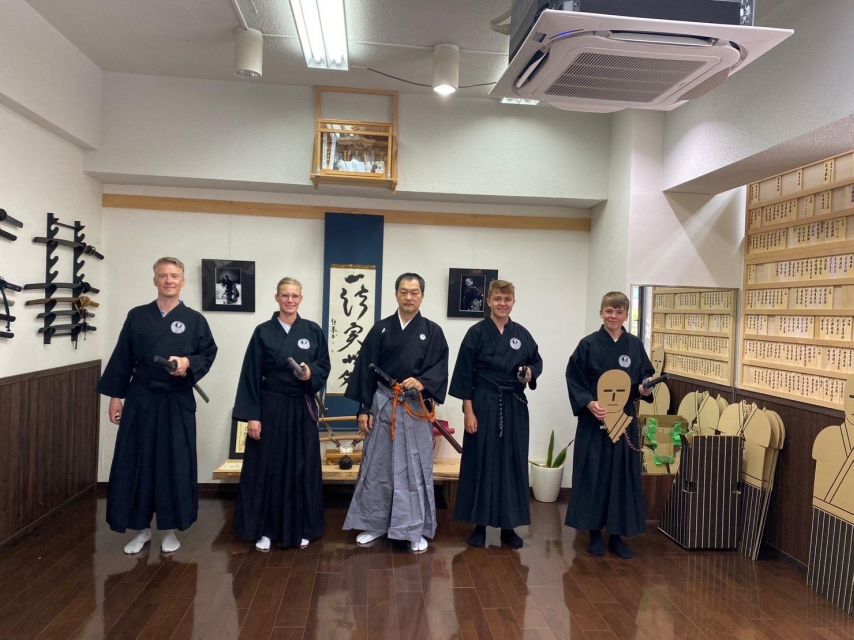
After the change of outfit, the day moves into fundamental movements. This is where you build coordination and learn how the technique is supposed to look and feel—before anyone asks you to go further with the katana.
The practical value of this section is huge. When you get the basics, the later stages make more sense, and you can focus on accuracy instead of guessing what you’re supposed to do.
You can also treat this as a quiet culture lesson. Even at the beginner level, the art has a discipline to it, and you start picking up the logic behind the movements.
From instruction to action: learning katana usage
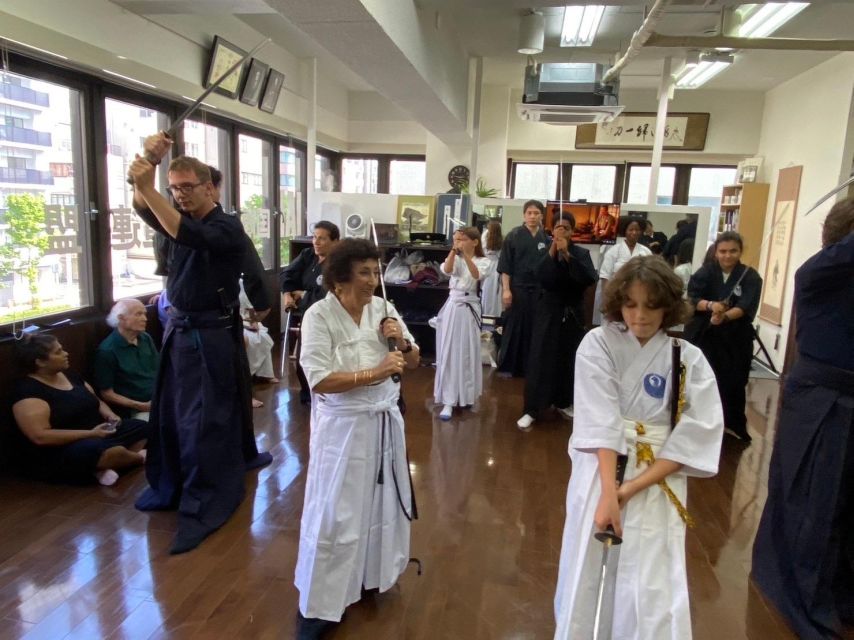
Next comes learning the usage of katana, followed by more practice that applies what you’ve learned. The itinerary frames this as progressing from understanding to doing, so you’re not stuck in lecture mode.
What you’ll likely enjoy here is that the training has an action-to-feedback rhythm: you follow the master’s guidance, attempt the movement, and refine it. That’s how the day becomes more than a show.
This is also the point where your “I came for history” motivation can turn into “I’m actually participating.” If you want to feel active during your Japan trip, this is one of the better cultural activities for that.
The master’s performance with shinken: why this moment hits
The centerpiece moment is the master’s performance using shinken (real sword). Seeing a real blade isn’t just dramatic—it changes how you understand the technique.
A real-sword demonstration highlights the precision of the forms: timing, control, and posture. It also gives you a visual reference for what you’ve been practicing in simpler terms during the earlier steps.
After that, you’ll get commemorative photos with the master. That’s a nice practical touch. You’ll leave with something concrete from the day, not just a memory of movements you might struggle to explain later.
And yes, expect more than one element. The experience is described as including an impressive show-style segment involving the pupils, which helps you see how the technique looks beyond the beginner level.





Q&A time: turning technique into samurai context
The last part of the class is Q&A. This is one of the most valuable parts of many martial-arts demonstrations, because it turns what you saw into real understanding.
From what you can expect in the flow, the Q&A comes after the practice and the shinken performance. That timing matters. You’re not asking questions in the abstract; you can refer to what you just learned and what you just saw.
This is also where the experience leans into the bigger story: samurai pride and spirit passed down through generations, and the idea of keeping Iaido training taught worldwide. Even if you’re not studying history academically, the conversation helps connect technique with culture.
Price and value: is $161 reasonable for this day?
At $161 per person, this isn’t the cheapest activity in Japan. But it is priced like an instructional experience, and the inclusions support that.
Here’s what you get for the money:
- Activity fee
- Rental outfit and katana
- Travel insurance (included)
The value angle is straightforward. You’re paying for trained instruction, the equipment rental (so you don’t need to bring or buy anything), and the structured progression of the day. The shinken performance and the commemorative photos also add weight; those aren’t usually included in basic cultural workshops.
What’s not included matters too:
- Food and drinks
- Hotel pick-up and drop-off
So the cost makes sense if you’re okay handling your own meals and getting to the meeting point on your own. If you’re hoping for a fully packaged day with transportation and meals, this one will feel incomplete.
What to bring (and what to avoid overthinking)
The official guidance is simple: bring comfortable clothes. That’s your biggest “prep” step.
You don’t need to bring a sword or outfit. Rental outfits and katana are included, so your job is to show up ready to move and follow directions.
If you’re a planner, you can still do one smart thing: wear clothes that let you change easily and handle standing, kneeling, and movement without fuss. That alone makes the first part of the day smoother.
Language support: English and Japanese instruction
The instructor is listed as English, Japanese. That’s important if you’re new to Iaido terms and Japanese martial culture in general.
This also suggests you won’t be stuck waiting for translation when you have questions. The Q&A is part of the design, so having the languages covered supports the whole experience.
If you want the best use of your time, treat the Q&A like a chance to ask what you’re genuinely curious about, not just general questions.
Who should book (and who should skip)
This class is well-suited for people who want a hands-on introduction to samurai sword technique. I think you’ll especially like it if you:
- enjoy Japanese history and want a physical way to connect with it
- want to practice, not only watch
- appreciate structured instruction and a formal, traditional style
It’s not for everyone. It’s not suitable for children under 5, and it’s not suitable for wheelchair users. The meeting point is on the 3rd floor, so mobility and stairs can also be a real practical factor even when the listing doesn’t spell everything out.
Also skip it if you only want a passive viewing experience. The point of this day is that you participate.
Practical logistics for your day in Japan
This is a 1-day activity. Starting times vary, so check availability when you lock in your schedule.
The experience runs from the meeting point (on the 3rd floor) and ends back at the same place. That helps if you’re planning the rest of your day in the Kanto area, because you won’t need another long ride just to return somewhere new.
Cancellation is offered with a full refund up to 24 hours in advance, so you have some flexibility if plans shift.
Should you book Samurai Experience (Iaido)?
Book it if you want a real skill-based cultural activity and you like the idea of learning sword technique fundamentals. The combination of practicing yourself, seeing the master’s shinken performance, and getting Q&A plus photos is a strong mix for one day.
Skip it if you’re not interested in hands-on movement, if you need food and drink included, or if accessibility needs mean this format won’t work for you.
If you’re the kind of traveler who likes value in experiences—equipment included, instruction included, and a clear progression—this one is worth serious consideration.
FAQ
FAQ
Where does the Iaido class start?
The Iaido session is held on the 3rd floor of the meeting point building.
How long is the Samurai Experience (Iaido)?
It lasts 1 day. Starting times vary, so you’ll need to check availability.
What languages are spoken during the experience?
The instructor speaks English and Japanese.
What’s included in the price?
The activity fee includes rental outfits and a katana, plus travel insurance.
Is food or drinks included?
No. Food and drinks are not included.
Do you get a photo during the experience?
Yes. You’ll take commemorative photos with the master.
Is there a real sword demonstration?
Yes. The master performs with a shinken (real sword).
What should I wear or bring?
Bring comfortable clothes.
Is this experience suitable for young children?
No. It’s not suitable for children under 5 years.
Is it wheelchair accessible?
No. It’s not suitable for wheelchair users.