REVIEW · TOKYO
Tokyo:Calligraphy &Make your original folding fan in Asakusa
Book on GetYourGuide →Operated by Local Earth · Bookable on GetYourGuide
Tokyo’s calligraphy workshop feels like a reset button. In Asakusa, you’ll learn brush-and-ink fundamentals, practice real strokes on thin paper, then turn what you write into an original folding fan. It’s hands-on, calm, and surprisingly personal.
I love that you don’t just watch—you get guided practice time (including the posture side and the right ink amount). I also love the extra touch of green tea plus a postcard you write to yourself for later reflection. One thing to consider: the ink can stain, so you’ll want clothes that can get a bit dirty even with the aprons.
In This Review
- Key things you’ll do (and why it matters)
- Asakusa Calligraphy: A Calm Creative Break in a Busy Neighborhood
- Meeting Your Instructor and Getting Set Up (Fude, Ink, and Apron Mode)
- The Calligraphy Story: From Hiragana Meaning to Real Life Practice
- Posture and Ink Amount: The Two Secrets People Actually Feel
- Brush Techniques on Guide Paper: How You Build Strokes That Look Right
- Your Final Piece: Writing Until It Feels Like You
- Green Tea and a Postcard to Yourself: Turning Art Into a Memory
- Making Your Original Folding Fan: Calligraphy You Can Use
- Price and Value: Why $16 Can Feel Like a Bargain
- Who This Workshop Is For (and Who Should Think Twice)
- Small Practical Notes That Keep You Comfortable
- Optional Choices You Should Watch For (Henna and T-Shirts)
- Should You Book Tokyo Calligraphy & Make Your Original Folding Fan?
- FAQ
- Where does the class meet in Tokyo?
- How long is the calligraphy and fan workshop?
- How much does it cost?
- Is the instructor able to teach in English?
- What’s included in the workshop?
- Is there an option with Henna tattoo included?
- Do I need to bring anything?
- Can I eat or drink during the session?
- Are pets allowed?
- Is it wheelchair accessible?
- Can I print my calligraphy design onto a T-shirt?
- Is there a free cancellation window?
- Can I reserve and pay later?
Key things you’ll do (and why it matters)
- Practice with a real brush and ink so your strokes look intentional, not random
- Learn posture and technique so you’re not fighting the brush the whole time
- Use guide paper for 8 techniques, then apply them to a final design you keep
- Write a postcard to yourself while the memory is fresh, then take it home to send
- Melt traditional ink sticks and learn how the water/ink balance changes the feel
- Make a folding fan that turns your calligraphy into a wearable-on-the-day souvenir
Asakusa Calligraphy: A Calm Creative Break in a Busy Neighborhood
Asakusa can be loud, hot, and visually intense. This class gives you something different right away: a small, structured session focused on your hands and your breathing. Even if you think you have zero artistic talent, you’re taught step-by-step and you get to practice until your work looks like yours.
You’ll meet near the Asakusa area (the coordinates listed are 35.7162239, 139.7922354), and you’ll work with an English-speaking instructor. From the way the session is described and how people talk about it, it’s built for a wide range of comfort levels, from first-timers to people who just love crafts.
The duration can vary from 30 to 90 minutes depending on the option and schedule. That matters because you can treat it like a quick afternoon cooldown or as a longer creative block if you want time to slow down and redo strokes.
You can also read our reviews of more tours and experiences in Tokyo.


Meeting Your Instructor and Getting Set Up (Fude, Ink, and Apron Mode)
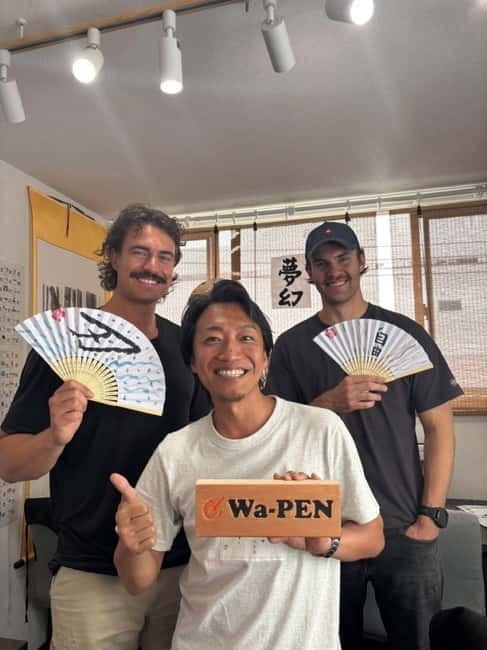
This experience is led by a professional calligraphy instructor with English support. The core setup is simple: brush, ink, paper, and guidance. You’re also told to wear comfortable clothes because you’ll be working with ink.
Here’s what’s practical: even if aprons are provided, you should still wear something that won’t ruin your day if it gets a tiny stain. Calligraphy can be surprisingly messy at first while you figure out your ink flow and brush pressure.
The workshop also includes instruction on tools and technique, including the brush called Fude. That’s important because calligraphy isn’t just about copying symbols—it’s about how the brush behaves when you move it.
The Calligraphy Story: From Hiragana Meaning to Real Life Practice
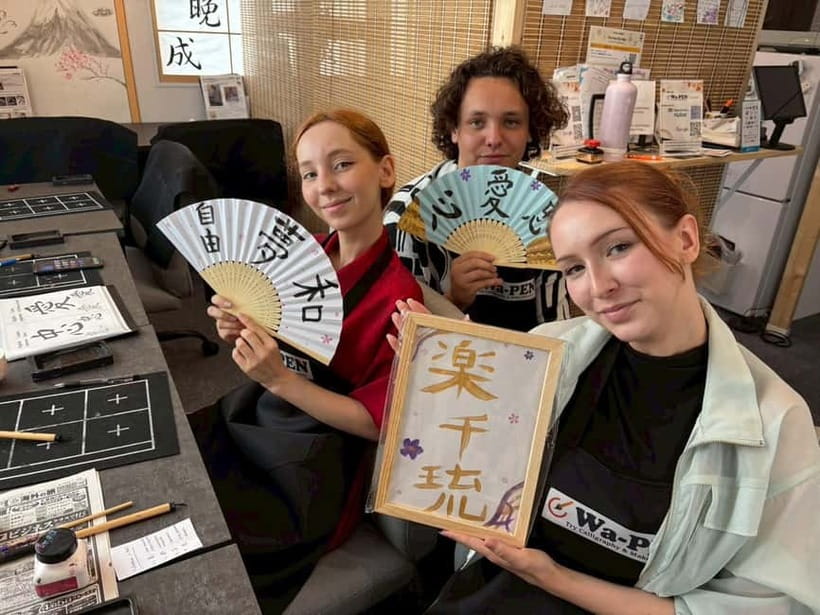
Before you start writing, the class connects the strokes to meaning. You’ll learn the history of Japanese calligraphy and discover the “mind” behind hiragana and how it relates to modern culture. You also get a framework for what you’re seeing on the page: strokes aren’t decoration only; they’re communication.
Why this matters for your experience: when you understand what you’re trying to express, practice feels less like homework. You’re not just learning shapes—you’re learning intention. That’s one of the reasons the session tends to feel reflective, not stressful.
You’ll also hear about kanji and how meaning can live inside a brush form. If you’re writing your name in Japanese (often kanji), you’re suddenly looking at your own identity through a new lens.
Posture and Ink Amount: The Two Secrets People Actually Feel
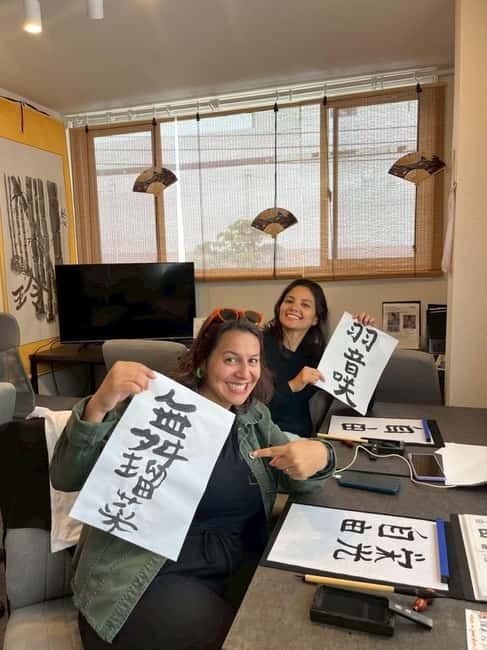
A major part of the workshop focuses on the attitude and right posture for calligraphy. This isn’t a “nice-to-know” add-on. Posture changes everything: your arm movement becomes smoother, your line quality improves, and you stop fighting the brush.
You’ll also learn how to use the right amount of ink. Too much and the lines bleed. Too little and the stroke looks scratchy. The class guides you toward the balance that makes each technique readable.
Then you get the classic calligraphy method: traditional ink melting. The workshop uses water to melt traditional solid ink sticks, which changes the ink’s texture and flow. That small step turns calligraphy into a tactile ritual rather than just a craft table activity.
Brush Techniques on Guide Paper: How You Build Strokes That Look Right
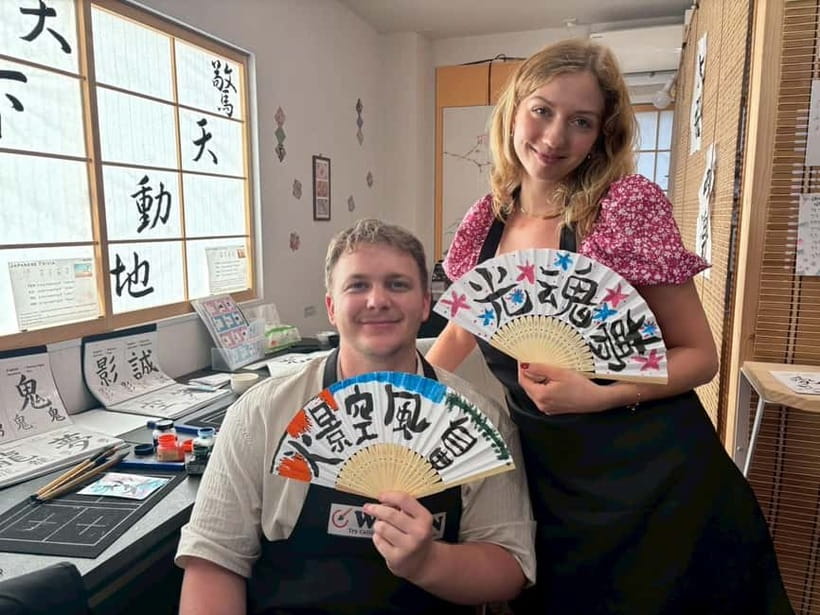
Here’s where the workshop earns its keep. You’ll practice writing using guide paper and learn basically 8 techniques. Guide paper matters because it gives your hand a path. You can focus on pressure, direction, and timing instead of panicking over alignment.
Most people find the first minutes awkward. That’s normal. The instructor guides you through strokes until they start to feel predictable, then you move toward writing your own selected design. The goal isn’t perfection—it’s confidence in the process.
You’ll practice for about 30 minutes on thin paper. That’s a sweet length: long enough to get real practice in, not so long that you lose patience or start rushing.
And you get choice in the final output. You can pick from a sample book or order a design with help from the staff. If you’re writing your name, this is where you connect the classroom strokes to a personal keepsake.



Your Final Piece: Writing Until It Feels Like You
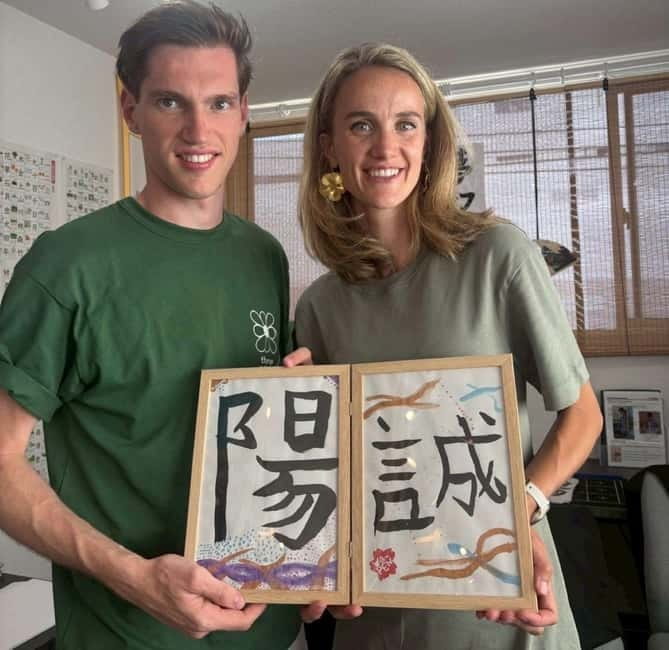
At some point, you’re likely to think, I need one more try. The structure is designed to let you keep practicing until you’re satisfied with your work. That’s a big deal because a good calligraphy workshop doesn’t just hand you a finished product—it lets you grow into it.
When you write the final design on thin paper, your strokes have a different energy than the practice sheets. It’s thinner, more sensitive, and it shows your hand control. If you get a line you like, you’ll feel it instantly.
You also take the piece home. That means the “real souvenir” isn’t only the fan—it’s the written art you made, which you can frame or keep as a memory of your time in Tokyo.
Green Tea and a Postcard to Yourself: Turning Art Into a Memory
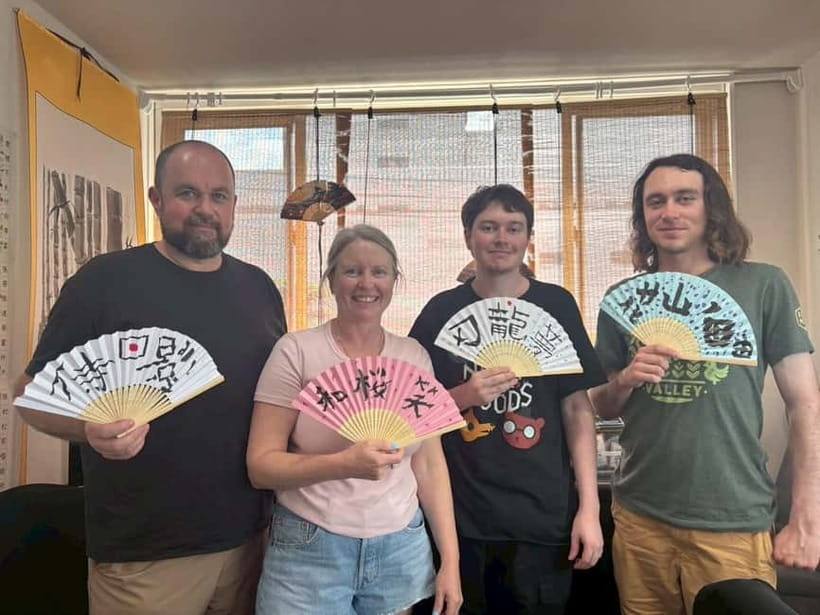
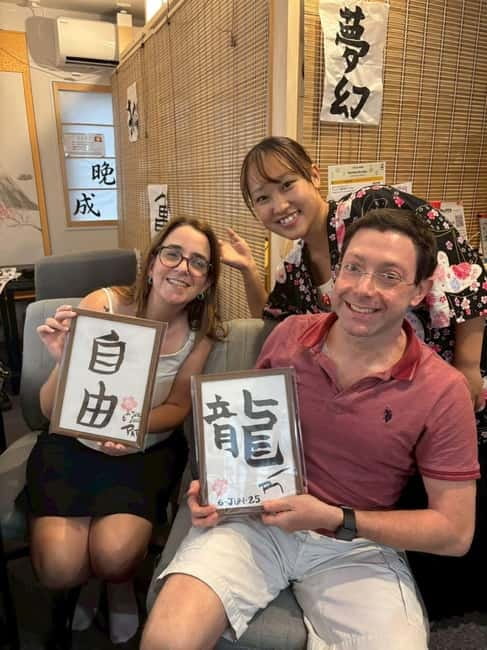
One of the best parts of this experience is what happens after the writing: you get a cup of green tea and you write a postcard to yourself. The idea is simple and smart. You reflect on your emotions after calligraphy while the experience is still fresh.
Then you take the postcard home to send later. It’s a small thing, but it’s also a powerful one: you’ll get a reminder from your past self when you’re back in your regular routine and you need a little Tokyo back.
This isn’t just “crafting.” It’s time for you to connect the strokes to how you felt doing them—calm, focused, proud, surprised. That emotional note is what makes the keepsake worth keeping longer than a week.
Making Your Original Folding Fan: Calligraphy You Can Use
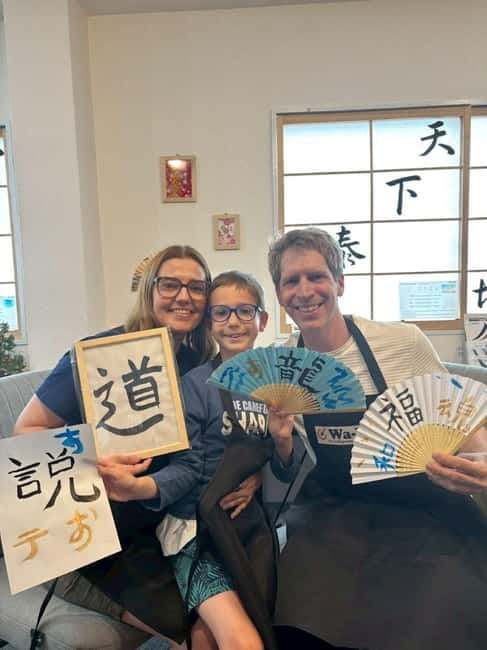
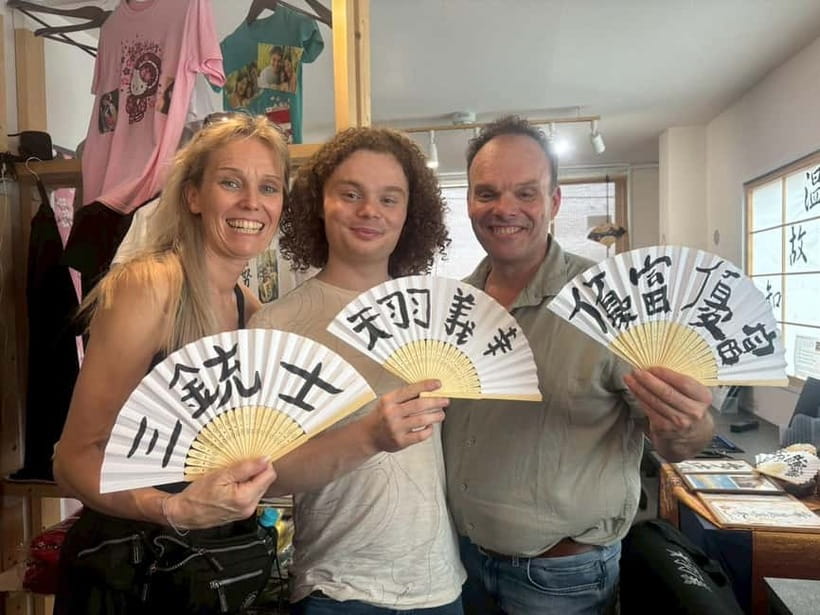
Then comes the fun part: you make an original folding fan based on your calligraphy. This is what turns your written strokes into something you can hold, use, and show without needing wall space.
A fan fits the vibe of Asakusa and summer Japan perfectly. It also means your final artwork has movement and context—it looks different when it’s opened, closed, and held at different angles.
From the way the experience is described and how people talk about it, the fan outcome is a major highlight. You’re not leaving with a single flat sheet. You’re leaving with an object that feels like a real personal souvenir.
Price and Value: Why $16 Can Feel Like a Bargain
The price listed is $16 per person, with 30–90 minutes of activity depending on timing and option. For Tokyo, where many craft experiences cost much more, this stands out for how much instruction you get: history/context, posture coaching, ink practice, guided technique drills, a final writing piece, a postcard moment, and a fan.
In other words, you’re paying for more than materials. You’re paying for coaching. Calligraphy is skill work, and the posture/ink guidance is exactly what reduces frustration.
You’ll want to compare value based on what you actually want. If you want a fast photo-op souvenir, you might be disappointed. If you want a calm, guided creative skill plus a keepsake you can bring home, this feels like strong value.
Who This Workshop Is For (and Who Should Think Twice)
This workshop is a great fit if you like hands-on learning, crafts, and meaningful souvenirs. It also suits people who want a break from Tokyo intensity—especially when you want something that doesn’t require athletic energy or long walking.
It can work well for different ages too. For example, it’s described as enjoyable even for a young participant with patient instruction. Still, since it involves ink tools and careful strokes, you’ll want to use your judgment for kids based on temperament and ability to follow directions.
One clear limitation: it’s not suitable for wheelchair users. Also, no pets are allowed (assistance dogs are allowed).
Small Practical Notes That Keep You Comfortable
A few details matter for comfort and smooth timing:
- Wear clothes that can get a bit dirty from ink (aprons are ready)
- Avoid food and drinks during the session since you’re told no food/drinks are allowed
- Bring comfortable clothing because you’ll be seated with brushwork and focused attention
If you plan the rest of your day, keep in mind you’ll want time to enjoy the green tea and the postcard reflection, not just rush out the door.
Optional Choices You Should Watch For (Henna and T-Shirts)
Two add-ons/variants can change what you actually get:
- If you select Henna tattoo options, the calligraphy experience is not included. So make sure you’re booking what you actually want.
- Printing your calligraphy to a T-shirt is not included. If you want that, you can buy a T-shirt in the shop, but it’s separate.
These details matter because it’s easy to end up with a booking that doesn’t match your expectations. Double-check the option name before you finalize.
Should You Book Tokyo Calligraphy & Make Your Original Folding Fan?
I’d book it if you want a calm, guided craft that teaches real technique. This is one of the few Tokyo activities where you leave with both skill-based art and a usable object, plus a reflective postcard moment with green tea.
You might skip it if you’re looking for something purely sightseeing-focused, or if you need wheelchair accessibility. Also, if you’re extremely sensitive to mess, you’ll want to plan your outfit carefully.
If you do book: go in with patience. Your first strokes won’t look like the final piece, and that’s the point. Let the instructor coach you on posture and ink amount, then write your name or your chosen design. The best souvenirs are the ones you make slowly enough to feel them.
FAQ
Where does the class meet in Tokyo?
The meeting point can vary by option, but the listed coordinates are 35.7162239, 139.7922354 in the Asakusa area.
How long is the calligraphy and fan workshop?
The duration is listed as 30 to 90 minutes depending on the option booked and available starting times.
How much does it cost?
The price is $16 per person.
Is the instructor able to teach in English?
Yes. The instructor is listed as English.
What’s included in the workshop?
It includes history of Japanese calligraphy, posture/attitude coaching, traditional ink melting, brush usage and techniques, practice with guide paper, custom design practice, writing a postcard, and making an original folding fan. It also includes green tea.
Is there an option with Henna tattoo included?
If you select the Henna Tattoo options, the calligraphy experience is not included.
Do I need to bring anything?
You should wear comfortable clothes. You’ll want clothes that can get a bit dirty from ink (aprons are provided).
Can I eat or drink during the session?
No. You’re told that no food and drinks are allowed during the session.
Are pets allowed?
Pets are not allowed, but assistance dogs are allowed.
Is it wheelchair accessible?
It is not suitable for wheelchair users.
Can I print my calligraphy design onto a T-shirt?
Printing your design to a T-shirt is not included. If you want it, you can buy a T-shirt in the shop.
Is there a free cancellation window?
Yes. You can cancel up to 24 hours in advance for a full refund.
Can I reserve and pay later?
Yes. There’s an option to reserve now & pay later.