REVIEW · TOKYO
Tokio A: Tour de la ciudad en Español – Spanish
Book on GetYourGuide →Operated by NIPONEANDO · Bookable on GetYourGuide
Tokyo can feel like a video game with no pause button, but this Spanish tour helps you play it right. You’ll get a close, friendly guide, respectful sightseeing, and solid cultural context as you move from Sensō-ji to Shinjuku and finish in Kabukicho. One thing to plan for: transportation isn’t included, and you’ll also need to budget for your own drinks and food.
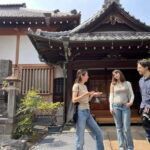
The guides come with real people energy. In past tours, you might get guides like Nikita, Camila, or Emi—each the kind of person who explains without turning the day into a lecture. It’s also clearly built for people who want practical next-step advice after the tour ends, not just photos and a stamp.
If you like your Tokyo day structured but not stiff, this is a great fit. The route is wheelchair accessible, but it’s not suitable for hearing-impaired travelers, so keep that in mind before booking.
In This Review
- Key Things That Make Tokio A Worth Your Time
- A Spanish Tokyo Day That Flows (Without Feeling Like a Tour Bus)
- Sensō-ji in Asakusa: Start With the Temple Everyone Talks About
- The Quick Metro Hop to Ueno (Then a Park Time Slot That Matters)
- Lunch With a Real Window in Ueno
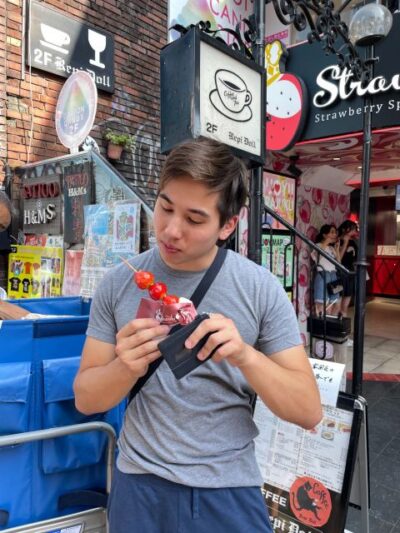
- Ameyoko Market: The Atypical Stop That Adds Texture
- Riding to Shinjuku and the Viewpoint Plan (Shinjuku or Ebisu)
- Kabukicho and the Golden Gai Area: Neon Night Energy at Day’s End
- The Price: Is $96 a Good Value for an 8-Hour Spanish Tour?
- How the Logistics Actually Work (Pickup, Meeting Point, and What to Bring)
- Who Should Book This Tour (And Who Might Be Frustrated)
- Should You Book Tokio A: Tour de la Ciudad en Español?
- FAQ
- Is the tour offered in Spanish?
- What are the main areas you visit during the day?
- How long is the tour, and how is the day paced?
- What is included in the price, and what is not?
- Where do you meet the guide?
- What if the Shinjuku viewpoint is closed?
Key Things That Make Tokio A Worth Your Time
- Spanish-only guidance that keeps the day easy to follow from start to finish
- Line-skip entry at Sensō-ji via a separate entrance, saving you time where it counts
- Real neighborhoods, real contrast: tradition in Asakusa, parks and markets in Ueno, skyline views in Shinjuku, nightlife zones in Kabukicho
- Small transit breaks (metro/train) that reduce fatigue without slowing the day too much
- Friendly, close guiding style—the kind where you can ask questions and get useful recommendations
A Spanish Tokyo Day That Flows (Without Feeling Like a Tour Bus)
This tour is built around the idea that Tokyo is easiest when someone helps you connect the dots. You’re not just walking past landmarks. You’re getting context for what you’re seeing, why it matters, and what to watch for as you go.
I like that it stays highly practical. The day is long enough to hit several major areas—8 hours—but it’s broken into guided blocks with short jumps on subway/metro and train. That rhythm matters in Tokyo, where it’s easy to waste energy “getting your bearings” instead of actually enjoying the city.
You’ll also feel the tour’s tone: respectful of the environment, and focused on helping you continue enjoying your trip after the last stop. That last part is underrated. Tokyo is huge. A guide who gives you next-step advice can be the difference between a fun visit and a frantic scavenger hunt.
You can also read our reviews of more tours and experiences in Tokyo.

Sensō-ji in Asakusa: Start With the Temple Everyone Talks About
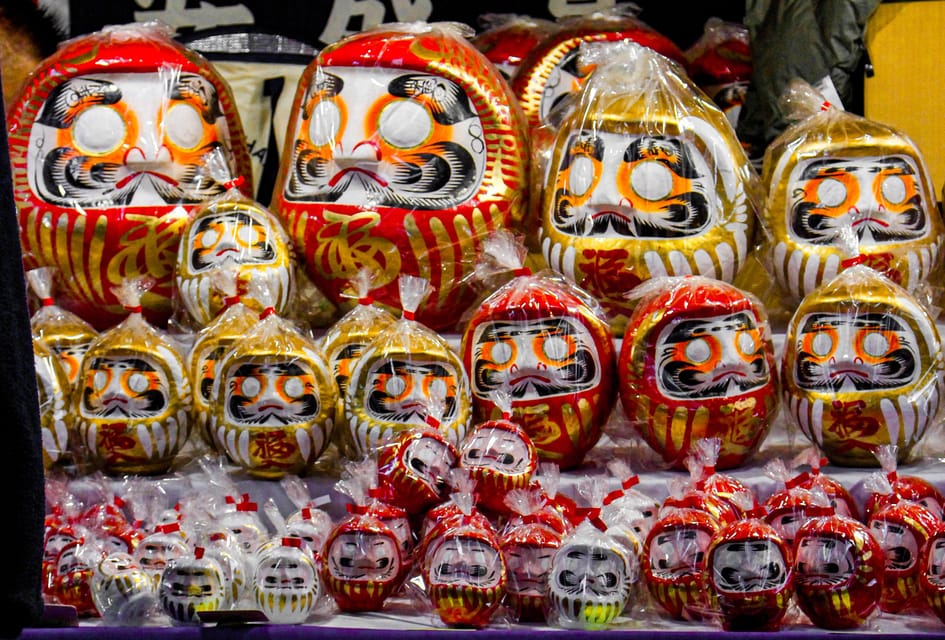
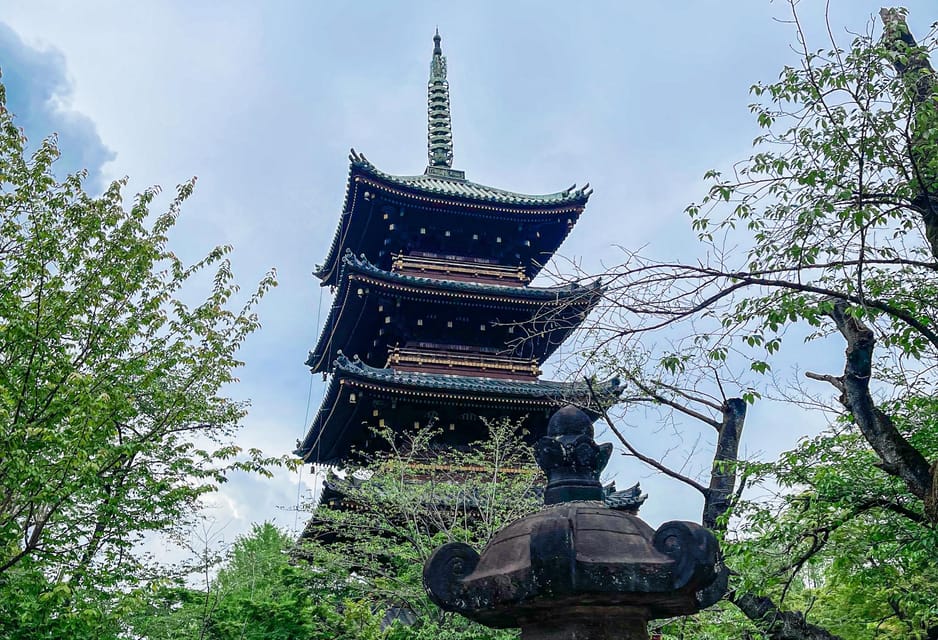
The day begins in Asakusa, in the traditional neighborhood vibe that still feels like Tokyo’s older face. Your first major stop is Sensō-ji, one of Japan’s most famous temples—and it’s the right place to start because it sets the tone for everything that follows.
Expect a guided visit of about 2 hours, with time to see the temple area properly rather than sprinting through it. You also get skip-the-line entry through a separate entrance. That’s a big value-add. At popular temples, time can evaporate before you even get inside, and you’re paying for a tour, so you want the experience, not the queue.
Logistically, the meeting point is in front of the entrance to the Asakusa Tourist and Cultural Information Center, and the guide will be identified with a hanging badge that says NIPONEANDO. It’s a simple setup, and it helps you start the day calmly instead of searching around.
One more small but important thing: the tour notes that luggage or large bags aren’t allowed. So treat this as a “carry-on your day” experience—small bag, comfortable shoes, and you’ll be fine.
The Quick Metro Hop to Ueno (Then a Park Time Slot That Matters)
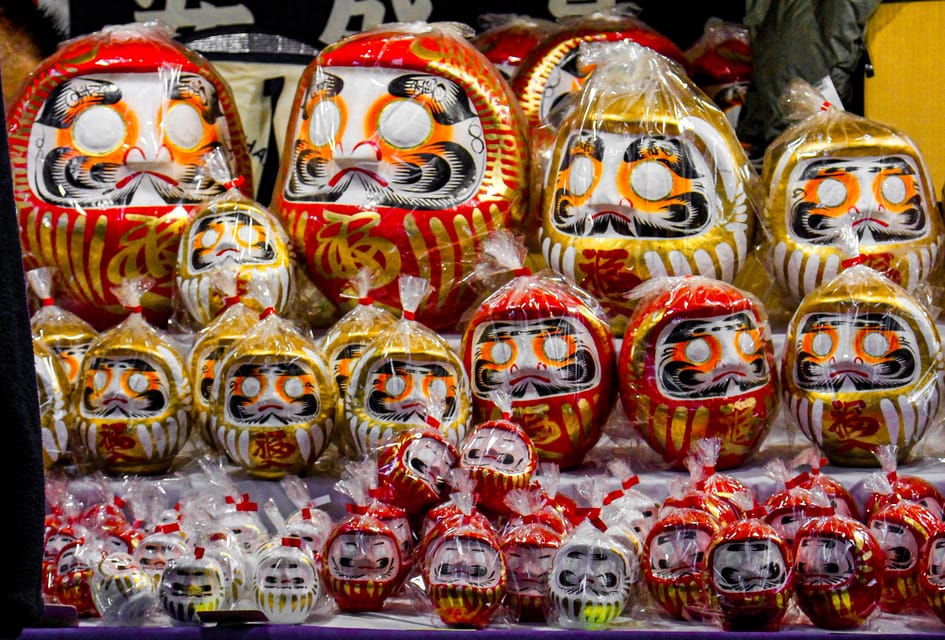
After Asakusa, there’s a short metro ride (about 10 minutes) to Ueno. This is the kind of timed transition that keeps the day moving without losing momentum.
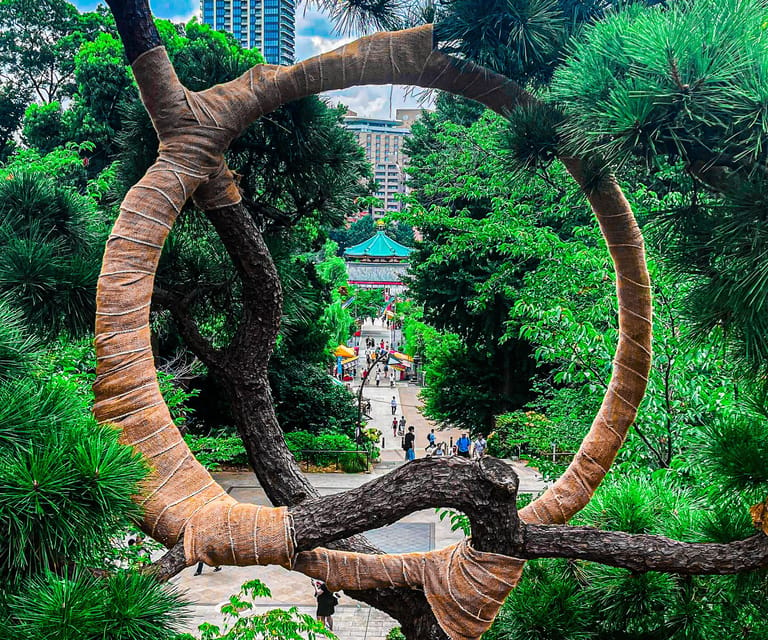
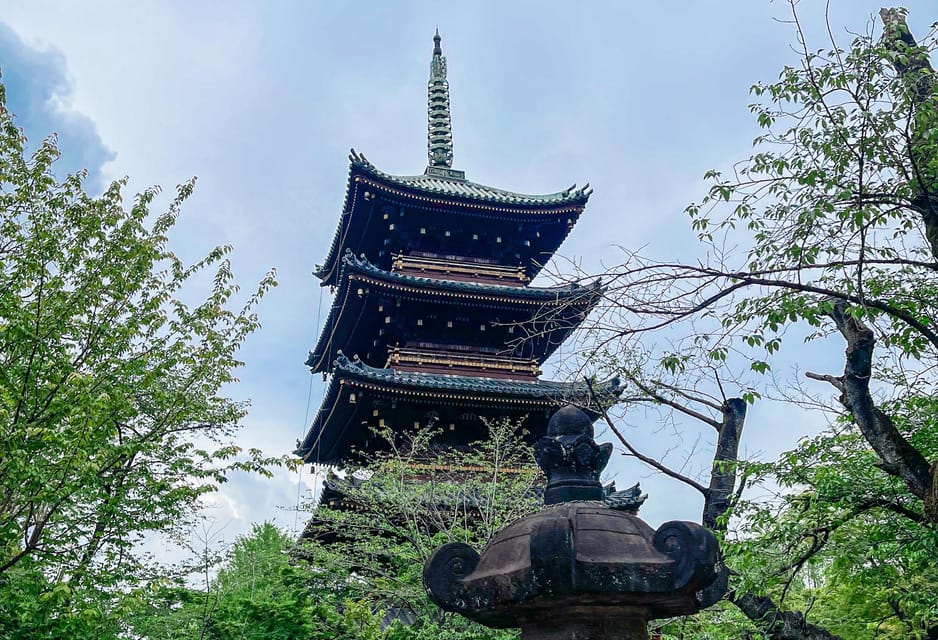
In Ueno Park, you’ll get around 1.5 hours of guided time. This isn’t just a photo stop. A good park visit needs explanation—what areas are worth focusing on, what you’re looking at, and how the neighborhood connects to the rest of the day. Ueno works well as a reset after temple time. The park gives you breathing space, and it also sets you up for lunch and the market area that comes next.
If you’re the type who likes to understand what you’re walking through, you’ll appreciate that this tour doesn’t treat Ueno as filler. It’s one of the more human-scale parts of the route—less “big monument, hurry up,” more “walk, look, learn.”
Lunch With a Real Window in Ueno
After the guided time in Ueno Park, you get about 80 minutes for lunch. That’s enough time to eat without feeling rushed, but not so much time that the day drifts.
Keep in mind: food and drinks aren’t included. That’s normal for Tokyo city walks, but it’s also part of the value question. You’re paying for guidance and structure, not for meals you can choose for yourself anyway.
My advice: use the lunch break to do two things. First, take a breather. Second, ask your guide for quick recommendations for what to try in that area (or where to head next). The tour’s whole pitch is that you’ll leave with practical suggestions, so lean into that while you still have your guide on hand.
Ameyoko Market: The Atypical Stop That Adds Texture
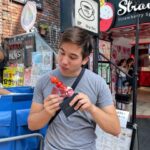
After lunch, the tour includes Ameyoko, described as an atypical market stop. This is one of those Tokyo experiences that gives your day texture—colors, noise, and the feeling that you’re moving through local life rather than a themed attraction.
The key benefit here is variety. You’re mixing temple, park, lunch, and market before heading to modern Tokyo’s higher-energy parts. That contrast is the point. Japan can shift moods fast, and Ameyoko helps you feel that change in your body, not just in a travel photo.
Also, because it’s a market, you’ll likely want some cash flexibility (even though the tour itself doesn’t list exact spending). Just assume you’ll find snacks, small goods, or quick bite options that catch your eye. If your “no extra spending” plan is strict, bring that mindset—but if you’re curious, this is where curiosity pays off.

Riding to Shinjuku and the Viewpoint Plan (Shinjuku or Ebisu)
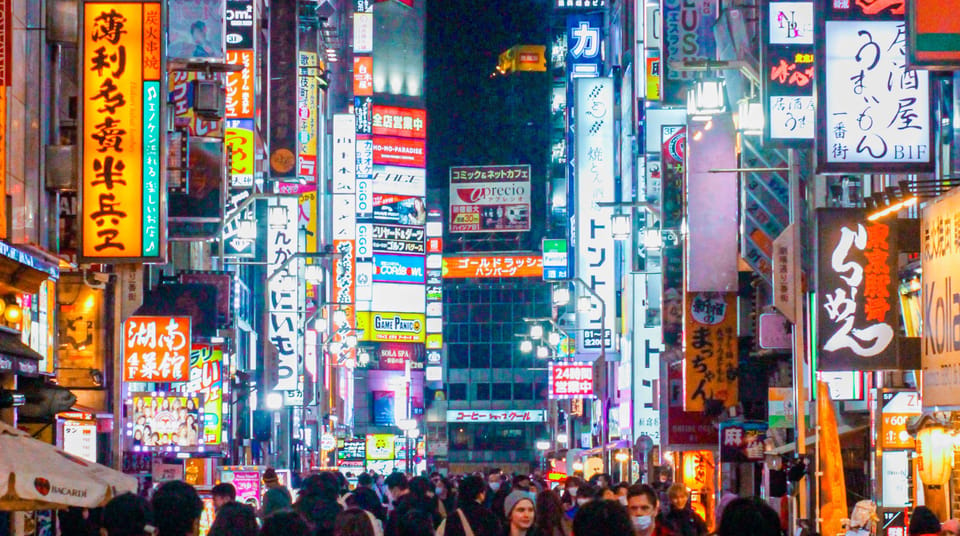
Next comes the train ride (about 25 minutes) toward Shinjuku, one of Tokyo’s best-known districts for modern city energy.
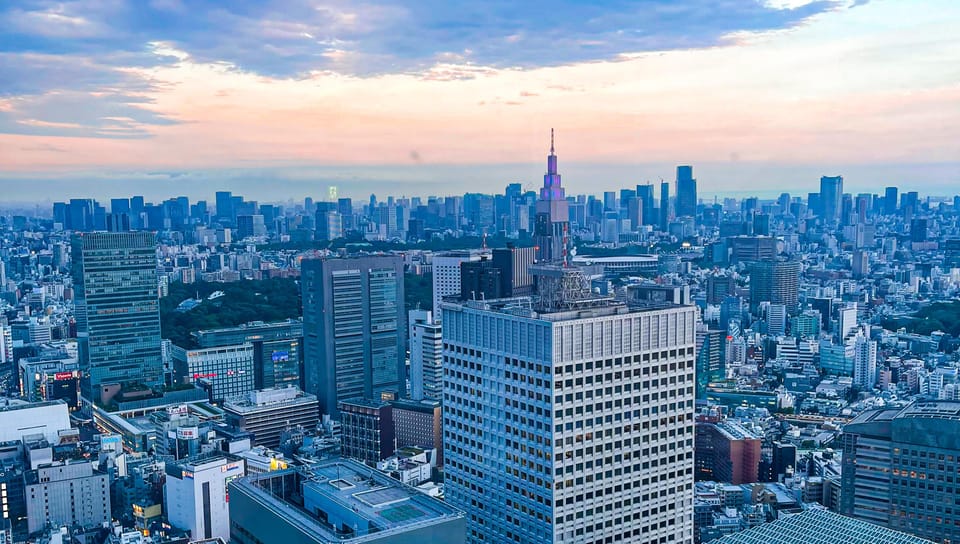
In Shinjuku, you’ll get about 1.5 hours guided, and one of the highlights is going up to a best-viewpoint option. Here’s the practical catch: the tour notes that the viewpoint can change if the original Shinjuku mirador is closed. If that happens, the plan may switch to the viewpoint in Ebisu.
That’s actually a sign of a well-run operation. Tokyo closures happen. Rooftop and observation access can change. Knowing there’s a backup viewpoint helps you avoid the letdown feeling you get when plans fail with no alternative.
When you’re ready to choose, prioritize comfort. Shinjuku viewpoints can be crowded, and this stop is the emotional “shift” of the day—from walking Tokyo streets to looking at them from above. If you like skyline perspectives, this is the moment your photos should get the most attention.
Kabukicho and the Golden Gai Area: Neon Night Energy at Day’s End
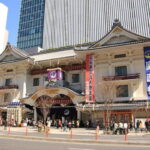
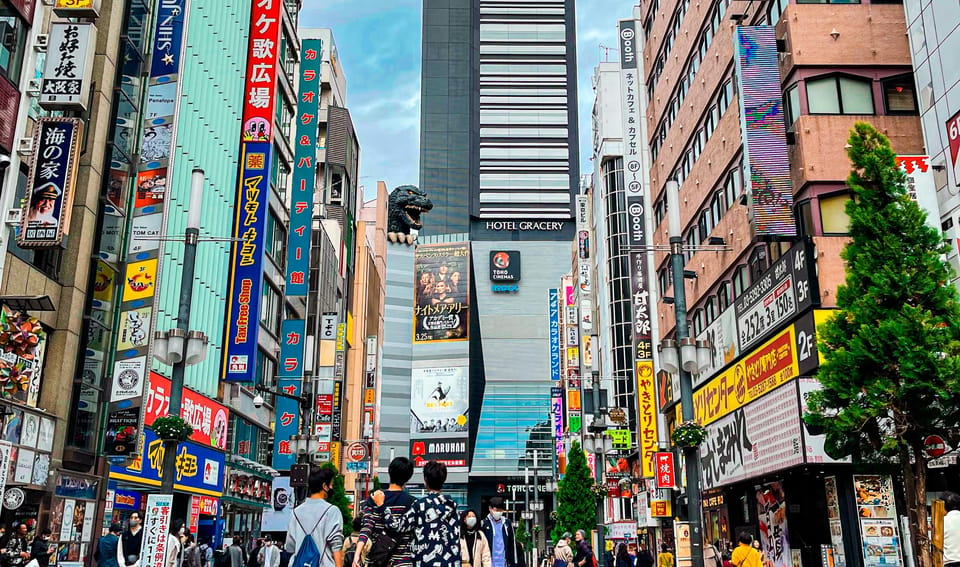
The tour finishes in Kabukicho, described as Tokyo’s red light district area, sometimes associated with Golden Gai. The guide takes you through about 50 minutes there, ending at Kabukicho Theater.
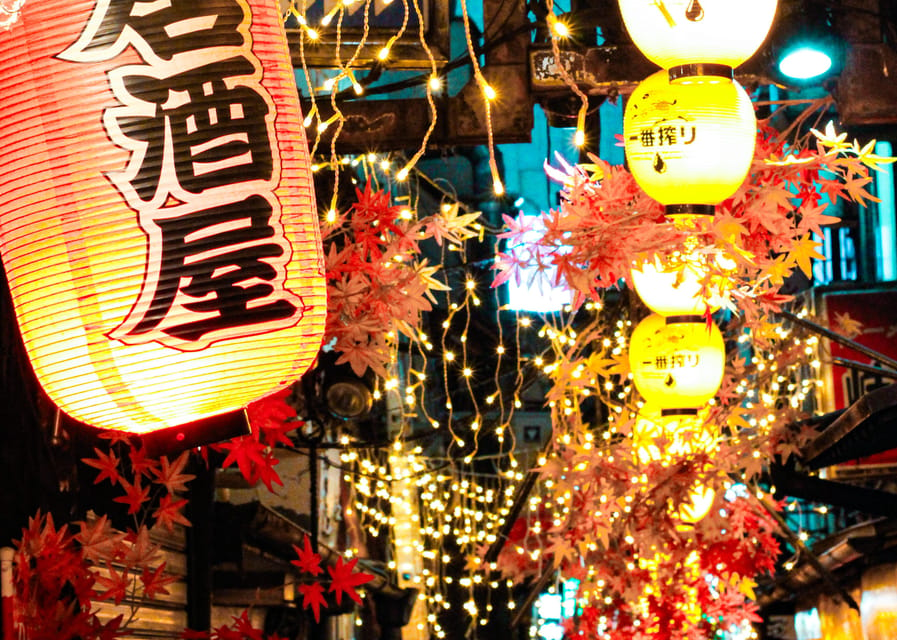
This is a real-world Tokyo nightlife zone, even though your visit is guided during the day portion of the itinerary. Expect neon storefront energy and lots of venues like karaoke bars, bars, restaurants, and gaming stores. The tour frames it as the final contrast piece: after tradition, markets, and views, you get the Tokyo that runs on lights and nightlife.
Is this stop for everyone? It depends on your comfort level. If nightlife districts make you uneasy or you’d rather avoid that kind of area, you’ll want to consider whether the Kabukicho segment fits your trip style. On the other hand, if you want Tokyo’s “other face,” this is one of the more honest ways to see it—through explanation and navigation, not through wandering blindly.
Also, there’s a short on-foot transfer (about 10 minutes) before you settle into the Kabukicho guided time. It’s not a long walk, but it’s enough to change the atmosphere completely.
The Price: Is $96 a Good Value for an 8-Hour Spanish Tour?
At $96 per person for 8 hours, the value depends on what you’d otherwise do. If you were planning a self-guided day, you’d still pay for entry fees where applicable, transit costs, and the time cost of figuring out how to stitch neighborhoods together.
Here’s what you’re paying for:
- A live Spanish guide (and Spanish-only matters in a city where you can easily get lost in translation)
- Guided time in several major areas: Asakusa/Sensō-ji, Ueno Park, Shinjuku, and Kabukicho
- Skip-the-line entry at Sensō-ji
- A structure that prevents “Tokyo drift,” where you move a lot but don’t see much
What’s not included:
- Transportation (400¥)
- Drink and food
So in real-life terms, think of the price as covering the guide and access strategy, while you handle transit and meals. That’s pretty standard. The question is: would you spend the same time moving between these districts effectively on your own? If not, the tour’s price feels more reasonable fast.
How the Logistics Actually Work (Pickup, Meeting Point, and What to Bring)
The meeting point is clear: outside the Asakusa Tourist and Cultural Information Center entrance, where you’ll spot the guide with the NIPONEANDO identification badge.
Pickup is optional only if you add a hotel pickup supplement or select the private tour option. Even then, the tour notes that pickups are done via public transport, not a private car door-to-door. That means you should plan to meet the guide at the start while they handle the transit method with you.
Also important: the tour is wheelchair accessible. But it’s not suitable for hearing-impaired travelers, likely because it’s a live guided experience without the accessibility details listed for audio accommodations.
What to bring:
- Comfortable walking shoes (you’ll be on your feet during multiple guided segments)
- A small bag since luggage or large bags aren’t allowed
- Money for transit (400¥) and any drinks/food you want
- A phone with maps help, even though the guide is there—Tokyo is big, and backup navigation makes everyone calmer
Who Should Book This Tour (And Who Might Be Frustrated)
I think this tour is a strong match if you:
- Want Spanish guidance and don’t want to piece things together in English
- Like contrast: temples, parks, markets, city views, then nightlife neighborhoods
- Appreciate a guide who gives advice you can use after the tour ends
- Enjoy asking questions and getting direct, friendly responses
It may be less ideal if you:
- Are sensitive to nightlife-red-light district vibes at the end (Kabukicho can feel intense)
- Need accommodations for hearing-impaired accessibility (not suitable)
- Want a totally free-form itinerary with no guided structure (this is scheduled and timed)
Also, if you’re traveling with a larger group, there’s a private group option available. For private tours, there’s a special note: if you add starting one hour earlier (09:00), the tour ends one hour earlier (17:00). That’s useful if you like finishing sooner and keeping your evening flexible.
Should You Book Tokio A: Tour de la Ciudad en Español?
If you want a guided day that covers major Tokyo zones in Spanish, this is a book-worthy option. The mix of Sensō-ji + Ueno + Shinjuku viewpoint + Kabukicho is a smart sweep, and the line-skip at Sensō-ji is a practical win.
I’d especially recommend it if you value explanation and navigation. Tokyo rewards confidence, and a good guide helps you feel that confidence faster—without burning your day in transit confusion.
Skip it if you strongly prefer quiet sights only, or if hearing accessibility is a must. Otherwise, for a straightforward, guided, neighborhood-by-neighborhood Tokyo overview, this one has the structure and the human touch.
FAQ
Is the tour offered in Spanish?
Yes. The tour guide provides the experience in Spanish.
What are the main areas you visit during the day?
You’ll start in Asakusa at Sensō-ji, visit Ueno Park, go to Ameyoko market after lunch, then head to Shinjuku for a viewpoint, and finish in Kabukicho (including the Kabukicho Theater area).
How long is the tour, and how is the day paced?
The tour lasts 8 hours. It includes guided segments (for example, temple and park time), plus short transit hops by metro/subway and train, with a short walking portion near the end.
What is included in the price, and what is not?
Included: the Spanish tour and the 8-hour experience. Not included: transportation (400¥) and drinks and food.
Where do you meet the guide?
You meet in front of the entrance to the Asakusa Tourist and Cultural Information Center, and the guide carries an identification hanging that says NIPONEANDO.
What if the Shinjuku viewpoint is closed?
The tour notes that the viewpoint may be changed from Shinjuku to Ebisu if the original mirador is closed.