REVIEW · TOKYO
Sumi-e Experience in a relaxing green tea shop in Tokyo
Book on GetYourGuide →Operated by H.I.S. Co Ltd(TIC) · Bookable on GetYourGuide
Japanese ink painting is surprisingly calming. You’ll do sumi-e in a green tea shop in Tokyo, with a short instructor intro, one chosen subject, and time to make a real keepsake on paper. I especially like the small group size (limited to 8 participants), which makes it easier to get help without feeling rushed.
I also like that tea is part of the class, so the experience feels like a break, not a sprint. One thing to think about first: you’ll use black ink, so you need to wear clothes you don’t mind getting inked, and you’ll need to provide your birth date before you start.
In This Review
- Key points before you go
- Tokyo green tea calm at a 4F meeting point
- How the 1-hour sumi-e lesson actually runs
- Choosing your theme and project (coasters, lamp shade, kakejiku)
- Coasters course: 9 cm washi-on coasters
- Lamp shade course: USB-powered 10 cm square shade
- Hanging Stroll course: kakejiku scroll, 75×32 cm washi
- Ink wash painting basics: making something that looks like sumi-e
- The tea breaks you don’t realize you need
- Price and value: what $105 buys in Tokyo for this class
- Who should book this sumi-e class (and who should skip it)
- Tips to make your brushwork feel easier
- Should you book this sumi-e experience?
- FAQ
- How long is the sumi-e class?
- What should I choose when I book?
- Is the instructor able to teach in English?
- What is included in the price?
- Can I take my finished artwork home?
- What should I wear?
- Is it suitable for young children?
Key points before you go
- One hour, three parts: intro/demo, making time, then a short wrap-up with guidance for finishing and handling your piece.
- English instruction: easy to follow even if you’ve never touched a brush for painting.
- Pick your project: coasters, a USB lamp shade, or a hanging kakejiku (scroll).
- Tea included: it helps you slow down and focus while you paint.
- You take it home: your chosen theme becomes a personal souvenir you keep.
Tokyo green tea calm at a 4F meeting point
This class is set up to feel quiet and manageable, which matters in a city like Tokyo. You meet at a 4F building, and from there the whole flow is designed around a short teaching segment and hands-on time. Expect the room to focus on art materials, brush work, and simple, Zen-linked ink techniques—not a loud, showy performance.
The setting is part of the value: doing ink wash painting while sipping tea makes the experience feel like an actual pause in your day. It’s also a good fit if you want something cultural without needing to read a long history text or wander for hours to find a viewpoint.
Practical note: since this is on a “4F” you’ll likely want to arrive a bit early so you can get to the right floor without stress. That one small habit keeps the class calm from minute one.
You can also read our reviews of more tours and experiences in Tokyo.


How the 1-hour sumi-e lesson actually runs
The class is 1 hour, and the timing is structured in a way that helps beginners succeed. Here’s what to expect:
- 10 minutes: the instructor introduces themself, then demonstrates how ink wash painting works—how to hold the brush, how to load ink, and how to translate your chosen subject into simple forms.
- 40 minutes: your hands-on making time. You choose one theme and paint it onto your selected item.
- 10 minutes: output time and instructor instruction—help for what you should do next so you leave with your work correctly prepared and handled.
English is supported by the instructor, and that’s a big deal because sumi-e isn’t about memorizing steps. It’s about getting comfortable with motion—how much pressure to use, when to let ink spread, and when to keep it crisp.
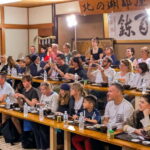
In one recent experience, master Shigen led the class and the group had a relaxed pace—plus, lots of tea. That combination is exactly what you want if you’re learning something new but still want it to feel friendly and doable.
Choosing your theme and project (coasters, lamp shade, kakejiku)
You don’t just make a random ink blot and hope for the best. You choose one painting theme you want to draw, and you apply it to a specific “project” you’ll take home. The options are:
Coasters course: 9 cm washi-on coasters
You’ll draw your design on washi Japanese paper coasters that are 9 cm in diameter. If you want something practical—something you’ll actually use at home—this is the safest bet. Coasters also handle small variations well; with ink wash painting, imperfections are part of the charm rather than a flaw.
This course is especially good if you’re traveling with luggage constraints and want a compact souvenir that won’t require special packing beyond normal care.
Lamp shade course: USB-powered 10 cm square shade
Here you decorate a 10 cm square lamp shade. It lights up via USB connection, which turns your ink art into something that changes with the light. Even if you don’t set up a big lighting display, it’s a fun way to show your work daily—quietly, every time you plug it in.
One consideration: this option is more “display” than “use.” If you’re a minimalist, you might find a lamp shade feels more like a decoration. If you love functional art, this one earns extra points.




Hanging Stroll course: kakejiku scroll, 75×32 cm washi
The kakejiku is a traditional hanging scroll made of washi paper, sized 75×32 cm. Your ink wash theme becomes a framed-feeling work you can hang and live with.
This is the choice if you want something that looks like a real piece of Japanese art. It’s also the option most people imagine when they hear sumi-e.
Ink wash painting basics: making something that looks like sumi-e
Sumi-e is often described as simple, but simple doesn’t mean easy. The craft works because black ink and water create a full range of tones—from softer gray washes to darker strokes. Your job is to translate your theme into brush movements that feel intentional, even when the style invites spontaneity.
During the demo, you’ll likely see how the instructor uses:
- brush pressure and angle to vary line weight,
- spacing to let ink breathe on the paper,
- water to create lighter gradients.
Then comes the important part: learning not to overcorrect. In sumi-e, small irregularities aren’t a failure. They’re part of the visual language—especially in nature-inspired subjects like trees, bamboo-like forms, and mountain-style scenery (based on how the art form is commonly taught).
If you’re nervous about doing it “wrong,” don’t. The class is built around one theme and one piece on one project. That structure reduces the pressure, and the instructor’s guidance during output time helps you finish with confidence.
The tea breaks you don’t realize you need
Tea is included, and that’s not just a nice add-on. It changes the whole rhythm of the class. Sipping tea while you paint makes the session feel slower and more focused, which helps you get better brush control with less tension.
Also, tea is a gentle way to settle into the mindset the art form is associated with: less rushing, more attention to what the ink is doing on the surface.
In a recent class, the instructor had the group drinking a lot of tea, which tells you this shop-style setting is meant for comfort. If you’re coming straight from sightseeing, this tea + art combo can be a surprisingly good reset.
Price and value: what $105 buys in Tokyo for this class
At $105 per person for a 1-hour workshop, you’re paying for a guided art lesson with materials and tea. The included items are clear:
- painting class fees,
- painting equipment,
- tea.
Transport isn’t included, so you’ll handle getting yourself to the 4F meeting point.
Here’s the value logic: you’re not just buying “a souvenir you could have picked up.” You’re making a personal piece on traditional materials (washi paper), and you’re supported by an English-speaking instructor for the whole process. You also get a finished work you can take home—coasters, a USB lamp shade, or a hanging scroll—so you leave with something tangible and specific to your theme.
If you’re already doing a few paid experiences in Tokyo, this is one of the better ones for value because it combines learning + a keepsake + included refreshments. It’s not a long museum-style commitment, either, so it’s easier to fit into a day.
Who should book this sumi-e class (and who should skip it)
This class makes sense if you:
- want a hands-on Tokyo activity that’s not purely sightseeing,
- prefer small groups (you cap at 8 participants),
- like the idea of learning a traditional technique with simple structure,
- want a souvenir that’s genuinely yours.
It also works well for first-timers. The instructor demo and step-by-step timing are designed to help people who have never used ink and a brush for art.
You should reconsider if:
- you need completely mess-free activities. You’ll be working with ink, and you’re told to wear clothes you don’t mind getting inked.
- you’re traveling with very delicate clothing or you hate the idea of a stained shirt.
Age note: it’s not suitable for children under 5. For young kids close to that age, you’ll want to judge carefully based on comfort with mess and attention span, since the class includes ink handling.
Wheelchair accessibility is available, which is a plus for visitors who need step-free or supportive access.
Tips to make your brushwork feel easier
You can improve your experience fast with a few practical choices:
- Wear clothing that can handle ink. Long sleeves that you’re not afraid of are often better than a favorite top.
- Bring yourself a calm plan: this is 1 hour, so mentally treat it like a focused session, not a “wander and craft whenever” activity.
- Choose a theme you actually want to repeat. The point is personal satisfaction—one theme, one project, one finish.
Also, be ready to share your birth date. The class asks you to provide it, so don’t expect to skip that step at check-in.
Should you book this sumi-e experience?
Yes, if you want a real creative activity in Tokyo that’s structured, guided, and low-stress. This is especially worth booking if you’re drawn to traditional Japanese art and you like the idea of taking home a project that matches your own theme—coasters, a lamp shade, or a hanging scroll. The included tea and small-group format help it feel like a break, not a transaction.
Maybe skip it if you’re uncomfortable with ink mess, have no interest in brushwork, or you only want passive culture from your day. But if you’re willing to get a little ink on your clothes, this class is one of the most straightforward ways to experience sumi-e in a calm, supportive setting.
FAQ
How long is the sumi-e class?
The class runs for 1 hour, including an instructor introduction and demo, your painting time, and a short output/instruction period.
What should I choose when I book?
You choose both a painting theme and one course/project: coasters, a lamp shade, or a hanging kakejiku.
Is the instructor able to teach in English?
Yes. The instructor is listed as English-speaking.
What is included in the price?
The price includes the painting class fees, painting equipment, and tea.
Can I take my finished artwork home?
Yes. You can take your completed coaster, lamp shade design, or hanging scroll home as a souvenir.
What should I wear?
Wear clothes you don’t mind getting dirty, since you’ll be painting with ink.
Is it suitable for young children?
It is not suitable for children under 5 years old.