REVIEW · TOKYO
SAMURAI EXPERIENCE in Tokyo(Harajuku)【SAMURAI’ve】
Book on GetYourGuide →Operated by SYDO Inc. · Bookable on GetYourGuide
Samurai sword work in a Tokyo dojo sounds theatrical. Then you add reigi sahou manners and kitsuke kimono dressing, and it turns into hands-on practice you can actually use. I love that you get both etiquette and movement, not just posing with a prop sword, and I love the chance to take home a proper photo in full kit. One thing to plan for: it’s a 1-hour workshop with basic techniques and stylized choreography, so this is not a full sword-training boot camp.
This class runs with a qualified instructor who works in video and stage productions, so the teaching feels clear and performance-friendly. English is supported (along with Japanese and Chinese), and the group is capped at 10 people, which helps you get attention instead of standing around. You’ll want to show up in comfortable clothes, because you’ll be moving and changing quickly.
In This Review
- Key things to know before you go
- Why a 1-Hour Samurai Experience in Harajuku Works
- Finding the Red Door and Settling Into the Dojo Basement
- Reigi Sahou: Samurai Manners You Practice, Not Just Hear About
- Kitsuke Kimono Dressing: Wearing the Costume the Right Way
- Sword Fighting Basics: What You Actually Learn (and What You Should Expect)
- Tachimawari: Stylized Moves Like Sword-Fight Scenes
- Photos With a Sword and Kimono: The Ending That Seals the Memory
- Price and Value: Is $70 for This Workshop Fair?
- Language, Group Size, and How Comfortable It Feels
- Who Should Book This Samurai Experience in Harajuku
- Quick Practical Tips Before Your Session
- Should You Book SAMURAI’ve in Harajuku?
- FAQ
- How long is the SAMURAI’ve experience in Tokyo (Harajuku)?
- How much does it cost?
- What’s included in the price?
- What should I wear or bring?
- Where do I meet the instructor?
- Is it suitable for young children?
Key things to know before you go
- Reigi sahou first: manners and demeanor come before any sword choreography
- Kitsuke kimono dressing: you learn how to wear the kimono properly for the full look
- Tachimawari practice: stylized sword-fighting movements used in sword-fight scenes
- Small-group pace: limited to 10 participants, so questions don’t get lost
- Photo shoot included: you finish with sword-in-hand pictures that match the lesson
Why a 1-Hour Samurai Experience in Harajuku Works
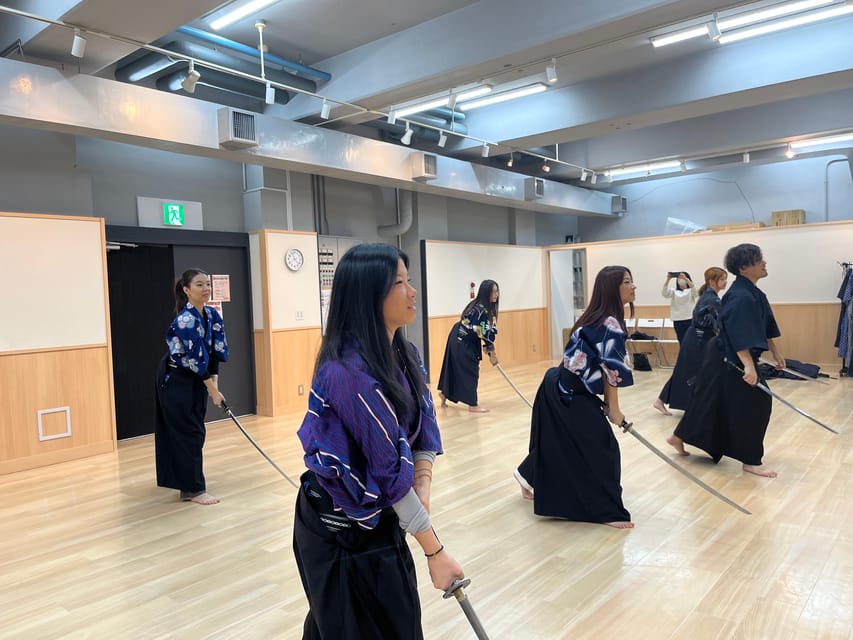
A one-hour sampler can feel rushed on paper. Here, it makes sense because the session is built as a sequence: appearance first, then etiquette, then movement, then photos. You get a complete mini-story of what it feels like to step into a samurai role in Tokyo.
I also like the balance. Some experiences go heavy on costume and light on substance. This one starts with reigi sahou (samurai etiquette and conduct) and moves into actual practice with sword techniques, even if they’re kept beginner-friendly.
The location helps too. Harajuku is one of those areas where you can do this workshop as a side quest while you’re already exploring. You’re not carving out a whole day just to touch samurai culture.
You can also read our reviews of more tours and experiences in Tokyo.



Finding the Red Door and Settling Into the Dojo Basement
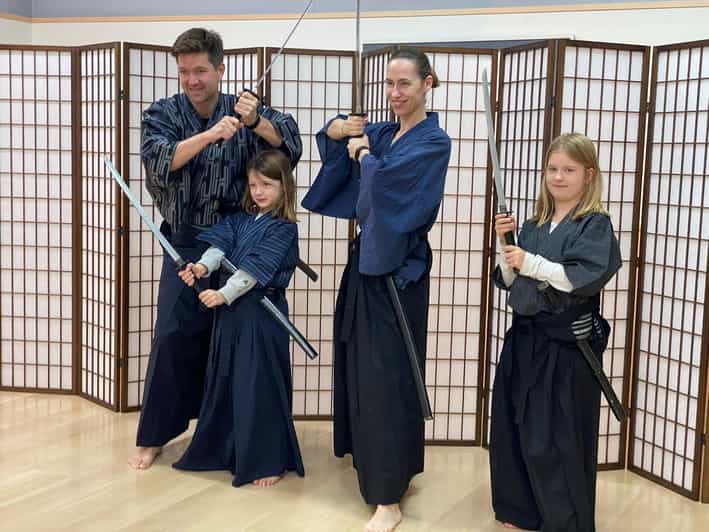
Your start point is easy once you know what to look for: enter through the red door, go to the second-floor basement, and you’ll be at the dojo area.
Timing matters because you’ll be ready to move fast. This is not the kind of activity where you show up early, wander, and stroll into place when you feel like it. Build in a little buffer so you can get checked in and settle before dressing starts.
Location-wise, it’s about a 5-minute walk from Kitasandou Station and roughly an 8-minute walk from Harajuku Station. If you’re already in the Harajuku orbit, that’s a very workable hop—especially when you’re trying to fit this around shopping or a meal nearby.
Reigi Sahou: Samurai Manners You Practice, Not Just Hear About
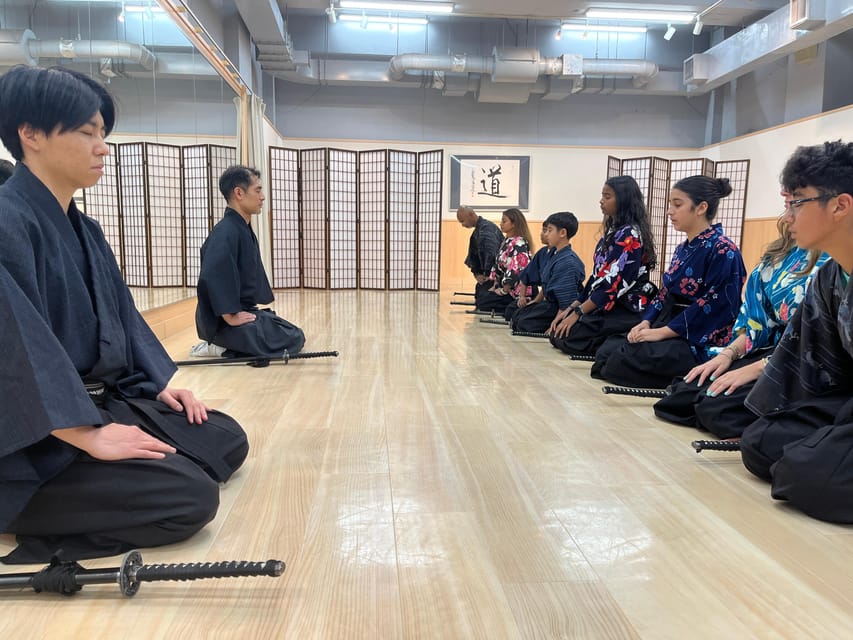
Before you touch a sword, you learn the etiquette piece: reigi sahou. This is the part that often gets skipped in pop-culture versions of samurai training. Here, it’s the foundation.
In practical terms, reigi sahou is about how you carry yourself: how you show respect, how you hold your posture, and how you act as part of a disciplined setting. You don’t need to be a history buff to get it. You just follow what the instructor teaches and translate it into your body language.
I like this order because it changes how you perform the sword moves later. When your stance and demeanor are aligned, the choreography looks more convincing, and you feel more confident during the practice portion. It’s also the kind of “small but meaningful” skill you can explain to friends later without sounding like you only learned a trick.
The instructor is qualified and brings experience from video and stage productions. You’ll notice that in how they guide your timing and positioning. It’s structured, not chaotic, even when it’s interactive.
Kitsuke Kimono Dressing: Wearing the Costume the Right Way
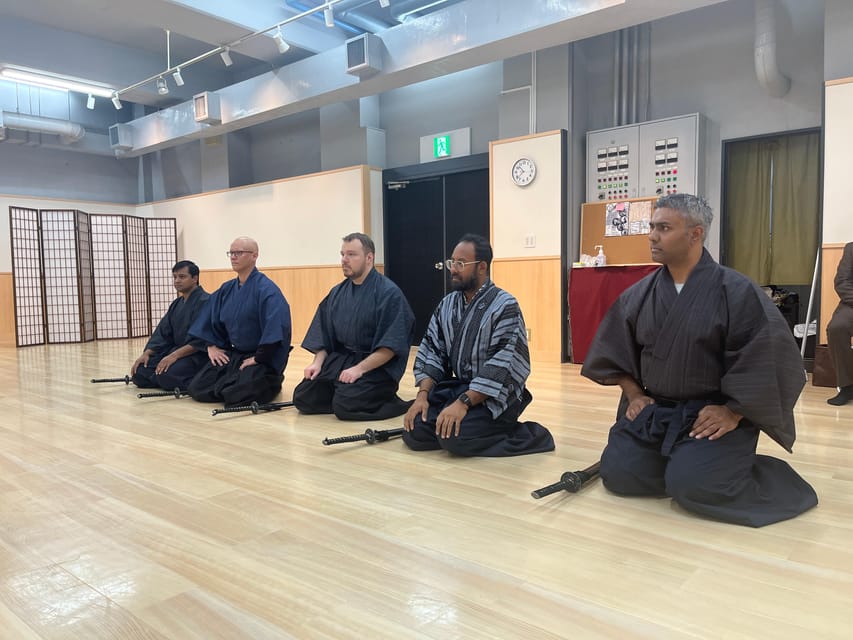
Then comes kitsuke kimono dressing. This is the moment where the experience stops being purely educational and becomes visual. You’re learning how to put on the kimono correctly, which is a big part of why the photos at the end work so well.
A few things make this more useful than a typical costume photo:
- You’re not just handed a robe. You learn the process of wearing it.
- Dressing properly helps you stand and move in a way that matches the rest of the lesson.
- You’ll finish the class looking like you belong in the scene, not like you borrowed a Halloween outfit.
You’ll want to wear clothes that make changing easier. The tour asks for comfortable clothing, and that’s good advice. Even if you’re not thrilled by the idea of changing, the fast reality is: if your clothes are awkward to remove or uncomfortable to adjust, the workshop feels harder than it needs to.
Sword Fighting Basics: What You Actually Learn (and What You Should Expect)
After etiquette and dressing, you move into sword practice. The workshop focuses on basic samurai sword-fighting moves. That wording matters: you’re learning fundamentals, not attempting real battlefield techniques.
The session is designed to be doable for a wide range of people, because anyone can join regardless of age and gender as long as they have the samurai spirit. The class does have limits: children under 5 aren’t suitable, and wheelchair users aren’t recommended.
In your practice, you’ll likely focus on:
- correct basic forms and positioning
- controlled movement patterns
- learning how the instructor sets up the choreography
Think of it like learning the “language” of sword scenes first—stance, flow, and timing—then using that language in the next part called Tachimawari.
If you’re hoping for advanced sparring or a long curriculum, this won’t be that. But if you want hands-on technique plus a sense of confidence, it’s a solid match.





Tachimawari: Stylized Moves Like Sword-Fight Scenes
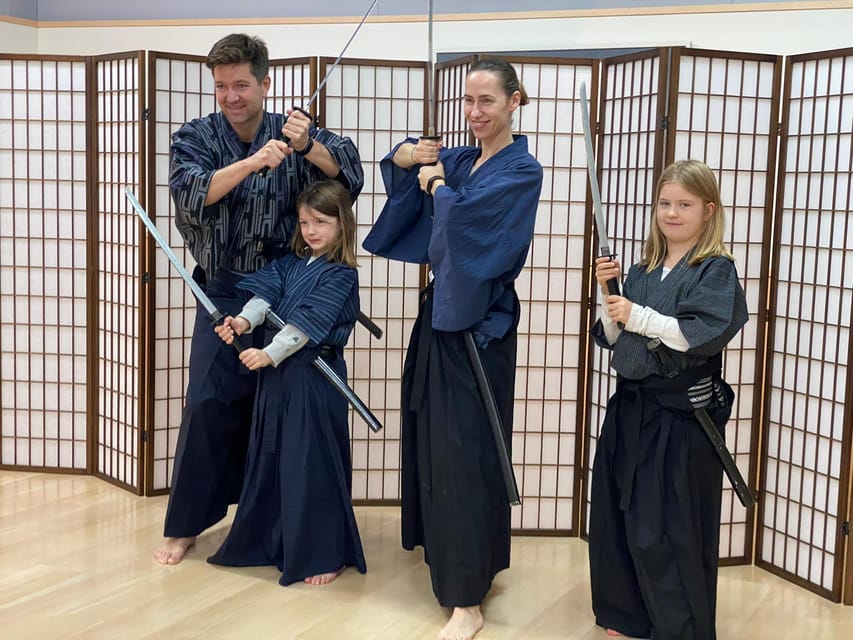
Next is Tachimawari, the stylized movements used in sword-fighting scenes. This is where the workshop starts to feel like the samurai version of choreography you’ve seen on screen, but taught in a structured, beginner-friendly way.
Tachimawari is valuable because it turns isolated basics into a sequence. Instead of just practicing posture over and over, you link motions together. That’s what makes the experience fun and also what makes your photo moment look like it belongs to the training.
You also get a thrill factor without needing special experience. The goal is to help you feel the intensity of the movements while staying safe and guided. With a small group of up to 10 participants, you’re not stuck watching while others take the spotlight.
This portion is also one of the easiest to share later. You can recreate a simplified version of what you learned and explain how the etiquette piece shaped your stance and rhythm.
Photos With a Sword and Kimono: The Ending That Seals the Memory
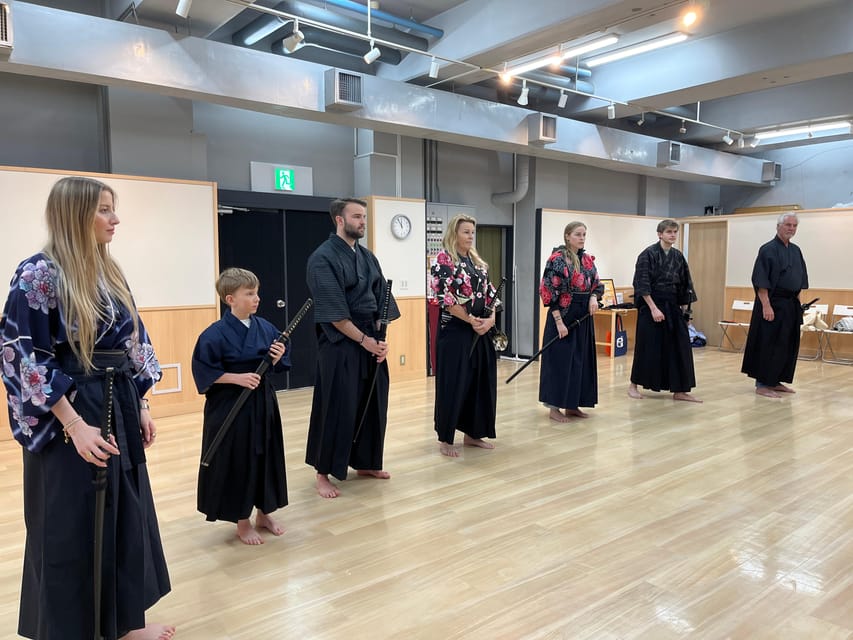
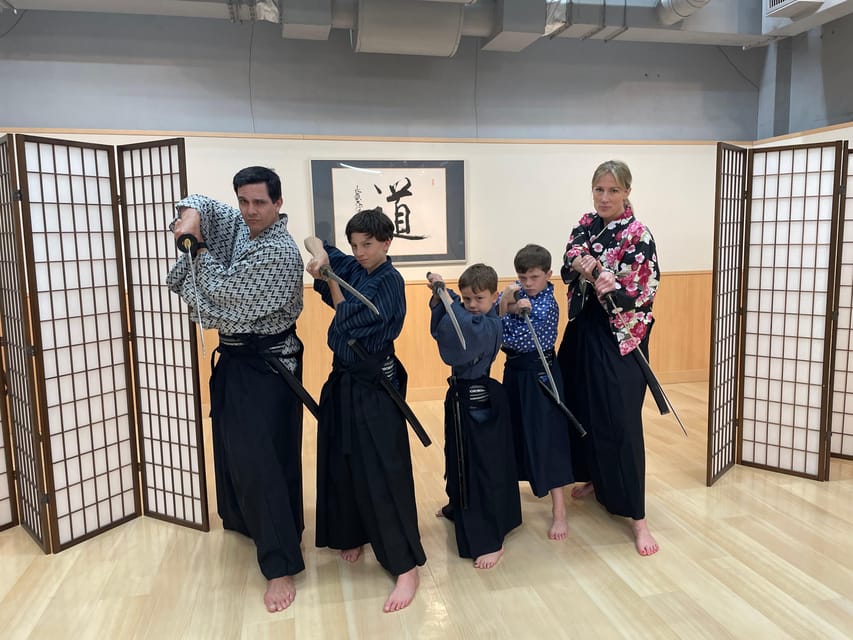
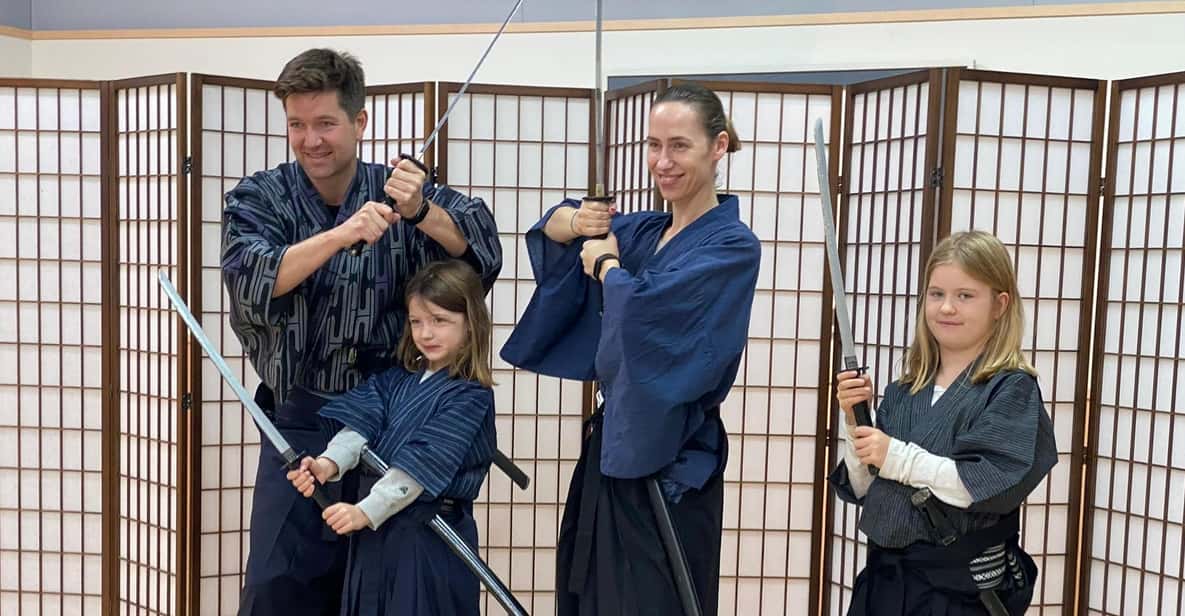
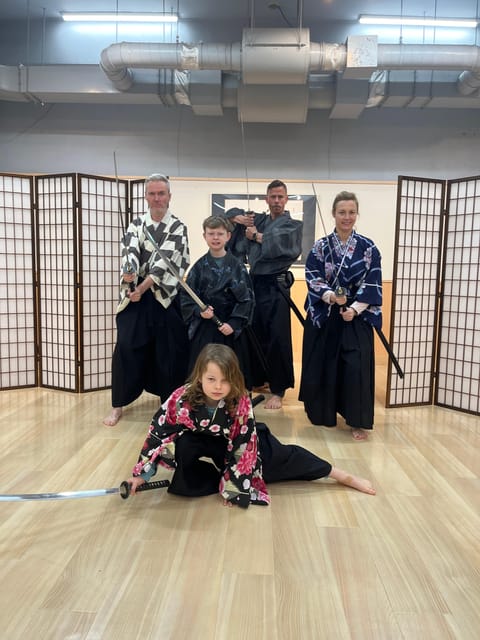
You wrap up with a photoshoot where you pose while holding a sword and wearing your kimono. This is included, and it’s not just a random souvenir stop.
For many people, the value of an activity like this comes from having a clear before-and-after. You start in regular clothes. You finish as a dressed, instructed, practice-ready samurai character with pictures that actually reflect the lesson.
If you care about photos, this is the right structure. The dressing and movement parts happen before the camera moment, so your final pose looks intentional rather than improvised.
If you care less about photos, it still works because the photos force you to lock in the posture you trained. It’s a final check that your stance and presence are aligned with what the workshop taught.
Price and Value: Is $70 for This Workshop Fair?
The price is $70 per person for a 1-hour experience. On its face, that’s not cheap. But here’s why I think it can be good value if you want the full package, not just a show.
You’re getting:
- an instructor (with English, Japanese, and Chinese support)
- samurai kimono to wear
- an etiquette lesson (reigi sahou)
- a sword-fighting experience with basic moves and Tachimawari practice
- a photoshoot
That combination is the real value. Cost isn’t just paying for sword time; it’s paying for the whole guided transformation: learning manners, dressing properly, practicing movement, and then capturing it with photos.
What’s not included is also important: transportation to the meeting point and food/drinks. So budget for your meal and commute like a normal Tokyo outing. If you’re already in Harajuku, transportation can be minimal, which makes the overall day plan feel easier.
Language, Group Size, and How Comfortable It Feels
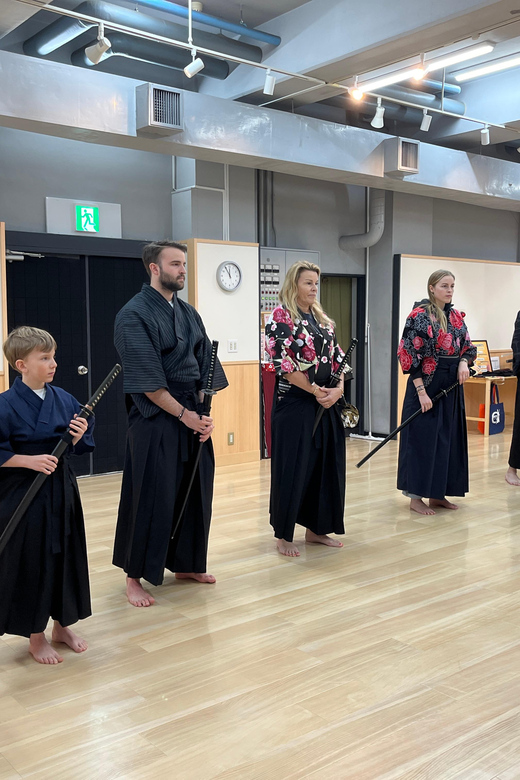
The instructor is available in English, Japanese, and Chinese, and the class is kept small, limited to 10 participants. That matters for two reasons.
First, it reduces confusion. Sword moves and etiquette are easier when you can ask quick questions or understand cues clearly. Second, small group size tends to keep the energy up. You’ll practice more than you watch.
If you’re anxious about doing activities in Japan because of language barriers, this workshop is designed for multilingual instruction. You don’t need perfect Japanese to get value out of the day.
Who Should Book This Samurai Experience in Harajuku
This is a great fit if you want a hands-on, structured cultural activity that feels fun and photograph-ready. It’s also ideal if you like learning through doing: posture, etiquette, and movement all taught in sequence.
It’s especially good for:
- couples and friends who want an experience with a shared memory
- solo travelers who like guided instruction in a small group
- families with kids who are old enough to participate safely (it’s not suitable under 5)
- anyone who enjoys martial arts aesthetics, even if you’re a beginner
It’s not the best choice if you need mobility accommodations, because wheelchair users aren’t suitable. It also isn’t designed for serious athletic training goals in one hour.
Quick Practical Tips Before Your Session
A few small things can make a big difference in how smooth this feels:
- Wear comfortable clothes that are easy to change in and out of.
- Don’t plan a tight schedule right after. Dressing and photo time take effort.
- Bring water planning for later. Food and drinks aren’t included.
Also, aim to arrive without rushing. Walking in, meeting the instructor, and switching into the lesson flow is part of the experience. If you show up stressed, it’s harder to enjoy the etiquette and movement sections.
Should You Book SAMURAI’ve in Harajuku?
If you want a complete 1-hour samurai role experience—reigi sahou, kitsuke kimono dressing, basic sword moves, Tachimawari practice, and a sword-and-kimono photoshoot—then yes, it’s worth booking. The price makes more sense when you treat it as a guided package, not just a sword session.
If you’re looking for advanced training, long drilling, or real sparring, this won’t match your expectations. But if your goal is to leave with new skills you can explain and simple moves you can demonstrate, this workshop is exactly the kind of Tokyo activity that feels like more than a souvenir.
FAQ
How long is the SAMURAI’ve experience in Tokyo (Harajuku)?
The experience lasts 1 hour.
How much does it cost?
It costs $70 per person.
What’s included in the price?
You get an instructor, a samurai kimono to wear, a samurai etiquette lesson, a samurai sword fighting experience, and a photoshoot.
What should I wear or bring?
Wear comfortable clothes.
Where do I meet the instructor?
Enter through the red door and go to the second floor basement. It’s about a 5-minute walk from Kitasandou Station and about an 8-minute walk from Harajuku Station.
Is it suitable for young children?
Anybody can join regardless of age and gender as long as they have the samurai spirit, but it is not suitable for children under 5 years. Wheelchair users are also not suitable.