REVIEW · TOKYO
Japanese Traditional Music Show in Tokyo
Book on GetYourGuide →Operated by Zakuro Show · Bookable on GetYourGuide
Tokyo has a concert you can actually hear. ZAKURO SHOW is an intimate, small numbered audience setting where musicians in kimono play wagakki instruments right in front of you. An English/Japanese host keeps everything understandable by explaining what you’re hearing as the program moves.
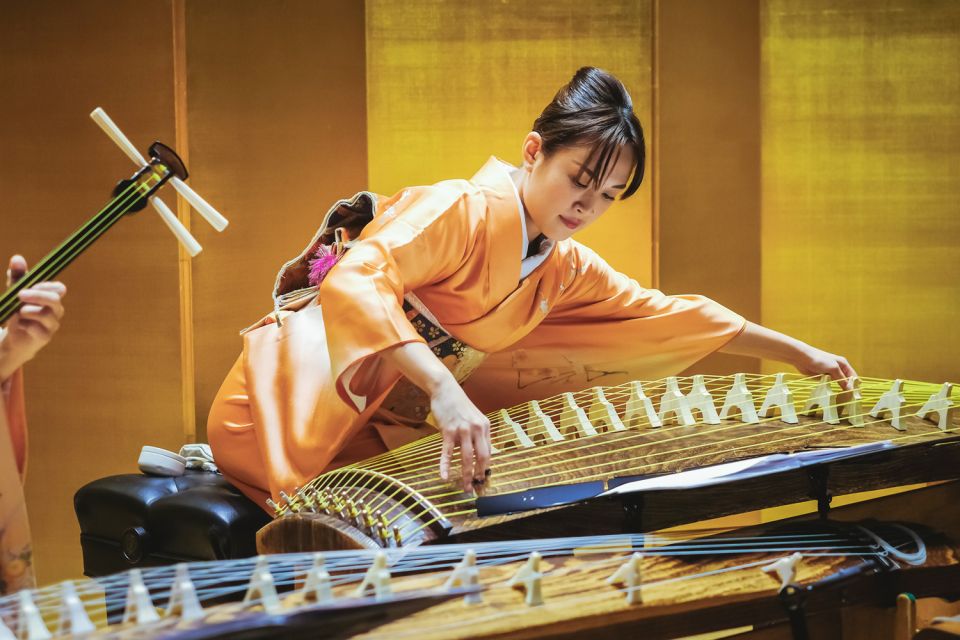
I love the close-up teaching moments. You get instrument-by-instrument context while the music stays front and center, including a mix of old and newer pieces. I also like the smart programming, from the koto and shamisen sounds to the shakuhachi flute and powerful taiko drums, plus a surprising Western hit cover.
One thing to consider: it’s only one hour, and there are no food or drinks included. If you’re hungry, plan dinner before or after, not during.
In This Review
- Quick reasons this wagakki show feels special
- Getting to Hall 60 near Meiji-Jingumae and Harajuku
- What the one-hour concert program is really like
- The wagakki lineup: koto, shamisen, shakuhachi, taiko up close
- How the host’s translation keeps the music from feeling confusing
- Photos, videos, and the chance to meet the musicians afterward
- Price and value: $38 for a reserved seat plus explanation time
- Who should book ZAKURO SHOW, and who might not
- Should you book this wagakki concert in Tokyo?
- FAQ
- How long is the Japanese traditional music show?
- What Japanese instruments will I hear during the performance?
- Can I take photos or videos during the show?
- What languages is the show presented in?
- Do I get a reserved seat, and is there a ticket line to deal with?
- Are food and drinks included?
- Is the venue wheelchair accessible?
Quick reasons this wagakki show feels special
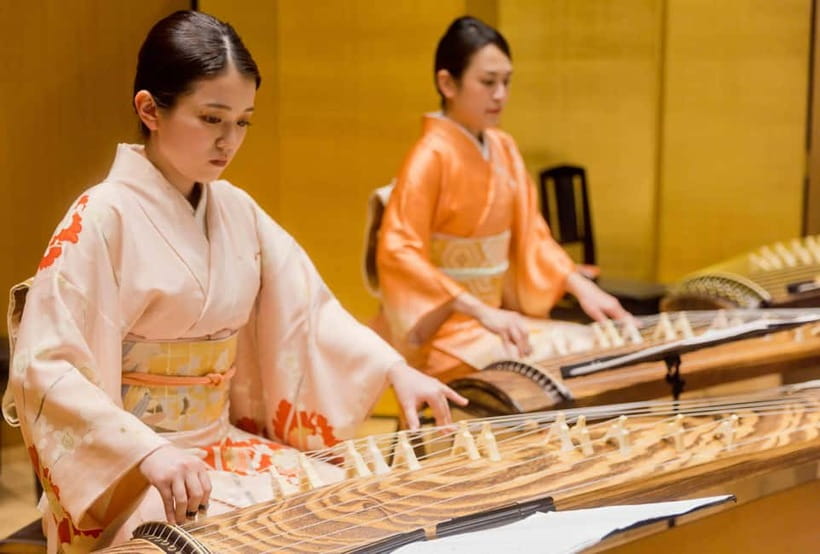
- Small-numbered seating means you’re not watching from the back row.
- English and Japanese hosting keeps the story of each piece clear.
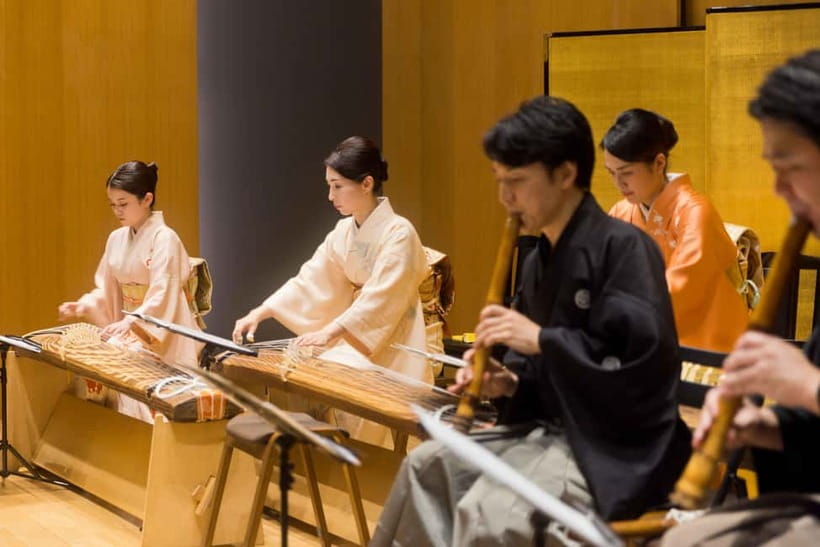
- Up-close wagakki lineup includes Japanese harp (koto), shamisen, shakuhachi, and taiko.
- Photos and videos are allowed, plus you can take pictures with the musicians afterward.
- Program variety covers ancient and modern traditions, with a Western pop cover thrown in.
Getting to Hall 60 near Meiji-Jingumae and Harajuku
This show meets at Hall 60, by Meiji-Jingumae Station (Exit 7), a roughly 1-minute walk. If you’re coming from JR Harajuku Station (Omotesando Exit), plan on about a 5-minute walk.
I suggest arriving a bit early so you can settle into your reserved seat without rushing. Tokyo stations can be confusing at first, and your time is better spent watching musicians get ready.
You can also read our reviews of more tours and experiences in Tokyo

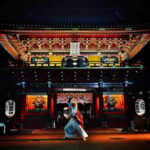
What the one-hour concert program is really like
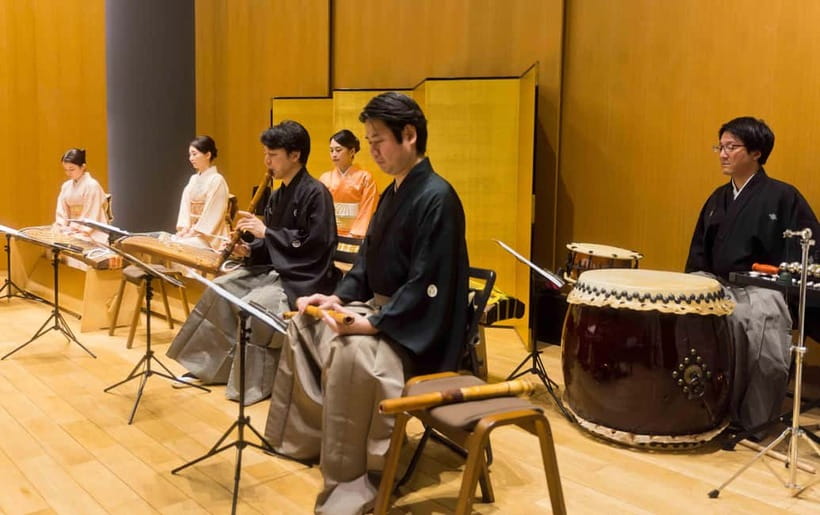
The format is simple and focused: you get a reserved seat for a one-hour concert program. The musicians are close enough that you’ll notice details like posture, how hands move on strings, and how breath controls the shakuhachi.
Between pieces, the host explains what’s going on. That matters because wagakki music can sound mysterious if you only hear it once. Here, the program is designed to give you context as you go, so your ears start picking up patterns faster.
The show also includes both older and newer selections. You’ll hear traditional pieces alongside modern Japanese traditional music, which helps you understand that this isn’t museum stuff frozen in time.
And yes, there’s a Western cover. It’s not there to dilute the experience. It’s there to show how Japanese instruments can make familiar melodies sound completely different.
The wagakki lineup: koto, shamisen, shakuhachi, taiko up close
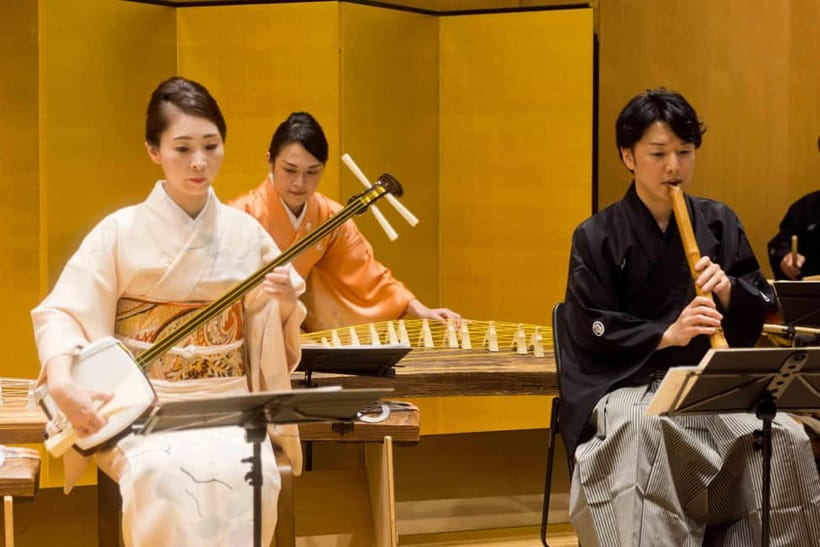
You’re not getting a “sound effects” demo. You’re seeing a full mini concert built around classic Japanese instruments.
Here’s what you can expect:
- Japanese harp (koto): bright, delicate plucks that often sound like clean drops of light.
- Shamisen: a sharper, more expressive plucked-string sound that can feel rhythmic and punchy.
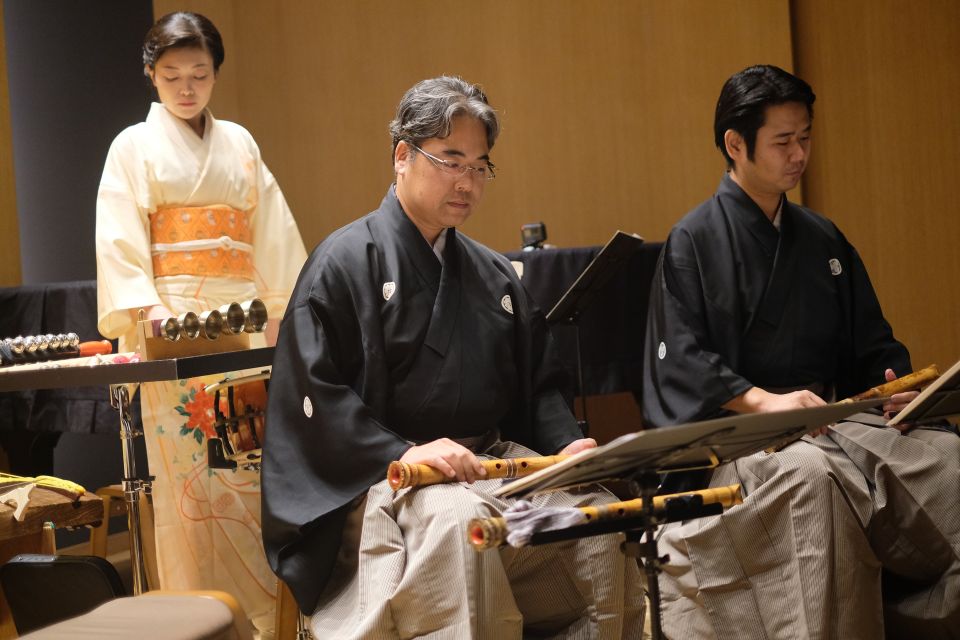
- Shakuhachi flute: breath-driven tones that can be airy, haunting, or quietly forceful.
- Taiko drums: big impact rhythms that change the room’s mood fast.
Because the musicians are right in front of you, you’ll likely notice how each instrument creates its own “space.” The koto and shakuhachi can feel airy and tonal, while the taiko drums pull everything into a physical beat you can feel.
The show also educates you on the history of the instruments involved and the pieces being performed. That historical context isn’t just trivia. It helps you catch why a certain style sounds the way it does and why a modern piece might borrow structure from older traditions.
How the host’s translation keeps the music from feeling confusing
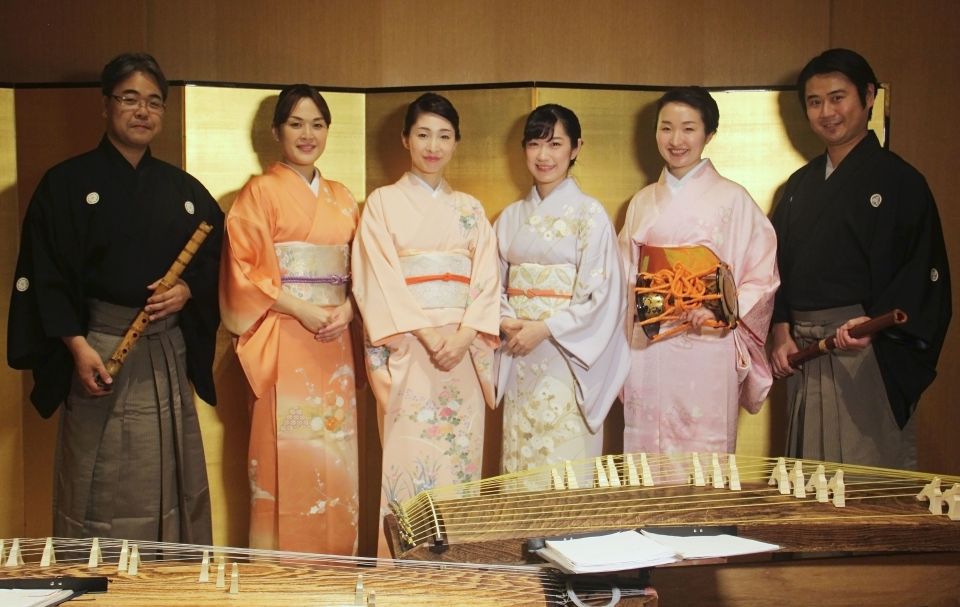
This experience runs with hosts/greeters in English and Japanese. In practice, that means the explanations are meant for people who don’t read Japanese music terms.
I like this approach for two reasons. First, you don’t have to guess what an instrument is doing while you’re listening. Second, the host’s commentary is placed between musical selections, so you don’t get stuck in a lecture before the concert starts.
The result is a show that works for first-timers and for people who already know a bit. If you’re new to wagakki, you get a path in. If you’ve heard a song before, you get context that makes the performance feel deeper.
If you’re bringing kids or teenagers, this is also the kind of structure that helps them stick with it. Short pieces, clear explanations, and visible instruments are a winning combo for attention spans.
Photos, videos, and the chance to meet the musicians afterward
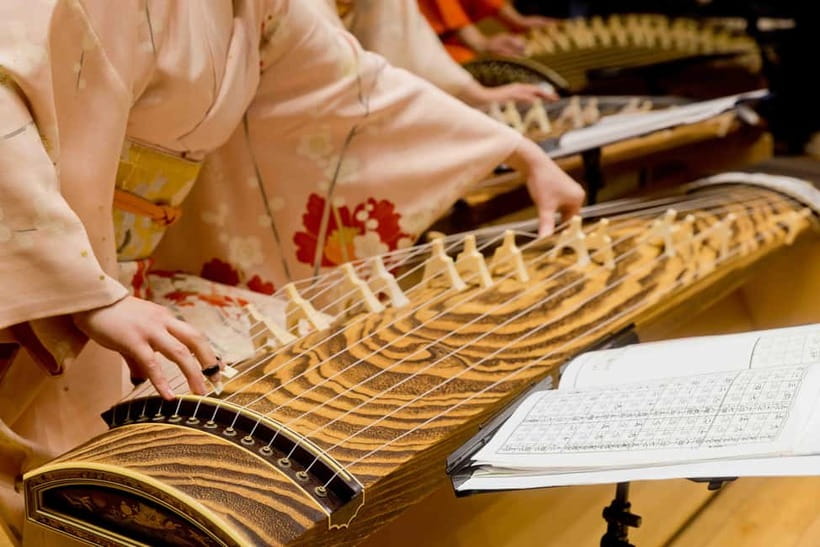
A lot of concerts say cameras are a problem. This one is refreshingly generous.
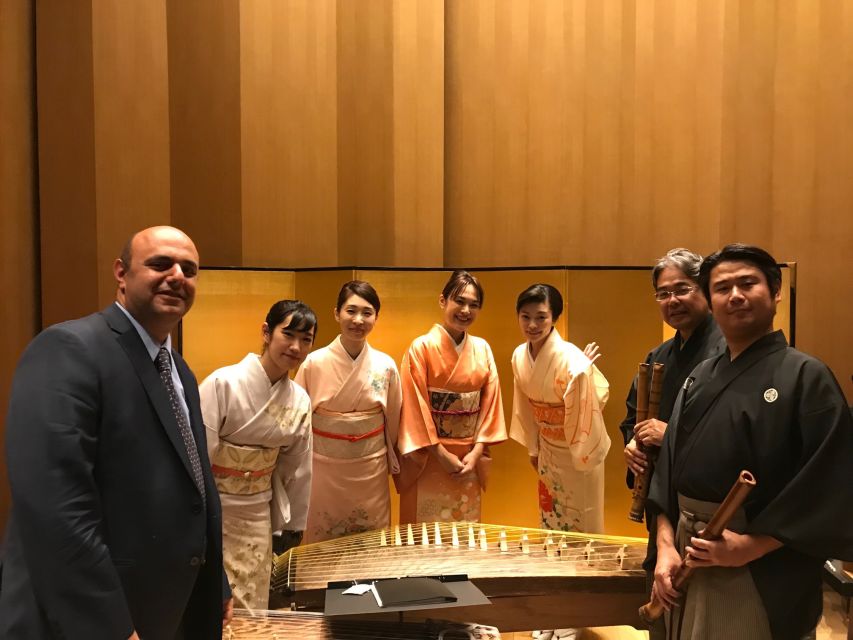
You can take photos and videos during the show. Afterward, there’s time to take pictures with the musicians. That small “meet and pose” moment is one of the reasons this experience often lands as a memorable night rather than just background entertainment.
Practical tip: set your phone to record before the performance begins, and keep an eye on your host’s cues. If you want the best shots, you’ll likely want to capture during the quieter transitions when the musicians are posed and not moving through quick changes.

Price and value: $38 for a reserved seat plus explanation time
At $38 per person for a one-hour concert, it’s not the cheapest thing you can do in Tokyo. But it also isn’t trying to be.
You’re paying for three things that are hard to reproduce on your own:
- a reserved seat in an intimate room
- English/Japanese hosting that explains instruments and pieces
- a full lineup of wagakki instruments performed live
Also, the ability to record and take photos adds real value. Many cultural shows restrict cameras, so you end up leaving with only your memory. Here you can keep both: the recording and the photos.
What’s not included is also clear. There’s no food or drinks, and there’s no merchandise included in the ticket. So treat the ticket as the show itself, then plan the rest of your evening like a normal Tokyo outing.
Who should book ZAKURO SHOW, and who might not
This is a strong pick if you want an authentic cultural experience without needing prior knowledge. It’s especially good for people who like learning as they listen—because the program actively explains what you’re hearing.
It also suits group travel. The setting is intimate, but it’s still structured and easy to follow, thanks to the English/Japanese hosting. That makes it a calmer “culture night” than some bigger venues where you get less guidance.
You might consider skipping if you hate any talking during performances or you only want long uninterrupted music. This show is built around short segments with explanations threaded in. It’s part of the design, not a side effect.
Also keep in mind the main limitation: it’s just one hour. If you want a long evening of performance, you’ll need to pair it with dinner or another activity afterward.
Should you book this wagakki concert in Tokyo?
I think it’s an easy yes if you want a compact, high-quality way to experience Japanese traditional music up close. For $38, you’re getting live koto, shamisen, shakuhachi, and taiko in a room where you’re not blocked by distance—and you’re also getting a host who makes the music understandable.
Book it if:
- you want a small-room, reserved-seat experience
- you care about what instruments and pieces mean, not just the sound
- you’d like to film and take photos, plus meet the musicians afterward
Skip it if:
- you’re looking for a long show with no explanations at all
- you want a package with food and drinks included
- you prefer big, late-night entertainment over a calm one-hour concert
If that’s your vibe, ZAKURO SHOW is the kind of Tokyo night that leaves you with something concrete: recordings, photos, and a clearer sense of how wagakki works.
FAQ
How long is the Japanese traditional music show?
The concert lasts one hour.
What Japanese instruments will I hear during the performance?
The show features Japanese traditional instruments including the Japanese harp (koto), Shamisen, Shakuhachi flute, and Taiko drums.
Can I take photos or videos during the show?
Yes. You can take photos and videos during the show and also take photos with the musicians afterward.
What languages is the show presented in?
The host/greeter provides content in English and Japanese.
Do I get a reserved seat, and is there a ticket line to deal with?
Your ticket includes entry to the venue and a reserved seat, and it’s designed so you can skip the ticket line.
Are food and drinks included?
No. Food and drinks are not included.
Is the venue wheelchair accessible?
Yes. The activity is wheelchair accessible.