REVIEW · TOKYO
Calligraphy & print your calligraphy on a T-shirt.
Book on GetYourGuide →Operated by Local Earth · Bookable on GetYourGuide
Your handwriting becomes wearable art. This Honshu class blends Japanese calligraphy with hands-on ink making and a real-world transfer onto a T-shirt. You also get cultural context for why Japanese characters look the way they do.
I love that you get real practice time, not just watching. And I like the calm rhythm, including green tea and a postcard souvenir. The one drawback is you’ll want clothes you don’t mind getting ink on, since brushwork is part of the fun and spills happen.
In This Review
- Key highlights you can count on
- Japanese calligraphy on a T-shirt: why it works
- Finding the red brick building (and arriving 10 minutes early)
- The first lesson: Japanese characters, culture, and what you’re actually writing
- Making ink the traditional way with a sumi ink stick
- Writing with the Fude brush pen: practice the strokes, not the pressure
- Choosing your design and planning the T-shirt placement
- The print-your-own moment: what happens during the short wait
- Green tea + a postcard you write yourself
- Price and value: is $48 worth 1 to 1.5 hours?
- Who this is best for (and who should skip it)
- Small practical tips that make the class smoother
- Should you book this Japanese calligraphy and T-shirt class?
- FAQ
- How long is the calligraphy and T-shirt experience?
- What does it cost?
- Is the class taught in English?
- What should I wear?
- What materials are included?
- Will I get to print my calligraphy on the T-shirt?
- Where is the meeting point?
- What is the cancellation and payment policy?
Key highlights you can count on
- Sumi ink making: you mix ink with water using a sumi ink stick and inkstone setup
- Fude brush practice: learn how to hold and use the Japanese writing brush pen
- History in plain terms: you learn about Japanese characters and culture from an expert
- Thin-paper shodo practice: you write for about 30 minutes and then move to your chosen design
- Print-your-own T-shirt moment: decide the design and placement, then get your shirt back ready to take home
- Green tea + postcard: you write a postcard while your printed shirt is prepared
Japanese calligraphy on a T-shirt: why it works
A lot of activities in Japan let you watch craft. This one flips it. You’re not just learning what calligraphy looks like; you’re learning how it’s made—brush angle, ink flow, and character strokes that feel slightly different from alphabet writing.
You’ll also get cultural grounding that helps your strokes make sense. Japanese writing isn’t random scribbling. It has structure, history, and style choices that affect how a character looks on paper and on fabric.
And the best part is the payoff. After class, you’re walking around with something you created, not another postcard you bought at a shop you’ll forget tomorrow.
You can also read our reviews of more tours and experiences in Tokyo.



Finding the red brick building (and arriving 10 minutes early)
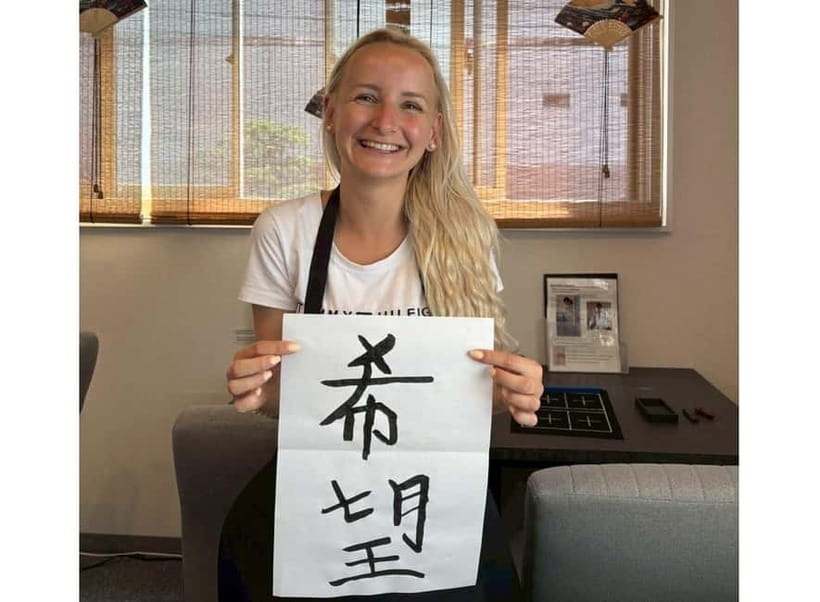
Your meeting point is a red brick building. The class is on the 3rd floor. There’s a sign on the 1st floor, and the restaurant is also on the 1st. Go up the stairs on the right side of that restaurant.
Show up about 10 minutes early. It’s not a suggestion for drama—it helps you get ready and seated with your materials so you can start practicing right away. Also, this class can mean ink spots. Wear comfortable clothes you don’t mind getting stained.
The first lesson: Japanese characters, culture, and what you’re actually writing
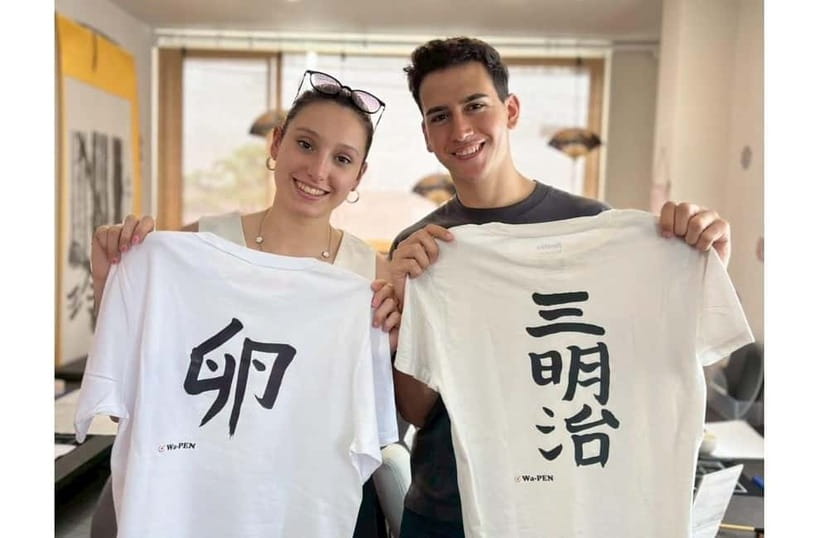
Before you put ink to paper, the instructor sets the stage: the history of Japanese characters and the culture behind them. That matters because calligraphy is a visual language. When you understand the intent—shape, balance, stroke direction—you stop treating it like a guessing game.
In this class, you’ll learn enough to make your practice feel purposeful. The goal isn’t to turn you into a scholar. It’s to give you context so your final design feels like it belongs in the tradition.
I also like that the teaching is in English. That means you don’t have to translate everything in your head while trying to control a brush that wants to go everywhere.
Making ink the traditional way with a sumi ink stick
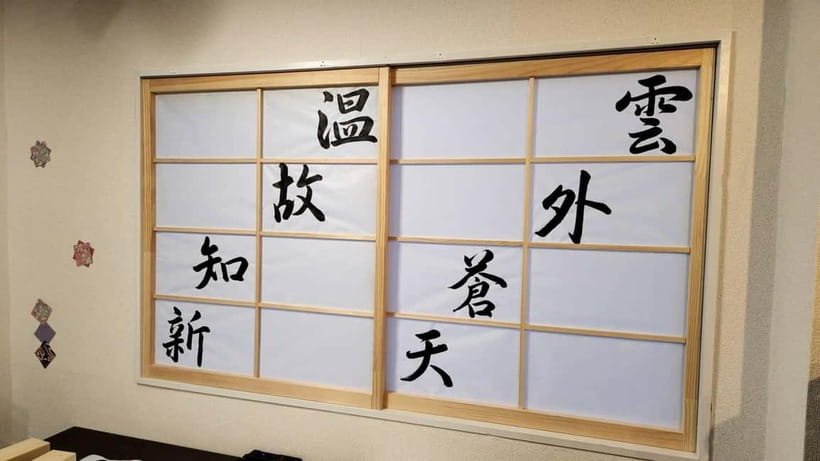
One of the coolest parts is that you make your ink. You mix water with a sumi ink stick, then learn how to use it with your writing tools.
This is one of those activities where you immediately feel the difference. Store-bought ink is consistent. Sumi ink has character. It can look darker, lighter, thicker, or more fluid depending on how you mix it and how long it takes to settle.
You’ll work with an inkstone setup and the class materials are provided. That includes the tools you’ll need for writing: an inkstone, under pad, paper-stopper, pen, and paper. The idea is simple: you get to understand what traditional ink is like, without needing to bring anything special.
Writing with the Fude brush pen: practice the strokes, not the pressure
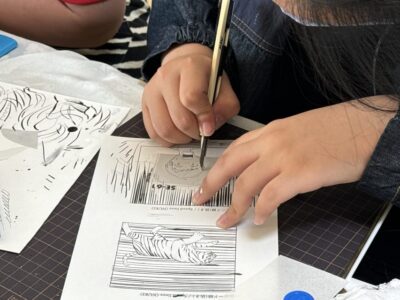
Next comes the technical part: learning how to use the Japanese pen called Fude. This brush pen is the bridge between your hand and the character.
Brush pens can be tricky at first because the stroke changes as you change pressure and angle. Too much force and you’ll flood the paper. Too little and the ink line looks thin or uneven.
You’ll practice for about 30 minutes on thin paper. Thin paper matters. It keeps the strokes crisp and gives you faster feedback, which is exactly what you want when you’re learning.
And since the instruction is hands-on, you get pointers as you go. From what I’ve seen in similar workshops, this is the part where a good teacher saves you from frustration. Here, the session centers on supportive guidance so you can keep moving forward instead of freezing.





Choosing your design and planning the T-shirt placement
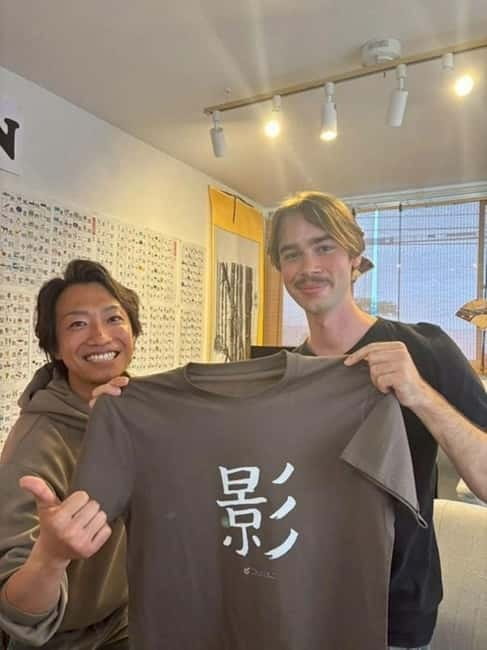
After you’ve practiced and feel at least a little confident, you pick your favorite design. This is a real decision point, not a last-minute formality.
Then you decide where to print it on your clothing. That placement choice affects the look more than you’d expect. A character or brush design can feel balanced in one spot and awkward in another—especially when you’re dealing with different shirt sizes and fabric.
You’ll be working with a T-shirt as part of the class experience. That means you don’t have to bring anything if you don’t want to. Still, if you’re the type who loves personal items and already packed a shirt you’d like to dedicate to the trip, you might be able to use one you bring. The class experience is designed around printing your chosen design onto clothing you’re set up to wear.
The print-your-own moment: what happens during the short wait
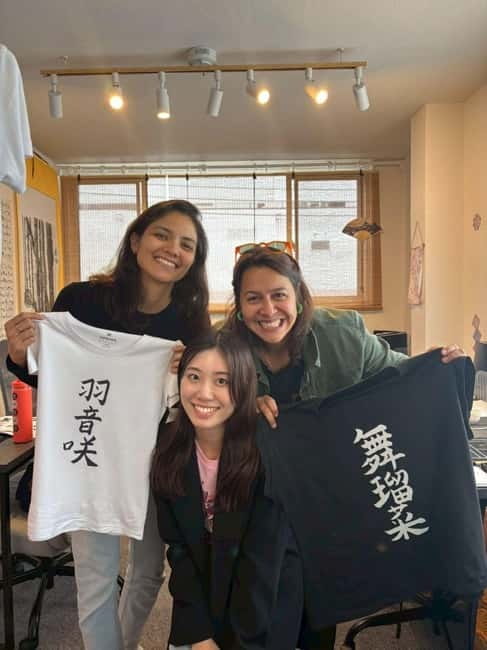
After you write and choose your design and placement, the class moves into printing. You’ll enjoy green tea while your shirt is being printed.
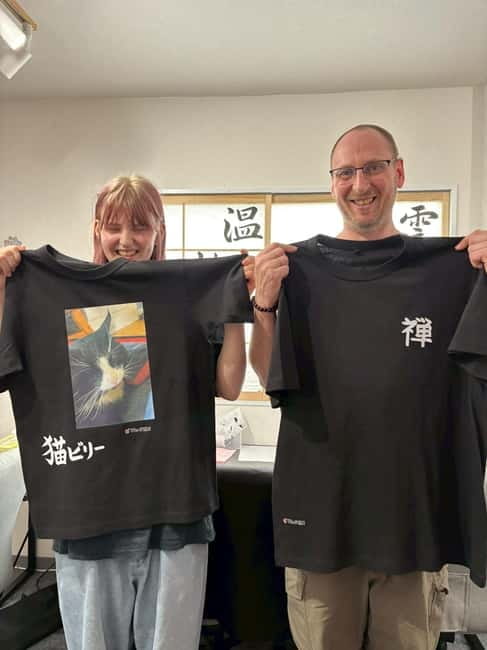
The timing is quick: after about 10 minutes, your clothes will be printed with your design and ready to take home.
That timing is a practical gift. It means you can stay present in class instead of sitting around for an hour wondering when your shirt will come back. It also means you can plan the rest of your day with a clear expectation: you’ll leave with the finished wearable keepsake.
Green tea + a postcard you write yourself
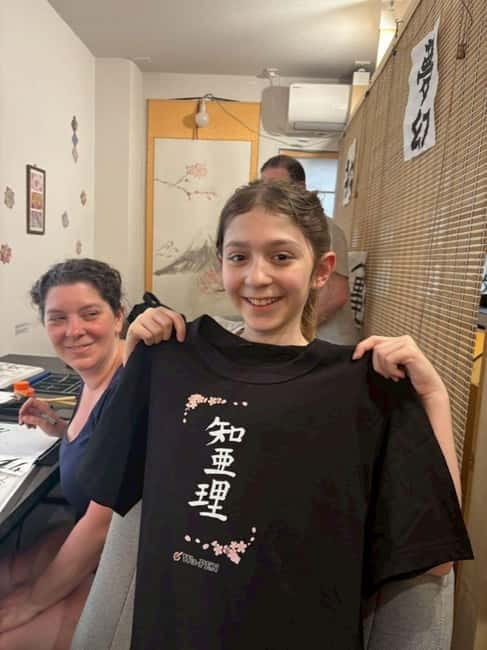
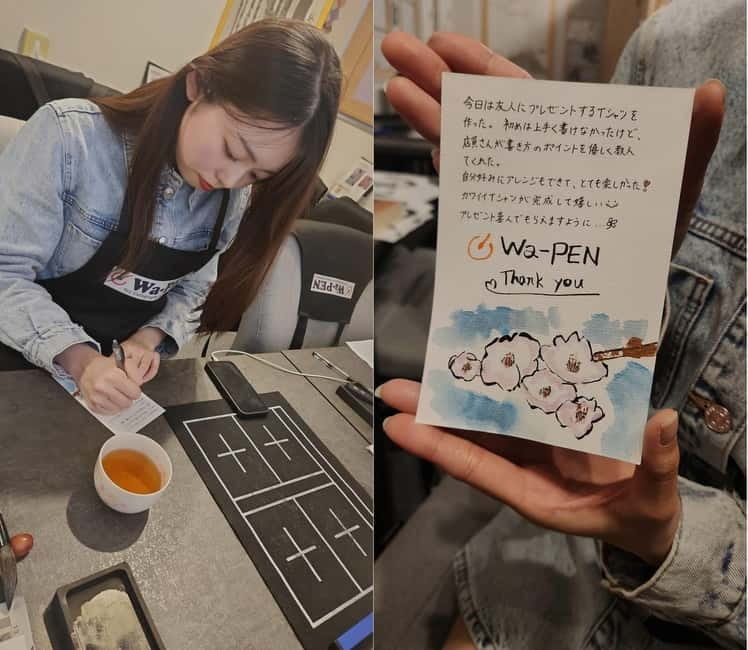
While the shirt printing happens, you get a cup of green tea and a postcard to take home.
This part is underrated. A postcard forces you to slow down and think about what you want to say. And since you’re already focused on Japanese characters, writing one more piece in the same style turns the souvenir into something personal.
You’ll write the postcard yourself. That means you’re not copying a template for the sake of it—you’re adding your own words in ink, which is the kind of small action that makes the trip feel real.
And yes, it’s a souvenir you’ll actually use. A T-shirt is wearable, but a postcard is portable and meaningful in a different way.
Price and value: is $48 worth 1 to 1.5 hours?
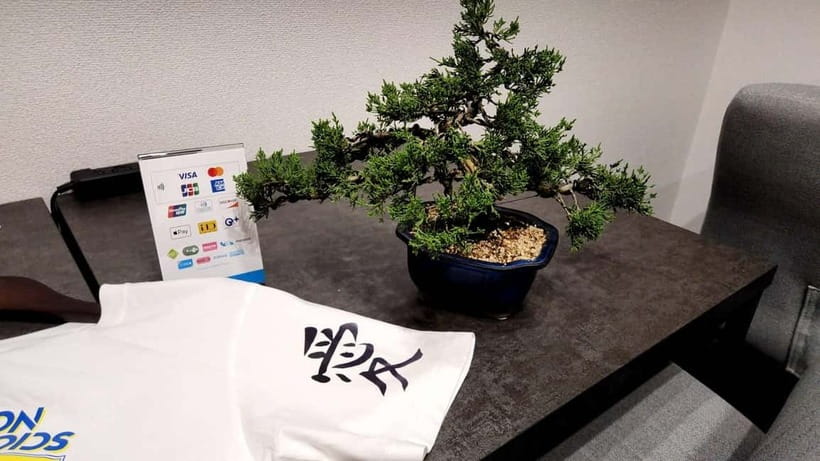
At $48 per person for 1 hour to 90 minutes, you’re paying for three things at once:
- Guided instruction (in English) so you can write with confidence
- Hands-on materials (including ink-making tools and all writing supplies)
- A finished custom item you can wear right after class
If you’ve ever tried to learn calligraphy on your own, you know how quickly costs add up. Ink, paper, and basic tools can be confusing to buy. Here, the class bundles the learning with the supplies and the final printing step.
So for me, the value comes from the complete chain: history context → ink making → brush practice → printed result. You’re not just paying for a craft outcome. You’re paying for the full learning experience that leads to that outcome.
Who this is best for (and who should skip it)
This class is a great fit if you want something authentic but not exhausting. You’re learning a cultural skill in a structured, beginner-friendly way, and you’ll leave with a tangible keepsake.
It also works well for families. The teaching style can be engaging for both younger and older students. If your group is curious and likes hands-on activities, you’ll probably enjoy the shared focus.
You might want to skip it if:
- You hate the idea of getting any ink on your clothes
- You’re expecting a long, deep lecture with no writing time
- You want a completely passive experience (this one is active)
Small practical tips that make the class smoother
- Wear comfortable clothes you don’t mind getting ink on. Ink stains are part of the reality here.
- If you’re sensitive about mess, wear sleeves you can roll down easily and bring a plan for going straight to lunch afterward.
- Arrive a little early. You’ll get set up without rushing, which matters when you’re learning brush control.
- If you love Japanese culture, pay attention during the character history portion. It helps your final design look intentional.
And one bonus planning idea: if your class timing is in the morning, you can often pair it with a nearby walk to see the area while your shirt is being prepared. It turns the whole half-day feel into one smoother rhythm.
Should you book this Japanese calligraphy and T-shirt class?
If you want a creative souvenir that doesn’t feel generic, I’d book it. The combination of ink making, brush practice, and printing your design onto clothing is the kind of “you did this” experience that stays with you.
Book it especially if:
- You like hands-on workshops
- You want English instruction
- You want something you can wear and show instead of storing paper souvenirs
Skip it if you’re uncomfortable with stains or you’re hunting for a big sightseeing tour. This is a craft class first, culture lesson second, and a wearable keepsake always.
If you’re on the fence, go for it. Worst case, you learn a new way to control a brush and you still take home a postcard and a shirt. That’s a pretty good day.
FAQ
How long is the calligraphy and T-shirt experience?
The class runs for 1 hour to 90 minutes. The exact time can depend on the starting time available.
What does it cost?
It costs $48 per person.
Is the class taught in English?
Yes. The instructor teaches in English.
What should I wear?
Wear comfortable clothes that you do not mind getting ink on.
What materials are included?
All necessary writing materials are included, including pen, paper, ink, inkstone, paper-stopper, and an under pad. The class also includes a T-shirt, a postcard, and green tea.
Will I get to print my calligraphy on the T-shirt?
Yes. You choose your design and decide where to print it on your clothing. After about 10 minutes, your T-shirt will be printed and ready to take home.
Where is the meeting point?
Meet at a red brick building on the 3rd floor. There is a sign on the 1st floor, and the restaurant is on the 1st floor. Go up the stairs to the right of the restaurant.
What is the cancellation and payment policy?
You can cancel up to 24 hours in advance for a full refund. You can also reserve now and pay later to keep your plans flexible.