REVIEW · TOKYO
Tokyo Toyosu Tuna Auction + Breakfast (Sushi Dai or Bentomi)
Book on GetYourGuide →Operated by Yummy Guide inc. · Bookable on GetYourGuide
Tuna money changes hands at sunrise. This guided look at Toyosu’s bluefin auction is a fast, hand-signal ritual, and I love the pairing of katsuobushi shaving with a market breakfast reservation. My other big plus is the option to get very close action (or a calmer view) before you sit down to eat. One drawback to plan for: the tour’s restaurant reservation is included, but the meal fee is not, and Sushi Dai seating is limited.
Guides like Rabia and Ami do a great job turning what could be chaos into something you can actually follow. You’ll practice the te-jirushi hand-signals mini lesson while auction staff call out bids, so the rhythm makes sense instead of just looking impressive. Just be ready for an early start—this is a morning routine, not a casual late brunch.
In This Review
- Key things I think you’ll care about most
- Toyosu at 5:25 AM: what the early start really changes
- Auction viewing options: ground-level deck vs 3rd-floor gallery
- Making sense of the bidding: te-jirushi and what’s happening in real time
- The katsuobushi moment: shaving bonito and comparing maguro-bushi
- Beyond the auction: market time and the “real Tokyo” details
- Breakfast inside Toyosu: Bentomi vs Sushi Dai
- Bentomi for tuna-bowl lovers
- Sushi Dai for a more refined breakfast
- Price and value: is $141 worth it?
- Who should book (and who should skip)
- Should you book this Toyosu tuna auction + breakfast tour?
- FAQ
- What time does the tour start?
- Where do I meet for the tour?
- How long is the experience?
- What viewing options are available for the tuna auction?
- Does the tour include breakfast?
- Is transportation to and from Toyosu included?
- What’s included in the tour fee besides the auction?
- Are there any dietary or accessibility limits?
- What language is the guide available in?
Key things I think you’ll care about most
- Ground-level deck (Exclusive) max 4 guests: very close to the auction action, sometimes even fresh-tuna bidding.
- 3rd-floor gallery (Standard): a wider view of the whole hall with less jostling.
- Te-jirushi mini lesson: learn the hand signals so you understand what you’re seeing.
- Bonito flake work (katsuobushi shaving) + tasting: compare it with rarer maguro-bushi.
- Breakfast reservation inside Toyosu: pick Bentomi (tuna bowls) or Sushi Dai (celebrated omakase breakfast); Sushi Dai is harder to secure.
- Small extras that feel real: miso soup cup souvenir and a photo with Okami-san using your phone/camera.
Toyosu at 5:25 AM: what the early start really changes
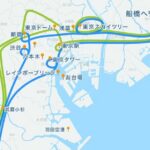
This tour starts at 5:25 AM, and that’s not just for drama. Toyosu’s auction-world runs on tight timing, and the payoff is you get to see the market as professionals do—before most of Tokyo wakes up. Meeting point is PR Square inside Toyosu Market, so build in time to find it quickly (good shoes help here more than you’d expect).
You’ll want comfortable shoes and comfortable clothes. You’ll also want your camera ready, because this is one of those rare Tokyo moments where motion, sound, and tiny details all matter. The tour also asks you to bring cash, which is a clue that something in the flow may require it on-site (most often tied to the restaurant meal fee that isn’t included).
One other practical point: the tour duration is 150 minutes. That’s actually a strong match for this kind of experience. It’s long enough to see the auction and do the food portion, but short enough that you don’t feel like you’re spending half your trip trapped in a schedule.
You can also read our reviews of more tours and experiences in Tokyo.
Auction viewing options: ground-level deck vs 3rd-floor gallery
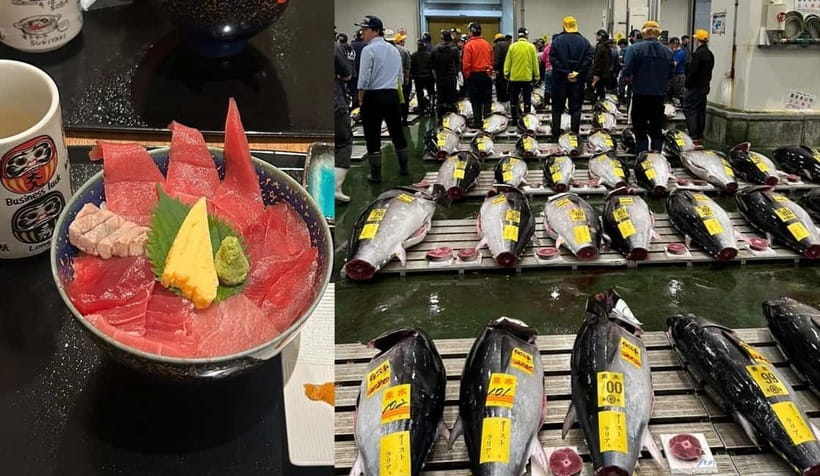
Your biggest decision here is how close you want to be to the bidding. The tour offers two viewing styles:
Exclusive: ground-level deck (max 4 guests)
This option puts you on a lower observation deck located just meters from the action. If you’re the type who wants to hear calls and watch hand signals without looking at them through distance, this is the one. Depending on the morning, you may even catch the highly coveted fresh tuna auction moments.
Standard: 3rd-floor gallery (open group)
You’ll get a panoramic view from higher up. It’s often easier for first-timers: you can see more of the hall at once, and you still get the auction calls and hand movements with your guide translating what they mean.
How to choose?
If you hate crowds and want a front-row feel, go Exclusive. If you want an easier rhythm—less physical pressure, more overview—go Standard. Either way, you’re not just watching from the comfort of a museum. You’re in a real working seafood space.
Making sense of the bidding: te-jirushi and what’s happening in real time
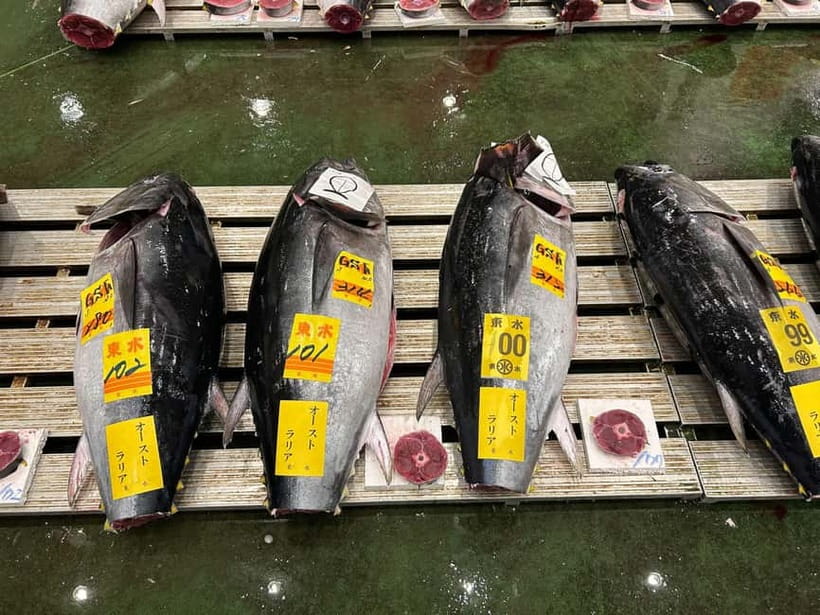
A tuna auction can look like noise from afar. The value of a guided approach is that you learn what you’re seeing while it’s happening. You’ll get a te-jirushi hand-signal mini lesson, so the auctioneers’ gestures stop being random.
In the auction hall, the pattern matters. Buyers inspect and grade tuna, then bidding moves quickly through hand signals and calls. That fast pace is exactly why the guide timing matters: you don’t want to arrive late and miss the sequence that explains the whole market logic.
This is also where the tour helps you understand the seafood industry beyond the plate. You’ll hear explanations about market logistics and how expert buyers decide what’s worth paying for. It’s a very practical “who decides, how they decide, and how quickly” lesson—more useful than any generic seafood lecture.
The katsuobushi moment: shaving bonito and comparing maguro-bushi
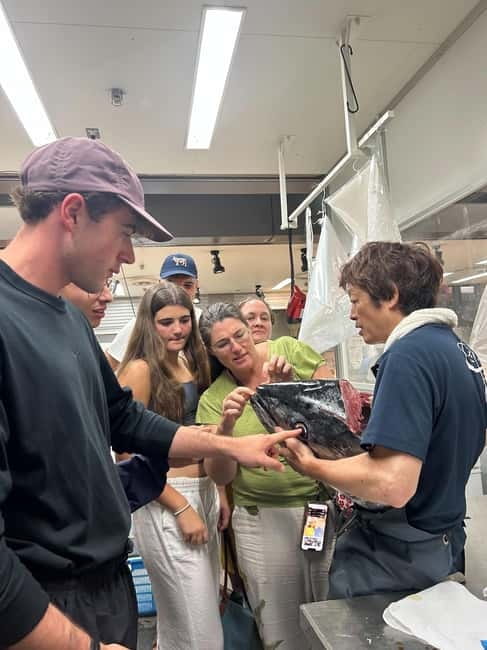
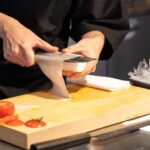
The tour’s food programming doesn’t wait until later. After auction viewing, you’ll do a katsuobushi shaving experience—hands-on work with bonito flakes. You’ll then taste a comparison with maguro-bushi, described as rarer in this context.
What makes this part special is that it connects the auction to your future meal. Auction-grade tuna and the deeper flavor world of Japanese seafood are different topics, but they overlap through how people value freshness, texture, and ingredient intensity.
Expect this to be fun, not just instructional. You’re not only learning the concept of katsuobushi; you’re physically doing the action, then tasting the results. And because you’ll do a comparison tasting, you’re less likely to treat the flavors like vague “fishy” notes. You start noticing how each ingredient behaves.
The tour also includes a miso soup cup souvenir. It’s small, but it’s the kind of souvenir that feels connected to what you actually ate and handled.
Beyond the auction: market time and the “real Tokyo” details
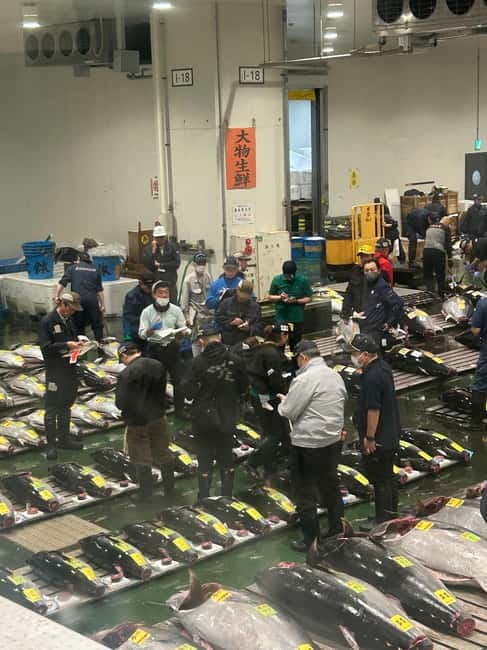
After the high-energy auction viewing, you’ll move through Toyosu’s market world with your local guide. The tour format doesn’t promise a long wandering safari, but it does include market time that helps you connect the auction to the broader supply chain: where seafood gets processed, packaged, and fed into restaurant life.
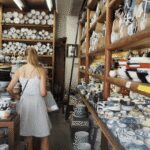
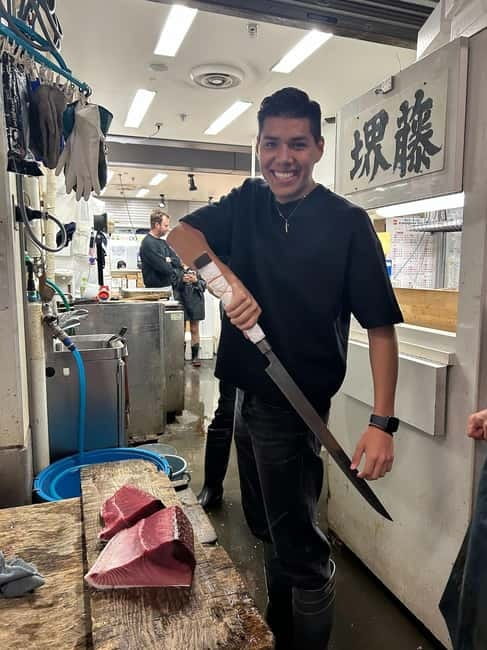
One thing I like about this pacing: you’re not just dropped into a hall and told good luck. Your guide keeps the morning coherent, including moments that can include close looks at market goods and the tools used by professionals (ceramics and restaurant equipment have shown up as part of the broader walk-and-look experience).
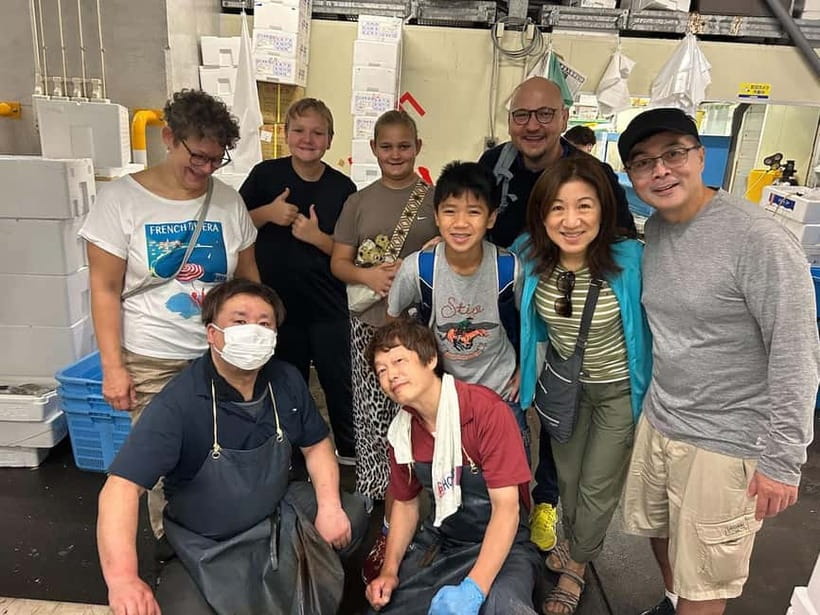
You’ll also get a photo moment: the tour includes photo shooting with Okami-san, using your own phone/camera. These are the small human touches that turn a “cool thing I watched” into “I got to interact with the place.”
Breakfast inside Toyosu: Bentomi vs Sushi Dai
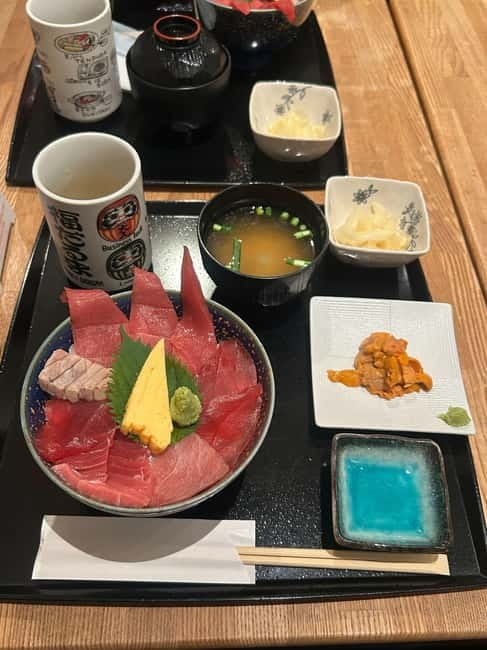
This is where the tour becomes a full morning meal plan rather than a sightseeing detour. Breakfast happens inside Toyosu Market at a premium venue, and you’ll choose between two reservation options. The reservation is included; the meal fee is excluded.
Bentomi for tuna-bowl lovers
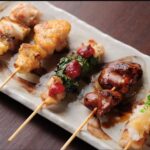
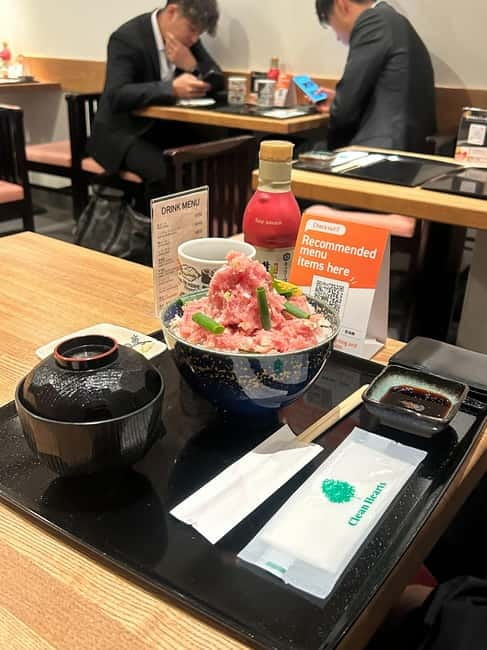
Bentomi is a long-time favorite among seafood professionals. Breakfast here leans into ultra-fresh tuna bowls (kaisendon) and dishes made from ingredients pulled straight from the morning’s market flow. If you want maximum tuna-per-minute and a straightforward, satisfying start, this is an easy pick.
Sushi Dai for a more refined breakfast
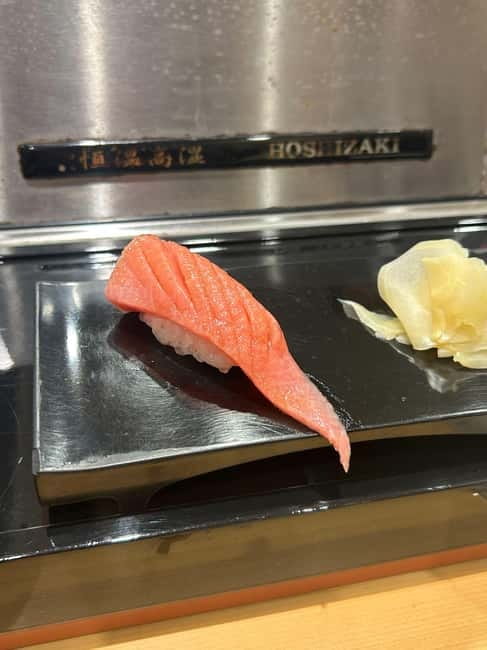
Sushi Dai is one of Tokyo’s celebrated sushi counters and is featured in the Michelin Guide. Breakfast is an omakase-style experience built around seasonal fish.
Two practical notes matter here:
- Seating is extremely limited, and availability depends on select tour plans.
- Since the meal fee isn’t included, you’ll want to budget for the restaurant portion separately.
My advice: if you want the auction to “pay off” in a polished, memorable meal, Sushi Dai is worth aiming for. If you’d rather keep it simple and focus on fresh bowl-style value, Bentomi fits the job.
Price and value: is $141 worth it?
At $141 per person, this isn’t a budget tour. But it is also not just you and a camera. For that price, you get:
- Tuna auction observation, with access to the ground deck, auction floor access (depending on option), or public gallery
- A guide plus the te-jirushi mini lesson
- The katsuobushi shaving experience and tasting comparison with maguro-bushi
- A miso soup cup souvenir
- Photo shooting with Okami-san
- A reservation for either Sushi Dai or Bentomi (meal fee excluded)
What’s not included is also clear:
- The restaurant meal fee (reservation included)
- Transportation to/from Toyosu Market
- Travel insurance
So where does the value land?
This price is really paying for (1) auction access and interpretation, and (2) turning that knowledge into a real food experience at a top venue. If you were to try this on your own, you’d spend time figuring out routes, timing, where to stand, and how to connect the auction to a high-end breakfast reservation. Here, the structure is already in place.
If you’re the kind of traveler who loves food detail and industry logistics, the cost often feels justified quickly. If you only want a casual look at the auction with no hands-on component, you may feel the early start is more work than reward.
Who should book (and who should skip)
This tour fits best if you:
- Get excited about food systems, not just eating
- Want to understand how buyers evaluate tuna quickly
- Prefer a guided experience with context during a chaotic-looking scene
- Are willing to start early and wear comfortable shoes for a working market
It’s also worth noting who it may not suit:
- Wheelchair users: not suitable
- Vegetarians: not suitable
If you have mobility issues or strong dietary restrictions, you’ll likely be uncomfortable in the market environment, and the menu format is not built around vegetarian needs.
Should you book this Toyosu tuna auction + breakfast tour?
Yes—if your travel style is hands-on, early, and food-nerd curious. The combination of close auction viewing options, a real te-jirushi mini lesson, and the katsuobushi shaving + tasting comparison makes this more than a photo stop. Then the morning ends with a meaningful breakfast at Bentomi or Sushi Dai, which is exactly what turns the auction into a complete Tokyo story.
Book sooner rather than later if you care about Sushi Dai. Limited seating means timing and tour plan selection matter.
And if you’re thinking, I just want the auction view: choose your viewing option carefully. The ground-level deck is high-impact, but the 3rd-floor gallery can be the smarter choice if you want an easier overview without feeling rushed.
FAQ
What time does the tour start?
The tour starts early at 5:25 AM.
Where do I meet for the tour?
The meeting point is at PR Square inside Toyosu Market. Meeting point may vary depending on the option booked.
How long is the experience?
The duration is 150 minutes.
What viewing options are available for the tuna auction?
You can choose Exclusive: ground-level deck (max 4 guests) or Standard: 3rd-floor gallery (open group).
Does the tour include breakfast?
The tour includes a reservation for breakfast at Sushi Dai or Bentomi, but the meal fee is excluded.
Is transportation to and from Toyosu included?
No. Transportation isn’t included, so you’ll need to plan your own way to and from Toyosu Market.
What’s included in the tour fee besides the auction?
Included items are auction observation, access to the chosen viewing area, a te-jirushi mini lesson, bonito flake (katsuobushi) shaving and tasting comparison, a miso soup cup souvenir, and photo shooting with Okami-san.
Are there any dietary or accessibility limits?
It’s not suitable for wheelchair users and not suitable for vegetarians.
What language is the guide available in?
The local guide offers Japanese/English interpretation.
If you tell me which breakfast you prefer (Bentomi vs Sushi Dai) and whether you want the closest view, I can help you choose the best viewing option.