REVIEW · TOKYO
Tea ceremony experience in Japanese-style room 60min
Book on GetYourGuide →Operated by 株式会社和樂苑 · Bookable on GetYourGuide
Tea time turns Tokyo quiet. This Japanese-style matcha ceremony at Wasako is interesting because you actively choose your sweets and matcha bowl, then you learn the steps and make your own tea with host Ryouko in a calm tatami room. I love the hands-on pace—watch, sip, learn, then brew—and I love the photo-friendly details in a building with cultural protection. One possible drawback: if you plan to sit on tatami, you’ll need socks (sold on site if you forget), and the overall value may feel a bit pricey if you were hoping for a longer, deeper lecture.
You’ll meet up with the group at a simple spot near Tawaramachi or Asakusa, then head inside the Charyo-Ichimatsu restaurant to a dedicated Japanese-style room. It runs in small groups (max 7), with four start times across the day, and instruction is available in English and Japanese.
In This Review
- Key things I’d circle on your itinerary
- Wasako inside Charyo-Ichimatsu: the setting that makes the class work
- Finding the meeting point near Tawaramachi and Asakusa
- Before you sit: socks, shoes-off, and tatami reality
- Choosing your sweets and matcha bowl: the part you’ll feel immediately
- Watch first, then join in: how the 60-minute flow usually feels
- The utensils, the small explanations, and why they matter
- Cultural property photos: where your camera will naturally go
- Price and value: what $45 gets you (and what to watch for)
- Who this is best for
- Small-group size: why max 7 makes a difference
- What to do before you go (a quick checklist)
- Should you book Wasako’s tea ceremony experience?
- FAQ
- What start times are available?
- How long does the experience take?
- Where do I meet for the tea ceremony?
- Do I need socks?
- Can I wear shoes indoors?
- Can I choose my tea sweets and matcha bowl?
- Will I only watch, or will I make matcha too?
- How big is the group?
- What languages are used during instruction?
- Who is the experience not suitable for?
- What is the cancellation policy?
Key things I’d circle on your itinerary
- You choose your tea sweets and your matching matcha bowl before you start
- You don’t just watch: you’ll learn and brew matcha yourself
- Ryouko teaches the why, including explanations around utensils, hanging scrolls, and furnishings
- Photo stops are built in, because the space is designed for visual detail
- Small group vibe (up to 7), which makes it easier to ask questions
Wasako inside Charyo-Ichimatsu: the setting that makes the class work
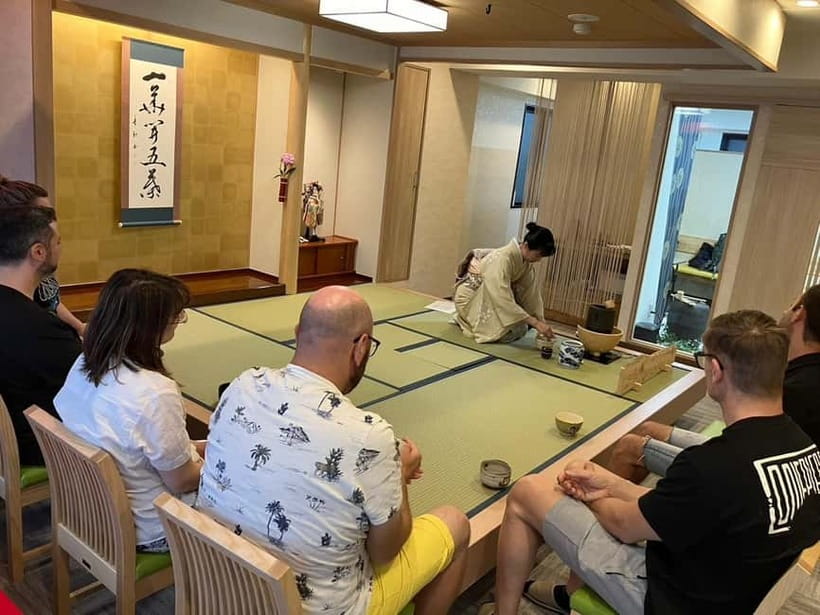
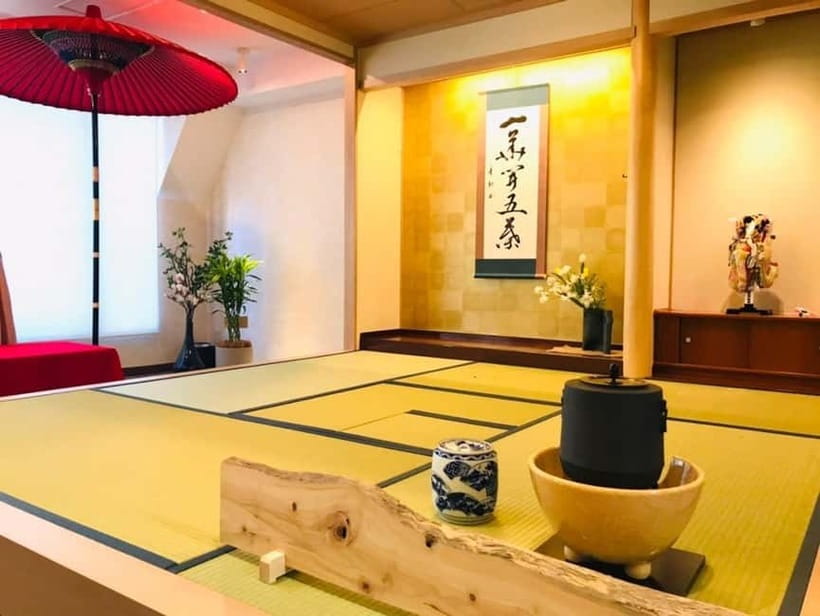
This experience happens in a Japanese-style room of Wasako, located inside the Charyo-Ichimatsu restaurant area. That location matters more than you might think. Tea ceremony isn’t only about taste. It’s about order, pace, and attention—quietly resetting your brain. The room design and the cultural layout help you do that fast, especially when you’re coming in from busy Tokyo streets.
Another detail I like: you’re not squeezed into a warehouse-style activity. You’re in a proper room with the kinds of objects and decor that make the ceremony make sense—like the hanging scroll and the furnishings that are part of the visual language of tea. You can even get pictures in spots that are naturally photogenic because the broader Ichimatsu building is listed as a registered tangible cultural property in Japan.
Also, this is the kind of activity where your senses matter. You’ll smell the tea tools, see the bowl choices up close, and hear the timing in the demonstration. It’s calm work. No rushing, no loud crowd energy.
You can also read our reviews of more tours and experiences in Tokyo.



Finding the meeting point near Tawaramachi and Asakusa
Your start depends on the time slot (10:00, 11:30, 13:30, 15:00), but the meeting point is consistent. It’s a 5-minute walk from Tawaramachi Station (Exit 3) on the Tokyo Metro Ginza Line, or about 10 minutes from Asakusa Station (Exit A4) on the Toei Asakusa Line.
One practical tip from real-life experience: signage can be a little unclear, so keep an eye out for green signs indicating Tea ceremony experience. Some guests have found the room on the 5th floor, a couple doors down from the kimono rental area (and close to an incense shop doorway). If you’re arriving right near your start time, it’s worth asking staff or checking with the front desk so you don’t lose five minutes hunting.
Before you sit: socks, shoes-off, and tatami reality
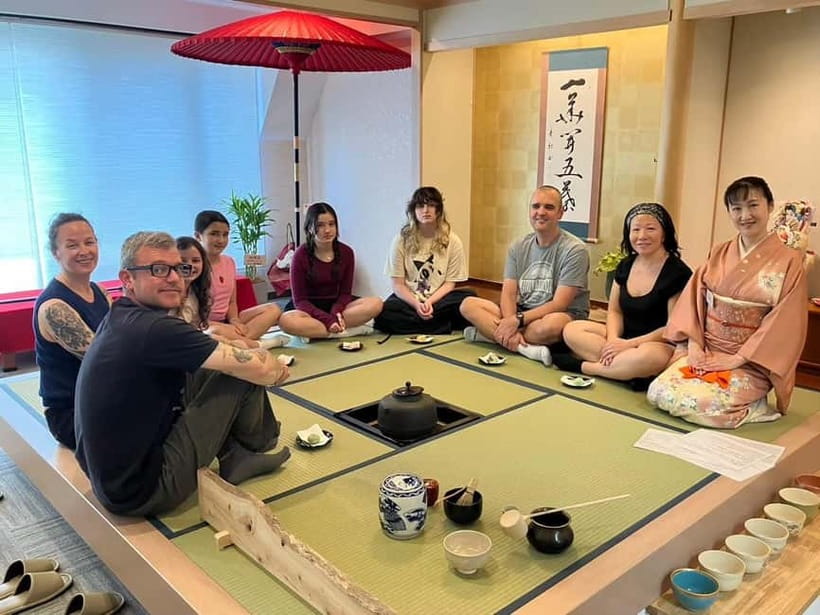
There’s one rule you should take seriously: no shoes indoors. That’s standard for tatami-friendly Japanese interiors, and you’ll see it right away when you enter the room area.
Then there’s the socks situation. If you want to get on the tatami, bring your own socks. If you forget, they’ll sell socks for 500 yen. I consider this the easiest way to avoid stress. Even if you think you might not sit on tatami, you may end up wanting to—so just pack socks in your bag the way you’d pack a charger.
One more thing: this experience isn’t suitable for wheelchair users, and it’s not for children under 6. The room setup and tatami style are the main reason.
Choosing your sweets and matcha bowl: the part you’ll feel immediately
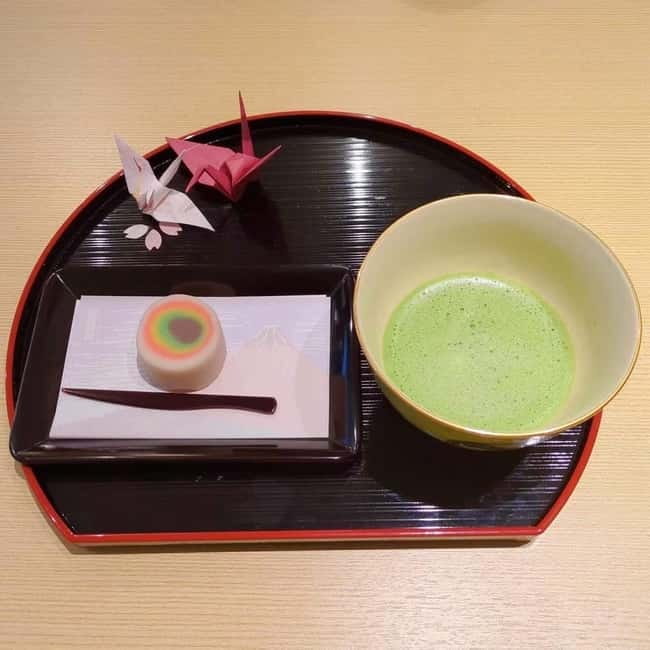
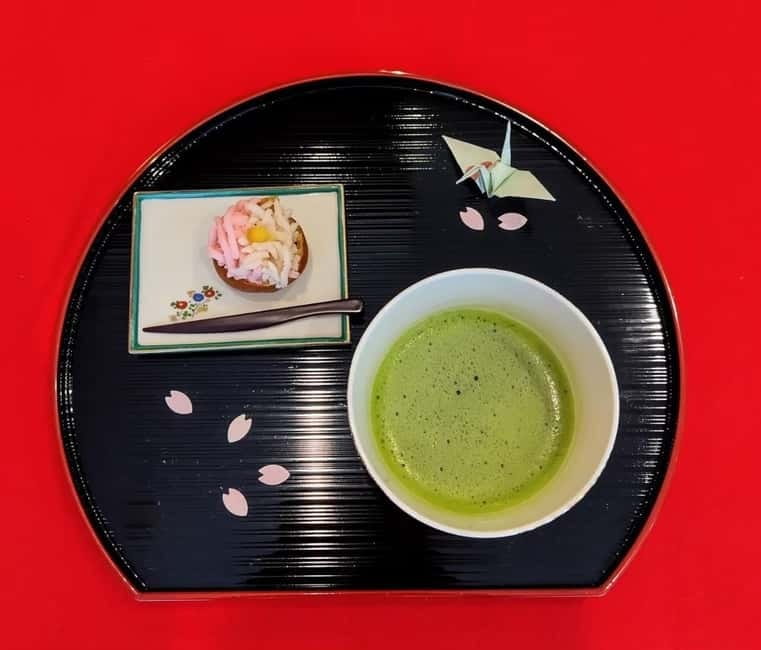
Here’s where the ceremony becomes personal. After you enter the Japanese-style room, you’ll select your tea sweets and choose a matcha bowl for the session.
What makes this step more than a gimmick is that each bowl has its own look and identity. They’ll explain the design of your chosen bowl individually, so you’re not just getting handed the same equipment as everyone else. That gives you a story while you sip: you’ll know what you’re looking at, and why it’s part of the moment.
In practice, this selection moment also slows everything down in a good way. While everyone else is deciding what to eat, you’re making a small ceremonial choice—sweets to match the tea, bowl to match the experience. It sets the tone.
Watch first, then join in: how the 60-minute flow usually feels
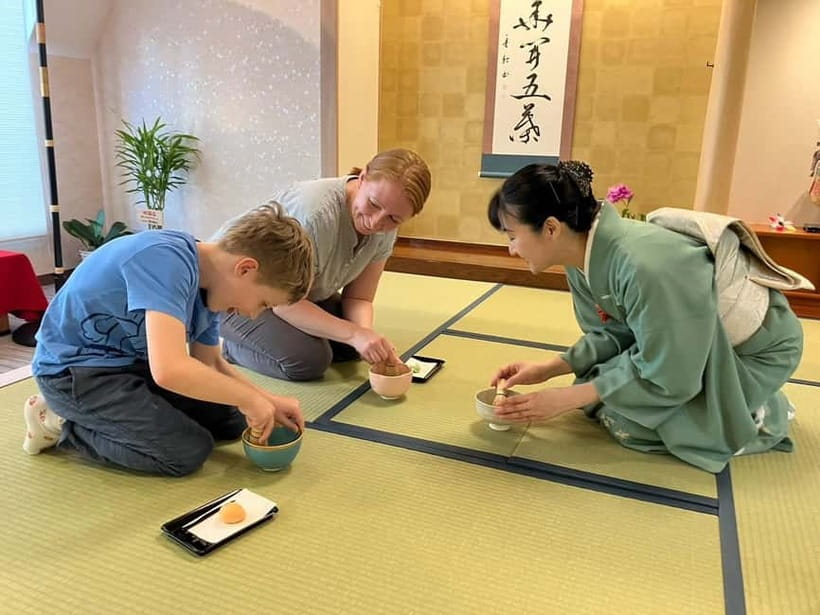
The experience gives you a structure that’s easy to follow: watch the demonstration, enjoy what’s served, then learn and practice.
You’ll start by watching the demonstration. While you watch, you can enjoy the sweets and drink the matcha. This matters because it teaches you the end goal before you start doing it yourself. It’s not purely instructional. There’s real tasting built in.
During the demonstration, explanations are provided as needed about:
- hanging scrolls and what they signify in the room,
- furnishings used in the ceremony,
- the history and cultural context of Japanese tea ceremony,
- and the matcha process itself.
Then comes the part most people come for: you’ll learn how to prepare matcha and get the chance to brew your own matcha. This is where the class stops being a show and becomes participation. You’ll feel the rhythm—how you handle the whisk, how the tea texture changes, and how attention changes when you’re responsible for making it.
Many sessions include a calm Q&A style. Ryouko and the team are known for being patient and informative, and they’ll answer questions when you have them.



The utensils, the small explanations, and why they matter
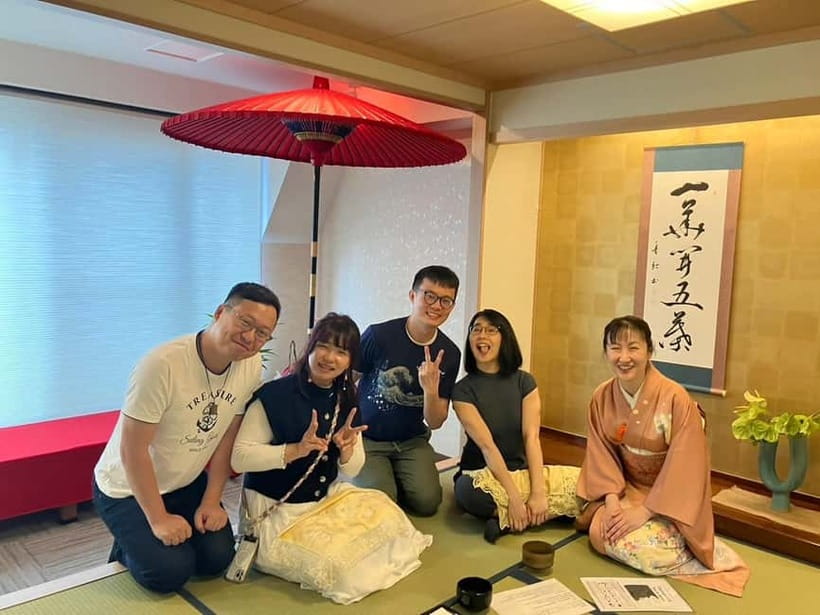
A tea ceremony can feel mystical if you don’t have any anchors. The good news here is that you aren’t left staring at objects with no context.
You’ll get explanation about tools and room elements—like the hanging scroll and furnishings—plus how they relate to the ceremony’s approach: attention, respect, and seasonal or aesthetic meaning. Even if you only catch part of it, you’ll feel how the room encourages restraint and focus.
One more reason this works for visitors: the staff approach tends to be friendly and encouraging, not stiff. You learn enough to make your own matcha, and you also understand what you just did.
And if you love photos, you’re in luck. The environment is designed for detail—utensils, bowl designs, and room composition.
Cultural property photos: where your camera will naturally go
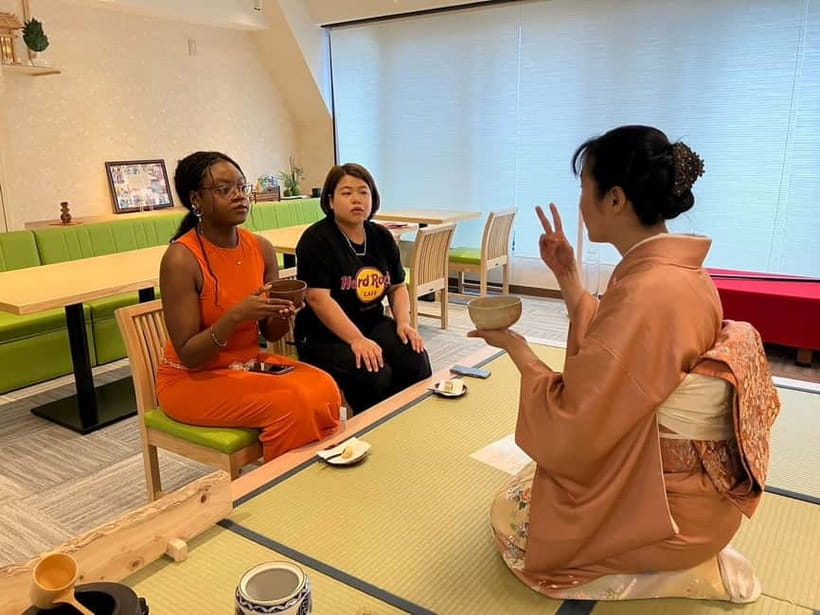
The Ichimatsu building being a registered tangible cultural property is a big deal for atmosphere. It’s not just “pretty walls.” It’s a preserved structure, with design choices that lend themselves to photography.
So even if you’re not into travel photography, you’ll likely find yourself taking pictures because the setting invites it. Some people also mention that staff help with photos during the ceremony. That’s helpful if you don’t want to hand your camera to strangers.
Practical photo tip: choose your camera plan before you start. Once you’re in, you’ll want your hands free for socks and utensils. Quick shots during transitions work best.
Price and value: what $45 gets you (and what to watch for)
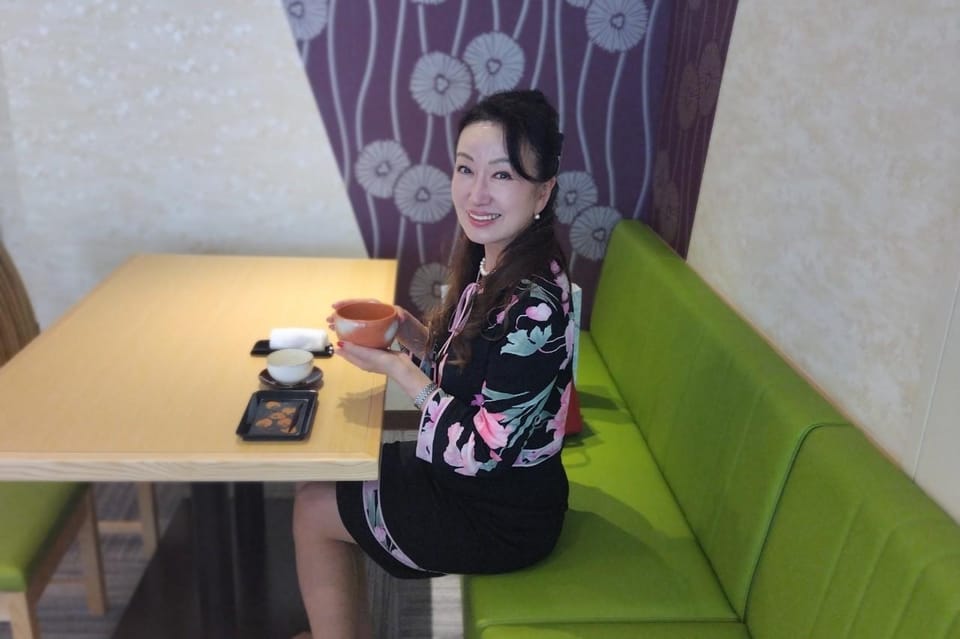
The price is listed as $45 per person. For a class that includes tea sweets, matcha green tea, a demonstration, and time to make your own matcha in a small group, that’s a fair baseline for Tokyo.
Where value can feel different is how you judge the experience:
- If you love culture and want a structured learning moment in a serene setting, the “watch + do” format is a strong match.
- If you expected a long, lecture-heavy class, you might find it short on pure explanation time. One past guest felt the price didn’t line up perfectly with the pace and depth they wanted. Your best bet is to show up ready to participate rather than just observe.
Also note: the duration is listed as 45 minutes to 4 hours, depending on your session and timing. That range is wide, so I’d treat the experience as a scheduled program that includes tasting and hands-on practice, not just a single “tea in the cup” stop.
Who this is best for
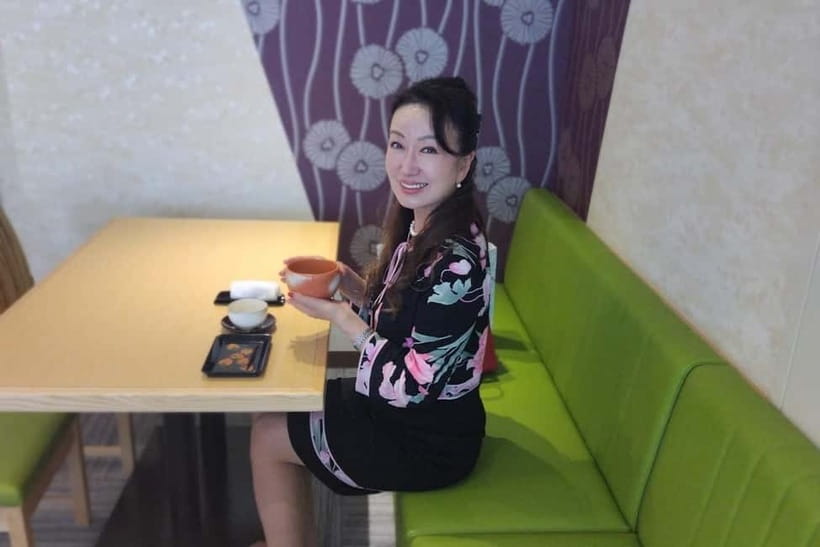
This tea ceremony experience is a great fit if you want:
- a hands-on cultural activity (not only watching),
- a calm break from Tokyo crowds,
- a small-group setting where you can ask questions,
- and a chance to learn matcha beyond the basics.
It can work for teenagers and adults who are curious about traditions. In past sessions, multi-generational groups also seemed to enjoy it, especially because it’s structured and photo-friendly.
If you’re traveling with very young kids, this one may not fit since it’s not suitable for children under 6. And if mobility is a concern, the room style means wheelchair users aren’t accommodated.
Small-group size: why max 7 makes a difference
You’re limited to 7 participants. That’s not just a number. In tea ceremony, timing matters. Too many people and everything gets stretched, the instructions get rushed, and you don’t get the same attention.
A small group also makes your own matcha brewing more realistic. You’ll be able to follow along, and staff are more likely to notice if you need help with the steps.
What to do before you go (a quick checklist)
- Bring socks so you can sit on tatami without buying last-minute replacements
- Wear clothing you can comfortably move in while seated
- Plan to arrive a little early so you don’t stress about finding the room
- If you’re planning photos, decide how you’ll handle your camera so you don’t fumble with utensils
That’s it. Tea ceremony is simple in concept, but it rewards calm preparation.
Should you book Wasako’s tea ceremony experience?
Yes, if you want a genuine matcha experience that’s built around real participation—choose sweets and a bowl, watch, taste, and then brew your own tea in a quiet Japanese room. The small group size and instruction in English and Japanese make it easier to understand what you’re doing, not just what you’re seeing.
I’d consider skipping (or lowering expectations) if your top priority is a long, in-depth lecture, or if you don’t want to follow indoor rules like no shoes and possible tatami socks. For most visitors looking for a meaningful cultural reset in Tokyo, this one is easy to recommend.
FAQ
What start times are available?
The tea ceremony experience offers four start times: 10:00, 11:30, 13:30, and 15:00.
How long does the experience take?
The duration is listed as 45 minutes to 4 hours. Check availability for the specific session length.
Where do I meet for the tea ceremony?
You’ll meet about 5 minutes on foot from Tawaramachi Station (Exit 3) on the Tokyo Metro Ginza Line, or about 10 minutes on foot from Asakusa Station (Exit A4) on the Toei Asakusa Line.
Do I need socks?
Yes, if you want to get on the tatami, you should bring socks. If you don’t have them, socks are sold for 500 yen.
Can I wear shoes indoors?
No. Shoes are not allowed indoors.
Can I choose my tea sweets and matcha bowl?
Yes. You’ll select your tea sweets and the matcha bowl used in your ceremony.
Will I only watch, or will I make matcha too?
You’ll watch the demonstration and enjoy the sweets and matcha, and you’ll also be taught how to prepare matcha and brew your own.
How big is the group?
It’s a small group limited to 7 participants.
What languages are used during instruction?
The instructor offers English and Japanese.
Who is the experience not suitable for?
It’s not suitable for children under 6 and not suitable for wheelchair users.
What is the cancellation policy?
Free cancellation is available up to 24 hours in advance for a full refund. A 50% cancellation fee applies for cancellations made the day before, and 100% applies on the day of the event.