REVIEW · TOKYO
Tokyo:Samurai Training : Swords, Bushido & Mental Discipline
Book on GetYourGuide →Operated by INTERNATIONAL GOSHIN-BUDO ASSOCIATION · Bookable on GetYourGuide
Swords and silence, all in one class. I love that it is real samurai training, not a show, with Bushido etiquette and wooden katana basics led by instructors Oedo and Yukikaze. I also like that you get one-on-one sparring using practical techniques. One consideration: it isn’t suitable if you have a cold.
The session runs for two hours in a traditional dojo in Kojimachi, once part of Edo Castle’s inner grounds. Between stick work and kata practice, you slow down with breathing, meditation, and a quiet break with matcha and sweets.
In This Review
- Key Highlights You’ll Actually Feel
- Kojimachi Dojo: Where Samurai Discipline Starts Before Any Sword Moves
- Etiquette and Bushido: The Mental Half You Can’t Skip
- Wooden Katana Basics and the Live Instructor Demo
- Heavy Stick Drills: Strength, Control, and Staying Grounded
- Silent Walking and Balance: The Ninja Exercise That Actually Trains Awareness
- Combat Kata and One-on-One Sparring: Where the Class Becomes Real
- Matcha Break, Certificate Scroll, and the Samurai Attire Photo
- Price and Value for $83: What Two Hours Actually Buys
- Who Should Book This Tokyo Samurai Class (and Who Should Skip It)
- Quick Practical Tips Before You Go to the Dojo
- Should You Book Samurai Training in Tokyo’s Kojimachi?
- FAQ
- How long is the Tokyo Samurai Training experience?
- Where do I meet for the class?
- Is the training conducted in English?
- Is this a show or hands-on training?
- How large is the group?
- What’s included in the price?
- Do I need to provide my uniform size?
- Is transportation included?
- Can I get a full refund if my plans change?
- Is this suitable for everyone?
Key Highlights You’ll Actually Feel
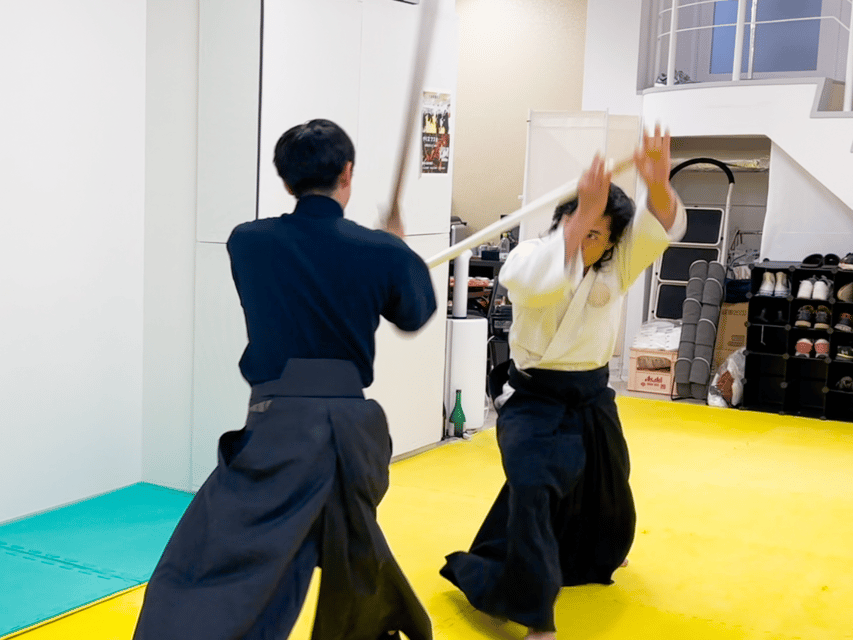
- Not a show: You train, correct form, and practice techniques rather than watching from the sidelines.
- English-friendly coaching: Sword skills, Bushido spirit, and dojo etiquette are taught in English.
- Heavy stick powerwork: Strength and control come from disciplined drills with a heavy practice stick.
- Ninja-style silent walking: Balance and awareness get tested in a low-noise, high-focus exercise.
- One kata plus sparring: You don’t just learn moves—you apply them in controlled one-on-one practice.
- Small group feel: Limited to 6 participants, so you get more attention than a big class setup.
Kojimachi Dojo: Where Samurai Discipline Starts Before Any Sword Moves
Tokyo’s Kojimachi district has that old-meets-modern feeling, and this class plants you in the old part. The training takes place in a traditional dojo that connects to Edo Castle’s inner grounds, so the setting does real work: it reinforces that this isn’t about posing in costume.
You’ll meet at the dojo entrance with a samurai waiting for you and a nobori flag as the landmark. Once inside, you’ll follow the dojo rules immediately—no shoes indoors and no smoking indoors—which sounds minor, but it sets the tone. You’re meant to act like a trainee, not a tourist.
This is also a class designed for beginners. You won’t be thrown into random chaos with a sword. Instead, you start by learning how to behave, breathe, and move with control, which makes the later stick drills and sparring feel more like training than guessing.
You can also read our reviews of more tours and experiences in Tokyo.



Etiquette and Bushido: The Mental Half You Can’t Skip
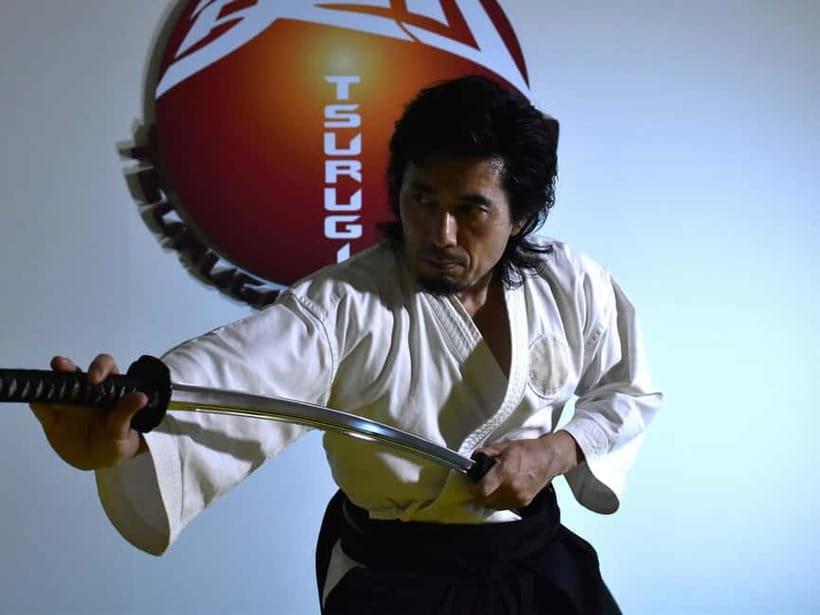
A lot of sword experiences jump straight to swinging. This one starts with the parts that make samurai training more than combat: etiquette and Bushido spirit. You’ll learn how a trainee carries themselves in a dojo—how to show respect, how to listen, and how to treat the training tools with seriousness.
Then you move into calming practices: breathing techniques and meditation. I like this because it changes what the body does. When you slow your breathing and focus your attention, your posture firms up, your reactions get cleaner, and you stop wasting energy.
In English instruction, you’ll also get context on the mindset behind the movements. The goal isn’t mystical talk. It’s practical: calm mind, steady body, clear awareness. That’s why silent walking later on works so well. You’re not just standing in place wondering what to do—you’ve already been trained to focus.
Wooden Katana Basics and the Live Instructor Demo
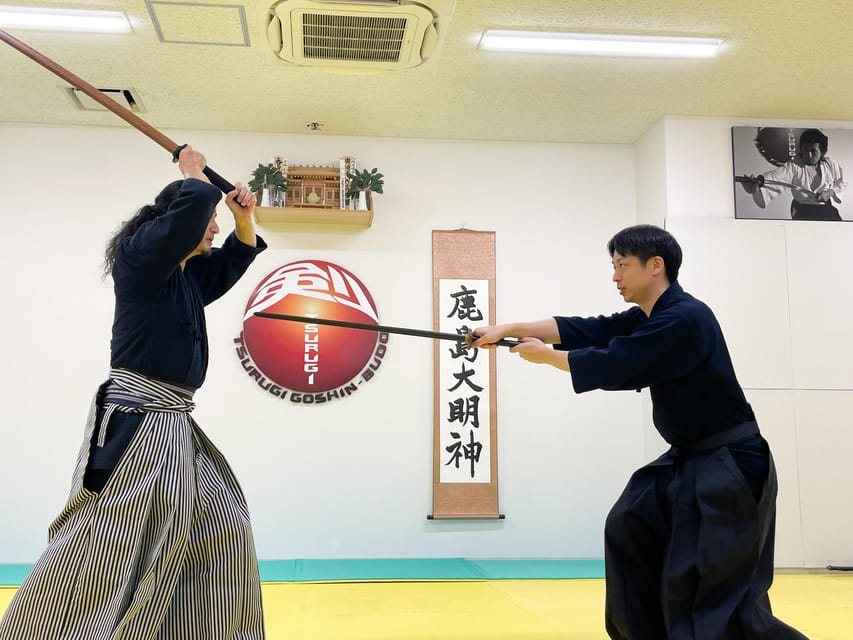
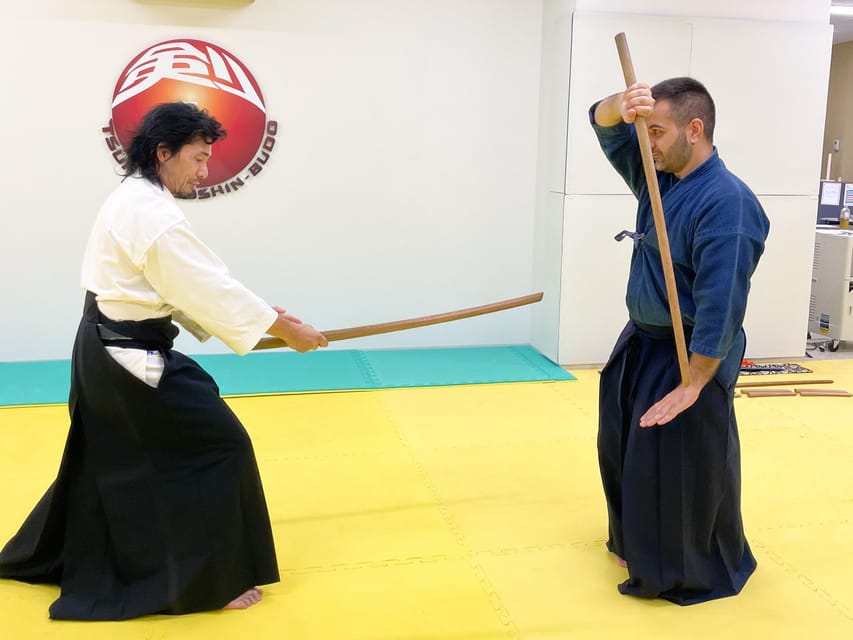
Next come the foundational sword skills using wooden swords (so you can learn safely while building correct habits). You’ll get a live sword demonstration by the instructor first, then you’ll start practicing the basics you’ll need for later kata and sparring.
This is where you’ll feel the difference between a performance and a class. A performance teaches you what looks cool. Training teaches you what prevents mistakes. You’ll be guided toward proper posture, controlled motions, and technique you can repeat, not just a single dramatic arc.
If you’re worried about safety, don’t be. The progression is step-by-step, and the format is beginner-friendly. You also get instructor coaching as you practice, not just a quick overview and a “good luck” attitude. That matters in a hands-on activity like this.
Heavy Stick Drills: Strength, Control, and Staying Grounded
After the wooden-sword groundwork, you shift to strength and body control with a heavy practice stick. This part is physical in a very specific way. It’s not about blasting through reps; it’s about stable form, timing, and managing power without losing balance.
I like this because it teaches the often-missed link between strength and technique. In sword work, raw force doesn’t help if your stance collapses or your movement telegraphs your intent. The stick drills build that kind of grounded coordination.
You’ll also get the sense that samurai training is whole-body training. Even before you’re doing combat kata or sparring, you’re training legs, core, and posture. If you’ve got a day where you’re feeling stiff or tired, this is still doable, but it helps to arrive rested. This class expects effort.
Silent Walking and Balance: The Ninja Exercise That Actually Trains Awareness
One of the most memorable elements is the silent walking exercise. It’s the kind of drill that sounds almost silly until you try it—because it’s harder than it looks. The point is balance, control, and awareness of your body in space.
You’ll practice moving quietly and deliberately, testing posture and focus. This kind of drill matters because sword combat is full of small adjustments: shifting weight, controlling distance, staying stable under pressure. Silent walking forces you to do those adjustments smoothly rather than with exaggerated steps.
For me, the value here is mental clarity. Your brain stops wandering because the drill demands attention. It also helps you understand how movement quality affects everything else you’ll do with the sword later.




Combat Kata and One-on-One Sparring: Where the Class Becomes Real
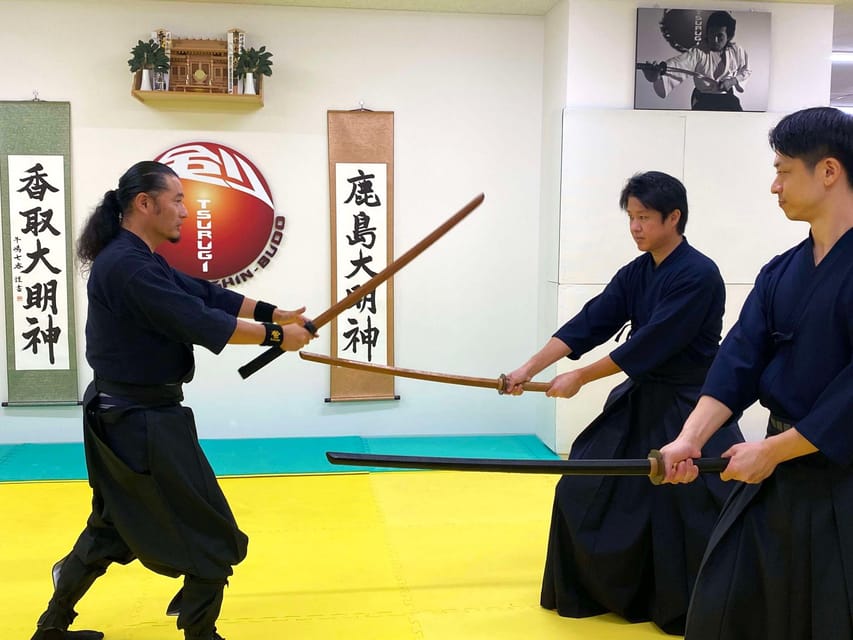
This is the section where the training turns from exercises into actual application. You’ll learn realistic combat sword techniques and then master one authentic samurai combat kata. Kata is a controlled pattern, but it’s not just choreography. It’s a way to learn sequence, timing, distance, and decision-making.
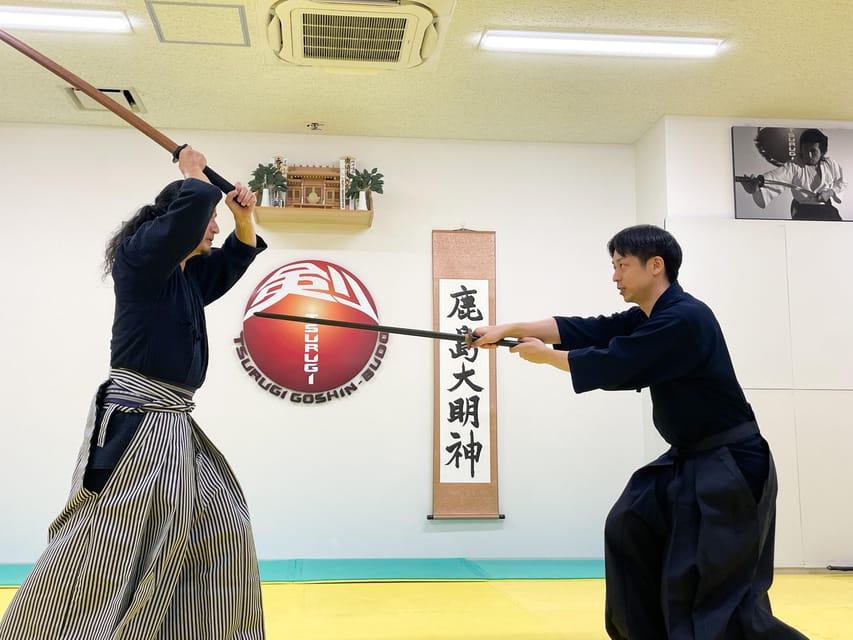
Once you have the kata pieces, you apply them in one-on-one sparring with the instructor. This is controlled and structured, and it’s the part that makes it feel like training rather than a lesson. You’ll practice with feedback so your technique improves instead of turning into a shaky version of what you just watched.
Two details from the experience stand out here: the attention you get and the tone of the coaching. Instructors like Oedo and Yukikaze are highlighted as especially exceptional, and the vibe is supportive even if English isn’t perfect in every moment. Communication may be a mix of English and Japanese, but the teaching is consistent and focused on keeping you moving the right way.
If you’ve never done anything like sparring before, this is still a good entry point because you’re not doing it blind. You’re arriving with basics, drills, and kata structure. The sparring then feels like testing what you learned, not inventing technique on the spot.
Matcha Break, Certificate Scroll, and the Samurai Attire Photo
Right after the hardest part of the training, you get a break that feels thoughtfully placed: matcha green tea and traditional Japanese sweets in a quiet cultural setting. This matters for two reasons. First, it helps you settle down after the physical work. Second, it gives you a moment to absorb what you practiced instead of rushing into the finish line.
Then comes the ceremony-style reward: a personalized scroll-style certificate with your name and the techniques you learned. I like this because it turns the class into something you can remember beyond photos. It’s also a nice way to mark progress, especially for beginners who worry they won’t “learn enough.”
You’ll also get the chance to wear traditional samurai attire and take a commemorative photo. This part is fun, and it doesn’t cheapen the training because the training already did the heavy lifting. You’ll walk away with both: an identity moment in costume and a genuine skill moment from the dojo.
Price and Value for $83: What Two Hours Actually Buys
At about $83 per person for a two-hour session, you’re paying for more than sword time. The value is in the structure and the instructor attention.
You get:
- English-instructed guidance on Bushido, etiquette, and sword fundamentals
- wooden-sword drills plus heavy stick conditioning
- silent walking for balance and awareness
- one kata learning, then one-on-one sparring
- matcha and sweets during a break
- samurai uniform rental, a personalized certificate scroll, and a photo
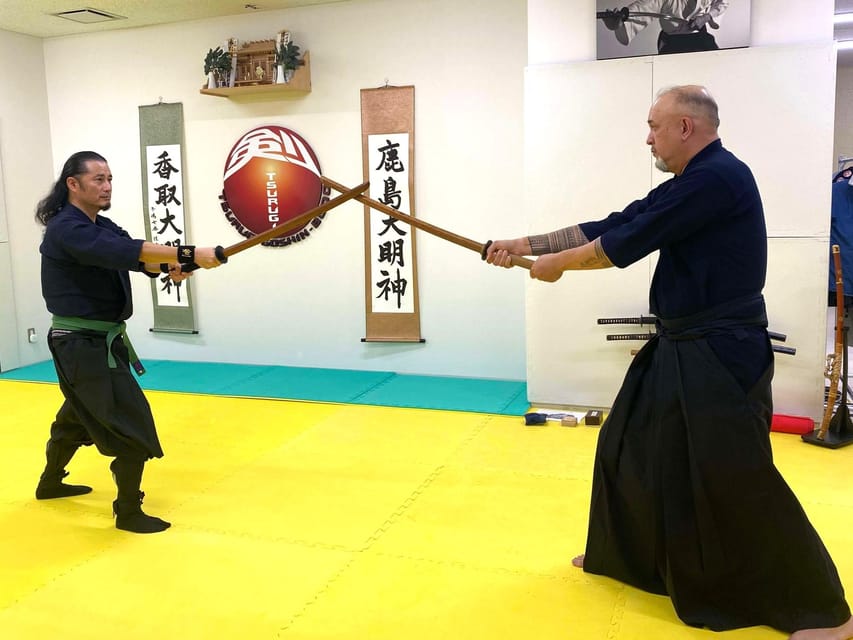
Many Tokyo activities look good online but boil down to watching or snapping quick pictures. Here, you’re training in the dojo with a small group capped at 6, so the coaching can actually land. Also, the uniform rental and cultural tea break are folded in, which reduces the usual “extra costs” feeling.
Transportation isn’t included, so plan your route to the dojo entrance. But once you’re there, the experience is self-contained. That makes the $83 feel like a fair fee for real instruction and equipment time.
Who Should Book This Tokyo Samurai Class (and Who Should Skip It)
You’ll likely enjoy this most if you want something hands-on in Tokyo that goes beyond sightseeing. It’s a strong fit for:
- beginners who like clear coaching and step-by-step progression
- anyone curious about Bushido philosophy and etiquette, not just swords
- people who want small-group attention rather than a crowded workshop
- friends or families looking for a shared training challenge
It’s not a good fit if you’re pregnant, and it’s also not suitable if you have a cold. The class includes breathing work, physical stick drills, and sparring, so you’ll want to feel well and steady before you go.
Also, be ready for dojo basics. Shoes stay out. You’ll move in training attire. Even if you’ve never worn a uniform like this, the staff handles it—you just need to be willing to follow rules.
Quick Practical Tips Before You Go to the Dojo
This experience has small details that make a big difference once you’re standing at the entrance. You’ll need to provide uniform sizing details ahead of time. The guidance is to tell the team everyone’s height and size in S/M/L categories so they can fit the samurai attire properly.
Wear comfortable clothing for the journey to the dojo. Inside, you’ll be switching into the uniform, and you’ll do balance drills and stick work. That means you want your body to feel free, not restricted.
If you’re sensitive to physical activity, plan your day so you’re not rushing in right after a long flight or an exhausting day of walking. The drills are part of the point, and your performance will be better when your energy is intact.
Should You Book Samurai Training in Tokyo’s Kojimachi?
If you want a Tokyo experience that treats you like a trainee instead of a spectator, this is a smart bet. The combination of etiquette + breathing + drills + kata + one-on-one sparring gives you a full training arc in only two hours. You’ll leave with a skill-based memory, a certificate with your name, and the added bonus of matcha and samurai attire.
Book it if you’re curious about Bushido discipline, want real coaching in English, and you’re okay with physical practice. Skip it if you’re dealing with illness or you don’t handle instruction-based physical drills well.
Overall, it’s good value for the time you spend and the feedback you receive. You’re paying for structured training, not a scripted show—and that difference shows in how the class feels.
FAQ
How long is the Tokyo Samurai Training experience?
It lasts 2 hours.
Where do I meet for the class?
You meet at the dojo entrance, with a samurai waiting for you. Look for the samurai nobori flag as your landmark.
Is the training conducted in English?
Yes. The experience is conducted in English, and the instructor languages are English and Japanese.
Is this a show or hands-on training?
It’s hands-on, real training. You practice sword basics, stick drills, silent walking, and you do one-on-one sparring with an instructor.
How large is the group?
It’s a small group limited to 6 participants, and there is a minimum of 2 participants required.
What’s included in the price?
Included are the samurai uniform rental, a live sword demonstration, an English guide on sword skills and Bushido, a personalized scroll certificate, matcha green tea and Japanese sweets, and a commemorative photo.
Do I need to provide my uniform size?
Yes. You’ll need to tell the provider everyone’s height and size (S/M/L).
Is transportation included?
No. Transportation is not included.
Can I get a full refund if my plans change?
Yes. You can cancel up to 24 hours in advance for a full refund.
Is this suitable for everyone?
It’s not suitable for pregnant women and it’s also not suitable for people with a cold.