REVIEW · TOKYO
Shibuya: Ramen Dojo Tokyo | Make All 3 (Tonkotsu/Shoyu/Miso)
Book on GetYourGuide →Operated by Viyago Japan · Bookable on GetYourGuide
Three ramen styles in one class sounds risky. It works here, because you physically make the noodles and then taste tonkotsu, shoyu, and miso side by side in one sitting, right near Shibuya Station. The experience is hands-on, beginner-friendly, and built around a pro noodle workflow that keeps you moving.
I especially love the fresh noodle making. You knead, roll, and cut dough using a professional noodle machine, so you’re not just standing around while someone else cooks. And the staff keep things clear in English, with small groups (max 8) that make it easier to ask questions without feeling rushed.
One thing to think about: the studio is stairs only, and the menu includes common allergens like wheat (gluten), egg, soy, chicken, and pork. If you have severe allergies or need strict dietary control, this may not be the right fit.
In This Review
- Key things that make this class worth your time
- Why This Shibuya Ramen Workshop Feels Like Tokyo Cooking Class, Not a Show
- In the Kitchen: What You Make During the 90 Minutes (Noodles, Chashu, Three Broths)
- Tonkotsu, Shoyu, Miso: The Flavor Differences You Can Actually Taste Side by Side
- Guides, Teaching Style, and Hands-On Momentum (Kazuki, Kensei, Kai and others)
- Price and Value: Why $64 Can Make Sense for a Ramen Meal Plus Skills
- Practical Tips: What to Wear, How Hungry to Be, and When to Ask Questions
- Where the Studio Is and How to Fit It Into a Shibuya Day
- Who Should Book Ramen Dojo Tokyo in Shibuya
- Should You Book This Ramen Class? My Bottom Line
- FAQ
- What happens during the 90 minutes at Ramen Dojo Tokyo?
- Is the class taught in English?
- How big is the group?
- What ramen styles do you make and taste?
- Are there dietary restrictions or allergens I should know about?
- Can I take photos during the class?
Key things that make this class worth your time
- You make noodles from scratch, then cut them with a professional cutter.
- You taste three ramen styles in one go: tonkotsu, shoyu, miso.
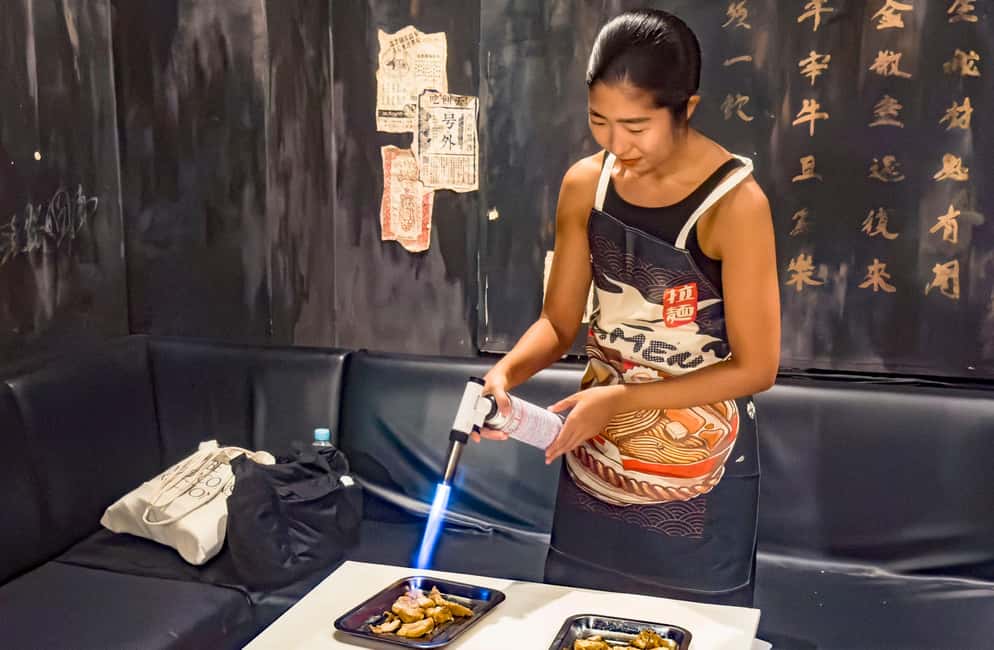
- Chicken chashu is part of the work, not just a garnish on the side.
- English guidance in a small group (up to 8) keeps it beginner-friendly.
- Photo moments are part of the experience, with ramen trio plating at the end.
Why This Shibuya Ramen Workshop Feels Like Tokyo Cooking Class, Not a Show
Ramen is everywhere in Japan, but most people only experience it as a finished bowl. Here, the fun is in the process: dough texture, thickness, broth strength, and how toppings change the final bite. It’s a very “Tokyo” way to learn because you’re handling the mechanics behind what you normally order.
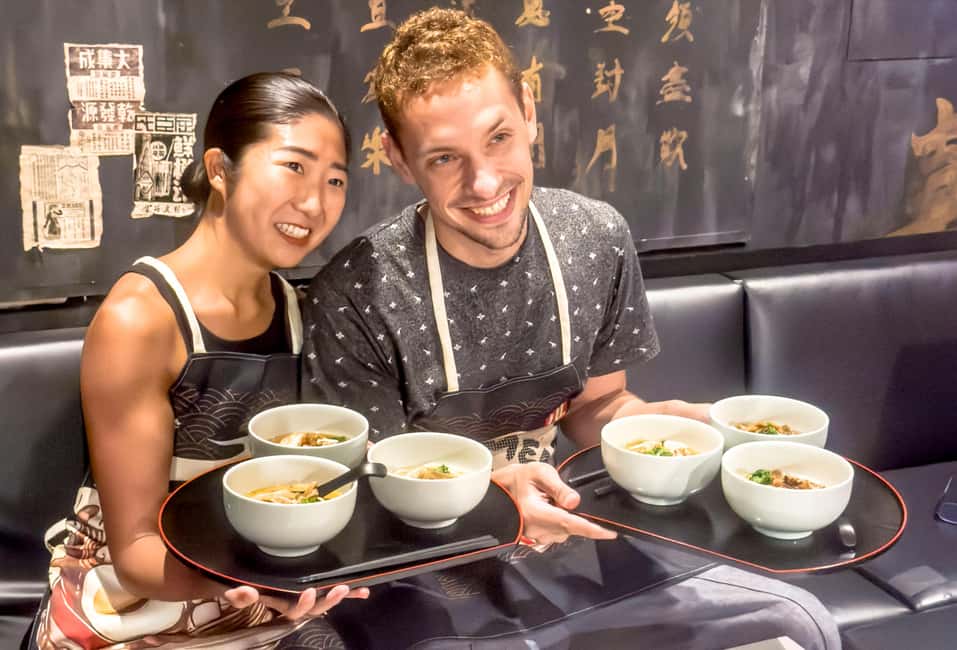
I also like that it’s positioned as a real meal. You don’t just sample one bowl and call it a day. You end up with three mini bowls and a clear sense of what differentiates tonkotsu, shoyu, and miso—not as trivia, but as something you taste immediately.
The vibe is relaxed and practical. You’re not performing; you’re cooking. And because the class is English-led and small, it tends to feel welcoming even if your Japanese is basic.
You can also read our reviews of more tours and experiences in Tokyo.



In the Kitchen: What You Make During the 90 Minutes (Noodles, Chashu, Three Broths)
The timing is tight but realistic for a 90-minute class. You check in, get a briefing, and then start working through the ramen parts like a mini production line.
Check-in & briefing (10 min). You’ll get the rundown of what’s coming and how the workflow works. This is useful because once noodle making starts, you want to know what your role is without slowing down the group.
Chicken chashu prep (5 min) + finishing (10 min). You’re involved with the chashu, and the pace keeps it interactive rather than passive. The key idea: you’re not just eating the topping; you’re learning how it fits into the ramen build.
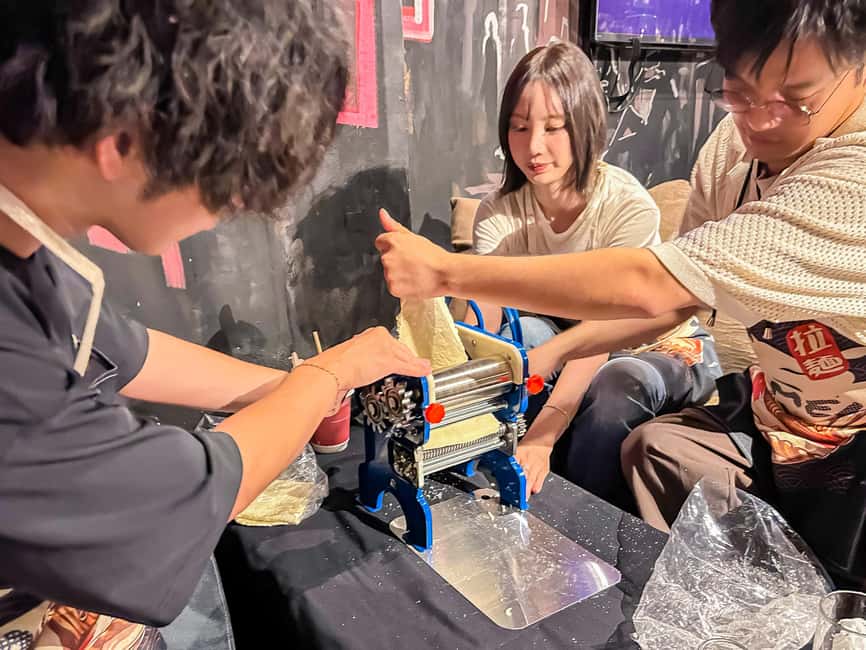
Noodle making (20 min). This is the core moment. You’ll knead the dough, roll it, and cut it with a professional cutter. Even if you’ve never made noodles before, the equipment helps you get to the correct shape without needing restaurant-level technique.
Boiling noodles / soup preparation (10 min). You’ll move into the “assemble what you built” phase here. Your instructor will guide how the noodles and soup components come together so you can taste all three styles by the end.
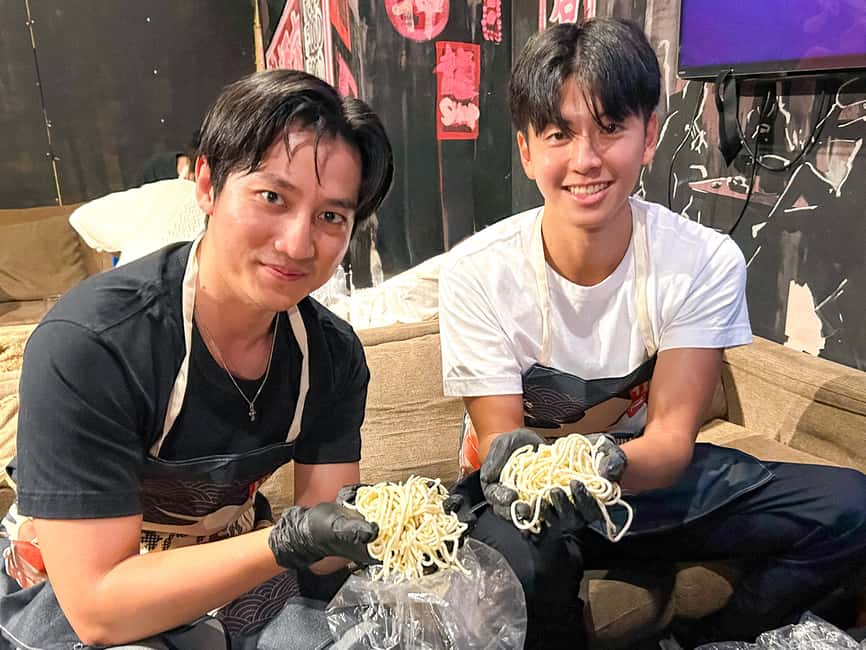
Plating (5 min) + tasting/photo time (30 min). This is where you slow down. You build and fine-tune your three mini bowls, add toppings, and then sit down to enjoy the results. You also get time for photos that aren’t forced; they come naturally when you plate three different versions of what you just made.
One practical note from past classes: parts of the broth process may be partially prepared ahead to keep the session within 90 minutes. The important part for you is that you still control the ramen you assemble and you taste the differences clearly.
Tonkotsu, Shoyu, Miso: The Flavor Differences You Can Actually Taste Side by Side
Most ramen comparisons online turn into arguments. In this class, the comparison is physical: three mini bowls, made in the same session, with the same general topping set-up.
Tonkotsu leans creamy and rich. You’ll notice it as soon as you taste it, because the mouthfeel is the point.
Shoyu is your soy-sauce pathway—savory and balanced, usually a little lighter feeling than the thicker styles.
Miso brings depth and a warmer, slightly earthy edge that changes how the noodles feel in your mouth.
The big “aha” here is that you can adjust what you’re tasting. The class includes adjusting the soup base strength to match your preference, so you’re not stuck with a single default flavor profile. That’s what makes the tasting session educational instead of just delicious.
And because you eat them in one sitting, you’ll remember the differences better than if you tried to compare three bowls over three different days.
Guides, Teaching Style, and Hands-On Momentum (Kazuki, Kensei, Kai and others)
This works because the instruction style is step-by-step and calm. Multiple instructors have led past sessions—people like Kazuki, Kensei, and Kai show up in reviews as clear, upbeat teachers who keep the group involved.
What I like from that pattern: the staff don’t just hand you tasks. They explain what you’re doing and why. That matters with noodles, where small differences in thickness can change bite and texture.
You’ll also see that teaching emphasizes technique you can copy later. One standout theme in feedback is that instructors encourage using hands and method over relying on electronics for texture control. So even though the class uses a professional noodle machine, you still learn how the dough should feel and how the cut noodles should behave.
The result is that even a first-timer can leave with something real: noodles that look like ramen noodles, not just dough that sort of turned into a noodle shape.
Price and Value: Why $64 Can Make Sense for a Ramen Meal Plus Skills
Let’s talk about the number: $64 per person for 90 minutes. That could feel steep if you think you’re buying dinner only. But you’re not. You’re paying for ingredients, equipment use, instruction, and the fact that you eat three ramen styles at the end.
Here’s the value breakdown that tends to land with people:
- You get three mini bowls (tonkotsu, shoyu, miso), not one.
- You make fresh noodles using a real pro setup, then you cook with them.
- You learn a core ramen skill: noodle dough handling and soup-base strength adjustment.
- You leave with a digital recipe after the class, so the experience can extend beyond the meal.
One reason this class feels like good value is that it’s not “watch and taste.” You do the work, and the work is the product. If you love food experiences, learning to make noodles is a skill you can bring back to your own kitchen.
And if you book during lunch, you may find it feels extra like getting a class-meal combo rather than a separate activity. (The key is still the same: you’re cooking and then eating what you made.)





Practical Tips: What to Wear, How Hungry to Be, and When to Ask Questions
This is one of those activities where small prep changes everything.
Wear clothes you don’t mind getting flour on. Aprons are provided, but noodle making still gets messy. Plan for a bit of flour dust on sleeves or pants as you knead and cut.
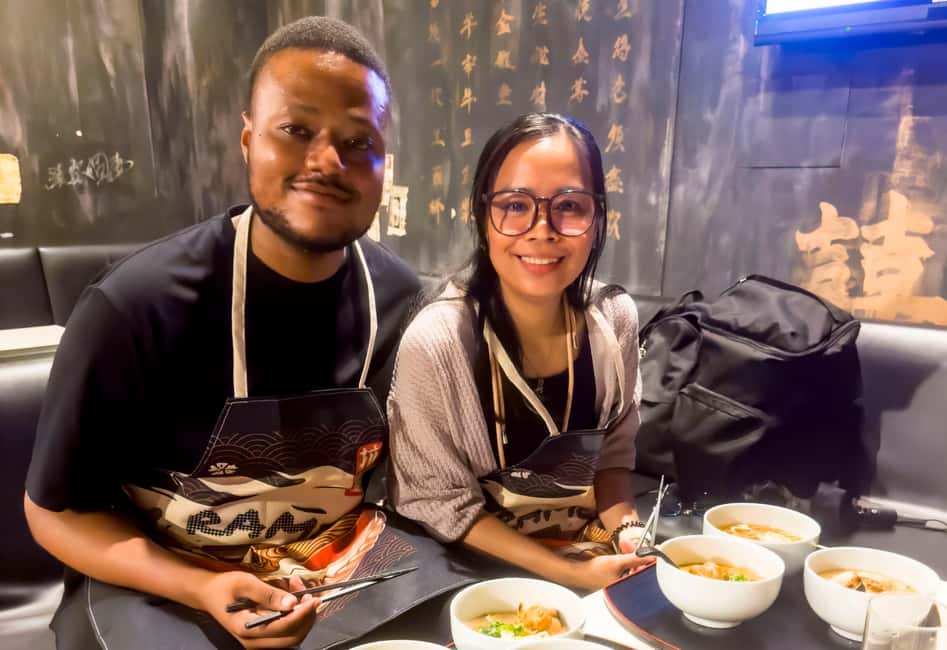
Go hungry. Three mini bowls sounds light until you’re actually eating. In feedback, people call out that the bowls can be filling, and that you’ll enjoy it more if you haven’t eaten right before the workshop.
Arrive on time for the class rhythm. The doors open 10 minutes before start, and there’s no early waiting area. If you arrive more than 5 minutes late, you may have to join in progress or, in some cases, be refused for safety/class flow.
Ask questions while the hands are busy. The best time is during noodle making and soup base discussion. You’ll learn what to look for—dough texture, noodle thickness, and how the strength changes the broth.
Use the photo time. Photography is welcome, and the plating moment is designed for a clean, “three bowls” shot. If you care about posting, this is one of the easier Tokyo food activities to capture well.
Where the Studio Is and How to Fit It Into a Shibuya Day
The studio is about a 10-minute walk from Shibuya Station. That makes it easy to slot into an afternoon of browsing—especially because the class starts and ends at the same location.
This is also a smart pre-planning move if you want a food activity that doesn’t kill your whole day. You’ll spend the 90 minutes cooking and eating, and then you can head back out for Shibuya’s energy afterward.
One practical catch: the studio has stairs only. If stairs are a problem for you, this is worth thinking about before you commit.
Who Should Book Ramen Dojo Tokyo in Shibuya
Book this if you want a hands-on Tokyo food experience with real take-home skills. It’s especially good for:
- Food lovers who want to learn, not just taste.
- Beginners who feel nervous in cooking classes but want English guidance and clear steps.
- Couples or small groups who prefer a quiet, focused setting (max 8 participants).
- Anyone who wants a fun ramen souvenir that’s actually edible: noodles and broth technique.
It may not fit if you:
- Have severe allergies or celiac disease, or need strict dietary control beyond what the class can partially accommodate.
- Have a strong sensitivity to airborne flour.
- Can’t manage stairs.
Should You Book This Ramen Class? My Bottom Line

If you like ramen and you want to understand why it tastes the way it does, this is an easy yes. You leave with three different styles, fresh noodles you made yourself, and a recipe you can actually follow later.
The only reasons to hesitate are practical: the studio’s stairs only setup and the allergen reality (wheat, egg, soy, chicken, pork). If those don’t affect you, you’re in for a genuinely satisfying 90 minutes where you cook, taste, and learn without needing previous experience.
FAQ
What happens during the 90 minutes at Ramen Dojo Tokyo?
You start with check-in and a briefing, then prep and finish chicken chashu, make noodles from scratch, prepare/boil noodles and soup components, plate three mini bowls, and finish with tasting and photo time.
Is the class taught in English?
Yes. The experience is guided in English (with the instructor also using Japanese).
How big is the group?
The workshop is limited to a small group, with a maximum of 8 guests.
What ramen styles do you make and taste?
You make and taste three styles in the same session: tonkotsu, shoyu, and miso.
Are there dietary restrictions or allergens I should know about?
The class uses wheat (gluten), egg, soy, chicken, and pork, and they cannot guarantee complete prevention of cross-contamination. Partial accommodation may be possible for no chicken/pork, vegetarian, and vegan with advance inquiry, but strict dietary compliance may not be fully supported.
Can I take photos during the class?
Photography is welcome, and the experience encourages sharing with #RamenDojoTokyo.