REVIEW · TOKYO
Tokyo:Sea of Mount Fuji, Hakone Ropeway, Ōwakudani, Enoshima
Book on GetYourGuide →Operated by Japan Visionary Tour · Bookable on GetYourGuide
Mt. Fuji from lake, volcano, sea in one day.
This day tour strings together three different angles on Japan’s most famous mountain, with a pirate ship on Lake Ashi and the Hakone Ropeway over steaming Ōwakudani. You also get Enoshima’s shoreline views and shrine stops, plus a Sagami Bay photo moment if the day cooperates.
I especially love that the schedule is built around big scenery moments, not just quick photo stops. You’ll also appreciate having a guide who keeps the timing tight and helps with tickets, with guides like Aki sending clear day-before details and people like Kishida, Belle, and Jimmy described as fun, patient, and on it.
The main drawback is simple: your best Fuji views depend on weather and visibility, and the day is packed, so you need a flexible mindset.
In This Review
- Key takeaways before you go
- Why this tour works: Fuji from three different worlds
- Lake Ashi and the pirate ship: the calm part of the day
- What you’ll actually do here
- What to watch for
- Hakone Ropeway above Ōwakudani’s steam: the view gets taller fast
- What you’ll actually do here
- The practical side
- Ōwakudani black eggs: the quirky food moment that makes sense
- How to plan for the eggs
- Why this works on a packed day
- Enoshima island: shrine steps, sea views, and food on the path
- What you’ll actually do here
- Food and snacks tip that saves time
- A small caution
- Sagami Bay photo stop: a quick coastal reset
- Price and value: what $50 really means
- How to judge whether it’s a good deal for you
- Timing and logistics that can make or break your day
- What to bring
- Tour rules to remember
- Who should consider skipping this tour
- Who this fits best (and who might want a different plan)
- Should you book this pirate ship, Ōwakudani, and Enoshima day trip?
- FAQ
- How long is the tour?
- What is included in the $50 price?
- Are the pirate ship cruise and Hakone Ropeway tickets included?
- Are meals included?
- Do I need cash for the stops?
- Will I definitely see Mount Fuji?
- Can I change the meeting point on the day of the trip?
Key takeaways before you go
- Three Fuji viewpoints: from Lake Ashi, above Owakudani, and (often) from Enoshima’s Sea-Mount Fuji angle
- Pirate ship deck time on Lake Ashi’s calm, mirror-like waters
- Ōwakudani steam and sulfur smell for a true volcanic “active earth” feel
- Kuro-tamago black eggs you can eat right on the spot, with longevity legend attached
- Enoshima shrine + Nakamise Dori for a mix of quiet holy spots and street food browsing
- A tight 10-hour flow that’s great for seeing a lot, but not for slow wandering
Why this tour works: Fuji from three different worlds
If you’re short on time in Tokyo, this is one of those rare day trips that tries to solve a real problem: Mt. Fuji sighting is part luck, part timing, and part perspective. This route gives you multiple chances. You’re not relying on one single viewpoint.
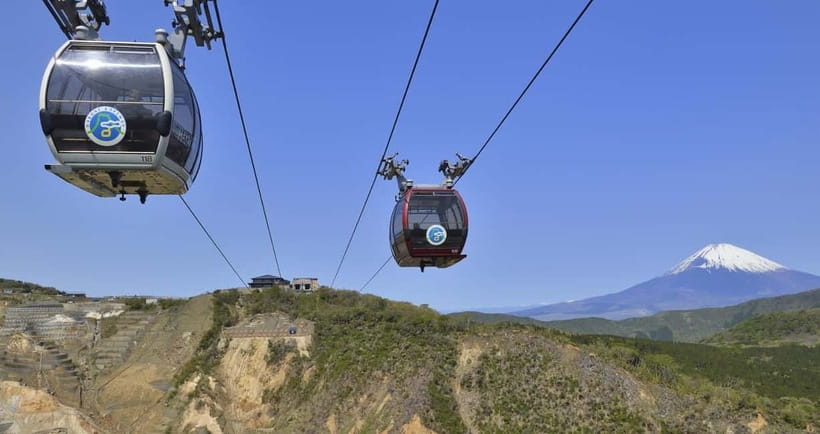
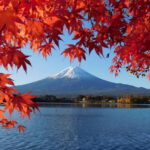
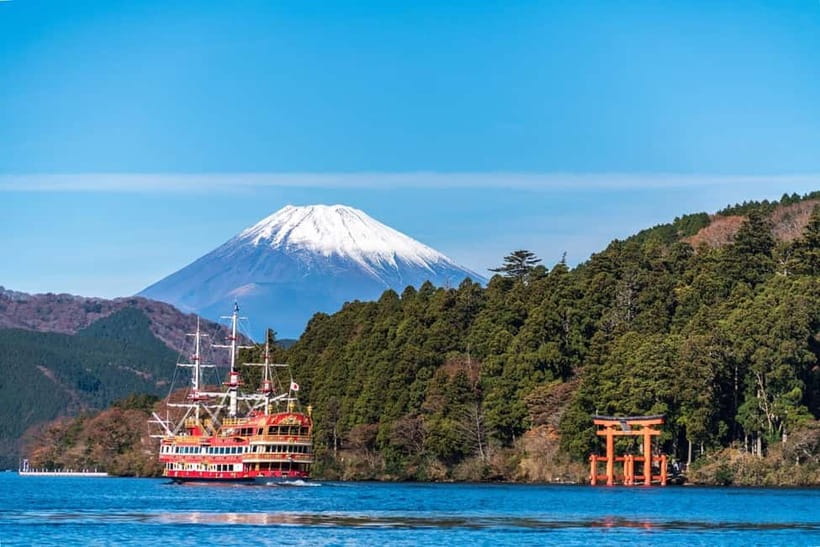
On Lake Ashi, Fuji can appear in the distance with mountains and a red torii gate in the frame. Up near Ōwakudani, the scenery changes from lake reflections to geothermal steam and volcanic terrain, with Fuji often appearing on the horizon when visibility is good. Then Enoshima shifts you from mountain views to coastal views, where the famous Sea-Mount Fuji silhouette can show up on clear days.
I like that the tour isn’t just “transport between famous stops.” The stops are placed so the day feels like a story: volcanic energy → lake stillness → seaside tradition. That pacing is exactly why people rate it highly and call it a highlight.
You can also read our reviews of more tours and experiences in Tokyo.
Lake Ashi and the pirate ship: the calm part of the day
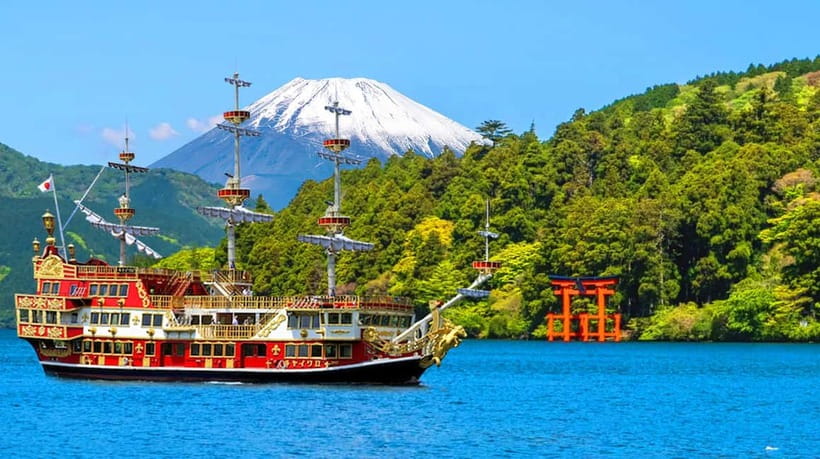
Lake Ashi is a volcanic lake, and the view is the whole point. Expect green mountain slopes wrapping around the water and that classic look where Mt. Fuji can show up far off, with the iconic red torii gate rising from the shallows. It’s one of Japan’s most recognizable scenic compositions.
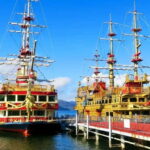
The photo stop is short, but the bigger payoff is the Hakone sightseeing cruise. Step onto a vintage-style pirate ship and you get something that a bus never gives you: real open-deck air and a moving perspective on the water.
What you’ll actually do here
- A quick Lake Ashi photo stop (around 20 minutes)
- A cruise on the water (around 25 minutes)
What to watch for
The cruise timing matters because you’re trying to line up Fuji visibility with clear sightlines over the lake. If it’s hazy, you may still enjoy the water-and-mountains look, but Fuji can fade or vanish. Bring the right clothes anyway, because it can feel chilly on the open deck.
Hakone Ropeway above Ōwakudani’s steam: the view gets taller fast
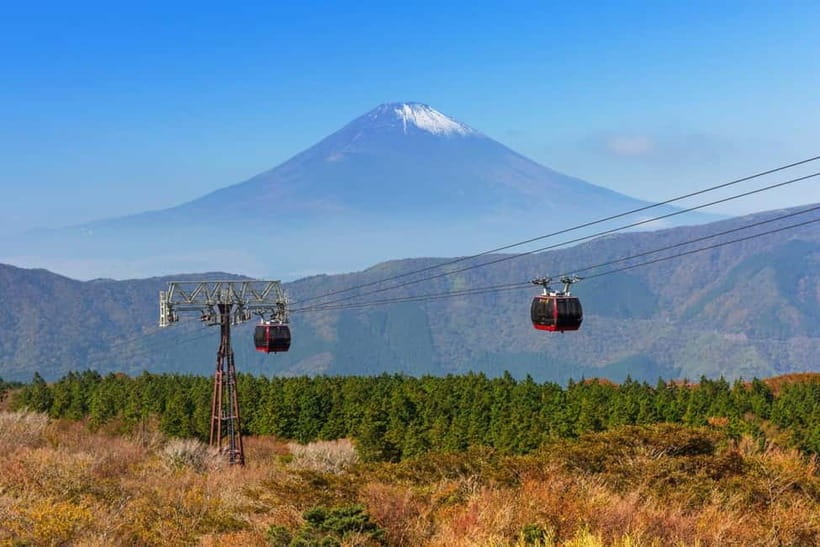
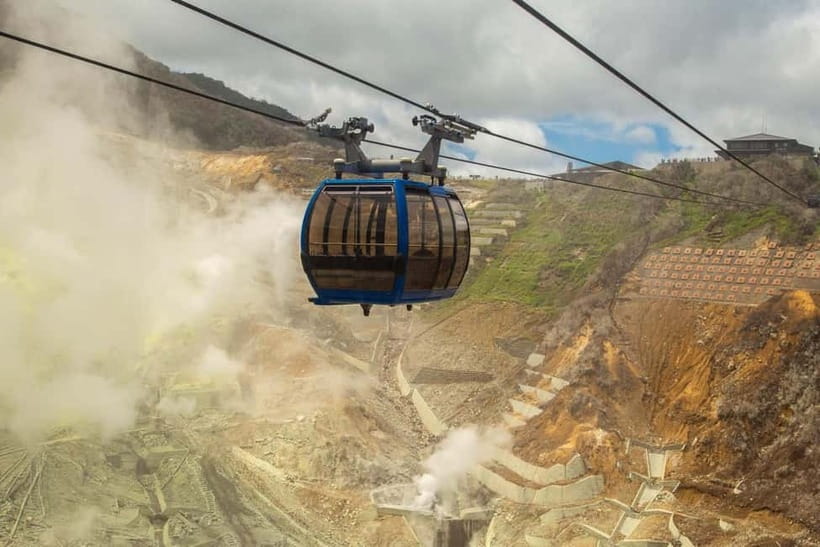
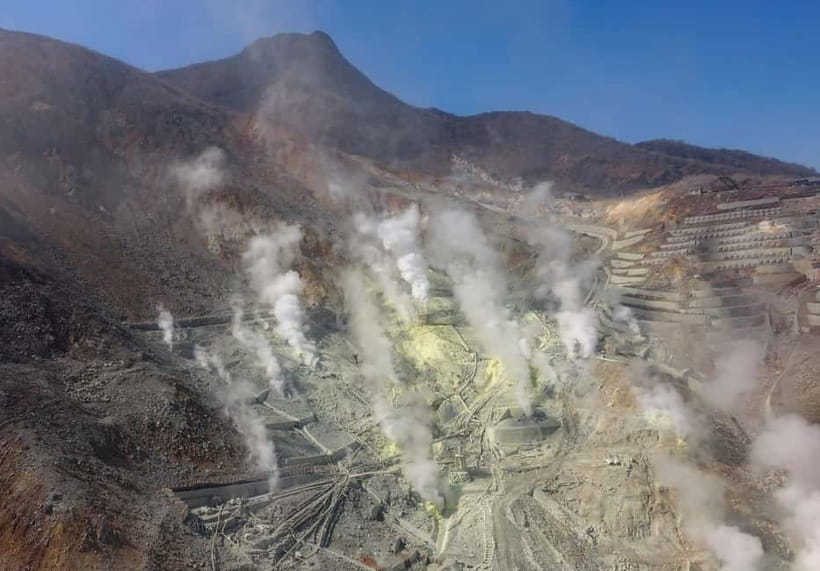
After the lake calm, the Hakone Ropeway gives you a total change of mood. The cable car rises above the valley, and you’ll see Owakudani’s dramatic geothermal activity from above: steam drifting from cracks in the ground and a terrain of ochre and rust tones.
This is one of the best parts for people who like “stop and stare” scenery. It’s not just about Fuji. It’s also about watching active earth in action from a safe, elevated vantage point.
What you’ll actually do here
- Ropeway ride (around 25 minutes)
- A follow-up photo stop and short time at Owakudani (around 30 minutes)
The practical side
The Ropeway is weather-sensitive. Fog and low visibility can soften everything, especially Fuji in the distance. Still, even without a perfect Fuji outline, the steam and sulfur atmosphere make Ōwakudani feel like a real volcanic zone rather than a theme-park stop.
Ōwakudani black eggs: the quirky food moment that makes sense
At Owakudani, don’t skip the black eggs. They’re called kuro-tamago: eggs hard-boiled in sulfur springs that turn them jet black. The legend says eating one adds seven years to your life. That’s folklore, not science, but the ritual is part of the experience.
The tour gives you a short, focused window here, which is ideal if you want the story and the taste without turning the day into an all-day food hunt.
How to plan for the eggs
- Go with the expectation of a quick food break, not a long meal
- If you care about timing for Fuji photos, keep your egg moment tight and move with the group
Why this works on a packed day
Kuro-tamago gives you something memorable that isn’t just sight. It’s a sensory stop: sulfur air, the legend, the moment of trying something local that fits the volcanic setting.
Enoshima island: shrine steps, sea views, and food on the path
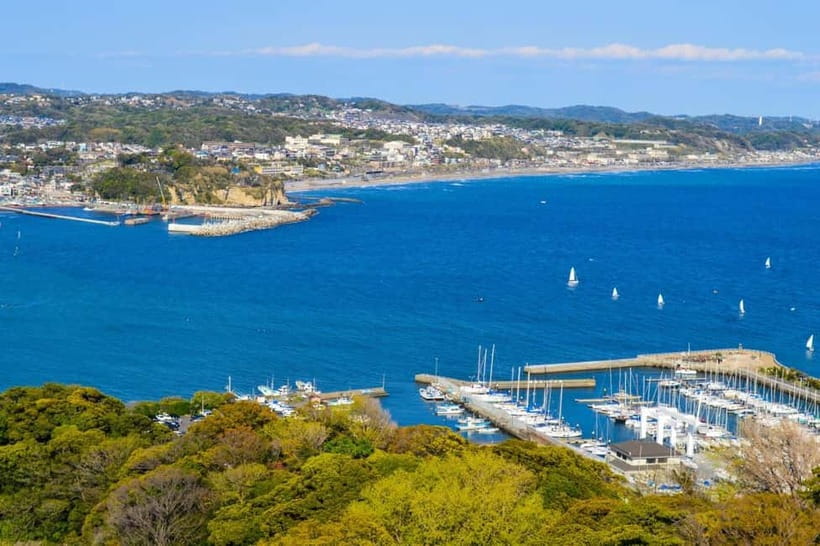
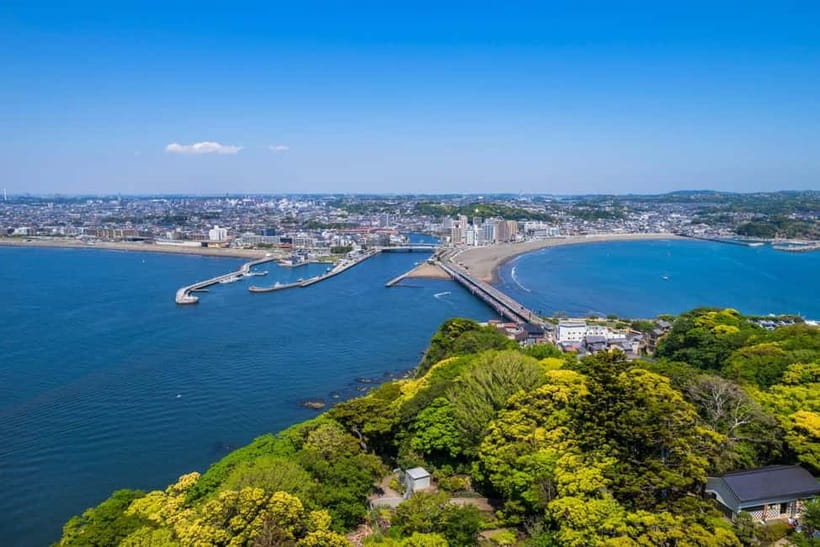
Enoshima is where the day shifts from volcanic drama to coastal calm. The island has greenery, sea breezes, and a shrine circuit that feels old and lived-in. You’ll climb stone steps toward viewpoints where the sea can open up in front of you.
On clear days, you might catch the world-famous Sea-Mount Fuji angle, where Mt. Fuji appears across the water rather than tucked behind mountains. Even when Fuji isn’t crisp, Enoshima still delivers a pleasant shoreline atmosphere and lots to look at on foot.
What you’ll actually do here
You’ll have a short mix of:
- Enoshima island photo stop and free time (around 30 minutes)
- Enoshima Shrine, Hetsunomiya (around 20 minutes)
- Enoshima Benzaiten Nakamise Dori (around 30 minutes)
- Bronze torii of Enoshima Shrine (around 10 minutes)
- Zuishinmon Gate (around 10 minutes)
Food and snacks tip that saves time
Most local shops may not accept credit cards, so carry some cash. Guides can help you buy pirate cruise or ropeway tickets if needed, but you’re still the one paying at small stalls. If you want street food, keep it simple: decide fast, grab what looks good, and don’t lose track of meeting time.
A small caution
This part of the itinerary is lovely, but the time is limited. If you’re the type who likes slow wandering, you might feel you want more minutes to explore beyond the shrine path and snack stops.
Sagami Bay photo stop: a quick coastal reset
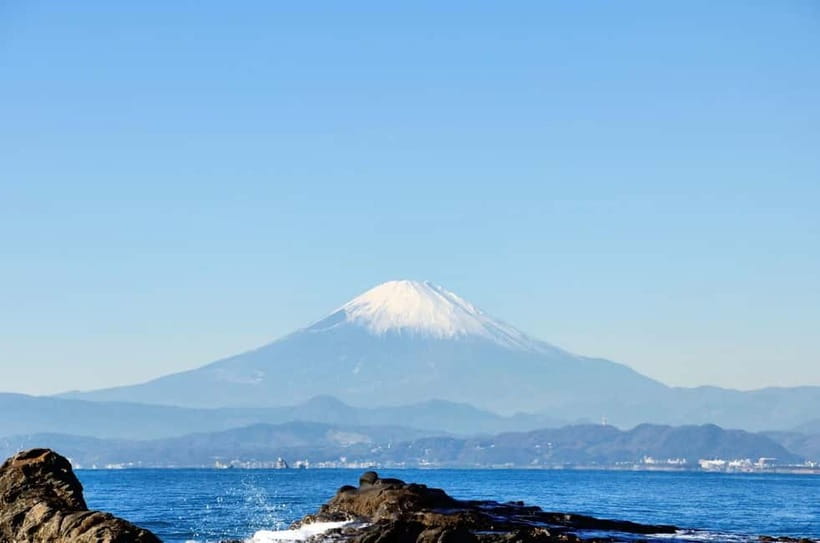
Near the end, you’ll get a photo stop at Sagami Bay, Kanagawa (around 20 minutes). It’s short, but it plays a useful role: it breaks up the volcanic and temple intensity with open water views.
If the day has been cloudy, this can still be worth it because you’re seeing a different coastline mood from what you had on Lake Ashi and around Enoshima.
Price and value: what $50 really means
The listed price is $50 per person for a roughly 10-hour day trip. That price is meaningful because it includes more than just transportation. You get:
- A professional English and Chinese-speaking tour guide
- A comfortable vehicle with A/C
- Round-trip transfers to and from the meet-up area
- Taxes, parking, toll fees, gas, and environmental fees
But here’s the part that matters for value: admission to the Hakone sightseeing cruise and admission to the Hakone Ropeway are not included unless you choose the option that adds them. That means your final cost can move up or down depending on which ticket option you select.
How to judge whether it’s a good deal for you
This tour becomes a strong value if you want the hassle removed:
- You don’t want to manage route changes, timing, and tickets across multiple areas
- You want a guide helping with schedule flow and ticket purchase support
- You like the idea of doing a lot in one day without standing in multiple queues on your own
If you enjoy planning yourself and already know how to build Hakone + Enoshima routing, you might find cheaper ticket-by-ticket options. Still, you’d be trading away the structure, the guide help, and the “all-in-one day” convenience.
Timing and logistics that can make or break your day
This is a long day with a lot of movement. Traffic congestion is common during peak seasons, public holidays, and weekends, so keep your evening plans flexible.
What to bring
- Layers: the day can run warm in the city and chilly near water and viewpoints
- Cash for small purchases on Enoshima
- A snack in your bag for the bus ride, since you’ll spend a lot of time in the vehicle
Tour rules to remember
- Smoking is not allowed.
- Food is not allowed in the vehicle.
That’s good to know because it affects what you can safely eat and when.
Who should consider skipping this tour
The tour is not suitable for:
- Pregnant women
- Wheelchair users
- People with altitude sickness
- People over 70
It’s also stated that those aged 70 and above are respectfully requested to sign a travel waiver upon arrival, so age restrictions are part of the safety design here.
Who this fits best (and who might want a different plan)
This is a good match if you:
- Want a classic Mt. Fuji-focused day without building your own itinerary
- Enjoy having a guide keep you on schedule and pointing out what to look for
- Like a mix: scenery + a volcanic experience + shrine and seaside atmosphere
It’s less ideal if you:
- Want lots of time for deep exploration at just one stop
- Get stressed by tight timing and lots of moving around in one day
- Prefer slower travel with unhurried meal breaks and wandering
Should you book this pirate ship, Ōwakudani, and Enoshima day trip?
Yes, I’d book it if Mt. Fuji is your priority and you want multiple chances to see it from different environments: lake, volcano, and coast. The combination of the pirate ship cruise, the Hakone Ropeway, and Enoshima’s shrine-and-sea vibe is exactly the kind of “value of structure” day trip that works.
I’d only hesitate if your schedule can’t handle delays from traffic, or if you’re very sensitive to long days. Also, go in knowing Fuji isn’t guaranteed. The itinerary is designed to still be enjoyable when visibility is less than perfect, but the crisp cone view is weather-dependent.
If you’re okay with that trade-off, this tour is one of the most efficient ways to cover Hakone and Enoshima in a single, memorable day.
FAQ
How long is the tour?
The duration is 10 hours.
What is included in the $50 price?
It includes a professional English & Chinese speaking tour guide, comfortable A/C vehicle, round-trip transfers to and from the meet up location, and all taxes, parking fees, toll fees, gas fees, and environmental fees.
Are the pirate ship cruise and Hakone Ropeway tickets included?
Admission to the Hakone sightseeing cruise and admission to the Hakone Ropeway are not included unless you choose the option that adds them.
Are meals included?
No. Meals and beverages are not included.
Do I need cash for the stops?
It’s a good idea to carry some cash. Most local shops may not accept credit card payments, and your guide can help with ticket purchases if needed.
Will I definitely see Mount Fuji?
Mount Fuji visibility depends on the weather. The guidance is to check the weather forecast in advance since visibility can be affected.
Can I change the meeting point on the day of the trip?
No. The meeting place cannot be changed on the day of the trip. If a change is necessary, you need to inform them at least one day in advance.